
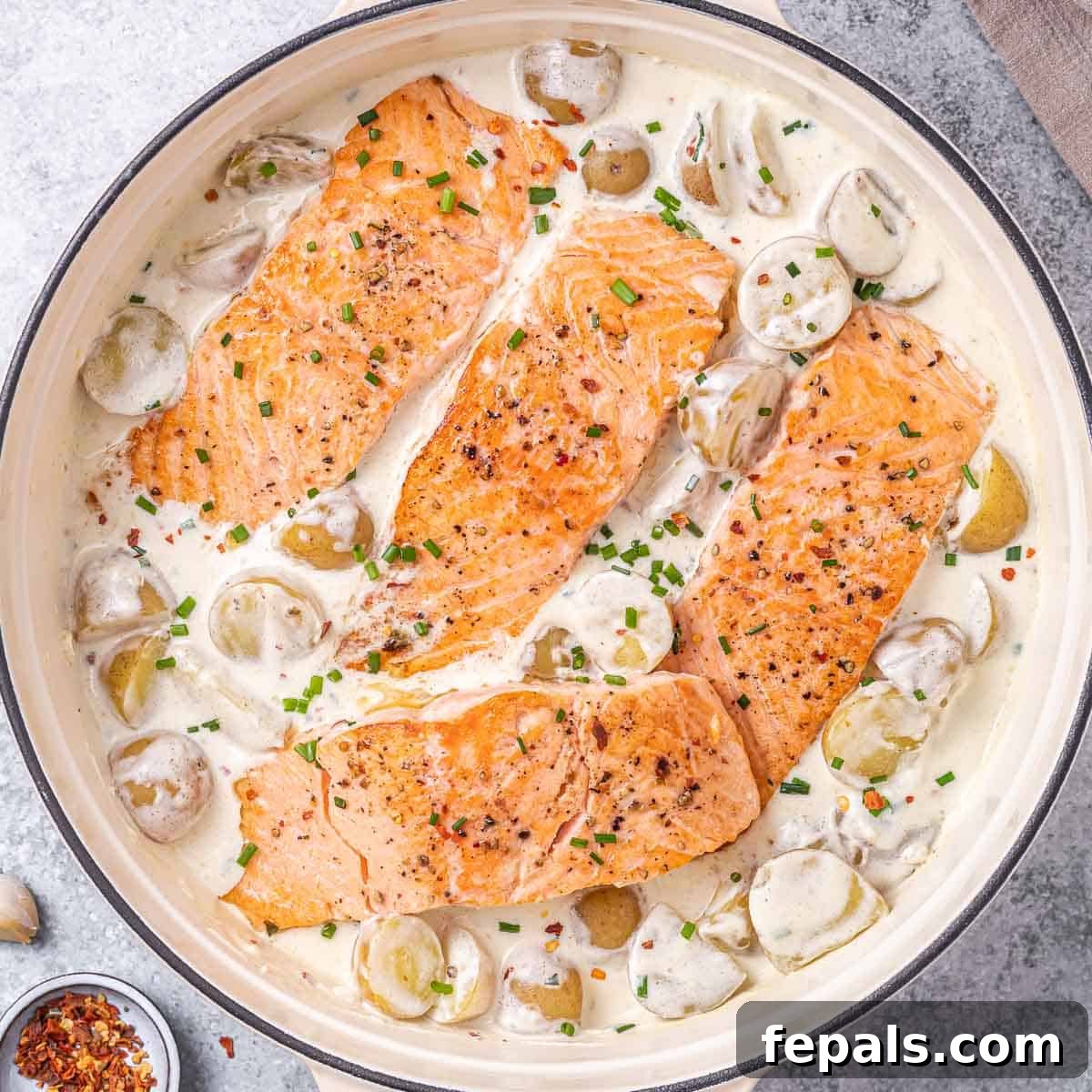
Transform your weeknight dinner routine with this incredibly easy and utterly delicious Creamy Salmon and Potato Skillet recipe. Designed for busy families, this wholesome meal brings together simple, healthy ingredients into a single pan, delivering a satisfying dinner in just under an hour. It’s a complete meal that’s both filling and packed with essential nutrients, making it a perfect choice for any day.
If you’re a salmon enthusiast, you’ll adore the rich flavors and tender texture of this dish. For more delightful salmon creations, consider trying my Baked Pesto Salmon or the irresistible Baked Honey Mustard Salmon.
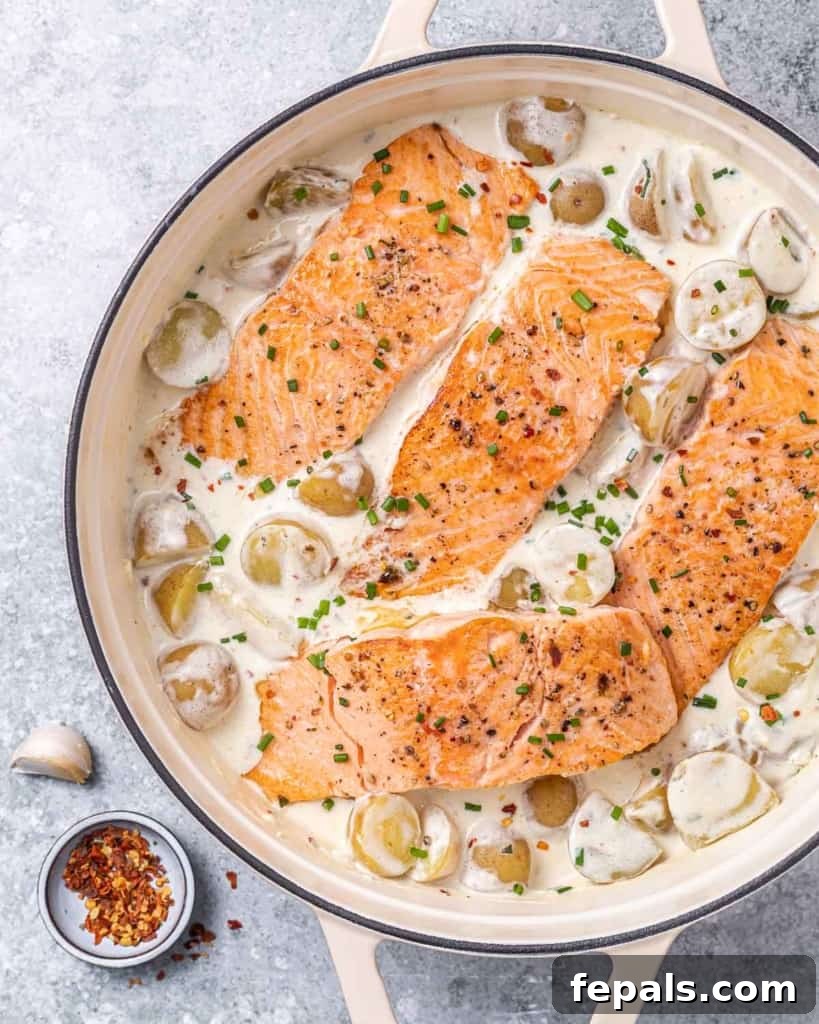
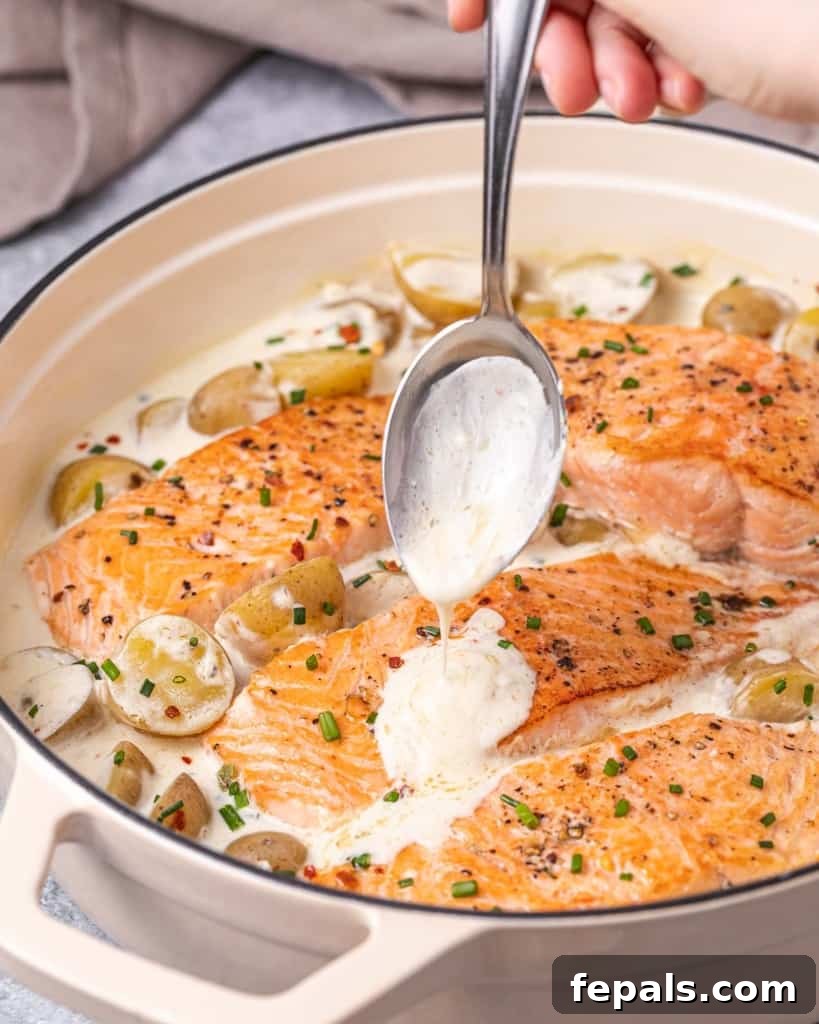
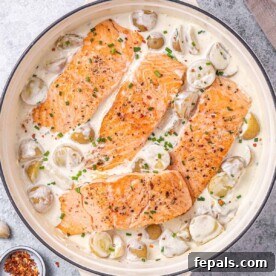
This exquisite sautéed salmon recipe featuring tender potatoes is a true crowd-pleaser, guaranteed to satisfy every member of your household. The salmon fillets are pan-seared to golden perfection, locking in their natural juices, before being enveloped in a luscious cream sauce. This rich sauce is crafted with a harmonious blend of olive oil, cream cheese, fragrant chives, and aromatic garlic, creating a flavor profile that is both comforting and sophisticated.
The baby potatoes are gently boiled until fork-tender, then introduced to the skillet to meld beautifully with the salmon and the creamy sauce. The result is a magnificent one-pan salmon and potato dish that boasts incredible richness and depth of flavor, making it an ideal choice for a truly satisfying and memorable dinner. Its simplicity belies its gourmet taste, offering a delightful experience without the fuss of complicated cooking.
Why You’ll Love This Creamy Salmon Skillet
- Unbelievably Delicious and Comforting: This dish is a culinary embrace, offering a wholesome and deeply satisfying meal that’s perfect for any occasion. Its rich, creamy texture and vibrant flavors make it an instant favorite, providing comfort after a long day. It’s also an excellent candidate for meal prepping, ensuring you have delicious, healthy meals ready to go throughout the week.
- Effortless Preparation in Under an Hour: With its straightforward steps and minimal cooking time, this recipe is a lifesaver for busy weeknights. You can achieve a gourmet-tasting meal with incredible speed, proving that nutritious and flavorful dinners don’t have to be time-consuming.
- Nutrient-Packed Goodness: Salmon is renowned for its high omega-3 fatty acid content, which supports heart and brain health. Combined with fiber-rich potatoes and fresh herbs, this meal offers a balanced array of macronutrients and vitamins, contributing to a healthy lifestyle.
- Versatile and Customizable: While the recipe is perfect as is, it offers ample room for customization. Easily adjust the seasonings to your preference, swap out potato types, or incorporate additional vegetables to make it uniquely yours. It’s a flexible recipe that adapts to what you have on hand.
- A True One-Pan Wonder: Minimize cleanup and maximize flavor! Cooking everything in a single skillet not only saves precious time on washing dishes but also allows the ingredients to simmer together, infusing every bite with rich, cohesive flavors.
Essential Ingredients for Your Skillet
Crafting this delightful creamy salmon and potato skillet requires a selection of fresh, wholesome ingredients. Below is a detailed list to guide you. For precise measurements, please refer to the comprehensive recipe card located further down the page.
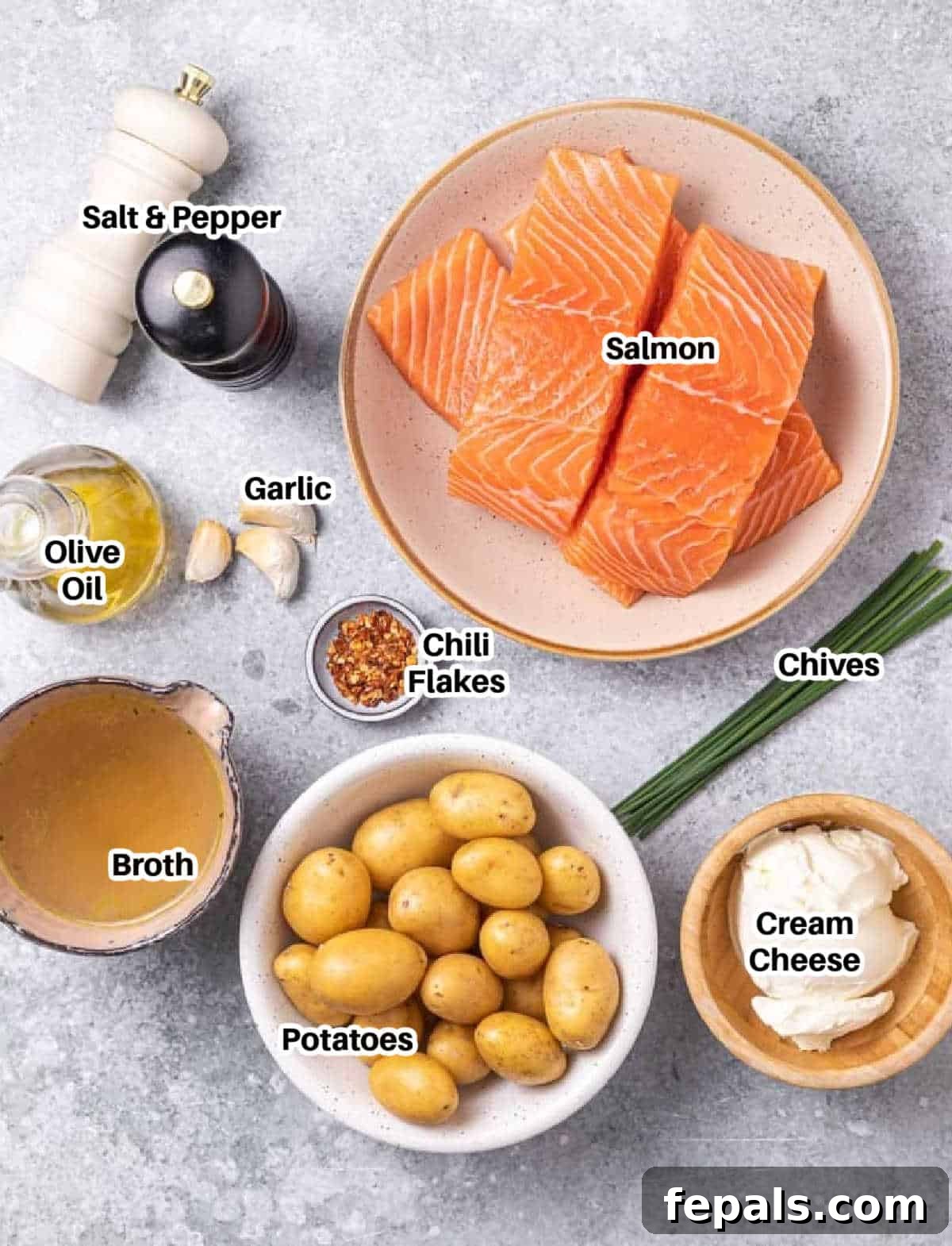
- Baby Potatoes: These small, tender potatoes are ideal for this dish as they cook quickly and absorb flavors beautifully. You can use any variety – red, yellow, or a mix of colors for visual appeal. If your baby potatoes are on the larger side, simply halve or quarter them to ensure even and faster cooking. New potatoes or fingerlings also work wonderfully.
- Salmon Fillets: Opt for skinless salmon fillets if possible, as they make for easier eating in this creamy skillet. However, if you have skin-on salmon, that’s perfectly fine! Just remember to start cooking them skin-side down first to achieve a crispy skin, adding an extra minute or so to that side’s cooking time before flipping. Fresh salmon is always best for flavor and texture.
- Seasonings:
- Garlic Cloves: Freshly minced garlic is crucial for building a robust flavor base for our creamy sauce. The more, the merrier if you’re a garlic lover!
- Salt and Pepper: Essential for enhancing the natural flavors of both the salmon and potatoes. Adjust to your personal taste throughout the cooking process.
- Fresh Chives: These delicate, oniony herbs add a beautiful freshness and mild pungency that cuts through the richness of the cream. Fresh chives are highly recommended for the best flavor and vibrant green garnish.
- Chili Flakes (Red Pepper Flakes): A touch of chili flakes adds a subtle warmth and gentle kick, balancing the creamy sauce. Feel free to adjust the amount based on your preferred spice level, or omit if you prefer no heat.
- Oil: I prefer using high-quality olive oil for its healthy fats and distinct flavor, which complements salmon wonderfully. However, feel free to substitute with avocado oil, which has a higher smoke point and a neutral taste, if you prefer.
- Vegetable Stock: This forms the liquid base for our sauce, adding depth and savory notes. Low-sodium vegetable stock is recommended to control the overall saltiness of the dish. If vegetable stock is unavailable, chicken stock makes a suitable alternative.
- Cream Cheese: The star of our creamy sauce! Full-fat cream cheese provides the richest texture and most decadent flavor. For those mindful of fat content, a light or reduced-fat cream cheese can be used without significantly compromising the creaminess, though the sauce might be slightly thinner.
How to Make This Creamy Salmon and Potato Skillet
Follow these straightforward steps to create a truly remarkable and effortless dinner that’s sure to impress.
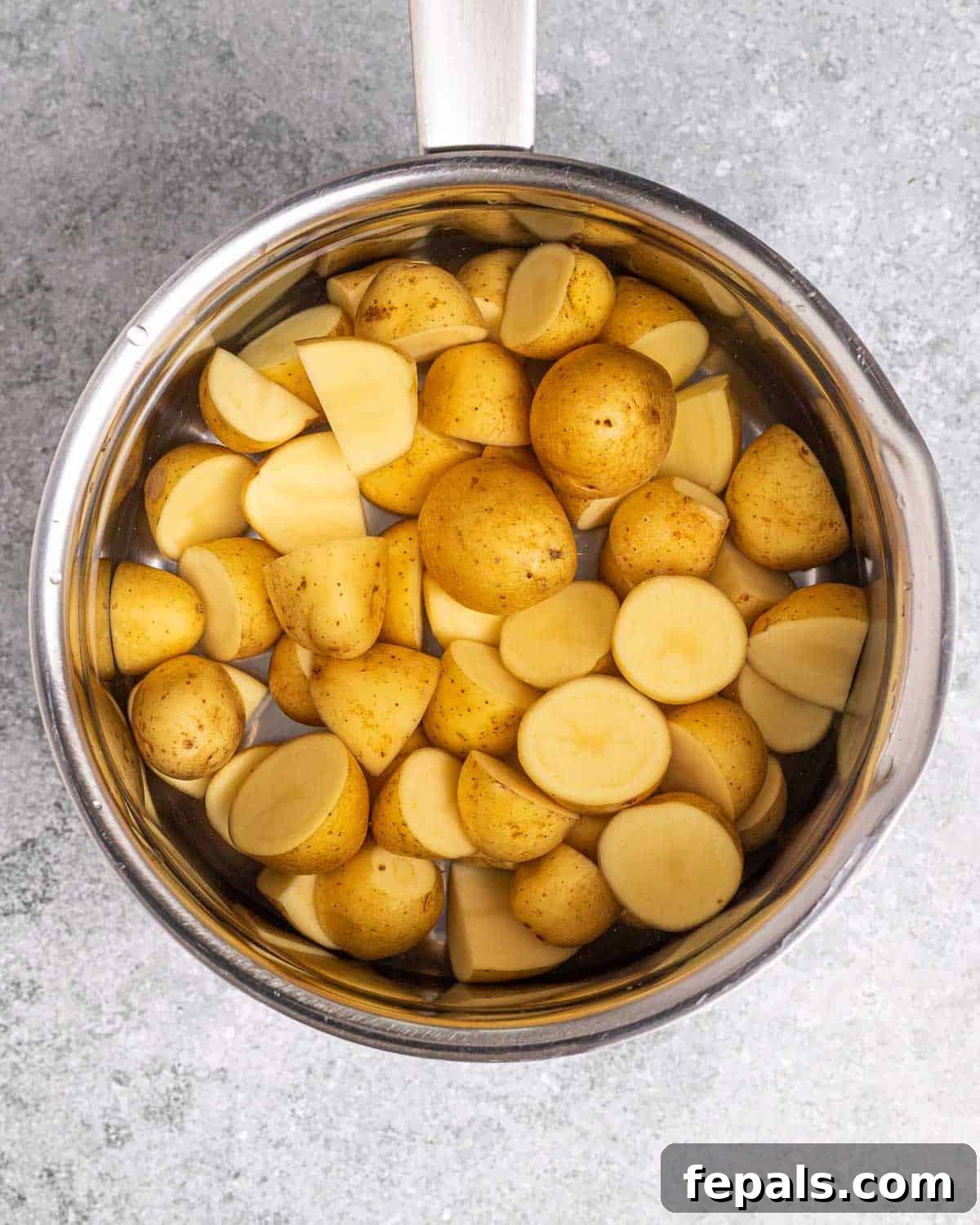
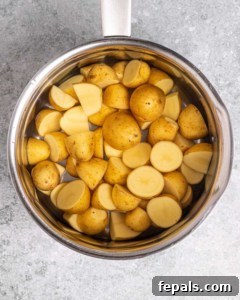
Step 1: Prepare the Potatoes. Place the halved baby potatoes in a medium pot and cover them with cold water. Bring to a boil over medium-high heat and cook until the potatoes are just fork-tender, about 10-15 minutes, depending on their size. Be careful not to overcook them, as they will continue to cook slightly in the skillet. Drain the water thoroughly and season the cooked potatoes generously with salt and pepper.
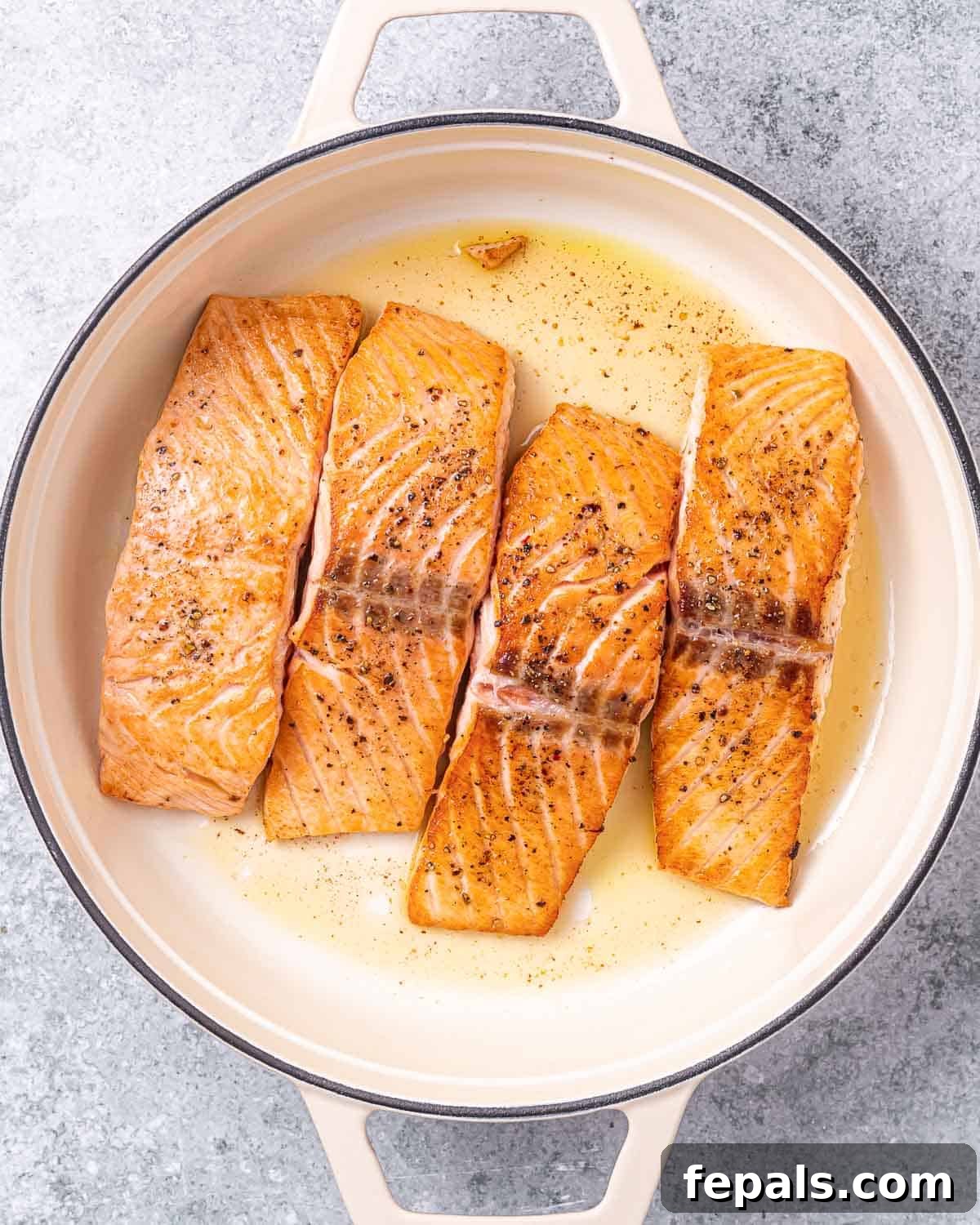
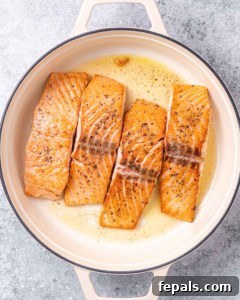
Step 2: Sear the Salmon. Pat the salmon fillets dry with paper towels and season both sides generously with salt and pepper. Heat the olive oil in a large, sturdy non-stick pan or cast-iron skillet over medium-high heat until shimmering. Carefully place the salmon fillets in the hot pan and sear for 3-4 minutes per side, or until they are golden brown and cooked through to your desired doneness. Remove the cooked salmon from the pan and set aside on a plate, tented loosely with foil to keep warm.
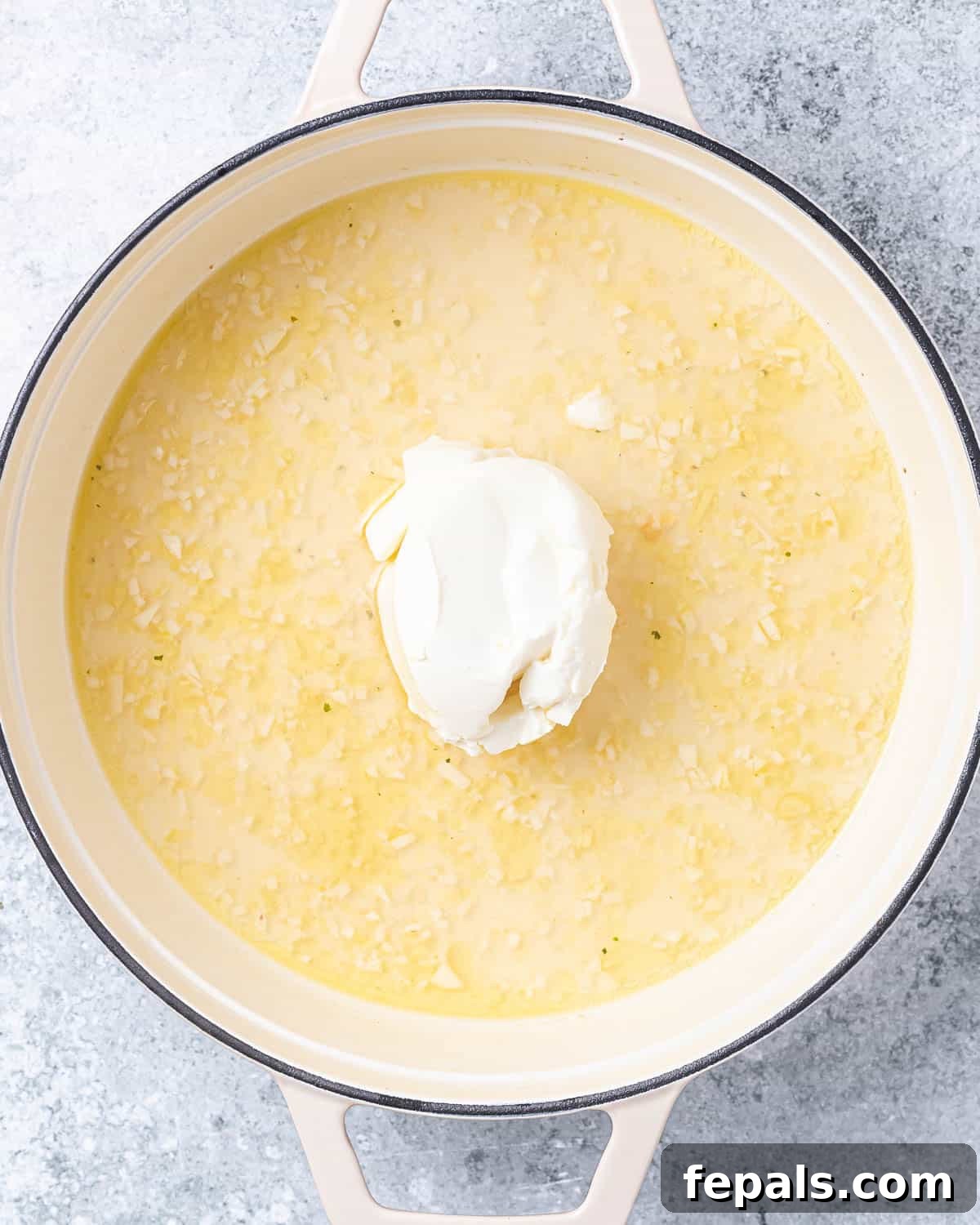
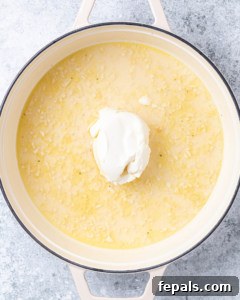
Step 3: Craft the Creamy Sauce. Using the same pan (no need to clean it – the browned bits add flavor!), reduce the heat to medium. Add the minced garlic and sauté for just about 30 seconds until fragrant, being careful not to burn it. Deglaze the pan by pouring in the vegetable stock, scraping up any delicious browned bits from the bottom of the pan with a wooden spoon. Allow the stock to bubble gently for a couple of minutes to reduce slightly. Then, add the cream cheese in small dollops and use a whisk to vigorously stir until the cheese is completely melted and smoothly incorporated into the stock, creating a rich and creamy sauce.
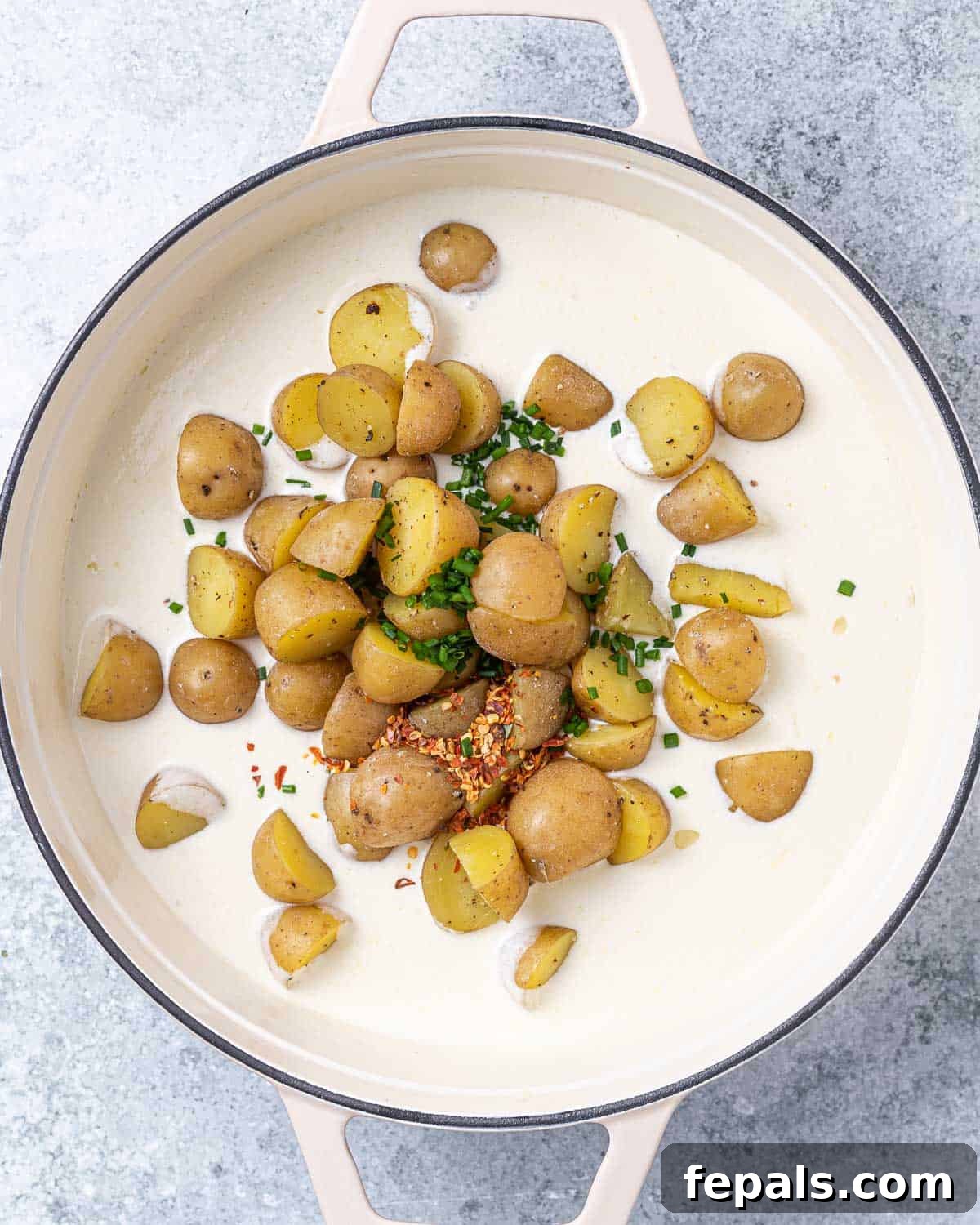
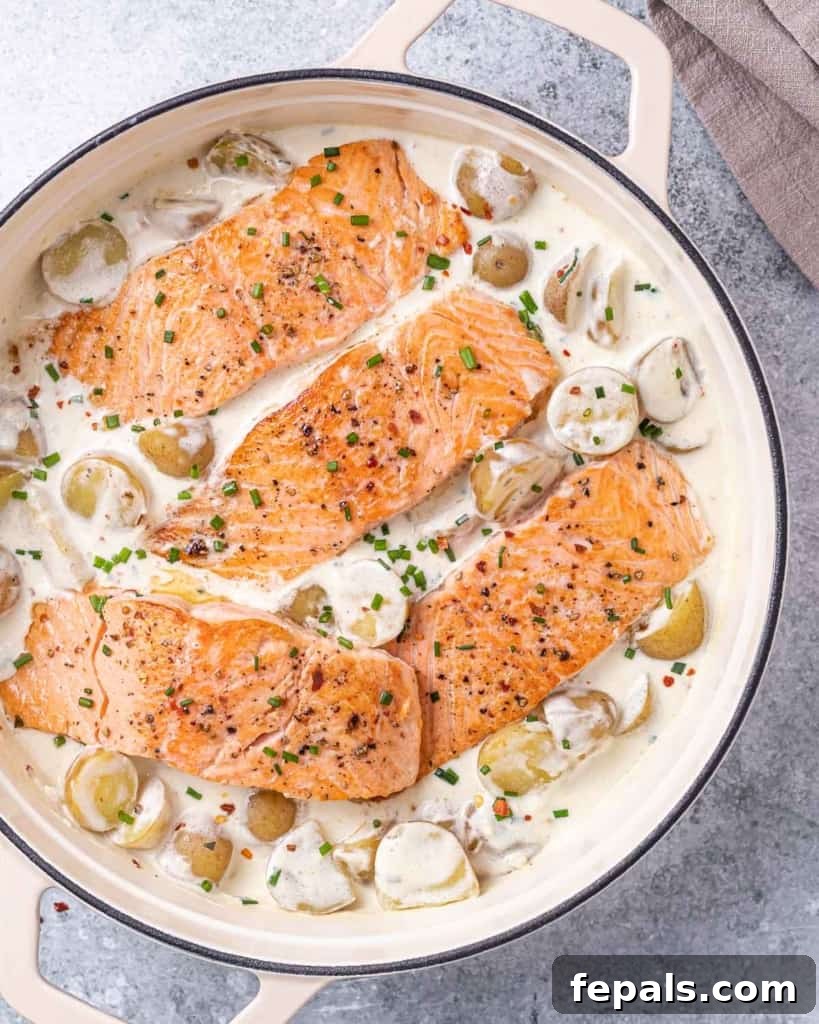
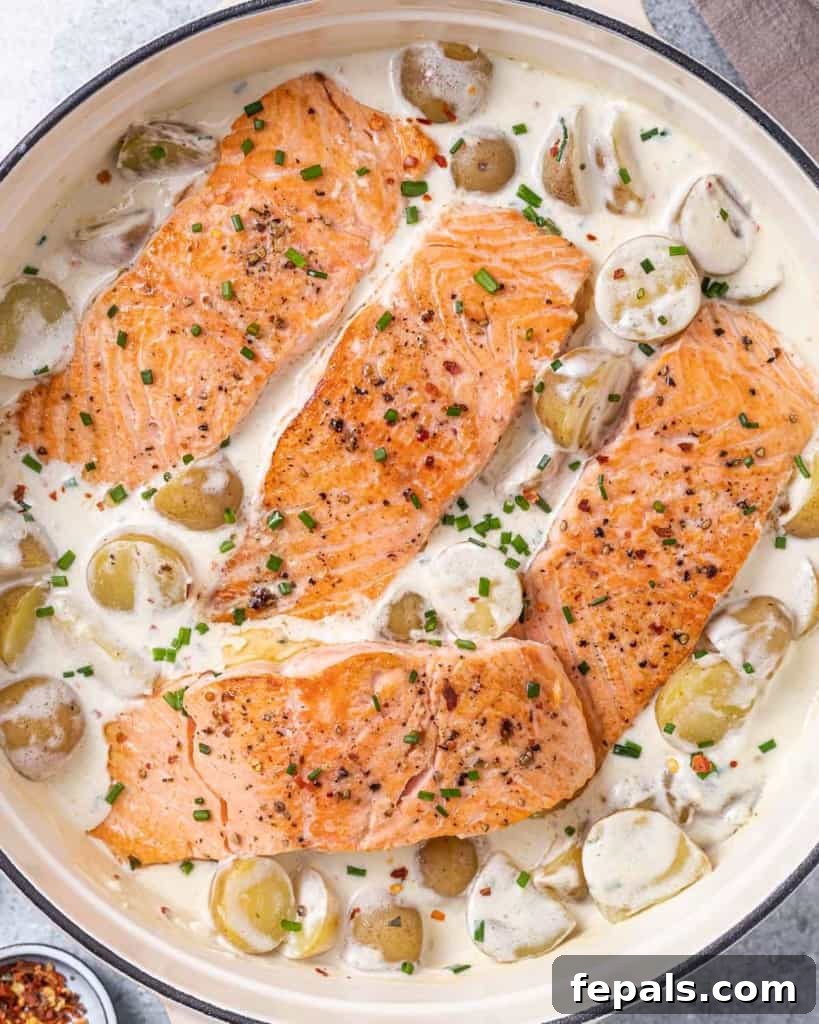
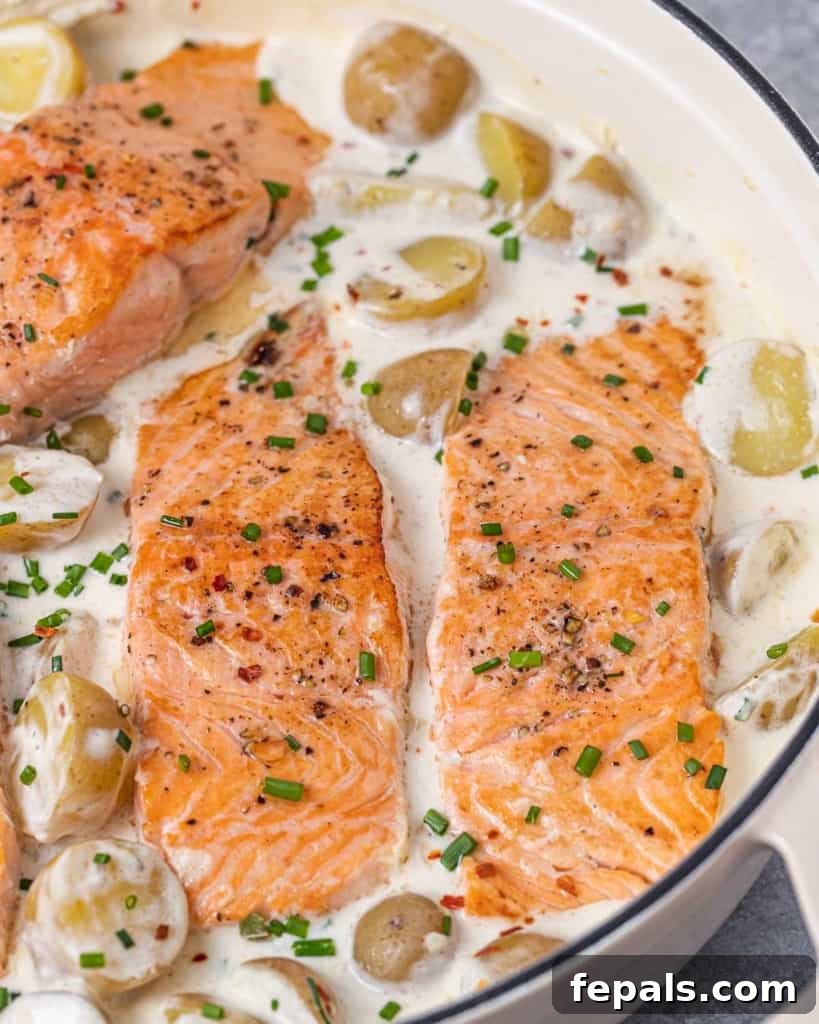
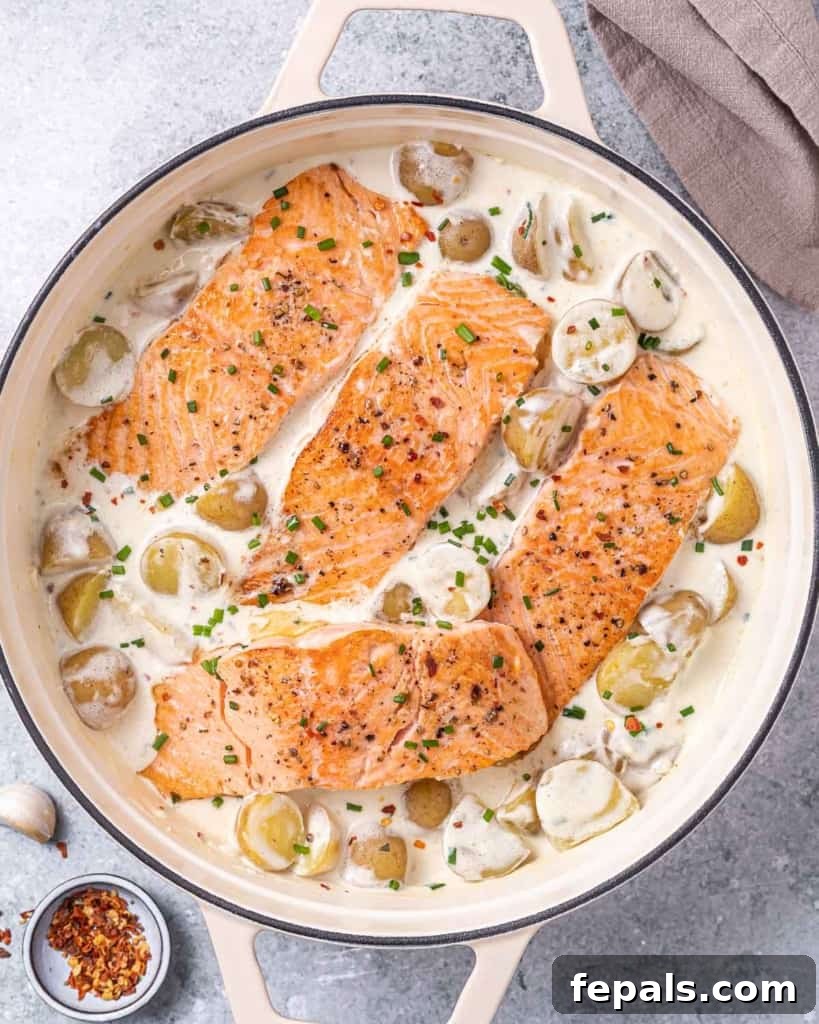
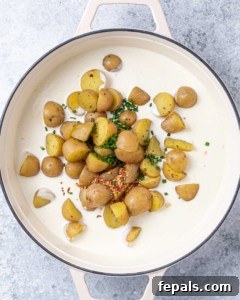
Step 4: Combine and Serve. Stir the chopped chives and chili flakes into the creamy sauce, then gently fold in the seasoned potatoes. Return the seared salmon fillets back into the pan, nestling them among the potatoes. Drizzle any remaining creamy sauce generously over the salmon. For a final touch, garnish with freshly ground black pepper and an extra sprinkle of fresh chives, if desired. Serve immediately and enjoy!
Storage and Reheating Recommendations
This Creamy Salmon and Potato Skillet is best enjoyed fresh, but it also stores and reheats quite well, making it ideal for meal prep. To ensure maximum freshness and food safety, follow these guidelines:
The optimal way to store leftover sautéed salmon and potatoes is to transfer them into shallow, airtight containers. Refrigerate promptly, and they will maintain their delicious quality for up to 3-4 days. Avoid leaving cooked food at room temperature for more than two hours.
Reheating Your Leftovers:
When you’re ready to enjoy your leftovers, you have a couple of convenient reheating options:
- Microwave Method: For a quick reheat, place the salmon and potatoes in a microwave-safe dish. Cover it with a microwave-safe lid or a piece of plastic wrap, leaving a small vent. Heat on high for 1-2 minutes, checking halfway through, until heated thoroughly. Be cautious not to overcook the salmon, as it can dry out quickly in the microwave.
- Stovetop Method: For best results, especially to revive some of that crispy texture in the salmon, reheat on the stovetop. Place the salmon and potatoes in a skillet over medium heat. You might want to add a tablespoon or two of extra vegetable stock or milk to help rehydrate the sauce. Stir the potatoes and sauce frequently, and gently warm the salmon, until everything is heated through. This process typically takes about 5-7 minutes. The stovetop method helps to keep the salmon moist and the potatoes tender.
Always ensure food is piping hot (165°F or 74°C) before serving leftovers.
Expert Tips for Success
- Don’t Overcook the Salmon: Salmon cooks quickly. Overcooked salmon becomes dry and less flavorful. Aim for an internal temperature of 145°F (63°C), or until it easily flakes with a fork.
- Pat Salmon Dry: Before searing, always pat your salmon fillets thoroughly dry with paper towels. This removes excess moisture, allowing the fish to develop a beautiful, golden-brown crust, which is essential for flavor and texture.
- Use a Hot Pan: A properly preheated non-stick or cast-iron skillet is key for a good sear. The oil should be shimmering but not smoking when you add the salmon.
- Adjust Sauce Consistency: If your sauce is too thick, thin it out with a little extra vegetable stock or milk. If it’s too thin, let it simmer gently for a few more minutes to reduce and thicken, or stir in a tiny pinch of cornstarch slurry (cornstarch mixed with a little cold water).
- Fresh Herbs Make a Difference: While dried chives can be used in a pinch, fresh chives offer a superior flavor and vibrant color that truly elevates the dish.
- Taste and Adjust: Always taste your sauce before combining all ingredients. Adjust salt, pepper, and chili flakes to your preference.
Serving Suggestions
This creamy salmon and potato skillet is a complete meal on its own, but you can easily elevate it with a simple side dish to add freshness and texture:
- Steamed Green Vegetables: A side of steamed asparagus, broccoli, or green beans provides a lovely contrast in color and nutrients.
- Simple Green Salad: A light, crisp green salad with a vinaigrette dressing would balance the richness of the creamy sauce perfectly.
- Crusty Bread: For soaking up every last drop of that incredible creamy sauce!
Variations and Substitutions
Feel free to get creative with this recipe and adapt it to your taste or what you have available:
- Different Fish: While salmon is fantastic, you could also try this recipe with other firm white fish like cod, halibut, or even chicken breast (adjusting cooking times accordingly).
- Herb Swaps: Experiment with other fresh herbs. Dill and parsley are classic pairings with salmon and would be delicious in the creamy sauce.
- Add More Veggies: Stir in some spinach, kale, or sun-dried tomatoes with the chives for extra nutrients and flavor. Sautéed mushrooms would also be a great addition.
- Spice it Up: For those who love heat, increase the amount of chili flakes or add a dash of cayenne pepper.
- Cheese Alternatives: If you don’t have cream cheese, a blend of Parmesan and a little heavy cream could work, though the texture will be different.
More Irresistible Salmon Recipes to Try
If you can’t get enough of this versatile and healthy fish, here are more delicious salmon recipes from our collection:
- Creamy Pesto Salmon
- Salmon Pesto Pasta
- Southwest Salmon Bowl
- Mediterranean Baked Salmon
- Pan-Seared Honey Balsamic Salmon
- Cilantro Lime Grilled Salmon
- Healthy Salmon Piccata Recipe
- Lemon Garlic Salmon
Frequently Asked Questions
While butter can undeniably add a rich, nutty depth of flavor to almost any dish, including salmon, making it taste incredibly decadent, olive oil or avocado oil offers a significantly healthier alternative without sacrificing taste. These oils provide delicious flavor and crucial healthy fats. Furthermore, some oils, like avocado oil, boast a higher smoke point than butter, which can be beneficial when searing at higher temperatures to prevent burning. With the right seasonings, salmon cooked in oil can be just as flavorful and satisfying, if not more so, than with butter, while also being a lighter option.
The ideal cooking time for salmon largely depends on the thickness of your fillet or steak, as well as the cooking method you choose. A general guideline is to cook salmon until it reaches an internal temperature of 145°F (63°C), at which point it will be flaky and opaque throughout.
- Oven Baking: For a 1-inch thick fillet, baking at 375°F (190°C) typically takes around 12-15 minutes.
- Grilling: A 1-inch thick fillet on the grill can take about 4-6 minutes per side, depending on the intensity of your grill’s heat.
- Pan-Searing: When pan-searing a 1-inch thick fillet on the stovetop over medium-high heat, expect it to cook in approximately 4-5 minutes per side, achieving a beautiful crust.
Always use a meat thermometer for accuracy to avoid overcooking and ensure moist, tender salmon.
Absolutely, salmon skin is not only safe but also highly nutritious! It’s an excellent source of beneficial omega-3 fatty acids, high-quality protein, and various other vital nutrients. However, the key to enjoying salmon skin is proper cooking. Undercooked salmon skin can be unpleasantly tough and chewy, detracting from the overall experience.
If you’re cooking salmon with the skin on, aim to achieve a wonderfully crispy and golden-brown texture. This typically requires cooking skin-side down for about 3-4 minutes over medium-high heat until it’s rendered crispy. This method ensures that the skin is both safe and delightfully palatable, adding a fantastic textural contrast to the tender flesh.
Yes, you can absolutely use frozen salmon fillets for this recipe. For the best results, it’s highly recommended to thaw them completely in the refrigerator overnight before cooking. If you’re short on time, you can quickly thaw them by placing the sealed fillets in a bowl of cold water, changing the water every 30 minutes, until thawed. Pat them very dry before seasoning and searing to ensure a good crust.
If you find your creamy sauce too thin, you can thicken it by simmering it gently for a few more minutes to allow some liquid to evaporate, or by stirring in a very small amount of cornstarch or flour mixed with cold water (a slurry) until it reaches your desired consistency. If the sauce is too thick, simply whisk in a splash more vegetable stock, milk, or even a little water until it loosens up to your preference.
Yes, this Creamy Salmon and Potato Skillet recipe is naturally gluten-free, assuming all your ingredients are certified gluten-free. Always double-check labels on vegetable stock and cream cheese to ensure no hidden gluten-containing additives.
You May Also Love These Skillet and Healthy Recipes
- Creamy Garlic Shrimp Skillet
- Antipasto Salad Recipe
- Garlic Butter Chicken Skillet
- Baked Balsamic Asparagus
- Greek Chicken Bowl
- Easy Sautéed Zucchini
- Creamy Ranch Chicken Skillet
Pin this delicious recipe now so you can easily find it later!
Pin It
To receive your free e-book, please click here to subscribe to our newsletter and get instant access to delicious recipes!
We love hearing from you! If you try this recipe and enjoy it, please leave us some feedback and a rating in the comment section below. Your thoughts and experiences are incredibly valuable to our community. Don’t forget to share this delicious recipe with your friends and family – spread the joy of healthy, homemade meals!
FOLLOW me on FACEBOOK | INSTAGRAM | PINTEREST | TWITTER for all of my latest blog posts and delectable recipes.
★
★
★
★
Creamy Salmon and Potato Skillet
Video
Ingredients
- 1 pound baby potatoes, halved
- 4 skinless salmon fillets
- Kosher salt and pepper, to taste
- 1 tablespoon olive oil
Sauce:
- 3-4 garlic cloves, pressed
- 1 cup low-sodium vegetable stock
- 8 ounces cream cheese
- 2 tablespoons chopped chives
- 1/2 teaspoon chili flakes
Instructions
-
Place the 1 pound baby potatoes (halved) in a pot of water and boil just until they begin to soften.

-
Do not overcook as they’ll get mushy—once ready, drain and season with Salt and pepper.
-
Season the 4 skinless salmon fillets with Kosher salt and pepper.
-
Heat the 1 tablespoon olive oil in a non-stick pan and fry the salmon until golden on both sides, then set aside. This typically takes 3-4 minutes on each side.
-
In the same preheated pan, sauté the 3-4 garlic cloves (minced) for about 30 seconds until fragrant.
-
Deglaze the pan with the 1 cup low-sodium vegetable stock and allow it to bubble gently for a couple of minutes to reduce slightly.
-
Add the 8 ounces cream cheese and use a whisk to incorporate it completely, ensuring a smooth and creamy sauce.
-
Stir in the 2 tablespoons chopped chives, 1/2 teaspoon chili flakes, and the cooked potatoes. Gently return the salmon fillets to the pan and drizzle generously with the creamy sauce.
-
Garnish with freshly ground black pepper, and extra chives, if desired, before serving.
Notes
- You may use any other cooking oil, such as avocado oil, in place of olive oil.
- If you prefer to reduce the fat content, a light or low-fat cream cheese can be used.
- Both dried or fresh chives will work, though fresh is recommended for best flavor and vibrant color.
- While skinless salmon fillets are preferred for ease of eating, skin-on fillets can also be used; simply cook skin-side down first for crispiness.
- Any variety of baby potatoes will work perfectly in this recipe.
Nutrition
Carbohydrates: 26g
Protein: 41g
Fat: 23g
Saturated Fat: 7g
Polyunsaturated Fat: 5g
Monounsaturated Fat: 8g
Cholesterol: 124mg
Sodium: 1106mg
Potassium: 1469mg
Fiber: 3g
Sugar: 5g
Vitamin A: 648IU
Vitamin C: 24mg
Calcium: 125mg
Iron: 2mg
Nutrition information is automatically calculated, so should only be used as an approximation.
Additional Info
Tried this recipe?
Mention @healthyfitnessmeals or tag #healthyfitnessmeals!