
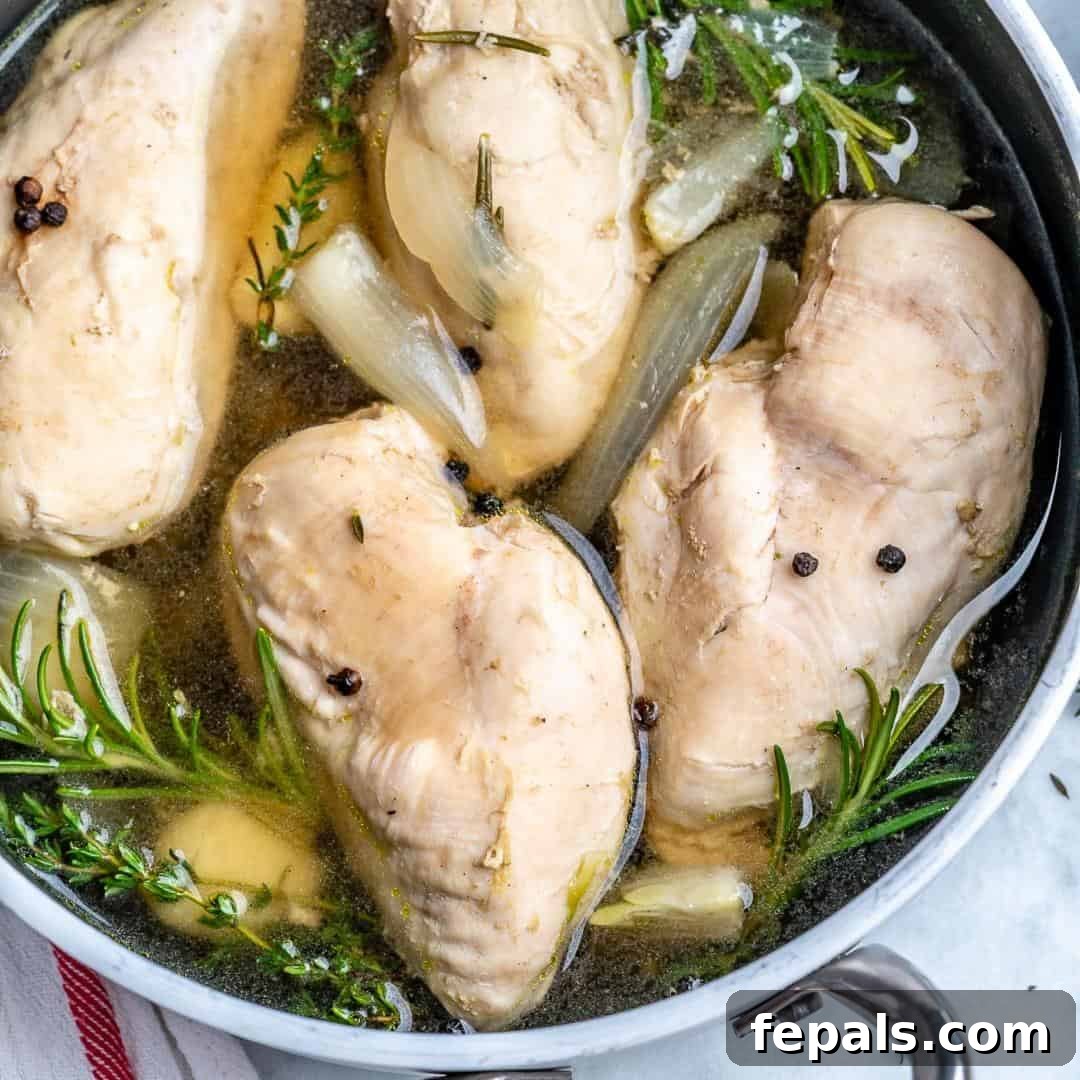
Unlock the secret to incredibly juicy, tender, and flavorful chicken with this foolproof guide on how to poach chicken breasts in your own kitchen! Poaching is a gentle cooking method that uses moist heat to slowly cook poultry, resulting in perfectly tender meat that’s never dry or tough. Infused with aromatic herbs and savory chicken broth, this healthy, high-protein, and low-carb preparation is a staple for meal prep and a versatile foundation for countless delicious recipes. Whether you’re aiming for a quick weeknight meal or preparing ingredients in advance, mastering poached chicken will revolutionize your cooking.
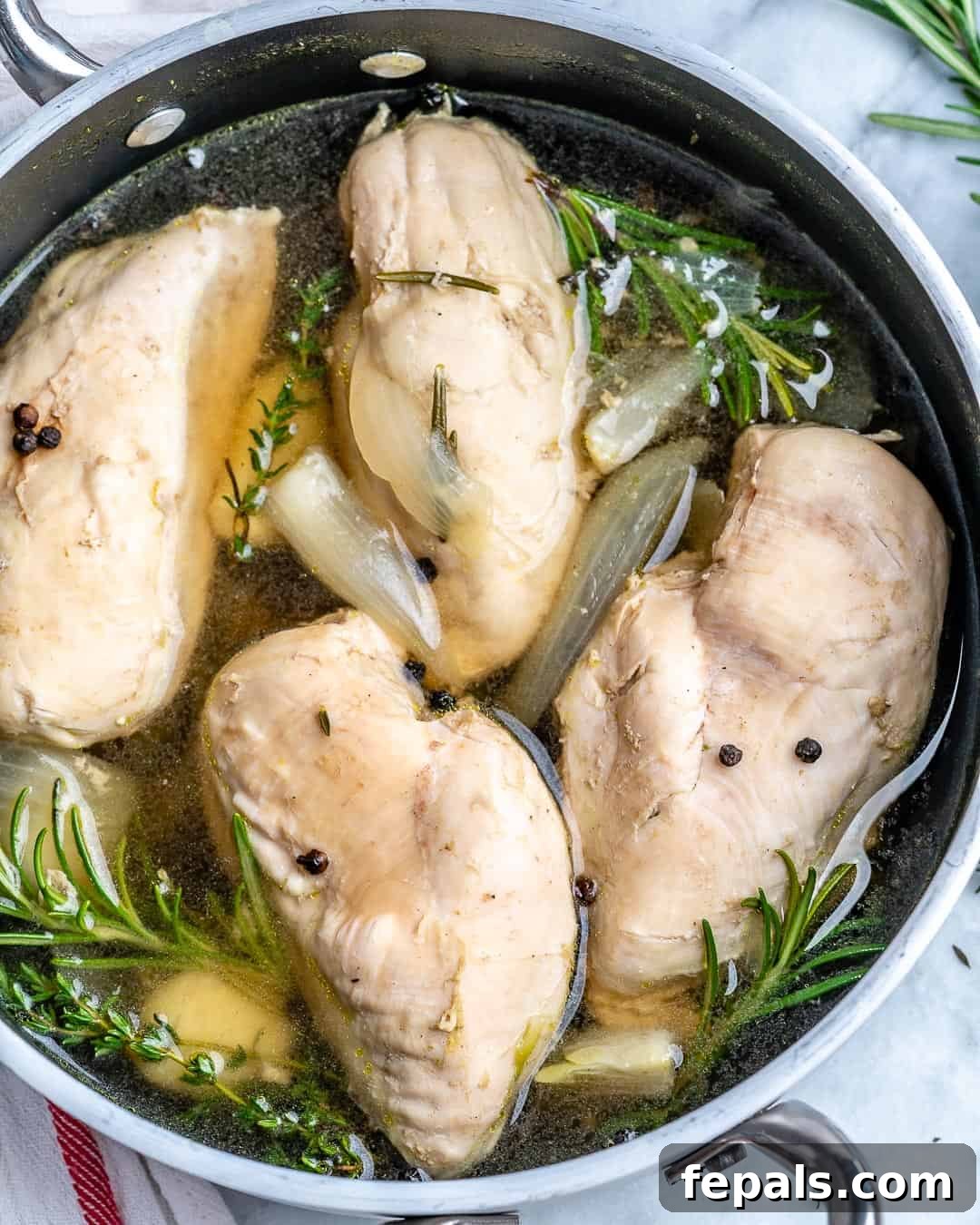
Making consistently perfect poached chicken breasts hinges on the art of cooking with gentle, even heat and an abundance of flavorful moisture. By simmering chicken in a fragrant liquid of chicken broth, sweet onions, pungent garlic, and fresh herbs, you create a deeply flavorful yet subtly seasoned chicken that is ready to be incorporated into an endless array of dishes. This method ensures the chicken remains incredibly moist, making it ideal for slicing into salads, shredding for tacos, or dicing for soups. Furthermore, poached chicken is an excellent make-ahead component, storing beautifully in the refrigerator for several days and freezing wonderfully for future meal planning.
The versatility of poached chicken makes it an indispensable ingredient in a healthy kitchen. Imagine adding tender slices to a crisp Chicken Caesar Salad, stirring shredded pieces into a comforting Creamy Chicken Noodle Soup, or creating zesty fillings for Buffalo Chicken Tacos. These are just a few examples of how this simple preparation can elevate your everyday meals. Beyond being delicious, poaching is celebrated for being one of the healthiest cooking methods, preserving nutrients and minimizing added fats.
Why Poached Chicken Is a Must-Try
Poaching chicken is more than just a cooking technique; it’s a gateway to healthier, tastier, and more convenient meals. Here’s why this recipe deserves a permanent spot in your culinary repertoire:
- Effortlessly Simple & Quick: Don’t let its elegant results fool you—poaching chicken is incredibly straightforward. With minimal ingredients and predominantly hands-off cooking, you can have perfectly cooked chicken ready in about 30 minutes, making it ideal for busy weeknights.
- Unrivaled Tenderness & Juiciness: Say goodbye to dry, rubbery chicken! The gentle, moist heat of poaching ensures that chicken breasts remain incredibly tender and bursting with natural juices. This method prevents the protein from seizing up, delivering a consistently succulent texture every time.
- Perfectly Infused Flavor: Unlike boiling, poaching allows the chicken to slowly absorb the delicate flavors of the simmering liquid. Infused with fresh herbs, savory chicken broth, and aromatics like onion and garlic, the chicken develops a subtle yet rich flavor profile that beautifully complements any dish you add it to.
- A Pillar of Healthy Eating: Poached chicken breasts are inherently lean, high in protein, and naturally low in carbohydrates. This cooking method requires little to no added fat or oil, making it an excellent choice for health-conscious individuals, meal preppers, and anyone looking for clean, nutritious protein.
- Ultimate Meal Prep Champion: Prepare a batch of poached chicken at the beginning of the week, and you’ll have a versatile ingredient ready for quick meals. It stores well in the refrigerator for several days, and it can be easily frozen for longer storage, ensuring you always have healthy protein on hand.
- Customizable Flavor Base: The neutral yet flavorful profile of poached chicken makes it a blank canvas for various cuisines. Experiment with different herbs, spices, or even citrus in your poaching liquid to create unique flavor foundations for your dishes.
Essential Ingredients You’ll Need
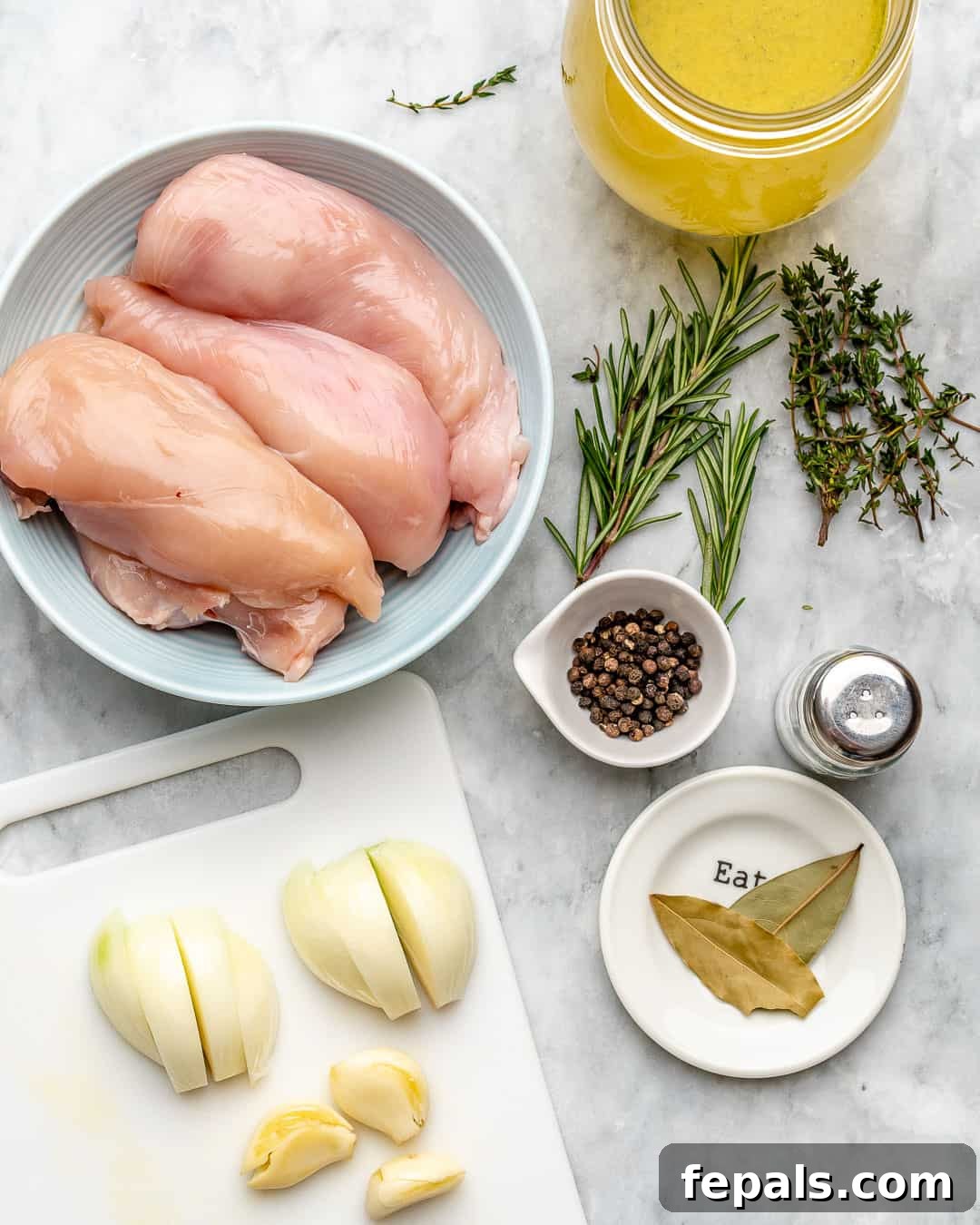
The beauty of poached chicken lies in its simplicity, requiring just a few fresh ingredients to achieve maximum flavor and tenderness. Here’s what you’ll gather:
- Boneless, Skinless Chicken Breasts: The star of the dish. Opt for fresh, plump breasts of roughly similar size for even cooking.
- Whole Peppercorns: These infuse a subtle warmth and aromatic spice into the broth without overwhelming the chicken.
- Sea Salt: Essential for seasoning both the chicken and the poaching liquid. Adjust to your taste preferences.
- Fresh Garlic Cloves: Lightly crushed, garlic adds a foundational savory note that enhances the overall flavor.
- Onions: Yellow or sweet onions, sliced, contribute a gentle sweetness and depth to the poaching broth.
- Fresh Herbs: A fragrant blend is key! Think sprigs of thyme, rosemary, and fresh parsley. Fresh herbs impart significantly more vibrant flavor than dried ones.
- Bay Leaves: These classic aromatics add a delicate, herbaceous background note to the broth.
- Chicken Broth (or Water): The poaching liquid is crucial. High-quality chicken broth adds immense flavor, but water can also be used if desired, perhaps with a pinch more salt and additional aromatics.
How to Poach Chicken Breasts: Step-by-Step Guide
Follow these simple steps to create perfectly poached chicken that’s ready for any meal:
- Prepare Aromatics: Begin by peeling your garlic cloves and lightly crushing them to release their aromatic oils. Next, peel and slice the onions into uniform ½-inch thick rounds. This preparation ensures maximum flavor extraction into the poaching liquid.
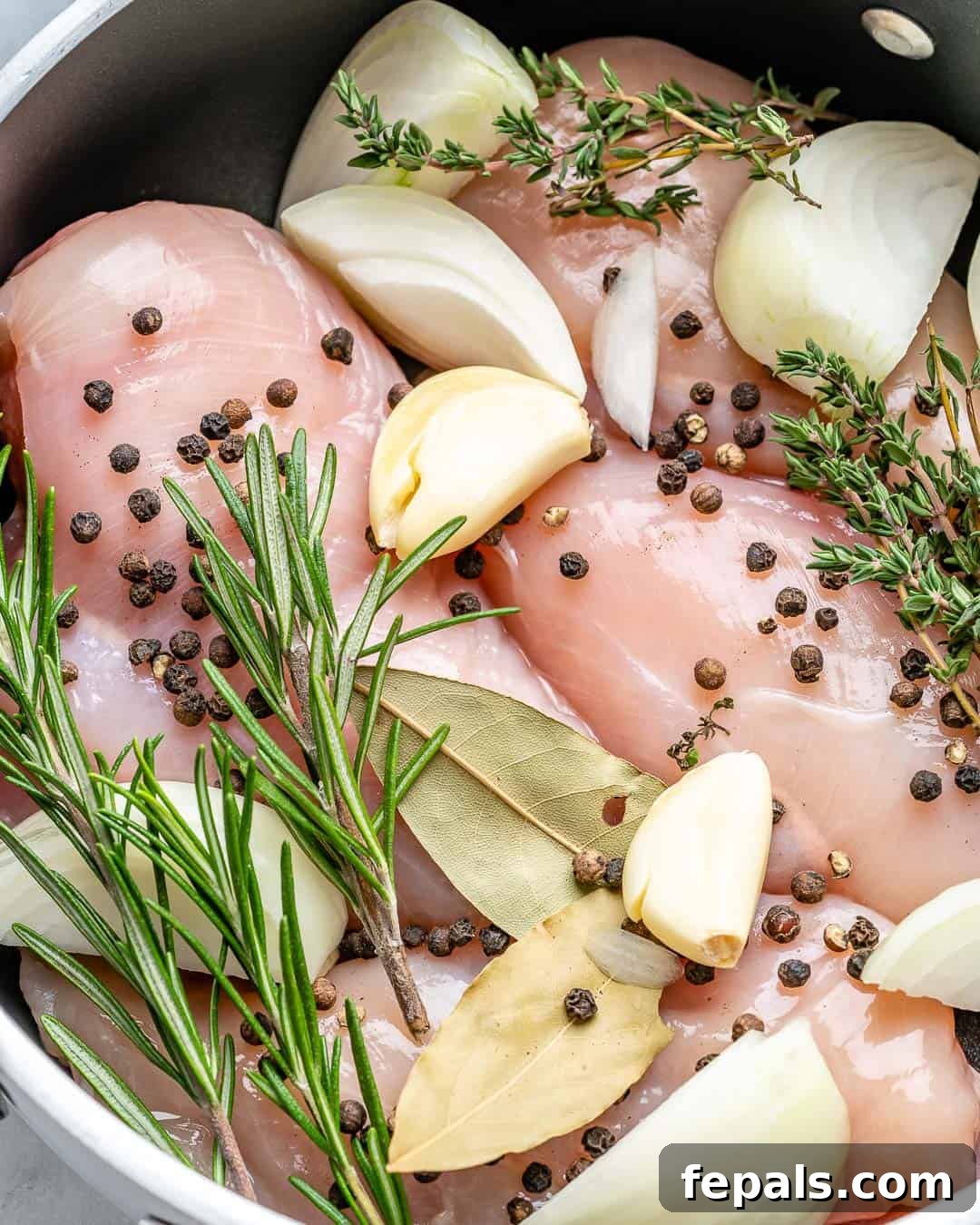
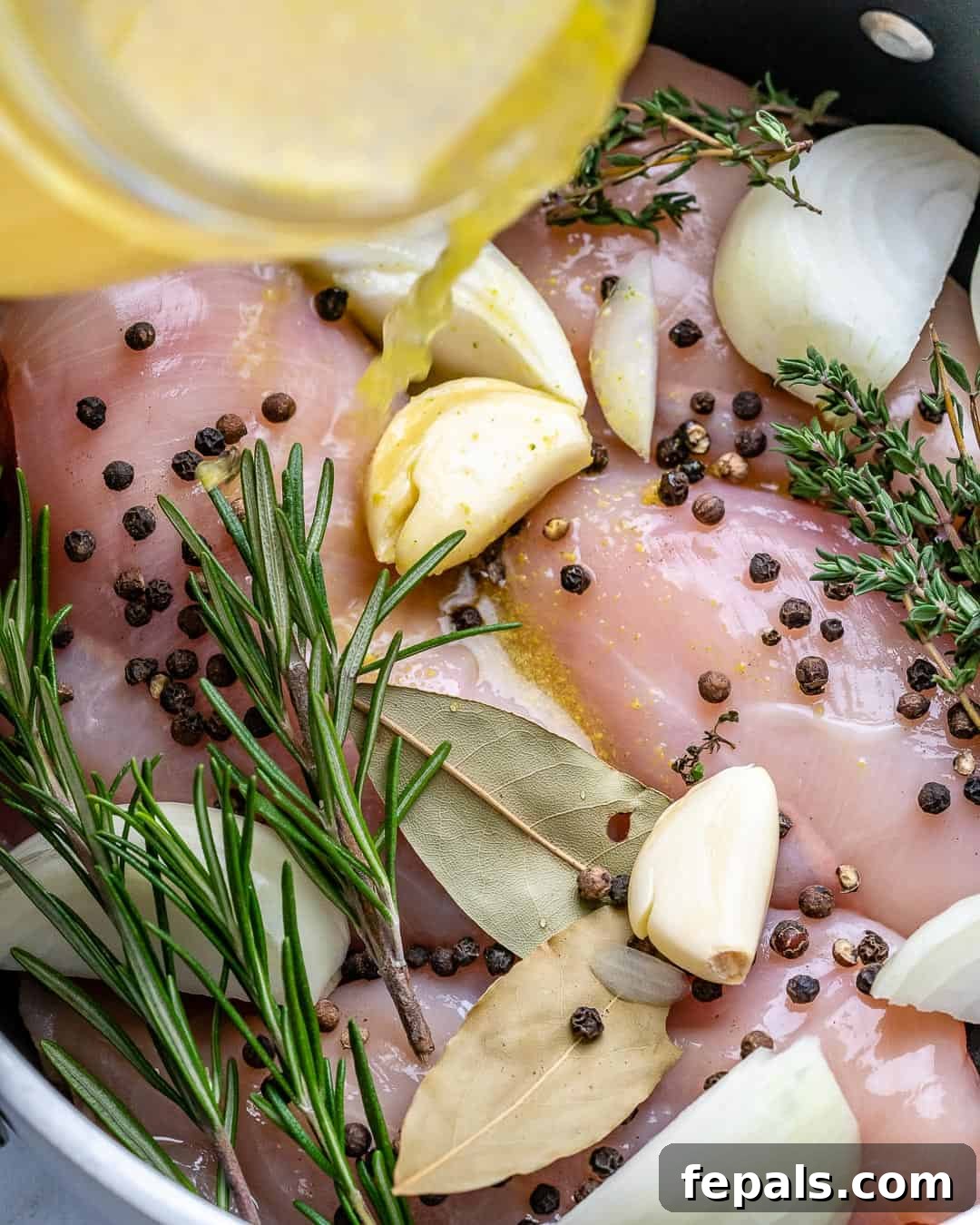
- Assemble in Pan: Choose a high-rimmed pot or Dutch oven large enough to comfortably hold your chicken breasts in a single layer. Place the chicken breasts, sliced onion, crushed garlic, bay leaves, and whole peppercorns into the pan. This forms the aromatic bed for your chicken.
-

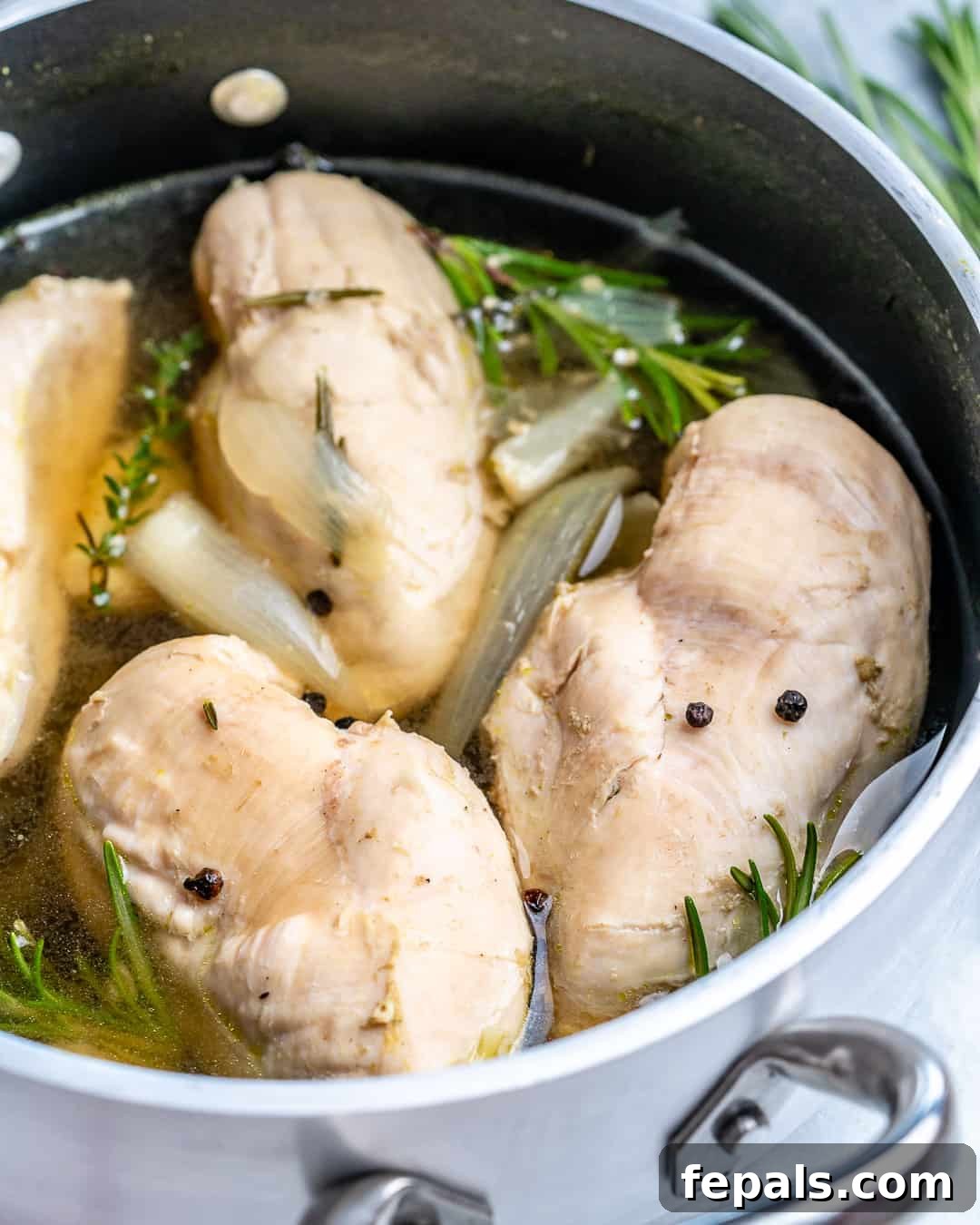
Add Poaching Liquid and Herbs: Carefully arrange the fresh herb sprigs (thyme, rosemary, parsley) around and over the chicken. Pour enough chicken broth into the pan to completely cover all the solids, ensuring the chicken is fully submerged. This is crucial for even cooking and moisture retention.
- Gentle Cooking Process: Place the pan over medium-high heat and gently stir the contents to ensure even distribution of aromatics. Bring the broth to a gentle boil, then immediately reduce the heat to low. The goal is a bare simmer—just a few small bubbles breaking the surface, not a rolling boil. Cover the pan with a lid and let the chicken simmer for about 10-12 minutes, or until it is cooked through and reaches an internal temperature of 165-170°F (74-77°C) at its thickest part. Cooking time may vary based on chicken thickness.
-
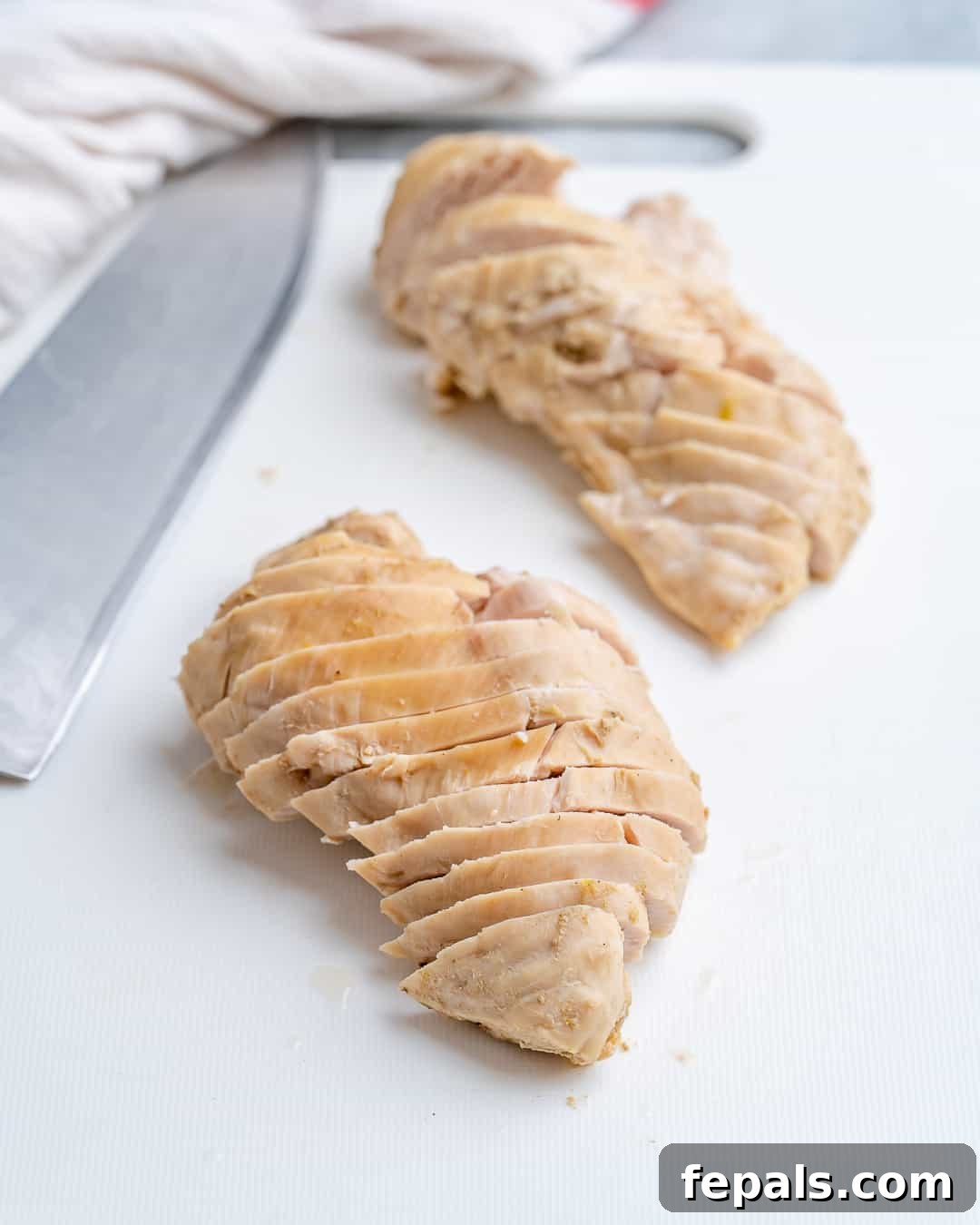
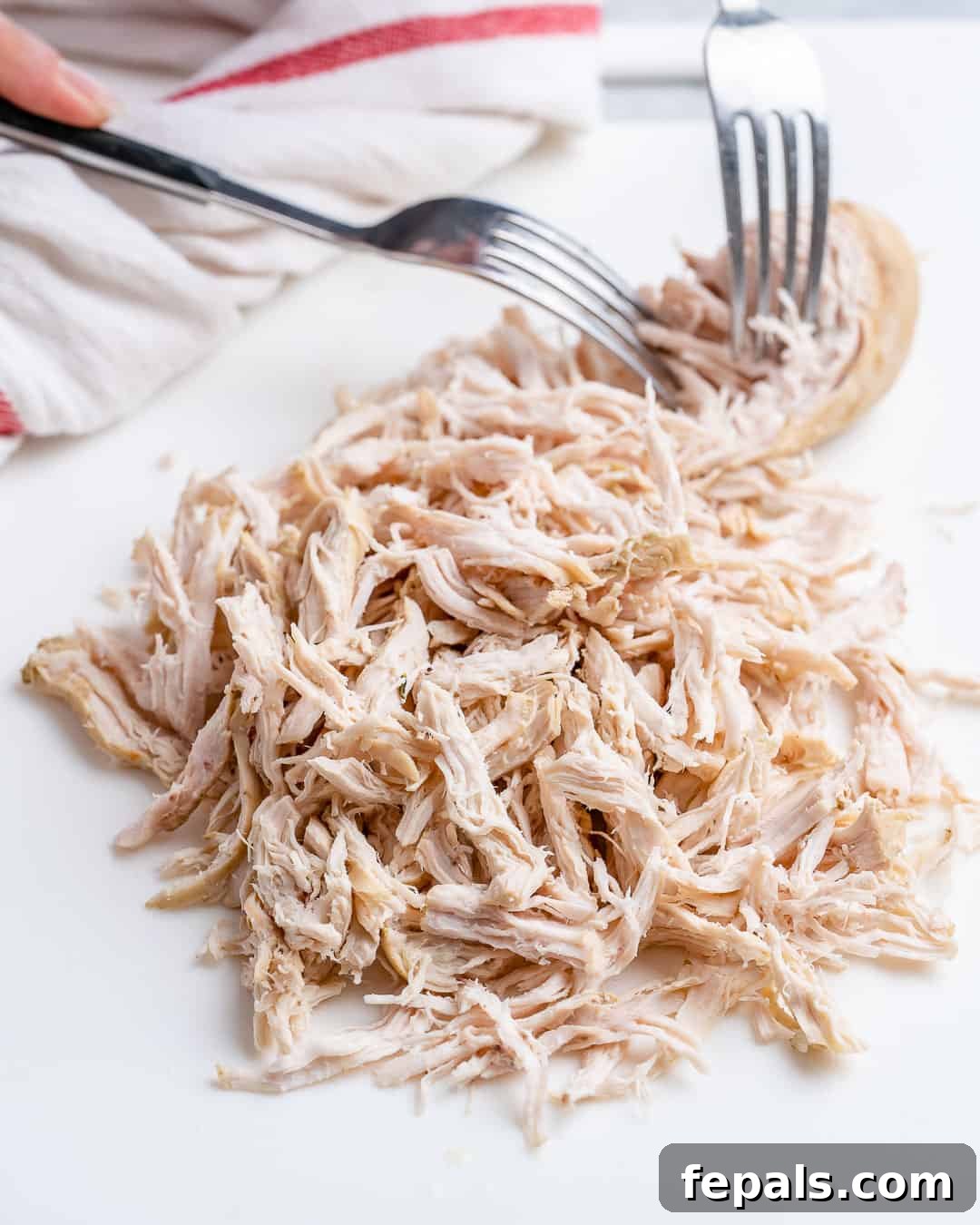
Cool and Prepare: Once the chicken is fully cooked, remove the pan from the heat. For maximum moisture and flavor, allow the chicken to cool in the poaching liquid to room temperature for about 15 minutes. This cooling period helps the chicken reabsorb juices. Then, carefully remove the chicken from the broth and place it on a clean plate or cutting board. Now you can easily slice it for sandwiches, dice it for salads, or shred it with two forks for tacos and casseroles.
- Save the Broth: Do not discard the flavorful poaching liquid! This nutrient-rich broth is an absolute treasure. Strain it to remove the solids and reserve it for future use. It makes an excellent base for homemade soups, a flavorful liquid for cooking rice, or a delicious addition to other recipes that call for chicken stock.
Expert Tips & Common Questions for Perfect Poached Chicken
Achieve consistently perfect poached chicken every time with these valuable insights:
- Choosing Your Chicken: While boneless, skinless chicken breasts are preferred for their leanness and even cooking, you can certainly use chicken tenders or even boneless, skinless thighs. Just remember to adjust the cooking time; tenders will cook faster, while thighs might take a bit longer. Always cook until the internal temperature reaches 165-170°F (74-77°C).
- The Magic of Whole Peppercorns: Resist the urge to use ground pepper. Whole peppercorns slowly release their complex, robust flavor into the poaching liquid, creating a much fuller and more nuanced taste in the broth and subsequently in the chicken.
- Onion Selection: This recipe shines with the mild sweetness of yellow onions. However, if you prefer a sweeter profile, sweet onions are also a fantastic choice and work beautifully in the poaching liquid.
- Embrace Fresh Herbs: Fresh herbs are non-negotiable for superior flavor. Thyme, rosemary, and parsley sprigs are classic choices. Use the entire sprig, stems included, as they contribute significantly to the aromatic infusion. Fresh herbs elevate the flavor of poached chicken far beyond what dried herbs can offer.
- Using Frozen Chicken Breast: Yes, you can poach chicken from frozen! Simply add the frozen chicken breasts to your pot with the aromatics and broth. The cooking time will be longer, typically around 20-25 minutes, but the gentle poaching method still yields tender results. For an alternative, consider using an Instant Pot to cook frozen chicken breasts efficiently.
- The Power of the Poaching Broth: Never throw away the leftover poaching liquid! This flavorful broth is a culinary goldmine. Strain out the solids and store it in an airtight container in the fridge or freezer. It’s excellent as a base for soups, a liquid for cooking rice or quinoa, or to deglaze a pan for sauces.
- Achieving the Ideal Temperature: The secret to moist, never-dry poached chicken is maintaining a gentle simmer, not a rolling boil. Aim for an internal temperature between 165-170°F (74-77°C). Use an instant-read meat thermometer inserted into the thickest part of the chicken breast for accuracy.
- Cooling for Juiciness: Allowing the chicken to cool partially or fully in its poaching liquid is a pro tip. As the chicken cools, it reabsorbs the flavorful moisture, resulting in even juicier, more succulent meat.
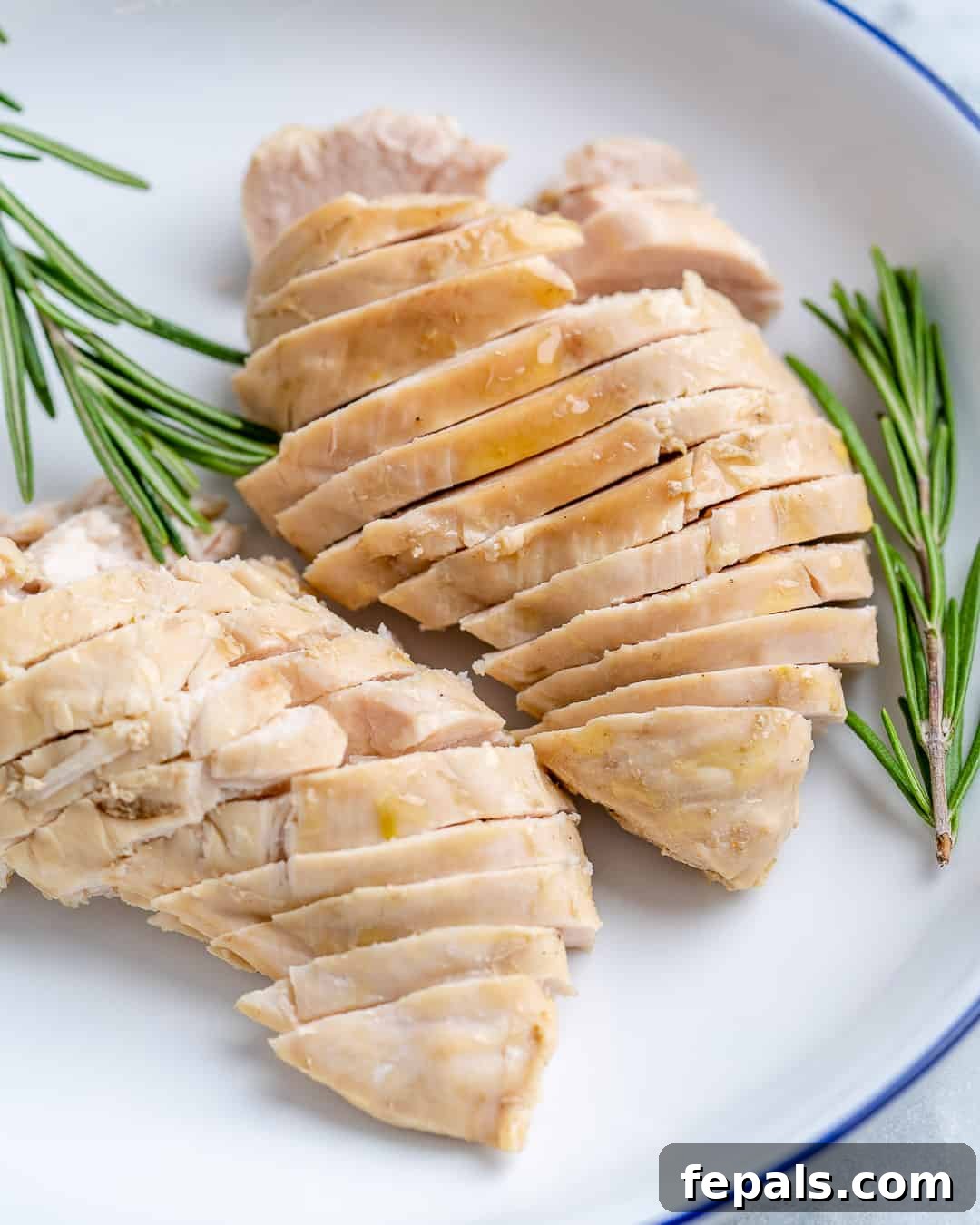
Can I Freeze Poached Chicken?
Absolutely! Poached chicken breasts are ideal for freezing, making them a fantastic component for future meal prep. You can freeze individual portions or an entire batch in an airtight container or freezer-safe bag. For optimal moisture retention, consider freezing the chicken along with some of the reserved poaching broth. This helps prevent freezer burn and keeps the chicken succulent upon thawing. Poached chicken can be frozen for up to 3 months without significant loss of quality.
How Do I Store Cooked Chicken?
Proper storage is key to extending the freshness of your poached chicken. Once cooled, transfer the chicken (sliced, shredded, or whole) to a zipper bag or an airtight container. Store it in the refrigerator for up to 4 days. When you’re ready to enjoy it, reheat gently in the microwave or on the stovetop with a splash of broth to maintain moisture. It’s also perfect for incorporating cold into salads or sandwiches, or baking into a casserole or similar dish in the oven.
What is the Ideal Temperature for Poached Chicken?
The ideal internal temperature for perfectly moist and safe-to-eat poached chicken is between 165-170°F (74-77°C). Using an instant-read meat thermometer is highly recommended. Insert the thermometer into the thickest part of the chicken breast, avoiding any bones, to get an accurate reading. Cooking past this range can result in dry, tough chicken, while undercooking poses a food safety risk. The gentle poaching method ensures the chicken reaches this temperature gradually, preserving its tender texture.
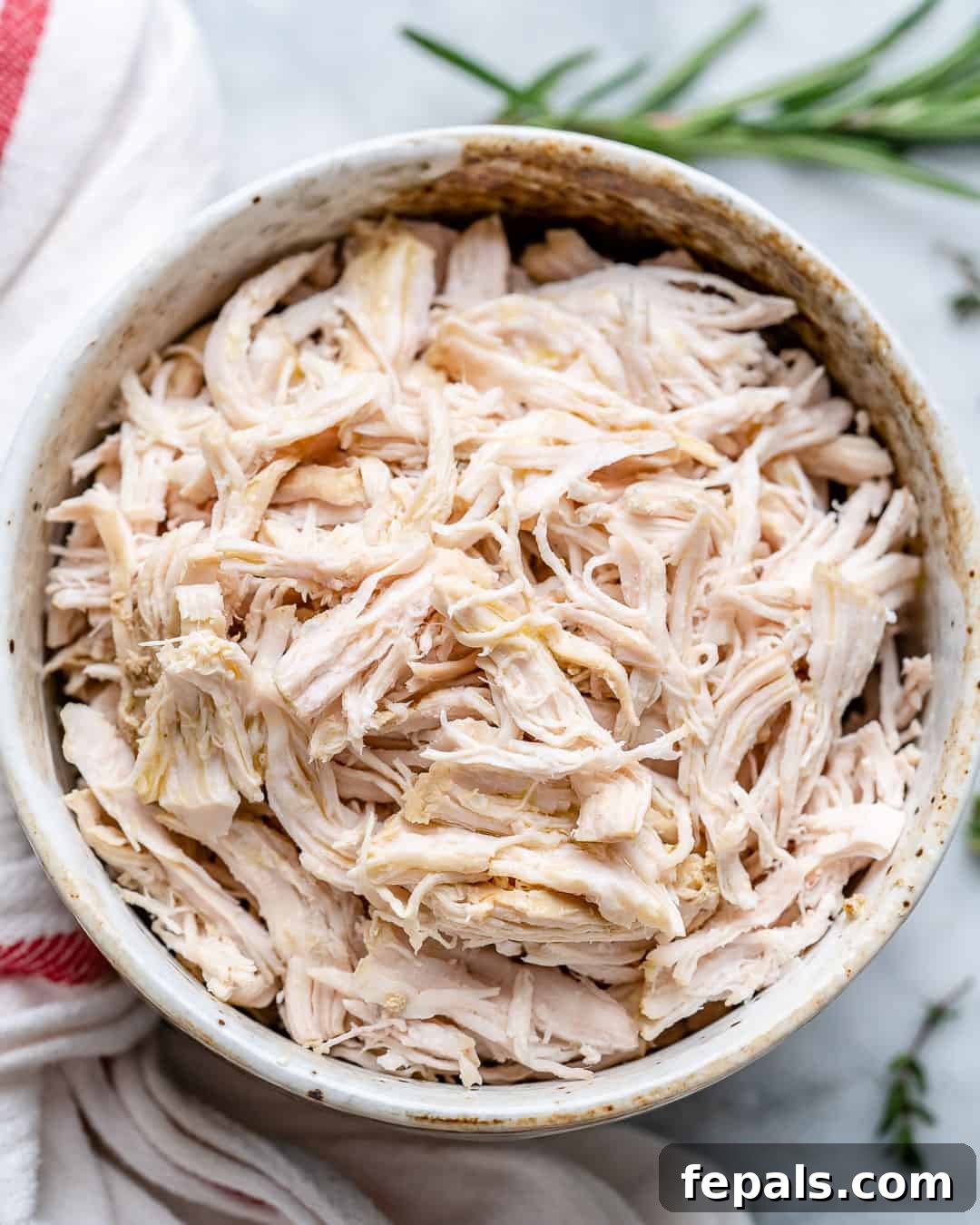
Creative Ways to Enjoy Your Poached Chicken
The beauty of poached chicken lies in its incredible versatility. Once you’ve mastered this simple technique, a world of healthy and delicious meal options opens up. Here are some inspiring ideas to use your tender, flavorful poached chicken:
- Hearty Salads: Dice or slice for a protein boost in any green salad, like a classic Cobb, a vibrant Mediterranean salad, or simply tossed with your favorite vinaigrette.
- Quick Sandwiches & Wraps: Shred or chop for a lean and flavorful sandwich filling. Mix with a light mayo, Greek yogurt, or a pesto for a gourmet touch.
- Comforting Soups & Stews: Add shredded or diced chicken to chicken noodle soup, tortilla soup, or a hearty vegetable stew for extra protein and texture. Remember to use your reserved poaching broth for an extra layer of flavor!
- Pasta Dishes: Toss with your favorite pasta, a light sauce (like pesto or olive oil and garlic), and some fresh vegetables for a complete meal.
- Healthy Bowls: Create grain bowls with quinoa or brown rice, roasted vegetables, and a generous serving of poached chicken.
- Enchiladas, Tacos & Burritos: Shredded poached chicken is perfect for stuffing into your favorite Mexican-inspired dishes.
- Spring Rolls & Lettuce Wraps: Use thinly sliced poached chicken as a lean protein for fresh, crisp spring rolls or healthy lettuce wraps.
- Chicken Salad: The classic! Combine shredded chicken with celery, red onion, grapes, and a light dressing for a refreshing salad.
Nutrition Information
Here’s an approximation of the nutritional breakdown per serving (1 chicken breast, 5-7 oz):
Serving: 1 chicken breast
- Calories: 230 kcal
- Carbohydrates: 16g
- Protein: 32g
- Fat: 4g
- Saturated Fat: 1g
- Cholesterol: 91mg
- Sodium: 1335mg
- Potassium: 773mg
- Fiber: 3g
- Sugar: 6g
- Vitamin A: 169 IU
- Vitamin C: 15mg
- Calcium: 51mg
- Iron: 1mg
Nutrition information is automatically calculated and should be used as an approximation.
Additional Recipe Info
Course: Main Course
Cuisine: American
Other Healthy Chicken Recipes to Explore
If you loved this simple and healthy chicken recipe, you might also enjoy these other flavorful options:
- Honey Mustard Chicken
- Grilled Cilantro Lime Chicken
- Asparagus Stuffed Chicken Breast
- Lemon Garlic Chicken Skillet with Asparagus
- Pineapple Chicken Kabobs
- Chicken Pasta Salad
We hope this detailed guide helps you master the art of poaching chicken breasts! It’s a foundational skill that will serve you well in creating countless healthy and delicious meals. If you try this recipe and love it, please consider leaving us feedback in the comment section below. Your ratings and comments help us grow and inspire others!
Don’t forget to share your culinary creations with friends and family. Tag us on social media using our hashtag #healthyfitnessmeals on INSTAGRAM for a chance to be featured! FOLLOW Healthy Fitness Meals on FACEBOOK, INSTAGRAM, PINTEREST, and TWITTER for all our latest blog posts, healthy recipes, and cooking inspiration.