
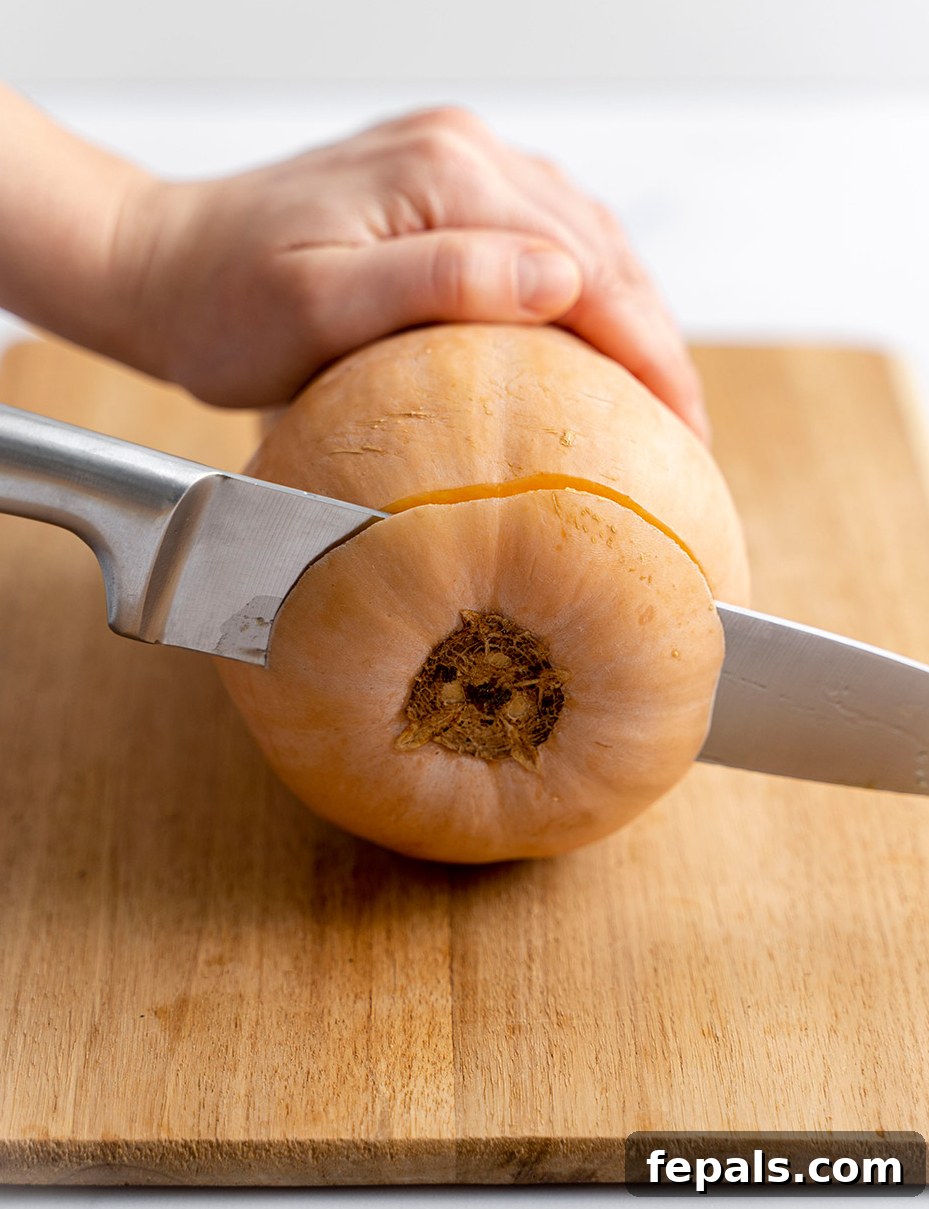
Often perceived as a culinary challenge, cutting a butternut squash can actually be a straightforward task with the right technique. This comprehensive guide will demystify the process, offering you everything you need to know about this versatile winter squash and how to expertly prepare it. Get ready to transform your kitchen experience and enjoy the delicious rewards of freshly cut butternut squash.
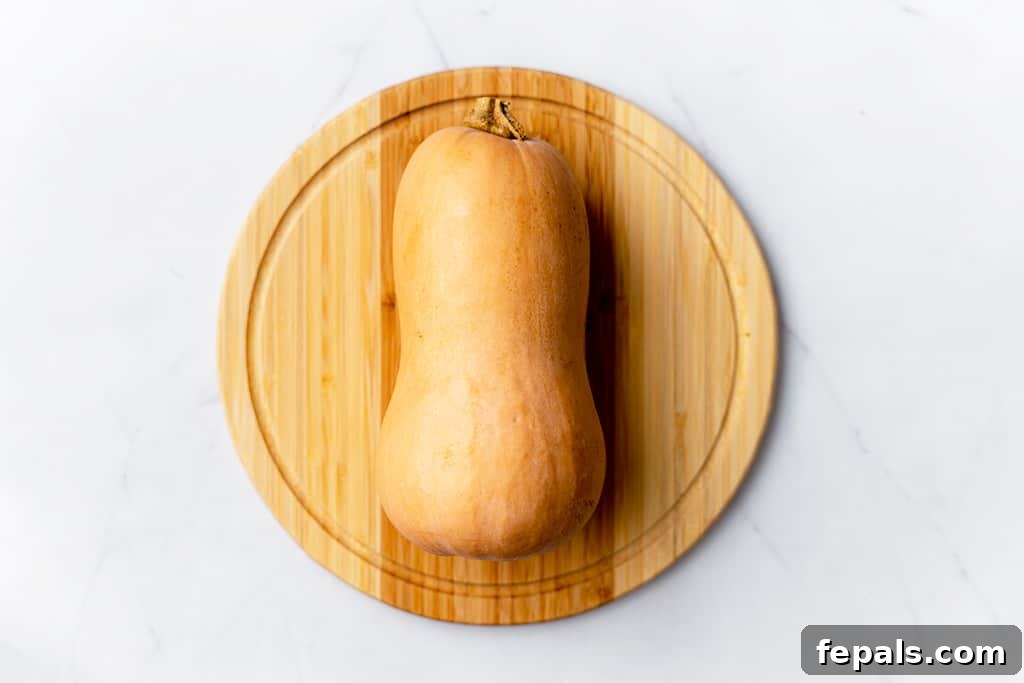
What is Butternut Squash? A Culinary Jewel
Butternut squash, scientifically known as Cucurbita moschata, is a type of winter squash distinguished by its pale, creamy yellow to deep orange skin and a characteristic bell-like or peanut-shaped form, often resembling a figure 8. It belongs to the same family as pumpkins and zucchini, thriving in cooler temperatures and typically harvested in late summer and fall, though it’s available year-round in most grocery stores.
Beyond its appealing appearance, butternut squash boasts a rich, sweet, and nutty flavor profile, making it a favorite ingredient in both savory and sweet dishes. Its dense, vibrant orange flesh becomes wonderfully creamy and tender when cooked, akin to a sweet potato. Despite its hard exterior, which can initially seem daunting to tackle, preparing butternut squash is simple once you master a few fundamental steps. This guide will empower you to cut butternut squash like a pro, opening up a world of culinary possibilities.
Nutritional Powerhouse: The Health Benefits of Butternut Squash
Butternut squash isn’t just delicious; it’s also packed with essential nutrients, making it a fantastic addition to any healthy diet. It’s an excellent source of vitamins, minerals, and fiber, contributing significantly to overall well-being. Here’s a closer look at its impressive health benefits:
- Rich in Vitamin A: Butternut squash is incredibly high in beta-carotene, which the body converts into Vitamin A. This vitamin is crucial for maintaining healthy vision, supporting immune function, and promoting skin health.
- High in Vitamin C: A powerful antioxidant, Vitamin C helps protect your cells from damage, boosts your immune system, and aids in collagen production for healthy skin.
- Good Source of Fiber: The dietary fiber content in butternut squash promotes digestive health, helps regulate blood sugar levels, and can contribute to a feeling of fullness, aiding in weight management.
- Packed with Potassium: This vital mineral is essential for maintaining healthy blood pressure, fluid balance, and proper nerve and muscle function.
- Antioxidant Properties: Beyond Vitamins A and C, butternut squash contains other antioxidants that combat oxidative stress and may reduce the risk of chronic diseases.
- Low in Calories: Despite its rich flavor and satisfying texture, butternut squash is relatively low in calories, making it a healthy and filling option.
Incorporating butternut squash into your meals is an easy and delicious way to boost your nutrient intake and enjoy a variety of health benefits.
How Does Butternut Squash Taste?
The flavor of butternut squash is often described as a delightful blend of sweet and nutty, with subtle earthy undertones. When roasted or baked, its natural sugars caramelize, intensifying its inherent sweetness and giving it a slightly buttery richness. This makes it incredibly versatile for various culinary applications.
Its cooked texture is remarkably smooth and creamy, much like that of a perfectly baked sweet potato or pumpkin puree. This makes it ideal for blending into soups, mashing as a side dish, or simply enjoying as tender roasted cubes. The sweetness pairs wonderfully with warming spices like cinnamon, nutmeg, and ginger for autumnal dishes, but it also complements savory herbs such as sage, thyme, and rosemary, making it a staple in hearty stews, curries, and salads.
Selecting the Perfect Butternut Squash: A Buyer’s Guide
Choosing a ripe and high-quality butternut squash is the first step to a delicious meal. While butternut squash is available throughout the year, it’s typically in season during the fall and winter months. Follow these tips to pick the best squash at your local grocery store or farmer’s market:
- Color Consistency: Look for a squash with a uniform, deep beige or tan color. Avoid any squashes with significant green patches, as this indicates it was harvested before reaching full ripeness, which can result in a less sweet and starchy flavor.
- Matte vs. Shiny Skin: The skin should have a matte finish, not a glossy or shiny appearance. A matte skin often signals ripeness, whereas a shiny skin can sometimes suggest immaturity.
- Weight for Size: Pick up the squash and feel its weight. A good butternut squash should feel heavy and dense for its size. This indicates a thick flesh and high moisture content, promising better flavor and texture. Lighter squashes might be dry or less flavorful.
- Firmness: Gently press on the skin. It should be very firm and hard. Steer clear of any squash that has soft spots, bruises, or cracks, as these can be signs of spoilage or internal damage.
- Intact Stem: Check the stem. It should be intact, dry, and firm. A missing or damaged stem can leave an opening for bacteria and moisture loss, leading to quicker spoilage.
By following these guidelines, you’ll be able to select a butternut squash that is perfectly ripe, flavorful, and ready for your culinary creations.
Essential Tools for Safe and Easy Butternut Squash Cutting
Before you begin cutting, gather the right tools to ensure safety and efficiency. Having these items on hand will make the process much smoother:
- Sharp Chef’s Knife: This is your most important tool. A large, sharp chef’s knife (8-10 inches) will cut through the tough skin and dense flesh with ease and precision, reducing the risk of slippage. A dull knife is actually more dangerous as it requires more force and can slip.
- Sturdy Cutting Board: Use a large, stable cutting board. Place a damp cloth or paper towel underneath it to prevent it from sliding around on your counter, enhancing safety.
- Vegetable Peeler: A high-quality swivel peeler is ideal for removing the tough outer skin. Ensure it’s sharp to make peeling less strenuous.
- Large Spoon or Ice Cream Scoop: Perfect for easily scooping out the seeds and fibrous strands from the squash’s cavity.
With these essential tools at your disposal, you’re well-equipped to tackle your butternut squash with confidence.
Step-by-Step: How to Cut Butternut Squash Like a Pro
The images below will guide you through the step-by-step process of safely and efficiently cutting a butternut squash. Remember, patience and a sharp knife are your best friends here!
Pre-Cutting Preparation: Stabilize Your Squash
First, wash the butternut squash thoroughly under cold running water to remove any dirt or debris from its skin. Place it on your sturdy cutting board, ideally with a damp cloth underneath to prevent movement. This stabilization is crucial for safety.
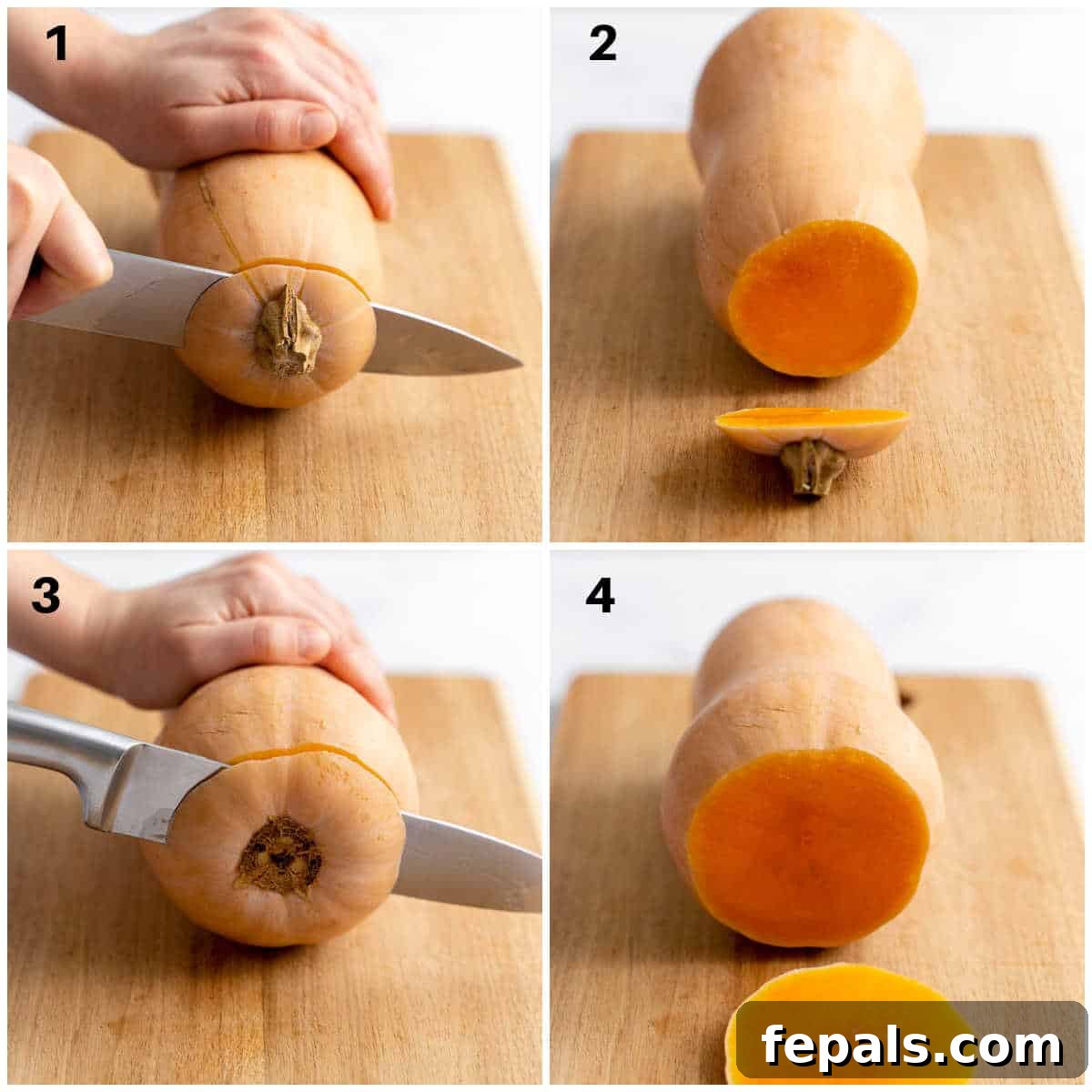
Step 1: Trim the Ends
- Carefully slice off about a quarter to a half-inch from both the top (stem) and bottom (blossom) ends of the butternut squash. This creates stable, flat surfaces, making the squash much easier and safer to handle as you continue cutting.
Step 2: Peel the Skin
- Lay the squash on one of its newly flattened ends so it stands upright and is stable. Using a sharp vegetable peeler, carefully peel the tough outer skin from end to end. Work your way around the squash, ensuring all the green and light beige skin is removed to reveal the bright orange flesh underneath. Alternatively, you can slice the squash in half first (as in step 3), then peel the halves, which some find easier. If the skin is exceptionally tough, you can microwave the whole squash for 2-3 minutes to soften it slightly before peeling.
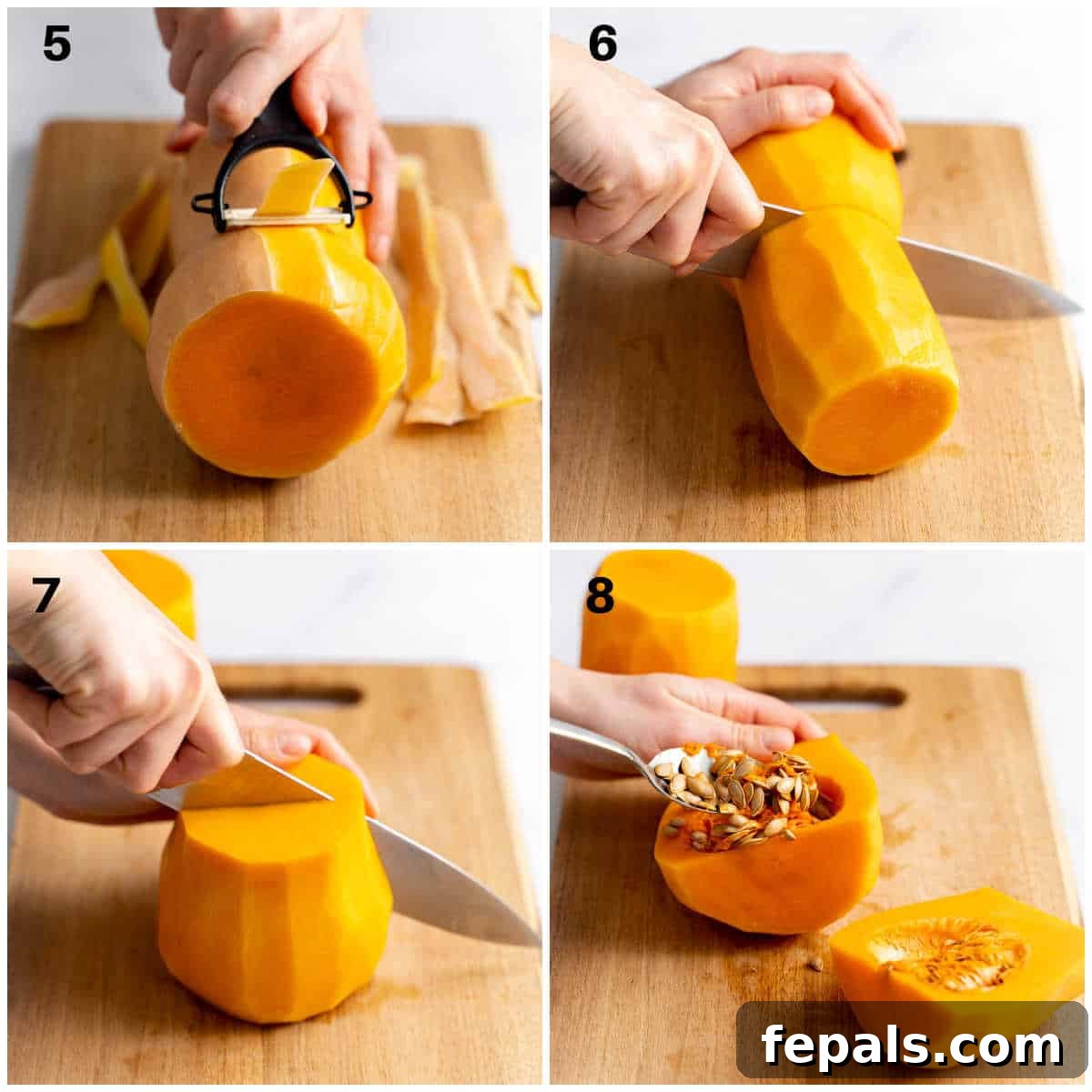
Step 3: Halve the Squash
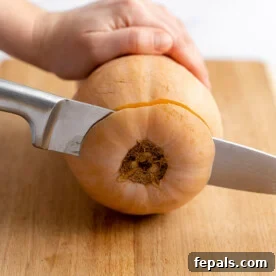
- Once peeled, lay the squash on its side on the cutting board. With a firm grip, carefully cut the squash in half horizontally, right where the narrow neck meets the round, bulbous bottom section. This creates two distinct pieces: the solid neck and the seed-filled base.
Step 4: Deseed the Squash
- Turn each half upright on its flat, cut side for stability. Carefully split the bulbous bottom section down the middle lengthwise.
- Using a sturdy spoon or an ice cream scoop, scoop out all the seeds and the fibrous strings from the cavity of both halves. You can discard these, or clean and roast the seeds for a healthy snack!
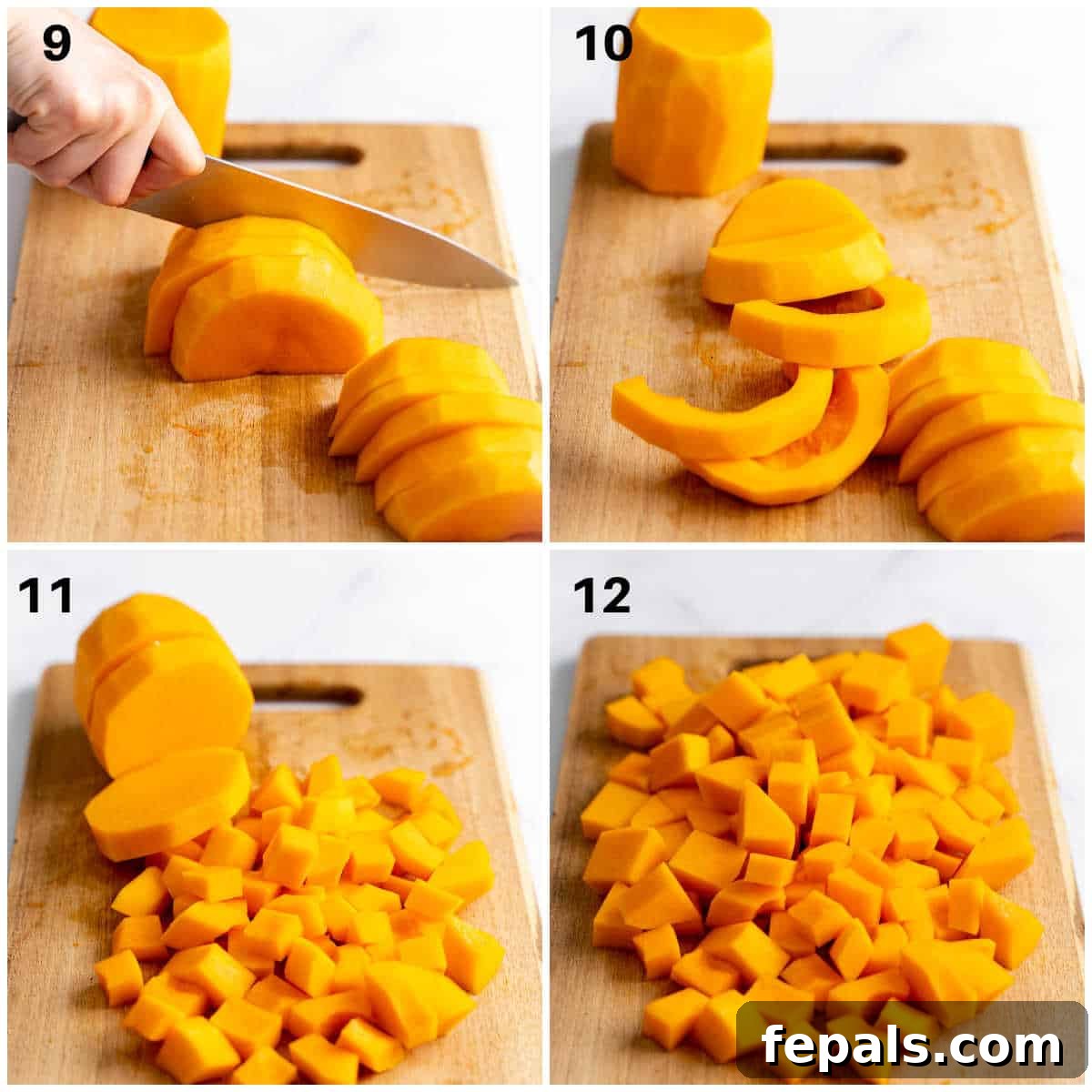
Step 5: Dice for Cooking
- Take the neck and bulbous halves (now deseeded) and place them cut-side down on the cutting board. This flat surface ensures stability.
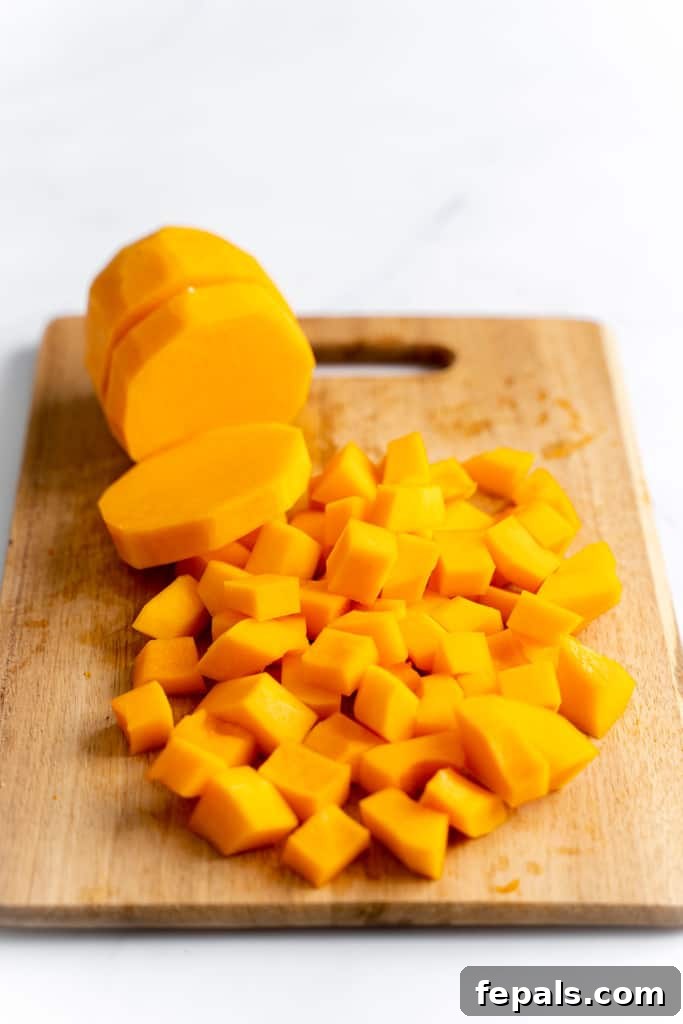
- Slice each section into planks or desired thickness. For roasting or baking, thicker slices (about 1-inch) work well. For soups or stews, slightly thinner slices are fine.
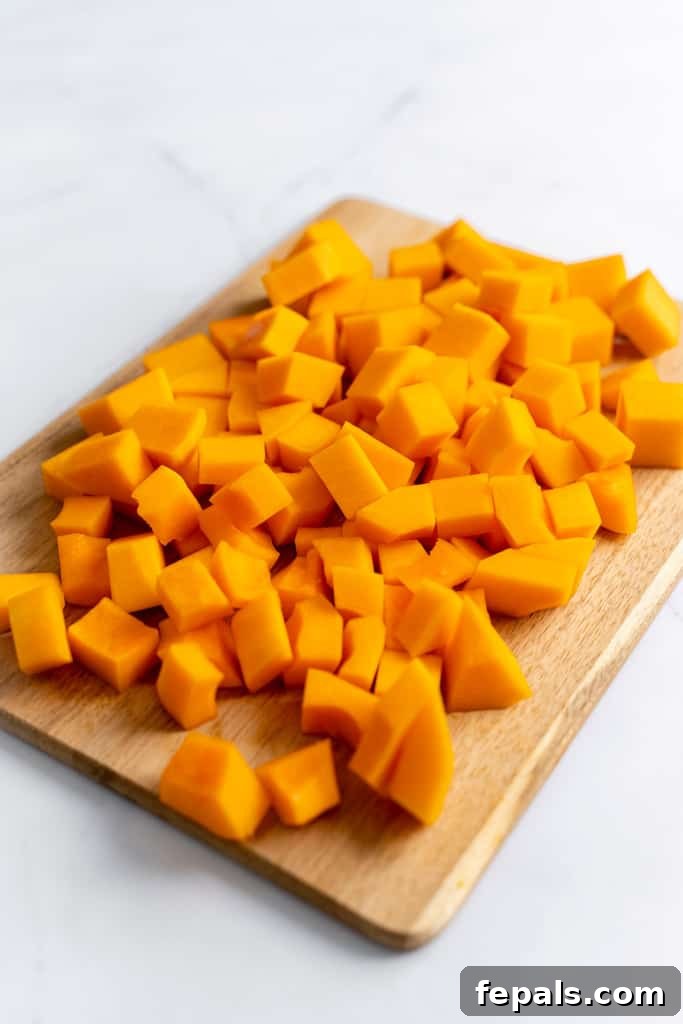
- Next, stack a few slices and cut them into strips. Finally, cut the strips into small, uniform cubes, roughly 1/2 to 1 inch in size, depending on your recipe. Uniform sizing is key for even cooking.
How to Store Butternut Squash: Whole and Prepared
Proper storage ensures your butternut squash remains fresh and flavorful for as long as possible, whether whole or already cut.
Storing Whole, Uncut Butternut Squash
Uncut butternut squash has an impressive shelf life, often lasting for weeks or even months under ideal conditions. To maximize its freshness:
- Cool, Dark Place: Store whole butternut squash in a cool (around 50-60°F or 10-15°C), dark, and dry place, such as a pantry, basement, or even a garage, if temperatures are stable.
- Avoid Sunlight: Direct sunlight can accelerate the ripening process and lead to spoilage.
- Good Ventilation: Ensure there’s good air circulation around the squash to prevent moisture buildup and mold.
- Duration: Stored correctly, a whole butternut squash can last for at least one to three months, sometimes even longer.
Storing Peeled and Cut Butternut Squash
Once you’ve peeled and cut your butternut squash, its shelf life significantly shortens, and it needs to be refrigerated:
- Airtight Container: Place the cubed or sliced butternut squash in an airtight container or a resealable plastic bag. This prevents it from drying out and absorbing odors from other foods in the fridge.
- Refrigerate: Store the container in the crisper drawer of your refrigerator.
- Duration: Freshly cut butternut squash will remain good for up to a week in the fridge.
Freezing Butternut Squash for Long-Term Storage
Freezing is an excellent option for preserving butternut squash for longer periods, perfect for meal prepping or using later in soups and purees:
- Prepare and Cut: Peel, deseed, and cut the butternut squash into your desired pieces (cubes, slices, or chunks) as described above.
- Blanching (Optional but Recommended): For best texture and color retention, you can blanch the squash before freezing. Boil the squash pieces for 2-3 minutes, then immediately transfer them to an ice bath to stop the cooking. Drain thoroughly.
- Flash Freeze: Spread the squash pieces in a single layer on a baking sheet lined with parchment paper. Place the sheet in the freezer for 1-2 hours, or until the pieces are solid. This prevents them from clumping together.
- Transfer to Freezer Bags: Once flash-frozen, transfer the solid squash pieces to freezer-safe bags or airtight containers. Remove as much air as possible from the bags to prevent freezer burn.
- Duration: Frozen butternut squash can be stored for up to 3 months. When ready to use, you can usually cook it directly from frozen, especially for soups, stews, or roasting.
By following these storage methods, you can enjoy the wonderful flavor and nutritional benefits of butternut squash year-round.
Versatile Ways to Cook Butternut Squash
Butternut squash is incredibly versatile and can be prepared using a variety of cooking methods, each bringing out different aspects of its delightful flavor and texture. Here are several popular ways to cook this delicious winter squash:
- Boil Them: A simple method often used for making purees or adding to soups. Cut-up butternut squash can be boiled in a pot of lightly salted water until fork-tender (usually 10-15 minutes). Once soft, drain it and use it to make creamy soups, baby food, or smooth sauces.
- Bake Them: Baking is one of the easiest and most hands-off ways to prepare butternut squash, perfect for bringing out its natural sweetness. After you’ve cut the squash into cubes or slices, toss them with a little olive oil, salt, and pepper on a sheet pan. Roast at 400°F (200°C) for about 20-25 minutes, stirring halfway through, until tender and slightly caramelized. For a sweet treat, drizzle with brown sugar, maple syrup, or honey during the last 10 minutes of baking.
- Sauté Them: Quick and flavorful, sautéing butternut squash is ideal for adding to pasta dishes, scrambles, or as a quick side. Cook small cubes of squash in a pan with a bit of olive oil, salt, and pepper over medium-high heat until tender and slightly browned. Add garlic or herbs like sage for extra flavor.
- Roast Them (on the Grill): For a smoky flavor, grilling butternut squash is a fantastic option. Slice the squash into thick planks or half-moons, brush with olive oil, and season with salt, pepper, and your favorite spices. Roast them over medium heat on an outdoor grill until tender with beautiful grill marks.
- Air-Fry Them: The air fryer offers a crispy and quick way to cook butternut squash with less oil. Toss seasoned butternut squash cubes with a small amount of oil. Air fry at 375°F (190°C) for 12-18 minutes, shaking the basket halfway through, until they are tender and deliciously crispy on the edges. This method is great for a snack or a quick side dish.
- Steaming: For a light and healthy preparation, steaming butternut squash preserves its nutrients and keeps it moist. Steam cubes or slices until tender, about 10-15 minutes. It’s a great base for mashing or adding to salads without extra oil.
Delicious Recipes Using Butternut Squash
Now that you know how to cut and prepare butternut squash, it’s time to explore some amazing recipes that showcase its incredible versatility:
- Butternut Squash Salad
- Maple Roasted Butternut Squash
- Chickpea Butternut Squash Curry
- Oven-Roasted Butternut Squash
- Butternut Squash Mushroom Risotto
- Honey Roasted Butternut Squash
- Butternut Squash Casserole
- Hasselback Butternut Squash
- Wild Rice and Squash Pilaf Stuffing
Pin this now to find it later!
Pin It
More Helpful How-To Tutorials
If you enjoyed learning how to cut butternut squash, explore more of our kitchen tutorials to hone your culinary skills:
- Learn How to Cut an Orange
- How to Cut a Cabbage
- Easy Techniques on How to Cut a Mango
- How to Make Cashew Butter
- How to Poach Chicken Breasts
FOLLOW me on FACEBOOK | INSTAGRAM | PINTEREST | TWITTER for all of my latest blog posts and recipes.
How to Cut Butternut Squash
Rena
10 mins
10 mins
Butternut squash may seem confusing to cut at first, but this guide will walk you through all you need to know about preparing butternut squash efficiently and safely.
Equipment
-
Sharp Chef’s Knife
-
Sturdy Cutting Board
-
Vegetable Peeler
-
Large Spoon or Ice Cream Scoop
Ingredients
- 1 butternut squash
Instructions
-
Slice off the top and bottom ends of the butternut squash to create flat, stable surfaces.
-
Stand the squash upright and use a vegetable peeler to carefully remove the tough outer skin from end to end.
-
Lay the peeled squash on its side and cut it in half horizontally, separating the neck from the bulbous bottom.
-
Turn the bulbous half upright and split it down the middle lengthwise.
-
Using a spoon or ice cream scoop, remove all seeds and fibrous strands from the cavities of the squash halves.
-
Place the deseeded halves and the neck piece cut-side down, then slice them into your preferred thickness (e.g., 1-inch planks).
-
Cut the slices into smaller, uniform cubes, typically 1/2 to 1 inch in size, depending on your recipe.
Notes
- Always use a very sharp chef’s knife for safety and efficiency.
- Select a firm, heavy butternut squash without soft spots.
- Store peeled and cut butternut squash in an airtight container in the fridge for up to one week.
- You can freeze pre-cut butternut squash for up to 3 months; blanching briefly before freezing helps maintain texture.
Nutrition
Calories: 338kcal
Carbohydrates: 88g
Protein: 8g
Fat: 1g
Saturated Fat: 1g
Sodium: 30mg
Potassium: 2640mg
Fiber: 15g
Sugar: 17g
Vitamin A: 79725IU
Vitamin C: 158mg
Calcium: 360mg
Iron: 5mg
Nutrition information is automatically calculated, so should only be used as an approximation.
Additional Info
Ingredient
American
Tried this recipe?
Mention @healthyfitnessmeals or tag #healthyfitnessmeals!