
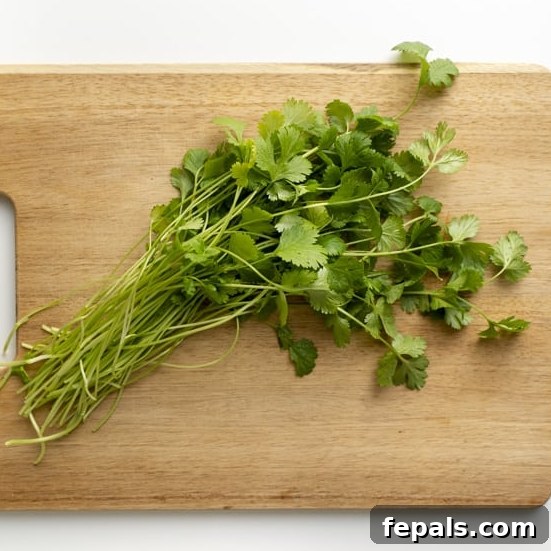
Mastering the Art of Cutting Cilantro: A Comprehensive Guide for Fresh Flavors
Unlock the full potential of your dishes by learning how to cut cilantro leaves like a pro! Fresh cilantro is an indispensable herb in countless cuisines, lending its vibrant, zesty, and refreshing flavor to everything from classic pico de Gallo and zesty tacos to hearty burritos and aromatic curries. This detailed tutorial will guide you through every step of preparing cilantro, from selecting the freshest bunch to proper chopping techniques and smart storage, ensuring you get the most out of this versatile herb.
Why Fresh Cilantro is a Kitchen Essential
Fresh cilantro, sometimes known as coriander leaves, is a culinary marvel. Its distinctive, bright, and slightly peppery flavor profile, often described as a mix of parsley and citrus with a hint of anise, is truly unique. This powerful herb has the remarkable ability to transform a good meal into an extraordinary one, infusing an unparalleled layer of freshness and complexity. It’s particularly celebrated in Mexican, Indian, Thai, and Middle Eastern dishes, where its aromatic qualities are perfectly balanced with savory, spicy, or tangy ingredients.
Unlike its dried counterpart, fresh cilantro provides an intense aroma and a crisp texture that simply cannot be replicated. It adds a visual appeal with its vibrant green leaves, making any dish look as enticing as it tastes. Whether you’re aiming for a super fresh and bright meal or simply looking to add an aromatic garnish, cilantro is your go-to herb. We frequently incorporate fresh cilantro into a variety of our favorite meals, such as our Cilantro Lime Grilled Chicken Salad, refreshing Cilantro Lime Pasta Salad, and the effortless Easy Cilantro Lime Chicken and Rice, among many others.
How To Pick the Freshest Cilantro at the Store
The journey to perfectly chopped cilantro begins with selecting the best bunch from your local grocery store or farmer’s market. Look for cilantro leaves that are:
- Perky and Upright: The leaves should stand tall and not appear droopy or limp.
- Vibrantly Green: A deep, rich green color indicates freshness and good health.
- Fresh Looking: The leaves should be free from any blemishes, wilting, or signs of decay.
Conversely, avoid cilantro that shows signs of wilting, browning, yellowing, or spotting. Any slimy texture or strong, unpleasant odor also indicates that the herb is past its prime. Trust your senses; fresh cilantro should have a distinct, bright aroma.
Essential Preparation: Washing and Drying Cilantro
Before you even think about chopping, proper washing and drying are paramount. Cilantro often comes with soil, sand, and sometimes even tiny insects or pesticide residues from the farm. Thorough cleaning ensures you’re consuming only the delicious herb itself.
Step 1: Rinse Thoroughly. Place the entire bunch of cilantro under cool, running water. Gently separate the stems and leaves with your fingers to allow water to reach all parts. You might need to rinse it several times, especially if you notice a lot of sand or dirt settling at the bottom of your sink or bowl.
Step 2: Submerge and Swirl (Optional but Recommended). For an even deeper clean, fill a large bowl with cold water and submerge the cilantro. Swish it around gently, allowing any remaining grit to sink to the bottom. Lift the cilantro out of the water, discard the dirty water, and repeat if necessary until the water remains clear.
Step 3: Dry Completely. This step is crucial for both chopping and storage. Excess moisture can make cilantro slimy and cause it to spoil quickly. There are a few effective ways to dry your cilantro:
- Salad Spinner: This is the most efficient method. Place the washed cilantro in a salad spinner and spin until completely dry. You may need to do this in batches.
- Paper Towels or Clean Kitchen Towel: Lay the cilantro in a single layer on several sheets of paper towel or a clean kitchen towel. Gently roll it up and pat dry, absorbing as much moisture as possible.
Ensuring your cilantro is bone-dry will make it easier to chop, prevent it from clumping together, and extend its shelf life in storage.
How To Chop Fresh Cilantro: A Step-by-Step Guide
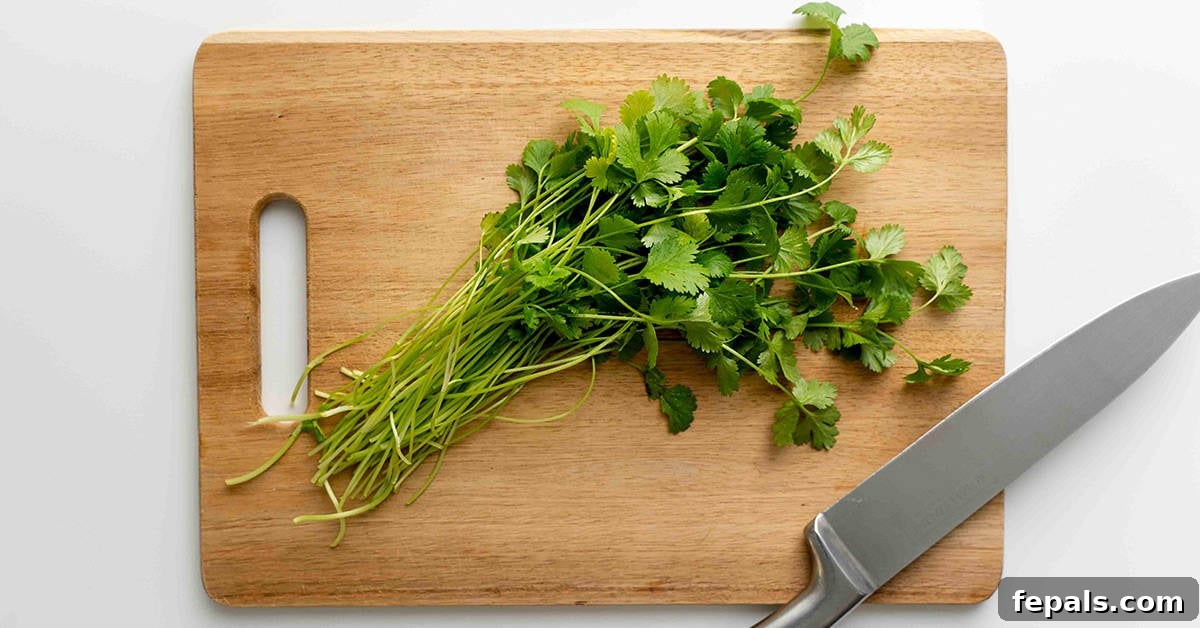
With your cilantro clean and dry, you’re ready to chop. A sharp knife and a stable cutting board are your best friends here. Here’s how to achieve perfectly chopped cilantro:
1. Gather Your Tools
You’ll need a sharp chef’s knife or a utility knife and a sturdy cutting board. A sharp knife makes cleaner cuts, minimizes bruising of the herb, and is safer to use than a dull one.
2. Trim the Stems
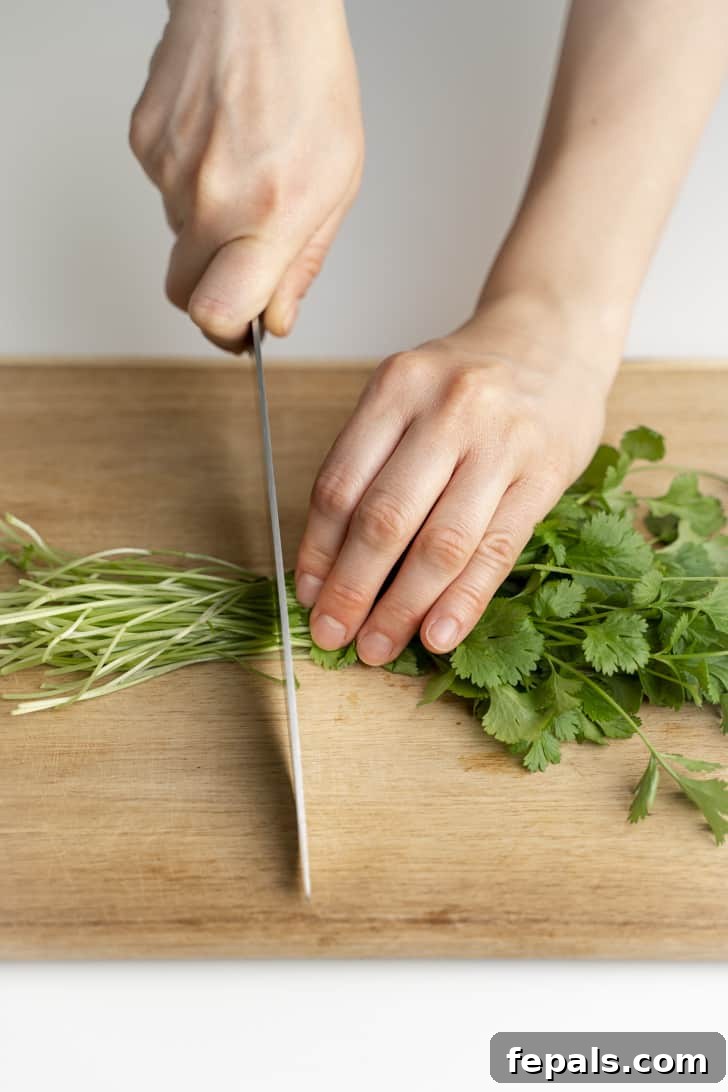
Carefully gather the cilantro into a bunch. Hold the bunch firmly and trim off the bottom few inches of the stems. The thinner, tender parts of the stems closer to the leaves are often used in cooking as they carry a strong cilantro flavor. However, the thicker, tougher stems at the very bottom are usually discarded or reserved for making stocks, broths, or infused oils. Decide how much stem you want to keep based on your recipe and preference.
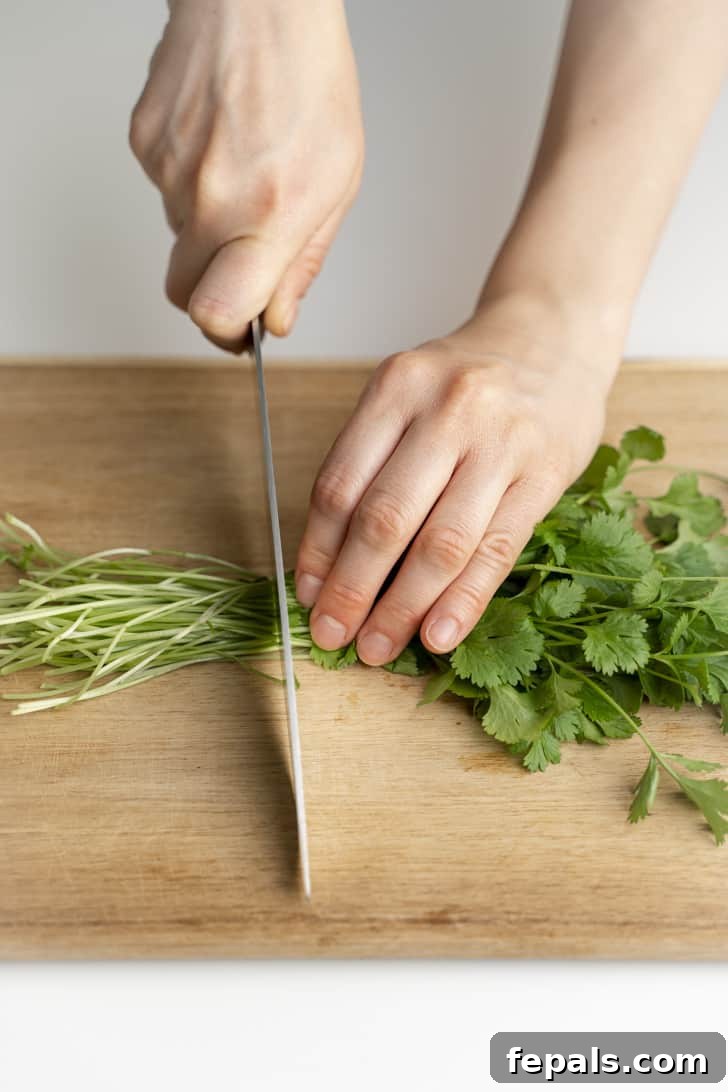
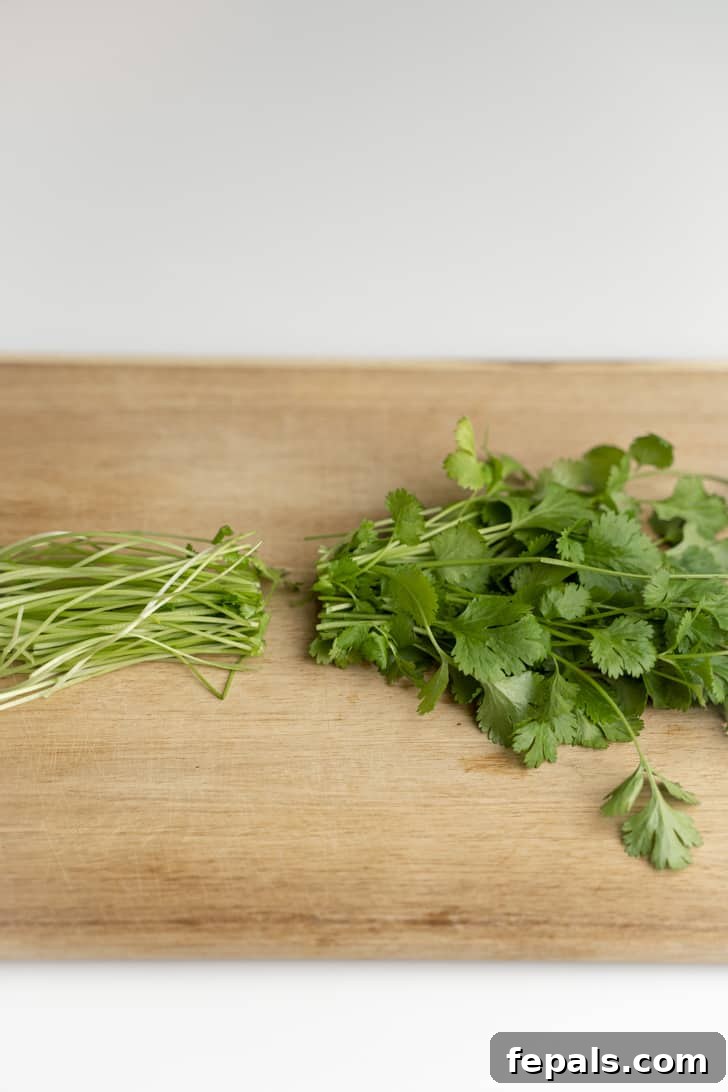
3. Bunch and Slice
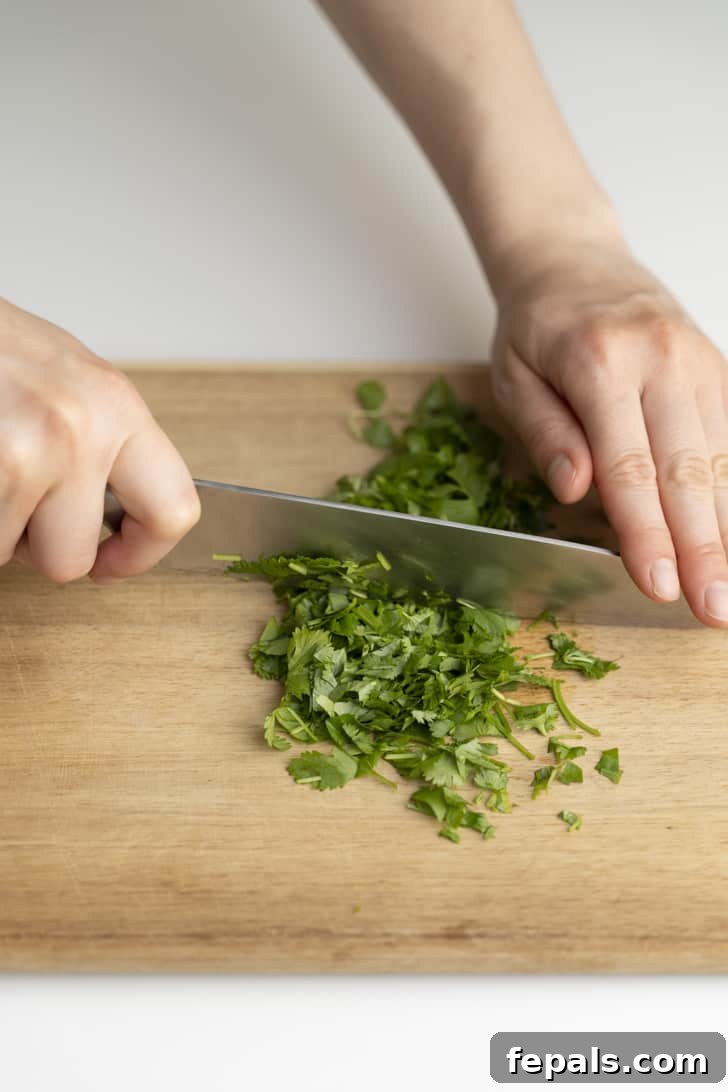
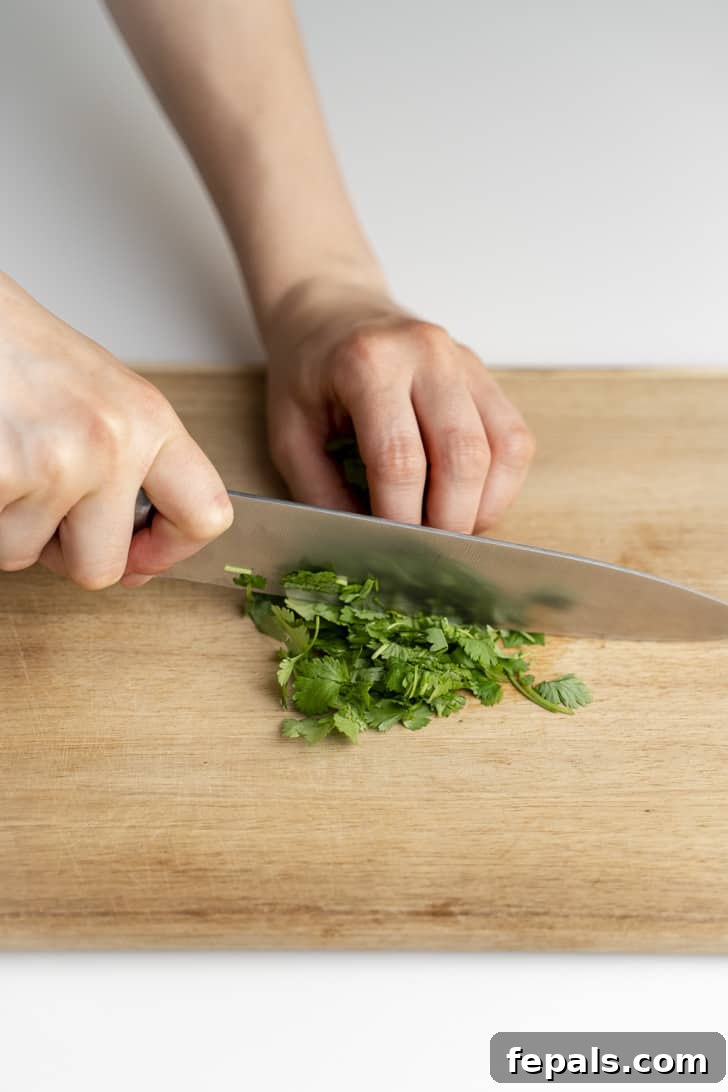
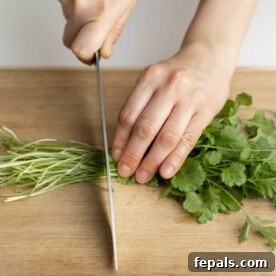
Once the stems are trimmed, firmly gather the cilantro leaves into a tight bunch or roll them tightly together on your cutting board. This creates a compact mass that is easier to chop uniformly. Hold the bunch with one hand, keeping your fingertips tucked in (forming a “claw” shape) to protect them.
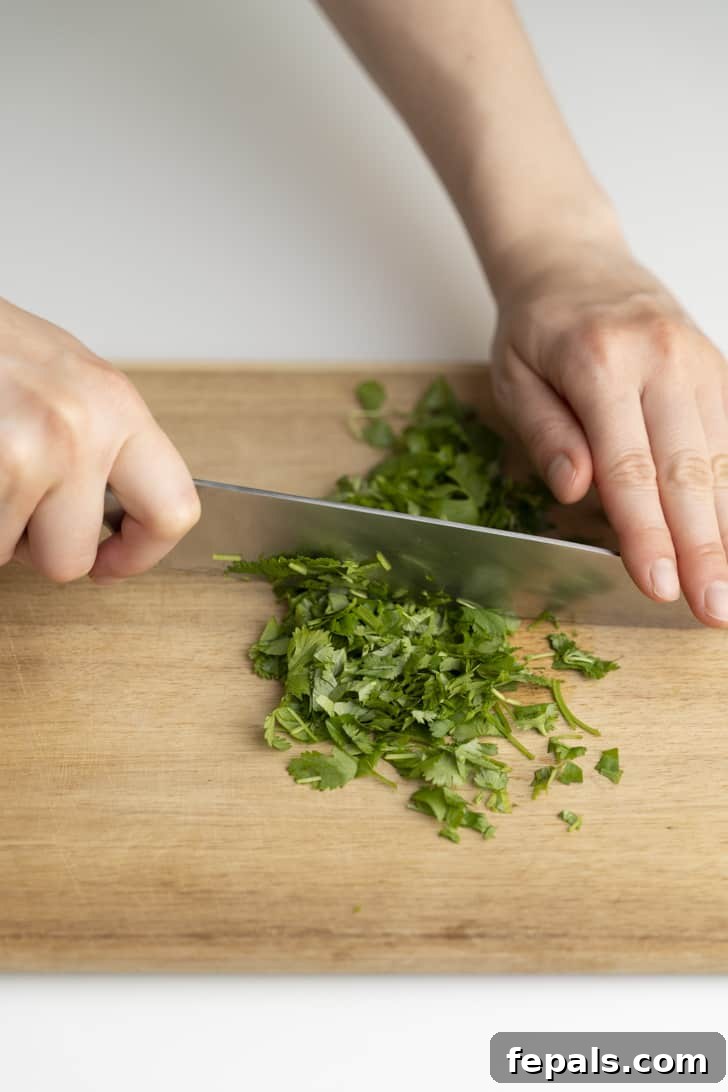
With your other hand, use a rocking motion with your knife. Start at one end of the bunch and make small, even cuts. The tip of your knife should stay on the cutting board while the heel lifts and falls. Gradually move the knife along the length of the cilantro, creating small pieces.
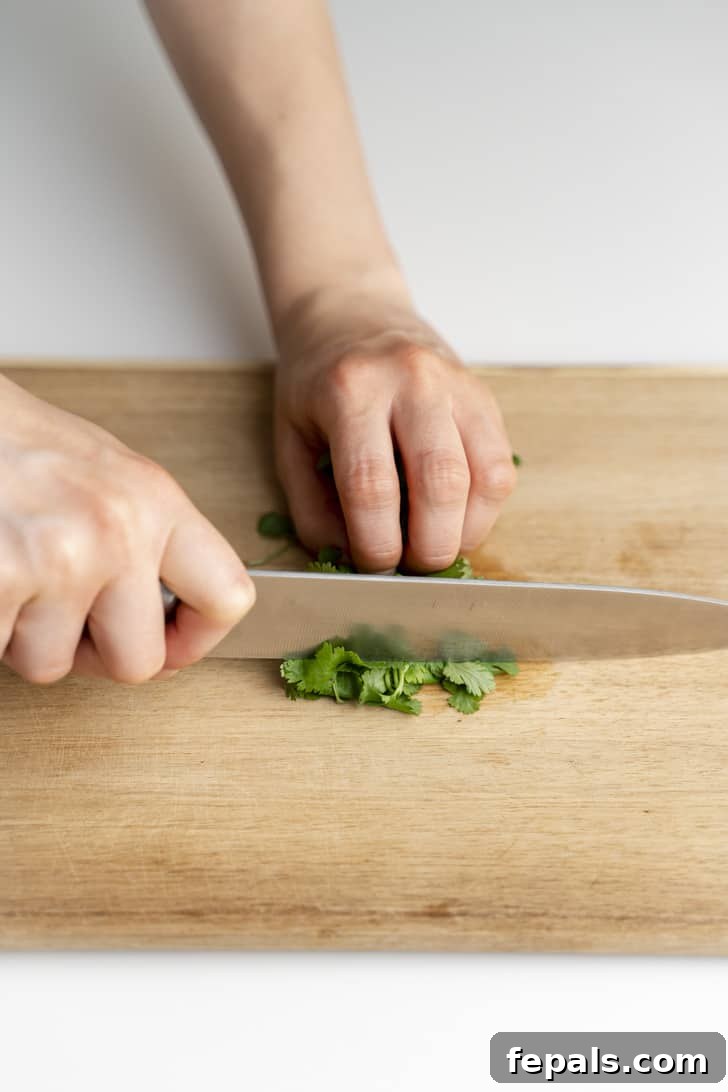
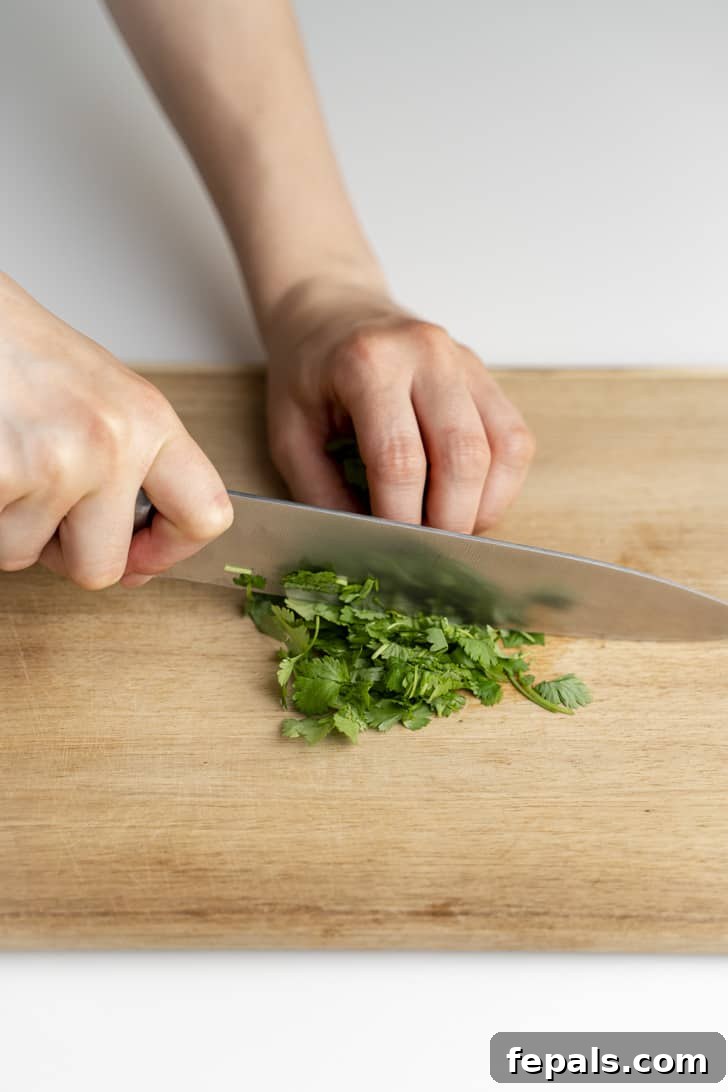
4. Fine Mince (Optional)
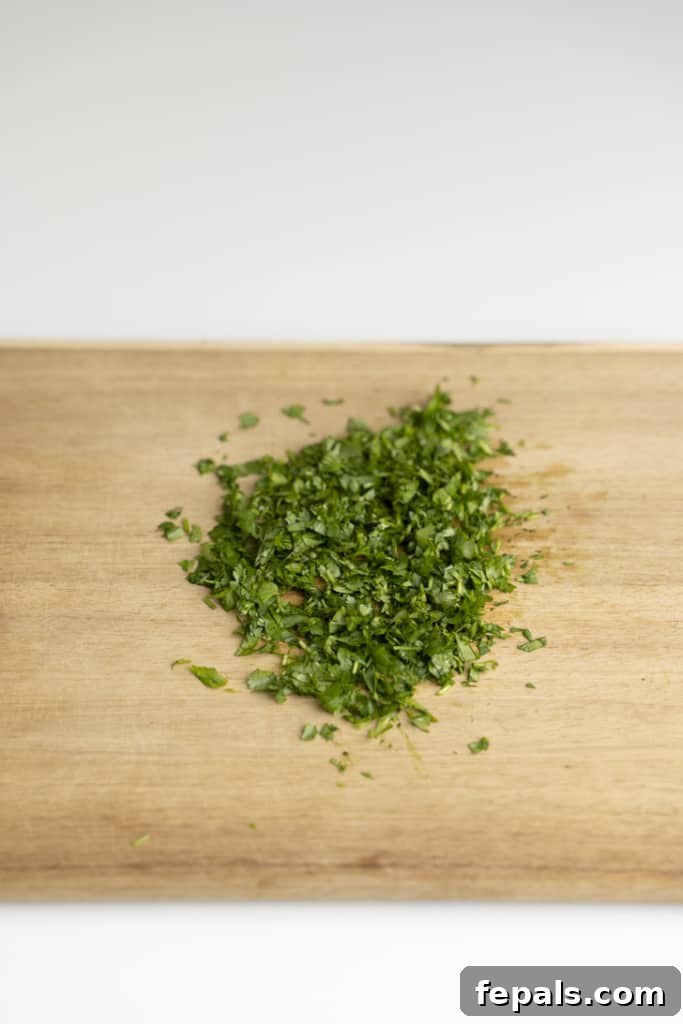
If your recipe calls for a finer mince, simply gather the already chopped cilantro into a pile. Continue the rocking motion with your knife, repeatedly gathering the pile back together with your free hand (using the blade as a barrier). Keep chopping until you reach your desired fineness. Be careful not to over-chop, as this can bruise the leaves and release too much moisture, diminishing their vibrant flavor and color.
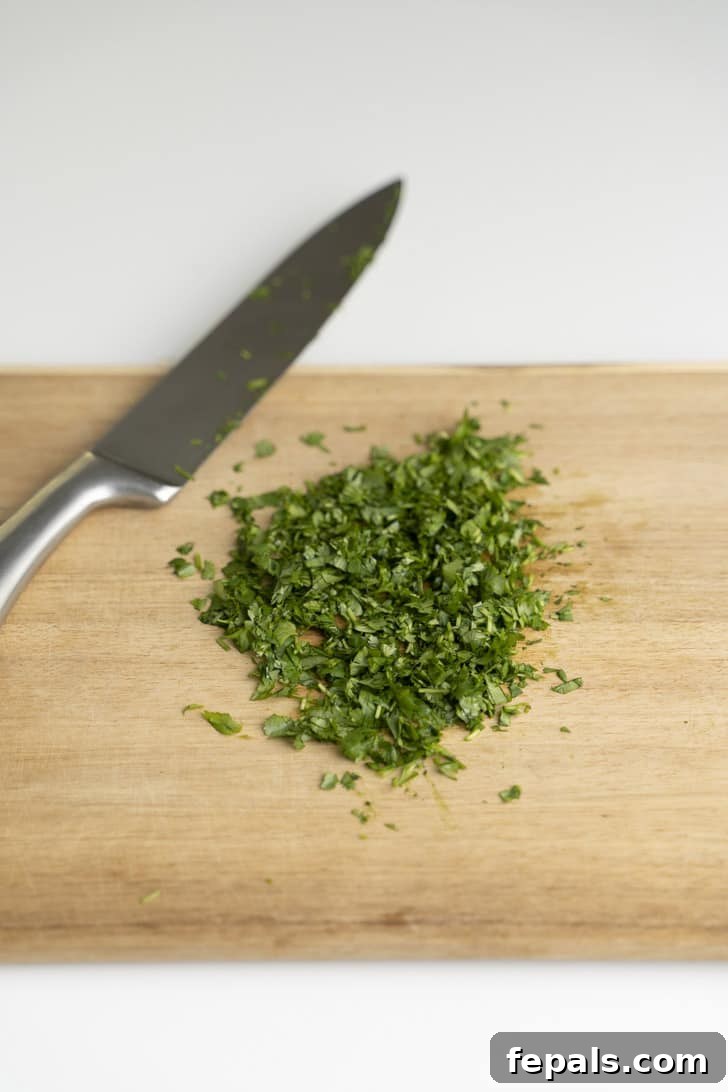
Your finely chopped cilantro is now ready to be used as a fresh garnish for tacos, salsas, soups, stews, burritos, and so much more. Enjoy the burst of fresh flavor!
Storing Fresh Cilantro for Optimal Freshness
Proper storage is key to extending the life of your fresh cilantro and preventing it from wilting prematurely. Once you have washed and dried the cilantro as described above, here are the best methods:
1. The Mason Jar Method (Recommended)
This method mimics a flower vase and keeps cilantro fresh for up to two weeks.
- Trim about an inch off the bottom of the cilantro stems.
- Place the bunch, stems down, into a mason jar or a glass with about an inch of water. Ensure only the stems are in the water, not the leaves.
- Loosely cover the top of the cilantro with a plastic bag (like a produce bag) to create a humid environment without trapping excess moisture.
- Place the jar in the refrigerator. Change the water every 1-2 days to maintain freshness.
2. Paper Towel Method
For shorter storage periods (a few days to a week), this method works well.
- Ensure the cilantro is thoroughly washed and dried.
- Wrap the cilantro loosely in a slightly damp paper towel.
- Place the wrapped cilantro in a sealed plastic bag or an airtight container.
- Store in the crisper drawer of your refrigerator.
You can easily snip off cilantro leaves with scissors as needed for your recipes while it’s stored.
Can You Freeze Cilantro? Extending Its Shelf Life
Yes, you can absolutely freeze cilantro to preserve its flavor for several months, though its texture will soften slightly upon thawing. Frozen cilantro is best for cooked dishes like soups, stews, sauces, or marinades, rather than fresh garnishes.
1. Freezing Chopped Cilantro
- Wash and thoroughly dry the cilantro.
- Finely chop the cilantro as desired.
- Spread the chopped cilantro in a single layer on a parchment-lined baking sheet.
- Freeze for 1-2 hours until solid.
- Transfer the frozen cilantro to an airtight freezer-safe bag or container, removing as much air as possible.
2. Freezing in Oil or Water
- Finely chop the cilantro.
- Pack the chopped cilantro into ice cube trays.
- Pour olive oil or a little water over the cilantro until the compartments are full.
- Freeze until solid.
- Once frozen, pop out the cilantro cubes and transfer them to an airtight freezer-safe bag.
When ready to use, simply drop a frozen cube directly into your hot dish or thaw it for sauces. This method helps prevent freezer burn and keeps the flavor intact.
Cilantro Stems: To Use or Not To Use?
A common question arises regarding cilantro stems. Many people wonder if they should be discarded. The answer largely depends on your preference and the dish you’re preparing.
- Stronger Flavor: Cilantro stems actually possess a more intense cilantro flavor than the leaves. If you enjoy a robust cilantro punch, feel free to use the tender upper stems.
- Texture Considerations: While the thinner, upper stems can be finely chopped and incorporated, the thicker, tougher bottom stems can be fibrous and less palatable in raw dishes.
- Best Uses for Stems: The more fibrous stems are excellent for dishes where they will be cooked down, such as soups, stews, curries, and marinades. They can also be blended into pestos, chutneys, or green smoothies, where their texture will be completely pulverized.
For garnishes or fresh salsas where a delicate texture is desired, it’s generally best to stick to just the leaves or the very tenderest parts of the stem.
Frequently Asked Questions About Cutting and Storing Cilantro
Do you cut cilantro stems off?
While many people opt to remove the thicker, tougher stems for aesthetic reasons or if they prefer a softer texture, the tender upper stems of cilantro are absolutely edible and highly flavorful. They have a stronger, more concentrated cilantro taste than the leaves. You can finely chop them along with the leaves for cooked dishes like curries, soups, or salsas, or reserve the thicker stems for making stocks or blending into sauces where their texture won’t be an issue.
Should you wash cilantro before you chop it?
Yes, it is imperative to wash cilantro thoroughly before using it, regardless of whether you plan to chop it or use it whole. Cilantro grows close to the ground and can often contain dirt, sand, and other debris. Washing also helps remove any potential pesticide residues. Always rinse under cool running water, gently separating the leaves, and consider a quick soak and swirl in a bowl of water to ensure it’s completely clean. Remember to dry it thoroughly afterward to prevent spoilage and for easier chopping.
Should cilantro be refrigerated?
Yes, cilantro should always be stored in the refrigerator to maintain its freshness and extend its shelf life. Storing it at room temperature will cause it to wilt and spoil rapidly. The best method for refrigeration is to treat it like a bouquet of flowers: place the stems in a glass of water, loosely cover the leaves with a plastic bag, and then place it in the refrigerator. This method can keep cilantro fresh for up to two weeks, much longer than simply placing it in a bag.
What’s the difference between cilantro and coriander?
Cilantro and coriander come from the same plant, Coriandrum sativum. The terms simply refer to different parts of the plant, often varying by regional dialect. “Cilantro” typically refers to the fresh leaves and stems of the plant, predominantly used in the Americas. “Coriander” usually refers to the dried seeds of the plant, which have a distinct warm, citrusy flavor, and are commonly used whole or ground in various spice blends worldwide. In some parts of the world, like the UK, both the leaves and seeds are referred to as “coriander.”
Can you eat cilantro raw?
Absolutely! Cilantro is most commonly enjoyed raw, especially as a fresh garnish or a key ingredient in dishes like salsa, guacamole, salads, and fresh relishes. Its vibrant, zesty flavor and crisp texture are best appreciated uncooked. Just ensure it’s thoroughly washed and dried before adding it to any raw preparation.
Cilantro Recipes You Will Enjoy
If you’re looking for some delicious recipe inspiration to put your freshly chopped cilantro to good use, we have you covered! Cilantro truly shines in these flavorful dishes:
Cilantro Lime Grilled Salmon: A perfectly grilled salmon fillet infused with the zesty brightness of lime and fresh cilantro, creating a light yet satisfying meal.
Lime and Cilantro Chicken Bites: Tender chicken pieces marinated in a vibrant lime and cilantro dressing, ideal for appetizers or a quick main course.
Grilled Cilantro Lime Chicken: Juicy chicken breasts marinated and grilled to perfection, boasting a refreshing and tangy flavor that’s a crowd-pleaser.
Cauliflower Rice With Cilantro and Lime: A healthy and flavorful alternative to traditional rice, brightened with fresh cilantro and a squeeze of lime, perfect as a side dish.
Lime and Cilantro Shrimp Recipe: Quick-cooking shrimp tossed in a vibrant sauce with plenty of fresh lime and cilantro, great for tacos, salads, or a light dinner.
More Step-By-Step Kitchen Tutorials
Looking to expand your culinary skills even further and master the preparation of other favorite ingredients? Be sure to explore our list of helpful kitchen tutorials!
- How To Cut Romaine Lettuce
- How To Cut Bell Peppers
- Cutting an Eggplant
- How To Cut a Potato
- How To Cut Green Onions
Conclusion
Mastering how to cut cilantro leaves is a fundamental skill for any home cook looking to enhance their dishes with fresh, vibrant flavors. By following these simple steps for selecting, washing, drying, and chopping, you can ensure your cilantro is always perfectly prepared. Proper storage methods will also help you keep this aromatic herb fresh for longer, minimizing waste and maximizing flavor.
Don’t hesitate to experiment with both the leaves and the tender stems to discover the full range of cilantro’s culinary potential. Whether it’s adding a final flourish to tacos, a burst of freshness to salads, or a foundational flavor to a curry, fresh cilantro is a game-changer.
If you try any of our recipes or find these tips helpful, we’d love to hear from you! Leave us some feedback in the comment section below, and don’t forget to rate your favorites! Sharing with friends and family is always appreciated.
Finally, please use our hashtag #healthyfitnessmeals on INSTAGRAM for a chance to be featured! FOLLOW Healthy Fitness Meals on FACEBOOK | INSTAGRAM | PINTEREST | TWITTER for all of our latest blog posts and recipes.
How To Cut Cilantro
Rena
1 bunch
5 mins
5 mins
10 mins
Learning how to cut cilantro leaves has never been easier! Fresh cilantro is delicious and the perfect addition to pico de Gallo, tacos, burritos, and so much more! This quick tutorial teaches you everything you need to know about preparing cilantro.
Equipment
-
1 knife
-
1 cutting board
Ingredients
- 1 bunch cilantro
Instructions
-
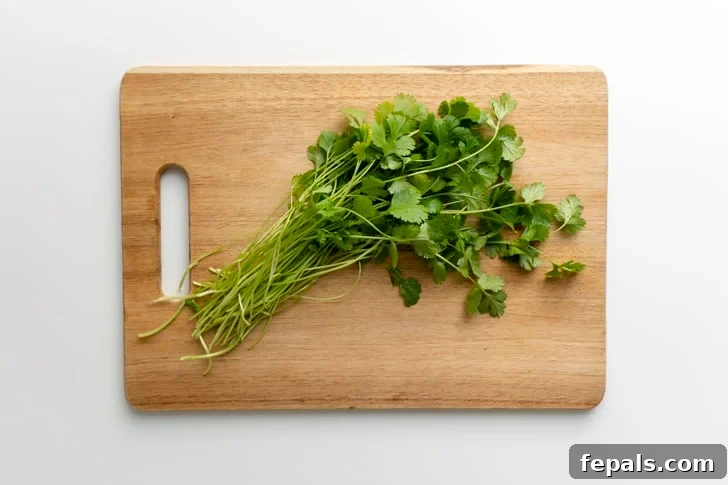
Wash and dry cilantro. Place on wooden cutting board.
-
Carefully, cut the stems off the cilantro as shown below. Discard the stems.
-
Next, place the cilantro leaves in a pile, then carefully rock the knife back and forth against the cutting board as you chop the leaves. Continue to gather the leaves into a pile as you cut through them.
-
Place the cilantro leaves into another pile, then continue to chop until you are left with fine pieces of cilantro. You can use chopped cilantro as garnishment for tacos, salsas, soups, burritos, and so much more.
Notes
Note: How to choose cilantro – Choose cilantro leaves that are perky, vibrantly green, and fresh looking. Avoid cilantro that is wilted, brown, or spotted.
- Don’t forget to wash really well to remove soil and debris.
Nutrition
Calories: 2 kcal
Carbohydrates: 0.3g
Protein: 0.2g
Fat: 0.04g
Monounsaturated Fat: 0.02g
Sodium: 4mg
Potassium: 42mg
Fiber: 0.2g
Sugar: 0.1g
Vitamin A: 540 IU
Vitamin C: 2mg
Calcium: 5mg
Iron: 0.1mg
Nutrition information is automatically calculated, so should only be used as an approximation.
Additional Info
ingredient
American