
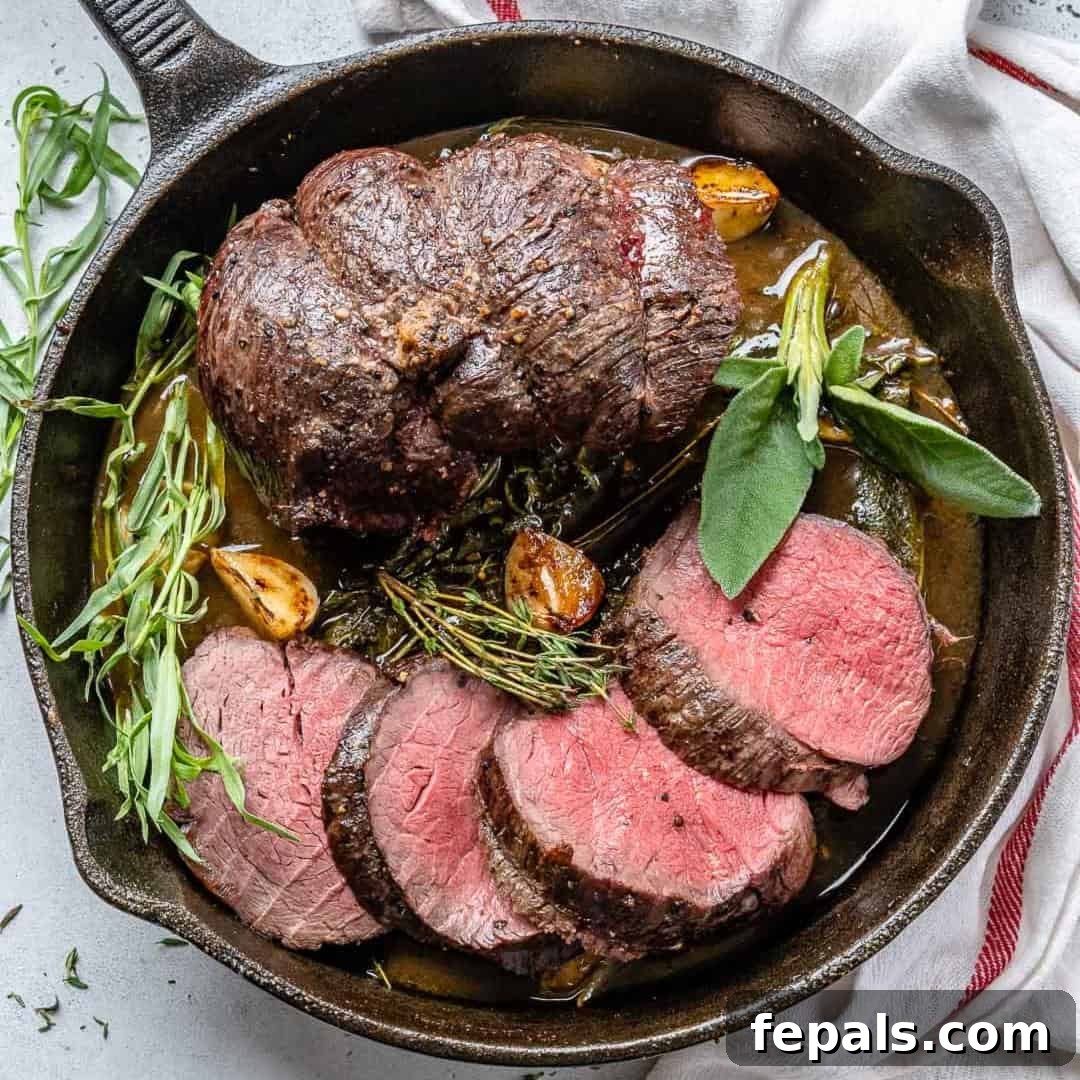
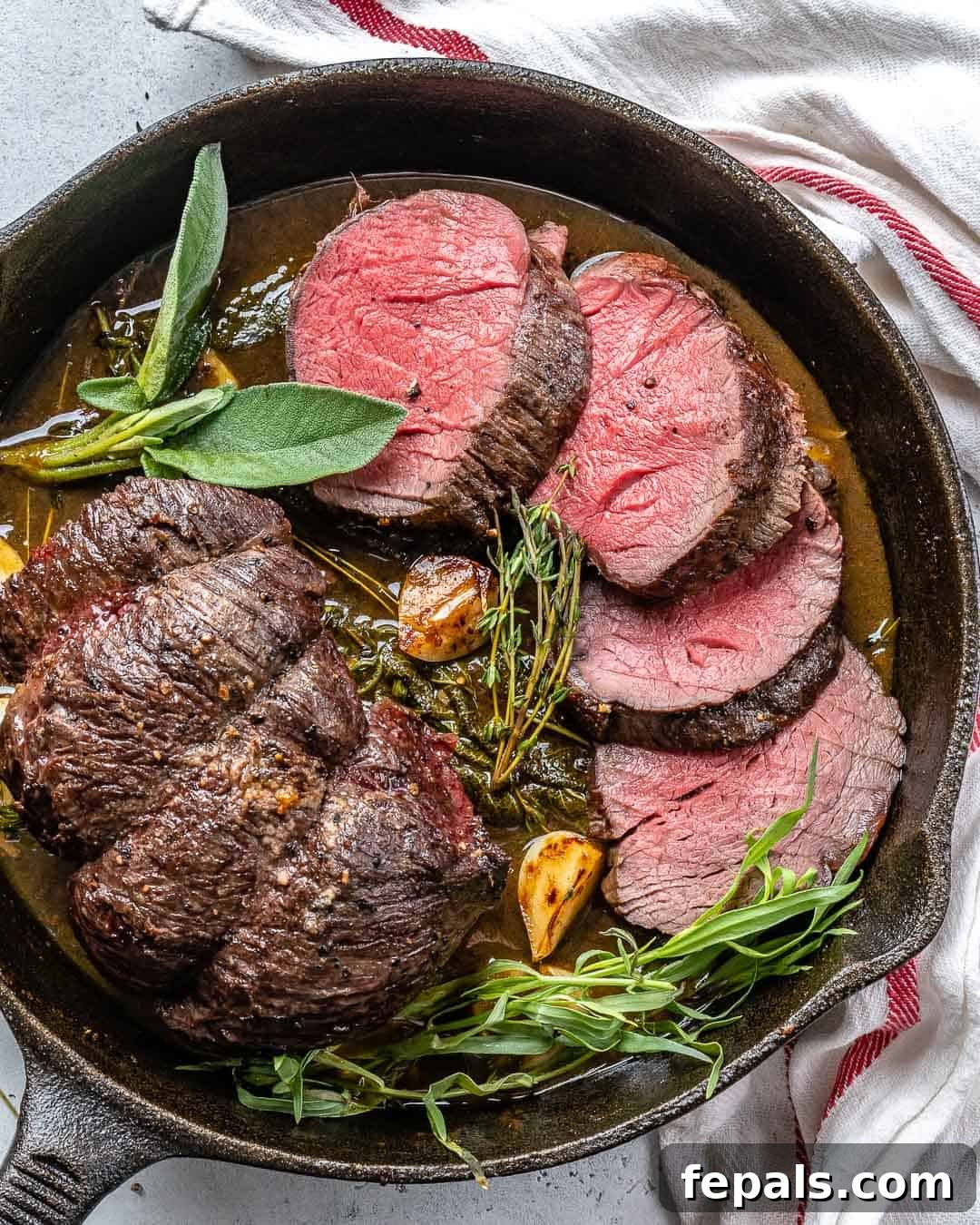
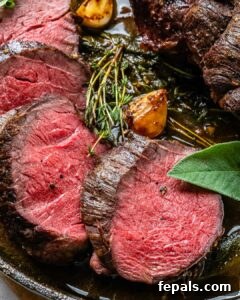
Unlock the secret to an unforgettable meal with this perfectly cooked Garlic Herb Beef Tenderloin Roast. Succulent, tender, and infused with aromatic garlic and fresh herbs, this oven-baked masterpiece is surprisingly simple to prepare. It’s the quintessential centerpiece for any festive holiday dinner, intimate family gathering, or special celebration, promising to impress with its elegant presentation and exceptional flavor.
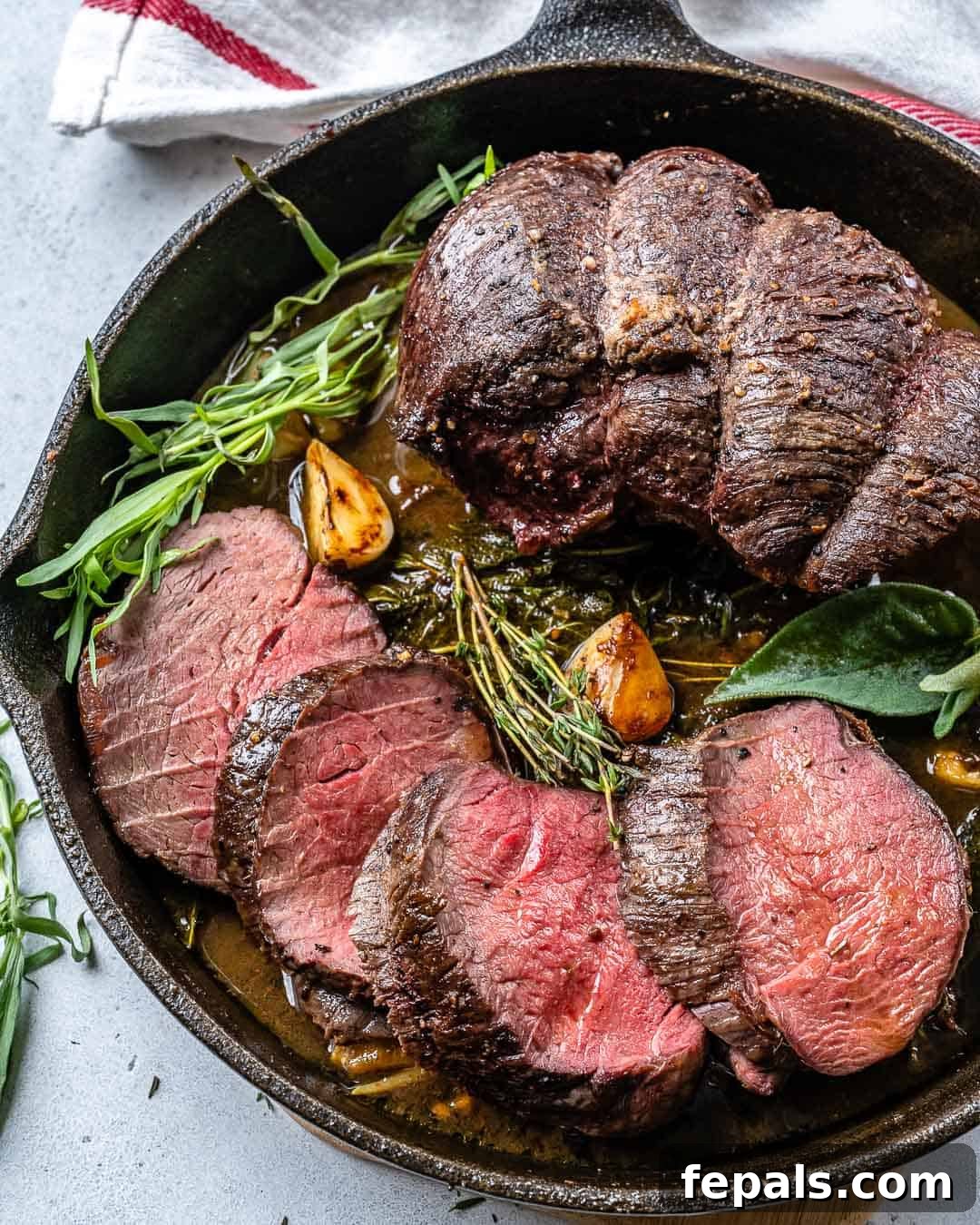
There’s nothing quite like a well-prepared beef tenderloin to elevate a meal from ordinary to extraordinary. This particular recipe for Garlic Beef Tenderloin Roast shines not only for its incredible flavor but also for its straightforward, no-fuss approach. Baked to perfection in the oven after a quick sear, the beef emerges incredibly juicy, melt-in-your-mouth tender, and bursting with rich, savory taste. It’s a dish that truly delivers on all fronts – elegance, ease, and deliciousness.
As a passionate home cook, I consistently turn to this beef tenderloin recipe throughout the year, knowing it will always be a crowd-pleaser. My family, especially my children, have a particular fondness for beef and steak, and their excitement is palpable whenever this dish makes an appearance on our dinner table. While this roast is fantastic on its own, it pairs beautifully with classic comfort sides. I often serve it alongside my creamy healthy mashed potatoes or vibrant garlic roasted broccolini, creating a balanced and utterly satisfying meal. Truly, any significant celebration or family get-together becomes even more special with a grand, juicy beef tenderloin roast at its heart, offering versatility and complementing a wide array of side dishes.
Why Choose Beef Tenderloin for Your Next Meal?
Beef tenderloin, often referred to as filet mignon, is renowned as one of the most prized cuts of beef. Its exceptional tenderness and delicate flavor make it a luxurious choice for special occasions. Sourced from the loin of the cow, this muscle is not heavily worked, resulting in a lean cut that boasts a buttery texture when cooked correctly. While it may be a more premium option, its unparalleled quality and ease of preparation for such a show-stopping dish make it a worthwhile investment for memorable meals. Opting for beef tenderloin means choosing a cut that promises minimal chewiness and maximum flavor, providing a truly exquisite dining experience.
Understanding Your Beef Tenderloin Cut
When purchasing beef tenderloin, you might find it in various forms. A whole beef tenderloin can weigh anywhere from four to six pounds and typically tapers from a thicker end (the “butt” end) to a thinner end (the “tail” end). For roasting, it’s often sold as a trimmed center-cut piece, which is ideal for achieving even cooking. You might also find it pre-cut into smaller steaks, known as filet mignon, or as chateaubriand, which is a larger center-cut portion perfect for two or more. Always look for a piece with a deep red color and minimal connective tissue or silver skin, as these can make the meat tough. A small amount of marbling (thin streaks of fat) is desirable for flavor, but beef tenderloin is naturally a very lean cut.
The Power of a Simple Garlic Herb Marinade
The beauty of this recipe lies in its simplicity, particularly the marinade. Beef tenderloin, with its inherent flavor, doesn’t require complex marinades to shine. A straightforward combination of crushed garlic, fresh herbs, olive oil, salt, and pepper works wonders. The garlic infuses the meat with a pungent, earthy depth, while fresh herbs like thyme, oregano, and sage add bright, aromatic notes that beautifully complement the richness of the beef. Olive oil helps to tenderize the outer layer and facilitates a gorgeous sear, locking in moisture and flavor. This simple yet effective marinade enhances the natural taste of the tenderloin without overpowering it, ensuring every bite is a delightful experience.
Essential Ingredients for Your Garlic Beef Tenderloin Roast
Gathering your ingredients is the first step to creating this magnificent roast. Quality ingredients, especially for a premium cut like beef tenderloin, will truly make a difference in the final taste.
- Beef Tenderloin: One whole tenderloin, typically 2-3 pounds. For larger gatherings, consider a 3-4 pound roast. Choose a high-quality cut for best results.
- Garlic Cloves: 4-6 cloves, freshly crushed. Fresh garlic is key for maximum flavor. You can adjust the amount to your taste.
- Freshly Chopped Herbs: A generous mix of thyme, oregano, and sage. These three herbs offer a classic, earthy, and aromatic profile that pairs wonderfully with beef. Rosemary is also an excellent addition if you enjoy its strong, piney notes.
- Olive Oil: About 2 tablespoons. Extra virgin olive oil adds flavor and helps with searing. As an alternative, you can use melted unsalted butter for a richer taste or avocado oil for a higher smoke point.
- Salt: 1 teaspoon, preferably Kosher salt or coarse sea salt. This is crucial for seasoning and drawing out the beef’s natural flavors.
- Ground Black Pepper: ½ teaspoon, freshly ground. Adds a subtle kick and enhances the overall seasoning.
- Bone Broth: ½ cup. Used to create a delectable pan sauce. Beef broth or even red wine can be substituted for an alternative flavor profile in the sauce.
Mastering the Oven-Roasted Beef Tenderloin: A Step-by-Step Guide
Achieving a perfect beef tenderloin roast involves a few key steps: proper preparation, a scorching sear, precise oven roasting, and a crucial resting period. Follow these instructions closely for a flawless outcome.
Preparation is Key
- Preheat your oven to 375 degrees F (190 degrees C). This ensures the oven is at the correct temperature for even cooking once the roast is transferred.
- Begin by trimming off any excess silver skin or tough fat from the beef tenderloin. Silver skin is a thin, silvery membrane that won’t render or tenderize during cooking and should be removed. You can leave a thin layer of fat, as it will melt and add flavor.
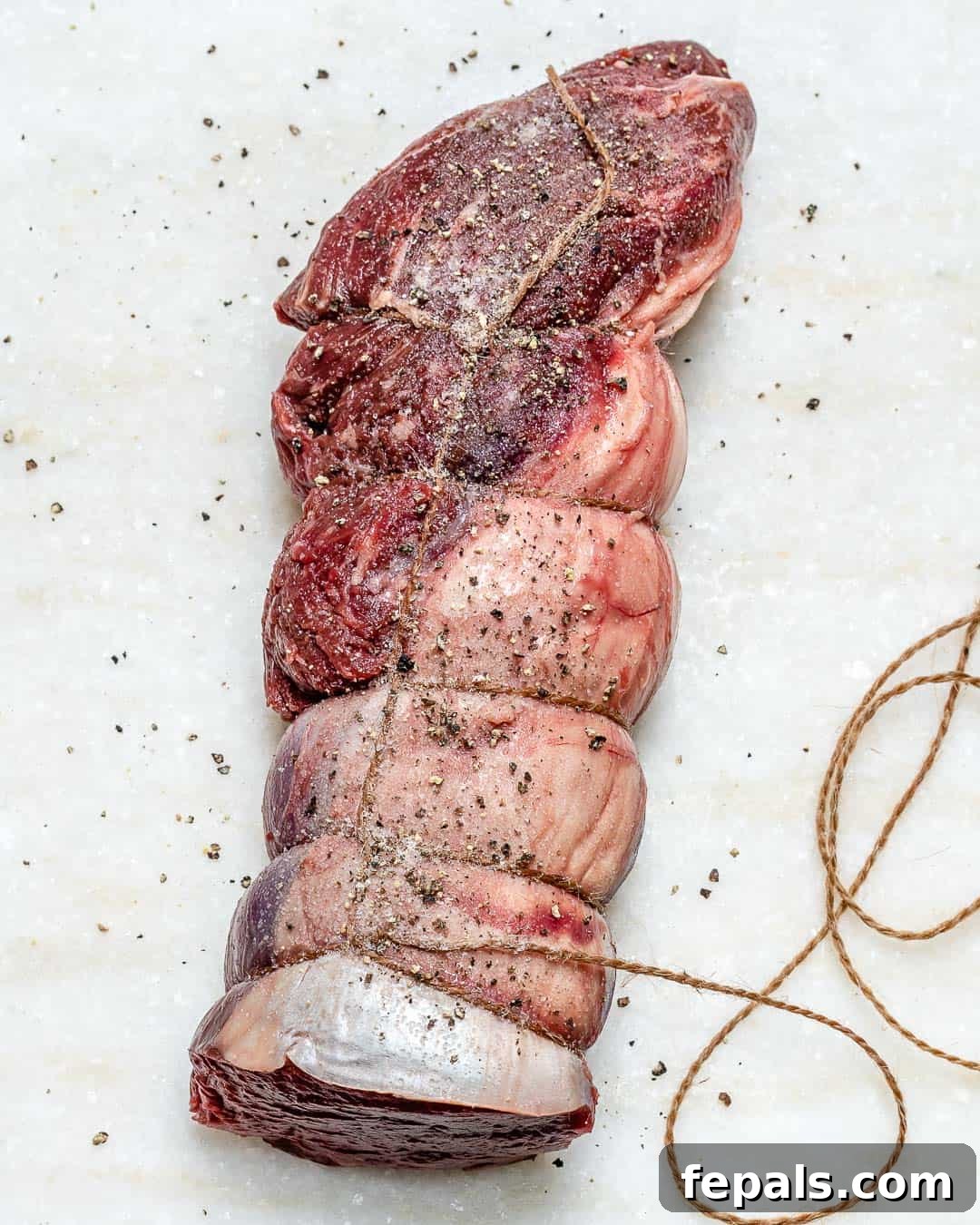
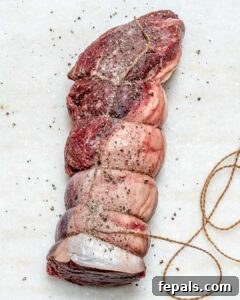
- If your tenderloin is long and uneven in thickness, you can gently cut it in half to create two more manageable pieces. The tenderloin naturally tapers at one end, becoming thinner. To ensure even cooking, tuck this tapered, thinner tip underneath the thickest part of the roast and secure it tightly with butcher’s twine. This creates a uniform cylinder, allowing the entire roast to cook at a consistent rate.
- Rub the roast generously all over with kosher salt and freshly ground black pepper. Don’t be shy with the seasoning; this large cut needs it. Allow the seasoned roast to sit at room temperature for about 30 minutes before cooking. This helps the meat relax, promotes even cooking, and allows the salt to penetrate deeper, enhancing flavor.
Step 1: Sear for a Golden Crust. Heat an oven-safe skillet (cast iron works beautifully) over medium-high heat until it begins to smoke lightly. This is crucial for achieving a deep, flavorful crust.
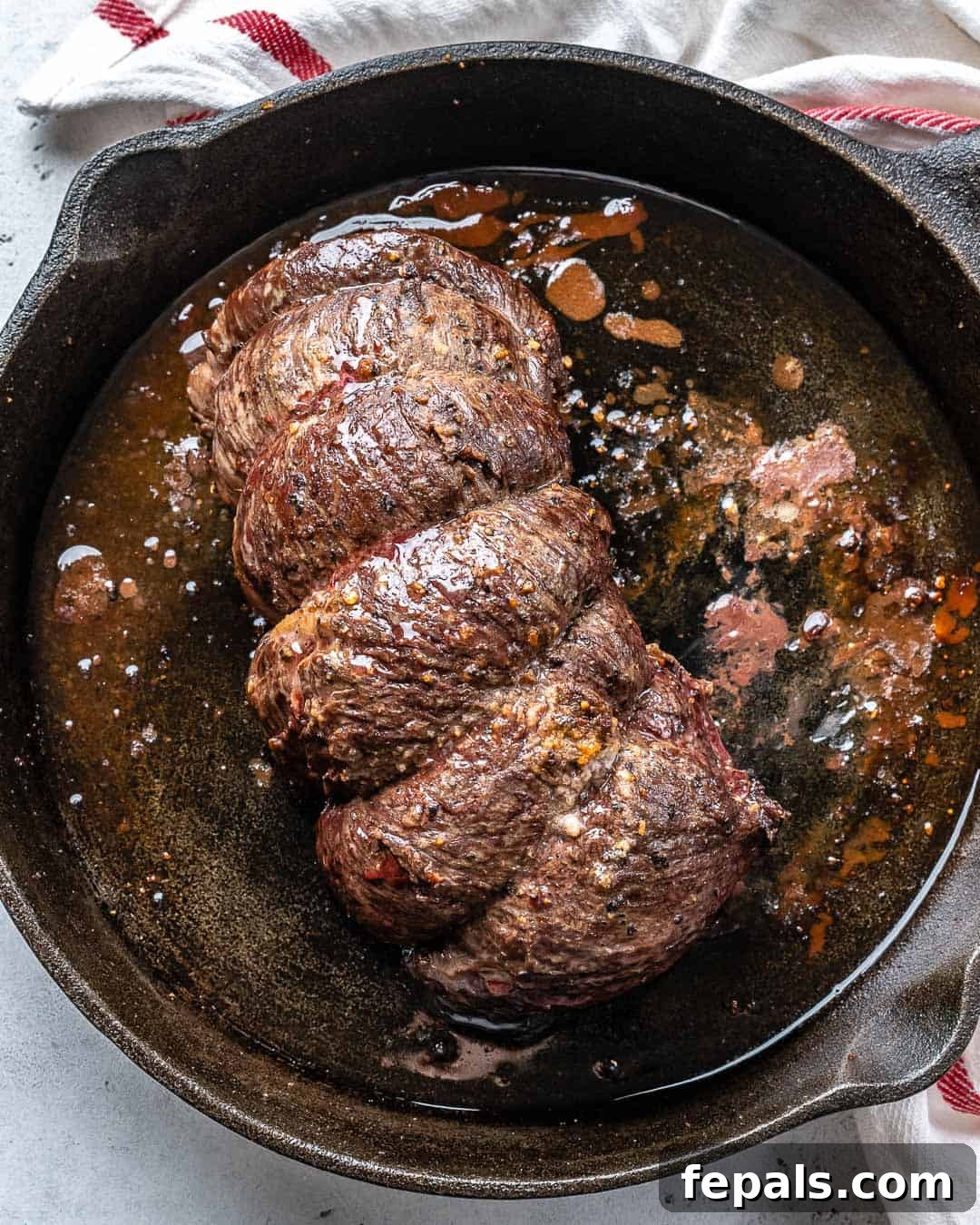
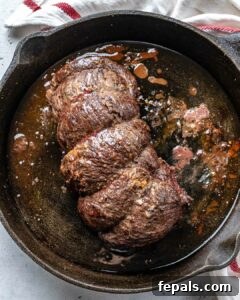
Step 2: Oven Roasting to Perfection. Add one tablespoon of olive oil to the hot skillet, ensuring it coats the bottom. Carefully place the seasoned beef tenderloin into the screaming hot skillet. Sear it on all sides for about 3-4 minutes per side, turning with tongs until a rich, golden-brown crust develops all around. This searing step is vital for building deep flavor and locking in juices.
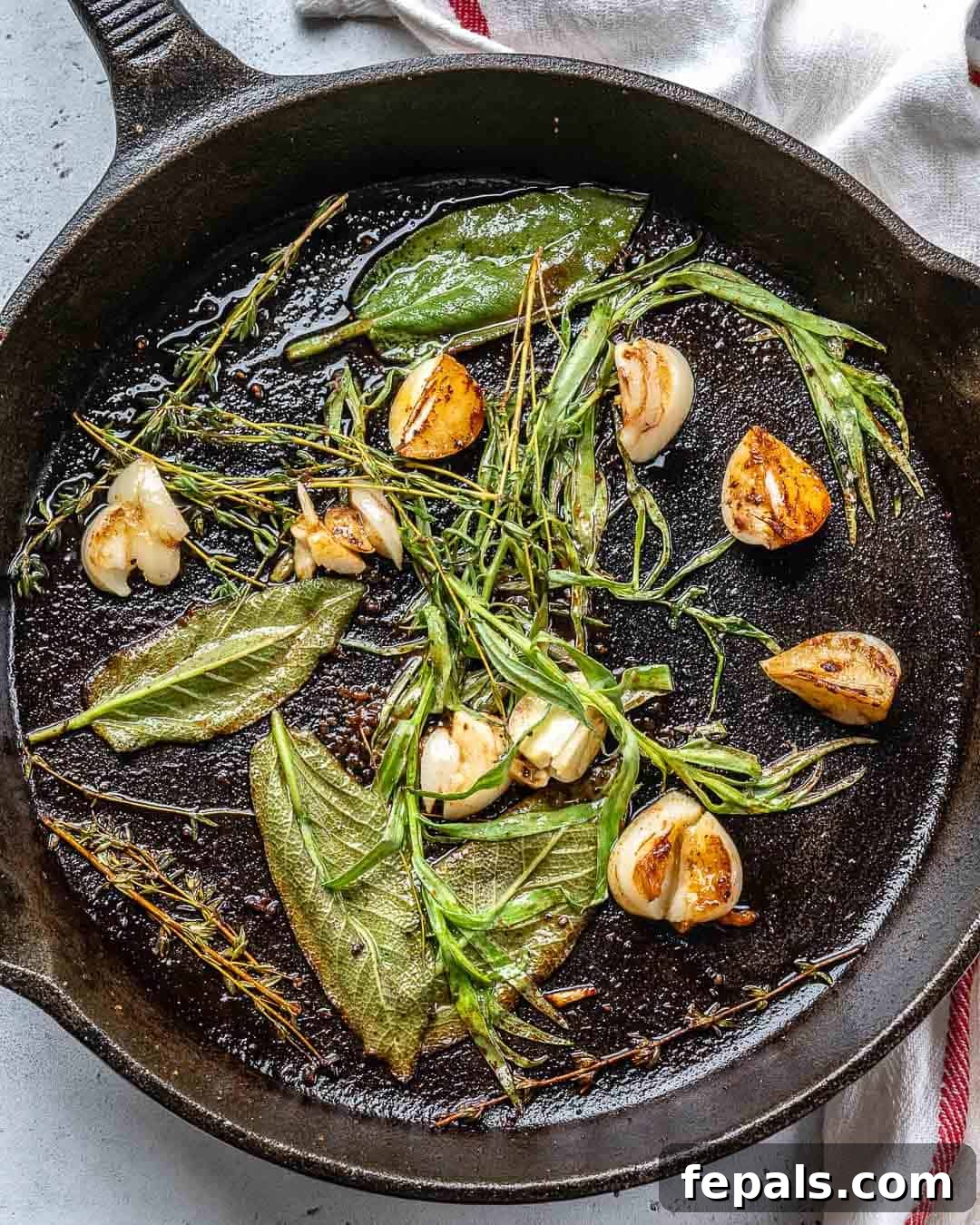
Step 3: Crafting the Flavorful Pan Sauce. Once seared, carefully transfer the skillet with the roast directly into your preheated oven. Roast until it reaches your desired internal temperature. For rare, aim for 120 degrees F (49 degrees C). For a perfect medium-rare, target 125-130 degrees F (52-54 degrees C). The cooking time will vary depending on the thickness of your roast and your oven, typically taking between 15-25 minutes for rare to medium-rare.
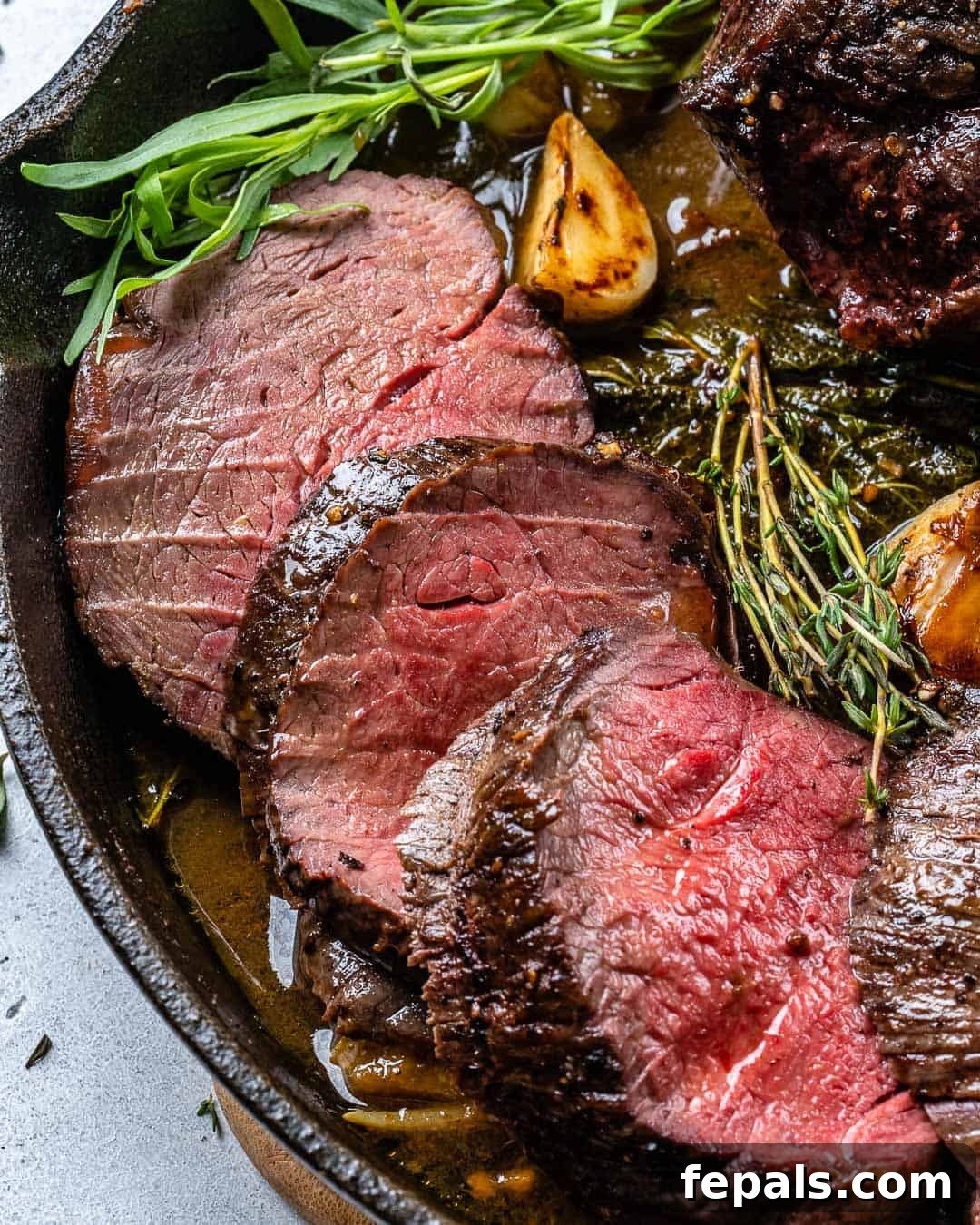
Step 4: Rest, Slice, and Serve. Immediately remove the roast from the oven once it reaches your desired doneness. Transfer it to a clean cutting board or plate, loosely tent it with foil, and allow it to rest for at least 10-15 minutes. This resting period is critical as it allows the juices to redistribute throughout the meat, ensuring a tender and moist final product. Skip this step, and you’ll lose precious juices when you slice.
Finishing the Sauce and Serving
While the beef is resting, return the same skillet (with the delicious beef drippings) to medium heat on the stovetop. Add the remaining olive oil, crushed garlic, and freshly chopped herbs to the pan. Cook, stirring constantly, for about 1-2 minutes until the garlic is fragrant and the herbs release their aroma. Be careful not to burn the garlic.
Next, pour in the bone broth. Reduce the heat to low and let the sauce simmer, using a wooden spoon to scrape up any browned bits from the bottom of the pan – these are packed with flavor! Continue to simmer until the liquid has reduced by half and slightly thickened, forming a rich, aromatic pan sauce.
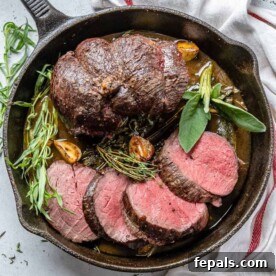
Once the beef has rested, remove the butcher’s twine. Using a sharp carving knife, slice the beef tenderloin into thick, even medallions. Arrange the sliced beef on a serving platter and generously spoon the warm pan sauce over the top. Serve immediately and prepare for an exquisite culinary experience!
Achieving Your Desired Doneness for Beef Tenderloin
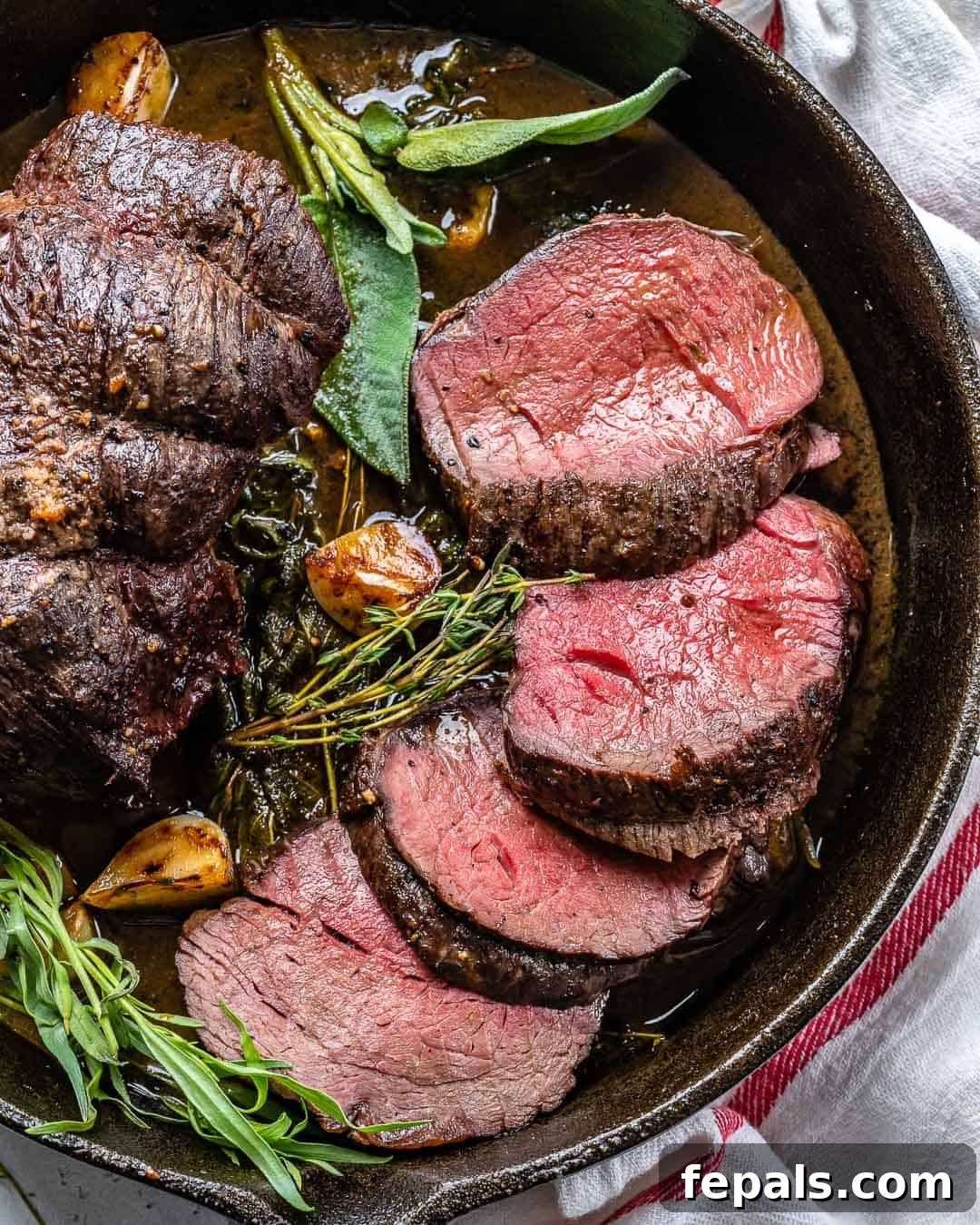
Cooking beef tenderloin to the perfect internal temperature is key to its success. A reliable meat thermometer is your best friend here. Insert the thermometer into the thickest part of the roast, avoiding bone or fat.
- Rare: 120-125°F (49-52°C) – Very red, cool center.
- Medium-Rare: 130-135°F (54-57°C) – Red, warm center. This is often considered the ideal doneness for tenderloin, preserving its juiciness and texture.
- Medium: 135-140°F (57-60°C) – Pink, warm center.
- Medium-Well: 140-145°F (60-63°C) – Slightly pink center.
- Well-Done: 150°F+ (66°C+) – Little to no pink. While possible, well-done tenderloin can lose its signature tenderness.
Remember that the internal temperature will continue to rise by 5-10 degrees Fahrenheit after the roast is removed from the oven due to carryover cooking. Always pull the roast out a few degrees before your target temperature to account for this.
How to Trim and Tie Beef Tenderloin for Even Cooking
Properly preparing your beef tenderloin before cooking ensures even heat distribution and a beautiful presentation. Here’s a more detailed guide:
- Remove Silver Skin: Lay the beef tenderloin on a clean cutting board. Identify the silver skin, a tough, silvery membrane that runs along the length of the tenderloin. To remove it, slide a sharp, thin knife just under the silver skin at one end. Angle the blade slightly upwards, away from the meat. Using a sawing motion, carefully work your knife along the length of the tenderloin, peeling the silver skin away. It’s okay if you remove a little bit of meat with it; better to remove all the tough silver skin.
- Trim Excess Fat: While beef tenderloin is lean, there might be some larger pockets of fat. You can trim these down, leaving only a thin layer of fat if desired. Some fat will render and add flavor, but excessive fat can create an uneven cook.
- Address the Tapered End: The tenderloin naturally tapers from a thick “butt” end to a thinner “tail” end. If left as is, the tail end will cook much faster than the butt end, leading to overcooked edges. To counteract this, tuck the tapered tip underneath the thickest part of the tenderloin, creating a more uniform thickness.
- Tie with Butcher’s Twine: Once the tapered end is tucked, secure the roast tightly with butcher’s twine. Start by tying a knot around the center of the roast. Then, create loops every 1-2 inches along the entire length of the roast, pulling the twine snug to hold the tucked end in place and maintain a cylindrical shape. This tying process, known as trussing, ensures even cooking and helps the roast hold its shape beautifully, resulting in uniform slices.
Frequently Asked Questions About Beef Tenderloin
Yes, essentially, they are the same cut of meat! “Beef tenderloin” refers to the entire primal cut, which is a large, elongated muscle. When this whole cut is sliced into individual steaks, those medallions are typically referred to as “filet mignon” (a French term meaning “delicate fillet”) or sometimes simply “tenderloin steak.” So, while filet mignon is always beef tenderloin, beef tenderloin encompasses the whole cut from which filet mignon steaks are derived.
The cooking time for beef tenderloin depends on its thickness, weight, and your desired level of doneness. Generally, for a 2-3 pound roast seared first and then oven-roasted at 375°F (190°C):
- For rare (120-125°F), it may take 15-20 minutes after searing.
- For medium-rare (125-130°F), expect 20-25 minutes.
- For medium (135-140°F), it could be 25-30 minutes.
These are estimates; always rely on a meat thermometer for accuracy. For safe consumption, the USDA recommends a minimum internal temperature of 145°F (63°C) for whole cuts of beef, followed by a 3-minute rest. However, many prefer tenderloin cooked to a lower temperature for optimal tenderness and juiciness.
For a main course, we generally recommend about half a pound (8 ounces or approximately 225 grams) of uncooked beef tenderloin per person. This typically yields a substantial and satisfying serving once cooked, considering some weight loss during the cooking process. For lighter eaters or if you have many rich side dishes, you might aim for 6 ounces per person. A 3-ounce portion of cooked beef tenderloin provides approximately 276 calories, 21g of fat, 0g of carbohydrates, and 20g of protein, making it a nutrient-dense option.
Beef tenderloin is a long, lean, and incredibly tender cut of beef that comes from the loin primal of the animal. Located along the spine, this muscle is not weight-bearing and sees very little movement, which is why it’s so exceptionally tender. It’s prized for its fine grain and mild, buttery flavor. In addition to being called “filet” or “filet mignon” in countries like France, Brazil, and the UK, it’s also the source of other luxurious cuts such as Chateaubriand (a thick center cut) and forms part of the T-bone and Porterhouse steaks.
While it’s best to roast the tenderloin just before serving for optimal texture, you can do some prep work in advance. You can trim and tie the tenderloin a day or two before, storing it tightly wrapped in the refrigerator. You can also crush the garlic and chop the herbs ahead of time. On the day of cooking, simply season the roast and let it come to room temperature before searing and roasting.
Store any leftover beef tenderloin in an airtight container in the refrigerator for up to 3-4 days. To reheat without drying it out, gently warm the slices in a skillet over low heat with a splash of beef broth, or wrap them loosely in foil and reheat in a low oven (around 250°F / 120°C) until just warm through. Avoid high heat, which can toughen the meat.
Absolutely! While thyme, oregano, and sage are a classic combination, feel free to experiment with other herbs that complement beef. Rosemary adds a strong, earthy, and piney flavor. Parsley can add a fresh, vibrant note. Marjoram, a milder cousin to oregano, also works well. You can use a single herb or a combination that suits your preference.
Perfect Pairings: What to Serve with Beef Tenderloin
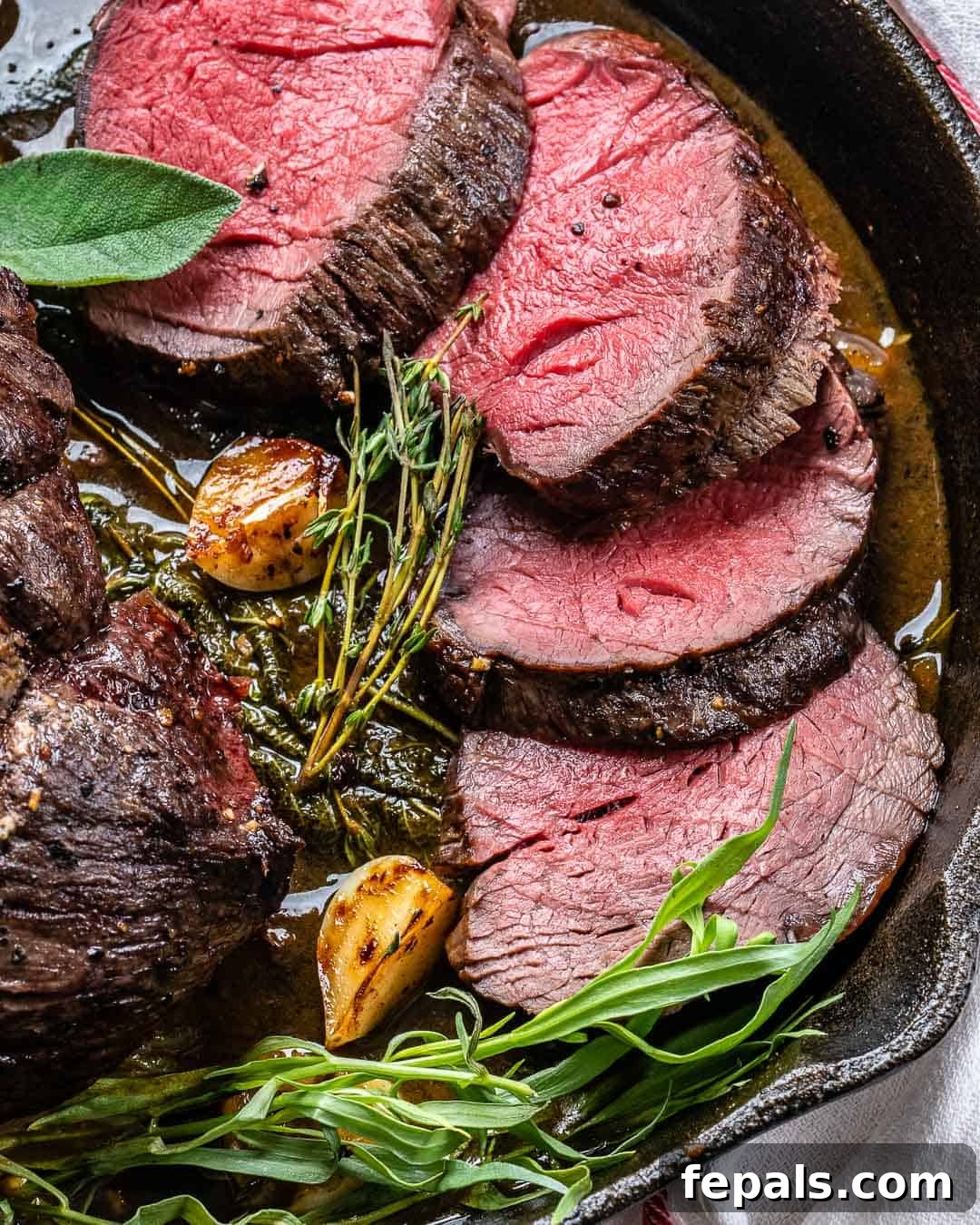
A glorious beef tenderloin roast deserves an equally impressive supporting cast of side dishes. Its rich flavor and tender texture make it incredibly versatile, pairing beautifully with a wide array of accompaniments. Here are some options to consider, transforming your dinner table into a true feast:
- Creamy Potato Dishes: Nothing complements beef quite like potatoes. Think classic Healthy Mashed Potatoes, savory Garlic Butter Hasselback Potatoes, or even a decadent gratin.
- Elegant Vegetable Sides: Elevate your meal with sophisticated vegetable preparations. Consider bright and fresh Garlic Roasted Broccolini, hearty Garlic Whole Roasted Cauliflower, or a comforting Healthy Broccoli Casserole. For a lighter touch, Easy Cauliflower Mash offers a creamy, low-carb alternative.
- Sweet and Savory Options: Balance the richness of the beef with a hint of sweetness. A Healthy Sweet Potato Casserole or Roasted Smoked Sweet Potatoes can provide a delightful contrast.
- Rich and Umami Flavors: Enhance the savory notes with dishes like Creamy Garlic Mushrooms, which bring an earthy depth that perfectly matches the beef.
- Comforting Grains: While not listed, a classic wild rice pilaf or a simple risotto could also make excellent additions.
- Seasonal Vegetables: Don’t forget to incorporate seasonal vegetables. Asparagus, green beans, or glazed carrots can add color and freshness.
- Creamy Corn Dishes: For a touch of Southern comfort, Cheesy Creamed Corn can be a surprisingly delicious pairing, offering sweetness and creaminess.
When selecting your sides, consider variety in texture and flavor to create a well-rounded and exciting meal.
You May Also Enjoy These Beef Recipes
If you’ve loved this beef tenderloin, explore other delectable beef dishes that are perfect for any occasion:
- Beef Wellington: An impressive classic featuring tender beef fillet coated in pâté and duxelles, then wrapped in puff pastry and baked.
- Slow Cooker Beef Rump Roast: A comforting and effortless recipe for tender, fall-apart beef roast cooked low and slow.
- Homemade Beef Stew: A hearty and warming stew packed with tender beef and vegetables in a rich, savory broth.
- Homemade Vegetable Beef Soup: A wholesome and nourishing soup, perfect for a cozy meal.
- Classic Homemade Beef Chili: A robust and flavorful chili, ideal for game day or a comforting weeknight dinner.
- Beef Bolognese Sauce: A rich, slow-simmered meat sauce perfect for pasta dishes.

Join our community and get exclusive recipes and tips straight to your inbox! Sign up here!
Don’t forget to subscribe to my NEWSLETTER for free and receive delicious recipes like this Garlic Herb Beef Tenderloin Roast delivered right to your inbox!
Thanks for stopping by. FOLLOW me on FACEBOOK | INSTAGRAM | PINTEREST | TWITTER for all of my latest blog posts and recipes.
Garlic Beef Tenderloin Roast
Beef Tenderloin Roast made with a simple garlic marinade and baked in the oven to perfection.
By: Rena
Servings: 6
Prep Time: 10 mins
Cook Time: 20 mins
Total Time: 30 mins
Ingredients
- 3 pounds Beef Tenderloin, one tenderloin (2-3 lbs)
- 4-6 Garlic Cloves, crushed
- Freshly Chopped Herbs (thyme, oregano, and sage)
- 2 tablespoons Olive Oil
- ½ teaspoon Ground Black Pepper
- 1 teaspoon Salt
- ½ Cup Bone Broth
Instructions
- Preheat the oven to 375 F. Rub the Beef Tenderloin roast generously with ½ teaspoon Ground Black Pepper and 1 teaspoon Salt. Heat an oven-safe skillet over medium-high heat until smoking hot.

- Add one tablespoon of the Olive Oil and place the roast into the hot skillet, searing it on all sides for about 3-4 minutes on each side.
- Transfer the seared roast to the preheated oven and roast until it reaches your desired doneness, 120 degrees for rare or 125-130 degrees for medium-rare.
- This may take somewhere between 15-20 minutes for rare, depending on the thickness of your roast.
- Once the roast is done, remove it from the oven and allow it to sit on a plate, covered, for about 15 minutes.
- Heat the same skillet with beef drippings over medium heat and add the remaining olive oil, 4-6 Garlic Cloves (crushed), and Freshly Chopped Herbs.
- Cook until fragrant, stirring constantly, then pour in ½ Cup Bone Broth. Reduce the heat and let it simmer, scraping any brown bits from the bottom of the pan. Cook until the liquid is reduced by half.
- Slice the beef and remove the twine as you slice off the pieces. Return it back to the pan, spooning the sauce over. Serve immediately and enjoy!

Notes
- Preparing the roast: Trim off any excess silver skin or tough fat from the meat. If you have one big long fillet, tuck the tapered tip under the thickest part and tie it with twine, creating an even thickness in the roast for uniform cooking.
- Allow the tenderloin to sit at room temperature for about 30 minutes before cooking. This helps ensure even cooking.
Nutrition
Nutrition information is automatically calculated, so should only be used as an approximation.
Calories: 669kcal | Carbohydrates: 1g | Protein: 42g | Fat: 54g | Saturated Fat: 21g | Cholesterol: 159mg | Sodium: 507mg | Potassium: 697mg | Fiber: 1g | Sugar: 1g | Vitamin C: 1mg | Calcium: 19mg | Iron: 5mg
Additional Info
Course: Main Course
Cuisine: American