
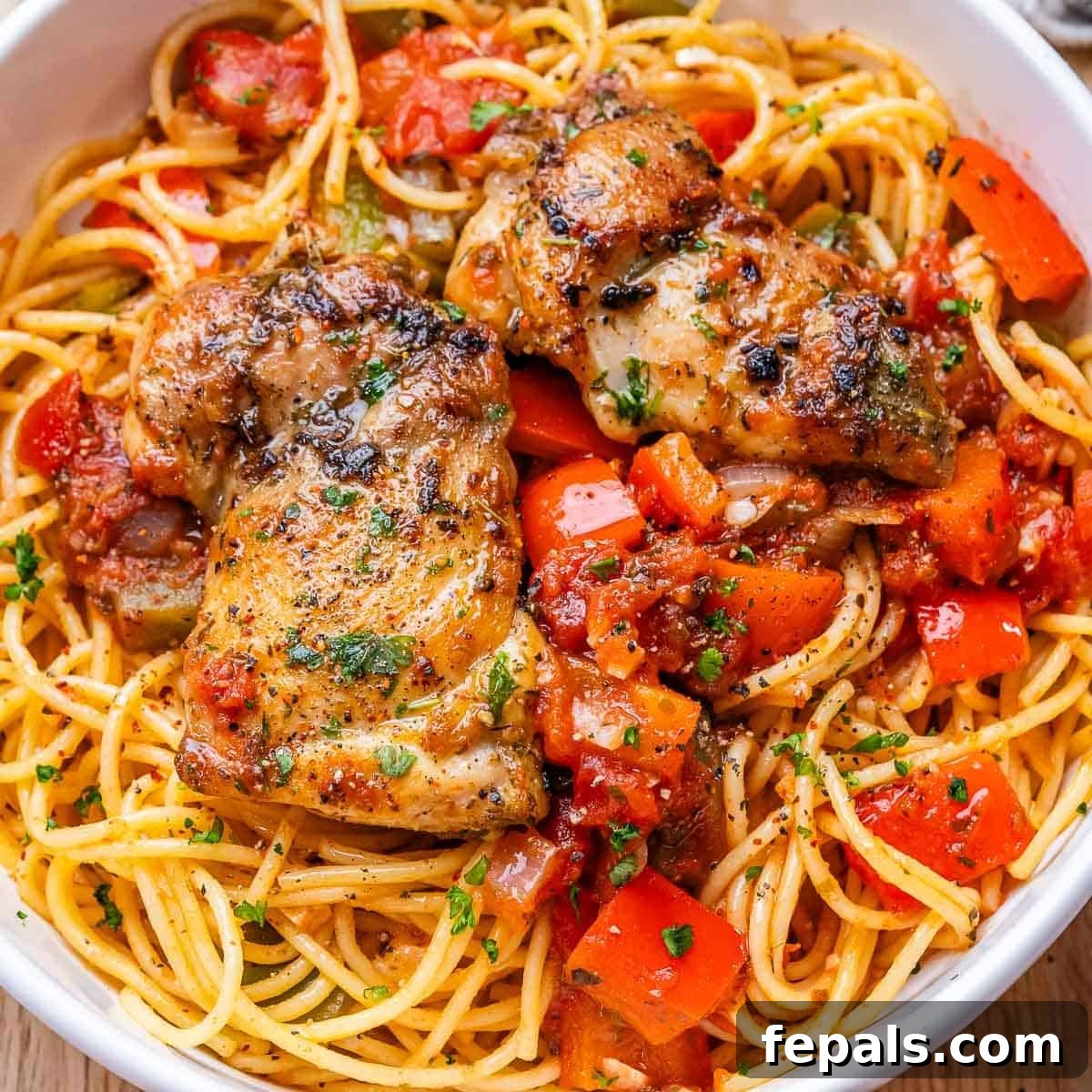
Welcome to the ultimate guide for crafting a truly exceptional Chicken Cacciatore! This rustic Italian classic, also affectionately known as “Hunter’s Chicken,” is a celebration of simple, wholesome ingredients transformed into an incredibly flavorful and comforting one-pan meal. Imagine tender chicken thighs, slow-braised to perfection, nestled in a rich, tangy tomato sauce infused with the sweet notes of onions and bell peppers, and fragrant herbs. It’s the kind of dish that warms you from the inside out, making it an instant family favorite perfect for any occasion, from a cozy weeknight dinner to an impressive gathering with friends.

While traditional cacciatore often features game meats like rabbit or pheasant, this recipe opts for succulent chicken thighs. Why chicken thighs? Their inherent richness and ability to remain incredibly moist and tender through a long braise make them the ideal choice for absorbing all the glorious flavors of the tomato-based sauce. The result is a dish that’s not only incredibly delicious but also remarkably easy to prepare, making it a stress-free yet deeply satisfying meal.
Ready to dive into a culinary journey? This comprehensive guide will walk you through every step, from selecting the freshest ingredients to mastering the perfect simmer, ensuring your Chicken Cacciatore is nothing short of spectacular. We’ll explore ingredient benefits, smart substitutions, and expert tips to elevate your cooking. Whether you’re serving it over a bed of al dente pasta, creamy polenta, or with a fresh loaf of Italian focaccia, this dish is guaranteed to impress. For an extra touch of Italian flair, consider pairing it with a vibrant Italian Chopped Salad or a comforting side of Garlic Butter Mashed Cauliflower.
Recipe at a Glance
The Essence of Chicken Cacciatore: A Culinary Journey
Chicken Cacciatore, meaning “hunter’s style” in Italian, harks back to rustic traditions where cooks would prepare hearty meals with whatever was available from the hunt or garden. This classic dish embodies the essence of Italian comfort food – robust flavors, simple ingredients, and a cooking method that coaxes out incredible depth. Our version pays homage to this heritage while making it accessible for the modern home cook. The magic truly happens as the chicken braises in the vibrant tomato and vegetable sauce, creating a symphony of flavors that is both complex and wonderfully comforting.
Beyond its delicious taste, Chicken Cacciatore is also a fantastic choice for its nutritional profile. Packed with lean protein from the chicken, vitamins from the bell peppers and tomatoes, and healthy fats from olive oil, it’s a well-rounded meal that’s both satisfying and good for you. It’s naturally gluten-free (when served with appropriate sides) and can easily be adapted to various dietary preferences. This dish is not just about eating; it’s about enjoying the process of creating something truly special in your kitchen.
Key Ingredients for Authentic Flavor
The beauty of Chicken Cacciatore lies in its reliance on fresh, high-quality ingredients that, when combined, create a truly unforgettable flavor profile. Below, you’ll find a detailed list of what you’ll need, along with insights into why each component is essential and potential substitutions to suit your pantry or preferences. The full, precise quantities are also listed in the detailed recipe card further down this post.
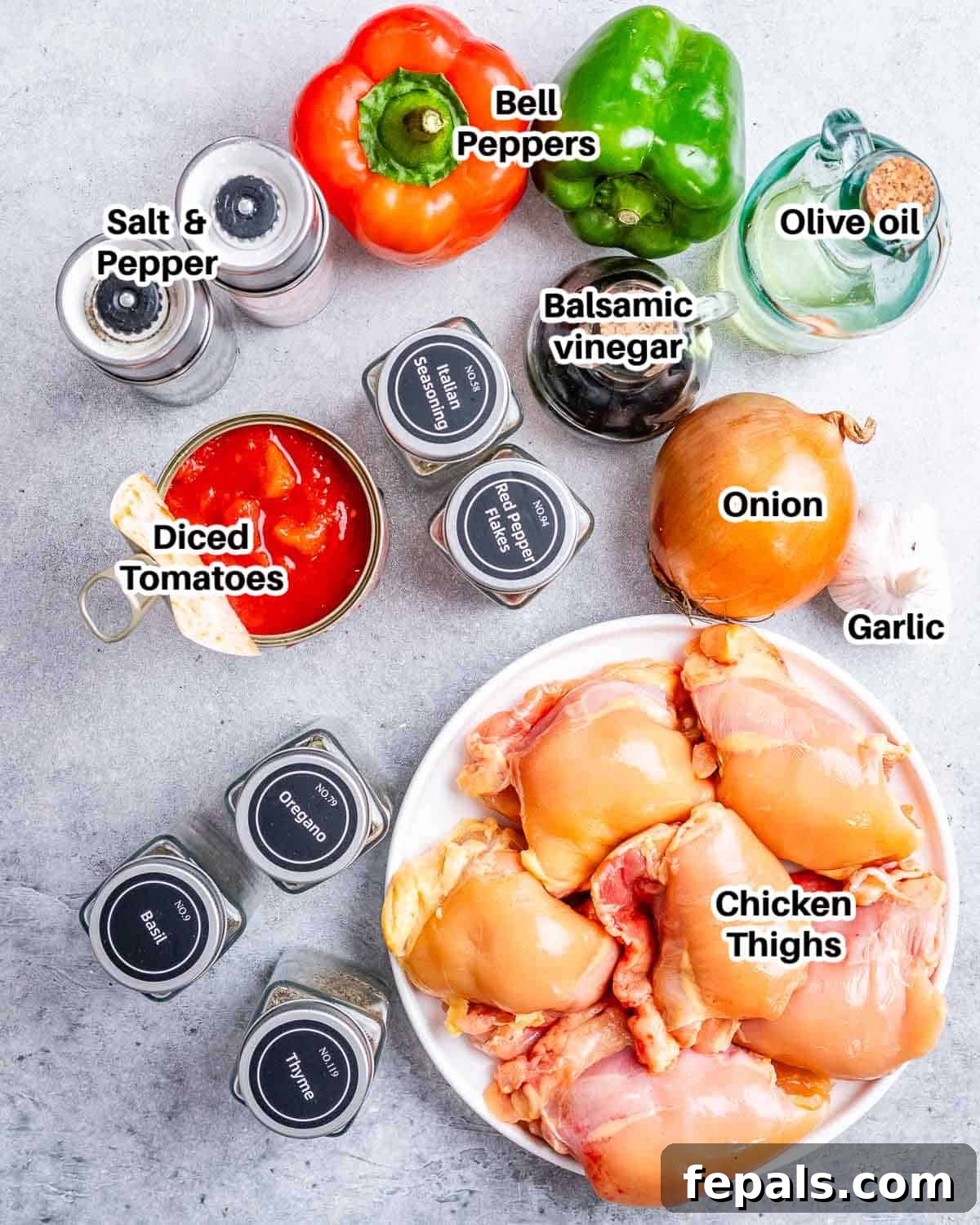
- Chicken Thighs: We highly recommend boneless, skinless chicken thighs for this recipe. They cook relatively quickly, stay incredibly moist, and offer a rich, savory depth of flavor that chicken breasts often lack in a braised dish. If you prefer chicken breast, it can be used, but be mindful that it may dry out if overcooked, and you might need to slightly adjust the simmering time. For an even richer, more traditional cacciatore, consider bone-in, skin-on thighs; just be aware they will require a longer cooking time.
- Olive Oil: A cornerstone of Italian cooking, high-quality extra virgin olive oil is used both to sear the chicken and to sauté the aromatics, building the foundation of flavor. Its fruity notes complement the other ingredients beautifully. Avocado oil is a suitable alternative if you’re looking for a higher smoke point or a different flavor profile.
- Aromatic Vegetables (Onion, Bell Pepper, Garlic):
- Onion: A medium yellow or sweet onion forms the sweet and pungent base of our sauce. It caramelizes slightly during sautéing, adding profound depth. Shallots can be used for a milder, more refined onion flavor.
- Bell Peppers: These bring natural sweetness and wonderful texture to the tomato sauce. Using a mix of colors (red, yellow, orange) adds visual appeal, but a green bell pepper is particularly recommended to balance the sweetness of the tomatoes and other peppers with a slightly more savory, earthy note.
- Garlic: Freshly minced garlic is always best for its pungent, aromatic intensity. If you’re short on time, pre-chopped garlic is a convenient shortcut. In a pinch, garlic powder can work, but reduce the quantity significantly.
- Seasonings:
- Italian Seasoning: This blend typically includes basil, oregano, rosemary, thyme, and marjoram, providing a quintessential Italian herb flavor profile.
- Dried Thyme, Oregano, Basil: Adding individual dried herbs in addition to the blend amplifies their presence and ensures a well-rounded herbaceousness throughout the dish.
- Red Pepper Flakes: A touch of heat to awaken the palate. Adjust the amount to your spice preference; omit if you prefer no heat.
- Kosher Salt and Black Pepper: Essential for seasoning the chicken and balancing all the flavors in the sauce. Always season to taste.
- Balsamic Vinegar: This is a crucial ingredient that lends a wonderful acidity, depth, and subtle sweetness to the sauce, cutting through the richness of the chicken and tomatoes. If you don’t have balsamic, red wine vinegar can be used, but you might want to add a tiny pinch of sugar or a touch of honey to compensate for the missing sweetness.
- Diced Tomatoes: Canned diced tomatoes form the heart of our rich sauce. Opt for good quality canned tomatoes, preferably those “with basil” for an extra layer of flavor. If using plain diced tomatoes, simply stir in some fresh chopped basil at the end of cooking for that added herbaceous touch. Crushed tomatoes or even passata can also be used for a smoother sauce.
- Fresh Basil or Parsley: These are optional but highly recommended garnishes. A sprinkle of freshly chopped basil or vibrant parsley just before serving brightens the dish with color and a burst of fresh flavor, completing the cacciatore experience.
How to Master the Art of Chicken Cacciatore: A Step-by-Step Guide
Creating this delicious Chicken Cacciatore is a straightforward process, but paying attention to each step will ensure a truly spectacular result. Follow these instructions carefully to achieve perfectly tender chicken and a deeply flavorful sauce.
Step 1: Prepare and Season the Chicken. Begin by patting your boneless, skinless chicken thighs dry with paper towels. This step is crucial for achieving a beautiful sear. Season both sides generously with kosher salt, freshly ground black pepper, and the Italian seasoning blend. Ensure the chicken is evenly coated to maximize flavor development during searing.
Step 2: Sear the Chicken. Heat a large, rimmed skillet over medium-high heat. Add approximately 1 tablespoon of olive oil. Once the oil shimmers, carefully place the seasoned chicken thighs in a single layer, ensuring not to overcrowd the pan (work in batches if necessary). Sear the chicken for 3-4 minutes per side until it develops a gorgeous golden-brown crust. This searing process locks in juices and adds immense flavor to the dish. The chicken doesn’t need to be cooked through at this stage; it will finish cooking in the sauce. Remove the seared chicken from the skillet and set it aside on a plate.

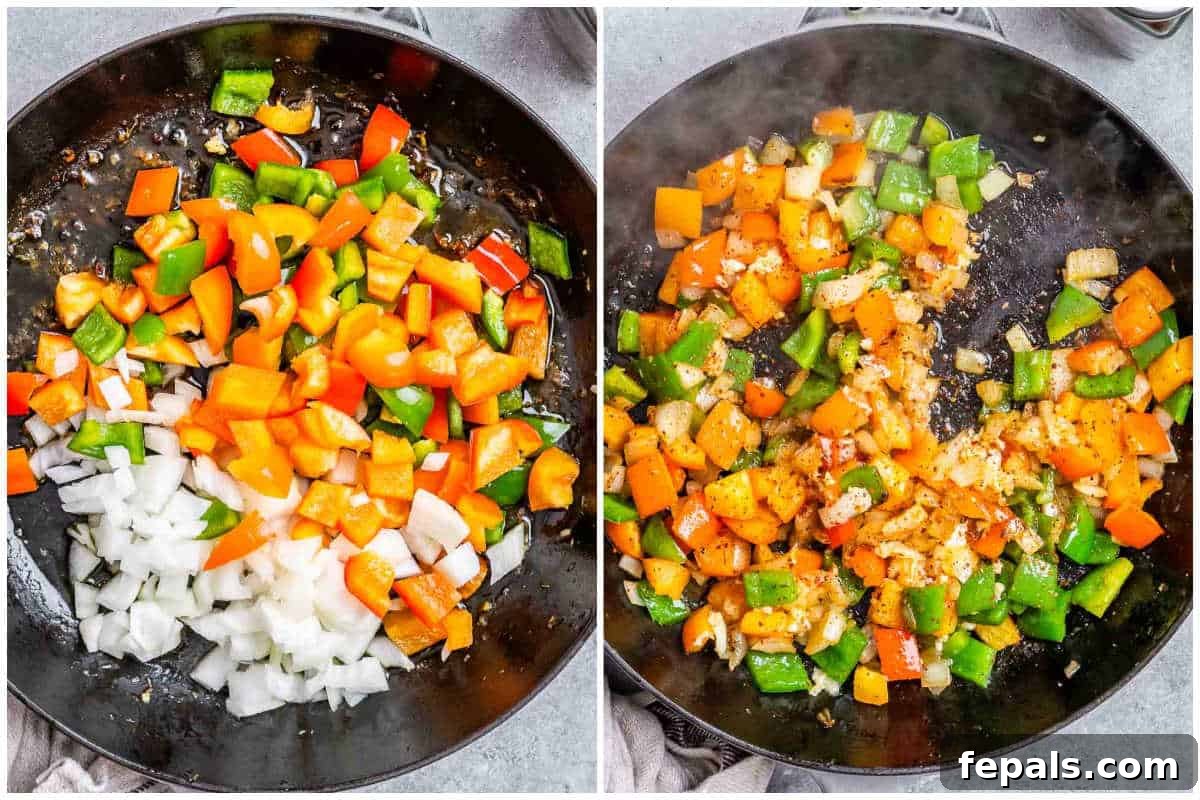
Step 3: Sauté the Aromatics and Deglaze. Add the remaining 1 tablespoon of olive oil to the same skillet. Reduce the heat slightly to medium. Add the finely chopped onions and sliced bell peppers. Sauté for 3-4 minutes, stirring occasionally, until they begin to soften and release their aromatic juices. Next, stir in the minced garlic and crushed red pepper flakes. Cook for just 1 minute more, stirring constantly, until the garlic becomes fragrant (be careful not to burn it!). Pour in the balsamic vinegar and a splash of filtered water. Use a wooden spoon to scrape up any browned bits from the bottom of the pan – this is called deglazing, and those bits are packed with incredible flavor that will enrich your sauce.
Step 4: Build the Sauce and Add Chicken. Add the canned diced tomatoes (including their juices) to the skillet, along with the dried thyme, oregano, and basil. Stir everything together thoroughly to combine all the flavors. Bring the sauce to a gentle boil, then immediately reduce the heat to low. Carefully return the seared chicken thighs to the skillet, nestling them into the simmering sauce. Ensure they are partially submerged to allow them to braise properly.
Step 5: Simmer to Perfection. Cover the skillet and let the chicken and sauce simmer gently for 15-20 minutes, or until the chicken is fully cooked through, incredibly tender, and almost falling apart. The low and slow simmering process is key to achieving that melt-in-your-mouth texture and allowing the flavors to meld beautifully. Remember to stir the bottom of the pan occasionally to prevent any sticking or burning. The sauce will also thicken slightly as it simmers.
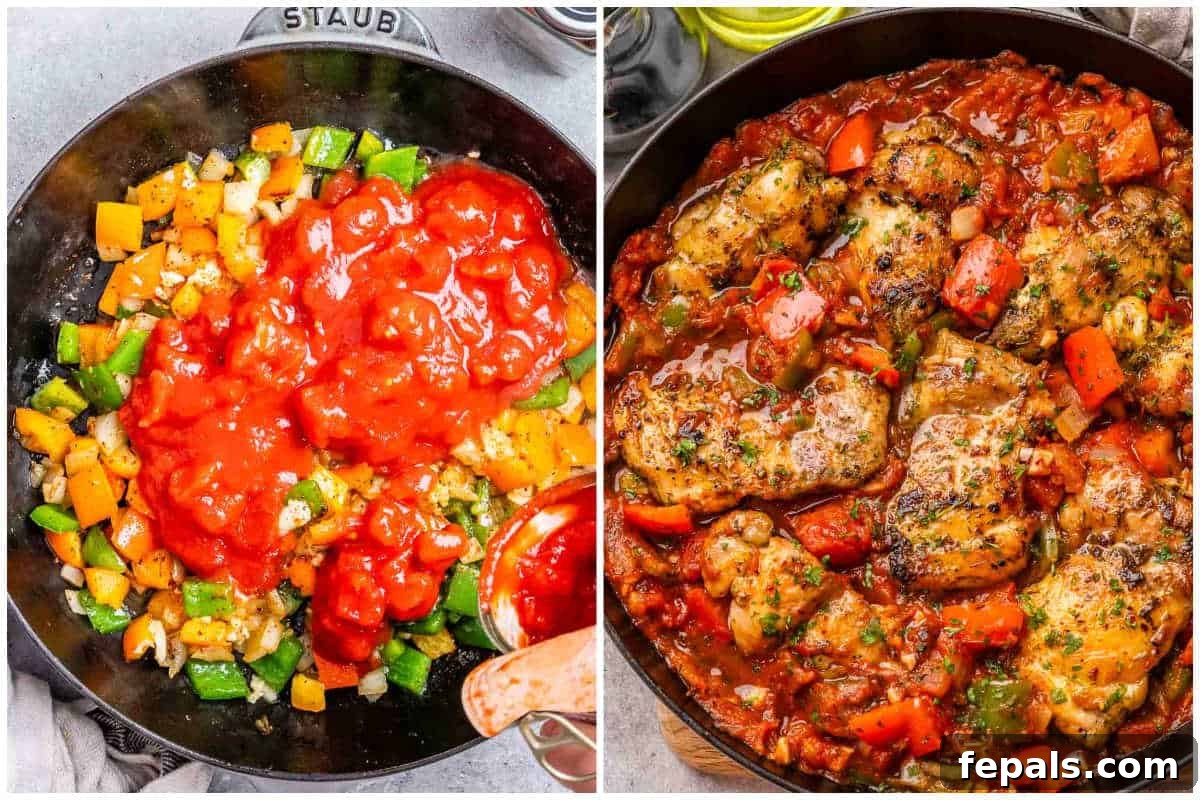
Step 6: Finish and Garnish. Once the chicken is tender and the sauce has reached your desired consistency, remove the skillet from the heat. Give it a final taste test and adjust seasonings if necessary. Garnish generously with freshly chopped basil or parsley for a burst of fresh flavor and vibrant color.
Step 7: Serve Warm and Enjoy. Ladle the rich Chicken Cacciatore warm over your favorite accompaniment. It’s absolutely divine served over cooked spaghetti, creamy polenta, or even fluffy rice. Prepare to savor a truly comforting and delicious Italian meal!
Expert Variations & Tips for Your Best Cacciatore
Elevate your Chicken Cacciatore with these tried-and-true variations and tips designed to enhance flavor, texture, and cater to diverse palates.
- Amplify Your Veggies: Don’t limit yourself to just onions and bell peppers. Sliced cremini mushrooms, sautéed alongside the bell peppers, add an earthy, umami depth. Towards the end of cooking, stir in a handful of baby spinach or kale until wilted for added greens and nutrients. Carrots and celery, chopped finely and added with the onions, can also contribute to a richer mirepoix base.
- For a Savory Twist: Introduce briny notes by stirring in capers or pitted Kalamata or black olives during the last 10 minutes of simmering. Their salty, tangy flavor pairs wonderfully with the rich tomato sauce and chicken.
- Boost Richness with Bone-In: For a more profound, traditional flavor and an even richer sauce, opt for bone-in, skin-on chicken thighs. The bones impart a significant amount of flavor and collagen into the sauce, making it incredibly luscious. Keep in mind that bone-in thighs will require a longer simmering time – typically around 30-40 minutes – to ensure they are fully cooked and fall-off-the-bone tender.
- The Secret to Tender Chicken: The key to succulent, falling-apart chicken is low and slow simmering. Resist the urge to rush the cooking process. A gentle simmer allows the chicken’s connective tissues to break down slowly, resulting in remarkably tender meat that effortlessly absorbs the sauce’s flavors.
- Quality Tomatoes Make a Difference: The quality of your canned tomatoes significantly impacts the final flavor of your sauce. Invest in good-quality crushed or diced tomatoes. If fresh, ripe tomatoes are in season, you can blanch, peel, and chop them for an even fresher taste, though this adds a bit more prep work.
- Parmesan Rind Magic: For an incredible boost of savory, umami flavor, add a discarded parmesan rind to the sauce as it simmers. The rind will slowly melt and infuse the sauce with its salty, cheesy goodness. Just remember to remove it before serving!
- A Splash of Wine: For an even deeper, more complex flavor, consider adding about half a cup of dry red wine (like Chianti or Merlot) after deglazing the pan and before adding the diced tomatoes. Let it simmer and reduce by half to concentrate its flavors before proceeding with the recipe.
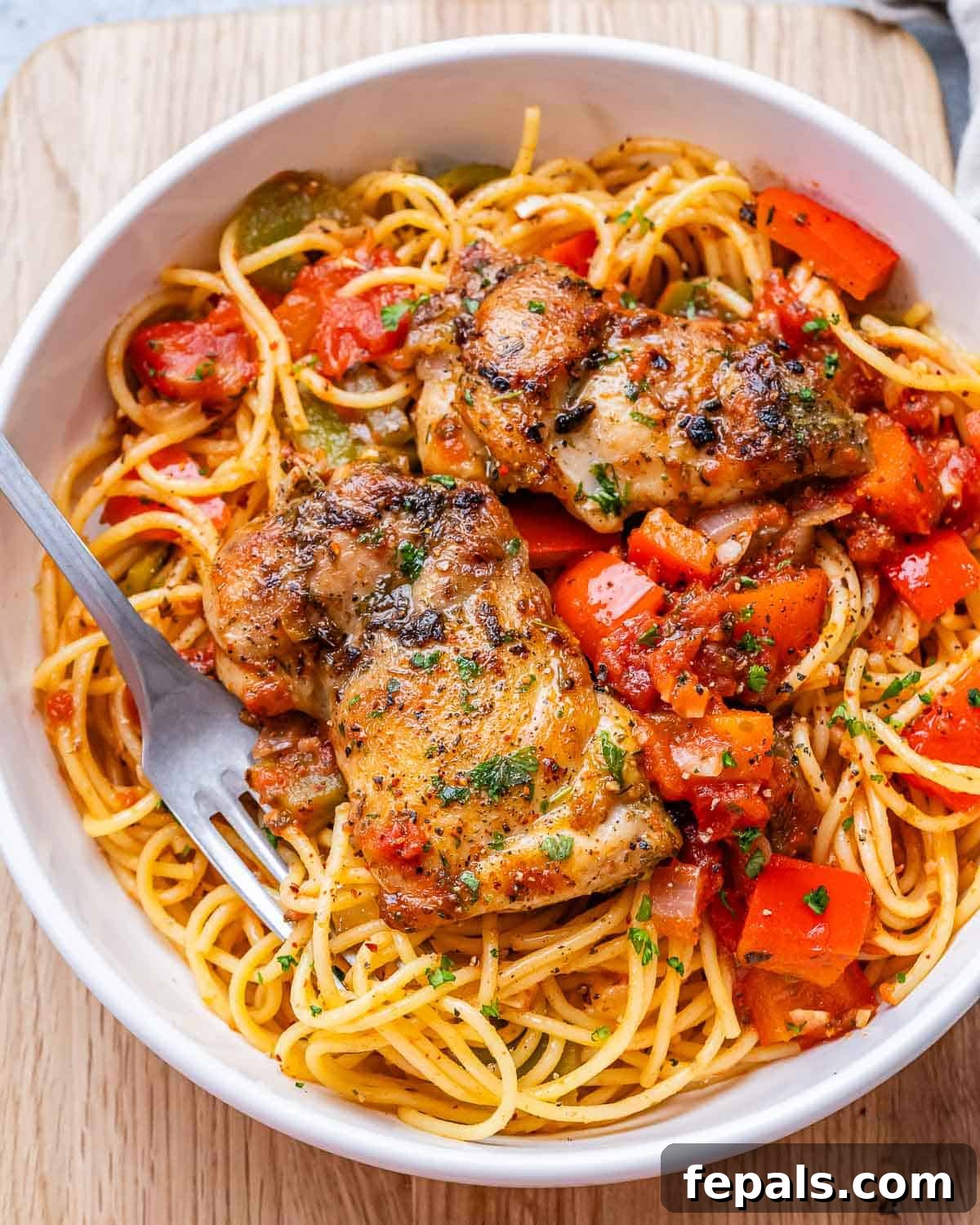
Serving Suggestions for Your Chicken Cacciatore
One of the many charms of Chicken Cacciatore is its versatility when it comes to serving. The rich, savory stew pairs beautifully with a variety of sides, allowing you to tailor your meal to your preferences or what you have on hand.
- Classic Pasta: A bed of al dente spaghetti, linguine, or fettuccine is a traditional and highly satisfying pairing. The pasta soaks up the delicious sauce, making every bite heavenly.
- Creamy Polenta: For a truly Italian and gluten-free experience, serve your cacciatore over creamy, dreamy polenta. The mild corn flavor and smooth texture provide a wonderful contrast to the robust stew.
- Crusty Bread: Don’t forget a good, crusty loaf of bread – Italian bread, focaccia, or a baguette – perfect for soaking up every last drop of that incredible sauce.
- Mashed Potatoes or Cauliflower Mash: For a comforting and hearty side, mashed potatoes are always a winner. Alternatively, for a lower-carb option, garlic butter mashed cauliflower provides a similar creamy texture.
- Rice or Couscous: Fluffy white rice, brown rice, or a light couscous can serve as excellent canvases for the flavorful sauce.
- Roasted Vegetables: A simple side of roasted asparagus, green beans, or broccoli can add freshness and a touch of extra nutrition.
- Fresh Green Salad: A crisp green salad with a light vinaigrette offers a refreshing counterpoint to the richness of the cacciatore.
Common Questions About Chicken Cacciatore
Once your chicken cacciatore has cooled completely to room temperature, transfer it to an airtight container. It can be safely stored in the refrigerator for up to 3-4 days. For longer storage, it freezes exceptionally well. Place it in a freezer-safe container or bag for up to 3 months. When ready to enjoy, thaw overnight in the refrigerator before reheating.
For best results, reheat chicken cacciatore in a skillet over medium-low heat. Add a splash of water or chicken broth to prevent it from drying out, and stir occasionally until it’s heated through and bubbling gently. You can also reheat individual portions in the microwave, stirring halfway through, until piping hot.
‘Cacciatore’ is an Italian word that translates to hunter. Therefore, Chicken Cacciatore literally means “Hunter’s Chicken.” Historically, it was a dish prepared with whatever game the hunter brought home, such as rabbit, pheasant, or wild fowl, cooked simply with readily available ingredients like onions, peppers, and tomatoes. In modern American kitchens, chicken thighs have become the most popular choice due to their availability and delicious, mild flavor.
A watery sauce can sometimes occur if the vegetables haven’t had enough time to release their moisture and concentrate their flavors before the liquids are added, or if the sauce hasn’t simmered long enough. To fix a watery sauce, simply continue to simmer the dish uncovered over low heat, stirring occasionally, until it thickens to your desired consistency. You can also stir in a tablespoon of tomato paste to help enrich and thicken the sauce quickly. Ensure your tomatoes are well-drained if using canned diced, or that you’re not adding too much extra liquid.
Absolutely! This recipe for Chicken Cacciatore is naturally gluten-free, making it a fantastic choice for those with gluten sensitivities or preferences. To keep the entire meal gluten-free, serve it over polenta, mashed potatoes, rice, or with gluten-free pasta instead of traditional spaghetti.
Yes, you can use boneless, skinless chicken breasts if you prefer. However, keep in mind that chicken breasts are leaner and can dry out more easily than thighs. To minimize this, sear them quickly to get a nice crust, then add them to the sauce for a shorter simmer time – typically 10-15 minutes, or until just cooked through. Monitor them closely to prevent overcooking.
If you enjoy a bit more heat, there are several ways to spice up your cacciatore. Increase the amount of crushed red pepper flakes in the sauce to 1 teaspoon or more, depending on your tolerance. You could also add a pinch of cayenne pepper with the other seasonings, or finely dice a small fresh chili (like a jalapeño or serrano, removing seeds for less heat) and sauté it with the onions and bell peppers.
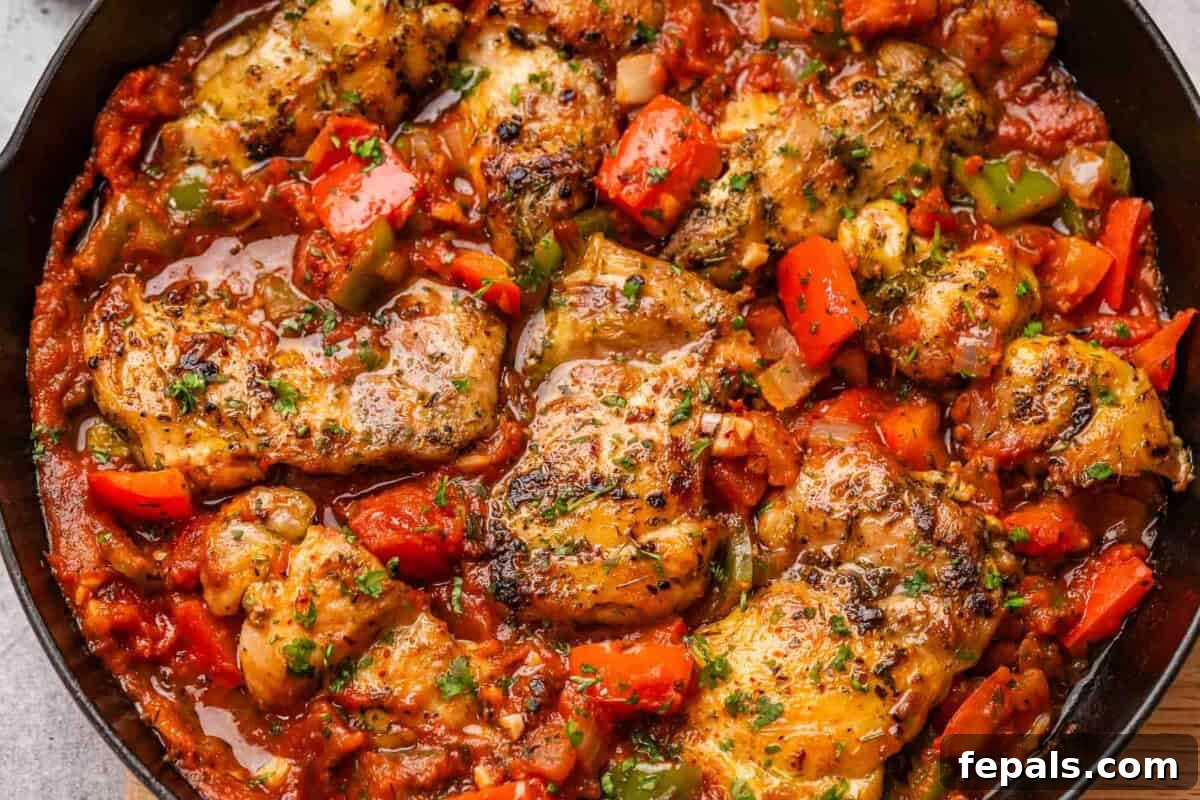
More Irresistible Chicken Recipes to Explore
If you’ve fallen in love with the comforting flavors of this Chicken Cacciatore, you’re in for a treat! Our collection of chicken recipes offers a diverse range of dishes, each packed with flavor and designed to inspire your next meal. From quick weeknight dinners to impressive weekend feasts, there’s a chicken recipe for every occasion.
- Chicken Scampi: A lighter, garlic-butter packed pasta dish that’s quick and satisfying.
- Chicken Fricassee: A creamy, French-inspired stew that’s wonderfully elegant.
- Easy Chicken Marsala: Earthy mushrooms and a rich Marsala wine sauce make this a timeless favorite.
- Chicken Puttanesca: A bold and zesty dish bursting with Mediterranean flavors.
- Chicken Pastina Soup: The ultimate comforting soup, perfect for cold days or when you need a little warmth.
- Chicken Florentine: Spinach and a creamy sauce elevate chicken to gourmet levels.
- Chicken Gnocchi: Tender chicken and soft gnocchi in a rich sauce, pure comfort.
- Baked Italian Chicken: Simple, flavorful, and perfect for an effortless family meal.
Thank you for joining us on this culinary adventure! We hope you thoroughly enjoy making and savoring this magnificent Chicken Cacciatore. Your feedback truly brightens our day, so if you try this recipe, please don’t hesitate to leave a comment and a rating below. Happy cooking!
Chicken Cacciatore
Rena Awada
Skill Level:
Intermediate
Servings:
4 servings
10 mins
Cook:
40 mins
Total:
50 mins
Pin Recipe
Print Recipe

Ingredients
- 2 pounds boneless chicken thighs
- 2 tablespoons olive oil, divided
- 2 teaspoons Italian seasoning
- Kosher salt and pepper, to taste
- 1 medium onion, finely chopped
- 2 bell peppers, seeded and sliced
- 4-6 cloves garlic, minced
- ½ teaspoon crushed red pepper flakes
- 2 tablespoons balsamic vinegar
- 14.5 ounces diced tomatoes with basil, one can
- 1 teaspoon dried thyme
- 1 teaspoon dried oregano
- 1 teaspoon dried basil
- fresh basil or parsley, optional garnish
Instructions
-
Season the 2 pounds boneless chicken thighs with 2 teaspoons Italian seasoning, Kosher salt and pepper on both sides.

-
Heat a rimmed skillet over medium-high heat. Drizzle with 1 tbsp of the 2 tablespoons olive oil. Add the seasoned chicken thighs. Sear until golden on both sides, then set aside (it doesn’t have to be cooked through for now).
-
Add the remaining 1 tbsp olive oil to the pan and saute the 1 medium onion (chopped) and 2 bell peppers (sliced) for 3-4 minutes. Add 4-6 cloves garlic and ½ teaspoon crushed red pepper flakes and cook for 1 minute. Add the 2 tablespoons balsamic vinegar and a splash of filtered water, then deglaze the pan by stirring all the way through the bottom.
-
Add 14.5 ounces diced tomatoes with basil, 1 teaspoon dried thyme, 1 teaspoon dried oregano, and 1 teaspoon dried basil. Stir to combine, and bring the sauce to a boil. Reduce the heat to low and add the seared chicken thighs.
-
Simmer the sauce together with the chicken for 15-20 minutes, or until the chicken is fully cooked through and tender. Make sure you occasionally stir through the bottom of the pan to avoid it from burning.
-
Once ready, remove from heat. Garnish with chopped fresh basil or parsley. Serve warm, over some cooked spaghetti, if desired.






Notes
Storage & Reheating:
- Storage: Allow the chicken to cool completely, then transfer to an airtight container. Store in the fridge for up to 3-4 days or freeze for up to 3 months. If frozen, thaw overnight in the fridge before reheating.
- Reheating: Warm the chicken cacciatore in a skillet over a medium-low heat with a splash of water or broth, stirring occasionally, until piping hot throughout.
Nutrition Information (Approximate per serving)
Carbohydrates: 15g
Protein: 39g
Fat: 45g
Saturated Fat: 11g
Polyunsaturated Fat: 9g
Monounsaturated Fat: 21g
Trans Fat: 0.2g
Cholesterol: 222mg
Sodium: 342mg
Potassium: 877mg
Fiber: 4g
Sugar: 7g
Vitamin A: 2272IU
Vitamin C: 89mg
Calcium: 103mg
Iron: 4mg
Nutrition information is automatically calculated and should only be used as an approximation.
Additional Info
Main Course, Dinner, Gluten-Free
Cuisine:
Italian