
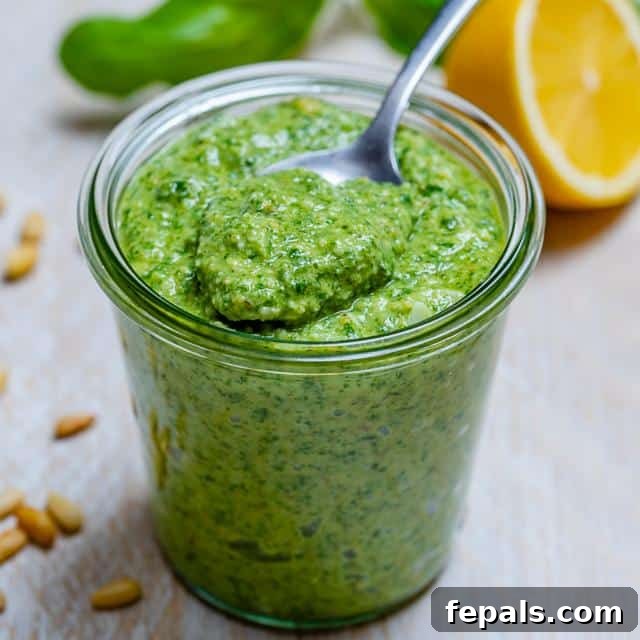
Unlock a world of vibrant flavor and culinary satisfaction with this definitive guide to crafting the most exquisite Homemade Pesto Sauce. Forget the lackluster, often overly salty, and preservative-laden store-bought versions; this recipe promises a fresh, aromatic, and deeply rewarding experience that will elevate your cooking to new heights. Easy to prepare and bursting with authentic taste, once you try this homemade delight, you’ll never look back.
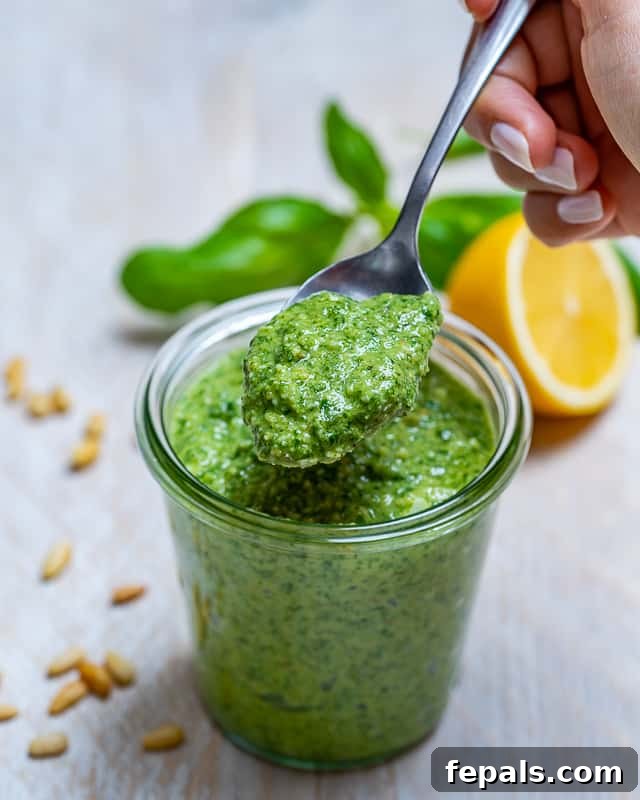
At its heart, this classic homemade pesto recipe requires only a handful of readily available, high-quality ingredients. While the traditional Ligurian pesto calls for pine nuts, its beauty lies in its adaptability. You can effortlessly swap pine nuts for walnuts, almonds, pecans, or even pistachios, each imparting a unique twist to the sauce. However, we have a particular fondness for pine nuts, especially when lightly toasted, as they lend a distinct, nutty depth that truly makes the flavor sing.
The cornerstone of an authentic and intensely flavorful homemade pesto is unequivocally fresh basil. This fragrant herb is non-negotiable for achieving that quintessential pesto taste and vibrant green hue. While adventurous cooks might experiment with other greens like cilantro, kale, arugula, or spinach for alternative pestos, nothing quite captures the unparalleled aroma and robust flavor profile of classic basil pesto. Its intense, sweet, and slightly peppery notes are what define this beloved Italian sauce.
Once you master this homemade basil pesto, you’ll want to incorporate it into everything! Discover its magic in our Chicken Pesto Recipe, our Easy Pesto Shrimp Recipe, and our Pesto Salmon – all designed to showcase the incredible versatility of this freshly made sauce.
Why Homemade Pesto is a Culinary Game-Changer
If you’ve grown accustomed to store-bought pesto, preparing it from scratch will revolutionize your perception of this iconic Italian sauce. The benefits extend far beyond just taste:
- Effortlessly Simple & Quick: Don’t be intimidated by the idea of making pesto. This recipe is incredibly straightforward, demanding only about 10 minutes of your time. Best of all, no cooking is required for the actual sauce, making it a perfect quick fix for any meal.
- Superior Taste That Outshines Store-Bought: The difference in flavor between homemade and commercially produced pesto is night and day. Fresh ingredients truly shine, delivering a bright, aromatic, and complex taste profile that pre-made versions simply cannot replicate. It’s a culinary revelation that you must experience.
- More Economical and Health-Conscious: Creating a generous batch of homemade pesto costs a mere fraction of what you’d spend on a smaller jar from the grocery store. Beyond the savings, you gain complete control over the ingredients, ensuring it’s free from undesirable preservatives, artificial flavors, and excessive sodium, making it a significantly healthier option for you and your family.
- Unleash Your Creativity with Customization: Homemade pesto offers endless opportunities for personalization. Adjust the garlic intensity, experiment with different nuts, or even try various hard cheeses to tailor the flavor precisely to your preference. This flexibility allows for unique variations that cater to diverse tastes and dietary needs.
- Pure, Unadulterated Freshness: Nothing compares to the taste and aroma of pesto made with just-picked basil. The vibrant color and potent fragrance are testaments to its freshness, enhancing every dish it graces.
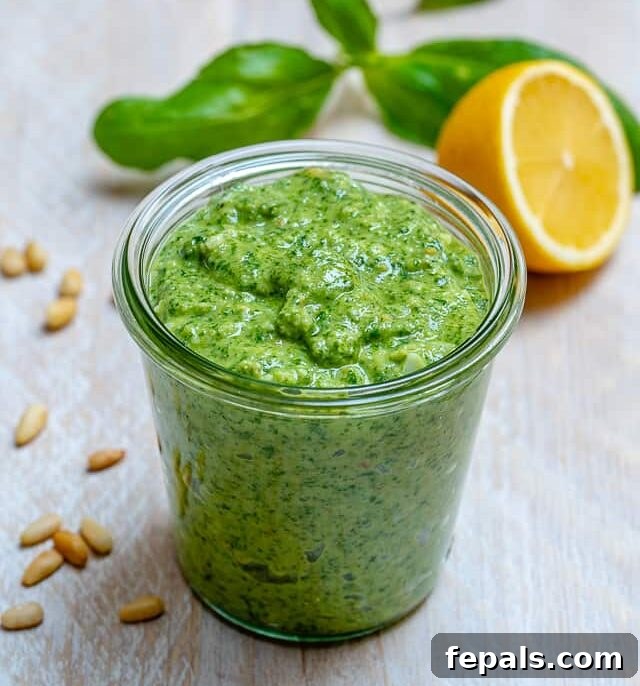
Essential Ingredients for Your Perfect Homemade Pesto
Crafting exceptional pesto begins with selecting the finest ingredients. Each component plays a crucial role in developing the sauce’s signature flavor and texture:
- Fresh Basil Leaves: This is the star of the show. For an unparalleled aroma and flavor, always opt for fresh basil. Dried basil simply won’t yield the same vibrant taste or brilliant green color. Choose bright green, unblemished leaves for the best results.
- Freshly Grated Parmesan Cheese: The quality of your cheese significantly impacts the final taste. We highly recommend grating your own block of Parmigiano-Reggiano at home. Pre-grated cheeses often contain anti-caking agents and lack the nuanced flavor of freshly grated varieties. For a bolder, saltier kick, you may also use Pecorino Romano in place of or in combination with Parmesan.
- Extra Virgin Olive Oil: This isn’t an ingredient to compromise on. A high-quality extra virgin olive oil contributes a fruity, peppery note and helps create a smooth, emulsified sauce. Do not substitute with other oils, as they will alter the authentic flavor.
- Lemon Juice: Freshly squeezed lemon juice is paramount. It brightens the flavor of the pesto and helps to maintain its vibrant green color by inhibiting oxidation. Bottled lemon juice pales in comparison and can introduce an artificial taste.
- Pine Nuts: Traditionally, pine nuts are used for their buttery texture and subtle, sweet flavor. While we adore pine nuts, they can be pricey. Excellent alternatives include walnuts (for a richer, slightly bitter note), pumpkin seeds (for a unique earthiness), almonds, or pistachios (which also add a lovely green hue). Toasting your chosen nuts can further enhance their flavor.
- Garlic Cloves: Only fresh garlic cloves will do. Avoid garlic powder or pre-minced garlic, which lack the pungency and aromatic complexity of fresh cloves. Adjust the quantity based on your preference for garlic intensity.
- Sea Salt or Kosher Salt: Essential for seasoning. Use fine sea salt or kosher salt to taste. It enhances all the other flavors in the pesto.
- Equipment Considerations: While a modern food processor makes quick work of pesto, don’t despair if you don’t own one! The traditional method uses a Mortar And Pestle, hand-grinding everything until smooth. This artisanal approach, though more time-consuming, can produce a uniquely textured and flavorful pesto. It’s a wonderfully tactile and rewarding experience.
- For a Vegan Option: Easily transform this recipe by swapping the Parmesan cheese with an equal amount of nutritional yeast. This will impart a savory, cheesy flavor without any dairy.
- Freshly Ground Black Pepper: Add a touch of freshly ground black pepper to round out the flavors, adjusting to your personal preference.
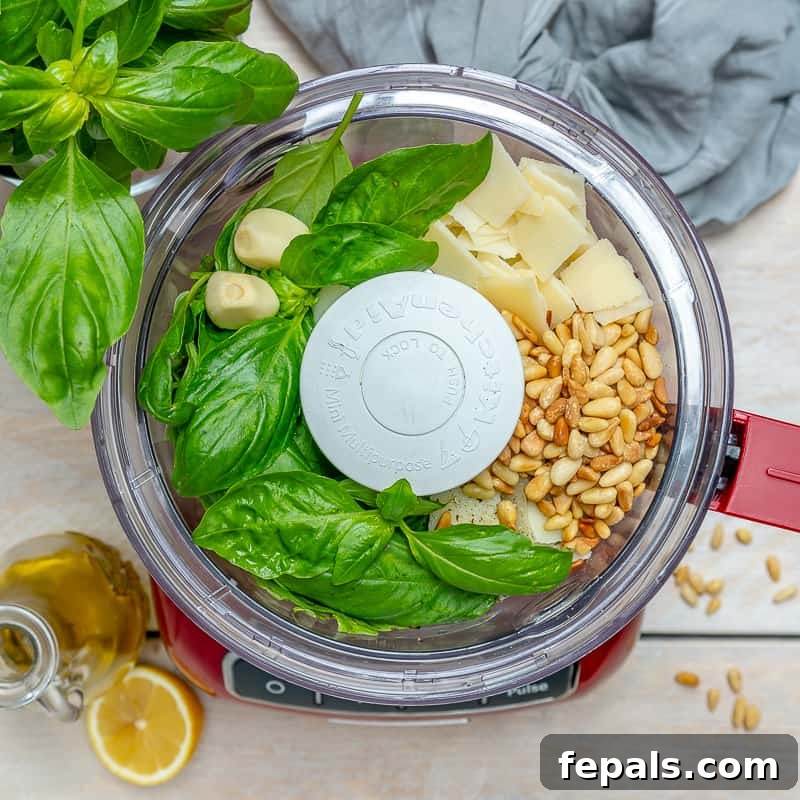
Your Step-by-Step Guide to Making Irresistible Homemade Pesto
Creating this aromatic sauce is a simple process, primarily involving assembly and blending. Follow these steps for perfect pesto every time:
- **Prepare the Pine Nuts (Optional, but Recommended)**: Begin by heating a small, dry frying pan over low heat. Add the pine nuts (or your chosen nuts) and toast them gently for about 3-4 minutes, or until they turn a light golden brown and become fragrant. It’s crucial to shake the frying pan every few seconds to ensure even toasting and prevent them from burning, as they can quickly go from golden to burnt. Once toasted, remove them from the pan immediately to cool slightly. This step deepens their flavor considerably.
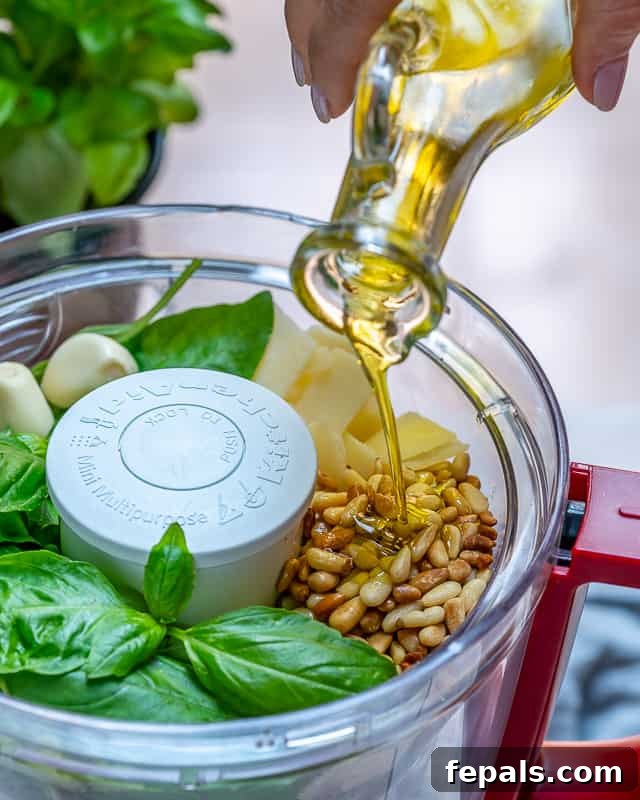
- **Combine Solid Ingredients**: In the bowl of your food processor, place all the ingredients EXCEPT the extra virgin olive oil. This includes the fresh basil leaves, toasted pine nuts, freshly grated Parmesan cheese, garlic cloves, lemon juice, sea salt, and black pepper. Pulse the mixture several times until all the ingredients are finely chopped and well combined. Scrape down the sides of the food processor bowl with a spatula as needed to ensure everything is incorporated.
- **Emulsify with Olive Oil**: With the food processor running on a low setting, gradually add the extra virgin olive oil in a slow, steady stream through the feed tube. This slow addition is key to creating a beautifully emulsified, smooth, and creamy pesto. Continue processing until the pesto reaches your desired consistency – smooth but with a slight texture from the nuts and basil. Stop occasionally to scrape down the sides of the bowl to ensure uniform blending.
- **Taste and Adjust**: Once blended, taste the pesto and adjust seasoning as needed. You might want to add more salt, pepper, or a squeeze more lemon juice to brighten the flavors further.
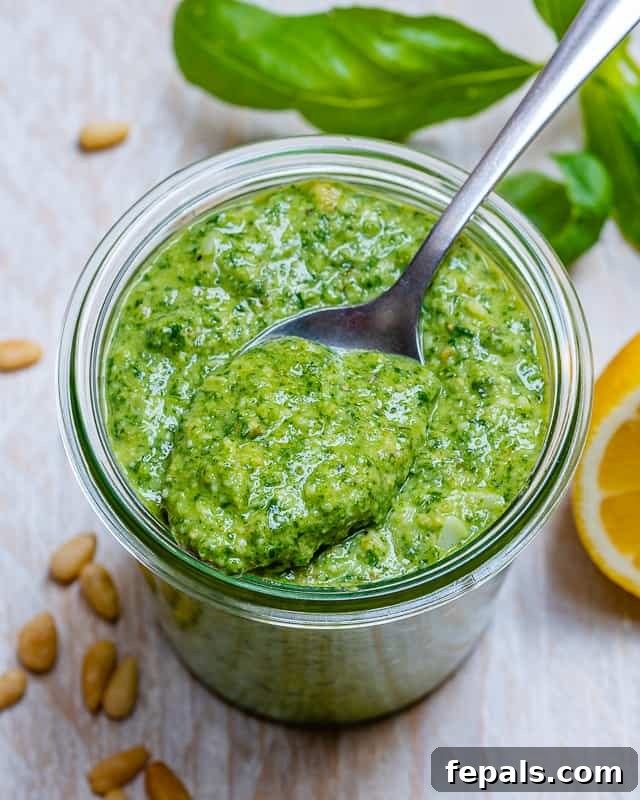
- **Storage**: Transfer your freshly made pesto to a clean, airtight 10 oz jar or container. To prevent browning (oxidation), pour a thin layer of olive oil over the top of the pesto before sealing. Store it in the refrigerator for up to 7 days or freeze it for extended freshness for up to 3 months.
Frequently Asked Questions About Homemade Pesto
Pine nuts, while traditional, can sometimes be expensive or hard to find. Fortunately, there are several fantastic alternatives that will still yield a delicious pesto:
- Almonds: A popular and excellent substitute, almonds offer a mild, slightly sweet flavor that complements basil beautifully without overpowering it. They also contribute to a wonderfully creamy texture.
- Walnuts: These provide a richer, more robust, and slightly bitter flavor profile compared to pine nuts. Walnuts are a great choice if you prefer a pesto with more character and a hint of earthiness. They maintain a good creamy texture when blended.
- Pistachios: For a truly vibrant green pesto with a subtly sweet and distinctive nutty taste, pistachios are an exceptional alternative. Many pesto enthusiasts consider them one of the best substitutes due to their unique flavor and color contribution.
- Hazelnuts: While an option, hazelnuts have a stronger, more distinctive flavor that might alter the traditional pesto taste quite a bit. Use them if you’re looking for a more adventurous, European-inspired pesto.
- Macadamia Nuts: These can be used for a very buttery, rich pesto. However, their flavor is quite mild, and they might not provide the same depth as pine nuts or walnuts. They are generally considered an ‘okay’ choice but perhaps not the top pick compared to others.
- Pumpkin Seeds (Pepitas): For a nut-free or allergen-friendly option, pumpkin seeds work wonderfully. They add a pleasant earthiness and a slight crunch.
Remember that toasting any of these alternatives beforehand will enhance their flavor, just as it does with pine nuts.
Homemade pesto, crafted from fresh ingredients and devoid of artificial preservatives, has a relatively shorter shelf life than its store-bought counterparts, but it can be enjoyed fresh for quite some time or stored for much longer. In a properly sealed jar or airtight container, kept refrigerated, your homemade pesto will remain fresh and delicious for up to 7 days. To extend its life significantly, you can freeze homemade pesto. It freezes exceptionally well and can be stored in freezer-safe containers or, ideally, as individual cubes (using ice cube trays), for up to 6 months. When ready to use, simply thaw the desired portion.
The question of whether to toast pine nuts for pesto is largely a matter of personal preference, and the straightforward answer is: you don’t *have* to. Traditional pesto recipes often use raw pine nuts. However, toasting the pine nuts (or any nuts you choose to use) before adding them to the pesto significantly enhances their flavor. Toasting brings out their natural oils, deepening their nutty aroma and adding a richer, more complex taste to the final sauce. It adds an extra layer of warmth and depth that many find superior. While optional, it’s a step highly recommended for a more flavorful homemade pesto. If you choose not to use pine nuts at all, walnuts and pistachios are popular and delicious alternatives that can also benefit from light toasting.
The primary reason homemade pesto turns brown is oxidation. Basil leaves, when exposed to air, react and lose their vibrant green color. The process is accelerated by air pockets in the pesto and can happen quickly. To minimize browning, ensure you pack the pesto tightly into your storage container, pressing out any air bubbles. Then, pour a thin layer of extra virgin olive oil over the surface before sealing the jar. The oil creates a protective barrier, preventing the basil from coming into contact with air. Adding fresh lemon juice to the pesto also helps, as its acidity slows down the oxidation process.
Absolutely! While Parmesan or Pecorino Romano cheese is a staple in traditional pesto, you can easily make a delicious dairy-free or vegan version. Simply omit the cheese from the recipe. To maintain a savory, umami flavor that cheese provides, substitute it with nutritional yeast. Nutritional yeast offers a distinctly cheesy taste and a boost of nutrients. You might also consider adding a touch more salt or a different nut, like cashews, which can add creaminess without dairy.
Storage Recommendations for Peak Freshness
The truly wonderful aspect of making homemade basil pesto is not only its straightforward preparation but also the ease with which it can be stored and reused, ensuring you always have a burst of fresh flavor on hand.
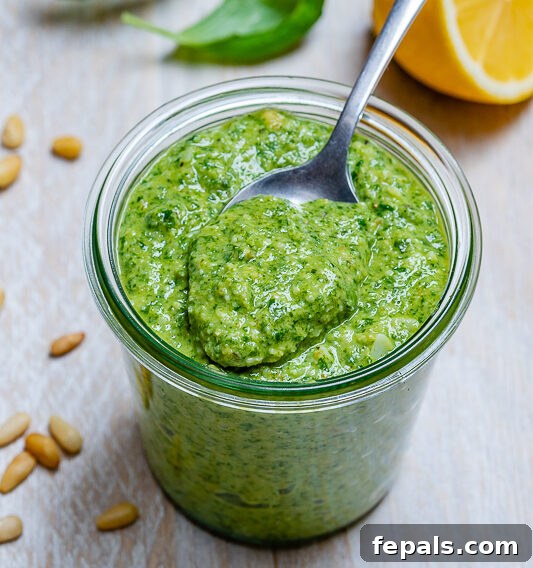
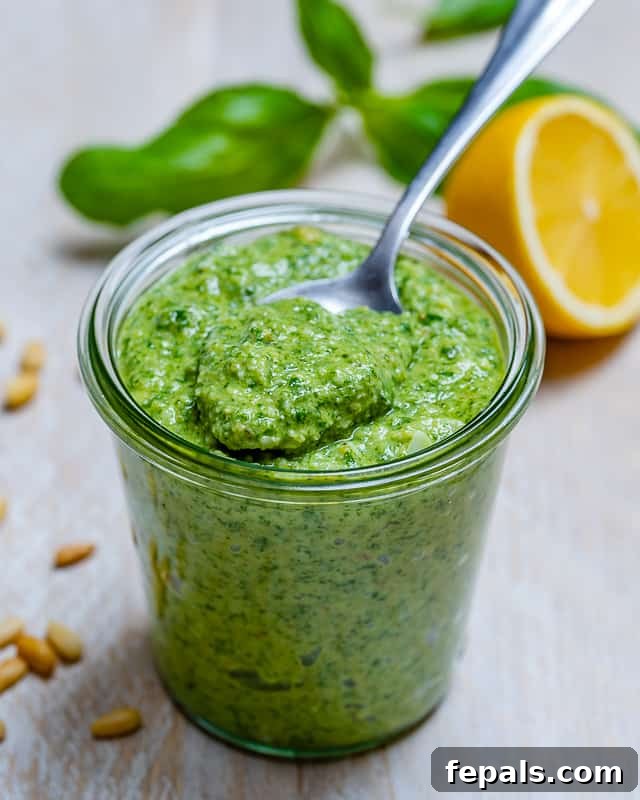
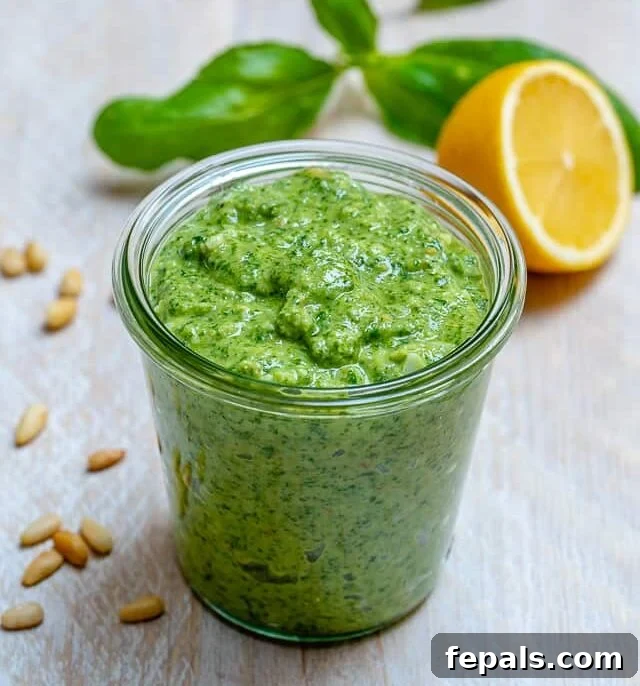
To keep your homemade pesto sauce fresh in the refrigerator, transfer it into a clean mason jar with a tight-fitting lid or any other airtight container. Before sealing, an important trick to prevent oxidation and maintain its vibrant green color is to pour a thin layer of extra virgin olive oil over the surface of the pesto. This creates a protective barrier against the air. Stored this way, your pesto will remain delicious and ready to use for about 7 days.
For longer preservation, pesto freezes exceptionally well, allowing you to enjoy summer flavors year-round! It can be frozen for up to 6 months without significant loss of flavor or quality. We highly recommend freezing pesto in smaller, individual portions, typically using ice cube trays. Once the pesto cubes are completely frozen (this usually takes a few hours), pop them out of the trays or molds. Transfer the frozen cubes into a freezer-safe, resealable plastic bag or container, removing as much air as possible before sealing. Label with the date. When you need pesto, simply retrieve a few cubes and thaw them at room temperature or gently in the refrigerator. This method is incredibly convenient for adding a touch of pesto to a single serving of pasta, soup, or any dish that could use a flavor boost.
Endless Ways to Enjoy Your Homemade Pesto Sauce
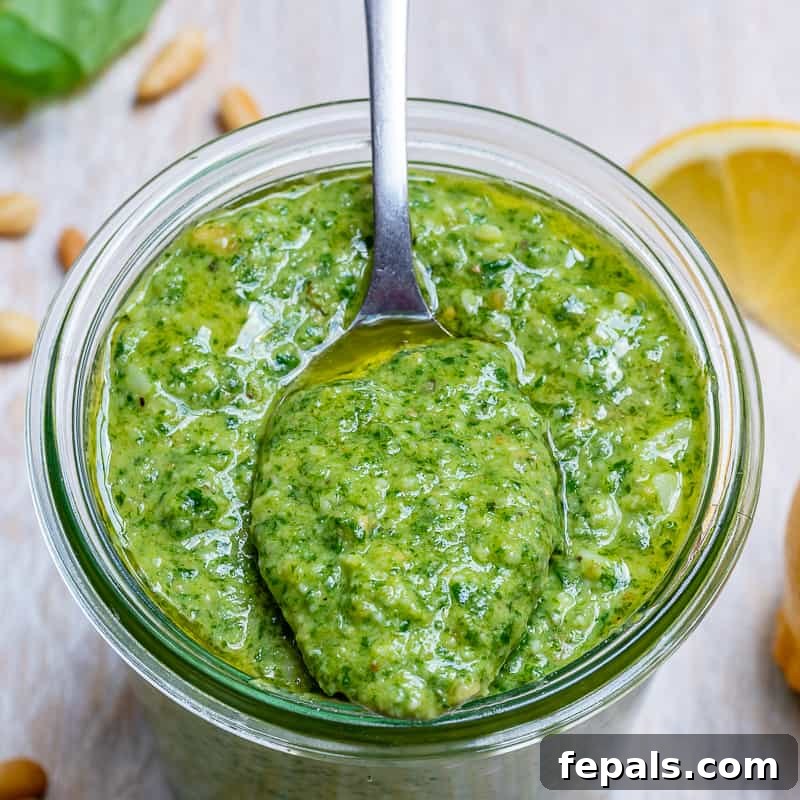
Once you have a jar of this glorious homemade pesto, the culinary possibilities are truly limitless. Its vibrant flavor can transform a multitude of dishes. Here are some fantastic ideas to inspire your next meal:
- Elevate Your Pasta Dishes: Pesto and pasta are a match made in heaven. Toss it with any kind of pasta – spaghetti, fettuccine, penne, or fusilli – for a quick and incredibly flavorful meal. It pairs beautifully with both hot pasta and cold pasta salads. Explore our Shrimp Pesto Pasta Recipe and our Salmon Pesto Pasta. For a lighter alternative, try it with spaghetti squash.
- Boost Your Salad Dressings: Whisk a spoonful of pesto into your favorite vinaigrette or creamy dressing for an instant flavor upgrade. It adds depth and a fresh herbiness that makes any salad more exciting, like our chicken pesto pasta salad.
- Top Off Bruschetta and Crostini: Replace traditional tomato toppings with a generous spread of pesto. Top with roasted cherry tomatoes, a sprinkle of goat cheese, or even some grilled vegetables for an irresistible appetizer.
- Enhance Dips and Spreads: Stir pesto into hummus, cream cheese, sour cream, or Greek yogurt to create a dynamic and herbaceous dip perfect for fresh vegetables, crackers, or pita bread.
- A Flavorful Pizza Sauce Alternative: Ditch the marinara and use pesto as your pizza base! Its savory notes pair wonderfully with mozzarella, chicken, sun-dried tomatoes, or fresh vegetables for a truly gourmet pizza experience.
- Drizzle Over Roasted or Grilled Vegetables: Toss your roasted broccoli, asparagus, zucchini, or bell peppers with a spoonful of pesto after cooking. It adds a fresh, aromatic finish that complements their natural sweetness.
- Brighten Up Breakfasts: Incorporate pesto into your morning routine. Swirl it into scrambled eggs, spread it on toast, or add a dollop to your breakfast sandwich for an unexpected burst of flavor.
- Perfect for Caprese Creations: Pesto is the ideal companion for the classic Caprese salad or sandwich. Layer it with fresh mozzarella, ripe tomatoes, and basil for an amplified flavor experience. Try our Pesto Caprese Sandwich.
- Marinade for Meats and Fish: Use pesto as a marinade for chicken, fish, shrimp, or pork. Its oil and acid tenderize while infusing your proteins with incredible flavor before grilling, baking, or pan-searing.
- Flavorful Sandwich Spreads: Spread pesto directly onto bread or mix it with mayonnaise for an upgraded sandwich or wrap spread. It’s especially good with turkey, chicken, or vegetarian sandwiches.
Explore More Delicious Recipes Featuring Pesto
If you love the taste of fresh pesto, you’ll adore these other recipes that brilliantly highlight its versatility:
- Pesto Bruschetta Chicken
- Pesto Shrimp Zoodles
- Sheet Pan Steak and Asparagus With Pesto
- Balsamic and Pesto Grilled Chicken
- Creamy Pesto Salmon
- Simple Pesto Pasta
Other Delicious Recipes You Might Also Enjoy
- Homemade Roasted Tomato Soup
- Healthy Pasta Primavera Recipe
- Chicken And Broccoli Stir-Fry
- Honey Sesame Chicken
- Shrimp and Spinach Pasta
- Vegan Spinach Avocado Pasta Recipe
Don’t miss out on more delicious and healthy recipes! Remember to subscribe to our NEWSLETTER for free and receive all our newest culinary creations delivered right to your inbox!
Finally, if you try this fantastic homemade pesto recipe or any other recipe from our collection and love it, please share your creations using our hashtag #healthyfitnessmeals on INSTAGRAM for a chance to be featured! FOLLOW Healthy Fitness Meals on FACEBOOK | INSTAGRAM | PINTEREST | TWITTER for all our latest blog posts and recipes, and connect with a community dedicated to healthy and delicious eating.
Homemade Pesto Sauce Recipe
Rate
Pin
Video
Ingredients
- 2 Cups Fresh basil leaves, packed
- 1/2 Cup Freshly grated Parmesan Cheese
- 1/2 Cup Extra virgin olive oil
- 1/2 Lemon, Juiced
- 1/3 Cup Pine nuts, or other nuts like walnuts or pistachios
- 2 Garlic cloves, peeled
- 1/2 Tsp Sea salt, or to your taste
- 1/4 Tsp Freshly ground black pepper, or to your taste
Instructions
-
Heat a small frying pan on low heat.
-
Add in the pine nuts and cook until golden for about 3-4 minutes. Keep shaking the frying pan every couple of seconds to prevent the nuts from over-coloring and burning.
-
Place all ingredients except olive oil into the bowl of a food processor. Pulse until chopped.
-
Continue processing while gradually adding oil in a steady stream, stopping occasionally to scrape down the sides of the food processor.
-
Transfer to a 10 oz jar and keep refrigerated for up to 7 days or freeze for up to 3 months.
Notes
Note: the nutrition fact is for about 2 tablespoons. The entire cup is 1509 calories.
Nutrition
Nutrition information is automatically calculated, so should only be used as an approximation.