
Are you ready to enjoy the succulent, tropical sweetness of a perfectly ripe mango? Whether you’re preparing a vibrant salad, blending a refreshing smoothie, or simply craving a healthy snack, knowing how to cut a mango efficiently and safely is a game-changer. Don’t let its unique shape or large pit intimidate you! This comprehensive guide will walk you through the simple steps to perfectly slice and dice a mango, along with essential tips on choosing the best varieties, determining ripeness, proper storage, and exciting ways to incorporate this versatile fruit into your diet.
Discover the World of Mango Varieties
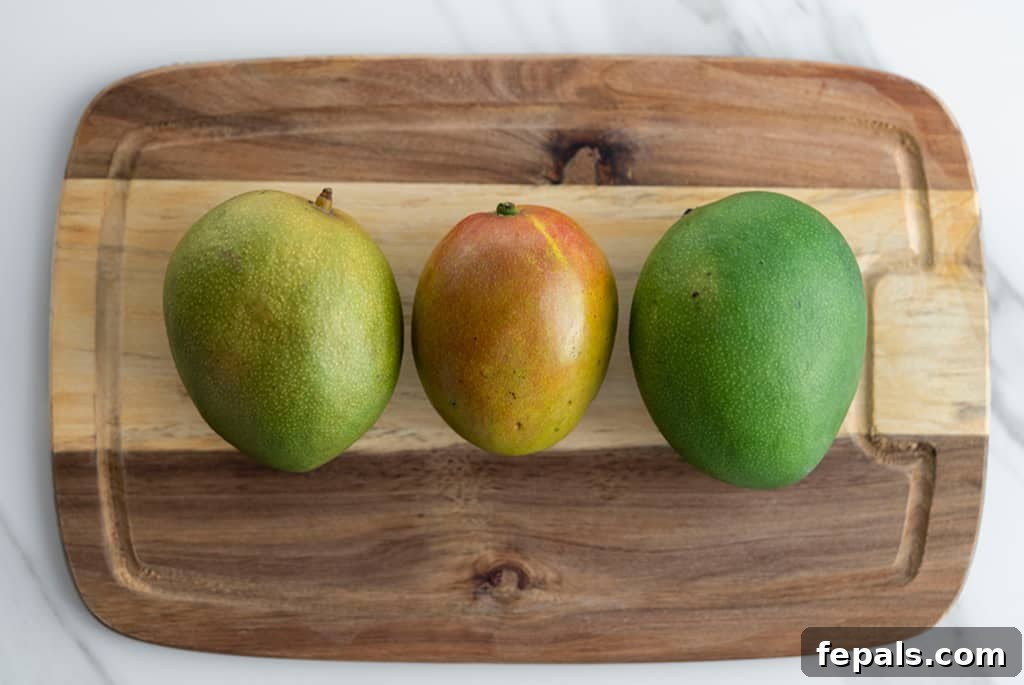
The mango, often called the “King of Fruits,” boasts an astonishing diversity with over 500 varieties cultivated worldwide. Each type offers a unique profile of flavor, texture, and appearance, making the world of mangoes truly exciting to explore. While you might not find all 500 at your local grocery store, here are some of the most common and beloved mango varieties you’re likely to encounter, along with tips on how to identify their ripeness.
Haden Mango: Originally from Florida, Haden mangoes are known for their beautiful, vibrant skin that transitions from bright red to green and yellow with small white dots. They offer a delightful sweet and tart flavor, often with a slightly bitter, tropical aftertaste. Haden mangoes have firm flesh with fine fibers, making them excellent for slicing and dicing. To determine ripeness, look for the green areas to yield to a more prominent yellow hue, and give it a gentle squeeze – it should feel slightly soft to the touch.
Honey Mango (Ataulfo): These small, kidney-shaped mangoes are easily recognizable by their intense golden-yellow skin. Honey mangoes, also known as Ataulfo, are renowned for their incredibly sweet, creamy, and non-fibrous flesh, often described as having peachy or honey notes. They have a very small, thin pit, maximizing the amount of edible fruit. A ripe Honey mango will have deep golden skin and feel soft all over, often developing slight wrinkles as it becomes perfectly ripe.
Francis Mango: Hailing from Haiti, Francis mangoes have an oblong shape and a distinctive multi-colored skin with green, yellow, and orange tones. Their flavor is complex, combining fruity sweetness with peachy and tropical undertones. The flesh is soft and juicy, though it might contain more fibers than the Honey mango. They ripen from green to yellow, and a gentle give when pressed indicates they are ready to eat.
Tommy Atkins Mango: Arguably the most commercially grown and widely available mango, the Tommy Atkins is a large, firm mango with an oval shape. Its skin is a striking mix of dark red, green, and orange-yellow accents. While generally more tart than other varieties, it still offers pleasing sweet notes. The firm texture makes it robust for shipping. Ripe Tommy Atkins mangoes will have some give when gently squeezed, and their color will deepen, though the red blush isn’t always an indicator of ripeness itself.
How to Choose a Perfectly Ripe Mango
Beyond specific variety indicators, here are universal tips for selecting a ripe mango:
- Squeeze Gently: A ripe mango will give slightly when you gently press it, similar to a ripe avocado or peach. Avoid rock-hard mangoes (underripe) or mushy ones (overripe).
- Smell the Stem: A fragrant, fruity aroma at the stem end is a strong indicator of ripeness. If it smells sour or alcoholic, it’s likely overripe.
- Check the Color (with caution): While color often changes with ripeness (e.g., green turning yellow), it’s not the sole determinant. Some varieties, like Tommy Atkins, retain green or red patches even when ripe. Always prioritize feel and smell.
- Avoid Blemishes: Steer clear of mangoes with major bruises, cuts, or shriveled skin. Small black spots are generally fine and indicate sugar development.
Mastering the Art of Mango Preparation
Before you begin slicing, ensure your mango is clean. Give it a good rinse under cool running water. For safety and ease, always use a sharp chef’s knife and a stable cutting board. A dull knife is more likely to slip, leading to accidents. The key to cutting a mango lies in working around its large, flat, oval-shaped pit in the center.
How to Cut Mango Slices
This method is perfect for adding long, elegant strips of mango to salads, desserts, or simply enjoying as a healthy snack.
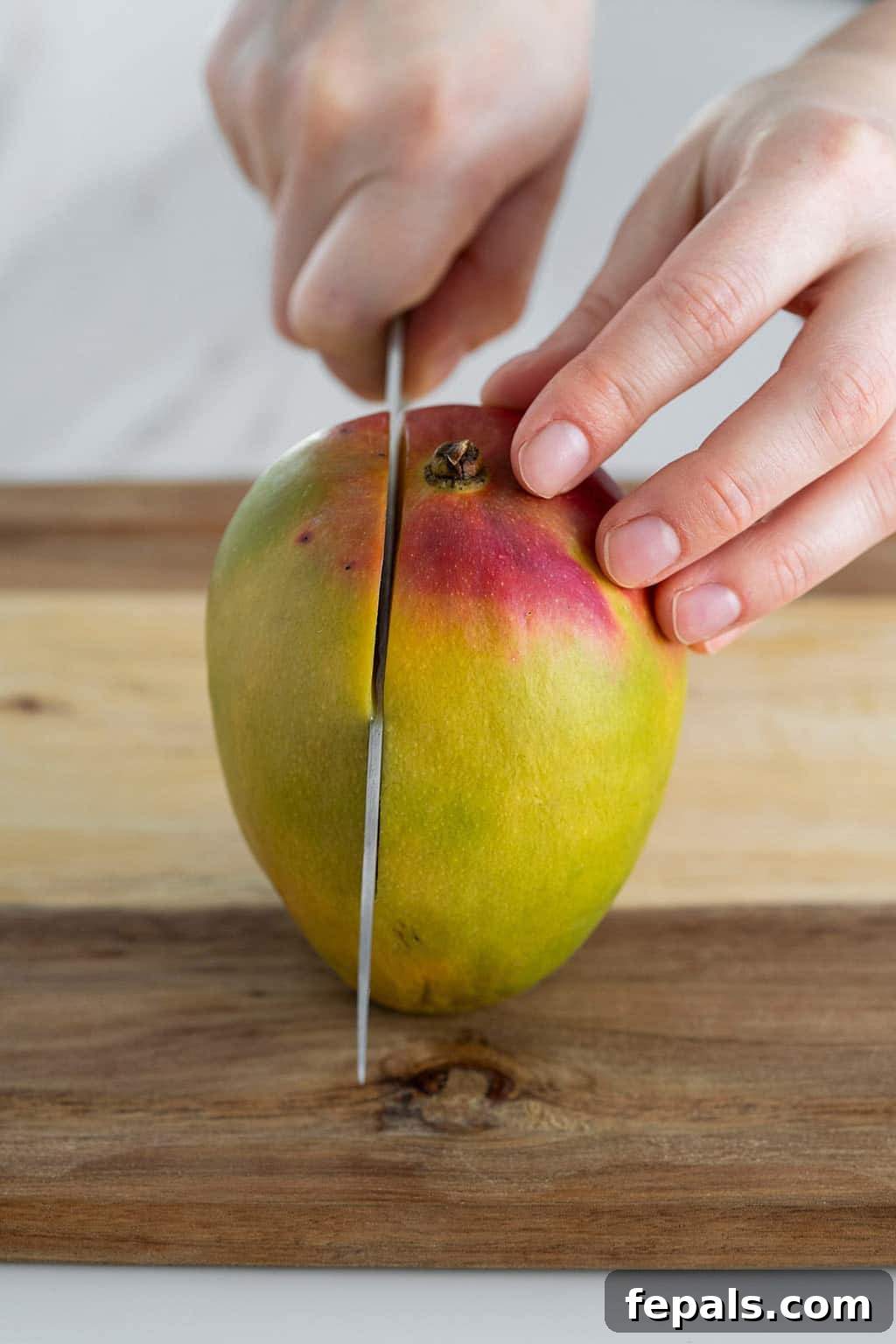
- Locate the Pit: Stand the mango upright with the stem end facing upwards. The pit runs through the center of the mango, often aligning with its flatter sides.
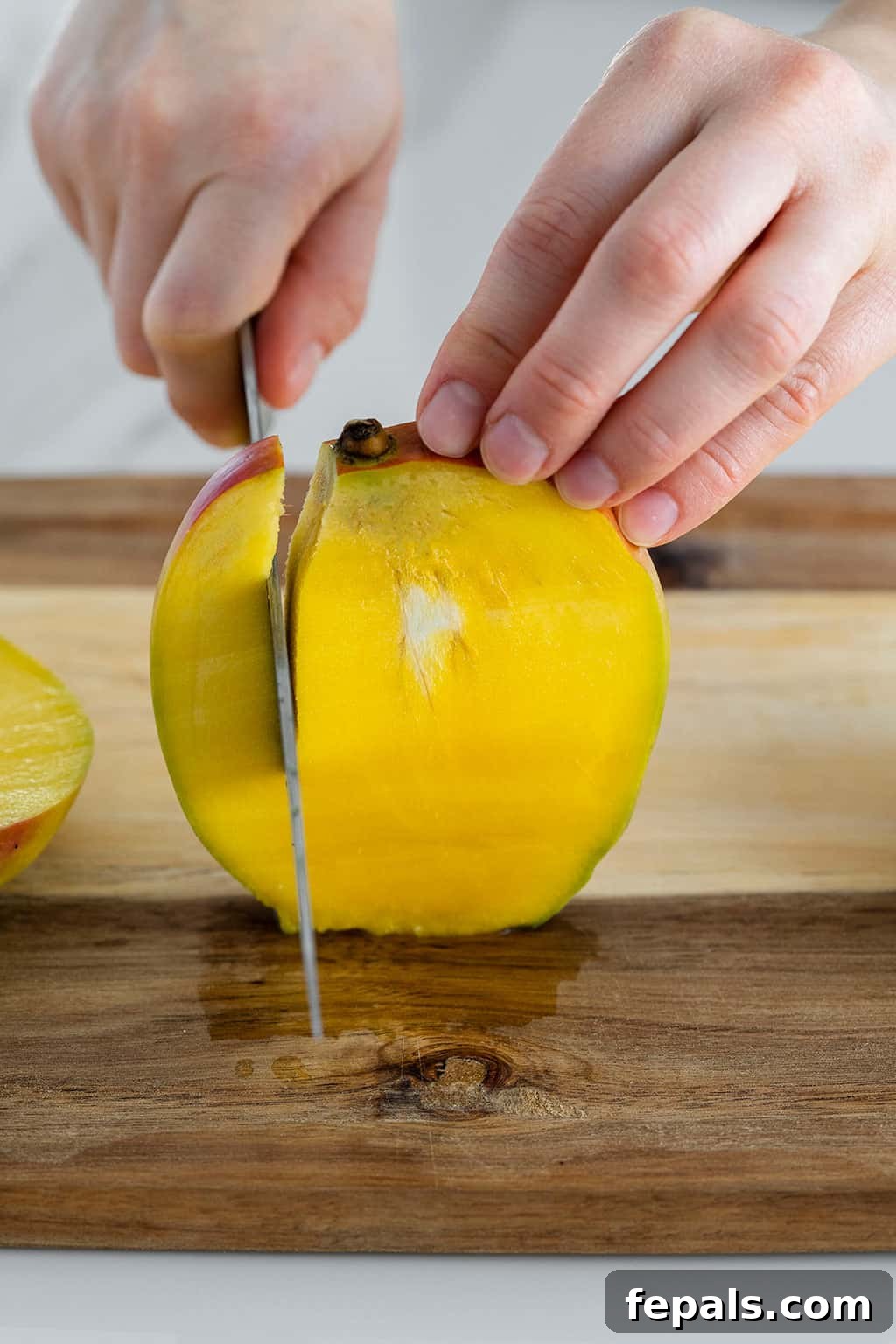
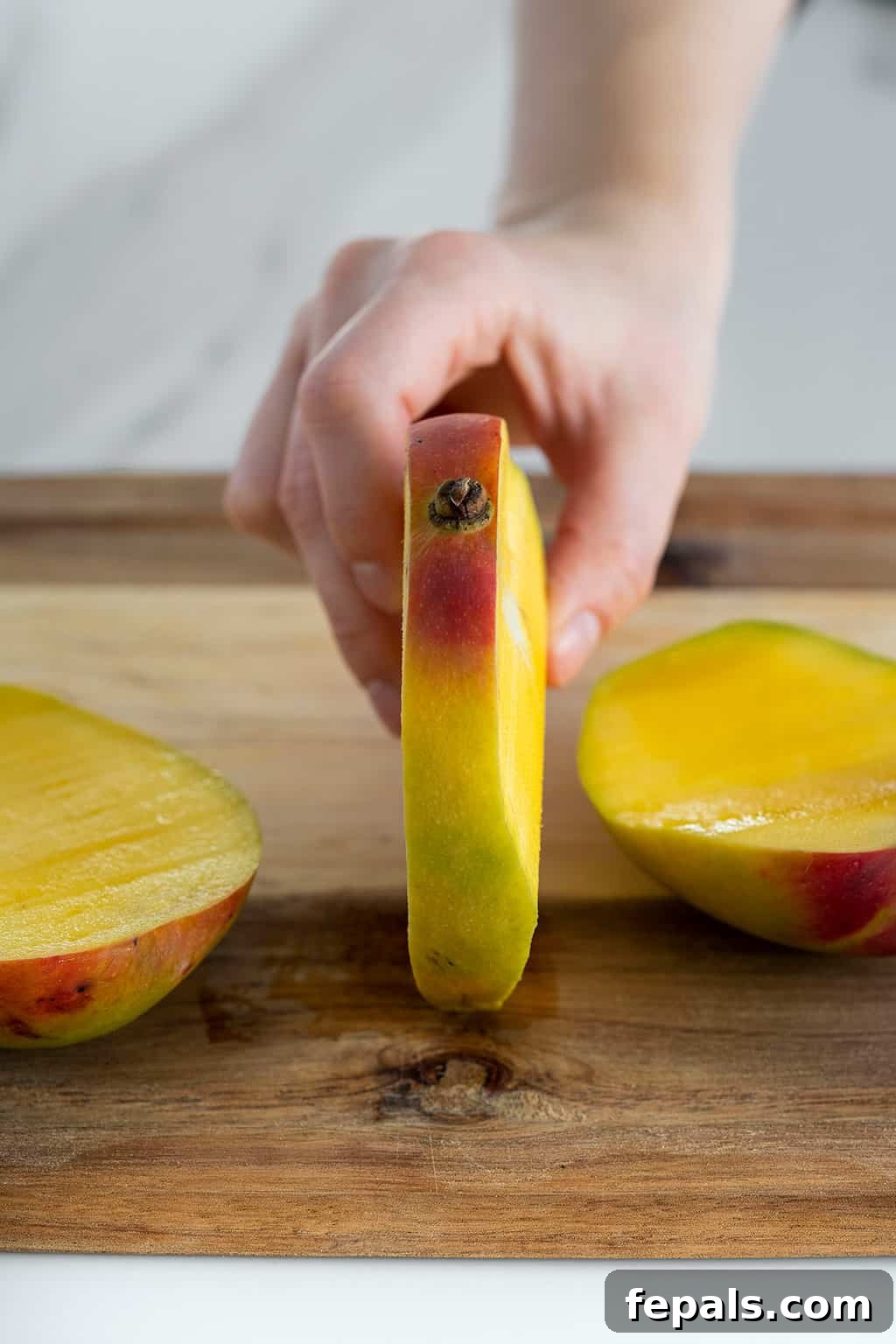
- Slice the “Cheeks”: Carefully slice down each side of the mango, just parallel to the pit. You want to cut as close to the pit as possible without actually hitting it. This will yield two large, fleshy “cheeks” of mango.
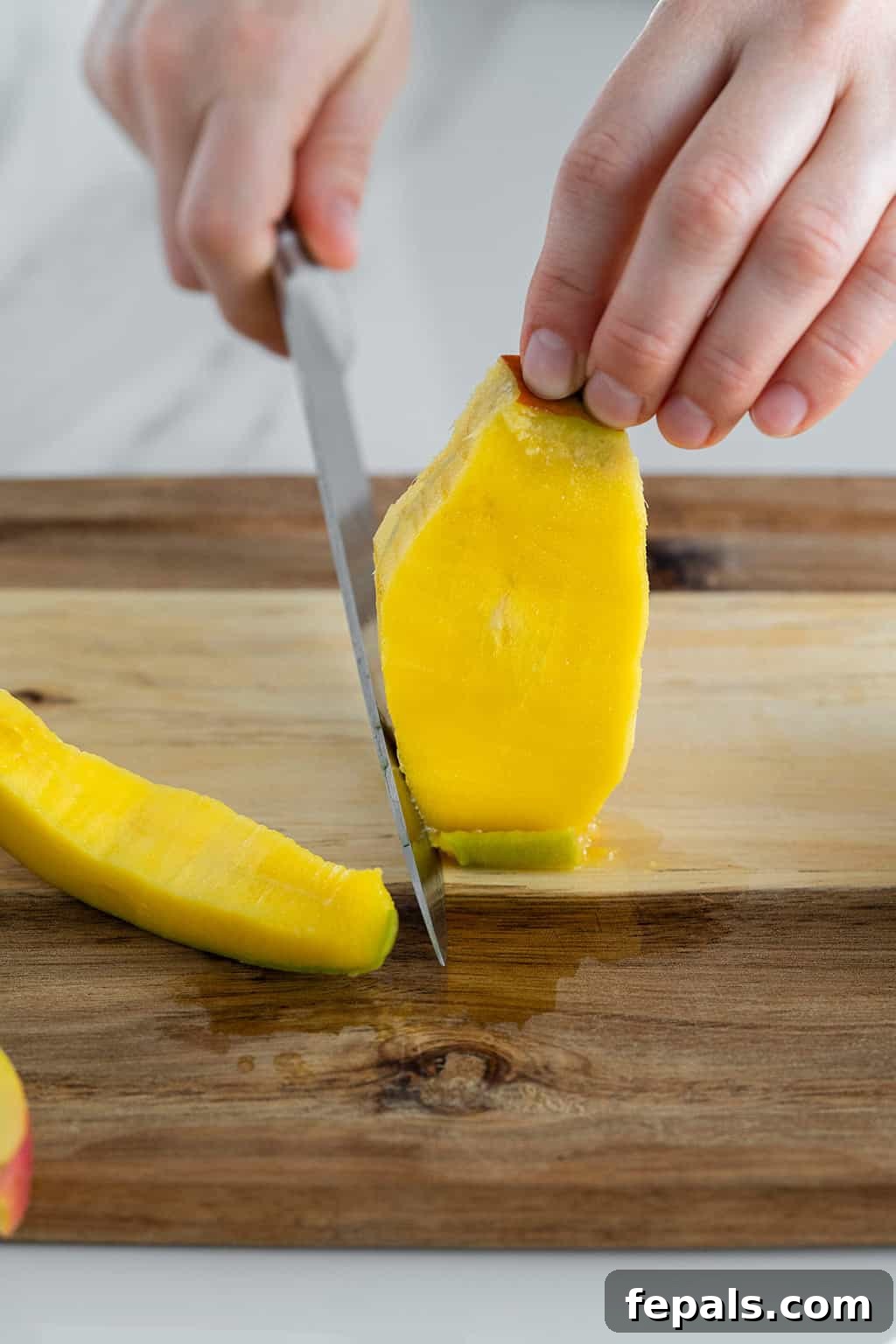
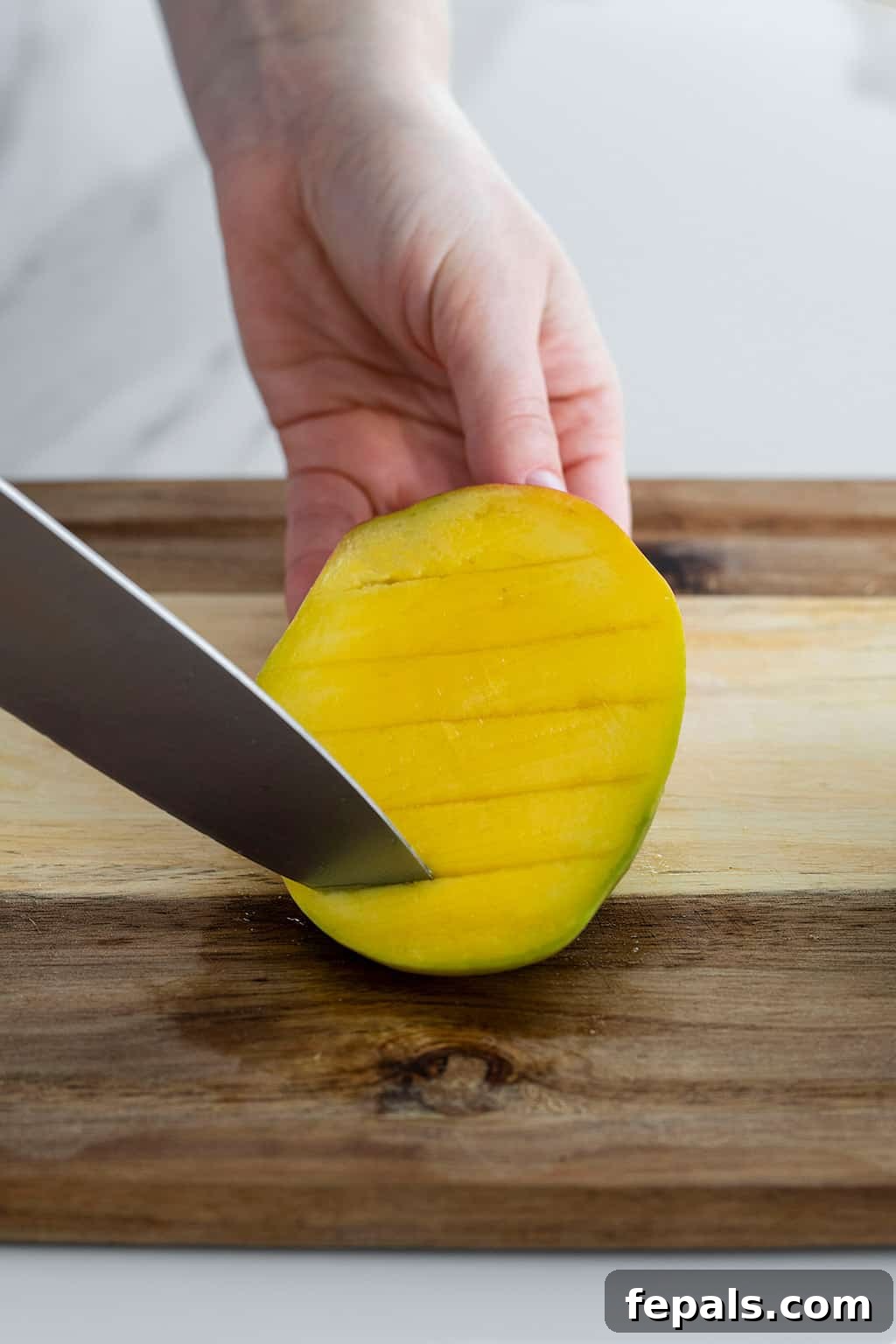
- Score the Flesh: Take one of the mango cheeks and place it skin-side down on the cutting board. Using your knife, make several lengthwise slices into the mango flesh, without piercing through the skin.
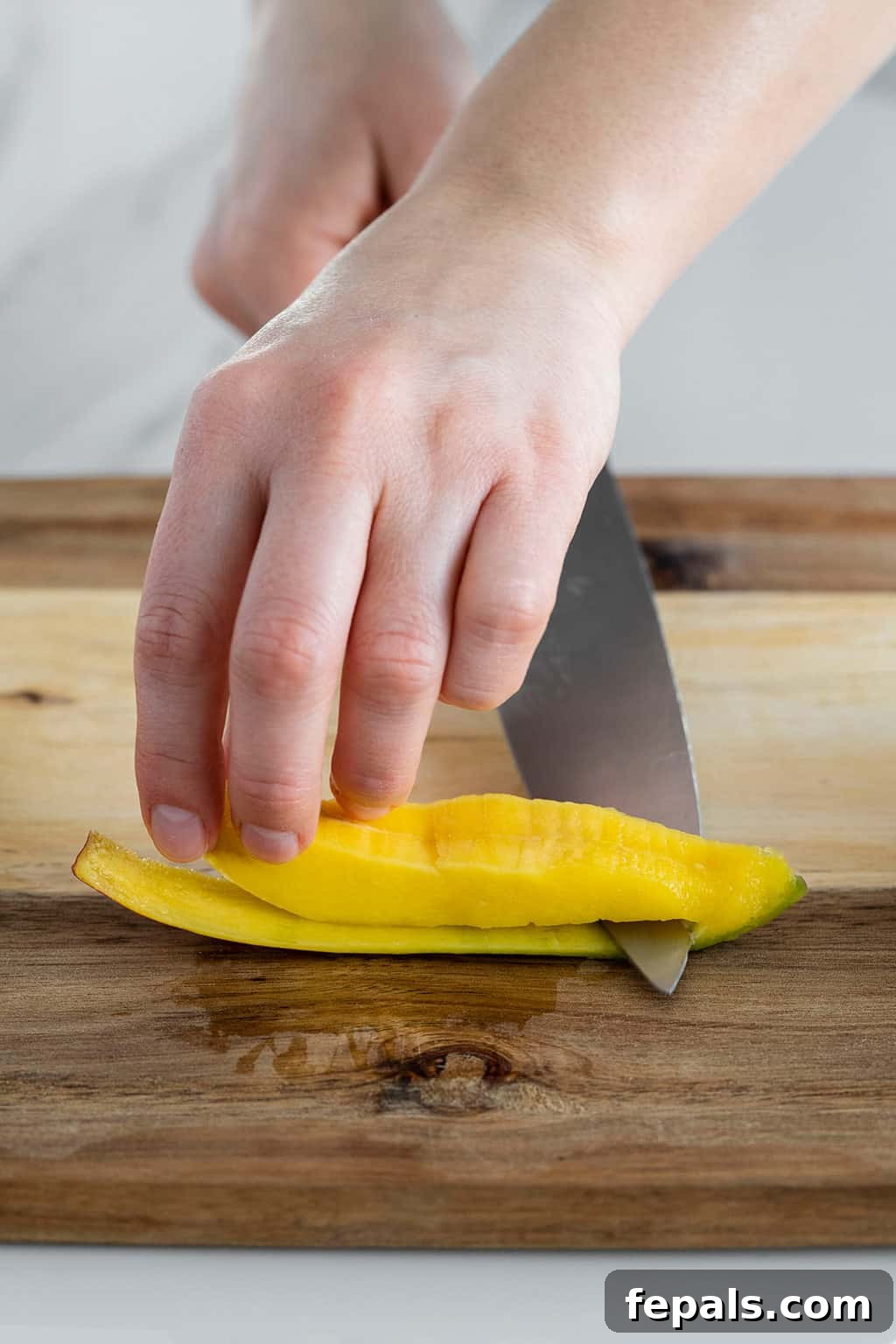
- Remove the Slices: Gently slide your knife between the scored flesh and the skin to separate the strips. Alternatively, you can use a large spoon to scoop out the slices. Repeat with the other cheek.
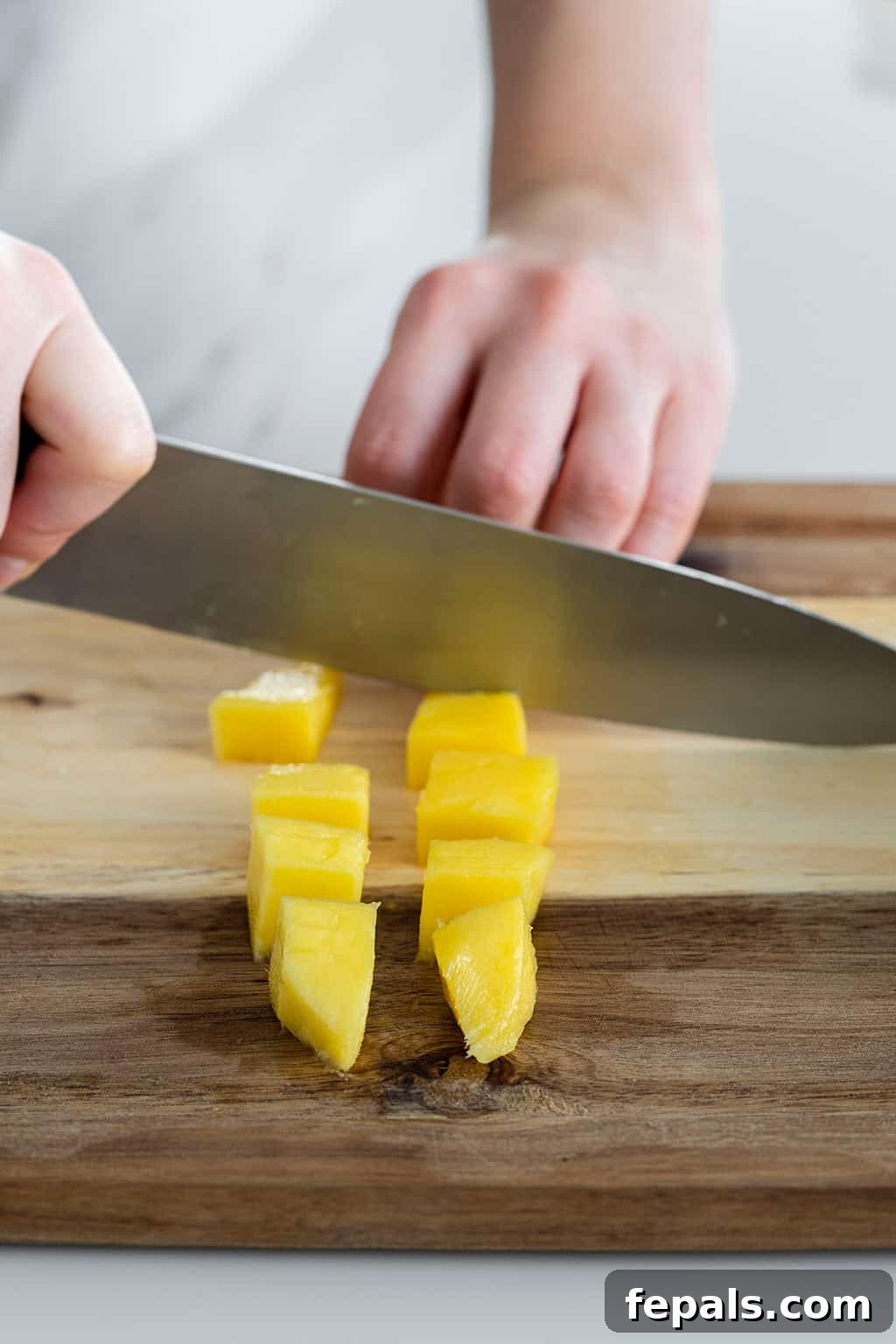
- Process the Remaining Flesh: The remaining fruit around the pit can be trimmed off and sliced or diced as desired.
How to Cut a Mango into Cubes (Hedgehog Method)
This popular method yields beautiful, uniform cubes, perfect for fruit salads, salsas, or as a garnish. It’s often referred to as the “hedgehog” method due to the appearance of the scored mango cheek.
- Slice the Cheeks: Just like with sliced mangoes, stand the mango upright and slice down each side, parallel to the pit, to create two large cheeks.
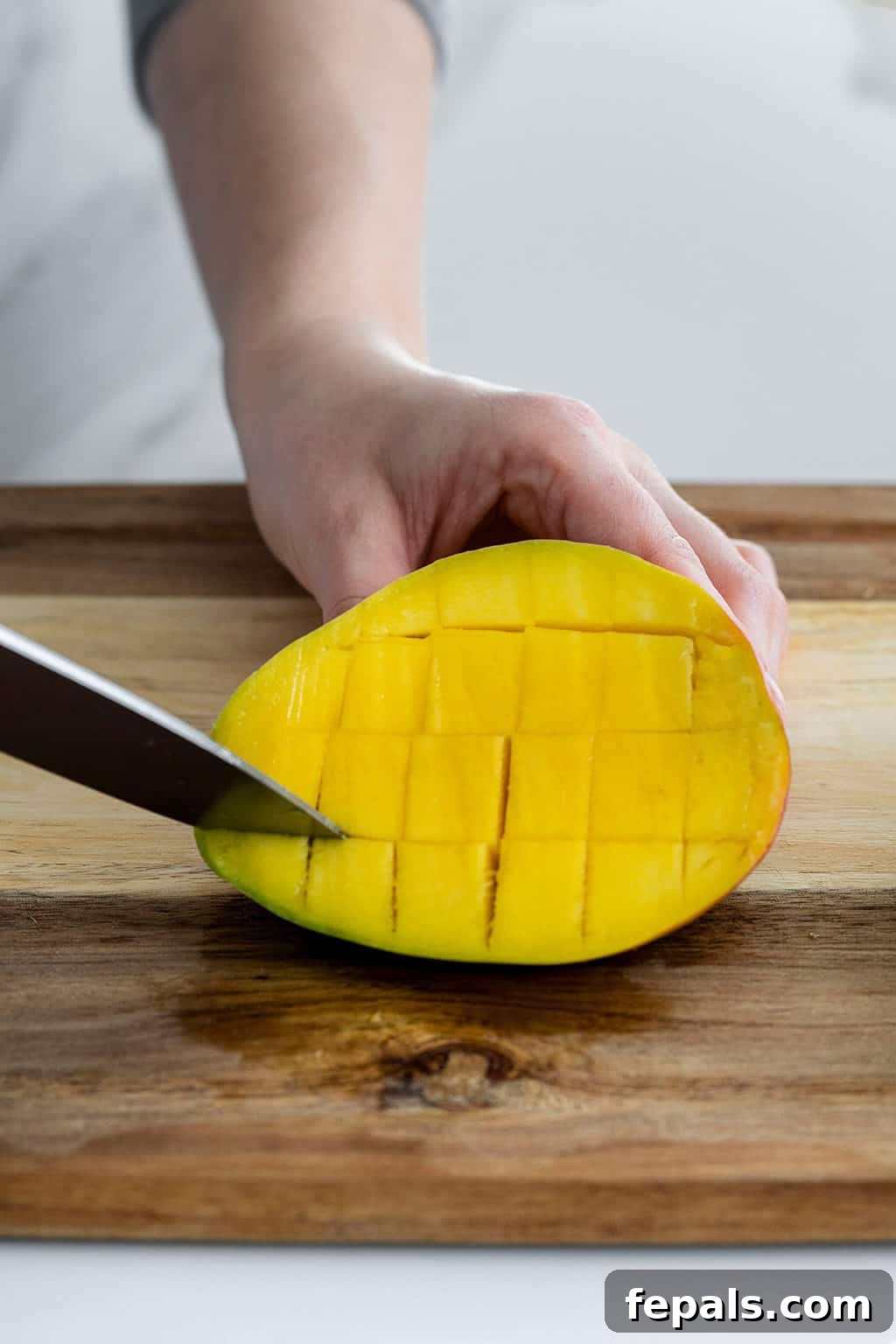
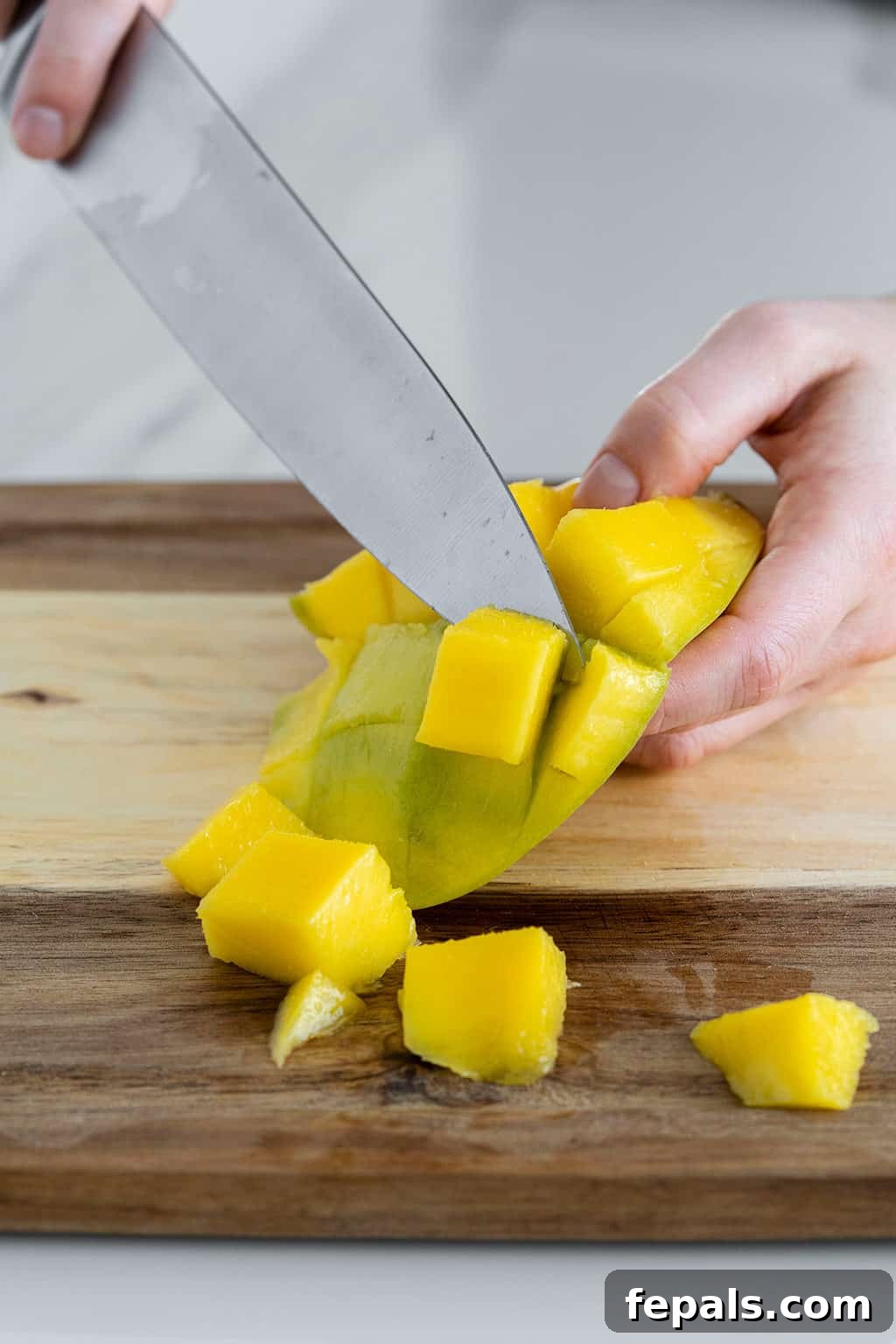
- Score the Flesh: With a mango cheek still skin-side down, carefully score the flesh in a grid pattern. Make lengthwise cuts, then crosswise cuts, without cutting through the skin. Aim for cubes of your desired size.
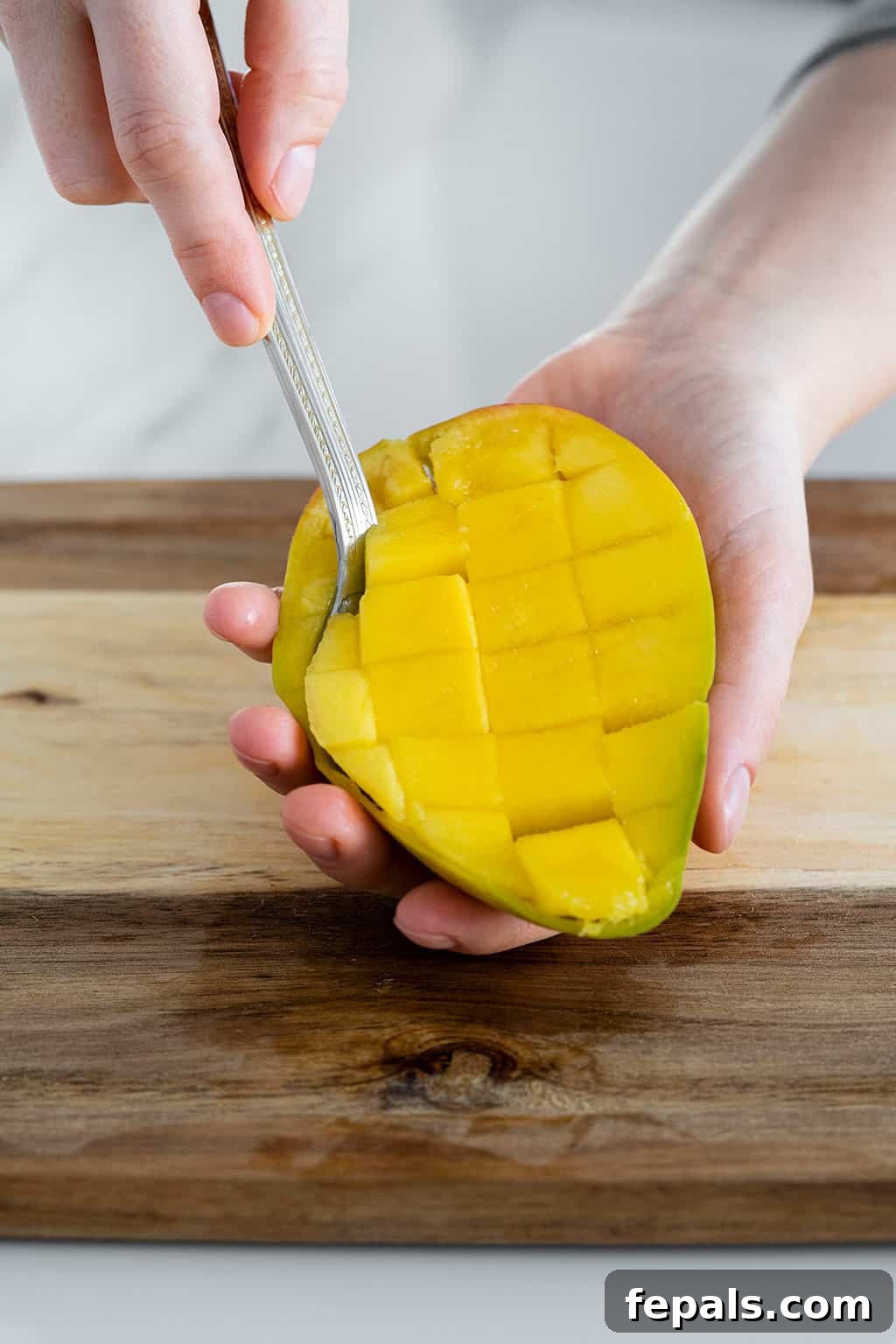
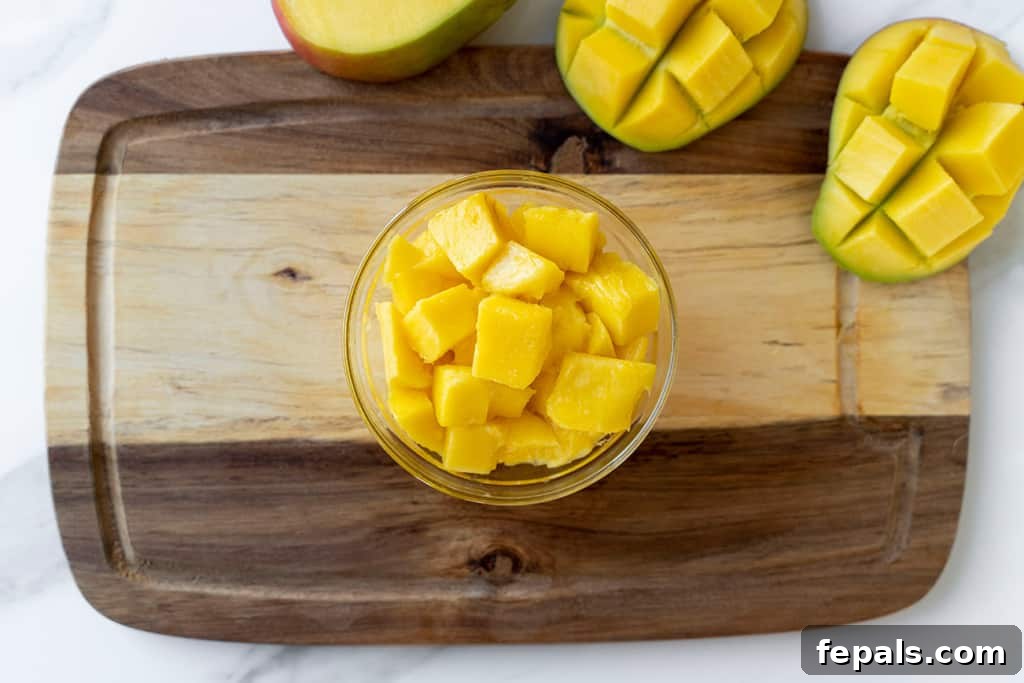
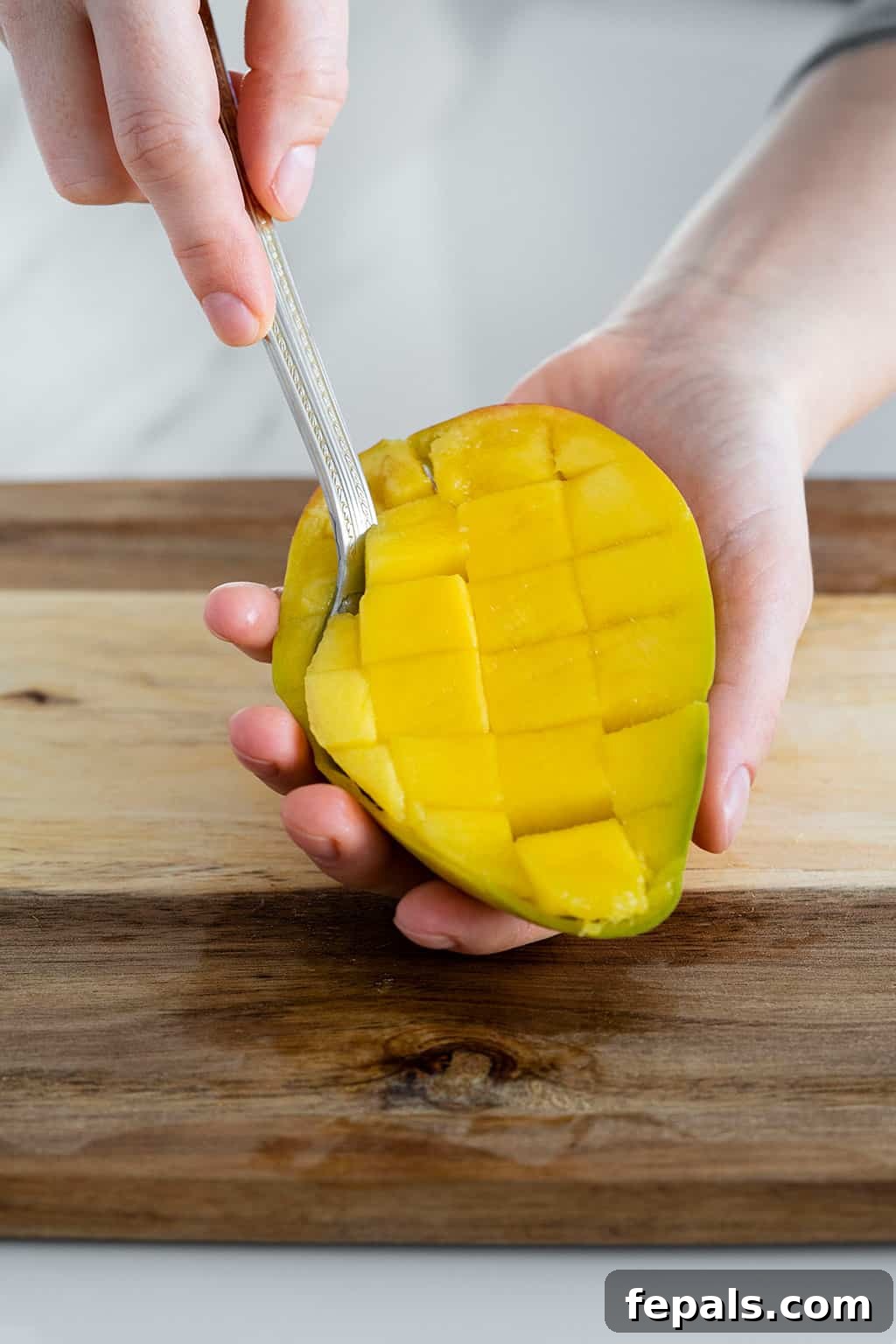
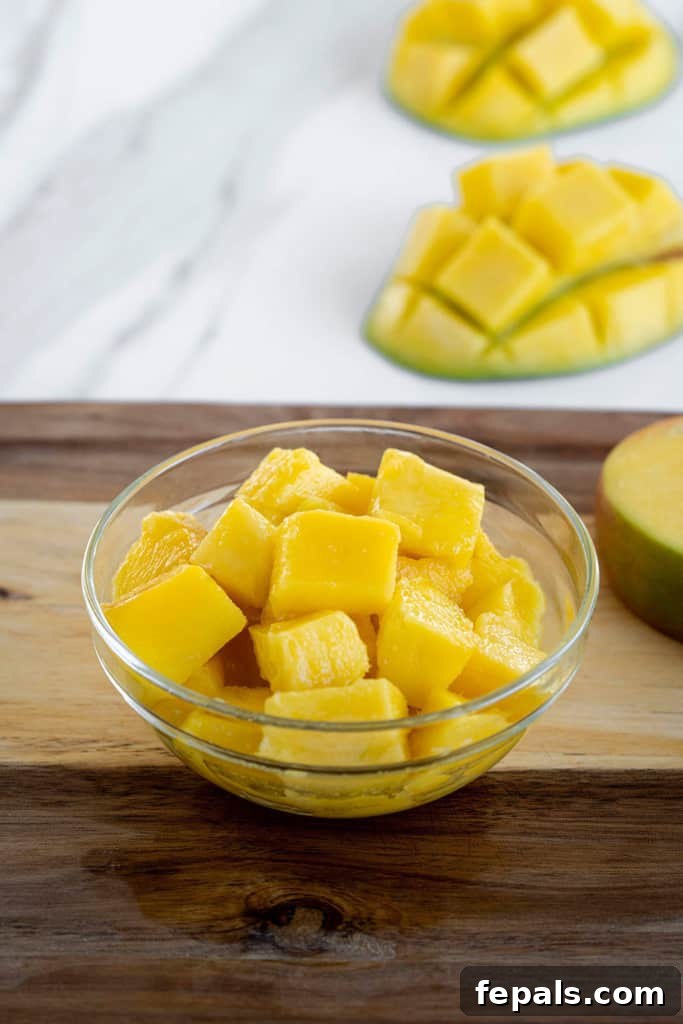
- Invert and Scoop (or Cut Off): Gently push the skin of the mango cheek inside-out (this is where it gets its “hedgehog” nickname). The scored cubes will pop out, making them easy to scoop off with a spoon or slice off with a knife directly into a bowl.
- Trim Remaining Flesh: Carefully trim any remaining flesh from around the pit and dice it as needed.
Optimal Mango Storage Solutions
Proper storage is crucial to enjoying your mangoes at their peak flavor and extending their shelf life. Different stages of ripeness require different approaches:
- Unripe Mangoes: Always store unripe mangoes at room temperature on your kitchen counter. Placing them in the refrigerator before they are ripe will halt the ripening process and can permanently affect their flavor and texture, preventing them from ever fully developing their sweetness.
- To Speed Up Ripening: If you’re eager to enjoy your mangoes sooner, place them in a brown paper bag with an apple or banana. These fruits release ethylene gas, a natural plant hormone that accelerates ripening. Check daily for desired softness.
- Ripe Mangoes: Once your mangoes have reached peak ripeness, transfer them to the refrigerator. This will significantly slow down the ripening process, allowing you to enjoy them for an additional 5-7 days.
- Cut Mangoes: For already cut or peeled mango pieces, store them in an airtight container in the refrigerator. Consume them within 4-5 days for the best quality and freshness.
Can I Freeze Cut Mango for Later Use?
Absolutely! Freezing is an excellent way to preserve the tropical goodness of mango for longer periods, making it readily available for smoothies, desserts, or any recipe that calls for mango. Here’s how to do it effectively:
- Prepare and Cut: Wash, peel, and cut your ripe mango into cubes or slices as desired.
- Single Layer Freeze: Arrange the mango pieces in a single layer on a parchment paper-lined baking sheet. This prevents them from clumping together.
- Flash Freeze: Transfer the baking sheet to the freezer and freeze for 2-3 hours, or until the mango pieces are completely solid.
- Transfer and Store: Once frozen solid, transfer the mango pieces from the baking sheet into a freezer-safe bag or an airtight container. Label with the date.
- Enjoy Later: Frozen mango can be stored in the freezer for up to 6-8 months. It’s perfect for adding directly to smoothies, making sorbets, or thawing slightly for other recipes.
Delicious Ways to Use Your Freshly Cut Mango
Mangoes are incredibly versatile, offering a burst of tropical flavor that can elevate both sweet and savory dishes. While simply enjoying fresh, chilled mango slices is a delight, here are numerous creative ways to incorporate this vibrant fruit into your culinary repertoire:
- Salads: Add a refreshing twist to green salads with mango cubes, or create a tropical sensation with a Healthy Grilled Chicken Mango Salad or Mango Black Bean Salad. The sweetness of mango perfectly complements savory ingredients.
- Salsas: Combine diced mango with red onion, cilantro, lime juice, and a touch of jalapeño for a vibrant Mango Avocado Salsa. It’s fantastic with grilled fish, chicken, or as a dip with tortilla chips.
- Smoothies & Drinks: Frozen mango is a smoothie powerhouse! Blend it with yogurt, banana, spinach, or other fruits for a nutritious and delicious breakfast or snack. You can also use fresh mango for tropical juices or aguas frescas.
- Desserts: From mango tarts and cheesecakes to sorbets and popsicles, mango is a star in desserts. Try it in Homemade Banana Ice Cream for an extra fruity kick.
- Breakfast Bowls: Elevate your morning oatmeal, yogurt parfait, or Fruit and Oatmeal Breakfast Bowl with fresh mango chunks.
- Main Dishes: Mango pairs surprisingly well with various proteins. Incorporate it into marinades for chicken or pork, or add it to savory bowls like Shrimp Taco Bowls for a sweet and spicy contrast.
- Chutneys & Sauces: Cook down mango with spices, vinegar, and sugar to create a delicious chutney that’s wonderful with curries, cheese, or grilled meats.
With these simple techniques and storage tips, you’ll be a mango-cutting expert in no time. Enjoy the sweet, nutritious benefits of this incredible tropical fruit in countless dishes!
If you found this guide helpful or tried a recipe featuring mango, please consider leaving feedback in the comment section below. Sharing is caring – spread the mango love with your friends and family!
FOLLOW me on FACEBOOK | INSTAGRAM | PINTEREST | TWITTER for all of my latest blog posts and recipes.
How To Properly Cut a Mango
By: Rena
Servings: 1 (large mango)
Prep Time: 5 mins
Cook Time: 0 mins
Total Time: 5 mins
Want to cut up some mango for a recipe or for healthy snacking? This step-by-step process shows you easy ways you can properly cut a mango, ensuring minimal waste and perfect pieces every time.
Equipment
- Sharp Chef’s Knife
- Cutting Board
Ingredients
- 1 large Mango, ripe
Instructions
How to Cut Sliced Mango
- Stand the mango upright with the stem facing upwards. Slice each side just parallel to the large, flat seed in the center.
- Take one of the mango cheeks and place it skin-side down. Slice the flesh of the mango lengthwise without breaking through the skin, similar to how you would score avocado slices.
- Using a knife, carefully slide it between the scored flesh and the skin to remove the slices. Alternatively, use a spoon or the edge of a cup to scoop out the slices.
How to Cut Mangoes into Cubes (Hedgehog Method)
- Stand the mango upright with the stem facing upwards. Slice each side just parallel to the seed to create two large cheeks.
- Take one of the mango cheeks and place it skin-side down. Slice the flesh of the mango lengthwise and then widthwise in a grid pattern without breaking through the skin.
- Gently push the skin of the mango cheek inside-out to expose the cubes (“hedgehog” style). Using a knife or spoon, easily remove the mango flesh cubes into a bowl.
Notes
- Always use a sharp knife for safety and efficiency when cutting mangoes.
- Wash the mango thoroughly before cutting.
- Do not place unripe mangoes in the fridge; allow them to ripen at room temperature on your kitchen counter to ensure optimal flavor development.
- To accelerate the ripening process of a firm mango, place it in a brown paper bag on your kitchen counter for a few days.
- Cut mango cubes can be frozen for 6-8 months when stored properly in an airtight container or freezer bag.
Nutrition Information (Approximate)
- Calories: 124 kcal
- Carbohydrates: 31g
- Protein: 2g
- Fat: 1g
- Saturated Fat: 0.2g
- Polyunsaturated Fat: 0.1g
- Monounsaturated Fat: 0.3g
- Sodium: 2mg
- Potassium: 348mg
- Fiber: 3g
- Sugar: 28g
- Vitamin A: 2240 IU
- Vitamin C: 75mg
- Calcium: 23mg
- Iron: 0.3mg
Nutrition information is automatically calculated and should only be used as an approximation.
Additional Info
Course: Ingredient, Snack, Fruit
Cuisine: Tropical, American