
Learning how to cut a cantaloupe can transform your fruit preparations, making this sweet, juicy melon a regular feature on your menu. With just a few simple steps, you can confidently peel, halve, and prepare your cantaloupe for effortless serving, whether you prefer cubes, slices, or crescent shapes. This guide will walk you through everything from selecting the perfect melon to expert cutting techniques and creative serving ideas, ensuring you enjoy every bite of this refreshing fruit.
Knowing how to pick and cut a cantaloupe is an invaluable skill for anyone who enjoys the taste of sweet, fresh melon. With the right tools—primarily a sturdy cutting board and a sharp knife—you can expertly transform a whole cantaloupe into various appealing designs and shapes. Imagine serving perfectly uniform cubes, elegant slices, crescent moons, or even playful melon spheres. While the task might initially appear daunting, with a bit of patience and focus, it is remarkably straightforward. And for those moments when simplicity reigns supreme, there’s nothing quite like enjoying a ripe cantaloupe straight from the fruit with a spoon.
Why Add Cantaloupe to Your Diet?
Cantaloupe is not just delicious; it’s also packed with vital nutrients that make it an excellent addition to any healthy diet. This vibrant orange melon is an exceptional source of Vitamin C, a powerful antioxidant known for boosting the immune system. It also provides a significant amount of Vitamin A, crucial for eye health and skin vitality. Additionally, cantaloupe is rich in potassium, which helps maintain healthy blood pressure, and it contains dietary fiber, aiding in digestion and promoting a feeling of fullness. With its high water content, it’s incredibly hydrating, making it a perfect snack on a warm day. Incorporating cantaloupe into your meals is an easy and delicious way to enjoy these numerous health benefits.
Selecting the Perfect Ripe Cantaloupe
The secret to the best-tasting cantaloupe often lies in its selection. A perfectly ripe cantaloupe will offer the most flavor and juiciness. Here’s how to choose one:
- Aroma: The most reliable indicator of ripeness is its smell. A ripe cantaloupe should have a sweet, musky, and distinctly melon-like fragrance, especially at the blossom end (the opposite of the stem end). Avoid those with no scent or an overly fermented smell.
- Skin Color and Texture: Look for a cantaloupe with a creamy beige, tan, or gold undertone between its prominent web-like netting. The netting itself should be well-defined and raised. Steer clear of melons that are too green, as they are unripe, or those with large brown spots or bruises, which indicate overripeness or damage.
- Stem End: The stem end should be smooth and slightly concave, indicating that the melon naturally detached from the vine when ripe, a process known as “full slip.” If there’s still part of the stem attached or a ragged tear, it was likely picked too early.
- Weight: A ripe cantaloupe will feel heavy for its size, suggesting it’s full of juicy goodness.
- Sound: Gently tap the melon. A ripe cantaloupe will produce a deep, hollow sound. A dull thud might mean it’s overripe, while a very high-pitched sound could mean it’s underripe.
Do you wash cantaloupe before cutting?
Absolutely, we strongly recommend washing all fruit before consuming it, and cantaloupe is no exception. Even though you will be cutting off the outer rind, the surface of the melon can harbor bacteria, dirt, and pesticide residues. As you slice through the skin, these contaminants can easily transfer to the edible flesh of the fruit. A simple rinse under cool running water, combined with a gentle scrub using a produce brush, is sufficient to clean the surface effectively. This small but crucial step significantly reduces the risk of foodborne illness and ensures your melon is as clean and safe as possible before serving.
Should you refrigerate uncut cantaloupe?
You do not have to refrigerate an uncut, whole cantaloupe. In fact, if your cantaloupe is not yet fully ripe, storing it at room temperature on your kitchen counter can help quicken the ripening process, allowing it to develop its full flavor and aroma. Once the cantaloupe is perfectly ripe, or after you have peeled and cut the fruit, it’s essential to refrigerate it promptly. Placing cut cantaloupe in a sealed, airtight container is crucial to maintain freshness and prevent it from absorbing odors from other foods in the refrigerator. Do not leave cut melon uncovered, as this exposes it to bacteria and causes it to dry out quickly. Properly stored, cut cantaloupe will remain fresh and delicious for up to 3-4 days in the refrigerator.
Essential Tools for Cutting Cantaloupe
Before you begin slicing into your cantaloupe, gather these indispensable tools to ensure a smooth, safe, and efficient cutting experience:
- Sharp Chef’s Knife: A large, sharp chef’s knife is your most important tool. A sharp blade is not only more efficient but also much safer than a dull one, as it requires less force and is less likely to slip.
- Sturdy Cutting Board: A large, stable cutting board, preferably made of wood or a non-slip material, will provide a secure surface and prevent the melon from moving around during cutting.
- Large Spoon or Melon Baller: For scooping out the seeds and fibrous strands from the melon’s center. A melon baller can also be used to create attractive spherical portions of the fruit.
How to Cut Cantaloupe into Halves and Beyond: A Step-by-Step Guide
Ready to enjoy your fresh cantaloupe? Follow these simple steps for perfectly cut melon every time:
Step 1: Trim the Ends for Stability
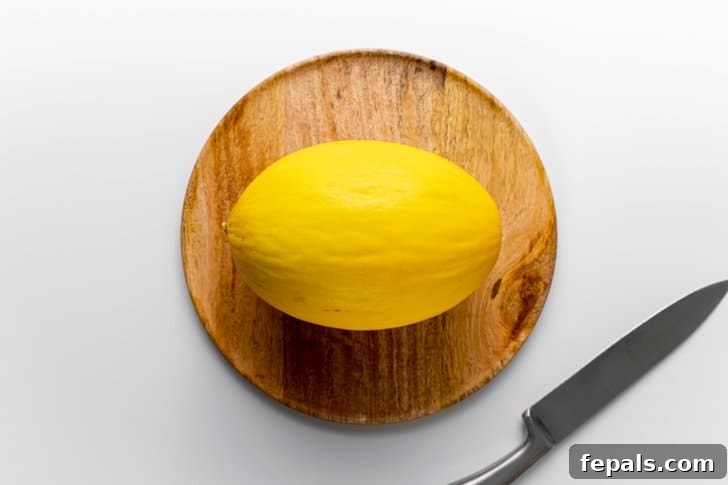
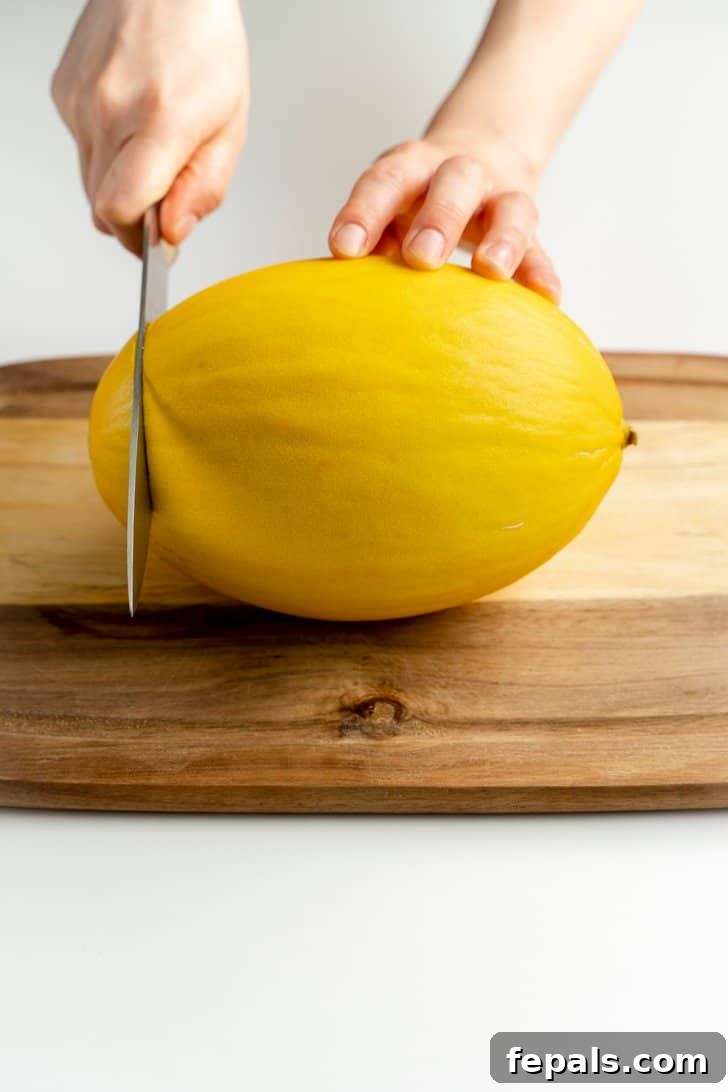
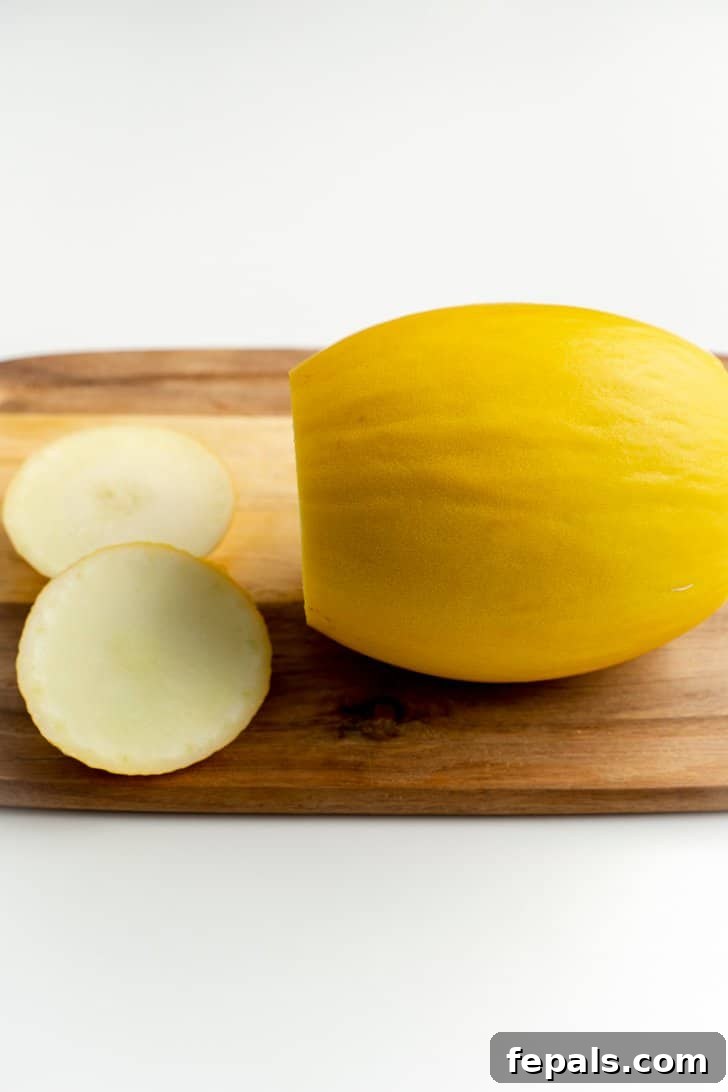
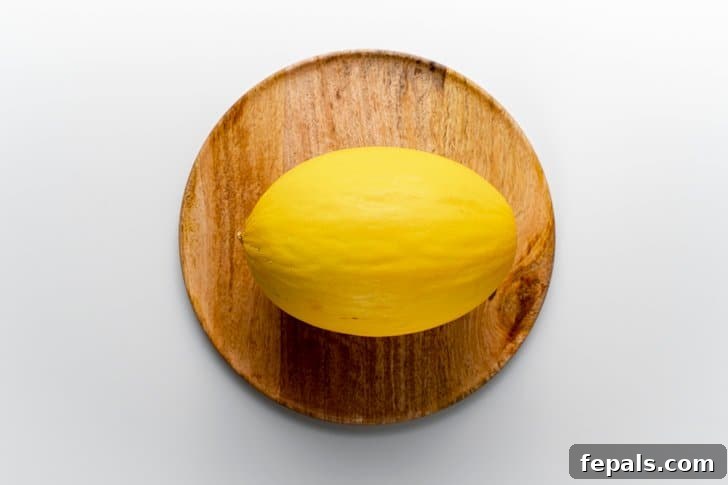
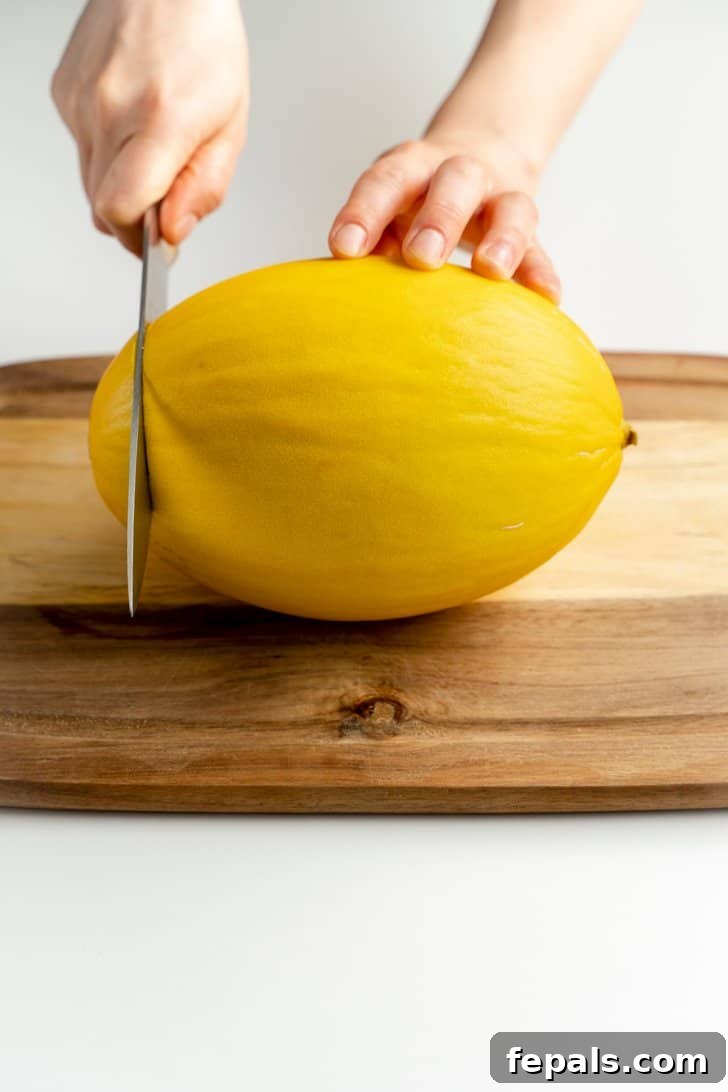
First, ensure your cantaloupe is clean. Place the cantaloupe on its side on your sturdy cutting board. Using your sharp chef’s knife, carefully slice off about half an inch from both the top (stem end) and bottom (blossom end) of the melon. This creates two flat, stable surfaces, making the cantaloupe much safer and easier to handle during subsequent cuts.
Step 2: Peel the Rind
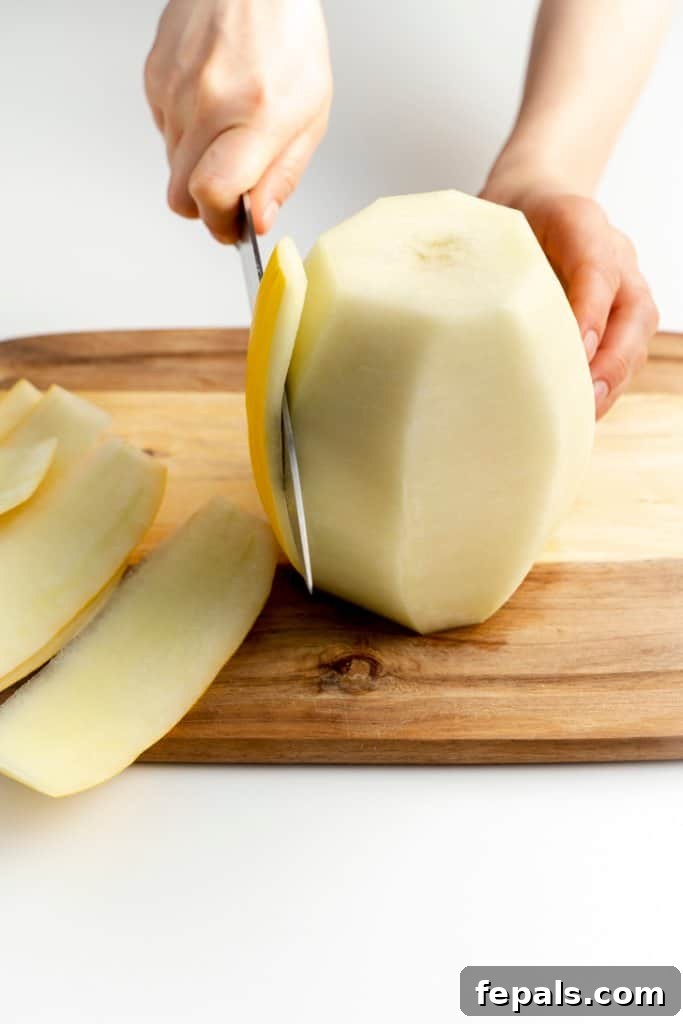
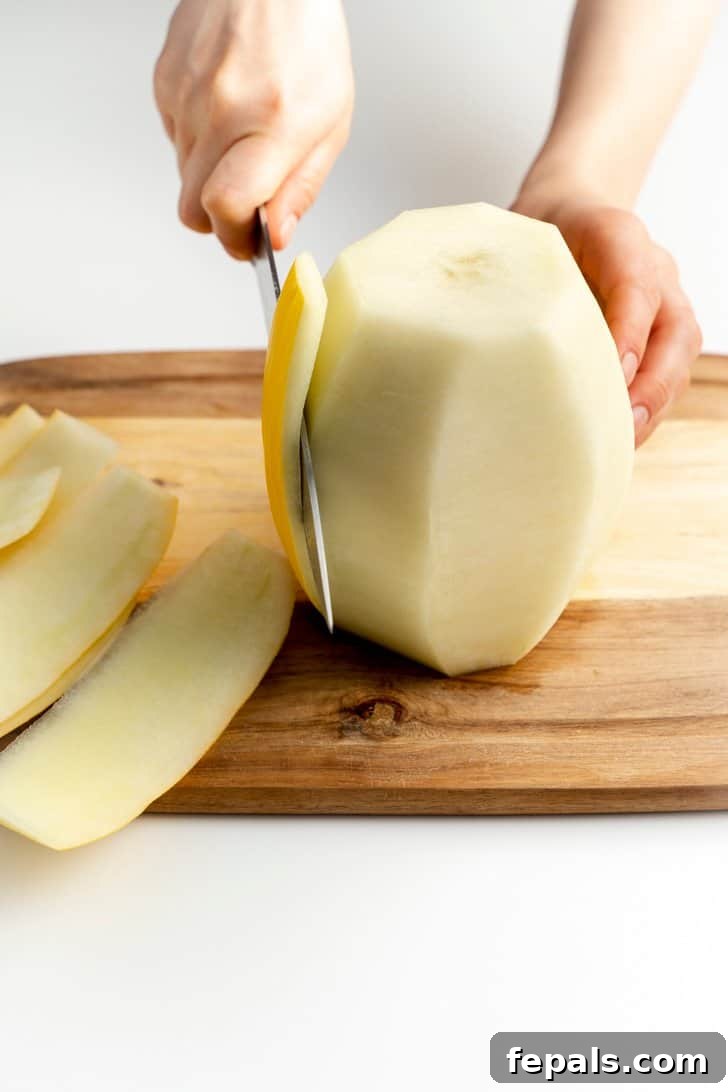
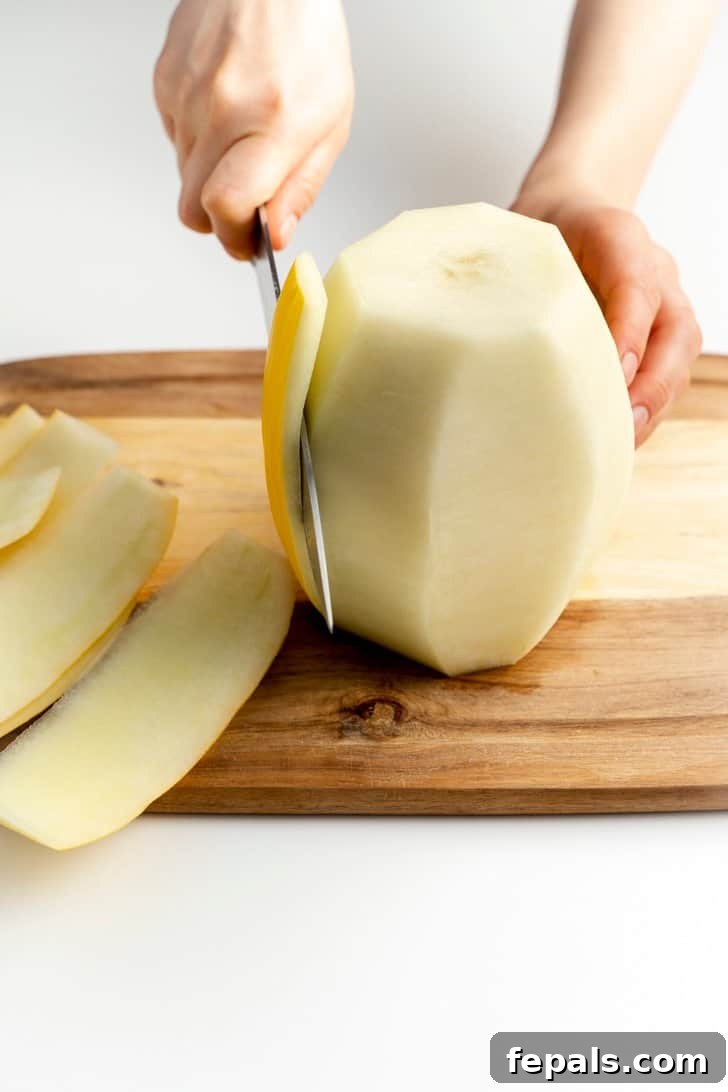
Next, stand the cantaloupe upright on one of its newly flattened ends. Carefully begin to slice the rind off, working from top to bottom. Position your knife just beneath the skin, following the natural curve of the melon. Aim to remove only the green-yellow rind and as little of the orange flesh as possible. Continue rotating the melon and slicing downwards until all the tough outer skin is removed, revealing the vibrant orange flesh beneath. Take your time with this step, prioritizing safety and a clean peel.
Step 3: Halve the Melon and Remove Seeds
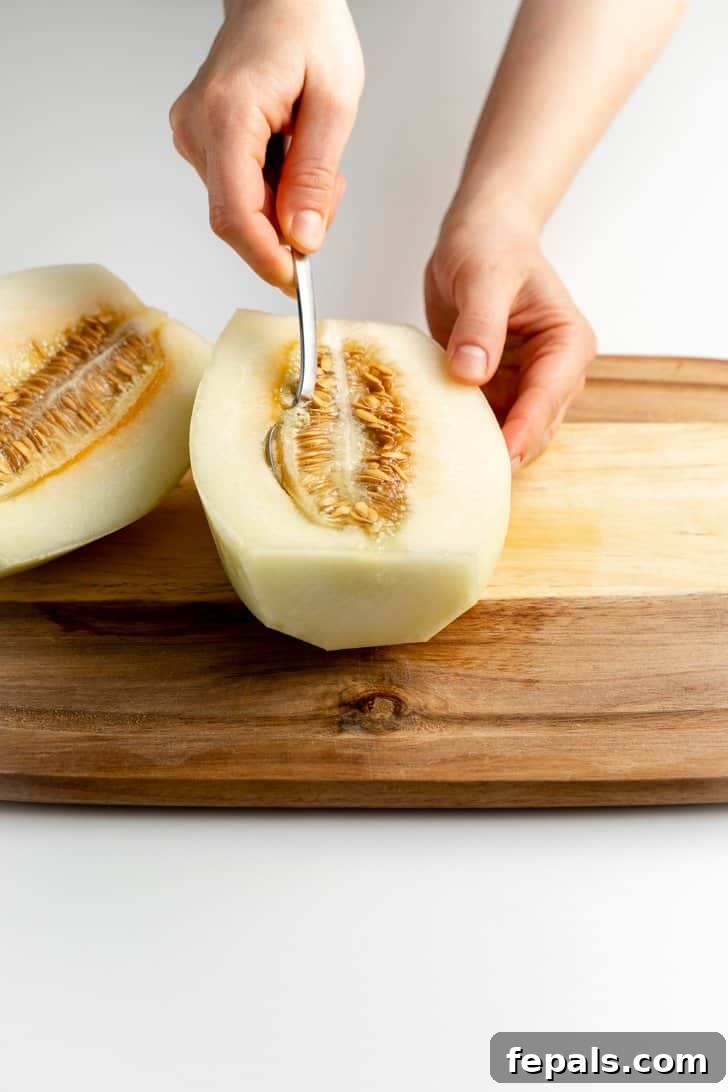
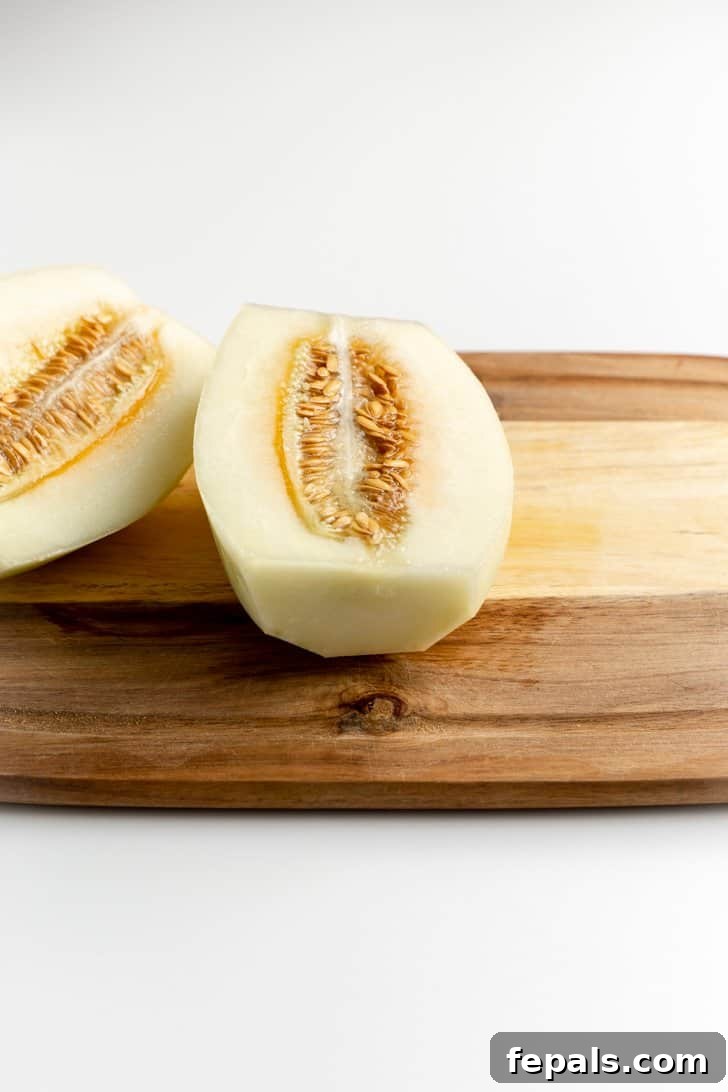
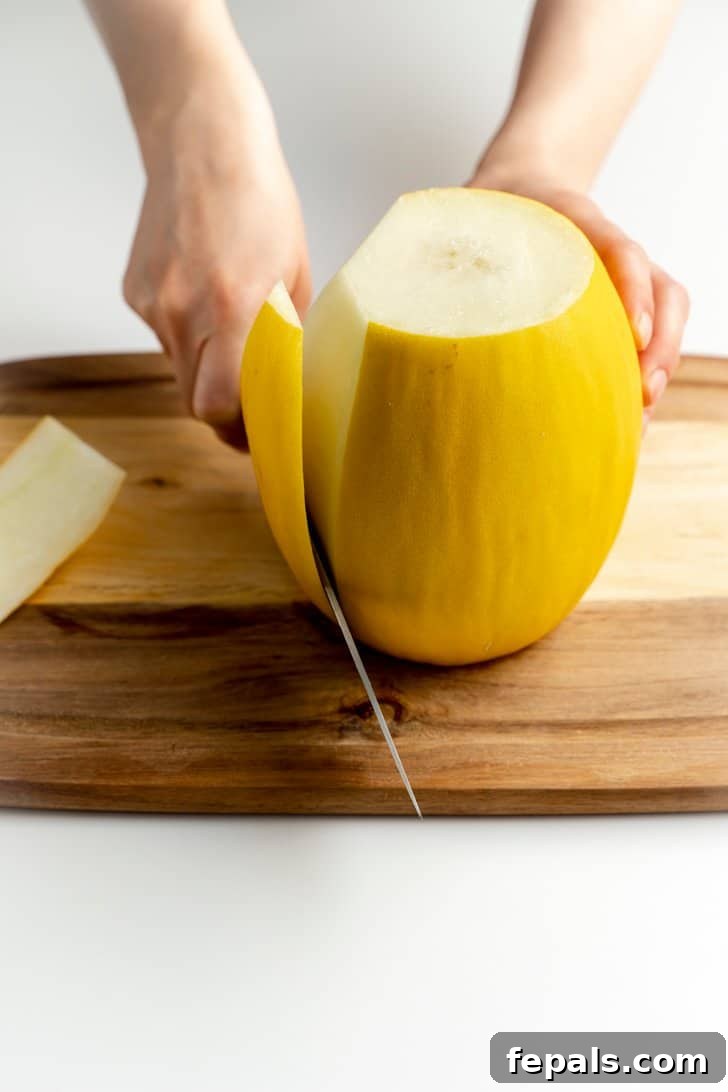
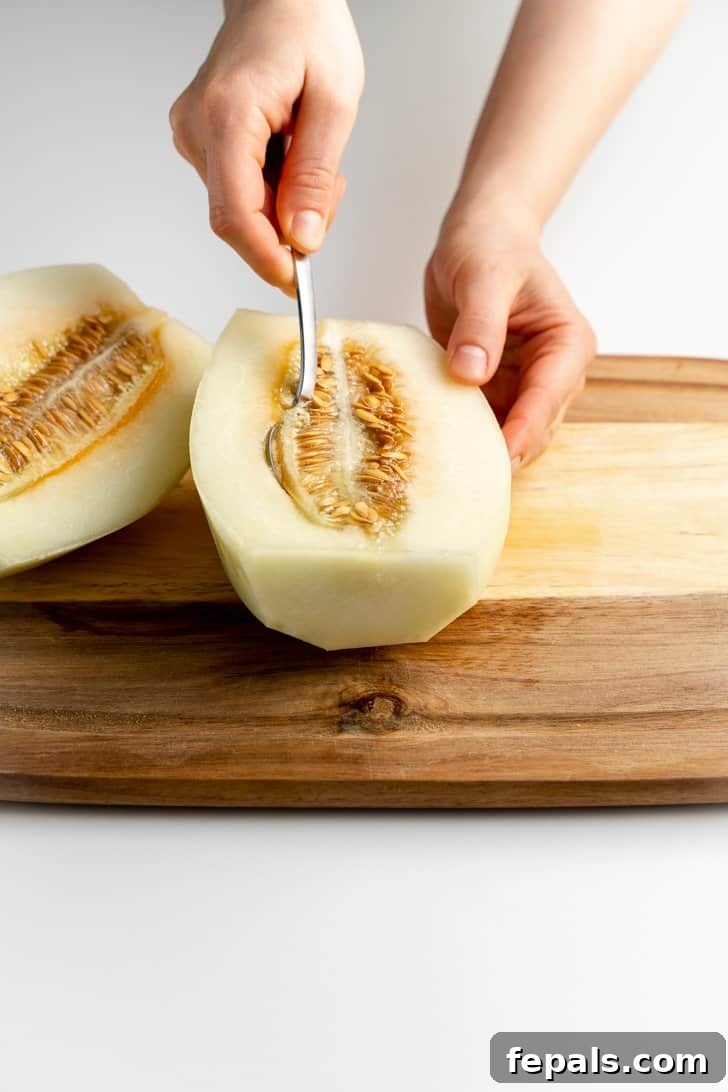
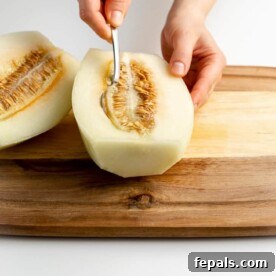
Once peeled, lay the cantaloupe on its side again. With your knife, cut the cantaloupe straight down the middle, from one end to the other, creating two symmetrical halves. Gently pull the two halves apart with your hands. You’ll reveal the fibrous seed cavity within. Using a large spoon or a melon baller, scoop out all the seeds and stringy membranes from both halves. Discard the seeds, and you’re left with two clean, ready-to-cut cantaloupe bowls.
Step 4: Slice and Dice to Your Preference
Now that your cantaloupe is peeled and seeded, you can cut it into your desired serving shapes:
- Cubes: Place a cantaloupe half cut-side down on the board. Slice it lengthwise into strips about 1-inch thick, then rotate the strips and slice crosswise to create uniform cubes. This is excellent for fruit salads or snacking.
- Slices/Crescents: For long, elegant slices, simply place the half cut-side down and slice it thinly or thickly from end to end. These crescent shapes are perfect for garnishes or eating by hand.
- Melon Balls: For a more decorative presentation, use a melon baller to scoop out spheres from the melon flesh. This creates beautiful, bite-sized pieces ideal for fruit platters.
Enjoy the cantaloupe halves, cubes, or slices in your favorite fruit salads, as a refreshing snack, or simply by themselves!
Creative Serving Suggestions for Cantaloupe
Cantaloupe’s sweet and refreshing flavor makes it incredibly versatile. Beyond simply eating it raw, here are some ideas to incorporate it into your meals:
- Classic Fruit Salads: Combine cantaloupe cubes with other seasonal fruits like berries, grapes, honeydew, and pineapple for a vibrant and healthy side dish.
- Smoothies and Juices: Blend fresh cantaloupe with yogurt, ice, and a touch of honey for a refreshing smoothie, or juice it with mint and lime for a hydrating drink.
- Savory Pairings: Cantaloupe pairs surprisingly well with savory ingredients. Try wrapping slices in prosciutto, adding cubes to a feta and mint salad, or even grilling slices for a unique smoky flavor.
- Desserts: Use cantaloupe in sorbets, granitas, or as a topping for yogurt and cottage cheese.
- Breakfast Bowls: Add cantaloupe to your oatmeal, granola, or smoothie bowls for a boost of natural sweetness and nutrients.
Notes and Pro Tips for Cutting Melon
- Be sure to select a ripe cantaloupe from the store. A ripe cantaloupe will be fragrant, slightly soft at the blossom end, and have a beautiful golden-tan color between its netting.
- Store any leftover cantaloupe in an airtight container in the refrigerator for up to four days to maintain its freshness and prevent spoilage.
- For an extra treat, dip the cantaloupe in your favorite fruit dips, a dollop of Greek yogurt, or a sprinkle of chili-lime seasoning for a zesty kick.
- The cutting method described here is versatile; you can cut almost any kind of melon (like honeydew or watermelon) using these same techniques.
- Remember to always use a sharp knife. A dull knife is more likely to slip, increasing the risk of injury. Keep your fingers tucked in a claw grip when slicing.
- For maximum refreshment, serve the cantaloupe chilled. You can even cut it ahead of time and store it in the refrigerator.
Frequently Asked Questions
To cut a whole cantaloupe, first wash it thoroughly. Then, trim off both ends to create flat, stable surfaces. Stand the melon upright and carefully slice downwards to remove the rind from top to bottom. Once peeled, cut the melon in half lengthwise and scoop out the seeds. From there, you can cube the cantaloupe, slice it into crescent shapes, or use a melon baller for spheres.
A ripe cantaloupe will have a sweet, musky aroma, especially at the blossom end. Its skin will be creamy beige or tan between the netting, and the netting itself will be raised and distinct. The stem end should be smooth, indicating a “full slip” from the vine. It should also feel heavy for its size and produce a hollow sound when tapped gently.
Yes, an uncut cantaloupe that is slightly underripe will continue to ripen and soften on the kitchen counter at room temperature. The sugars will develop further, enhancing its flavor and aroma. If you want to speed up the ripening process, place the cantaloupe in a paper bag. Once it reaches peak ripeness, it should be refrigerated to slow down further ripening and maintain freshness.
Yes, you can freeze cantaloupe! It’s best to cut it into cubes or balls first. Spread the pieces in a single layer on a baking sheet and freeze until solid. Once frozen, transfer them to an airtight freezer bag or container. Frozen cantaloupe is great for smoothies, sorbets, or as a refreshing addition to drinks, but its texture might be slightly softer when thawed.
More Posts You Will Enjoy
- How to Cut an Apple
- How to Make Almond Milk
- Easy Mixed Berry Fruit Salad
- Watermelon Feta Salad
- Fruit and Oatmeal Breakfast Bowl Recipe
We hope this comprehensive guide empowers you to confidently cut and enjoy fresh cantaloupe whenever the craving strikes! If you try this method, please use our hashtag #healthyfitnessmeals on INSTAGRAM for a chance to be featured! FOLLOW Healthy Fitness Meals on FACEBOOK | INSTAGRAM | PINTEREST | TWITTER for all of our latest blog posts and recipes.
How to Cut a Cantaloupe Melon
By: Rena
Servings: 1 cantaloupe
Prep Time: 5 mins | Cook Time: 10 mins | Total Time: 15 mins
Equipment
- 1 Sharp knife
- 1 Wooden cutting board
Ingredients
- 1 cantaloupe, ripe; whole
Instructions
- Place the cantaloupe on its side on top of the cutting board. With a knife, carefully slice off ½-inch from the top and bottom of the melon.
- Stand the cantaloupe on its bottom, then carefully slice down the edge of the rind and skin, making sure to cut the rind from top to bottom.
- Repeat until all of the skin is off of the cantaloupe.
- Next, cut the cantaloupe straight down the middle, forming two halves.
- Scoop out the seeds with a spoon. Enjoy!
Notes
- Be sure to select a ripe cantaloupe from the store. Ripe cantaloupe will be fragrant.
- Store any leftover cantaloupe in an airtight container in the refrigerator for up to four days.
- Dip the cantaloupe in your fruit dips.
- You can cut any kind of melon this way.
- Serve the cantaloupe as cubes, spheres, or slices.
- Enjoy chilled for the best flavor.
Nutrition
Nutrition information is automatically calculated, so should only be used as an approximation.
- Calories: 188kcal
- Carbohydrates: 45g
- Protein: 5g
- Fat: 1g
- Saturated Fat: 0.3g
- Polyunsaturated Fat: 0.5g
- Monounsaturated Fat: 0.02g
- Sodium: 166mg
- Potassium: 867mg
- Fiber: 4g
- Sugar: 44g
- Vitamin A: 18669IU
- Vitamin C: 60mg
- Calcium: 50mg
- Iron: 2mg
Additional Info
Course: Appetizer, Gluten-Free, Side Dish, Snack, Vegan, Vegetarian
Cuisine: American