
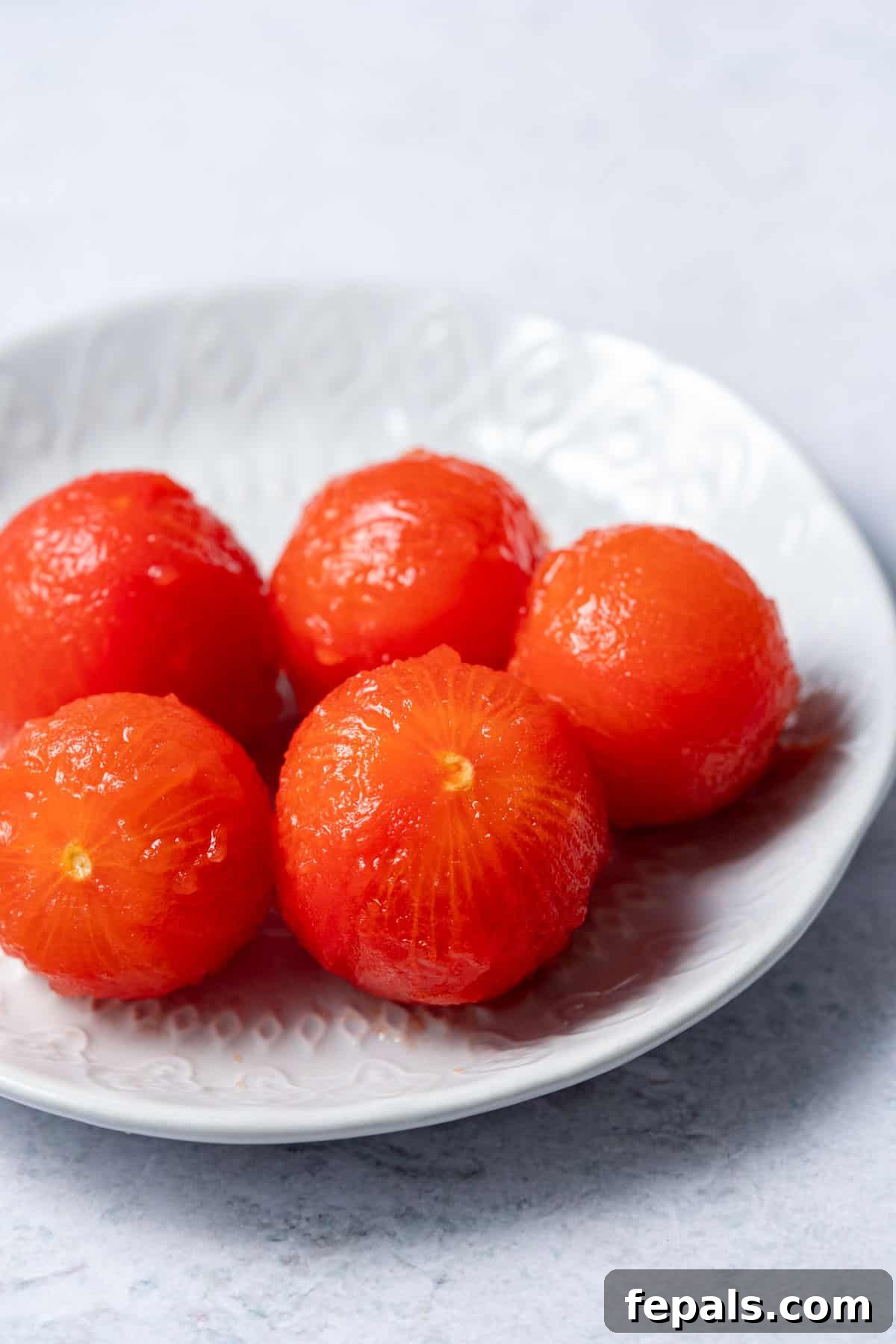
Unlock the secret to effortlessly preparing perfect tomatoes for all your culinary needs! Whether you’re crafting vibrant salsas, rich sauces, hearty soups, or preserving the summer harvest through canning, knowing how to **peel tomatoes** efficiently is a game-changer. This simple, time-tested method utilizes the power of boiling water and an ice bath to make tomato skin removal a breeze, transforming what might seem like a daunting task into a quick and satisfying kitchen skill. Get ready to elevate your cooking with perfectly smooth, skin-free tomatoes!
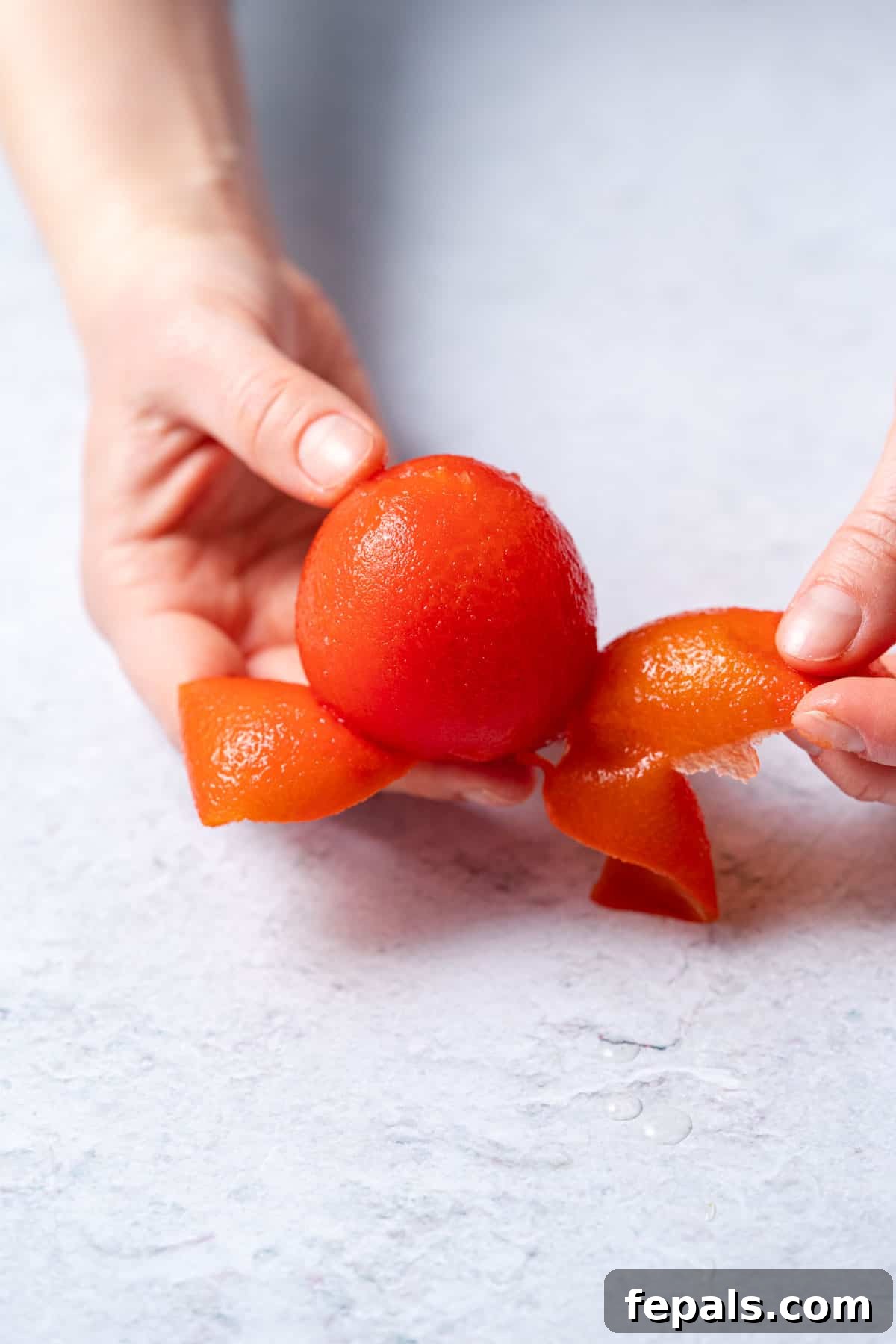
Many home cooks shy away from recipes that call for peeled tomatoes, often viewing the process as complicated or time-consuming. However, with just a few basic tools and a straightforward technique, you’ll discover that **peeling tomatoes by blanching** is remarkably simple and incredibly effective. Over the years, countless culinary experts and home chefs alike have relied on this method, consistently finding it to be the easiest and most reliable approach for achieving smooth, unblemished tomatoes.
The reasons to **peel tomatoes** are varied and significant. From enhancing the texture of delicate sauces and soups to ensuring a professional-grade finish for homemade canning, removing the skin is often a crucial step. The skin, while edible, can become tough and chewy when cooked, detracting from the overall mouthfeel of your dishes. Our method ensures the skin practically slips away, leaving you with tender, flavorful tomato flesh ready for any recipe you envision.
Is Peeling Tomatoes Truly Necessary? Understanding the Culinary Impact
While the decision to peel tomatoes can sometimes depend on personal preference or the specific dish you’re preparing, there are definite instances where it’s not just recommended, but essential. For recipes like smooth salsas, refined tomato sauces, creamy soups, and particularly for home canning, the tomato skin can significantly interfere with both the texture and flavor of the finished product. The tough, fibrous skins can become chewy, creating an undesirable mouthfeel and preventing your dishes from achieving that velvety consistency you desire.
In canning, the skins can also separate and float, making for a less appealing presentation and potentially affecting the overall quality and safety of your preserved goods by trapping air. Furthermore, some individuals find tomato skins difficult to digest, making peeled tomatoes a gentler option for sensitive stomachs. While a rustic chili or a chunky bruschetta might tolerate unpeeled tomatoes, aiming for culinary excellence in many preparations truly necessitates this simple extra step. By removing the skins, you ensure a smoother, more palatable, and visually appealing result every time.
Essential Tools and Ingredients for Effortless Tomato Peeling
Gathering your supplies before you begin will make the tomato peeling process smooth and efficient. You won’t need any fancy equipment, just a few kitchen staples:
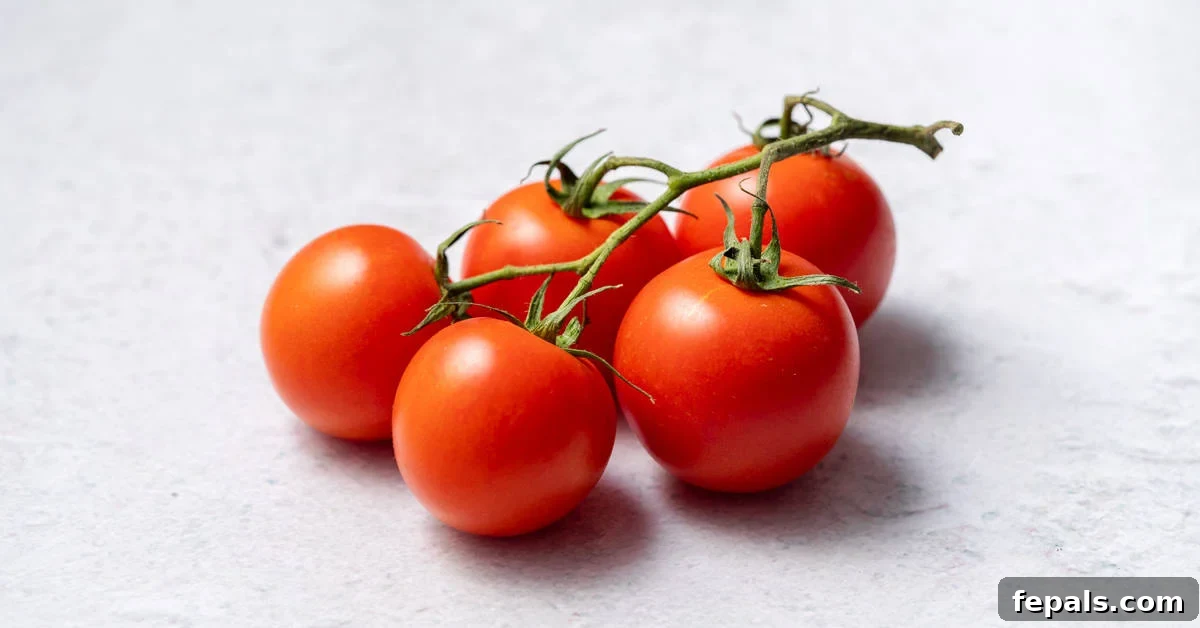
- Tomatoes: The star of the show! This blanching method works wonders for virtually any variety of tomato. Whether you’re working with juicy heirloom varieties, firm Roma (plum) tomatoes perfect for sauces, small and sweet cherry or grape tomatoes for quick preparations, or larger beefsteaks, they all benefit from this technique. Choose ripe but firm tomatoes for the best results, as overripe tomatoes can become mushy during boiling.
- Water: You’ll need a generous amount of water for two distinct phases: boiling and the ice bath. Using filtered water is always a good practice, especially if you plan to use your peeled tomatoes for canning, as it can subtly impact the final flavor. Ensure you have enough water to fully submerge your tomatoes in the pot and to create a substantial ice bath.
- Ice: Crucial for the ice bath! Ice serves a vital role in “shocking” the tomatoes after they’ve been blanched. This rapid cooling halts the cooking process immediately and helps to further separate the skin from the flesh, making peeling incredibly easy. Don’t skimp on the ice; a truly cold ice bath is key to success.
- Bowl: A large mixing bowl or any sturdy container will be needed to prepare your ice bath. Choose one spacious enough to comfortably hold all your blanched tomatoes and plenty of ice and water. A clear bowl can be helpful for observing the cooling process.
- A Medium to Large Saucepan or Pot: This will be used for blanching the tomatoes in boiling water. The size of your pot should accommodate the number of tomatoes you plan to peel at once, allowing them to be fully submerged without overcrowding. Overcrowding can lower the water temperature and lead to uneven blanching. Use your best judgment to select a pot that provides ample space.
- Sharp Knife: A small paring knife or a utility knife with a sharp blade is essential for scoring the tomatoes before blanching and for gently peeling away the loosened skins afterward. A sharp knife ensures clean cuts and minimizes effort.
- Slotted Spoon or Spider Strainer: This tool will be invaluable for safely transferring the hot tomatoes from the boiling water directly into the ice bath. Its slotted design allows water to drain away quickly, preventing excess hot water from entering your ice bath.
Mastering the Art of Tomato Peeling by Blanching: A Step-by-Step Guide
Peeling tomatoes using the blanching method is straightforward and highly effective. Follow these steps for perfectly peeled tomatoes every time:
Step 1: Preparation is Key
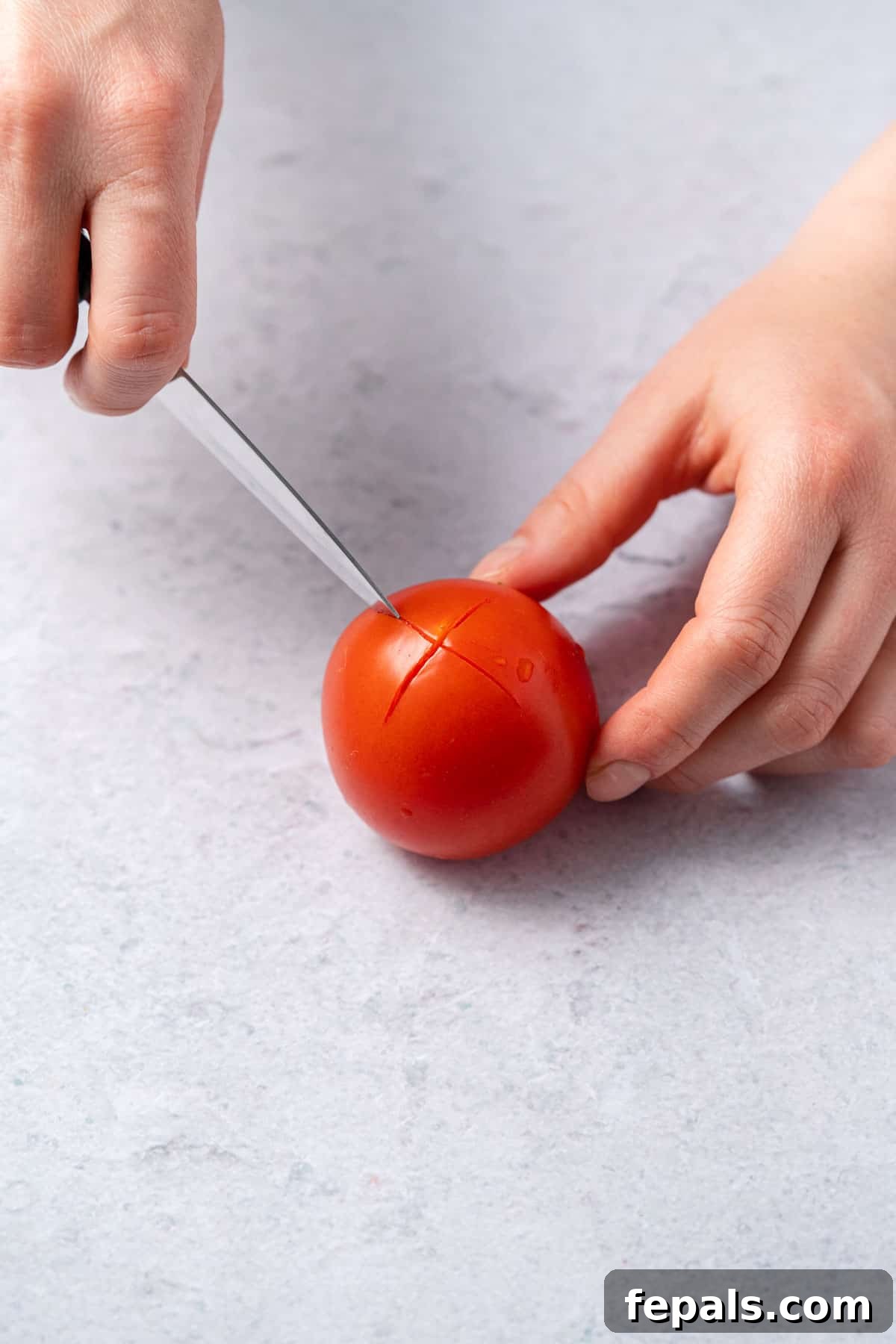
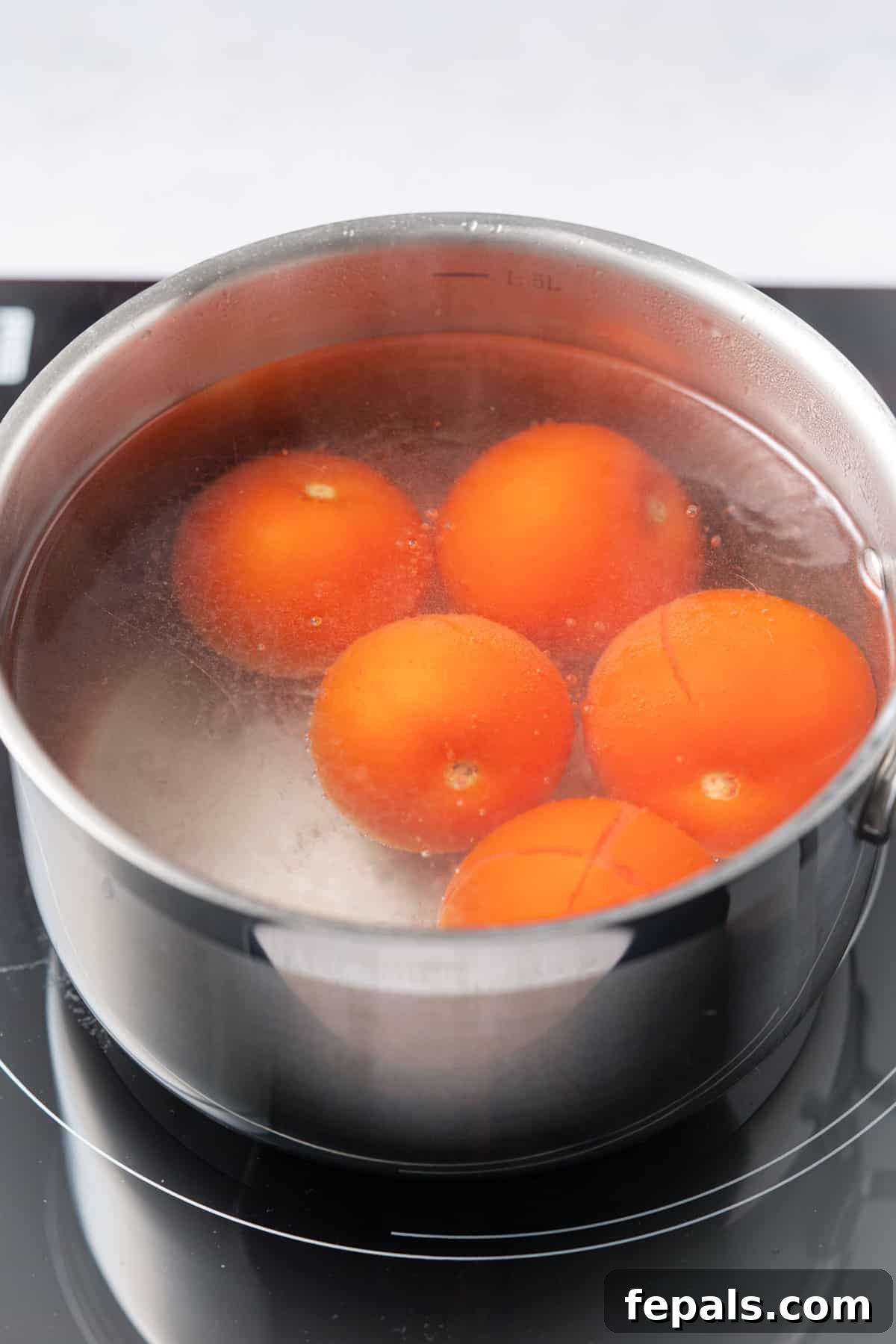
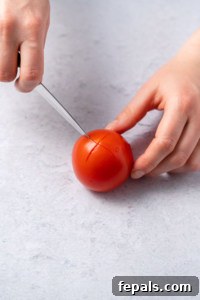
Begin by carefully washing and thoroughly drying each tomato. This removes any dirt, pesticides, or residues, ensuring a clean start. Next, take a sharp knife and gently cut a shallow “X” into the bottom of each tomato. This “X” cut should be just deep enough to pierce through the skin, but not so deep that it cuts significantly into the flesh. This small incision is where the magic happens – it allows the boiling water to penetrate slightly under the skin, making it easier to separate. Always make the cut on the opposite end from the stem.
Step 2: Set Up Your Stations
Place a medium to large pot of water on your stovetop and bring it to a rolling boil over high heat. While the water is heating, prepare your ice bath. Fill a large bowl with plenty of ice and cold water. This ice bath is critical for instantly stopping the cooking process and shocking the tomatoes, which helps to loosen their skins dramatically. Ensure the ice bath is genuinely cold – the colder, the better for optimal results.
Step 3: Blanch the Tomatoes
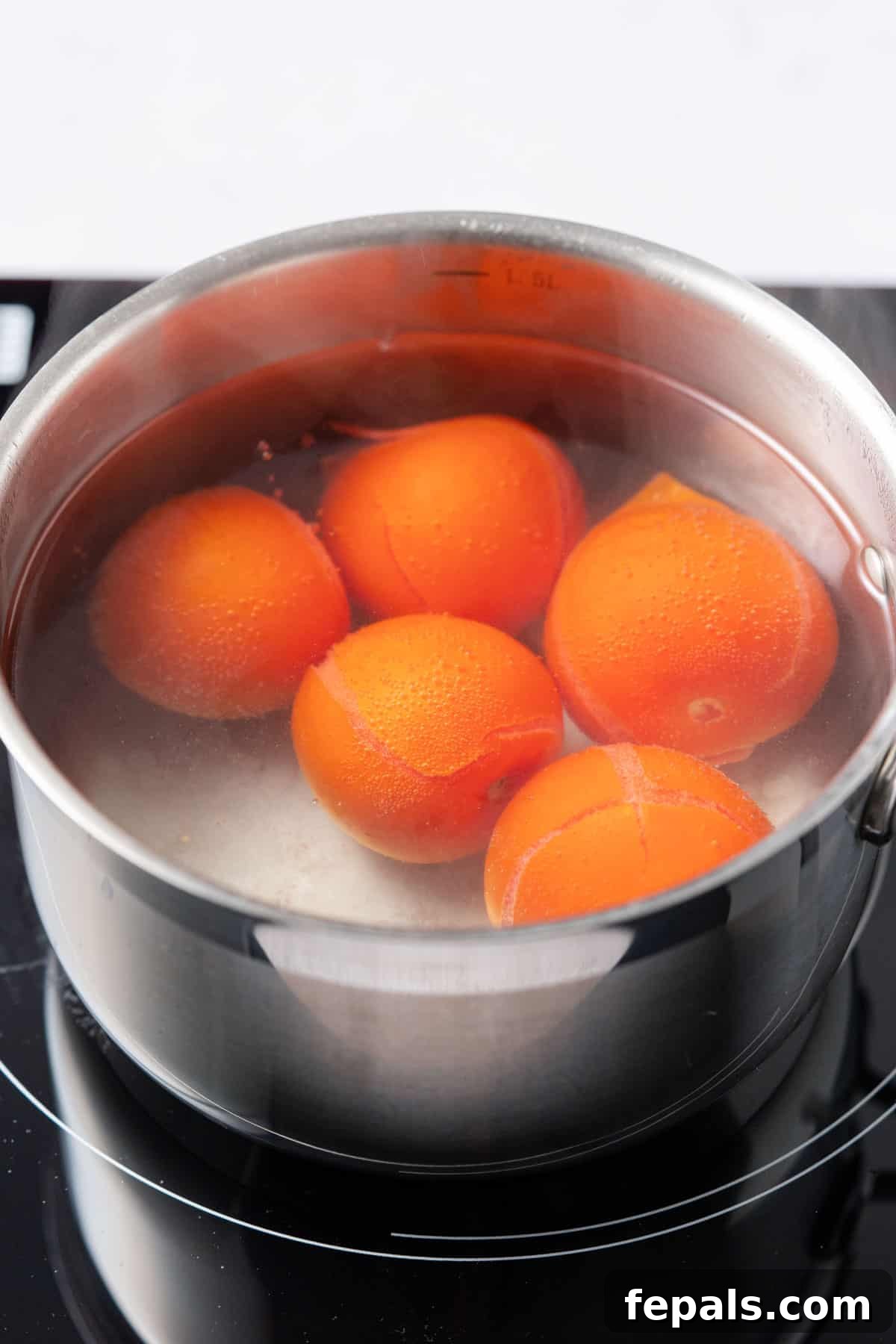
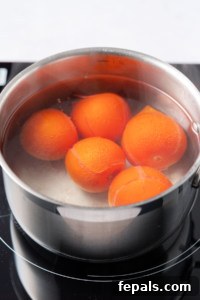
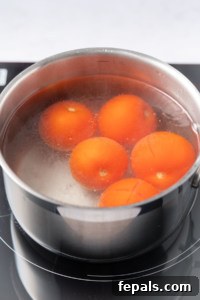
Once your water is at a full, rolling boil, carefully place the prepared tomatoes into the boiling water. Do not overcrowd the pot; if you have many tomatoes, work in batches to maintain a consistent water temperature. Allow the tomatoes to boil for a short duration, typically 30 to 60 seconds. Keep a close eye on them: the tomatoes are ready to be removed when you notice the skin around the “X” cut beginning to wrinkle, curl, and visibly tear away from the fruit’s flesh. This visual cue is your signal that the blanching process has worked its magic.
Step 4: The Ice Bath Shock
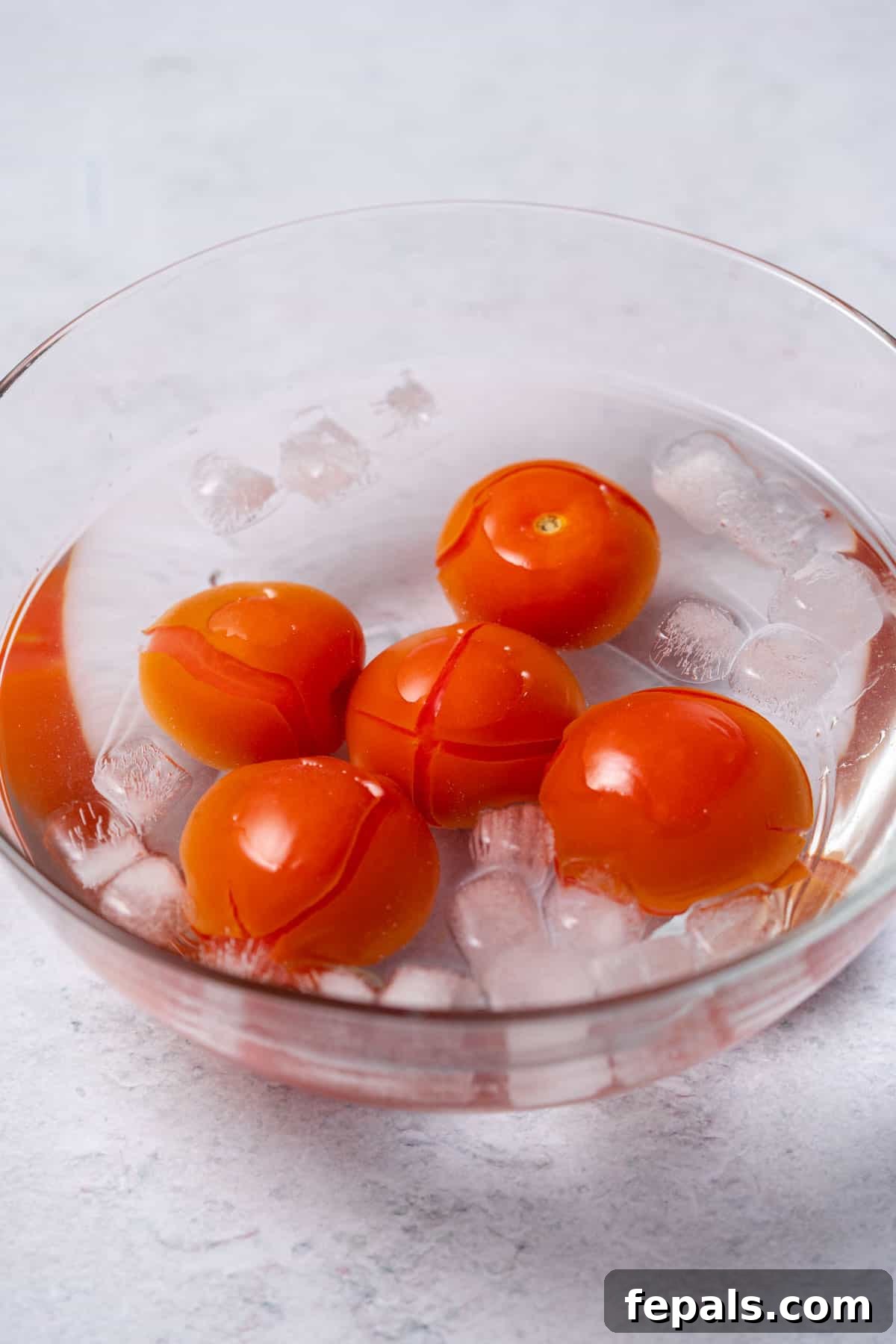
Using a slotted spoon or spider strainer, carefully remove each blanched tomato from the hot water. Immediately transfer them into the waiting ice bath. This sudden temperature change, known as “shocking,” is key to making the skins easy to remove. Allow the tomatoes to sit in the ice water for several minutes, or until they are completely cooled down. This ensures they stop cooking and that the skin fully loosens from the pulp. Once cool, you can easily handle them for the next step.
Step 5: The Grand Reveal – Peeling the Tomatoes
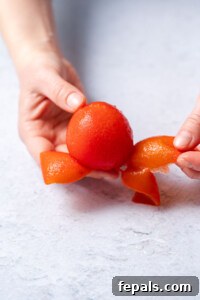
Once the tomatoes are thoroughly cooled, take them out of the ice bath. You’ll notice the skin is already visibly loose, particularly around the “X” you cut earlier. Use your fingers or a small, sharp knife to gently grasp a corner of the loosened skin near the “X.” The skin should effortlessly peel away from the tomato flesh in large strips or even whole pieces. You shouldn’t need to apply much force at all; if you do, the tomato may need a few more seconds in the boiling water next time, or a colder ice bath. Continue this process for all your blanched tomatoes.
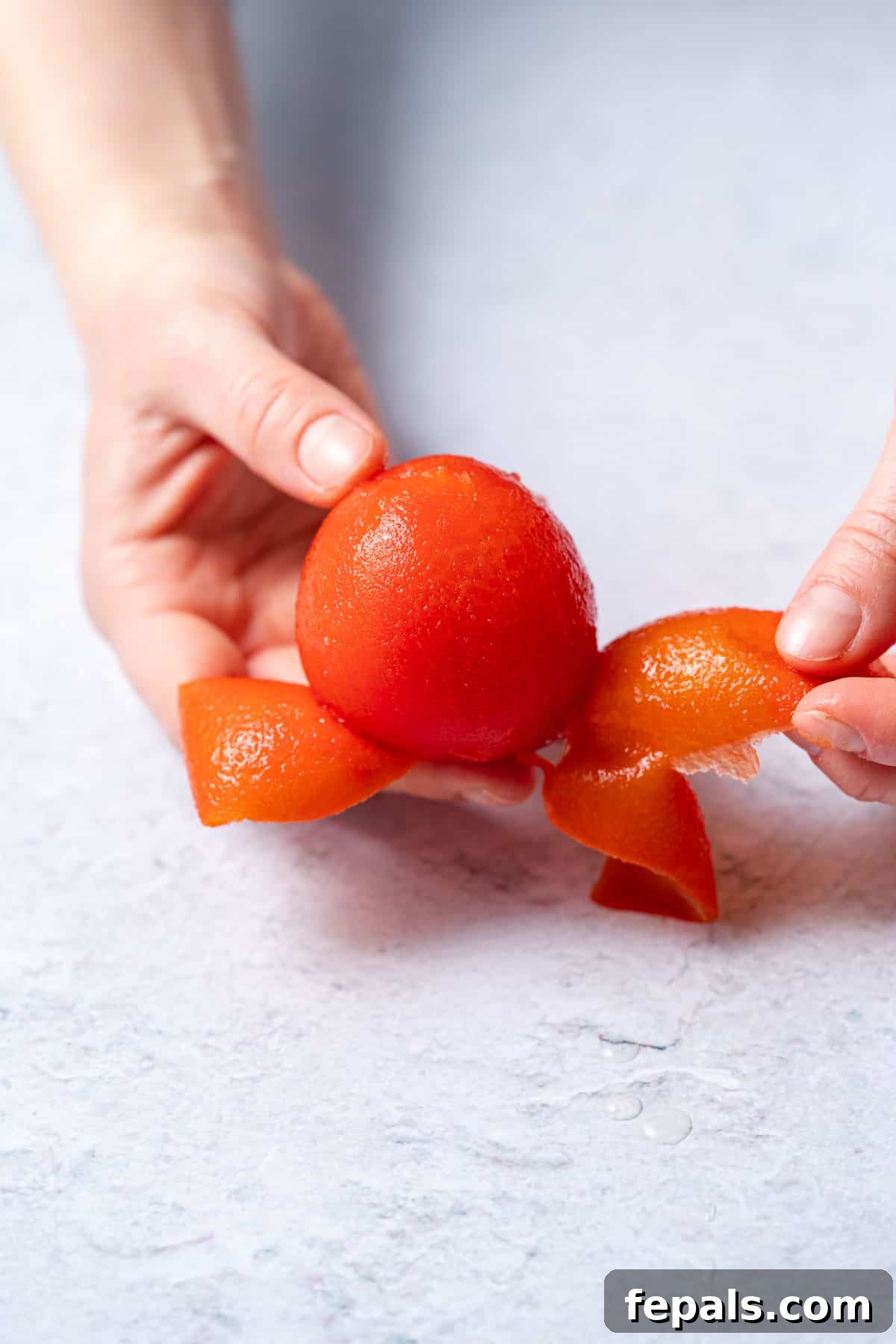
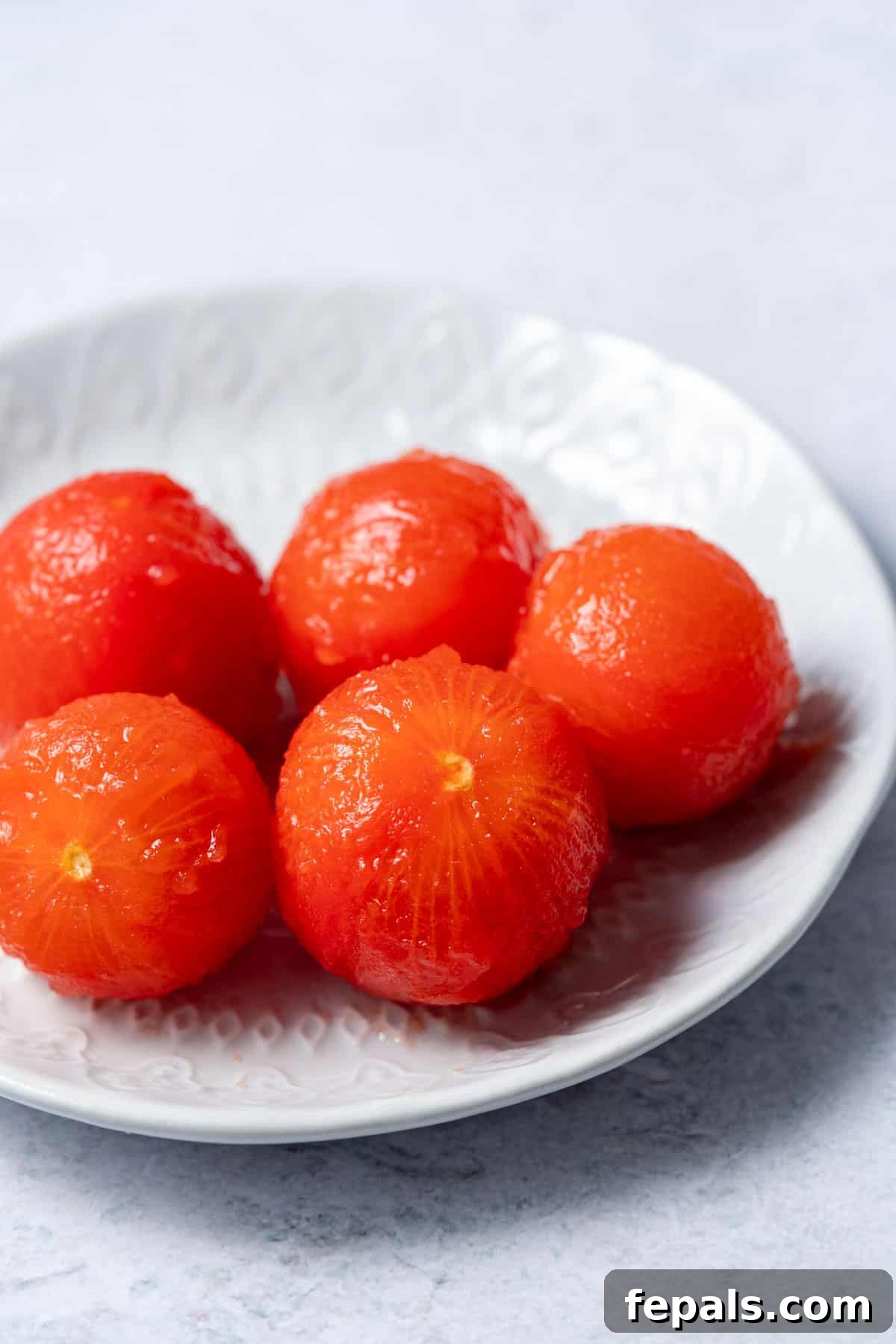
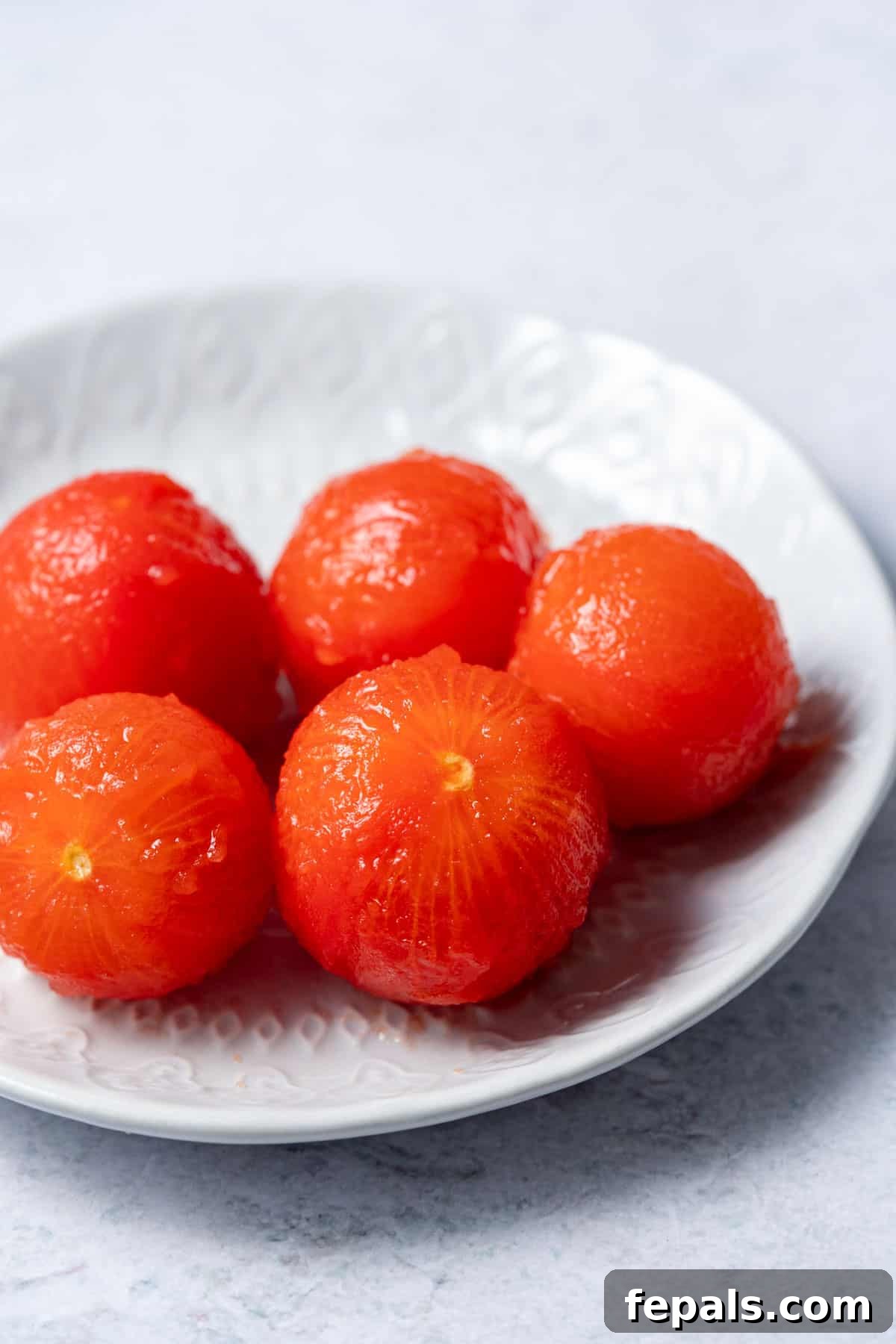
Congratulations! You now have perfectly peeled tomatoes, ready to enhance your favorite recipes. These blanched and peeled beauties are especially ideal for canning, where smooth texture and consistent quality are paramount. Enjoy the rich flavor and smooth consistency they bring to your next culinary creation!
Expert Tips for Flawless Tomato Peeling Every Time
Achieving perfectly peeled tomatoes is a simple skill, but a few expert tips can ensure your success and make the process even smoother:
- Choose Ripe but Firm Tomatoes: While overripe tomatoes are delicious, they can become too soft and mushy during the blanching process, making them harder to handle. Opt for ripe tomatoes that still have some firmness.
- Don’t Crowd the Pot: When blanching, ensure there’s enough space for each tomato in the boiling water. Overcrowding drops the water temperature too quickly, leading to uneven blanching and potentially requiring longer cooking times, which can soften the tomatoes too much. Work in batches if necessary.
- Perfecting the “X” Cut: The shallow “X” cut is crucial. It needs to break the skin but not deeply slice into the flesh. A shallow cut ensures the skin can easily curl away without tearing off large chunks of the tomato itself.
- Watch for the Wrinkle: The visual cue of the skin wrinkling and starting to tear at the “X” is your most reliable indicator that the tomatoes are ready. Don’t rely solely on timing, as tomato size and ripeness can affect how quickly the skin loosens.
- The Importance of the Ice Bath: A truly cold ice bath is non-negotiable. It instantly stops the cooking process, preventing the tomatoes from becoming overcooked and mushy. It also creates a rapid contraction that helps the skin pull away from the flesh more effectively. Use plenty of ice!
- Handle with Care: Once blanched and cooled, tomatoes are quite delicate. Handle them gently during peeling to avoid bruising or squishing the tender flesh.
- What to Do with the Skins: Don’t discard the skins! They are full of flavor and nutrients. You can dehydrate them to make tomato powder, which is excellent for seasoning soups and sauces, or even blend them into a vegetable stock for an extra layer of umami.
Beyond the Peel: Creative Uses for Your Freshly Peeled Tomatoes
Now that you’ve mastered the art of peeling tomatoes, a world of culinary possibilities opens up. Here are just a few ideas for how to use your beautifully prepared tomatoes:
- Homemade Sauces: This is arguably the most popular reason to peel tomatoes. Create rich, smooth marinara, chunky pasta sauces, pizza sauce, or a delicate tomato bisque. Peeled tomatoes ensure a silken texture that store-bought sauces can rarely match.
- Salsas and Dips: For truly elegant and smooth salsas – whether fresh pico de gallo or a cooked salsa roja – peeled tomatoes provide a superior base. The lack of skin allows other flavors to shine and prevents a chewy texture.
- Soups and Stews: From classic tomato soup to hearty minestrone, peeled tomatoes contribute a refined texture that makes every spoonful a delight. They integrate seamlessly into broths and stews without distracting skins.
- Canning and Preserving: If you’re preserving tomatoes whole, diced, or crushed, peeling is a must. It ensures a high-quality product that maintains its texture and appeal in jars. This is especially true for making canned whole tomatoes, tomato juice, or tomato paste.
- Bruschetta and Appetizers: For a sophisticated bruschetta, dice peeled tomatoes with fresh basil, garlic, and olive oil. The soft texture melts in your mouth, enhancing the bread and herb flavors.
- Salads: While some salads are fine with unpeeled tomatoes, delicate salads, especially those with tender greens, benefit from the smooth texture of peeled, diced tomatoes.
- Roasted or Grilled Tomatoes: For recipes where you want the tomato to melt and caramelize, peeling beforehand can prevent the skin from toughening or detaching unevenly during cooking.
Frequently Asked Questions About Peeling Tomatoes
Without a doubt, the blanching method described here is the quickest and most efficient way to peel tomatoes. Once you experience how easily the skins slip off after a brief boil and an ice bath, you’ll never consider other, less effective techniques again. It’s truly a game-changer for anyone regularly cooking with tomatoes.
While a vegetable peeler works wonders for firmer vegetables, tomatoes are far too soft and delicate for this tool. Attempting to peel a raw tomato with a vegetable peeler will likely result in a messy, squished tomato and very little peeled skin. The soft flesh simply doesn’t stand up to the pressure, making blanching the superior choice.
Tomatoes typically need to be blanched for a very short period, usually between 30 to 60 seconds in rapidly boiling water. The key indicator that they are ready is when the skin around the scored “X” at the bottom begins to wrinkle, curl, and visibly separate from the fruit. Larger or very firm tomatoes might take slightly longer, but always prioritize the visual cue over strict timing.
Absolutely! Freezing peeled tomatoes is an excellent way to preserve them for later use. Once peeled, you can freeze them whole, halved, or diced. For best results, spread them in a single layer on a baking sheet to flash freeze, then transfer to freezer-safe bags or containers. This prevents them from clumping together and allows you to use only what you need. They typically last 6-8 months in the freezer.
Yes, after peeling, it’s generally a good idea to remove the core (the stem end) of the tomato. This part can be tough and fibrous. Use a small paring knife to scoop out the core. If you plan to seed the tomatoes, this is also the ideal time to do so by gently squeezing or scooping out the seeds.
Discover More Essential Kitchen Guides and Recipes
Enhance your culinary skills with these additional helpful guides and delicious recipes:
- How To Cut Romaine Lettuce
- Homemade Buffalo Sauce
- How To Cut Peaches
- How To Cut an Orange
- Cutting Green Onions
We love hearing from you! If you try this method or any of our recipes and enjoy them, please leave us feedback in the comment section below. Don’t forget to rate your experience – your insights help our community grow. We’d also be thrilled if you shared this guide with your friends and family!
Finally, capture your culinary creations and use our hashtag #healthyfitnessmeals on INSTAGRAM for a chance to be featured! FOLLOW Healthy Fitness Meals on FACEBOOK | INSTAGRAM | PINTEREST | TWITTER for all of our latest blog posts and delicious recipes.
How To Peel Tomatoes By Blanching
By: Rena
Servings: 5 tomatoes
Prep Time: 5 mins
Cook Time: 10 mins
Total Time: 15 mins
Need to quickly peel some tomatoes? This guide teaches you everything you need to know about peeling tomatoes by blanching, so you can prepare smooth salsas, rich sauces, hearty soups, or prep for canning. This method is super easy and uses boiling water followed by an ice bath to make skin removal effortless.
Equipment
- 1 sharp knife (paring or utility)
- 1 large bowl (for ice bath)
- 1 medium to large pot or saucepan (for boiling)
- 1 slotted spoon or spider strainer
Ingredients
- 5 medium to large tomatoes (any variety)
- Water (for boiling and ice bath)
- Ice (plenty, for the ice bath)
Instructions
-
Wash and dry each tomato thoroughly. With a sharp knife, cut a shallow “X” in the bottom of each tomato, opposite the stem end. This cut should only pierce the skin.

-
Place a pot of water on the stovetop and bring it to a rolling boil. Meanwhile, prepare your ice bath by filling a large bowl with ice and cold water.
-
Once the water is boiling, carefully place each tomato into the water. Boil for approximately 30 to 60 seconds. The tomatoes are ready when the skin around the “X” begins to wrinkle and tear away from the fruit.
-
Carefully remove each tomato from the boiling water with a slotted spoon and immediately transfer them to the ice bath. Allow them to sit in the ice water until they are fully cooled down, usually 2-3 minutes.
-
Once the tomatoes have cooled off, remove them from the ice bath. Use your fingers or a sharp knife to gently peel the skin away from each tomato, starting from the “X” cut. The skin should come off easily with minimal force.

Notes
Tomatoes: This method works for all tomato varieties, including heirlooms, Roma, cherry, grape, and beefsteak. Choose ripe but firm tomatoes for best results.
Water: Use filtered water if possible, especially if canning.
Ice: A generous amount of ice is critical for effectively shocking the tomatoes and stopping the cooking process.
Bowl: Ensure your bowl for the ice bath is large enough to comfortably hold all tomatoes and ice.
Pot/Saucepan: Choose a pot size that allows tomatoes to be fully submerged without overcrowding; blanch in batches if needed.
Nutrition
Calories: 22 kcal
Carbohydrates: 5 g
Protein: 1 g
Fat: 0.2 g
Saturated Fat: 0.03 g
Polyunsaturated Fat: 0.1 g
Monounsaturated Fat: 0.04 g
Sodium: 6 mg
Potassium: 292 mg
Fiber: 1 g
Sugar: 3 g
Vitamin A: 1025 IU
Vitamin C: 17 mg
Calcium: 12 mg
Iron: 0.3 mg
Nutrition information is automatically calculated and should be used as an approximation.
Additional Info
Course: Ingredient
Cuisine: American