
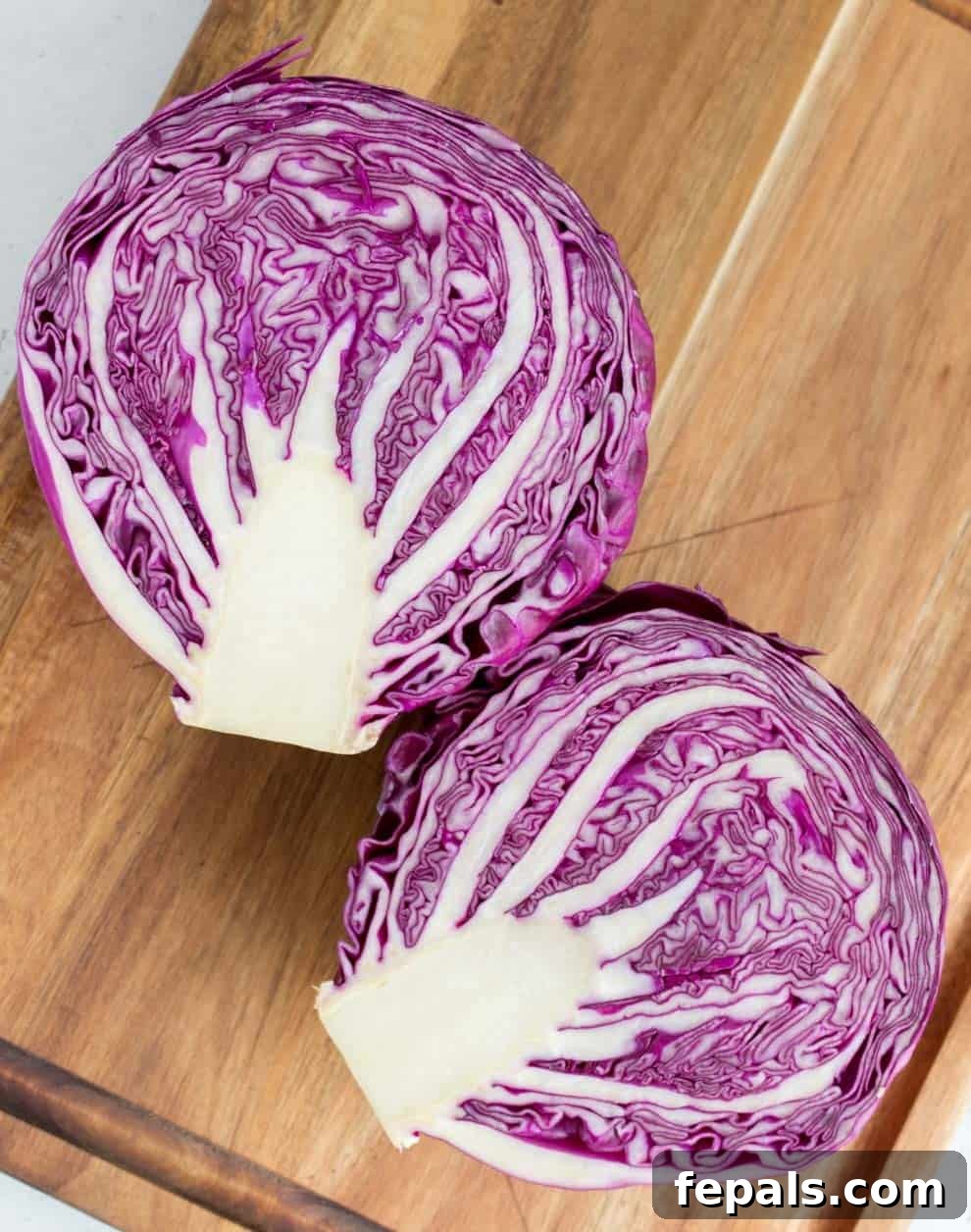
Cabbage, a versatile and nutritious cruciferous vegetable, is a staple in kitchens worldwide. From crisp coleslaws and vibrant salads to hearty braised dishes and fermented sauerkraut, its culinary applications are endless. However, for many home cooks, the thought of tackling a whole head of cabbage can seem daunting. This comprehensive guide aims to demystify the process, providing clear, step-by-step instructions on how to easily cut cabbage into various forms – wedges, strips, shreds, and squares – empowering you to confidently prepare this amazing vegetable for any recipe.
Mastering the art of cutting cabbage not only enhances your cooking efficiency but also unlocks a world of fresh, healthy, and flavorful meal possibilities. Whether you’re a beginner or looking to refine your knife skills, you’ll find everything you need right here to transform a humble head of cabbage into a culinary masterpiece. So, grab your sharpest knife, and let’s dive into the world of cabbage preparation!
Exploring the Diverse World of Cabbages
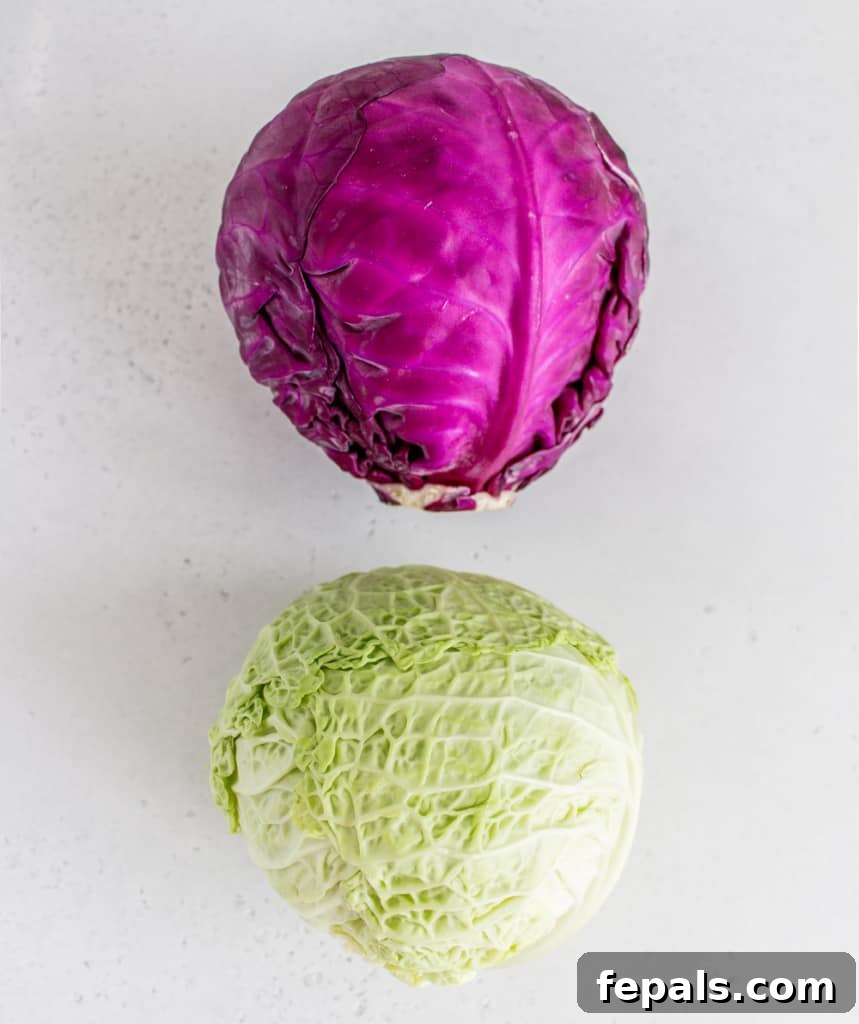
Before you begin slicing, it’s helpful to understand the different types of cabbage available. Each variety offers unique characteristics in terms of flavor, texture, and best culinary uses. You’ll commonly find these vibrant cabbages in your local produce aisle:
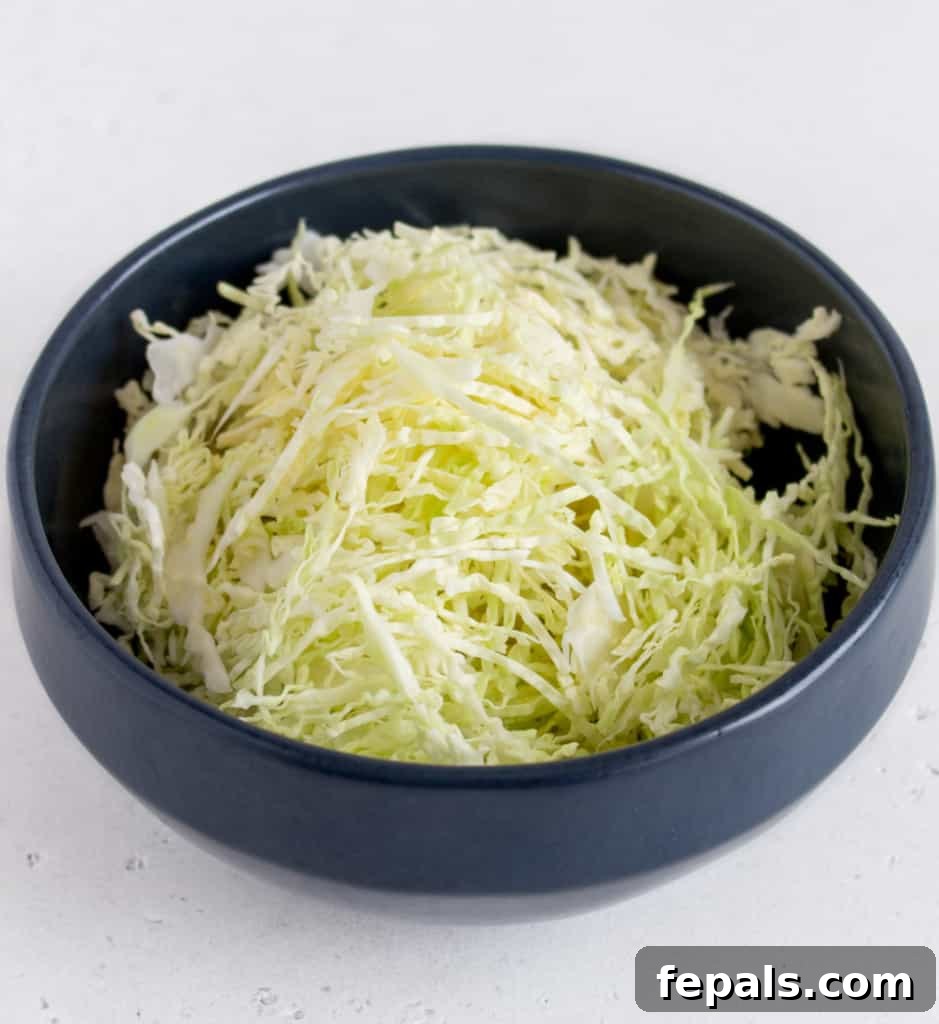
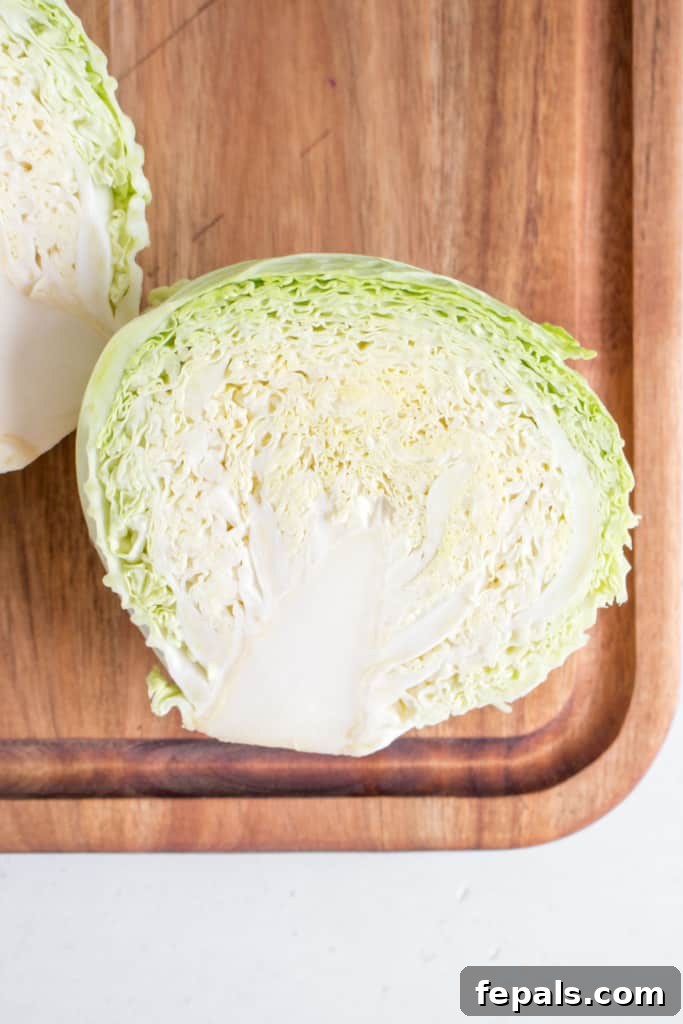
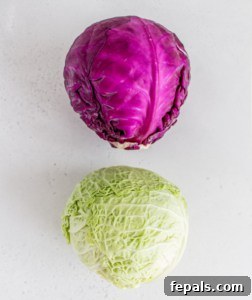
Green Cabbage: The most ubiquitous and widely recognized variety, green cabbage boasts tight, dense, pale green leaves. Its firm texture and slightly peppery, yet mild flavor make it incredibly versatile. It’s the go-to choice for classic coleslaws and fresh salads when finely shredded. It also holds up exceptionally well to cooking, making it perfect for braising, stir-fries, and of course, traditional fermented dishes like sauerkraut. Rich in Vitamin C and K, it’s a powerhouse of nutrition that’s easy to incorporate into daily meals.
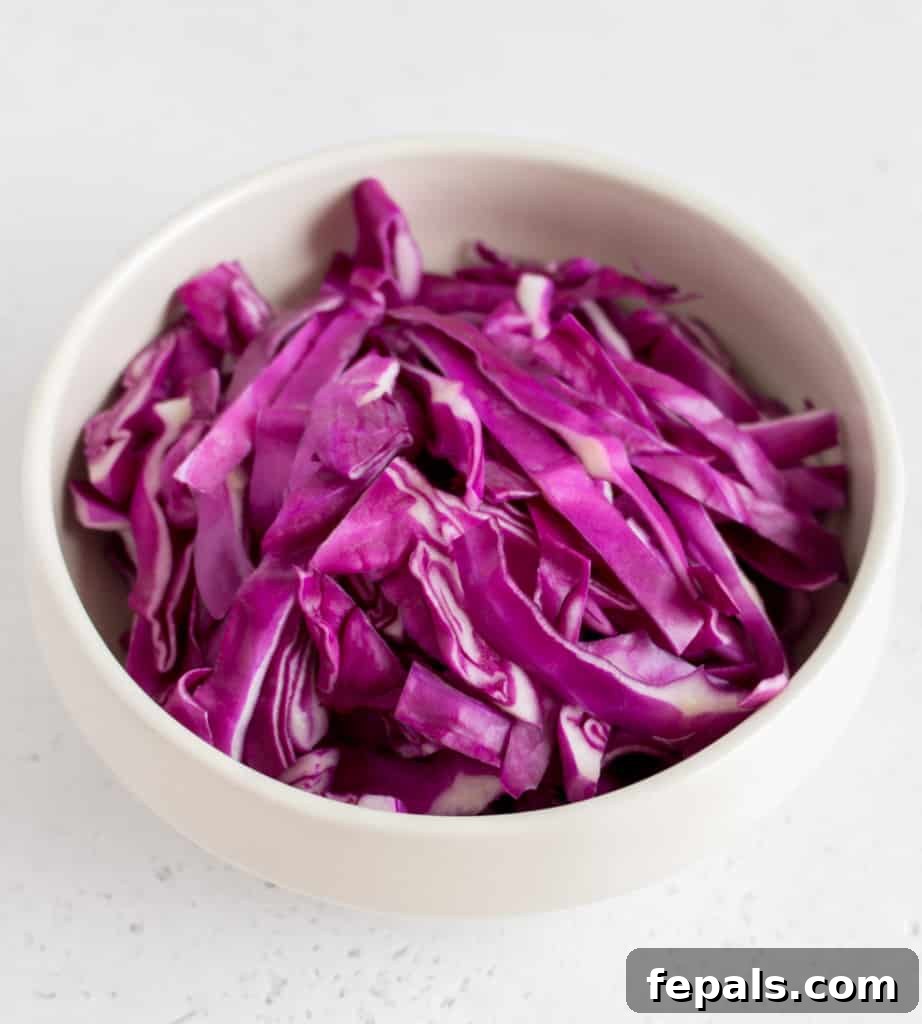
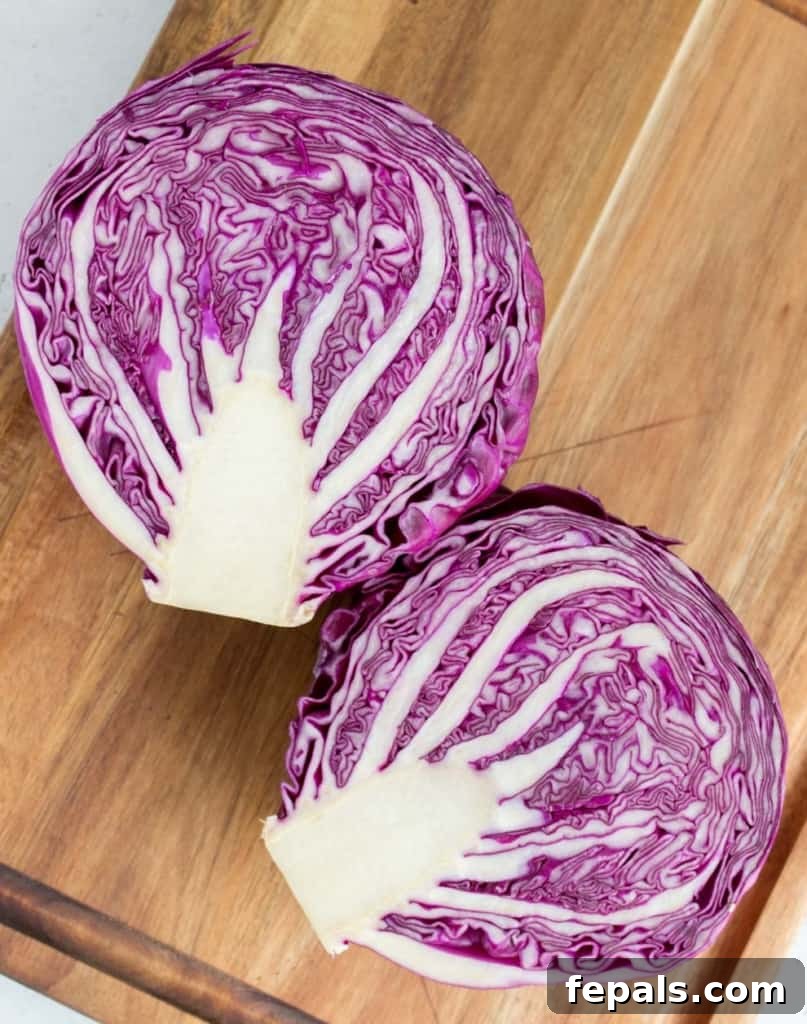
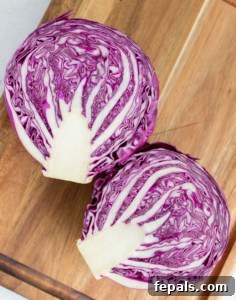
Red Cabbage: Visually stunning with its deep purple-red hue, red cabbage is essentially the vibrant cousin of green cabbage. Its texture is similar, and it can be used interchangeably in most recipes. While some connoisseurs detect a slightly earthier, sometimes more pungent flavor compared to green cabbage, this difference is often subtle. A key thing to remember is that red cabbage can bleed its color, turning other ingredients purple, especially when cooked. This can be a delightful visual effect or something to be mindful of depending on your dish. It’s particularly high in anthocyanins, the antioxidants responsible for its striking color, which offers additional health benefits.
Savoy Cabbage: Often considered the most aesthetically pleasing of the cabbage family, Savoy cabbage is distinguished by its deep green, crinkled, and ruffled leaves that resemble delicate lace. Unlike the firm heads of green or red cabbage, Savoy leaves are much softer and more tender, even when raw. This makes them an excellent choice for wraps, such as a healthy alternative to tortillas, or for making elegant cabbage rolls. Its mild, sweet flavor and delicate texture ensure it cooks quickly and adds a sophisticated touch to any meal.
Napa Cabbage: Also known as Chinese cabbage or celery cabbage, Napa cabbage has a distinctive oblong shape. It features thick, crisp white stems that transition into frilly, pale yellow-green leaves. Characterized by its mild, slightly sweet flavor and tender crunch, Napa cabbage is incredibly popular in Asian cuisine. It caramelizes beautifully, making it an ideal ingredient for stir-fries, and its ability to absorb flavors makes it a foundational component in many kimchi recipes. Its lighter, more delicate structure makes it a superb addition to fresh salads as well.
Selecting the Freshest Cabbage: A Buyer’s Guide
Choosing the right head of cabbage is the first step to a delicious dish. Look for these signs of freshness and quality:
- Weight: Always pick heads that feel surprisingly heavy for their size. This indicates a high water content and dense, healthy leaves, ensuring a good yield.
- Appearance: The cabbage should look vibrant, crisp, and fresh. Its leaves should be tightly packed and free from wilting or discoloration. While some loose outer leaves are normal, the main head should be firm and compact. Napa cabbage, however, naturally has looser leaves, but they should still appear lively, not limp.
- Condition: Avoid any cabbage with visible bruises, soft spots, or signs of insect damage. While the very tougher outer leaves can always be peeled off and discarded if slightly damaged, a generally pristine head is ideal.
Essential Tools and Safety Tips for Cabbage Preparation
Before you start slicing and dicing, ensure you have the right tools and keep safety in mind:
- A Sharp Chef’s Knife: This is your most crucial tool. A sharp knife is safer and more efficient than a dull one, as it requires less force and is less likely to slip.
- Large Cutting Board: Cabbage heads can be large and round, so a stable, spacious cutting board is essential for safety and comfort. Place a damp paper towel or non-slip mat underneath to prevent it from sliding.
- Mandoline Slicer (Optional): For perfectly uniform, thin shreds, a mandoline slicer can be invaluable. Always use the safety guard to protect your fingers.
- Washing Bowl/Colander: For rinsing your cabbage before and after cutting.
Safety First:
- Always keep your fingers tucked back when cutting, using a “claw” grip to guide the knife.
- Cut on a stable, non-slip surface.
- Pay attention to your cuts; avoid distractions.
- If using a mandoline, *always* use the provided safety guard.
Preparing Your Cabbage for Cutting
Before making any cuts, proper preparation ensures a clean and hygienic vegetable:
- Remove Outer Leaves: Peel off the outermost two to three leaves, as they can be tough, dirty, or damaged from handling.
- Rinse Thoroughly: Rinse the entire head of cabbage under cool running water. For napa or savoy cabbage, whose leaves are looser, you might want to separate some outer leaves and rinse them individually to remove any trapped dirt or small insects.
- Pat Dry: Gently pat the cabbage dry with a clean kitchen towel or paper towels. Excess moisture can make the cabbage slippery and harder to handle safely.
How to Cut Cabbage into Wedges
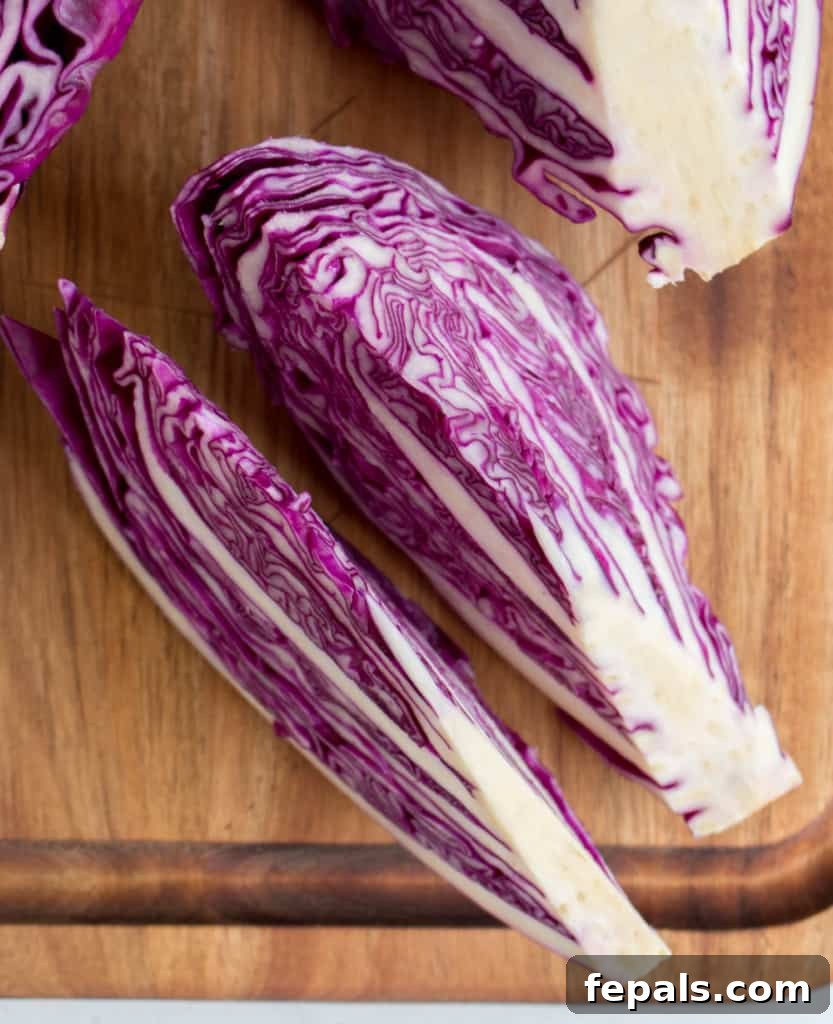
Cabbage wedges are perfect for roasting, grilling, or adding to stews where you want larger, more substantial pieces. This cut maintains a good bite and presents beautifully.
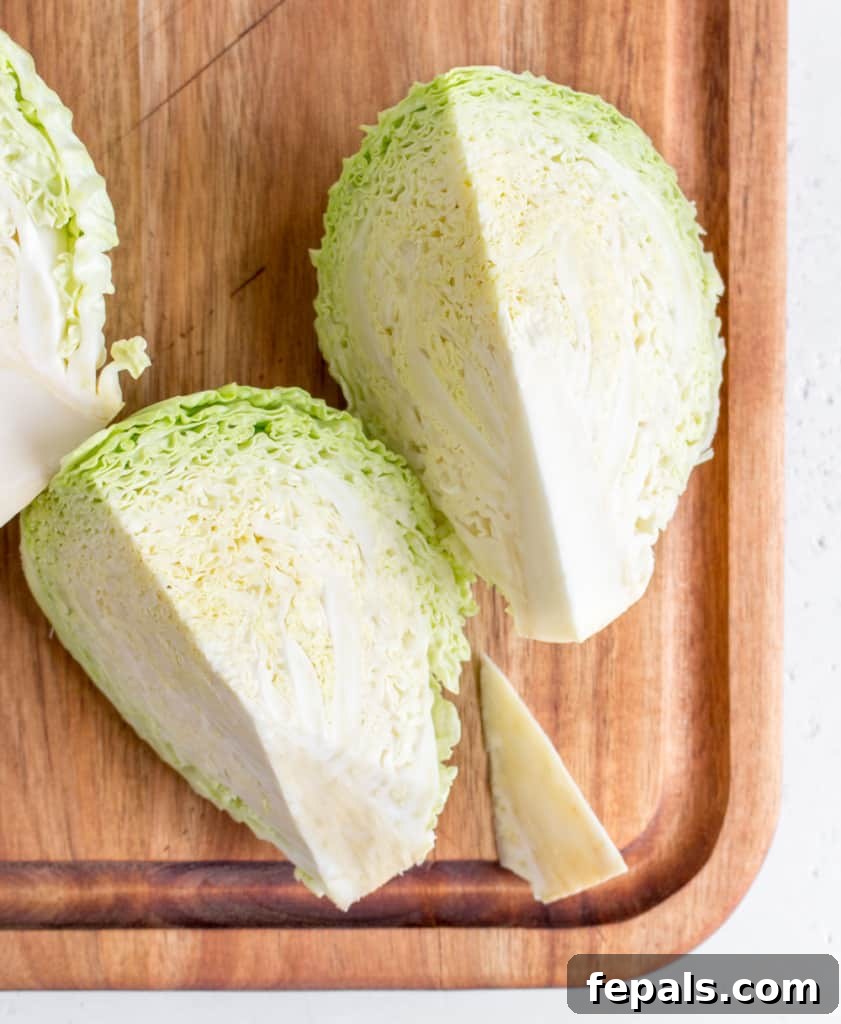
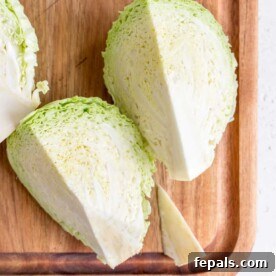
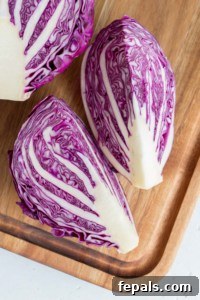
- Step 1: Halve the Cabbage. Place the whole cabbage on your cutting board. Using a sharp chef’s knife, carefully cut the cabbage in half, starting from the top and slicing straight down through the center of the stem.
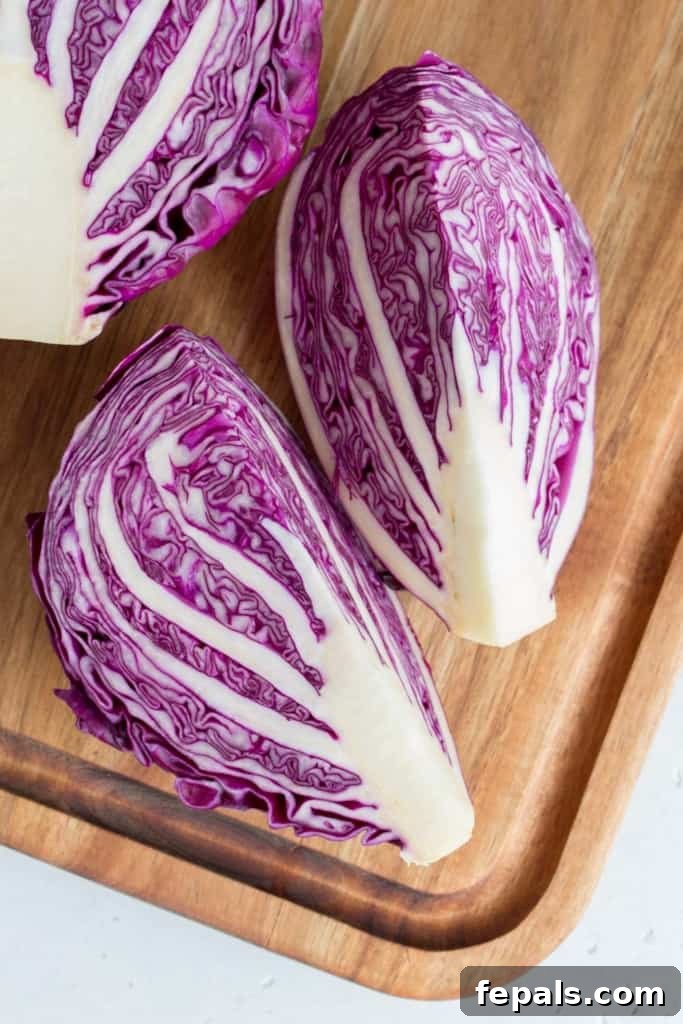
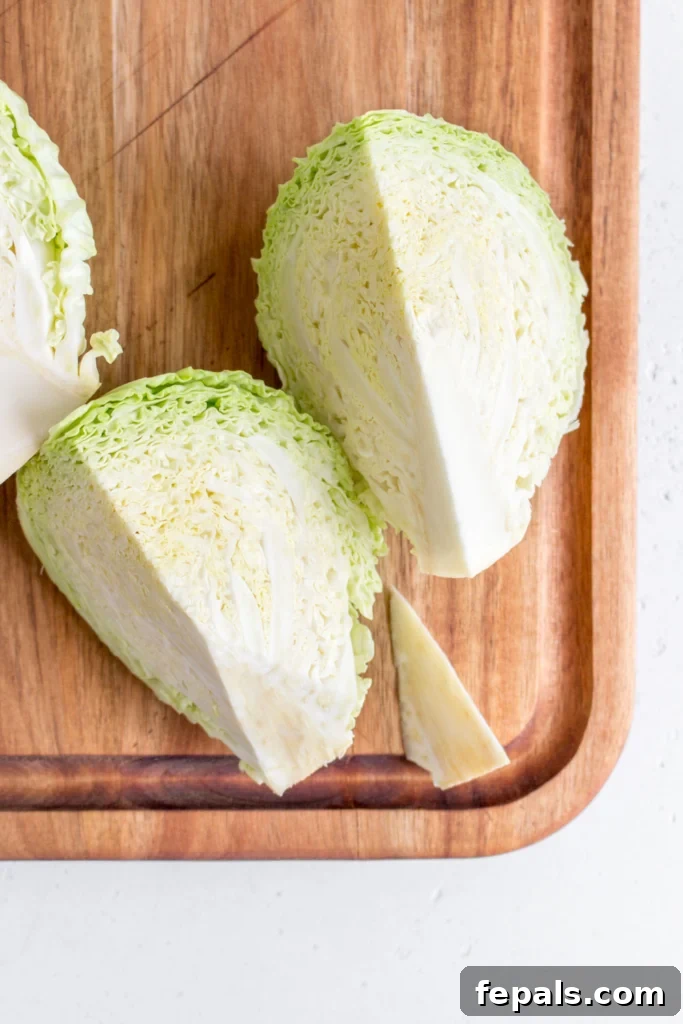
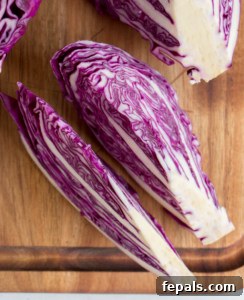
- Step 2: Quarter the Halves. Place one of the halved cabbage pieces flat-side down on the cutting board. Cut it in half again through the center of the stem, creating two quarters. Repeat with the other half of the cabbage, resulting in four equal quarters.
- Step 3: Core the Quarters. Take each quarter and place it on its side. Locate the dense, triangular core at the bottom. Using your knife, make a diagonal cut to carefully remove this tough core. Discard the core.
- Step 4: Refine Wedges (Optional). For thinner, more delicate wedges, you can cut each quarter in half one more time, creating eight thinner wedges from a whole cabbage. This is ideal if you’re aiming for quicker cooking times or smaller portions for individual servings.
How to Cut Cabbage into Strips (Shredding by Knife)
Cabbage strips or shreds are incredibly versatile, forming the base for coleslaws, stir-fries, and numerous salads. Achieving uniform strips ensures even cooking and a pleasing texture.
- Step 1-3: Prepare Quarters. Follow the first three steps from the “How to Cut Cabbage into Wedges” section: halve the cabbage, then quarter it, and finally, remove the core from each quarter. You should now have four cored cabbage quarters.
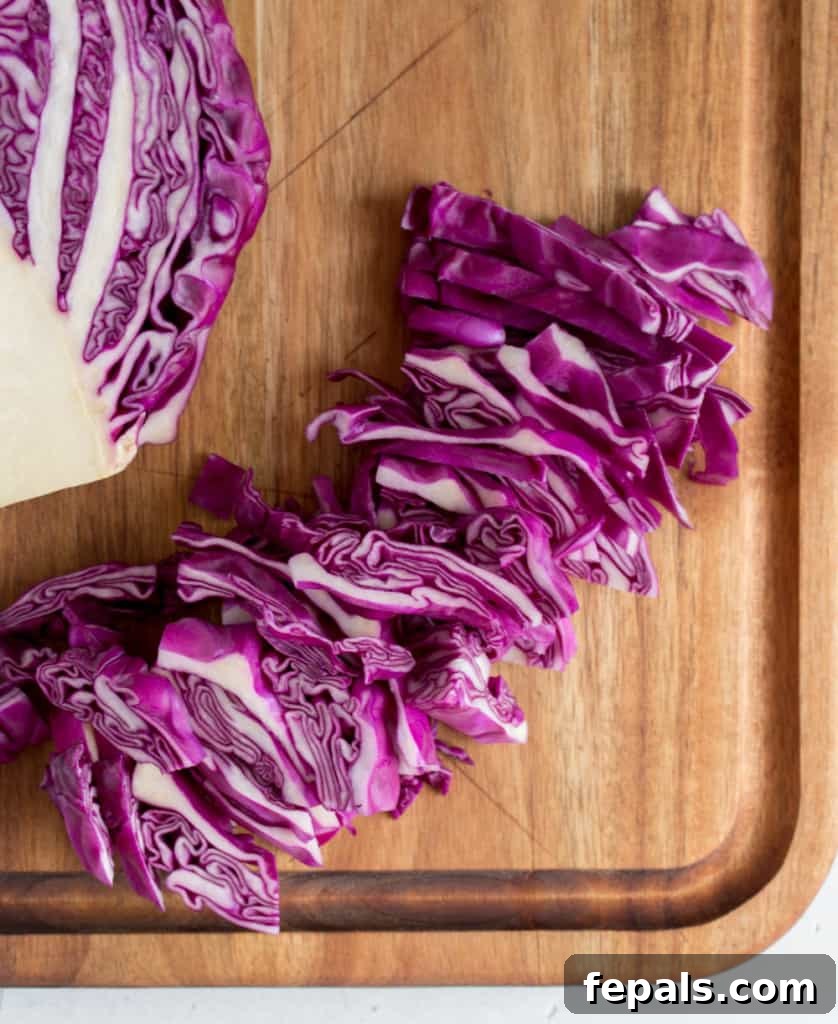
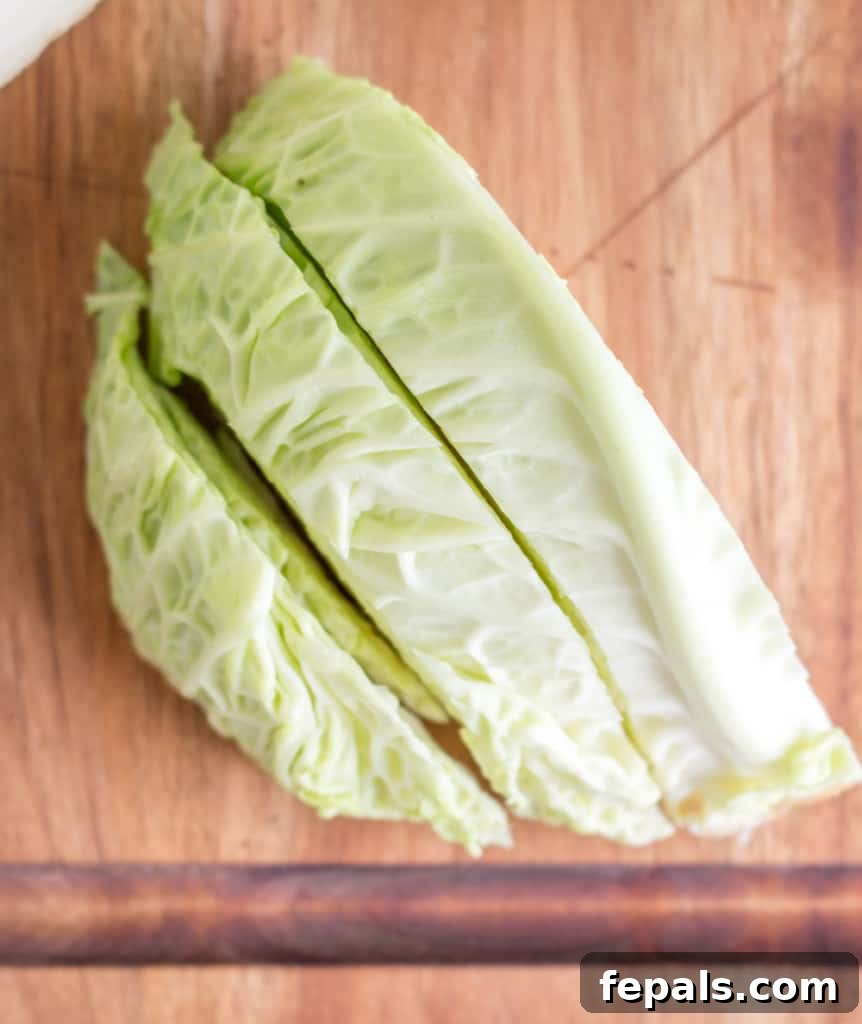
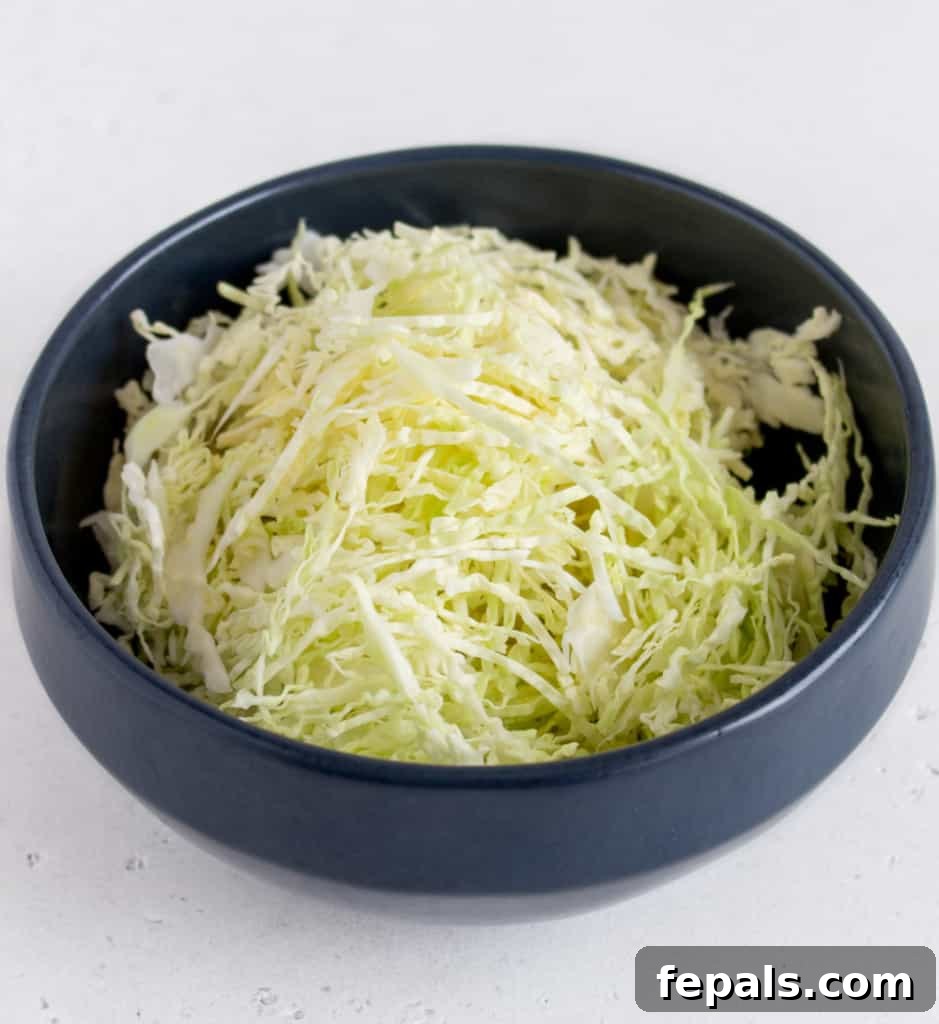
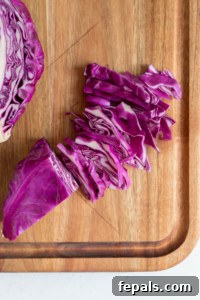
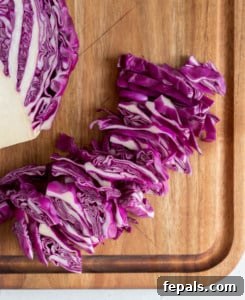
- Step 4: Slice into Strips. Place a cored cabbage quarter flat-side down on your cutting board. For longer strips, orient the quarter so the cut-side (where the core was removed) is facing away from you, and slice thinly along the length of the cabbage. For shorter strips, turn the quarter so the widest part is facing you, and slice thinly across the width. Aim for uniform thickness, typically ⅛ to ¼ inch, depending on your recipe.
- Step 5: Separate. Once sliced, gently separate the strips with your hands to loosen them.
How to Shred Cabbage with a Mandoline
For consistent, paper-thin shreds, especially when making coleslaw or sauerkraut, a mandoline slicer is an invaluable tool. It offers precision and speed but requires careful handling.
- Step 1-3: Prepare Quarters. As with the other methods, begin by halving the cabbage, then quartering it, and finally removing the core from each quarter.
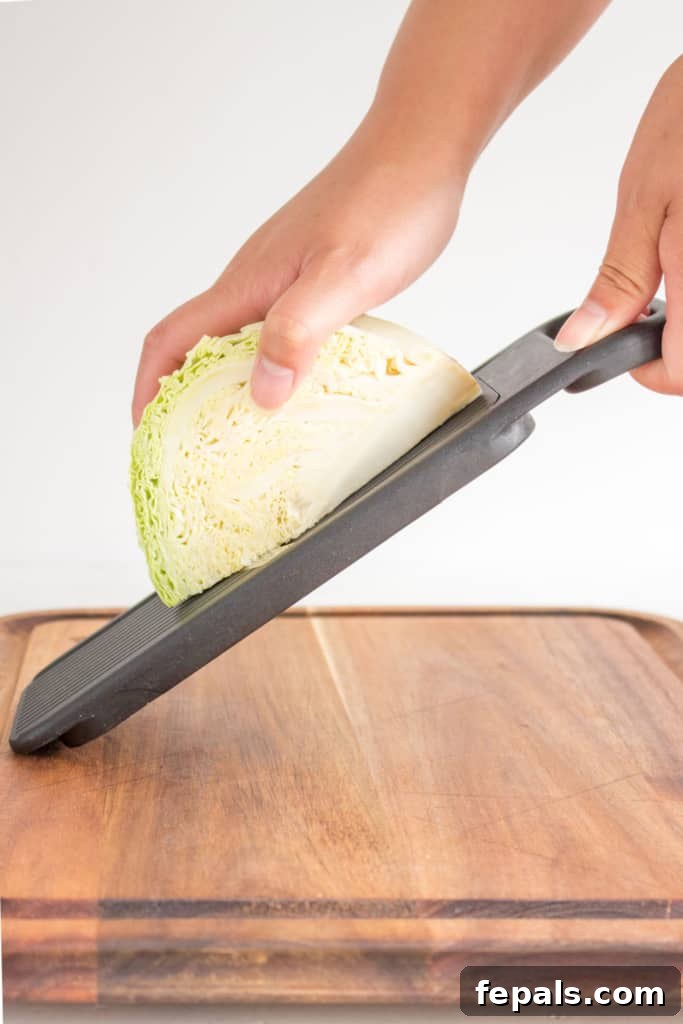
- Step 4: Set the Mandoline. Carefully set your mandoline slicer to your desired thickness. For most recipes requiring shredded cabbage, a thin setting (1/16 to ⅛ inch) works best.
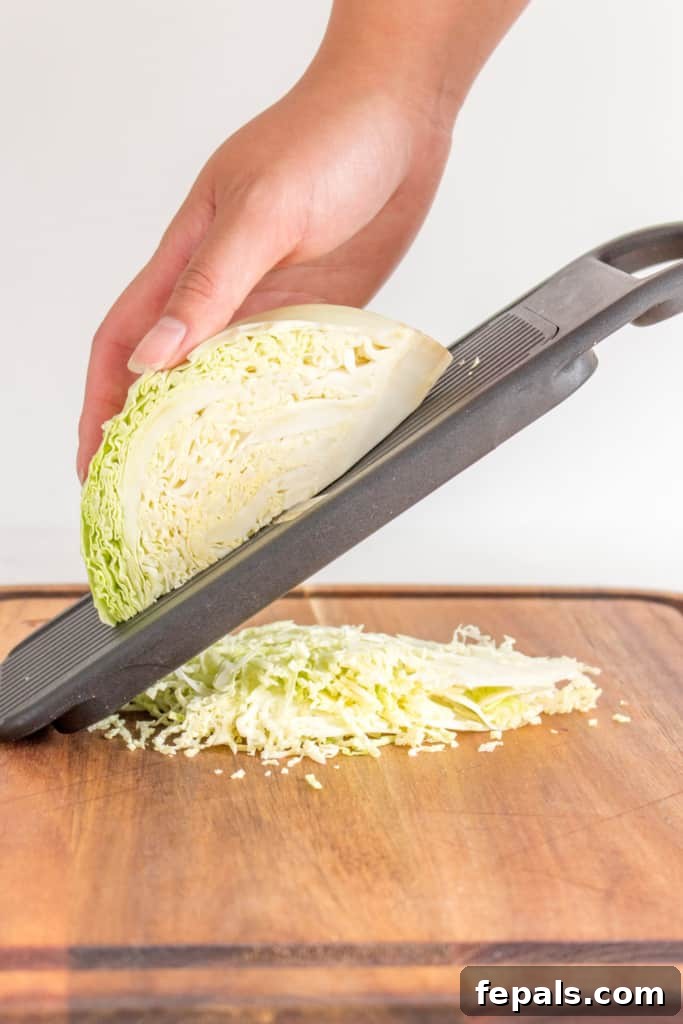
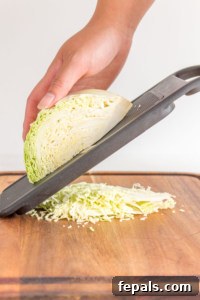
- Step 5: Shred Evenly. Using the safety guard or a cut-resistant glove, firmly hold a cabbage quarter and carefully slide it across the mandoline blade in a smooth, even motion. The guard will protect your fingers as you shred the cabbage down to the last piece. Repeat with the remaining quarters.
Mandoline Safety Reminder: Always use the safety guard. Mandoline blades are extremely sharp, and accidents can happen quickly without proper precaution.
How to Cut Cabbage into Squares (Chops)
Square-cut or chopped cabbage is ideal for dishes where you want tender, bite-sized pieces that blend well with other ingredients, such as soups, stews, and braises.
- Step 1-3: Prepare Quarters. Once again, start by halving the cabbage, quartering it, and removing the core from each quarter.
- Step 4: Slice into Strips. Place a cored cabbage quarter flat-side down on the cutting board. Slice the quarter into 3-4 lengthwise strips, depending on the size of your cabbage and the desired size of your squares.
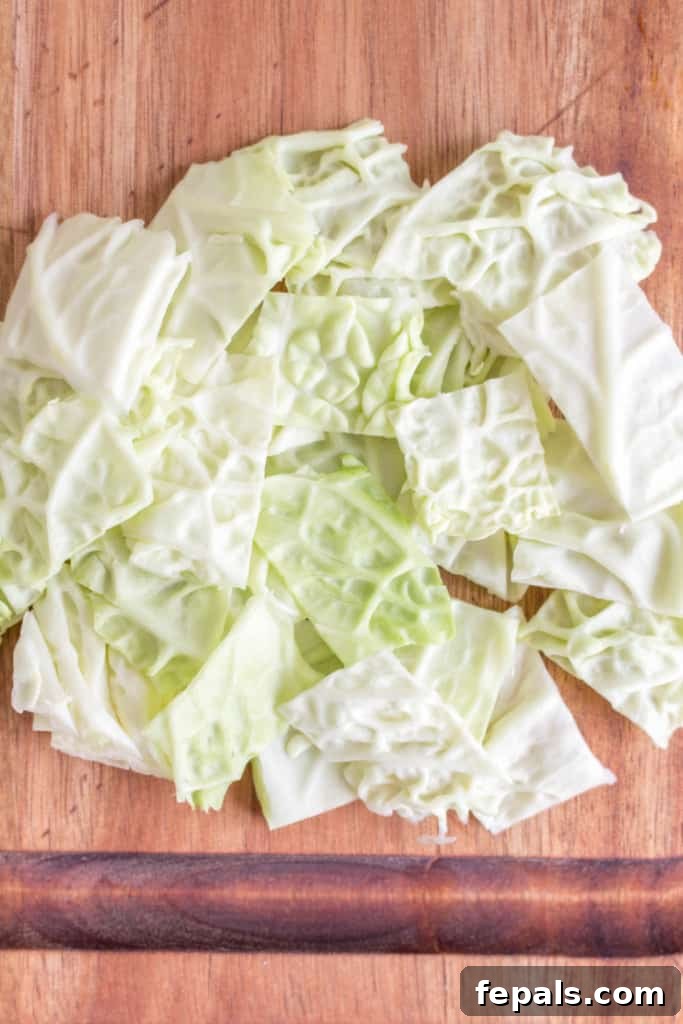
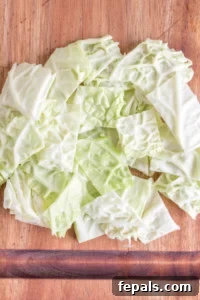
- Step 5: Cut into Squares. Rotate the sliced cabbage 90 degrees. Now, make perpendicular cuts across the strips to create uniform square or dice-shaped pieces. Aim for pieces roughly ¾ to 1 inch in size for most applications.
Versatile Uses for Every Cabbage Cut
Each method of cutting cabbage lends itself to different culinary applications, maximizing flavor and texture in your dishes:
- Cabbage Wedges: These larger pieces are fantastic for grilling, roasting, or slow-cooking. They caramelize beautifully, developing a sweet, tender interior and slightly crispy edges. Try them with a drizzle of olive oil, salt, and pepper, or a rich balsamic glaze.
- Shredded Cabbage: The quintessential choice for fresh applications like vibrant coleslaws, crunchy taco toppings, and hearty salads. It’s also excellent for quick stir-fries, where its thinness allows it to cook rapidly and absorb flavors. Don’t forget its role in traditional fermented dishes like homemade sauerkraut.
- Square-Cut Cabbage (Chops): These robust, bite-sized pieces are perfect for braising, adding to comforting soups and stews, or even for pickling. They maintain their texture well during longer cooking times and contribute a substantial, earthy flavor to the overall dish.
The Incredible Health Benefits of Cabbage
Beyond its culinary versatility, cabbage is a nutritional powerhouse, packed with vitamins, minerals, and antioxidants. Incorporating cabbage into your diet offers a multitude of health advantages:
- Rich in Vitamins and Minerals: Cabbage is an excellent source of Vitamin C, which supports immune function, and Vitamin K, crucial for blood clotting and bone health. It also provides a good amount of Vitamin B6, folate, manganese, and potassium.
- High in Fiber: Its high fiber content aids digestion, promotes gut health, and can help regulate blood sugar levels. Fiber also contributes to feelings of fullness, assisting in weight management.
- Potent Antioxidants: Cabbage is loaded with powerful antioxidants, including anthocyanins (especially in red cabbage) and sulforaphane, which help combat oxidative stress and may reduce the risk of chronic diseases.
- Anti-inflammatory Properties: The compounds found in cabbage possess anti-inflammatory properties, which can help reduce inflammation throughout the body.
- Supports Heart Health: Regular consumption of cabbage, particularly red cabbage, has been linked to improved heart health due to its ability to lower cholesterol and blood pressure.
Including cabbage in your meals is a simple yet effective way to boost your overall health and wellness.
Delicious Recipes Using Cabbage
Now that you’re a pro at cutting cabbage, here are some inspiring recipes to put your new skills to good use:
- Hearty Chicken Cabbage Soup: A comforting and nutritious meal, perfect for a cold day.
- Deconstructed Cabbage Roll Soup: All the flavors of traditional cabbage rolls in an easy-to-make soup.
- Revitalizing Vegan Detox Cabbage Soup: A light yet filling soup, excellent for a healthy reset.
- Vibrant Vegetarian Pasta Salad with Shredded Cabbage: Add a delightful crunch to your pasta salad.
- Nutrient-Packed Quinoa Veggie Bowl with Chopped Cabbage: A wholesome bowl featuring a medley of vegetables.
- Crispy Asian Chopped Chicken Salad: Elevate your salad with finely shredded cabbage for an irresistible texture.
When to Enjoy Cabbage: Seasonality and Freshness
Cabbage is a wonderfully hardy vegetable that enjoys an extended growing season. It’s generally in its peak season from late fall through early spring, making it an excellent choice for warming, hearty dishes during the colder months. Its robust nature means it stores well, so you can often find good quality cabbage year-round. However, for the freshest and most flavorful heads, look for it when it’s naturally in season. A bowl of my Chicken Cabbage Soup is particularly comforting when the weather turns chilly, utilizing the best of seasonal produce.
Storing Cabbage for Maximum Freshness
Proper storage is key to extending the life of your cabbage and keeping it crisp and flavorful:
- Whole Cabbage: Uncut, whole heads of cabbage can last an impressively long time. Store them unwashed in a plastic bag or wrapped loosely in plastic wrap in the crisper drawer of your refrigerator. When stored correctly, a whole head of cabbage can remain fresh for anywhere from 3 weeks up to 2 months.
- Cut Cabbage: Once cut, cabbage begins to lose moisture and nutrients more quickly. To store cut cabbage, first ensure it is thoroughly dry. Use a salad spinner or pat it dry with paper towels. Place the dried cut cabbage in an airtight container or a sealed plastic bag. It will typically stay fresh for 2-4 days in the refrigerator. If you notice any wilting, a quick soak in ice water for 15-30 minutes can often revive its crispness.
- Cooked Cabbage: Leftover cooked cabbage should be stored in an airtight container in the refrigerator and consumed within 3-4 days.
The Right Tool: What Knife to Use for Cabbage
While various knives exist, a sharp chef’s knife is truly all you need to perfectly cut and prepare cabbage in all its forms. Its broad, sturdy blade provides the necessary leverage for cutting through dense cabbage heads, while its sharpness ensures clean, precise cuts. A well-maintained chef’s knife makes the task feel effortless and safe, minimizing the risk of slips or uneven cuts.
Mastering the art of cutting cabbage opens up a world of culinary possibilities. With the techniques and tips outlined in this guide, you can confidently prepare this versatile vegetable for any dish, from quick weeknight meals to elaborate festive spreads. Cabbage is not only delicious but also incredibly healthy, making it a fantastic addition to a balanced diet. Experiment with different cuts and types of cabbage, and discover your new favorite way to enjoy this humble yet extraordinary vegetable!
More Helpful How-to Tutorials
Expand your kitchen skills with these other useful preparation guides:
- How to Make Zucchini Noodles
- How to Cut Leeks
- How to Cut Butternut Squash
- How to Cut Kiwi
Get my free eBook!
Grab my free ebook featuring 20 of my top 30-minute family-friendly healthy dinner recipes. Download it here!
If you try a recipe and you like it, leave me some feedback in the comment section below, and don’t forget to rate it! I would love it if you shared it with friends and family.
FOLLOW me on FACEBOOK | INSTAGRAM | PINTEREST | TWITTER for all of my latest blog posts and recipes.
How to Cut Cabbage
By: Rena
Servings: 4
Prep Time: 10 mins
Total Time: 10 mins
While it may seem difficult to cut, learn how to easily cut cabbage with this step-by-step guide so you can make anything from braised cabbage to Sauerkraut at home!
Ingredients
- 1 cabbage
- Water (for washing)
Instructions
-
Wash the cabbage and remove any tough outer leaves.

-
Cut the cabbage in half, from the top through the middle of the stem.
-
Place the flat cut-side of the cabbage down and cut each half into quarters.
-
Flip over the quarters and cut diagonally to remove the core.
-
For Wedges: Leave as is for quartered wedges, or cut each wedge in half again for thinner wedges.
-
For Strips: Slice the quarters into thin pieces. For shorter strips, orient the quarter with the long side facing you and cut across the width. For long strips, cut along the length of the cabbage quarters.
-
For Shreds (using a mandoline): Set your mandoline to the desired thickness. Carefully slide the cabbage quarters across the mandoline to shred evenly, always using the safety guard.
-
For Squares: Place the cored cabbage quarter cut-side down and slice into 3-4 strips (depending on cabbage size). Then, make perpendicular cuts across these strips to create square pieces.
Notes
- Always peel off and discard the first 2-3 outer leaves of the cabbage before cutting.
- Rinse cabbage thoroughly under cold water to get rid of any dirt or residues, especially for Napa or Savoy varieties where dirt can hide between looser leaves.
- Cabbage is incredibly versatile; use it in a variety of dishes including soups, salads, stir-fries, and fermented foods.
Nutrition
Nutrition information is automatically calculated, so should only be used as an approximation (per serving):
- Calories: 57 kcal
- Carbohydrates: 13g
- Protein: 3g
- Fat: 1g
- Saturated Fat: 1g
- Sodium: 41mg
- Potassium: 386mg
- Fiber: 6g
- Sugar: 7g
- Vitamin A: 222 IU
- Vitamin C: 83mg
- Calcium: 91mg
- Iron: 1mg
Additional Info
Course: ingredient
Cuisine: American
Tried this recipe?
Mention @healthyfitnessmeals or tag #healthyfitnessmeals!