
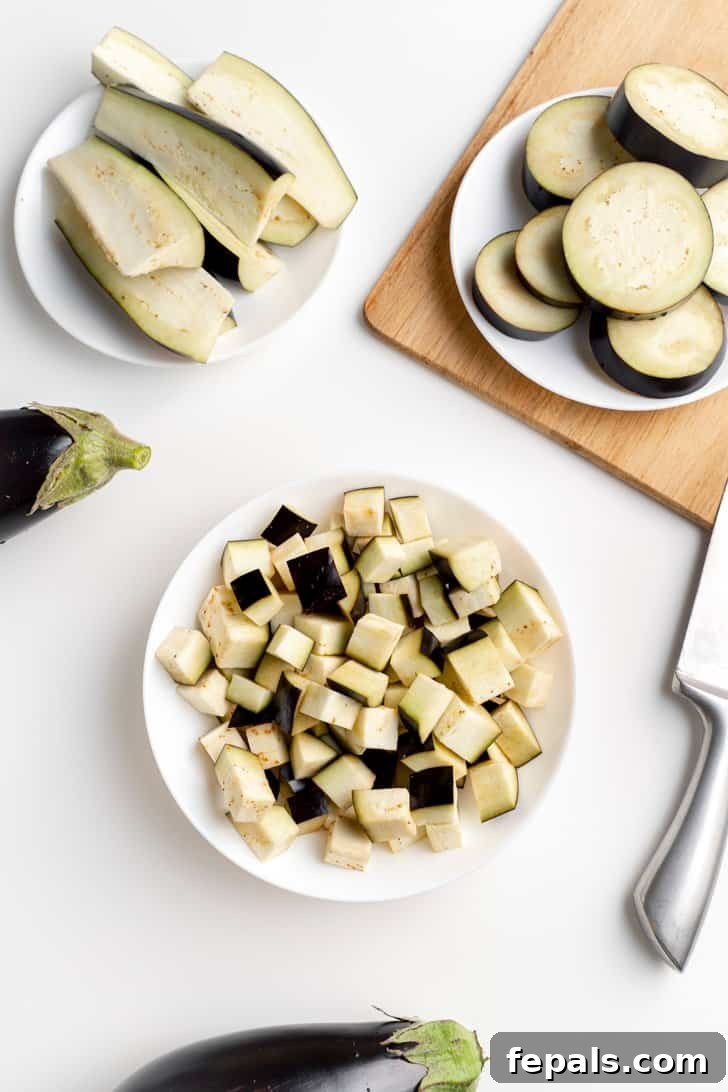
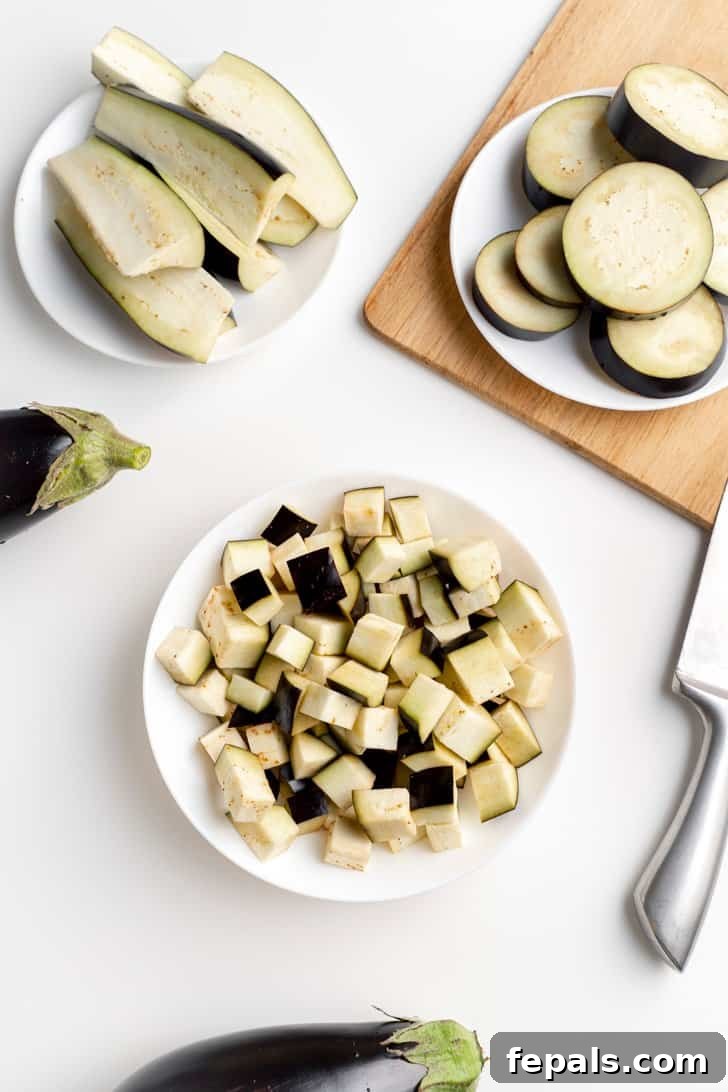
Learning how to properly cut an eggplant is a fundamental skill for any home cook. Whether you’re aiming for perfectly roasted slices, hearty cubes for a stew, or elegant rounds for grilling, the right technique can elevate your culinary creations. This comprehensive guide will walk you through three essential methods for slicing eggplant: into circular rounds, uniform cubes, and long, versatile strips. Master these cuts, and you’ll unlock a world of delicious eggplant recipes, from classic eggplant parmesan and savory lasagna to vibrant stir-fries and satisfying grilled dishes.
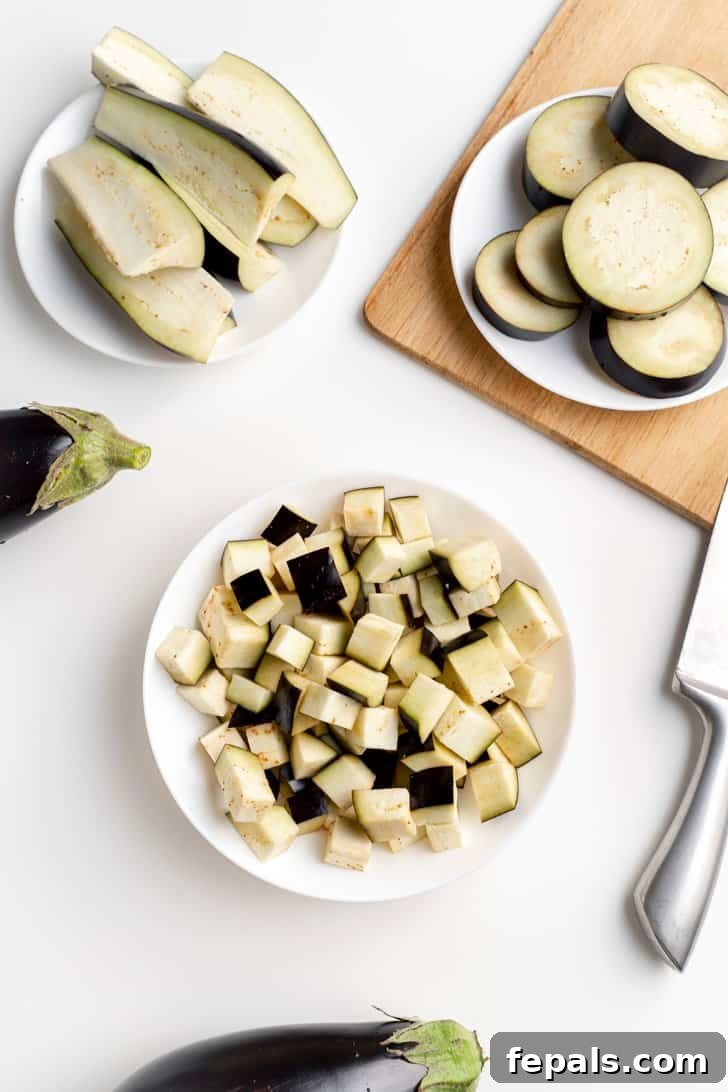
The idea of cutting an eggplant can sometimes feel daunting, especially for those new to cooking with this unique vegetable. However, with a sharp knife, a sturdy cutting board, and a bit of practice, you’ll find that preparing eggplant is surprisingly straightforward. Proper cutting not only ensures your eggplant cooks evenly but also enhances the texture and presentation of your final dish. We’ll demystify the process, making it simple to achieve your desired cuts every time.
Eggplants, often referred to as aubergines in many parts of the world, are not only versatile but also incredibly nutritious. They are rich in fiber, vitamins, and natural minerals, making them a fantastic addition to a healthy diet. Beyond traditional frying or roasting, eggplants can be incorporated into a wide array of dishes. Here are some inspiring ideas to get you started, leveraging the distinct cuts you’re about to learn:
- Hearty Beef and Quinoa Stuffed Eggplant: Ideal for cubed or halved eggplants.
- Delicious Vegetarian Eggplant Lasagna: Perfect for long, thin eggplant strips.
- Wholesome Eggplant and Zucchini Gratin: Can use a combination of rounds and cubes.
- Grilled Eggplant Rounds with Feta and Mint: Utilizes beautifully cut circular slices.
- Spicy Eggplant Curry: Best made with uniform eggplant cubes.
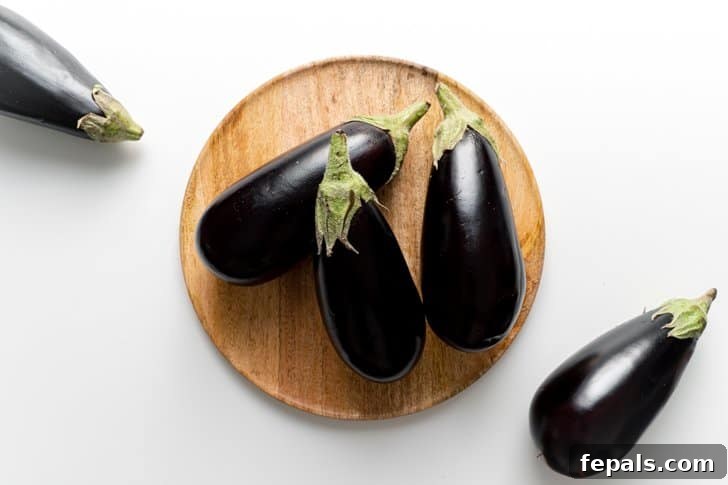
How to Choose the Perfect Eggplant
Selecting a ripe and healthy eggplant is the first step to a successful dish. A good eggplant will not only be easier to cut but will also offer the best flavor and texture. When you’re at the market or in your garden, look for an eggplant that is:
- Slightly Firm but Yielding: Gently press on the skin. It should give slightly under your thumb but spring back, indicating freshness. Avoid eggplants that are rock-hard (underripe) or mushy (overripe).
- Deep, Uniform Color: For most common varieties, a deep, glossy purple hue is desirable. The color should be consistent across the entire surface, without any significant blemishes or dull patches.
- Smooth and Shiny Skin: The skin should look taut and vibrant, free from wrinkles, deep cuts, or soft spots. Wrinkled skin indicates an older eggplant that may be bitter and spongy.
- Heavy for its Size: A dense eggplant suggests it’s full of moisture and hasn’t dried out.
- Green Stem: The stem and calyx (the leafy cap) should be green and fresh-looking, not brown or shriveled. This is another indicator of freshness.
A ripe eggplant is far easier to slice into clean rounds, cubes, or strips than an underripe one, which can be tough. Conversely, an overly soft eggplant can be messy to cut and may have an unpleasant texture once cooked. Taking a moment to choose wisely will significantly impact your cooking experience and the final taste of your meal.
Mastering the Art of Cutting Eggplant: Three Essential Methods
With your perfect eggplant in hand, it’s time to learn the techniques that will transform it into a culinary canvas. These three easy, step-by-step methods will teach you how to prepare your aubergine for any recipe, ensuring optimal texture and visual appeal. From thick-cut grilled rounds to finely diced cubes for sauces, we’ll cover everything you need to know about preparing eggplant with precision.
Method 1: Crafting Elegant Eggplant Rounds (for Grilling, Parmesan & Moussaka)
Eggplant rounds are perfect for dishes like eggplant parmesan, grilled vegetable platters, or layered in moussaka. Their uniform shape allows for even cooking and beautiful presentation. Follow these steps to achieve flawless circular slices:
- **Wash and Dry:** Begin by washing the eggplant thoroughly under cool, filtered water to remove any dirt or residue. Pat it completely dry with a clean kitchen towel. Excess moisture can make slicing slippery.
- **Stabilize the Eggplant:** Place the dried eggplant horizontally on your cutting board. Using a sharp chef’s knife, carefully slice off the stem end. This creates a flat surface, exposing the pale interior of the eggplant and making it more stable.
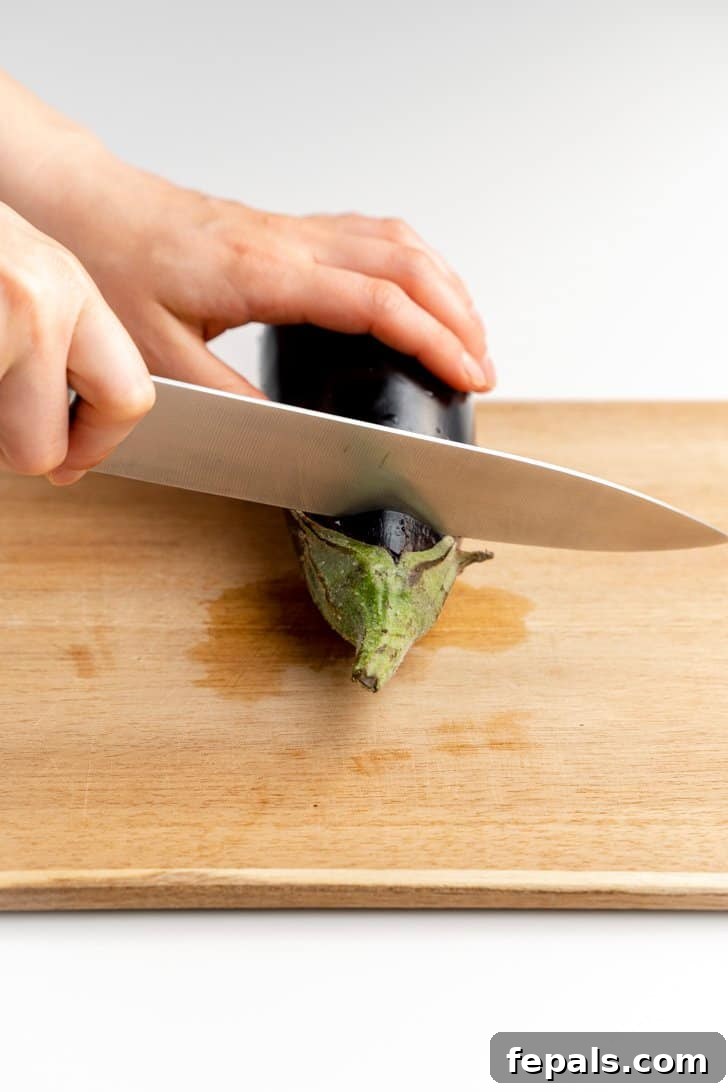
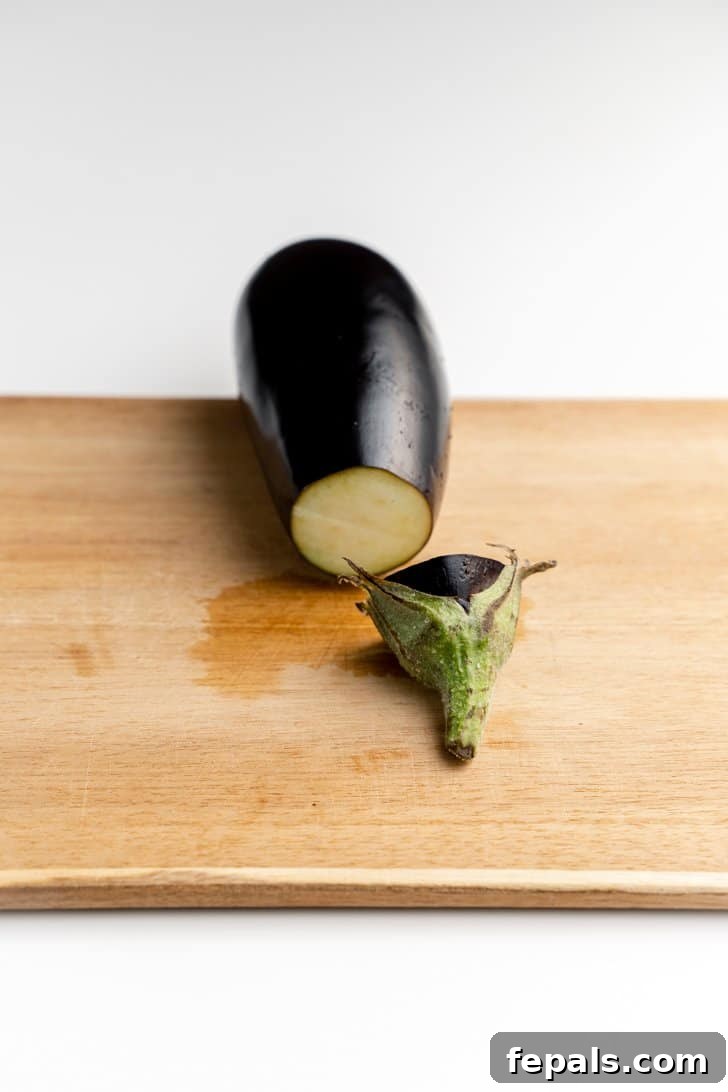
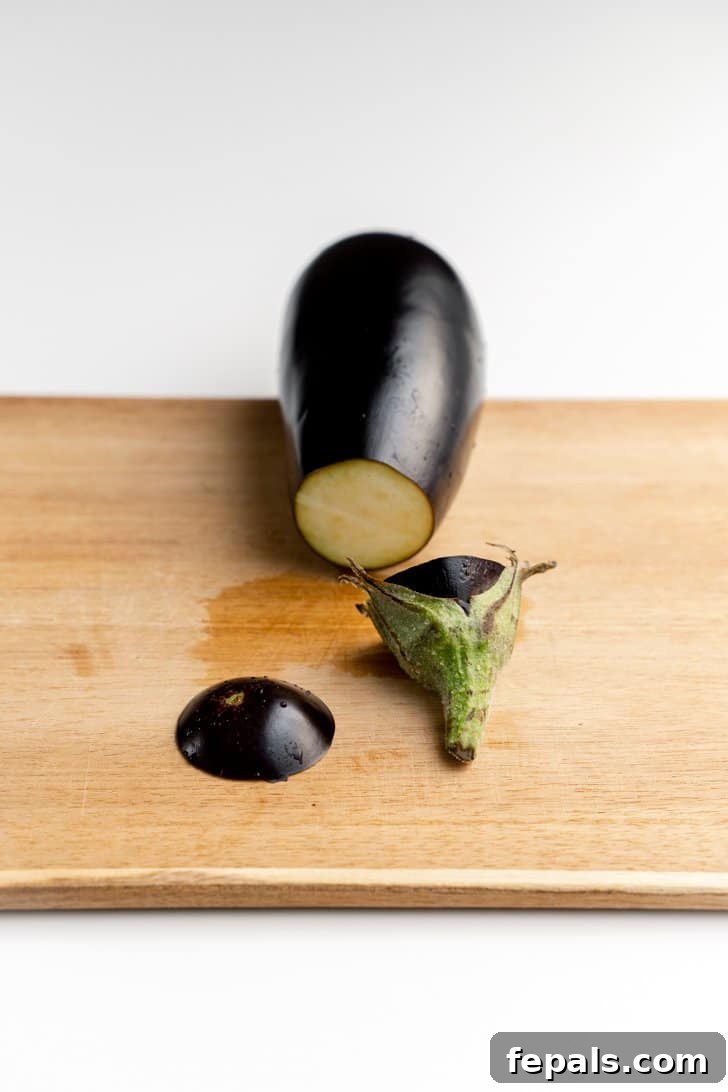
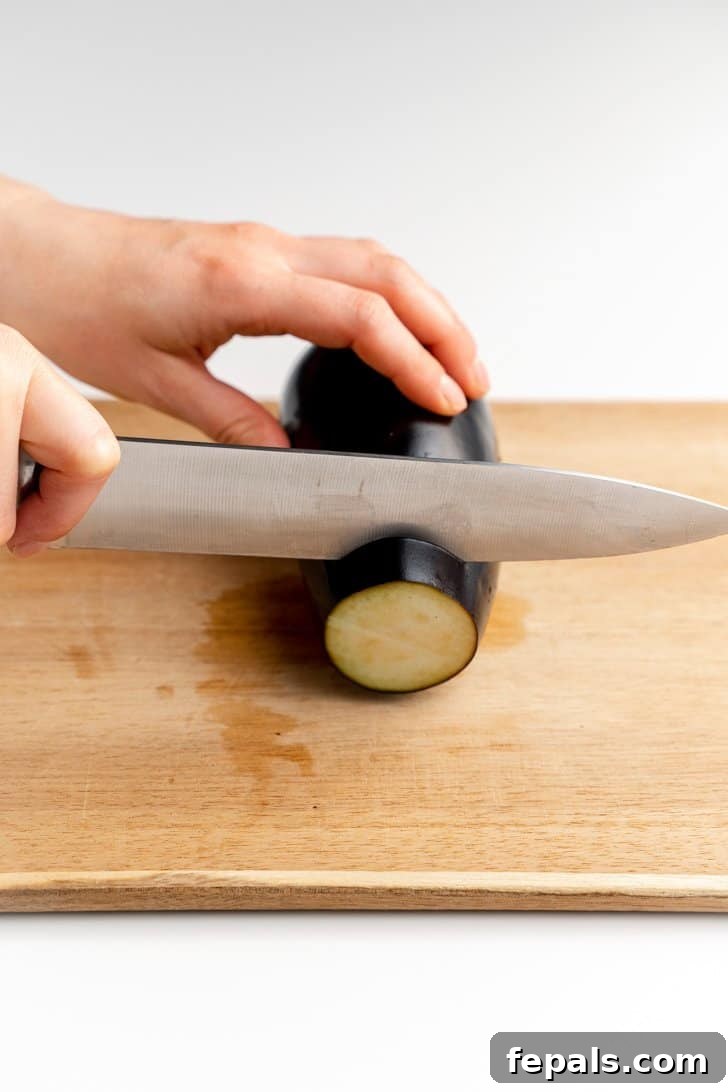
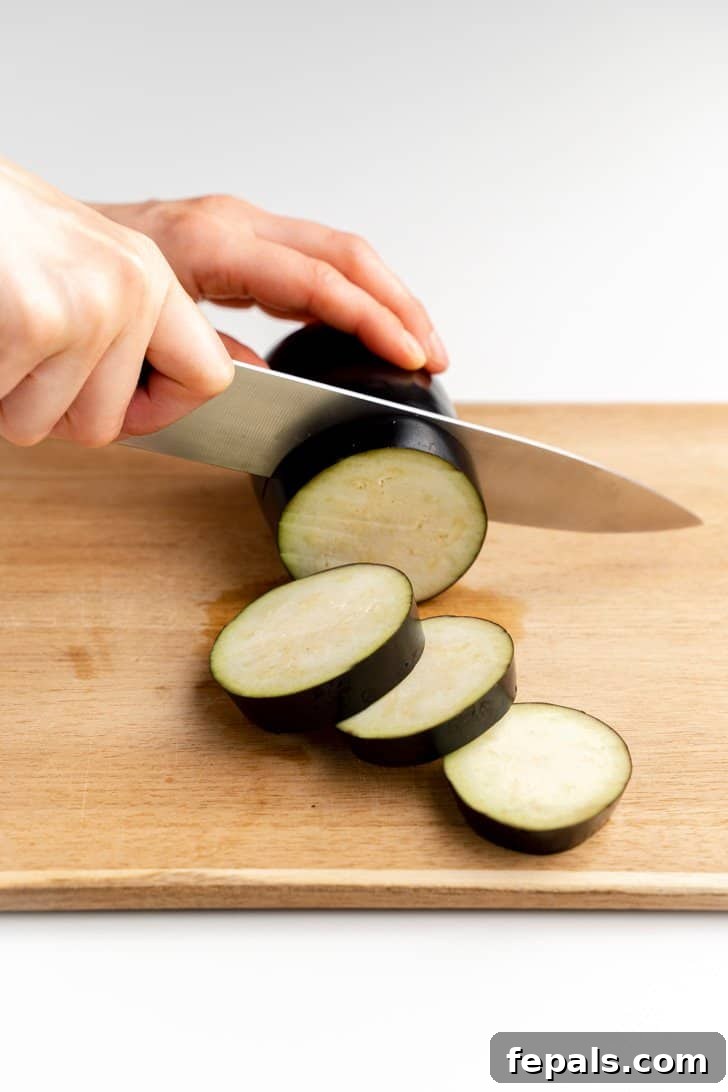
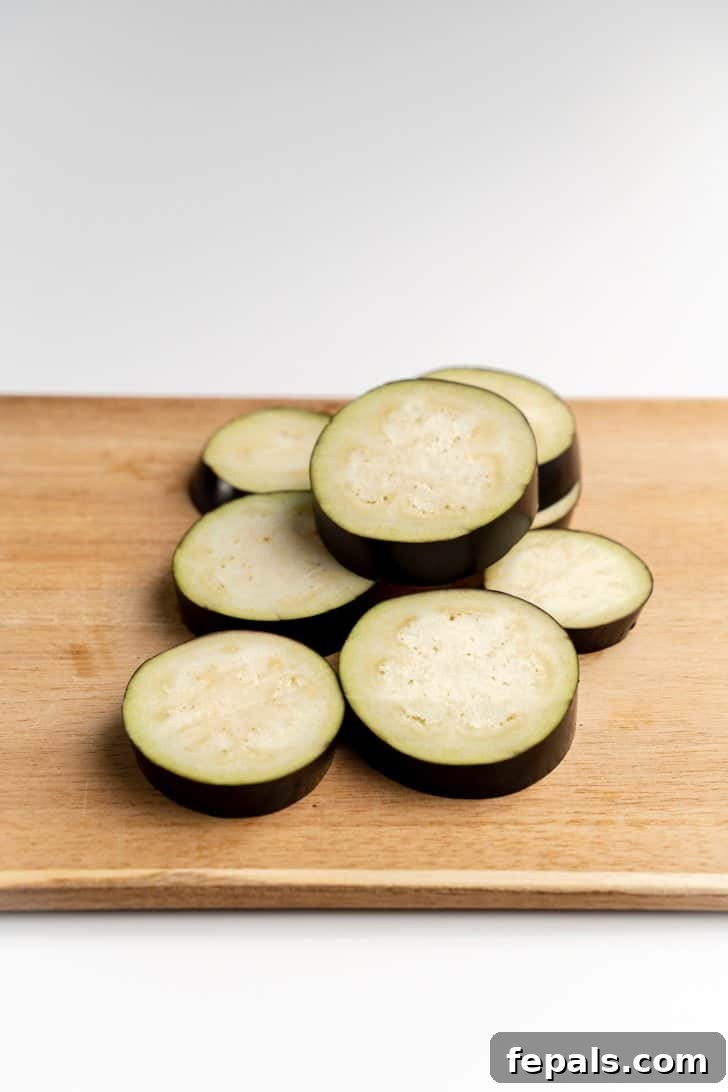
- **Slice into Rounds:** With the eggplant now stable on its side (or with the cut end facing down on the board for extra stability), begin to carefully slice it into uniform rounds. For most recipes, a thickness of about ½-inch (1.25 cm) is ideal, but you can adjust this based on your specific dish. Thinner slices cook faster and become crispier, while thicker slices retain more moisture and a meatier texture.
- **Continue Slicing:** Maintain consistent pressure and a steady hand as you continue slicing along the length of the eggplant. Aim for uniformity to ensure all pieces cook evenly. Once you’ve sliced the entire eggplant, you’ll have a beautiful pile of perfect rounds ready for your recipe.
Now that you’ve mastered the art of slicing rounds, let’s move on to cubing. Eggplant cubes are incredibly versatile, ideal for roasting alongside other vegetables, adding to curries and stews, or simply frying and seasoning as a standalone side dish.
Method 2: Creating Versatile Eggplant Cubes (for Roasts, Stews & Stir-fries)
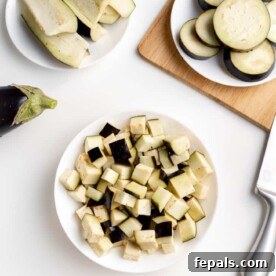
Cubed eggplant offers a different texture and is excellent for absorbing flavors in sauces or becoming wonderfully tender when roasted. Uniform cubes ensure even cooking, preventing some pieces from becoming mushy while others remain undercooked. Here’s how to cube an eggplant into perfect chunks:
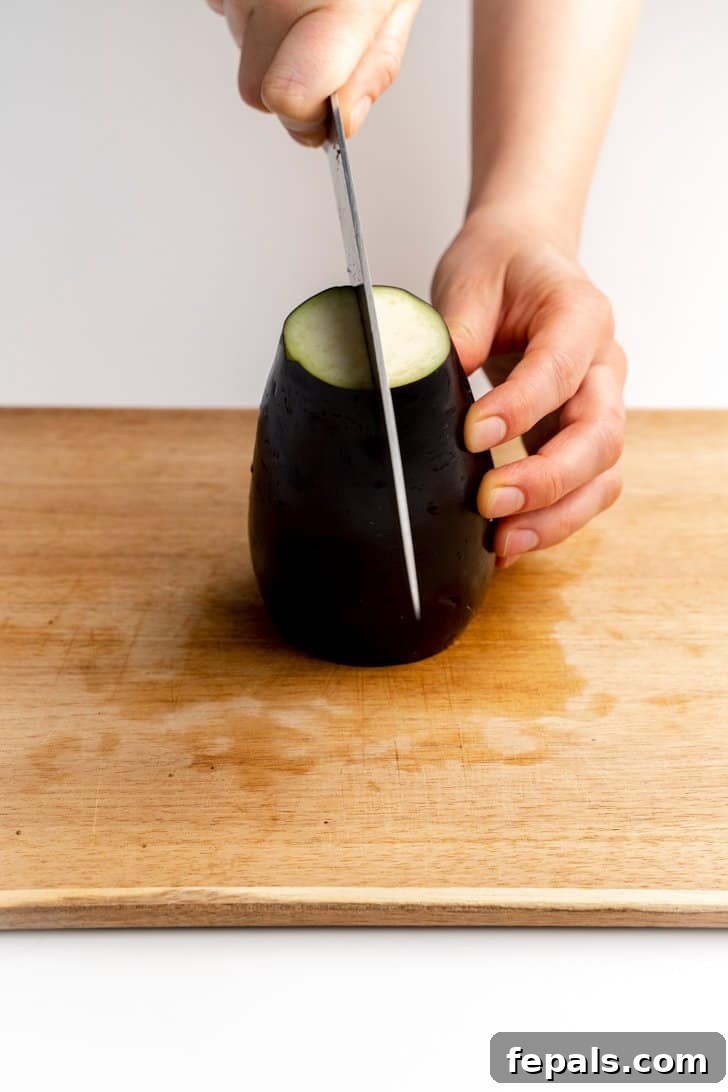
- **Prepare the Eggplant:** Start by washing and thoroughly drying your eggplant. Place it on the cutting board and slice off both the stem end and about a ½-inch (1.25 cm) from the bottom end. This creates two flat, stable surfaces.
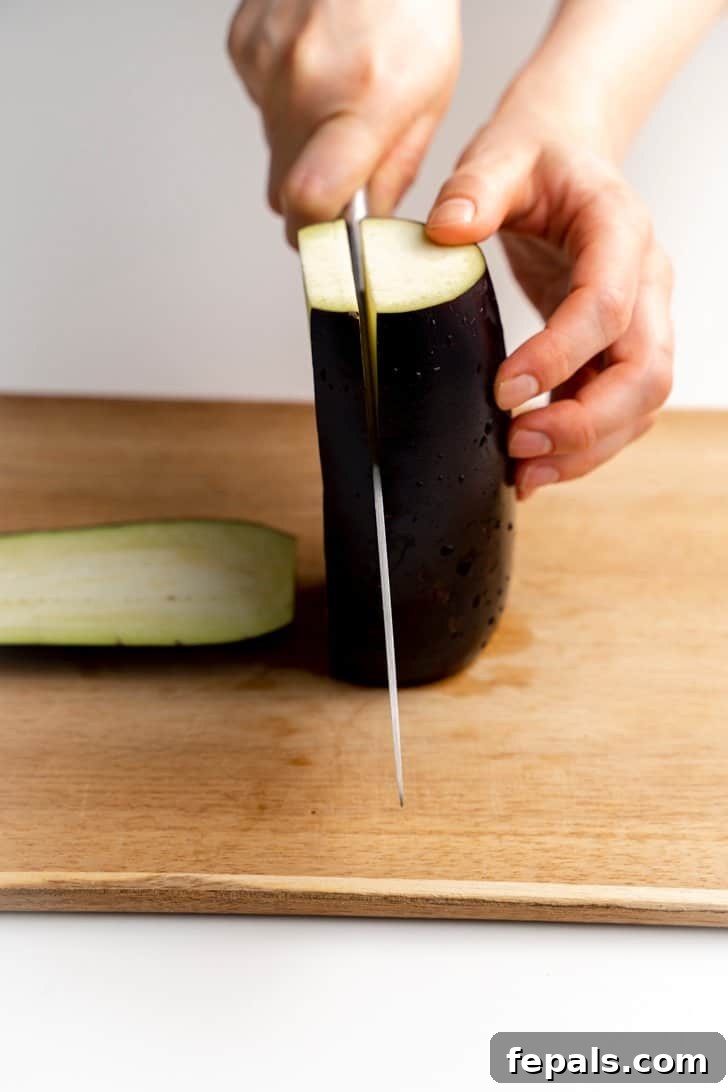
- **First Lengthwise Cuts:** Stand the eggplant upright on one of its flat ends. Carefully slice the eggplant lengthwise into four thick planks. Aim for consistency in thickness to ensure uniform cubes.
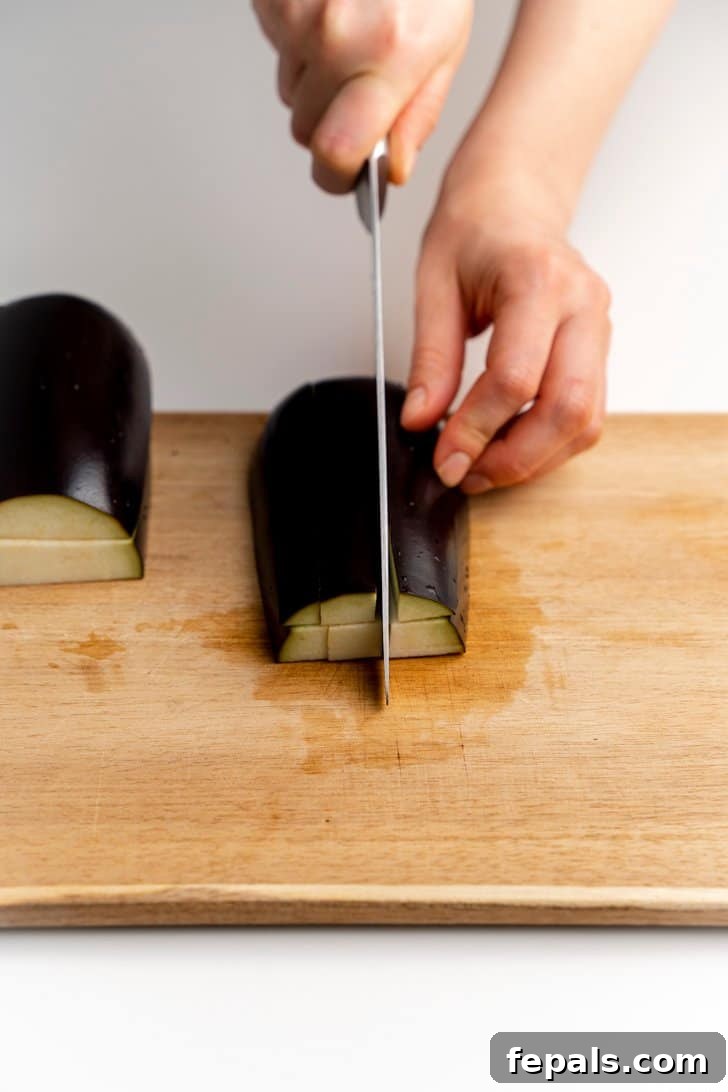
- **Create Strips:** Take each eggplant plank and lay it flat on the cutting board. Now, slice each plank lengthwise into uniform strips. The width of these strips will determine the size of your cubes. For 1-inch cubes, make 1-inch wide strips.
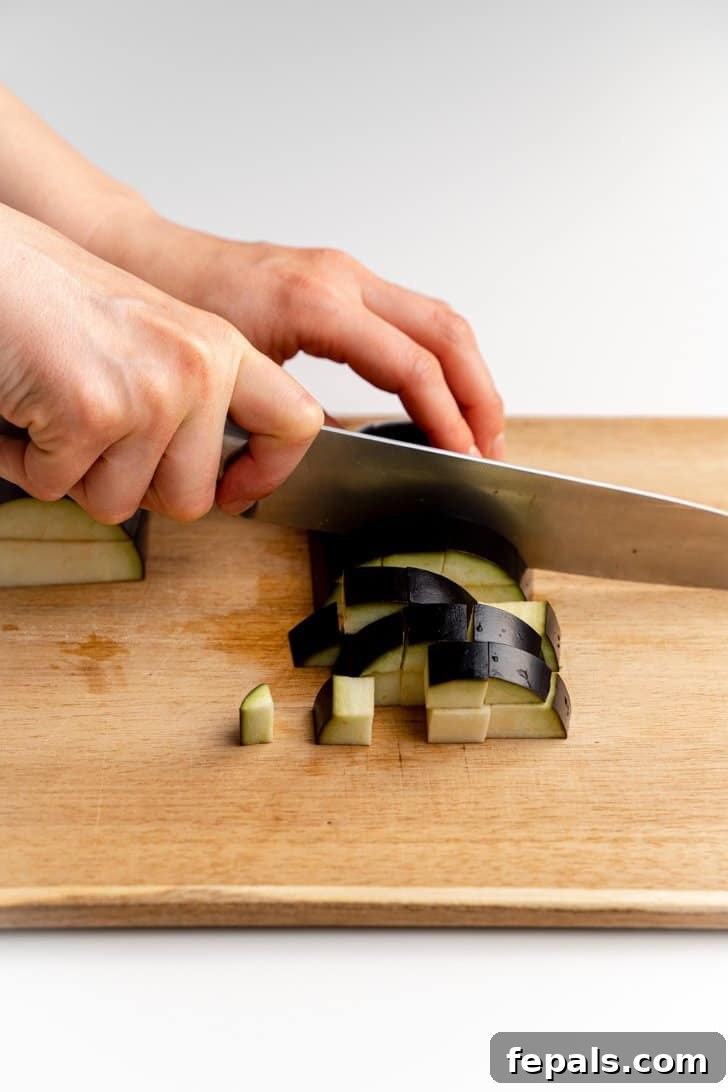
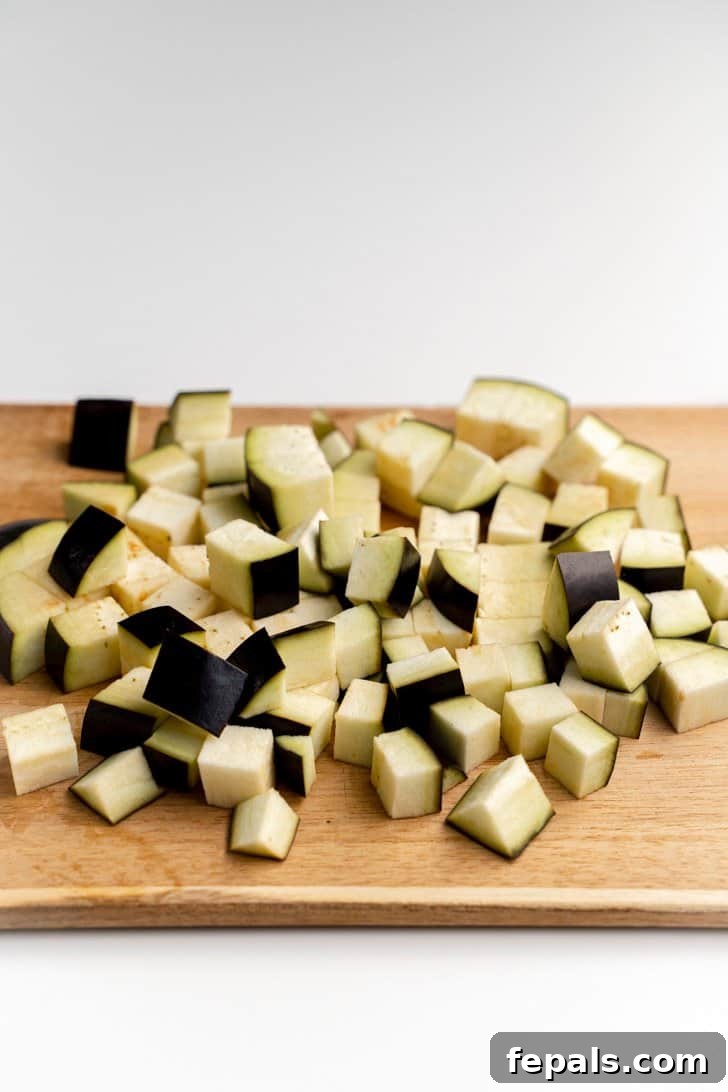
- **Dice into Cubes:** Gather a few strips together and rotate them 90 degrees. Now, slice crosswise through the strips, creating even cubes. Continue this process with all remaining strips until the entire eggplant is diced into your desired cube size.
Method 3: Preparing Long Eggplant Strips (for Lasagna, Roll-Ups & Casseroles)
Long, thin eggplant strips or planks are ideal for layering in dishes like vegetarian lasagna, creating elegant eggplant roll-ups, or baking in casseroles where you want a substantial yet tender slice. These cuts are often broader than rounds, offering more surface area for flavor and a satisfying “meaty” texture.
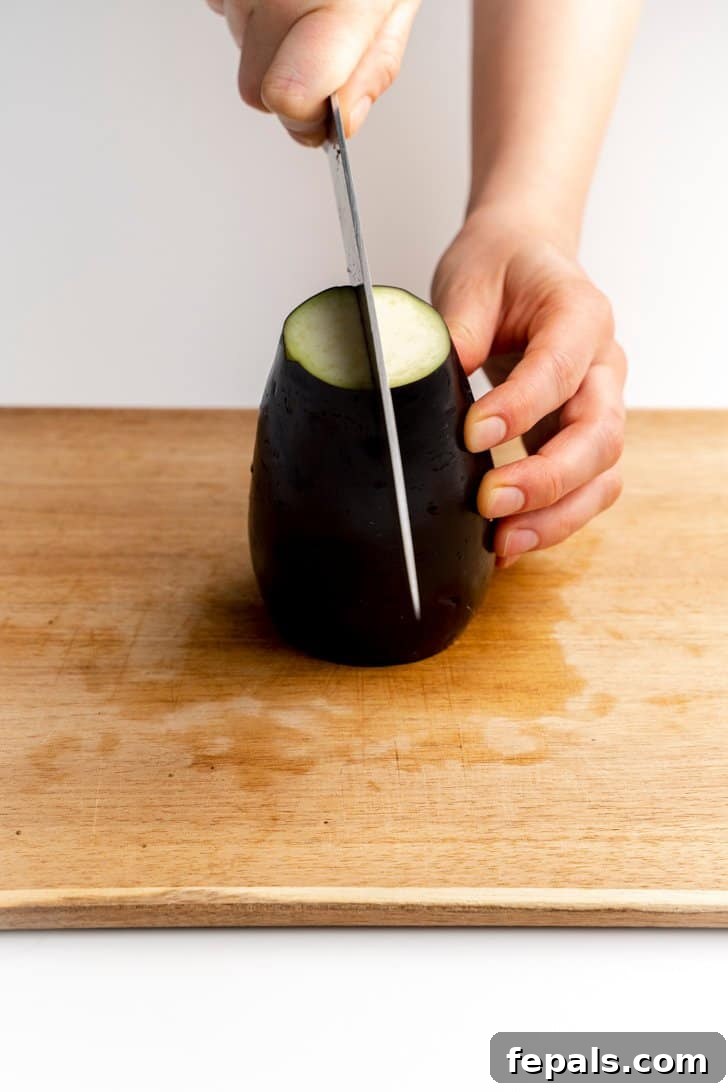
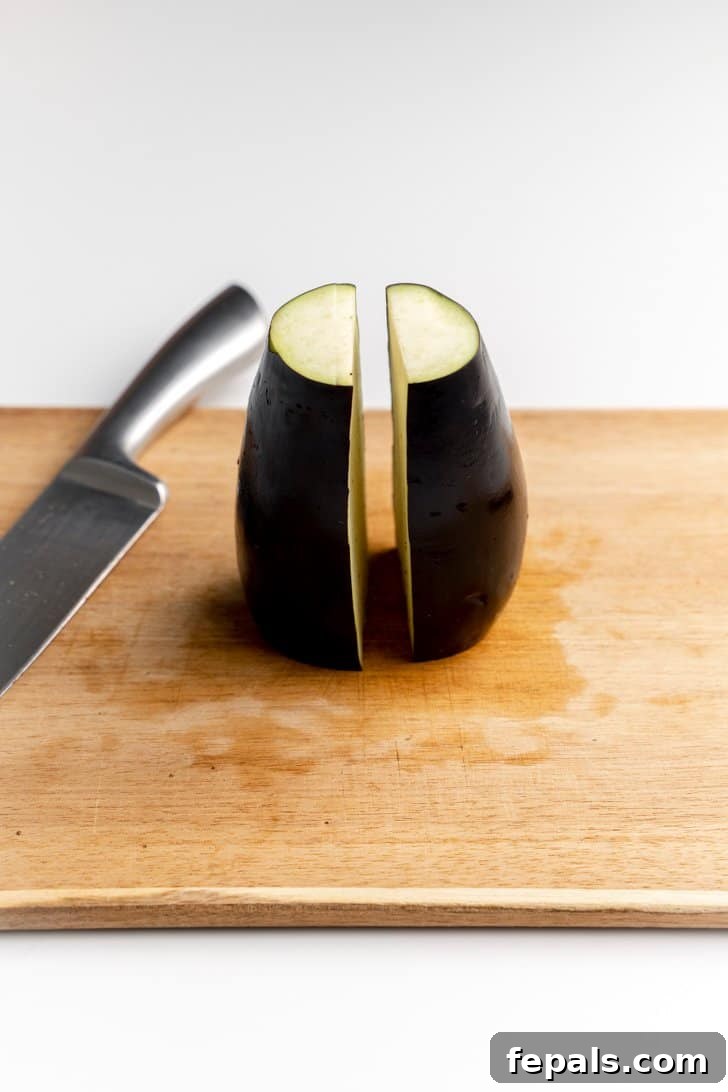
- **Prepare and Halve:** As with the other methods, wash and dry the eggplant. Slice off both the top (stem) and bottom ends to create a stable, flat base. Now, with a sharp knife, carefully slice the eggplant straight down the middle lengthwise, creating two equal halves.
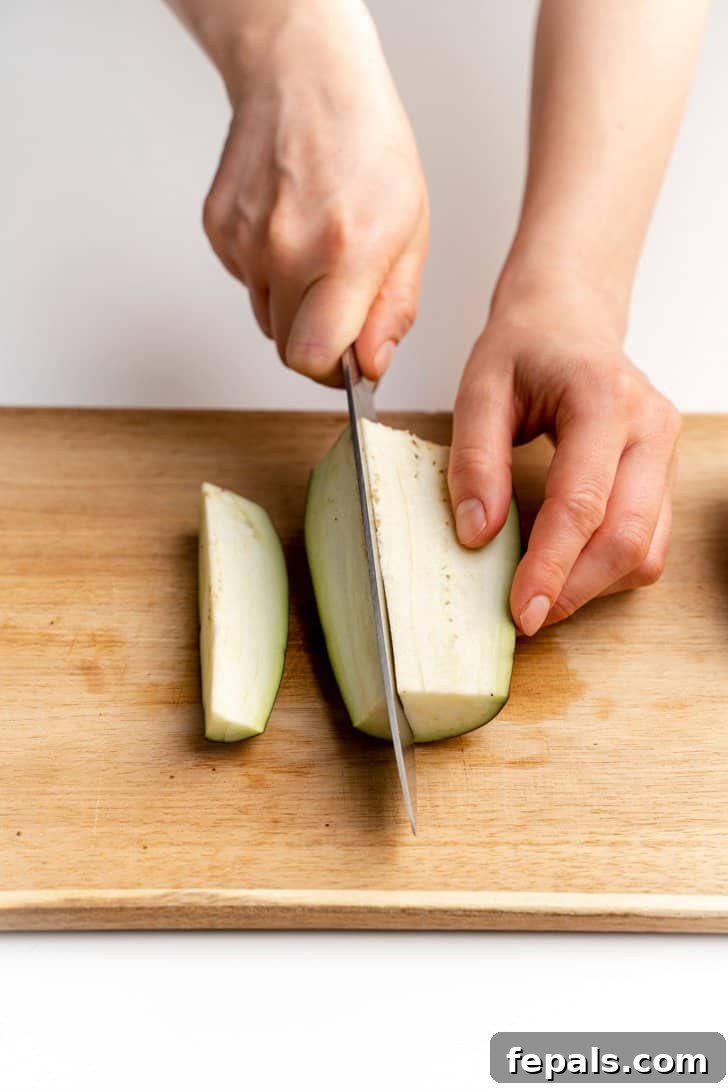
- **Slice into Strips:** Lay each eggplant half flat on your cutting board, cut-side down. Using your sharp knife, begin slicing along the length of the eggplant, creating long, even strips. The thickness will depend on your recipe: thinner slices (¼-inch to ⅓-inch) are great for lasagna or roll-ups, while slightly thicker slices (½-inch) are better for grilling or pan-frying.
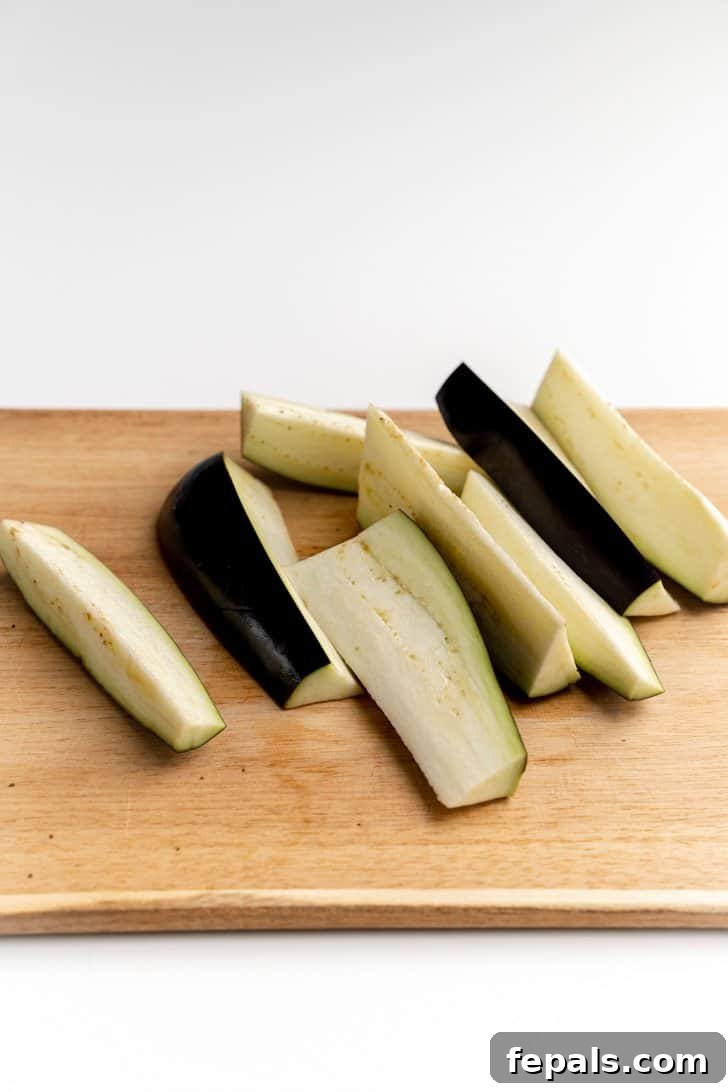
- **Ensure Uniformity:** Continue slicing until you have processed both halves into a collection of beautiful, elongated eggplant strips. Consistency in thickness is key here, especially for dishes where the strips need to cook at the same rate or be rolled evenly.
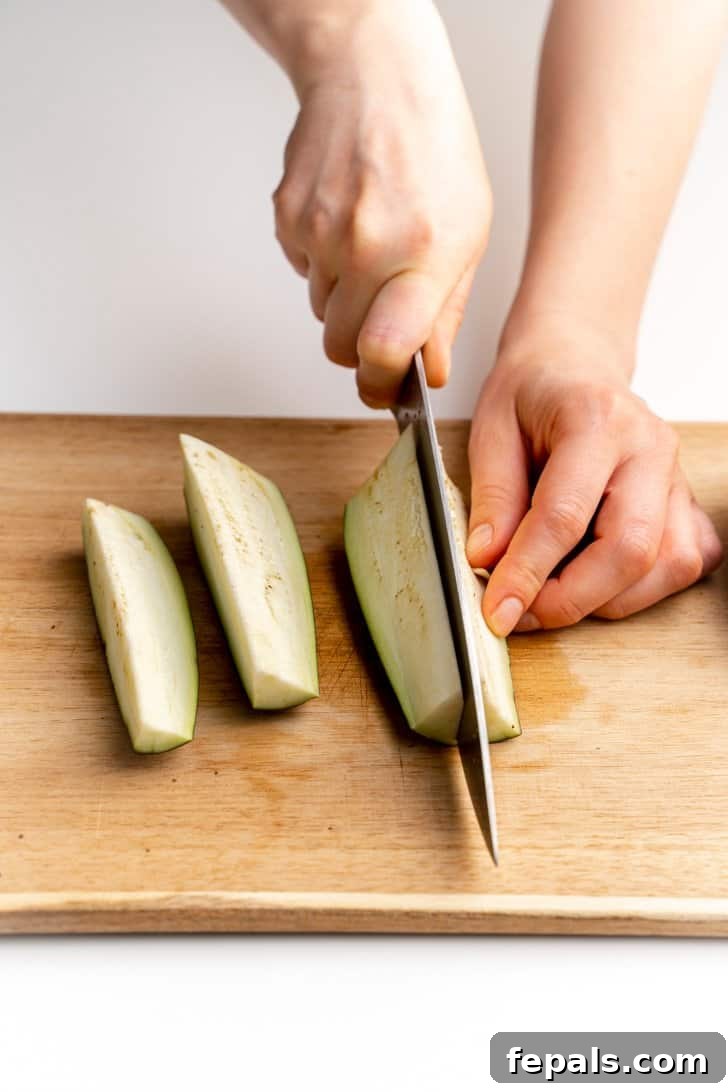
The result of this method should be a batch of smooth, even strips ready to be layered, rolled, or grilled. These versatile cuts are fundamental for creating elegant and satisfying eggplant-based main courses.
Frequently Asked Questions About Eggplant
Generally, no, it is not necessary to peel the skin off eggplant. The skin is entirely edible and provides a lovely texture that softens beautifully as it cooks. Furthermore, the skin is packed with beneficial nutrients and fiber, making it a healthy part of the vegetable. The only times you might consider peeling are if you’re using a very large, older eggplant whose skin might be tough, or if a recipe specifically calls for it for a very delicate texture.
To prepare eggplant for cooking, first wash and thoroughly dry it. Then, choose your desired cut: slice into circular rounds, dice into uniform cubes, or create long lengthwise strips, depending on your recipe. After cutting, you can immediately proceed to cook or prepare for storage. For many dishes, coating the eggplant pieces with a neutral cooking oil and a squeeze of lemon juice, along with seasonings, before cooking is a great way to enhance flavor and prevent excessive oil absorption.
One of the healthiest and most delicious ways to cook eggplant is by roasting. After cutting your eggplant into your preferred shape, brush the pieces lightly with olive oil, sprinkle with Kosher sea salt and freshly ground black pepper, and then roast them at 400°F (200°C) until they are tender, slightly crispy, and beautifully browned. This method minimizes oil usage while bringing out the eggplant’s natural sweetness and creamy texture. Air frying is another excellent healthy alternative for achieving a crispy exterior with less oil.
Yes, eggplants should be refrigerated if you are not planning to use them immediately. Store whole, unwashed eggplants in the crisper drawer of your refrigerator, preferably in a perforated plastic bag, to maintain freshness. Eggplants are sensitive to cold, so avoid storing them in the coldest parts of the fridge. They are best used within one to two days of purchase, but can typically last up to a week when stored properly. Once cut, fresh eggplant should be used within a day or two and stored in an airtight container in the refrigerator.
Maximizing Your Eggplant: Additional Notes and Tips
- Versatile Cooking Methods: Remember that properly cut eggplant is suitable for more than just baking and stovetop cooking. Its robust texture makes it an excellent choice for grilling, adding a smoky depth to your dishes.
- Choosing the Right Ripeness: Always aim for an eggplant that is ripe, yet firm to the touch. An unripe eggplant can be too tough to cut, while an overripe one will be too soft and potentially bitter.
- Freezing for Future Use: To extend the shelf life of your eggplant, blanch your sliced or cubed eggplant pieces briefly in boiling water, then cool them quickly in ice water. Drain well, pat dry, and freeze them in a single layer on a baking sheet before transferring to freezer-safe storage bags. Frozen eggplant can last for up to four months, making it perfect for meal prep. Thaw thoroughly before incorporating into your recipes.
- A Vegetarian Powerhouse: Eggplant is a fantastic meat substitute, offering a satisfying texture and ability to absorb flavors. It’s a stellar choice for vegetarian meals, such as hearty meatless lasagnas, vibrant curries, or plant-based burgers, providing fiber and nutrients without the need for meat.
- Preventing Bitterness: While modern eggplants are less bitter than older varieties, some cooks still prefer to salt cut eggplant before cooking. Sprinkle salt on the pieces, let them sit for 20-30 minutes, then pat dry. This draws out excess moisture and can help reduce any residual bitterness, though it’s often an optional step.
Delicious Recipes to Pair with Your Perfectly Cut Eggplant
Once you’ve mastered the art of cutting eggplant, you’ll be eager to incorporate it into a variety of mouth-watering dishes. Here are some fantastic recipes that beautifully complement the versatile nature of eggplant, whether it’s roasted, grilled, or baked:
- Hearty Chicken Orzo Soup: Enjoy a comforting bowl alongside grilled eggplant rounds.
- Cheesy Chicken Parmesan Meatballs: Serve with roasted eggplant slices for a complete Italian-inspired meal.
- Oven-Roasted Garlic Green Beans: A wonderful green vegetable side that pairs well with any eggplant dish.
- Crispy Air Fryer Chicken Parmesan: A healthier alternative to fried chicken parmesan, complemented by a side of roasted or pan-fried eggplant.
- Layered Eggplant and Zucchini Casserole: Perfect for using both eggplant rounds and strips.
- Mediterranean Eggplant Salad: Cubed eggplant shines in this refreshing dish.
Explore More Essential “How-To” Guides for Your Kitchen
Sharpen your kitchen skills even further with these helpful guides on preparing other popular ingredients. Mastering these basic techniques will make you a more confident and efficient cook:
- How to Make Zucchini Noodles
- How to Cut and Deseed a Pomegranate
- Learn How to Cut Cabbage
- 3 Easy Ways to Cut a Mango
- How to Cut Kiwi
Don’t forget to share your beautifully cut eggplant creations! Use my hashtag #healthyfitnessmeals on INSTAGRAM for a chance to be featured! FOLLOW Healthy Fitness Meals on FACEBOOK | INSTAGRAM | PINTEREST | TWITTER for all of my latest blog posts and delicious recipes.
How to Cut and Slice an Eggplant for Roasting (3 Ways)
By: Rena
Servings: 1 eggplant
Prep: 3 mins | Cook: 5 mins | Total: 8 mins
There are many ways you cut an eggplant for roasting. Learn how to slice eggplant into lengthwise strips, cubes, and rounds so you can create your favorite eggplant recipes when it comes to grilling, lasagna, and eggplant parmesan!
Equipment
- 1 sharp knife
- 1 cutting board
Ingredients
- 1 large eggplant, ripe
Instructions
How to Cut an Eggplant into Rounds
- Wash the eggplant with cool filtered water then dry it off thoroughly.
- Place the eggplant on a cutting board. Carefully slice the stem off the top of the eggplant to create a flat base.
- Next, with the eggplant lying on its side, slice ½-an inch round circle off of the eggplant. Continue to slice uniform rounds until all desired pieces have been sliced off.
How to Cut an Eggplant into Cubes
- Slice off the top (stem) and bottom of the eggplant to create flat ends. While the eggplant is standing upright, slice the eggplant into 4 long, thick planks.
- Place the eggplant planks down on the cutting board, flat side down. Cut more slices crisscross against the lengthwise cuts to create strips.
- Continue to cut against the lengthwise slices until you have diced the eggplant into several even, cubed pieces.
How to Slice an Eggplant into Strips
- Slice the top (stem) and bottom off the eggplant with a sharp knife to create flat ends. Next, cut the eggplant cleanly in half from top to bottom.
- Next, take each eggplant half and lay it cut-side down. Cut the eggplant into uniform lengthwise strips (typically 4-6 pieces per half, depending on desired thickness). Continue slicing until you have cut all of the eggplant into strips.
Notes
- Cutting and slicing eggplant prepares it not only for baking and stovetop cooking but is also excellent for grilling.
- Ensure the eggplant is ripe but not overly soft for best results in cutting and cooking.
- To freeze sliced or cut eggplant, blanch briefly, cool, pat dry, and store in freezer-safe bags for up to four months. It’s perfect for future meal prep.
- Eggplant is a fantastic option for vegetarian needs, offering a substantial alternative to meat in dishes like lasagna or curries.
Nutrition
Carbohydrates: 27g
Protein: 4g
Fat: 1g
Saturated Fat: 0.2g
Polyunsaturated Fat: 0.3g
Monounsaturated Fat: 0.1g
Sodium: 9mg
Potassium: 1049mg
Fiber: 14g
Sugar: 16g
Vitamin A: 105IU
Vitamin C: 10mg
Calcium: 41mg
Iron: 1mg
Nutrition information is automatically calculated and should only be used as an approximation.
Additional Info
Cuisine: American, Italian