
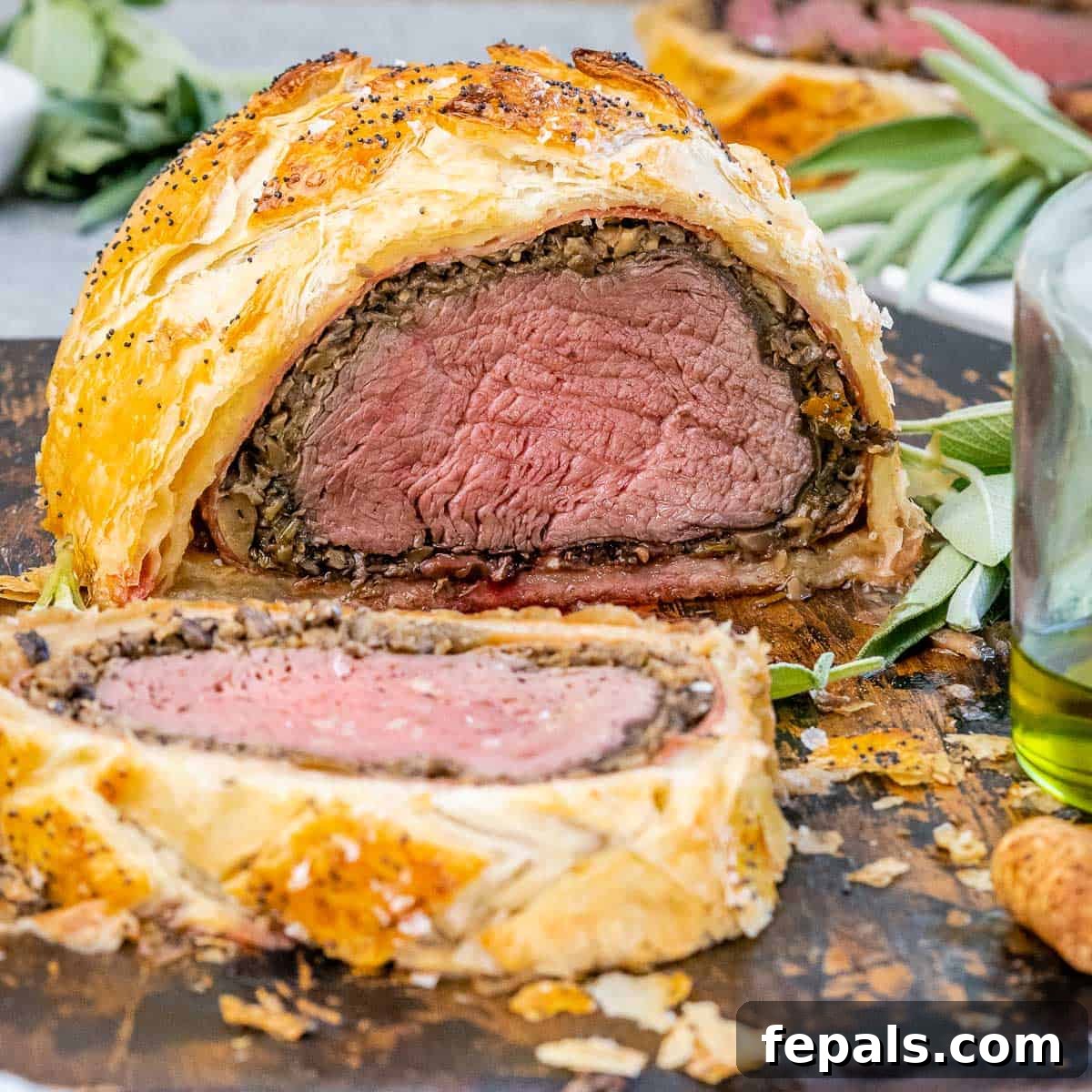
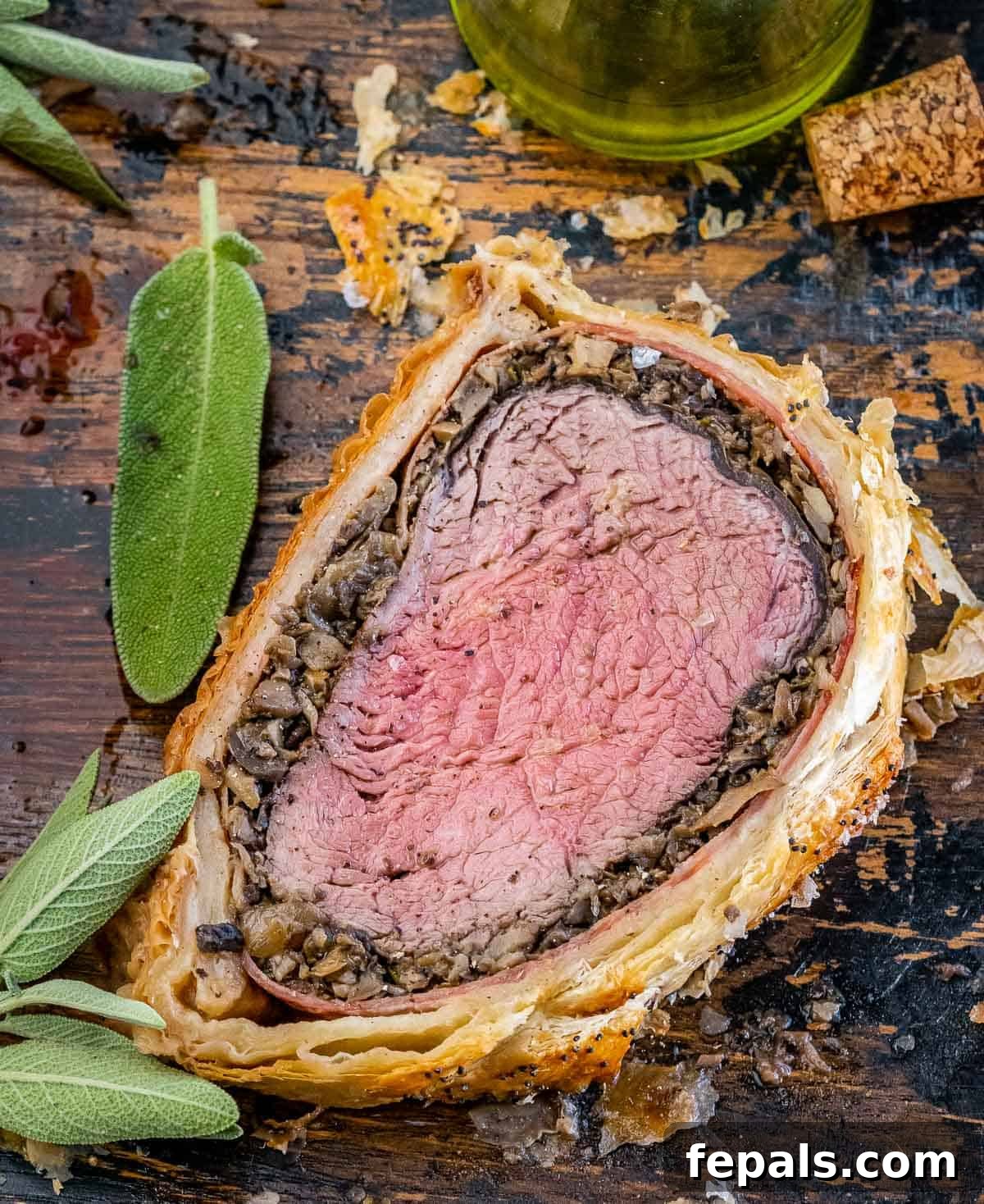
Elevate your holiday table with the ultimate showstopper: a perfectly crafted Beef Wellington. This iconic dish features a supremely tender, juicy beef tenderloin, exquisitely coated in a rich mustard glaze, then layered with savory prosciutto, aromatic mushroom duxelles, and finally enveloped in delicate, flaky puff pastry. Baked to a glorious golden brown, each slice reveals a symphony of textures and flavors that promises an unforgettable culinary experience.
While often perceived as a daunting culinary feat reserved for professional chefs, mastering this classic is more approachable than you might think. With clear, detailed steps and a bit of planning, you can confidently create a Beef Wellington that will impress your family and friends, making it a cherished centerpiece for your festive gatherings.
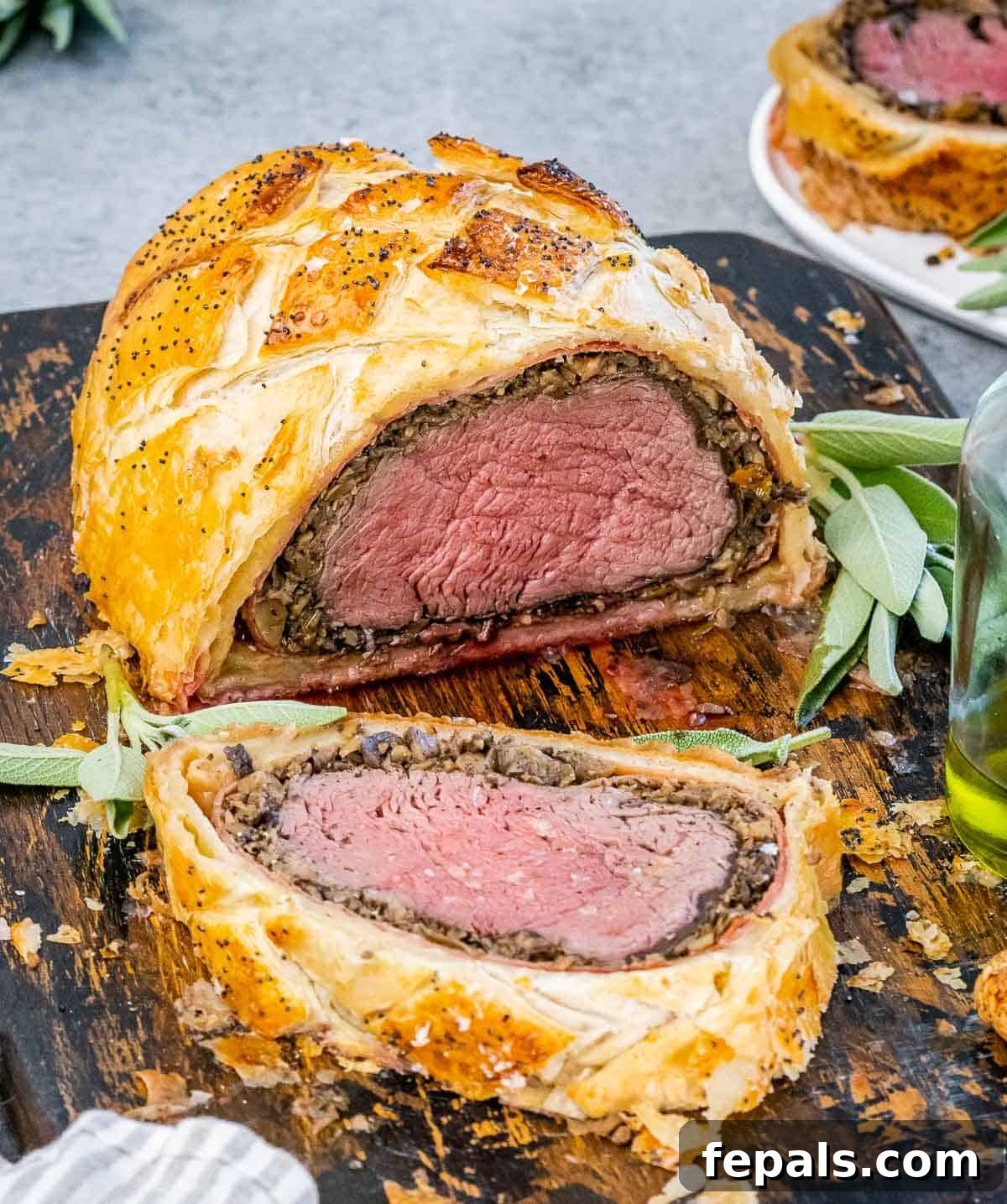
Imagine the delight as you present this magnificent dish, its golden crust hinting at the succulent treasure within. Beef Wellington isn’t just a meal; it’s an experience, a culinary tradition that brings warmth and elegance to any special occasion, especially during the holidays. My family looks forward to this masterpiece every Christmas, and its timeless appeal never wanes.
To complete your festive spread, consider pairing your Beef Wellington with equally delightful sides. Creamy and cheesy Potatoes au Gratin offer comforting richness, while a vibrant Onion Boil or sweet Roasted Honey Glazed Carrots add depth and color. For a classic touch, a hearty Wild Rice Stuffing makes a wonderful accompaniment, creating a truly memorable holiday feast.
Many home cooks might view Beef Wellington as an intimidating recipe, something requiring advanced skills. I’m here to assure you that it’s entirely within your reach! The key to success lies in careful planning and following straightforward, logical steps. I’ve broken down each stage of the process into easy-to-manage instructions, ensuring that with a little time and attention, your Beef Wellington will be a stress-free triumph.
Essential Ingredients for Beef Wellington
Crafting the perfect Beef Wellington begins with selecting high-quality ingredients. Each component plays a crucial role in building the layers of flavor and texture that define this exquisite dish. Below is a detailed look at what you’ll need, with full measurements provided in the recipe card at the end.
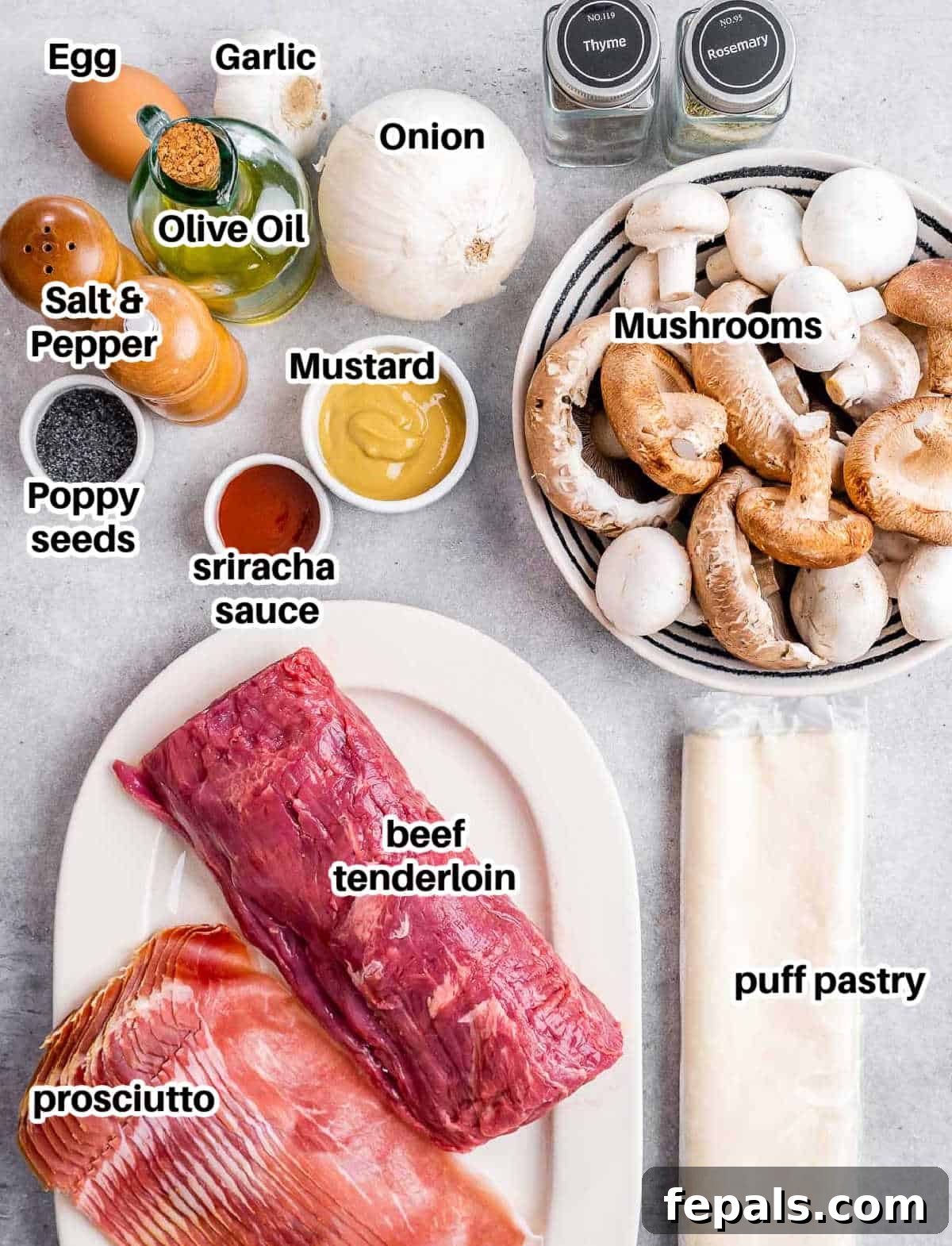
- Mushrooms: The foundation of your duxelles. A mix of varieties like white button and cremini mushrooms provides a balanced, mild, and earthy flavor. You can also experiment with richer options like portobello or shiitake for added depth. The goal is to create a finely minced mixture that cooks down to a paste-like consistency, bursting with umami.
- Onion & Garlic: These aromatic staples infuse the mushroom duxelles with savory sweetness and a pungent kick, enhancing the overall flavor profile. Finely chopping them ensures they meld seamlessly into the mixture.
- Olive Oil: Used for sautéing the mushroom duxelles and searing the beef tenderloin. High-quality extra virgin olive oil adds a lovely undertone, but avocado oil is also an excellent alternative due to its high smoke point.
- Herbs: Dried thyme and dried rosemary are classic choices that lend an herbaceous, warm fragrance to the duxelles. Fresh herbs, finely chopped, can also be used for a brighter flavor. Don’t forget kosher salt and freshly ground black pepper to season generously at every stage.
- Beef Tenderloin: The star of the show! For the best results, seek out a center-cut piece of beef tenderloin, often labeled as “Chateaubriand” at your butcher. This cut is incredibly tender and lean, ensuring a luxurious texture. Aim for a consistent thickness to ensure even cooking.
- Mustard Sauce: A tangy and slightly spicy coating for the beef that adds a layer of flavor and helps the prosciutto adhere. Dijon mustard is traditional, and a touch of sriracha sauce offers a subtle, pleasant heat that complements the richness of the beef. Adjust sriracha to your preference or omit for a milder taste.
- Prosciutto: Thin slices of this delicate cured ham serve a dual purpose. They add a wonderful salty counterpoint to the beef and, crucially, act as a barrier. This protective layer helps prevent the moisture from the mushroom duxelles from making the puff pastry soggy, ensuring a crisp, golden crust.
- Puff Pastry: The flaky, buttery exterior that encases the Beef Wellington. For superior results, invest in a true-butter puff pastry from a reputable brand like Dufour. Its rich flavor and exceptional flakiness will elevate your dish. Remember to thaw it properly before use.
- Egg: A single beaten egg creates an “egg wash” that is brushed over the puff pastry. This is essential for achieving that beautiful, glossy golden-brown finish and contributes to the pastry’s crisp texture.
- Poppy Seeds: Optional but highly recommended for an elegant presentation. Sprinkled over the egg-washed pastry, they add a delicate crunch and a visually appealing speckled finish. Flaky sea salt can also be added for extra seasoning and texture.
Beef Wellington Substitutions & Variations
While the classic Beef Wellington recipe is truly exceptional, don’t hesitate to personalize it to suit your taste or dietary needs. Here are a few thoughtful substitutions and variations you can explore:
- For the Mustard Sauce: If Dijon mustard isn’t your preference, feel free to experiment. Whole grain mustard adds a coarser texture and pungent flavor, yellow mustard offers a milder tang, and spicy mustard can provide an extra kick. If you’re not a fan of heat, the sriracha sauce can be entirely omitted without compromising the dish’s integrity. Consider a horseradish sauce for a sharper, more piquant note.
- Make it Gluten-Free: With the increasing availability of high-quality alternatives, making Beef Wellington gluten-free is simpler than ever. Simply substitute the standard puff pastry with a gluten-free puff pastry, ensuring all other ingredients are naturally gluten-free.
- Other Herb Options for the Mushroom Duxelles: The mushroom filling is a fantastic canvas for various herbs. Beyond thyme and rosemary, consider adding finely chopped fresh or dried oregano, tarragon for a subtle anise flavor, chives for a delicate oniony note, or basil for a hint of sweetness. Experiment to find your favorite aromatic combination.
- Prosciutto Alternatives: If prosciutto is unavailable or not preferred, thin slices of Parma ham, Serrano ham, or even very thinly sliced bacon can be used as a delicious alternative for the savory layer and moisture barrier. Ensure bacon is pre-cooked until crisp and excess fat is rendered before using.
Step-by-Step Guide: How to Make Beef Wellington at Home
Making Beef Wellington is a rewarding process that involves several distinct stages. By taking your time with each step, you’ll ensure a perfectly layered and flavorful result. Follow these detailed instructions to create an unforgettable culinary masterpiece.
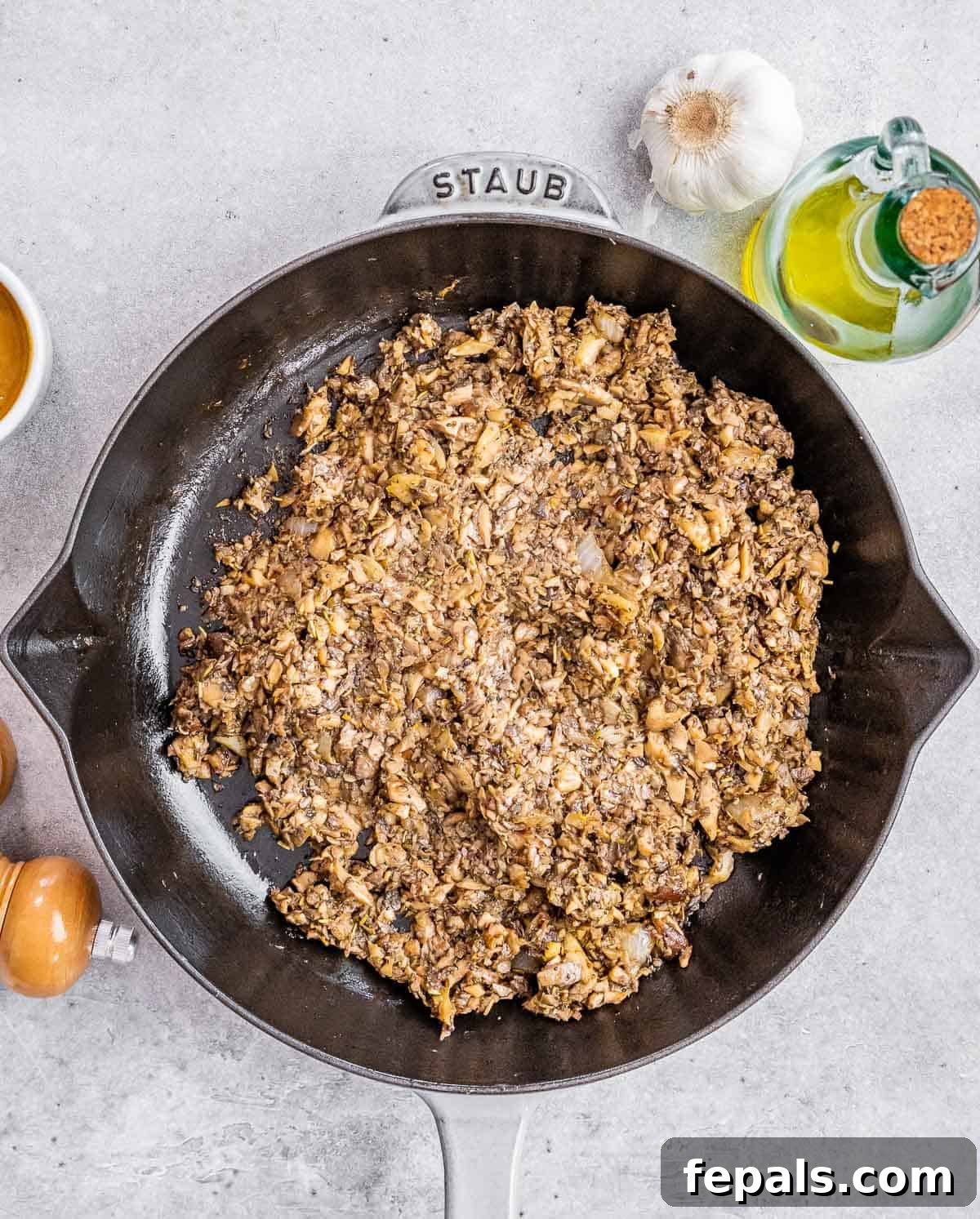
Step 1: Prepare the Mushroom Duxelles. Begin by coarsely chopping your mixed mushrooms and sweet or white onion. Transfer these to a food processor and pulse several times until the mixture is very finely chopped, almost like a coarse paste. Heat the olive oil in a large, heavy-bottomed skillet or pan over medium-high heat. Add the finely chopped mushroom-onion mixture, minced garlic, dried thyme, dried rosemary, kosher salt, and pepper. Cook, stirring frequently, for 8-10 minutes until a significant amount of the liquid has evaporated. Reduce the heat to medium and continue cooking, stirring often, for another 6-8 minutes. This extended cooking time is crucial: you want the mushrooms to deeply brown and all moisture to completely evaporate, resulting in a rich, concentrated, almost dry paste. This intense cooking prevents your puff pastry from becoming soggy and maximizes flavor. Taste and adjust seasoning as needed.
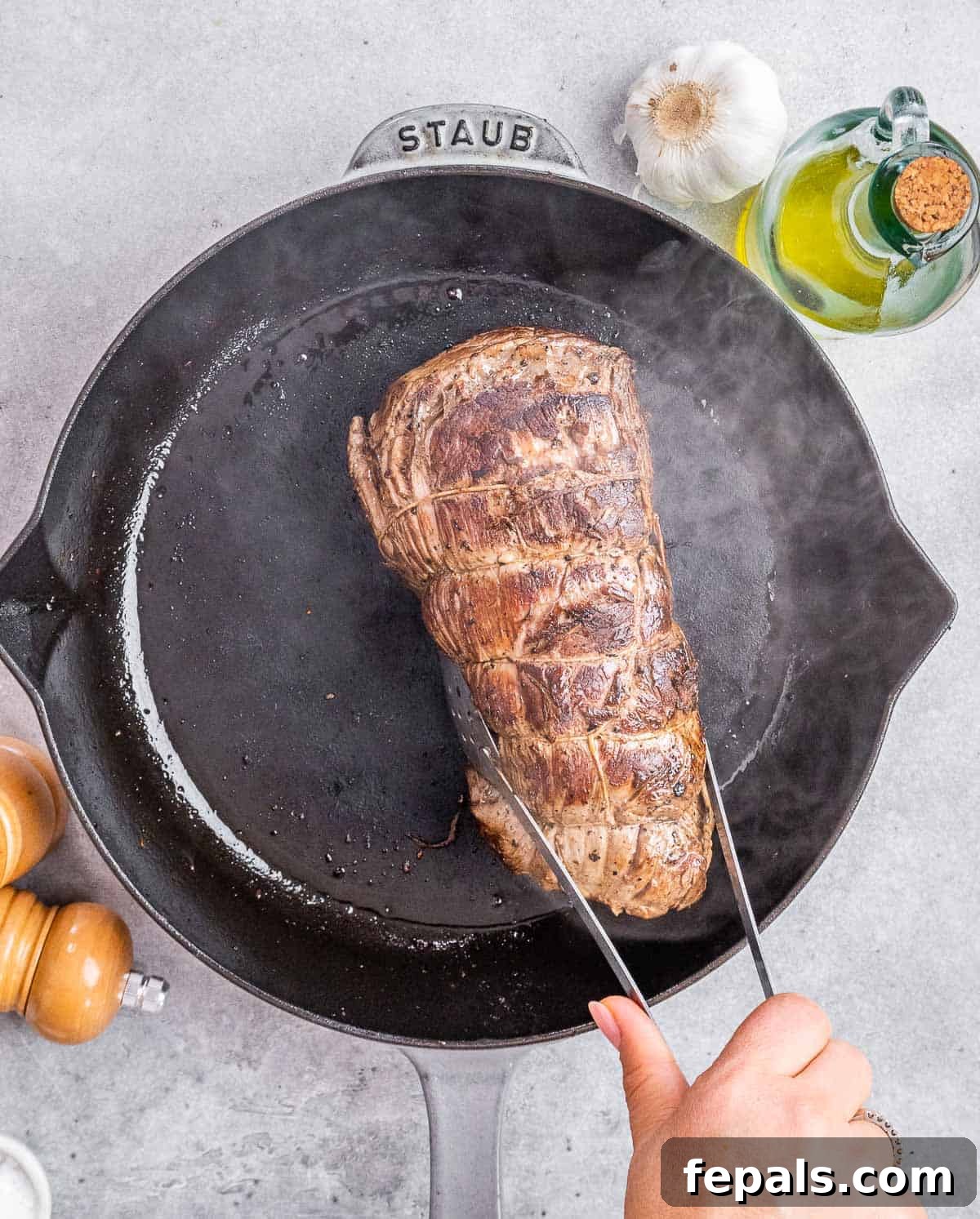
Step 2: Sear the Beef Tenderloin. Take your beef tenderloin and pat it thoroughly dry with paper towels; this is vital for achieving a good sear. Trim any excess fat or silver skin. To help the tenderloin maintain its shape during cooking, tie it tightly with butcher’s twine at 1-inch intervals along its length. Season the entire surface of the beef generously with kosher salt and freshly ground black pepper. Heat two tablespoons of olive oil in a large, oven-safe skillet over high heat until shimmering. Carefully place the seasoned tenderloin in the hot skillet and sear for approximately 2 minutes per side. Rotate the beef until all sides, including the ends, are beautifully golden brown and caramelized (about 8 minutes total). This searing locks in juices and develops a fantastic crust. Remove the seared tenderloin from the pan and set aside to cool slightly.
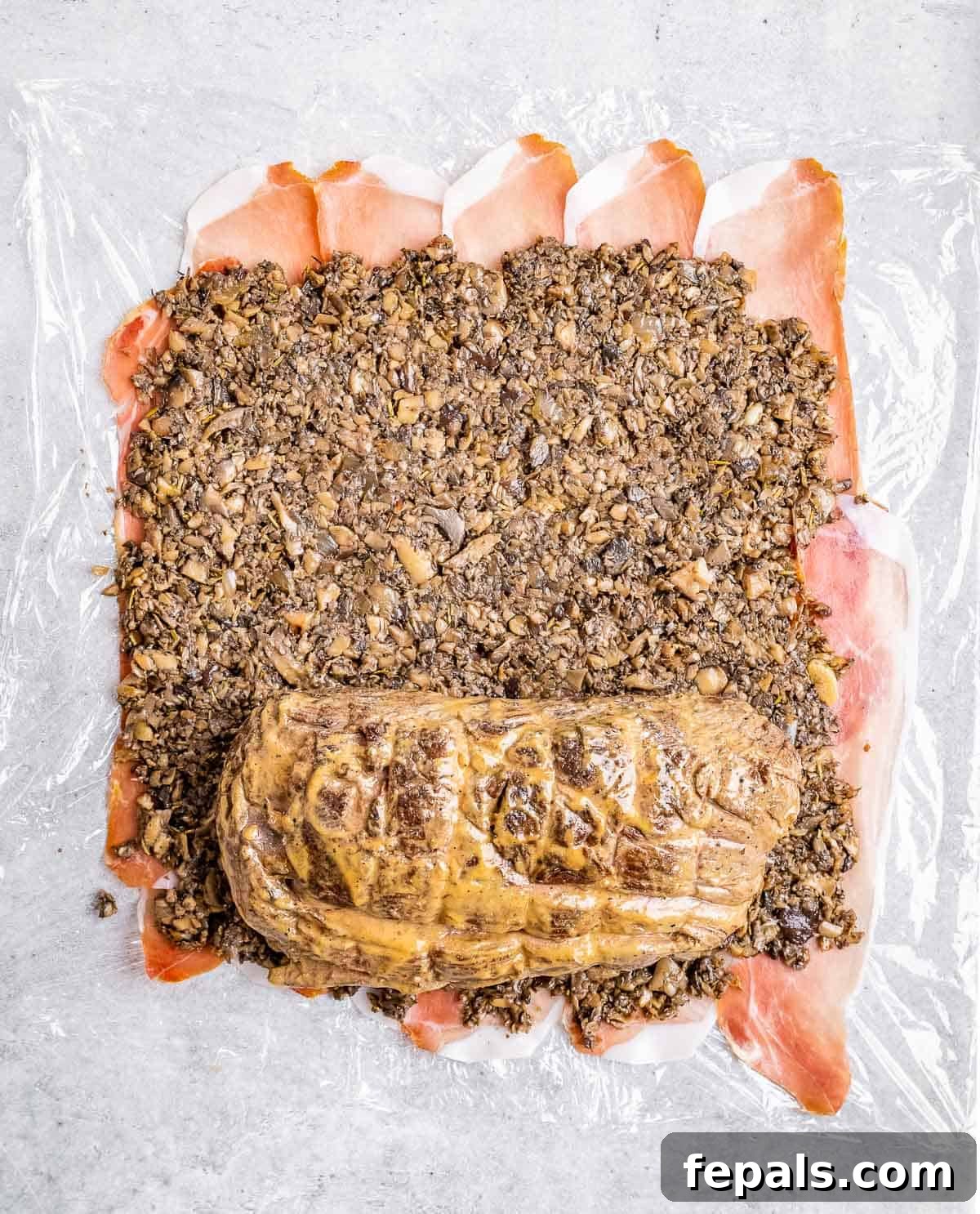
Step 3: Assemble the Prosciutto and Duxelles Layer. In a small bowl, whisk together the Dijon mustard and sriracha sauce (if using). Once the seared tenderloin has cooled enough to handle, carefully remove the butcher’s twine. Generously rub the mustard-sriracha mixture all over the entire surface of the beef. Next, prepare your workspace by laying a large piece of cling film (plastic wrap) on a clean, flat surface. Arrange the thin slices of prosciutto on the cling film, overlapping them slightly to form a rectangle that is roughly the same length as your tenderloin. Evenly spread the cooled mushroom duxelles mixture over the prosciutto, creating a smooth, consistent layer. Place the mustard-coated tenderloin at one end of the prosciutto and duxelles rectangle. Using the cling film, carefully and tightly roll the tenderloin, encasing it completely in the prosciutto and mushroom layer. Twist the ends of the cling film securely to create a compact, log-like shape. Refrigerate this wrapped beef for at least 30 minutes to allow it to firm up, making it easier to wrap in pastry.
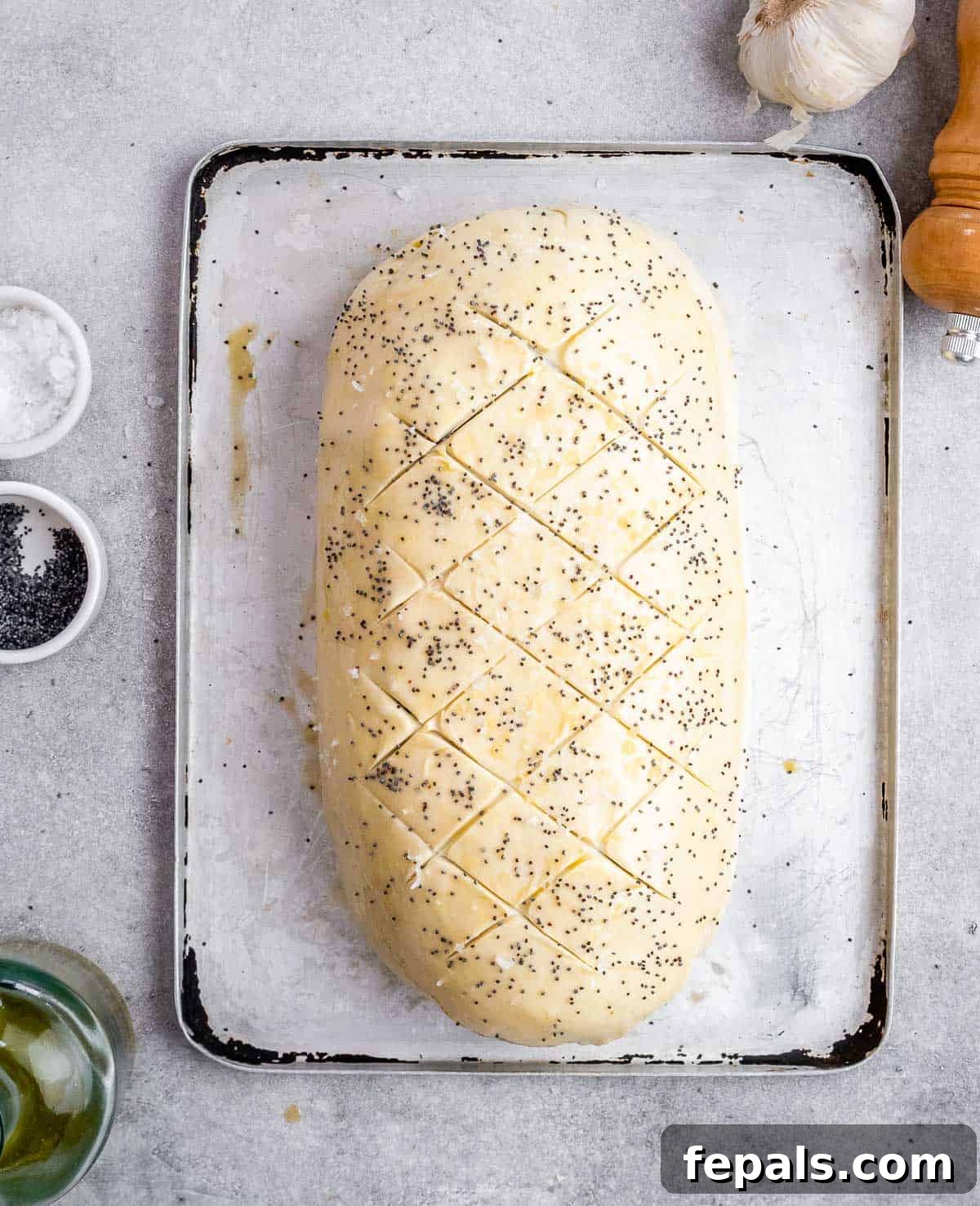
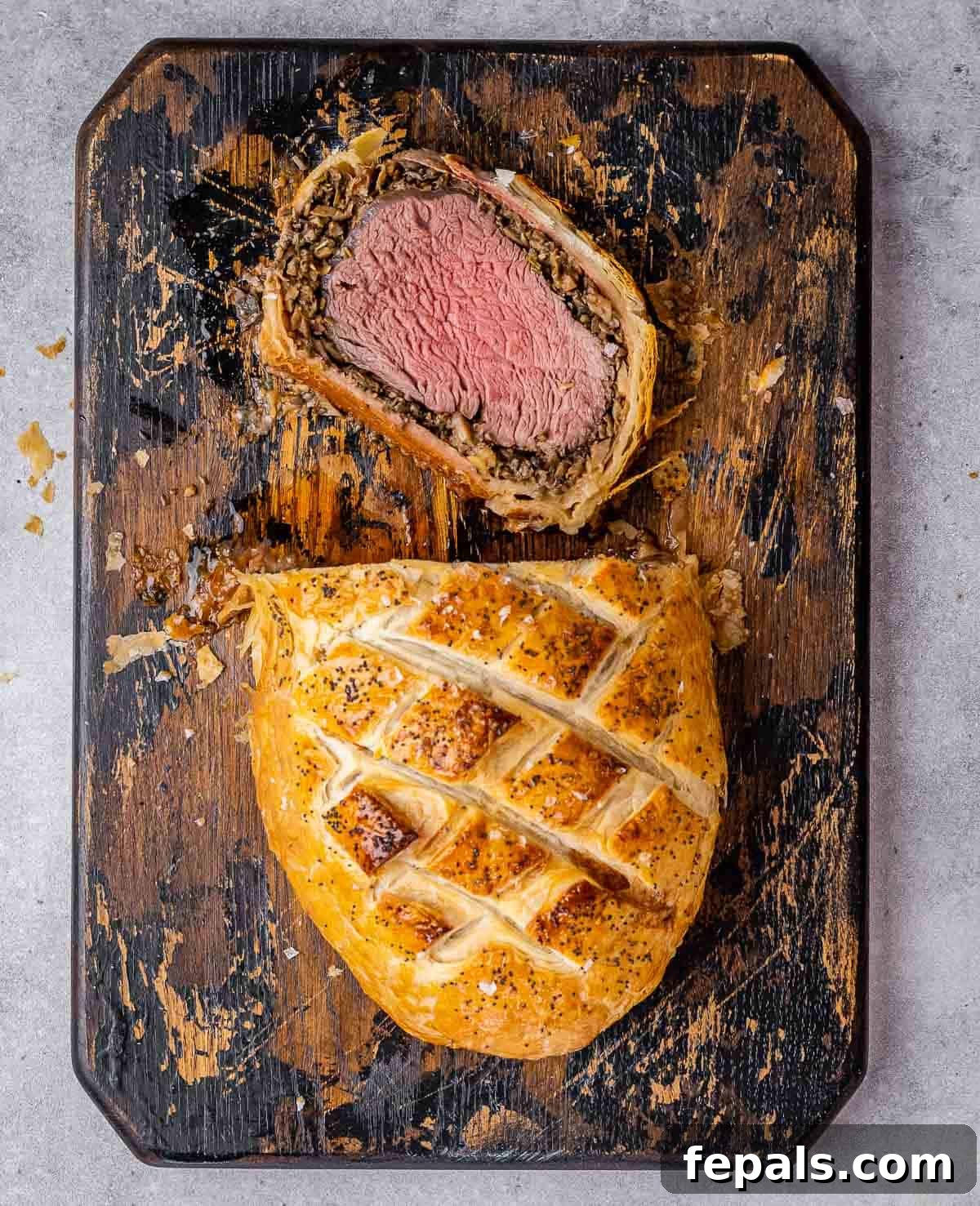
Step 4: Wrap in Puff Pastry and Decorate. Preheat your oven to 425°F (220°C). On a lightly floured surface, carefully roll out your thawed puff pastry into a rectangle. The pastry should be about 2 inches longer than your prepared tenderloin and wide enough to completely encase it. Remove the chilled, prosciutto-wrapped tenderloin from the cling film. Place it at one end of the puff pastry rectangle. Tightly roll the pastry around the beef, ensuring there are no air gaps. Trim any significant excess pastry from the ends, then fold and tuck the pastry ends neatly to seal the Wellington. Place the assembled Beef Wellington seam-side down on a parchment paper-lined baking sheet. In a small bowl, whisk one large egg to create an egg wash. Brush this egg wash generously over the entire surface of the puff pastry. For visual appeal and to aid in even baking, use a sharp knife to make a few light diagonal cuts across the top of the pastry, about 1 inch apart (be careful not to cut all the way through to the beef). Finally, sprinkle with poppy seeds and flaky salt, if desired, for extra texture and presentation.
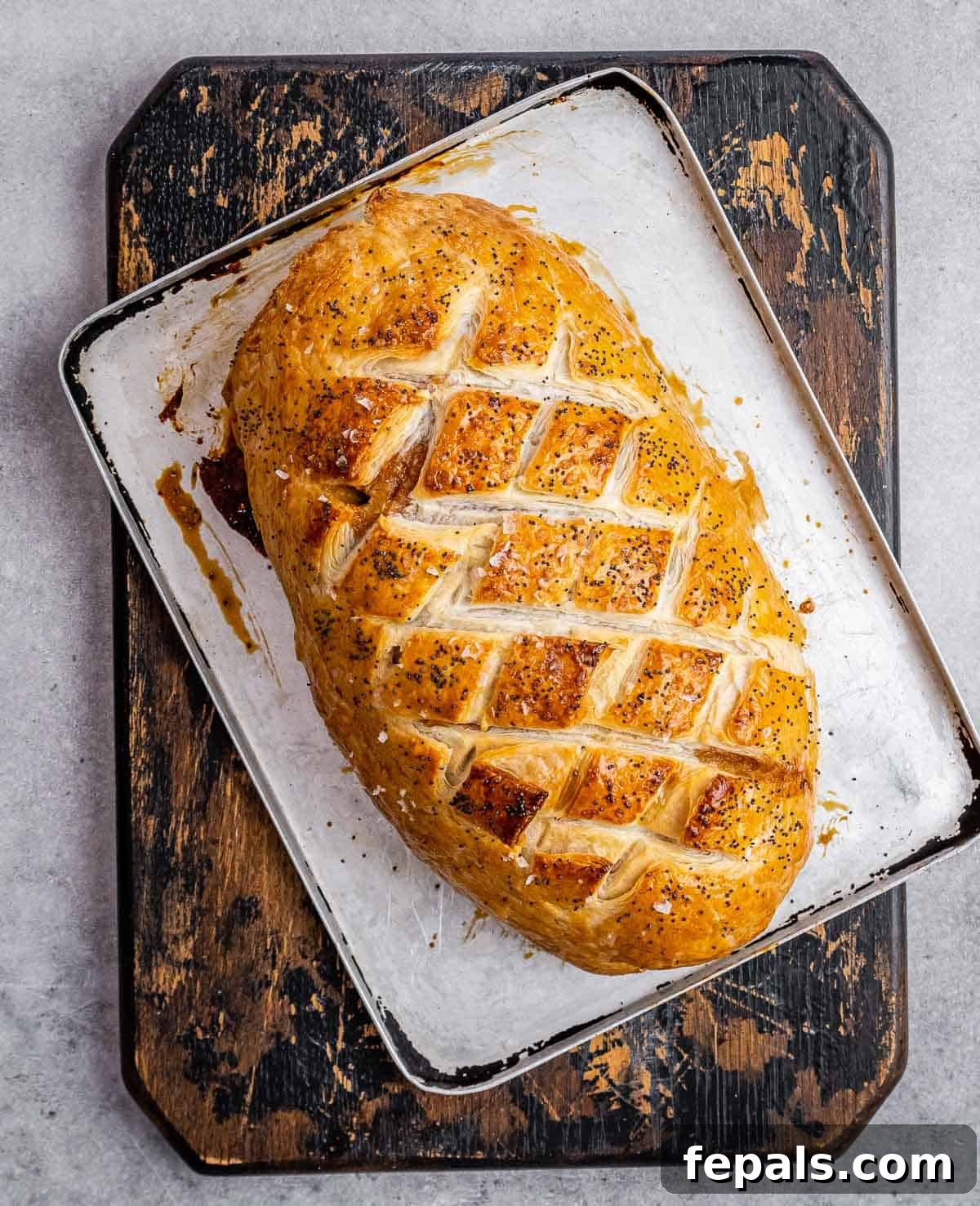
Step 5: Bake and Rest. Carefully transfer the baking sheet with your Beef Wellington to the preheated oven. Bake for approximately 35-40 minutes. The exact baking time will depend on the thickness of your tenderloin and your desired doneness. For a perfect rare, aim for an internal temperature of 125°F (52°C) when measured with an instant-read meat thermometer inserted into the thickest part of the beef (avoid touching the pastry). For medium-rare, aim for 130-135°F (54-57°C). Once baked to your liking and the pastry is gorgeously golden brown and puffed, remove the Beef Wellington from the oven. This next step is crucial for juicy results: allow it to rest on the baking sheet for a minimum of 15 minutes before attempting to slice. Resting allows the juices to redistribute throughout the meat, ensuring every slice is incredibly tender and moist. Transfer to a wire rack after resting to prevent a soggy bottom crust. Then, with a sharp serrated knife, slice into thick, impressive portions and serve immediately.
Chef’s Insights
Expert Tips for a Perfect Beef Wellington
- Achieving the Perfect Mushroom Duxelles: The success of your Beef Wellington heavily relies on the duxelles. Ensure the mushroom mixture cooks until it is thoroughly browned and all moisture has evaporated. It should be almost dry and somewhat crisp on the edges. This concentrated mixture is packed with umami flavor and critically prevents the puff pastry from becoming soggy. Don’t rush this step!
- Proper Puff Pastry Thawing: For the best flaky results, proper thawing is key. Thaw your frozen puff pastry dough overnight in the refrigerator. If you forget, it can typically thaw at room temperature in about 30 minutes, but keep an eye on it to ensure it doesn’t get too warm and sticky.
- Keep Pastry Chilled: Puff pastry is temperamental; it works best when cold. Keep the puff pastry refrigerated until the very moment you are ready to roll it out and wrap the beef. A chilled pastry ensures those beautiful, distinct layers and a supremely flaky result.
- The Importance of Diagonal Cuts: Don’t skip making those light diagonal cuts in the puff pastry before baking. Beyond adding an elegant decorative touch, these cuts serve a functional purpose: they allow steam to escape during baking, preventing the pastry from bubbling up unevenly and ensuring a uniformly crisp crust.
- Plan Ahead for Stress-Free Cooking: Beef Wellington can be prepped in advance! After assembling the beef, prosciutto, and mushroom duxelles, and wrapping it tightly in cling film, you can refrigerate the prepped beef for up to 6 hours. This allows you to tackle the more intricate steps ahead of time, making holiday dinner preparation much smoother.
- Use a Meat Thermometer: For precise doneness, especially with expensive cuts of meat, an instant-read meat thermometer is your best friend. Insert it into the thickest part of the beef (avoiding the pastry) to monitor the internal temperature. This guarantees your Beef Wellington is cooked exactly to your preference.
- Resting is Non-Negotiable: After baking, let your Beef Wellington rest for at least 15 minutes before slicing. This allows the juices to redistribute throughout the tenderloin, resulting in a more tender, succulent, and moist beef. Slicing too soon will cause the juices to run out, leading to a dry interior.
Frequently Asked Questions (FAQs) About Beef Wellington
Here are answers to some common questions about preparing and enjoying this classic dish:
The key to preventing a soggy bottom is two-fold: ensuring your mushroom duxelles is very dry before wrapping the beef, and allowing the Beef Wellington to rest on a wire rack for 15 minutes after baking. The prosciutto layer also acts as a crucial barrier against moisture from the duxelles, protecting the pastry.
Beef Wellington is a rich main course that pairs wonderfully with a variety of holiday side dishes. Complementary options include light, earthy vegetables like Garlic Butter Mashed Cauliflower, hearty Roasted Brussels Sprouts, or vibrant Roasted Garlic Parmesan Green Beans. Creamy potato dishes or a simple green salad also provide excellent balance.
While a center-cut beef tenderloin, also known as filet mignon or Chateaubriand, is ideal for its exceptional tenderness, it’s generally best to stick to these premium cuts. Other cuts like top sirloin or rump roast will not yield the same melt-in-your-mouth texture that Beef Wellington is known for and may require different cooking times or preparation methods.
Beef Wellington is truly at its best when served fresh, straight from the oven, as the puff pastry’s crispness is unparalleled. However, if you do find yourself with leftovers, store them in an airtight container in the refrigerator for up to 2 days. The pastry will inevitably soften, but the flavors remain delicious.
To reheat leftover Beef Wellington and attempt to revive some crispness in the pastry, place individual slices on a baking sheet and warm in a 250°F (120°C) oven for about 10-15 minutes, or until thoroughly heated through. Be careful not to overcook the beef inside.
Yes, you can prepare much of the Beef Wellington in advance. You can cook the mushroom duxelles and sear the tenderloin up to a day ahead. The full assembly (wrapping the beef in prosciutto, duxelles, and pastry) can be done up to 6 hours before baking, keeping it tightly wrapped in cling film in the refrigerator. This makes it a fantastic option for entertaining.
More Holiday Dinner Inspiration
Looking for other show-stopping dishes for your holiday feast? Explore these delicious recipes that are perfect for special occasions:
- Garlic Beef Tenderloin Roast
- Maple Roasted Turkey Breast
- Easy Thanksgiving Turkey
- Cranberry Roasted Chicken
- Boursin Mashed Potatoes
- Easy Potato Au Gratin
- Sheet Pan Herb-Baked Turkey
- Air Fryer Turkey Breast Recipe
Perfect Pairings: What to Serve with Beef Wellington
To create a balanced and memorable meal, consider serving your rich Beef Wellington with a variety of complementary side dishes. I often gravitate towards roasted vegetables to balance the protein from the meat and the carbs from the flaky puff pastry, creating a wholesome yet indulgent meal. Here are some of my favorite side dishes that beautifully complement Beef Wellington:
- Mixed Oven-Roasted Vegetables: A medley of colorful roasted vegetables like bell peppers, zucchini, and cherry tomatoes adds freshness and texture.
- Oven Roasted Cauliflower: Simple yet elegant, roasted cauliflower with a hint of garlic offers a tender, slightly nutty side.
- Air Fryer Green Beans: Quick to prepare and wonderfully crisp, green beans provide a vibrant green and light crunch.
- Garlic Roasted Broccolini: This slightly bitter and earthy vegetable, roasted with garlic, cuts through the richness of the Beef Wellington beautifully.
- Roasted Honey Glazed Carrots: The natural sweetness of carrots, enhanced by a honey glaze, provides a delightful contrast to the savory beef.

Sign up to download your copy today and discover quick and delicious meals!
Thank you for visiting! If you try this Beef Wellington recipe and love it, please consider leaving a review and rating in the comment section below. Your feedback is greatly appreciated, and I’d be thrilled if you shared this recipe with your friends and family.
FOLLOW me on FACEBOOK | INSTAGRAM | PINTEREST | TWITTER for all of my latest blog posts and delicious recipes.
Easy Beef Wellington Recipe
Rena
8 servings
30 mins
40 mins
30 mins
1 hr 40 mins
Print Recipe
Ingredients
Mushroom layer:
- 1.5 pound mixed mushrooms, chopped
- 1 sweet or white onion, coarsely chopped
- 2 tablespoons olive oil
- 3-4 garlic cloves, minced
- 1 teaspoon dried thyme
- 1/2 teaspoon dried rosemary
- Kosher salt and pepper, to taste
Tenderloin:
- 2.5 pounds beef tenderloin, fat trimmed, then tied with butcher’s twine at 1-inch intervals
- Kosher salt and pepper, to taste
- 2 tablespoons olive oil
- 2 tablespoons dijon mustard
- 1 tablespoon sriracha sauce, optional
Assembly:
- 12 thin slices prosciutto, about ¼ pound
- 14 ounces frozen puff pastry, thawed in the fridge
- 1 large egg, beaten
- 2 teaspoon poppy seeds
Instructions
Mushroom layer:
- Place the 1.5 pound mixed mushrooms (chopped) and coarsely chopped 1 sweet or white onion in a food processor and pulse several times until finely chopped.
- Heat the 2 tablespoons olive oil over medium-high heat in a large skillet and add the mushroom-onion mixture, 3-4 minced garlic cloves, 1 teaspoon dried thyme, 1/2 teaspoon dried rosemary, and Kosher salt and pepper. Cook, stirring frequently, for 8-10 minutes until most of the liquid is absorbed. Continue to cook over medium heat, stirring often for 6-8 minutes, until the mushrooms brown and there’s no liquid left. This step is important because having no liquid means crispy pastry at the end. Taste and adjust the salt to your taste.
Tenderloin:
- To prepare the 2.5 pounds beef tenderloin, pat dry with a paper towel. Trim the excess fat, then tie with butcher’s twine 4-5 times around the tenderloin to help keep its shape while cooking.
- Season with Kosher salt and pepper on all sides.
- Heat the 2 tablespoons olive oil in a large skillet and cook the tenderloin for 2 minutes per side (8 in total) until all sides are golden and seared. Remove from heat.
- In a small bowl, combine the 2 tablespoons dijon mustard with 1 tablespoon sriracha sauce (optional). Remove the butcher’s tie and rub the seared tenderloin all over with this mixture.
To assemble the beef Wellington:
- Roll a large piece of cling film on your clean working table.
- Lay with the 12 thin slices prosciutto, slightly overlapping each other. You need to form a square as long as the tenderloin. Spread the mushroom mixture over the prosciutto.
- Place the tenderloin on one end of your prosciutto square. Roll it tightly with the help of the cling film.
- Refrigerate for 30 minutes.
- Preheat the oven to 425°F.
- Roll out the 14 ounces frozen puff pastry to create a rectangle 2 inches larger than the length of your prepared tenderloin.
- Remove the tenderloin from the cling film and place it on one end of the pastry rectangle.
- Roll tightly, tucking the ends in. You might want to cut and remove any excess pastry.
- Place the prepared Wellington seam at the bottom of a sheet pan.
- Brush with beaten 1 large egg and make a few light diagonal cuts on the top (don’t go all the way through the pastry), 1 inch apart. Sprinkle with 2 teaspoon poppy seeds and flaky salt, if desired.
- Bake for 35-40 minutes, or until the internal temperature reaches 125ºF (for rare).
- Allow it to rest for 15 minutes before slicing.
Notes
- Beef Wellington is best served fresh! Once the puff pastry has been refrigerated, it won’t be quite as good. However, if you do have leftovers, place them in an airtight container in the fridge for up to 2 days.
- To reheat, place it in a 250ºF oven for about 12 minutes or until warm.
Cooking temperature: Use a thermometer if possible.
- Rare: 120–125°F (49–52°C)
- Medium-Rare: 130–135°F (54–57°C) – This is the most commonly recommended doneness for Beef Wellington.
- Medium: 140–145°F (60–63°C)
Nutrition
Calories: 436 kcal
Carbohydrates: 31 g
Protein: 8 g
Fat: 32 g
Saturated Fat: 8 g
Polyunsaturated Fat: 4 g
Monounsaturated Fat: 18 g
Trans Fat: 0.02 g
Cholesterol: 28 mg
Sodium: 885 mg
Potassium: 359 mg
Fiber: 3 g
Sugar: 3 g
Vitamin A: 45 IU
Vitamin C: 3 mg
Calcium: 32 mg
Iron: 2 mg
Nutrition information is automatically calculated, so should only be used as an approximation.
Additional Info
Main Course
American, French