
Are you looking to master the art of preparing leeks but feel a little confused about where to start? You’ve landed in the perfect spot! This comprehensive guide will walk you through everything you need to know about how to cut leeks, clean them effectively, and store them to maintain their freshness. Leeks are a wonderfully versatile vegetable, adding a delicate, sweet, and savory flavor to a myriad of dishes. Once you understand the simple techniques, you’ll find yourself incorporating them into your cooking more often.
What Are Leeks? Understanding This Versatile Vegetable
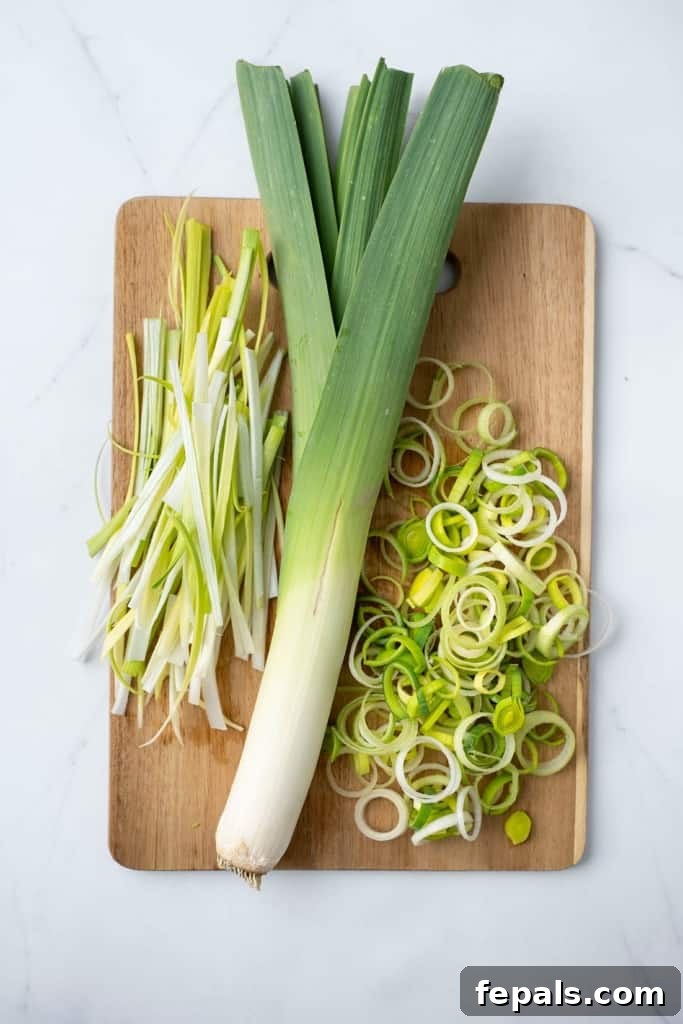
Leeks are an integral member of the Allium family, which also includes familiar favorites like garlic, onions, chives, and shallots. Visually, they resemble overgrown scallions, featuring distinct white bottoms that transition into light green and then dark green leafy tops. While the entire plant is edible, the white and light green parts are typically favored in recipes due to their tender texture and milder flavor. The darker green sections, while tougher and more fibrous, can still be used to flavor stocks and broths, making them surprisingly versatile.
Leeks generally enjoy a season from October through May, making them a popular cool-weather vegetable. Their unique growth habit, buried in sandy soil to achieve their characteristic white stalk, means they are prone to trapping dirt and grit between their layers. This necessitates thorough cleaning after cutting, a crucial step we’ll cover in detail, to ensure every bite is free of unwelcome debris. Beyond their culinary appeal, leeks are also a good source of vitamins K and A, manganese, and dietary fiber, contributing to a healthy diet.
The Subtle Flavor Profile: What Do Leeks Taste Like?
Given their family ties, it’s no surprise that leeks share a flavor kinship with onions. However, their taste is notably more subdued and refined. Leeks offer a milder, slightly sweeter flavor compared to the pungent bite of a raw onion, often described as having a delicate, oniony essence with a hint of garlic. This gentle flavor makes them an excellent choice when you want to add depth without overpowering other ingredients in a dish. A distinct advantage of cutting leeks is that, unlike onions, they typically won’t bring tears to your eyes, making for a more pleasant preparation experience.
Similar to their allium cousins, leeks are incredibly versatile and can be enjoyed both raw and cooked. When raw, thinly sliced leeks add a crisp, fresh, and subtly pungent element to salads or as a garnish. Cooked leeks soften beautifully, becoming incredibly tender and sweet, perfect for enriching soups, stews, sautés, and gratins. Their mildness allows them to blend seamlessly into dishes, enhancing other flavors rather than dominating them.
Selecting the Freshest Leeks: A Buyer’s Guide
Choosing high-quality leeks at the grocery store is the first step to a delicious meal. Here’s what to look for to ensure you bring home the best:
- Vibrant Color: Seek leeks with large, firm white and light green sections. These are the parts most commonly used and will offer the best flavor and texture. The dark green tops, though often discarded or used for stock, should still look fresh and green, not withered.
- Firmness: Gently squeeze the leek stalk. It should feel firm and solid throughout. Avoid any leeks that have soft, mushy spots or feel slimy, as these are signs of spoilage.
- Perky Appearance: Fresh leeks stand tall and proud. Their green tops should be crisp and perky, not droopy, wilted, or yellowed. Droopy or dried-out green parts indicate that the leeks are older and might not be at their peak freshness.
- Size and Shape: Leeks come in various sizes, some thick and robust, others tall and slender. The size doesn’t necessarily indicate quality or flavor; it mostly comes down to personal preference and how you plan to use them. Thicker leeks will yield more usable white and light green portions, while thinner ones might be more tender.
By paying attention to these simple cues, you can select fresh, high-quality leeks that will elevate your culinary creations.
Essential Preparation: Before You Slice Your Leeks
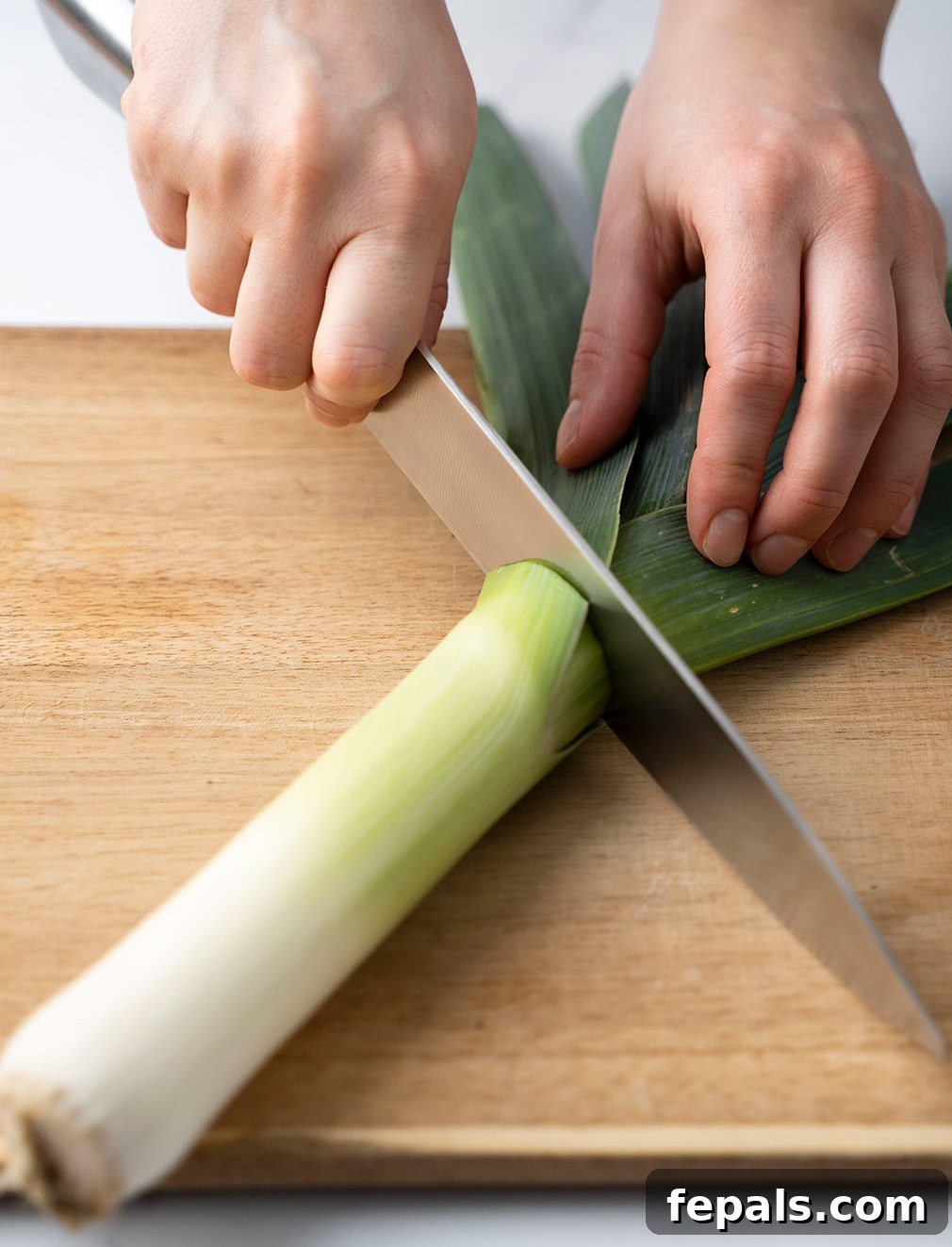
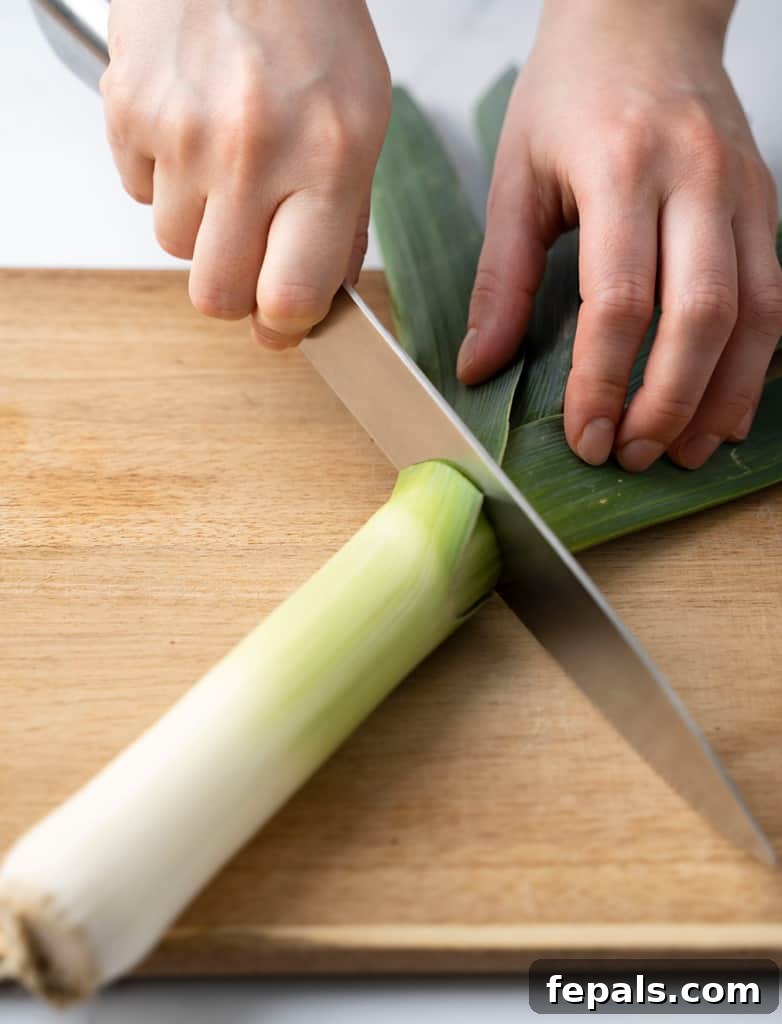
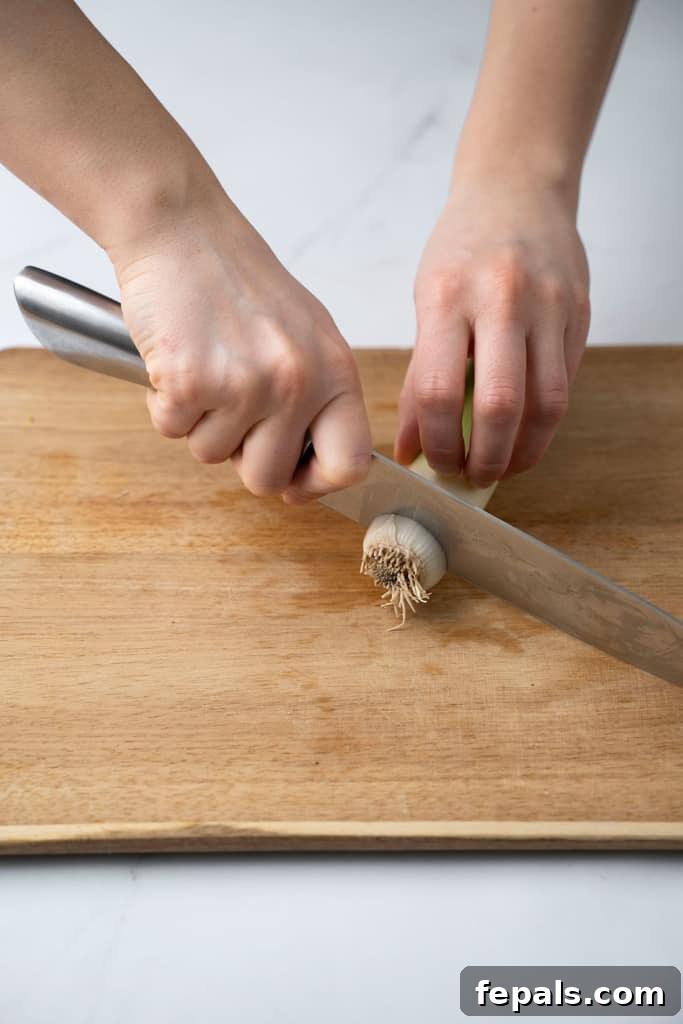
Before you dive into cutting your leeks, a little initial preparation goes a long way. This ensures you’re working with a clean, ready-to-cut vegetable. Start by giving the entire leek a quick rinse under cool running water to remove any obvious surface dirt. Next, you’ll want to trim away the very ends. The tough, dark green leafy tops are often fibrous and bitter, so cut these off and either discard them or save them for making vegetable stock. Similarly, trim off the root end, removing just enough to get rid of the bristly roots while preserving as much of the white base as possible. This initial trim makes the leek easier to handle and sets you up for precise cuts.
How to Cut Leeks: Techniques for Every Recipe
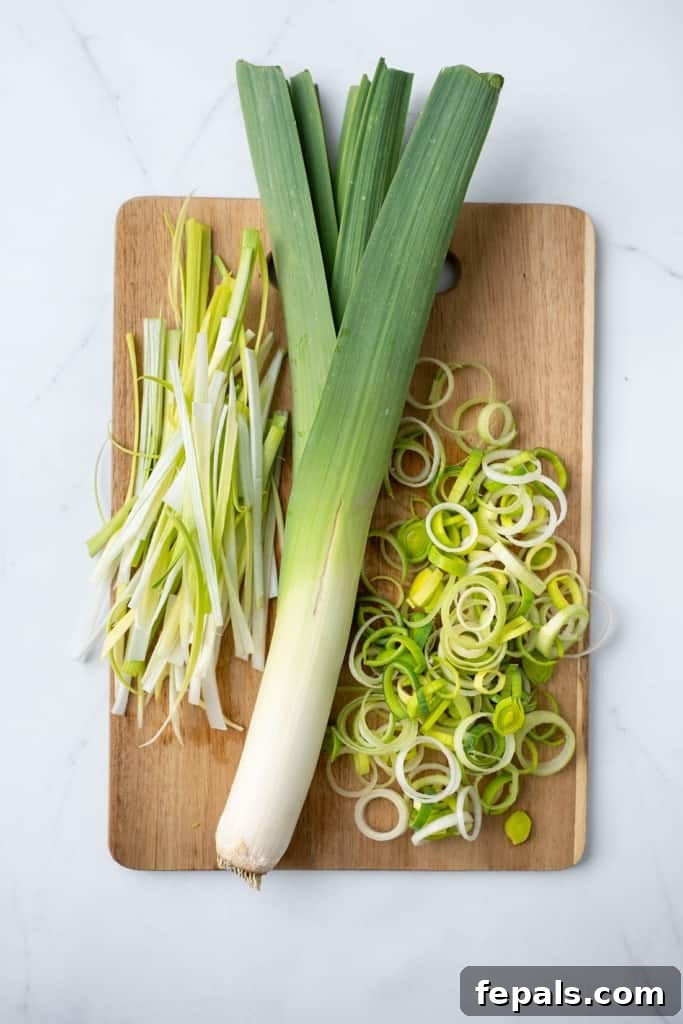
The way you cut your leeks can significantly impact their texture and how they integrate into a dish. There are several common cutting methods, each suited for different culinary applications. Whether you need delicate strips for a stir-fry, uniform rings for a soup, or hearty half-moons for roasting, mastering these cuts will open up a world of possibilities.
Method 1: Elegant Julienne Slices
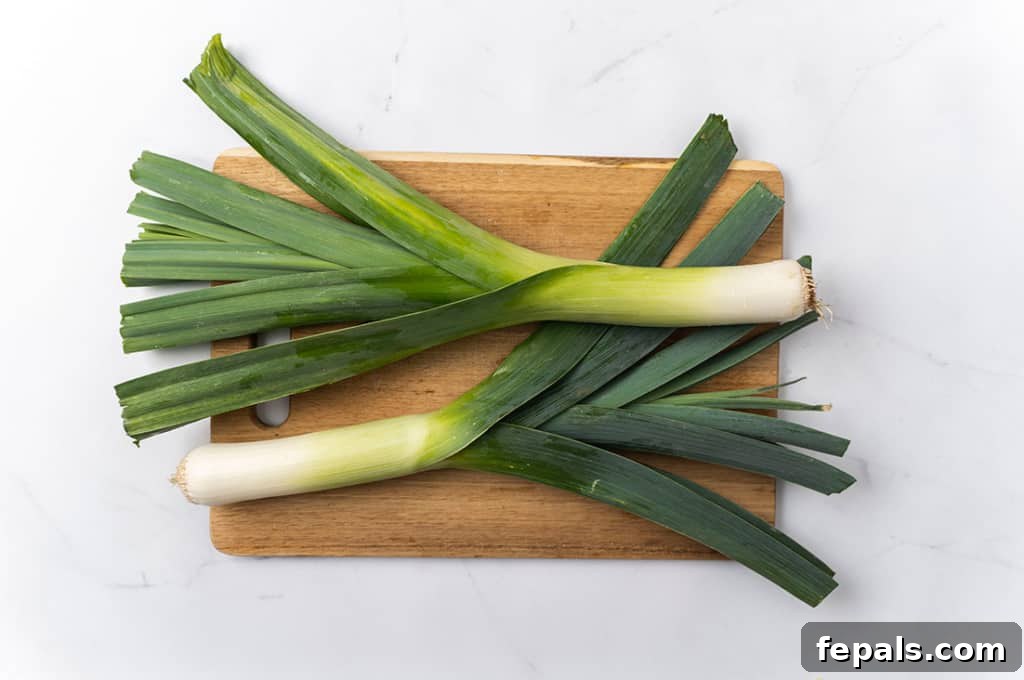
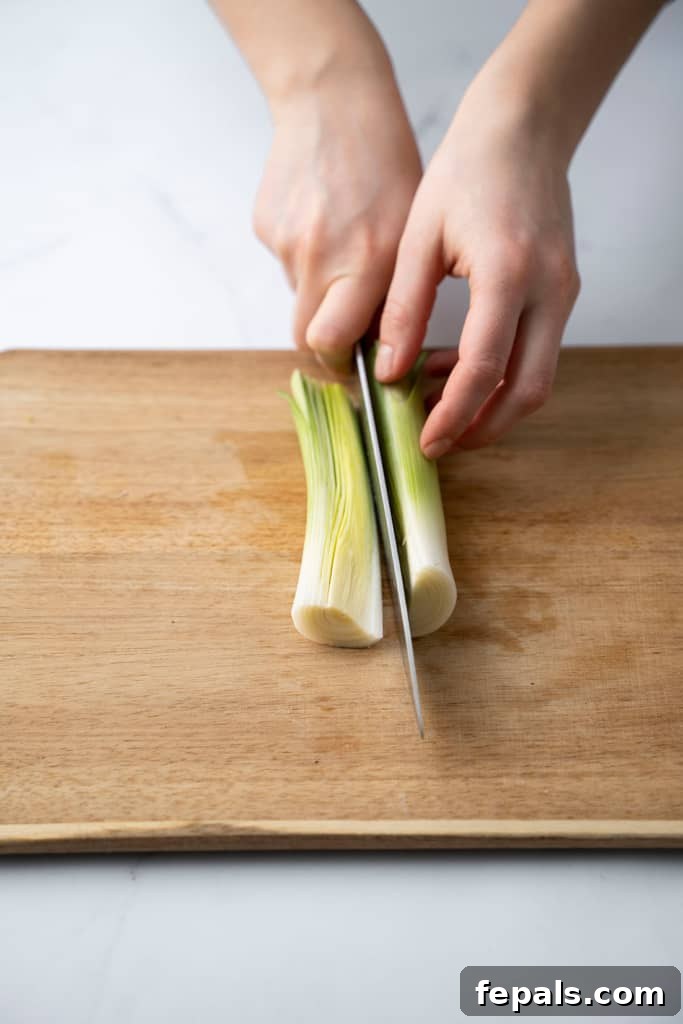
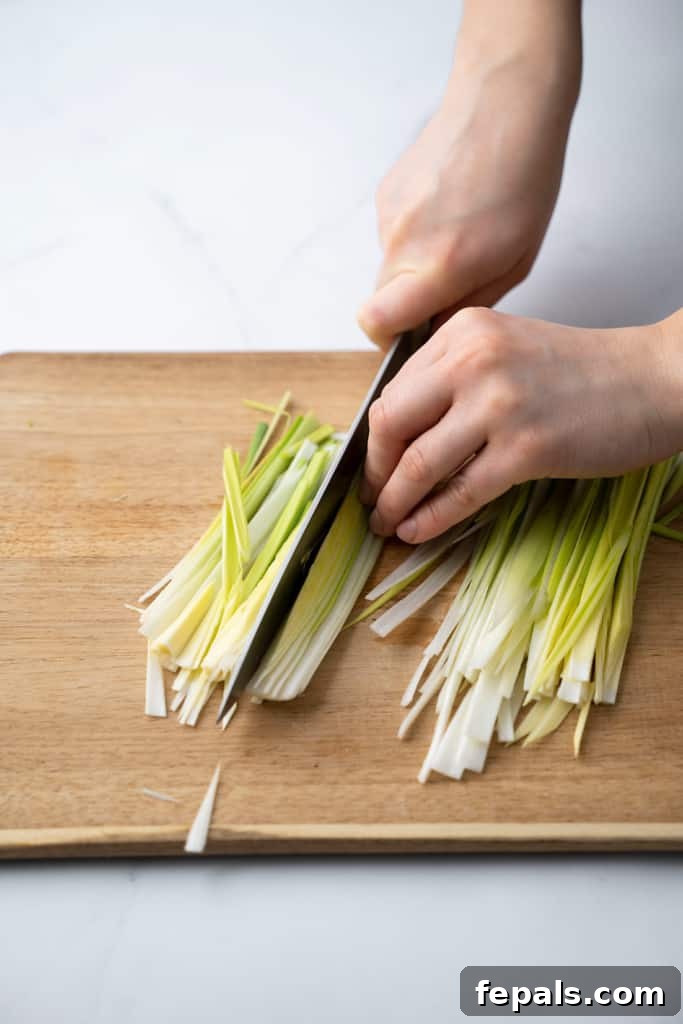
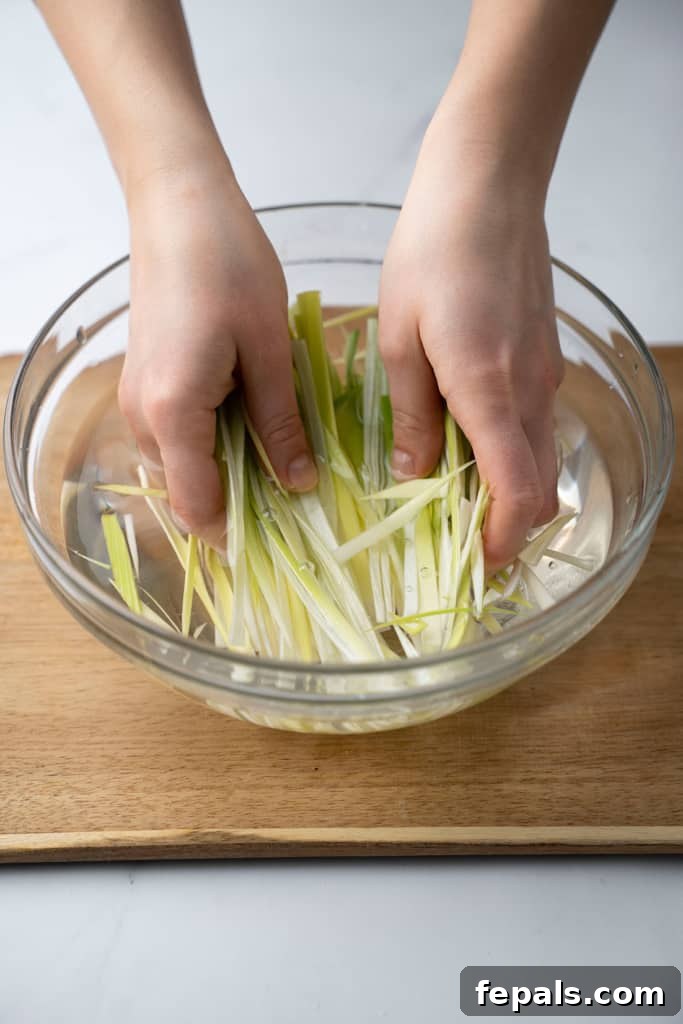
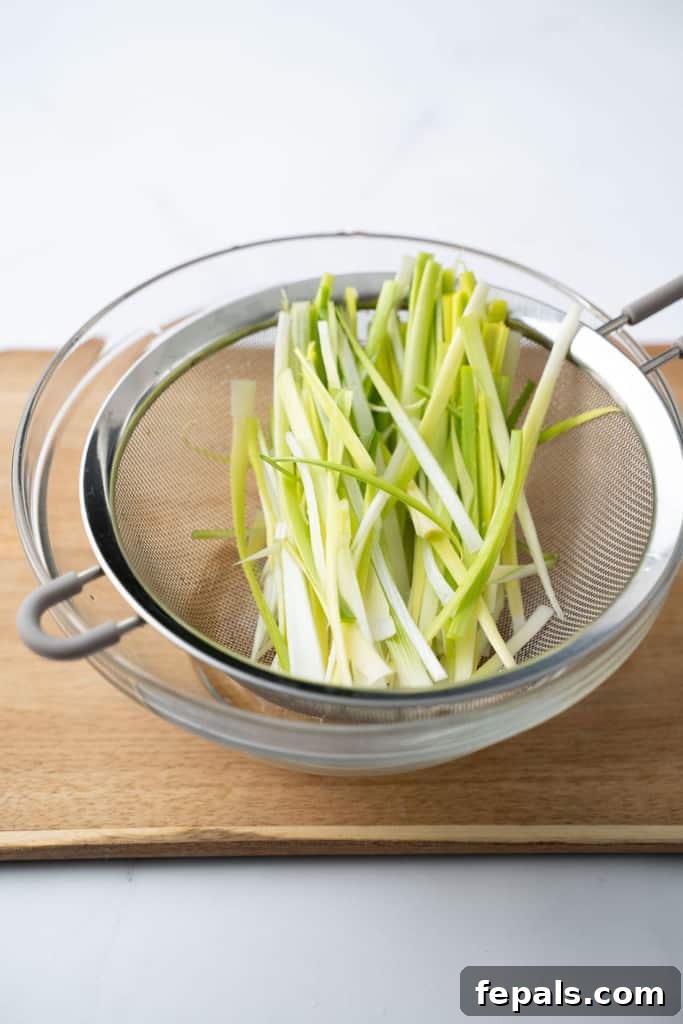
Julienning leeks produces long, thin strips, a cut that’s perfect for dishes where you want the leeks to integrate smoothly and cook quickly, such as stir-fries, quiches, or as a delicate garnish. This method also works wonderfully for roasted leeks, allowing them to crisp up nicely.
- First, ensure the dark green leafy tops and root ends have been trimmed off.
- Cut the white and light green portion of the leek in half lengthwise.
- Place each half cut-side down on your cutting board for stability.
- Carefully slice the leek halves into long, thin julienne strips. Aim for uniform thickness for even cooking.
Method 2: Classic Round Rings (Coin Slices)
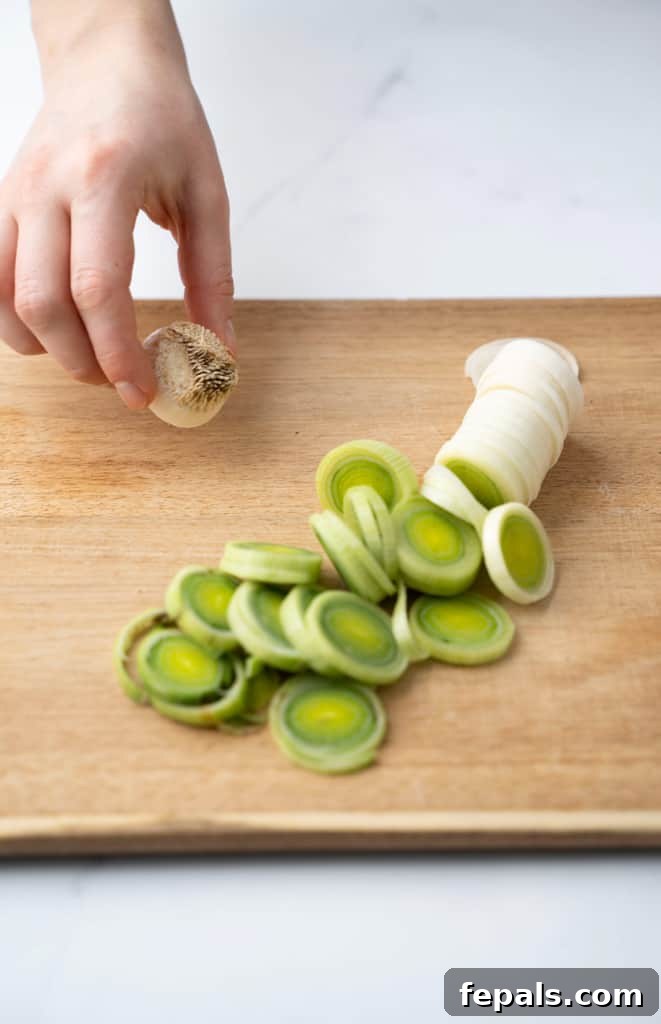
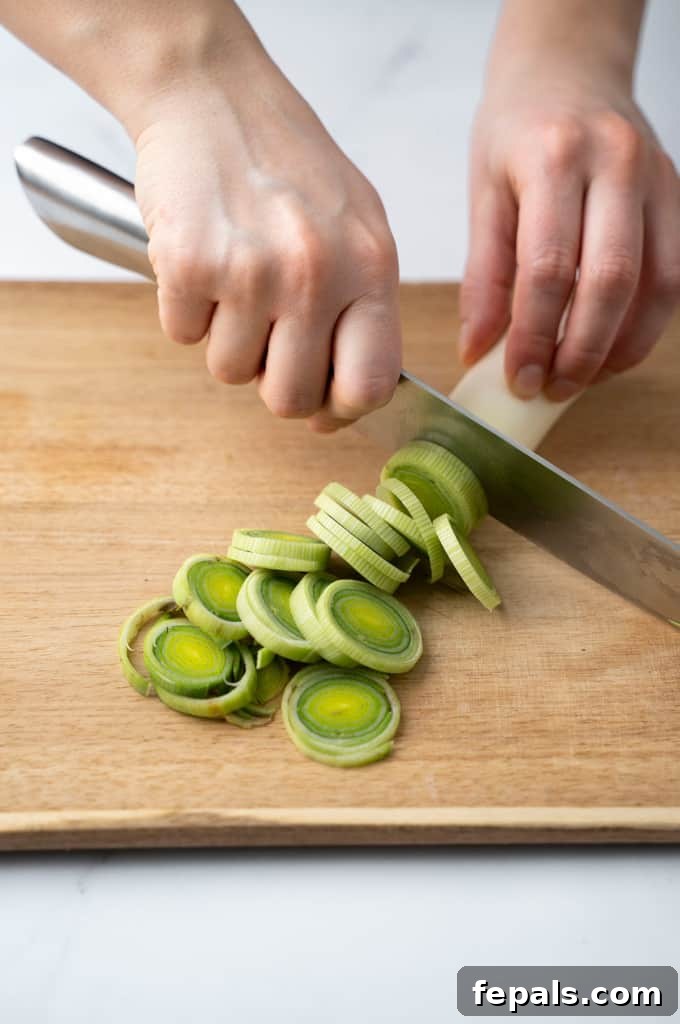
Circular leek rings are ideal for soups, stews, sautés, and casseroles where you want a more substantial texture and visual appeal. These uniform rounds cook down beautifully, becoming tender and sweet.
- Begin by trimming off the dark green leafy part and the root end of the leek.
- Holding the leek firmly, slice it into thin, uniform round rings from tip to root. The thickness can vary depending on your recipe, but generally aim for about ¼-inch slices.
Method 3: Half-Moon Slices for Sautéing and Roasting
This method offers a slightly larger piece of leek than rings, making it perfect for sautéing, roasting, or adding to larger stews where you want the leek to hold its shape a bit more.
- After trimming the dark green tops and root end, cut the leek in half lengthwise.
- Place each half cut-side down on your cutting board.
- Slice across the leek halves into desired thicknesses (e.g., ¼ to ½ inch), creating crescent or half-moon shapes.
The Crucial Step: Thoroughly Cleaning Your Leeks
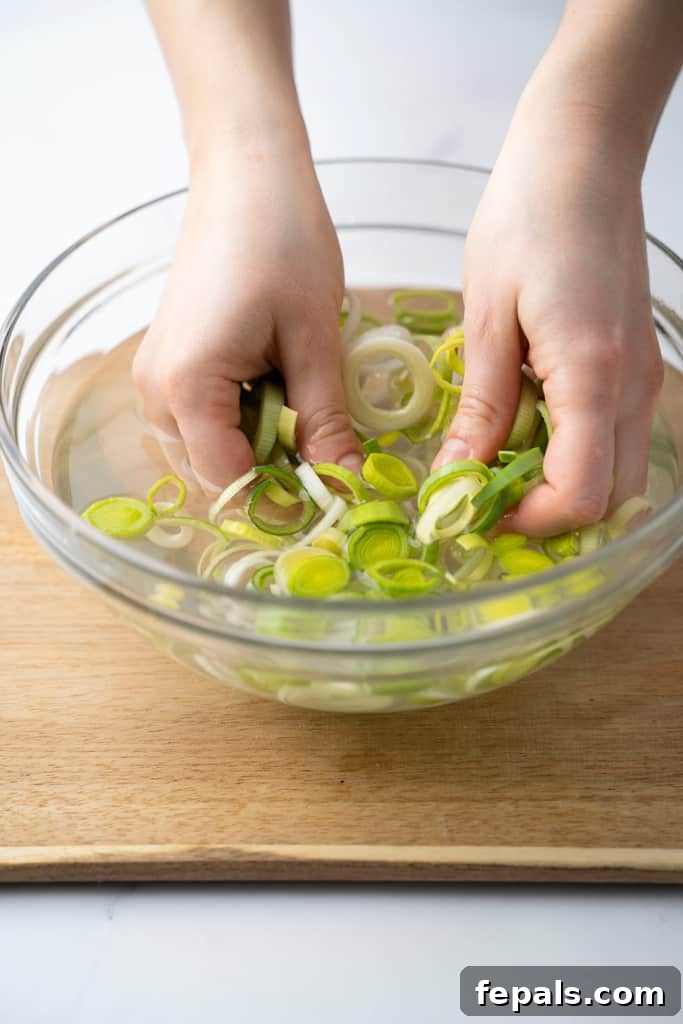
Due to how they are grown, leeks are notorious for trapping dirt, sand, and grit between their tightly packed layers. Skipping the cleaning step can lead to a gritty and unpleasant dining experience. Therefore, cleaning your leeks after cutting them is paramount, as this allows water to penetrate all the layers and wash away any hidden debris. Here’s the most effective way to clean your sliced leeks:
- Once your leeks are sliced (using any of the methods above), transfer all the cut pieces into a large bowl filled with cool water.
- Submerge the leeks completely and use your hands to gently swish them around and rub the layers against each other. This action helps to dislodge any trapped dirt and sand. You’ll often see the water become cloudy as the debris settles to the bottom of the bowl.
- Let the leeks sit in the water for a few minutes, allowing any remaining grit to sink.
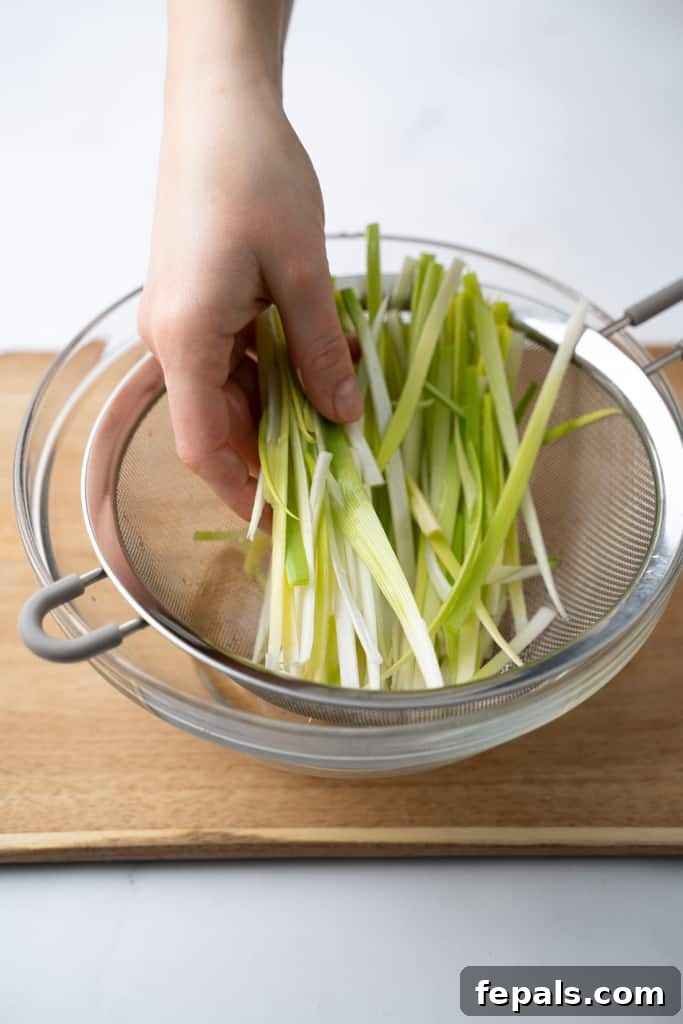
- Carefully scoop the cleaned leeks out of the water with your hands or a slotted spoon. Avoid pouring the leeks directly into a colander with the water, as this will likely pour the settled grit back onto your cleaned leeks. Leave any sediment behind in the bowl.
- Place the scooped leeks into a fine-mesh strainer or colander to drain off any excess water. For best results in cooking, you can gently pat them dry with paper towels or spin them in a salad spinner to remove as much moisture as possible. This ensures they caramelize nicely when sautéed or roasted, rather than steaming.
Storing Leeks for Maximum Freshness
Proper storage is key to extending the life of your leeks, whether they are whole or pre-cut. Knowing how to store them correctly ensures they remain crisp, flavorful, and ready for your next meal.
How to Store Whole, Uncut Leeks
When you bring fresh, uncut leeks home from the market, they are best stored in the crisper drawer of your refrigerator. Place them loosely in a plastic bag or wrap them in a damp paper towel before bagging to help retain moisture. There’s no need to wash them before storage; just trim the very ends if they are too long for your drawer. Stored this way, whole leeks can last remarkably well, typically for up to two weeks, sometimes even longer.
Storing Freshly Cut Leeks
If you’ve prepped your leeks in advance or have leftovers, storing them properly is crucial to prevent them from drying out or spoiling. After your sliced leeks have been thoroughly cleaned and dried (pat them dry with paper towels or use a salad spinner to speed up the process), transfer them to an airtight container. Place the container in the refrigerator, where the cut leeks will stay fresh for up to three days. Keeping them dry is essential, as moisture can lead to faster spoilage.
Freezing Leeks: Your Guide to Long-Term Storage
Yes, you absolutely can freeze sliced leeks, and it’s a fantastic way to extend their shelf life and have them on hand for quick meals! Freezing allows you to preserve their delicate flavor and texture for several months.
Once your leeks are thoroughly cleaned and completely dried (this is vital to prevent ice crystals and freezer burn), spread the slices in a single layer on a baking sheet lined with parchment paper. Place the baking sheet in the freezer for about one to two hours, or until the leek pieces are individually frozen solid. This “flash-freezing” step prevents them from clumping together in a giant block.
Once frozen, transfer the individual leek pieces into an airtight freezer bag or a freezer-safe container. Label and date the bag, and store it in the freezer for up to three months. The beauty of flash-freezing is that you can grab just the amount of leeks you need directly from the freezer, without needing to thaw the entire batch. They can be added straight from frozen into most cooked dishes like soups, stews, sautés, or casseroles, saving you precious prep time.
Creative Culinary Uses for Sliced Leeks
Leeks are incredibly versatile and can elevate a wide array of dishes with their distinctive, subtle onion flavor. Here are some popular and creative ways to incorporate sliced leeks into your cooking:
- Soups and Stews: Leeks are a foundational ingredient for creamy potato and leek soup, vichyssoise, or adding a delicate depth to chicken noodle soup and hearty beef stews.
- Risottos: Their tender texture and mild flavor make them a perfect addition to a rich and creamy leek and mushroom risotto.
- Quiches and Frittatas: Sautéed leeks blend beautifully with eggs and cheese, creating elegant and flavorful quiches, frittatas, and stratas.
- Stir-Fries: Thinly julienned leeks add a sweet, oniony note and a pleasant crunch to vegetable or meat stir-fries.
- Stuffing: Incorporate sautéed leeks into your holiday stuffing or dressing for an extra layer of savory flavor.
- Pizza Topping: Thinly sliced leeks can be caramelized and used as a unique and delicious topping for pizzas, often paired with goat cheese or bacon.
- Fried Rice: Add a touch of sophistication to your homemade fried rice by including finely chopped leeks alongside other vegetables.
- Braised or Roasted: Larger cuts of leeks can be braised until tender or roasted with olive oil and herbs for a simple yet elegant side dish.
- Sautéed Side Dish: Simply sauté leeks with a bit of butter or olive oil until tender and slightly caramelized. Season with salt and pepper for a quick and flavorful side.
Expert Tips for Cooking with Leeks
Unlock the full potential of leeks in your kitchen with these handy tips:
- Initial Storage: Store freshly purchased, uncut leeks in the crisper drawer of your refrigerator in a plastic bag to keep them fresh. You don’t need to wash them before storing. To save space, you can trim off the dark green leafy section before refrigeration.
- Shelf Life: When properly stored, whole leeks can last for up to two weeks in the fridge.
- Cleaning Technique: When cleaning sliced leeks, always transfer the cleaned leeks by hand or with a slotted spoon from the bowl of water to a strainer. Avoid pouring the entire bowl (water and leeks) through a strainer, as this can cause the dislodged dirt and sediments at the bottom of the bowl to redeposit on your leeks.
- Utilize Green Parts: Don’t discard the dark green, fibrous parts of the leek! While too tough for most recipes, they are excellent for adding flavor to homemade vegetable or chicken stocks. Simply add them to your stockpot.
- Sautéing for Sweetness: When sautéing leeks, cook them over medium-low heat until they are very tender and translucent, about 5-10 minutes. This brings out their natural sweetness and mellows their flavor. Avoid browning them too quickly.
- Raw Applications: If using raw leeks (e.g., in salads or as a garnish), slice them very thinly to ensure they are tender and less pungent.
Frequently Asked Questions About Leeks
Can you eat the dark green part of leeks?
Yes, the dark green part of leeks is edible, but it is typically tougher and more fibrous than the white and light green sections. While some people finely chop and cook the tenderest parts of the dark green leaves for a longer period in dishes like soups or stews, the general recommendation is to use these parts for flavoring stocks or broths, rather than as a primary component in your dish.
Do leeks need to be cooked?
No, leeks do not strictly need to be cooked. Thinly sliced raw leeks can add a fresh, mild oniony bite to salads or can be used as a garnish. However, cooking leeks (sautéing, roasting, braising) softens their texture and significantly enhances their sweetness and delicate flavor, making them more palatable and enjoyable in many recipes.
What’s the difference between leeks and green onions (scallions)?
While both are members of the allium family and share a somewhat similar appearance, leeks and green onions (scallions) have distinct differences. Leeks are much larger, with a thicker white stalk and broad, flat green leaves. Their flavor is milder and sweeter, especially when cooked. Green onions are much smaller, with thin white bases and narrow, hollow green shoots. They have a sharper, more pungent onion flavor, often used raw or lightly cooked as a garnish or in quick stir-fries. Leeks are typically used as a foundational vegetable, while green onions are often used for fresh flavor and garnish.
Discover More Essential Cooking Guides
Expand your culinary skills with these other helpful cooking resources:
- How to Cut a Mango
- How to Cut Cabbage
- How to Poach Chicken
- How to Make Cauliflower Pizza Crust
We hope this guide has been incredibly helpful! If you try these techniques or incorporate leeks into your favorite recipes, please leave us some feedback in the comment section below. We’d love to hear from you and don’t forget to rate it! Your shares with friends and family are always appreciated.
FOLLOW Healthy Fitness Meals on FACEBOOK | INSTAGRAM | PINTEREST | TWITTER for all of our latest blog posts and recipes.
How to Cut Leeks (Simple Reference)
If you’re confused about how to use and cut leeks, then this simplified guide will help you quickly and easily cut and clean leeks for any recipe!
Prep time: 10 minutes
Cook time: 0 minutes
Total time: 10 minutes
Servings: 1-2 Leeks
Ingredients
- 1-2 leeks, rinsed
- Water, for cleaning
Instructions
Method 1: Elegant Julienne Slices
- Rinse the leeks thoroughly. Cut off the dark green leafy part and the root end.
- Cut the remaining white and light green stem in half lengthwise.
- Place the halves cut-side down on your cutting board.
- Julienne the stems into long, thin pieces.
- Transfer the sliced leeks into a bowl of water and rub them through your hands to dislodge any dirt or debris.
- Carefully transfer the cleaned leeks to a strainer and allow the water to drain off.
Method 2: Classic Round Rings
- Cut off the dark green leafy part of the leeks and the root end.
- Slice the leek into thin, uniform round rings, from tip to root.
- Transfer the sliced leeks into a bowl of water and rub them through your hands to dislodge any dirt or debris.
- Carefully transfer the cleaned leeks to a strainer and allow the water to drain off.
Notes
- Freshly purchased whole leeks should be stored in the crisper drawer of your refrigerator in a plastic bag to stay fresh for up to 2 weeks. No need to wash before storing.
- When cleaning sliced leeks, always use your hands to transfer them from the bowl of water to a strainer, leaving any dirt or sediments at the bottom of the bowl.
- For best cooking results, ensure sliced leeks are thoroughly dry after washing. Pat them with paper towels or use a salad spinner.
Nutrition Facts (per serving)
- Calories: 54kcal
- Carbohydrates: 13g
- Protein: 1g
- Fat: 0.3g
- Saturated Fat: 0.04g
- Polyunsaturated Fat: 0.1g
- Sodium: 18mg
- Potassium: 160mg
- Fiber: 2g
- Sugar: 3g
- Vitamin A: 1484IU
- Vitamin C: 11mg
- Calcium: 53mg
- Iron: 2mg
Nutrition information is automatically calculated and should only be used as an approximation.
Additional Information
Course: Ingredient
Cuisine: American
Tried this recipe?
Mention @healthyfitnessmeals or tag #healthyfitnessmeals!