
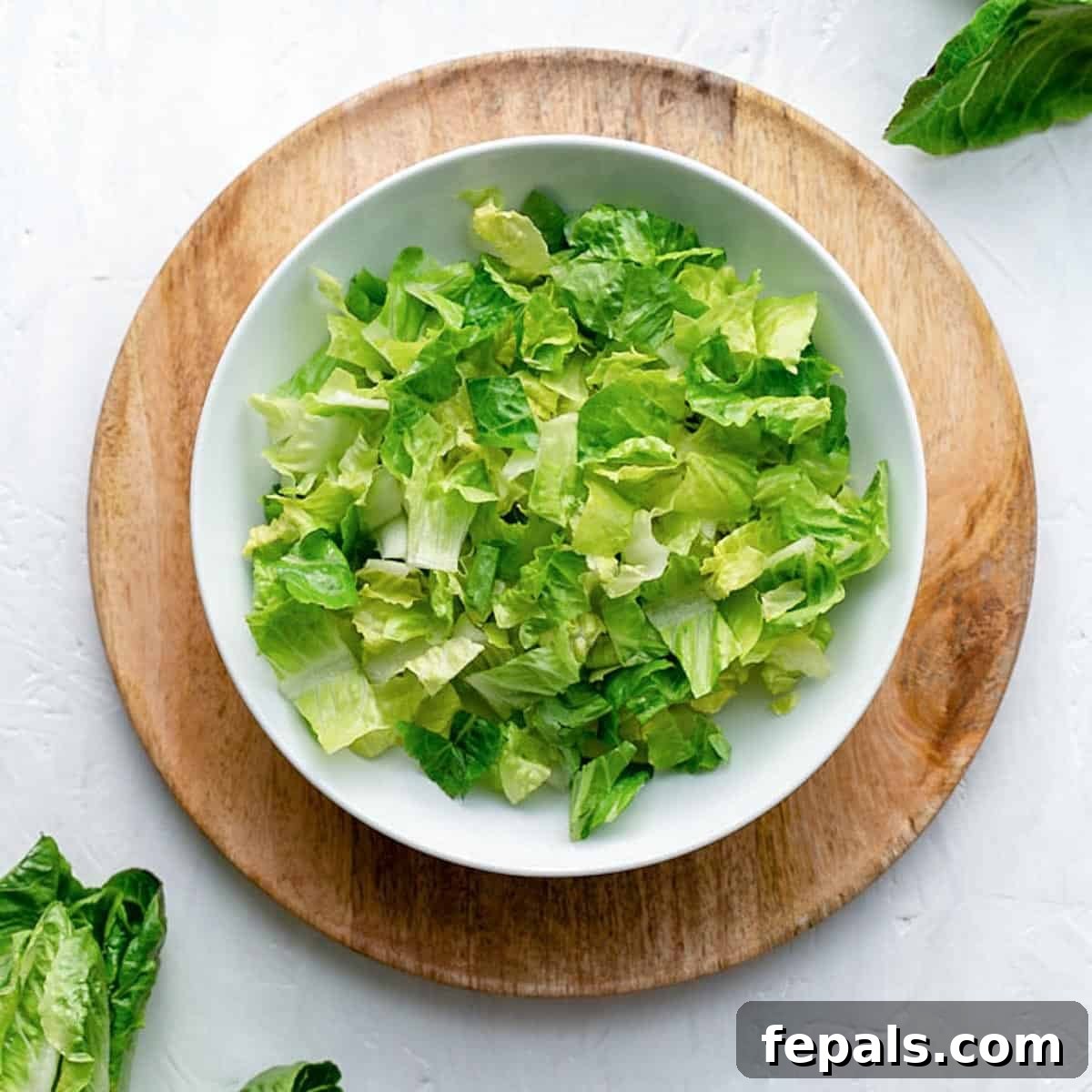
Romaine lettuce stands out as a vibrant, crisp, and incredibly versatile leafy green, serving as the perfect foundation for countless delicious salads and a healthy addition to a variety of dishes. If you’ve ever found yourself pondering the best way to clean, prepare, or chop this essential ingredient, you’re in the right place. This comprehensive guide will walk you through everything you need to know, from selecting the freshest head of romaine to mastering the art of chopping it like a culinary pro, ensuring you get the most out of every crunchy bite. Learning proper techniques not only elevates the taste and texture of your meals but also helps prolong the life of your lettuce, making healthy eating both easy and economical.
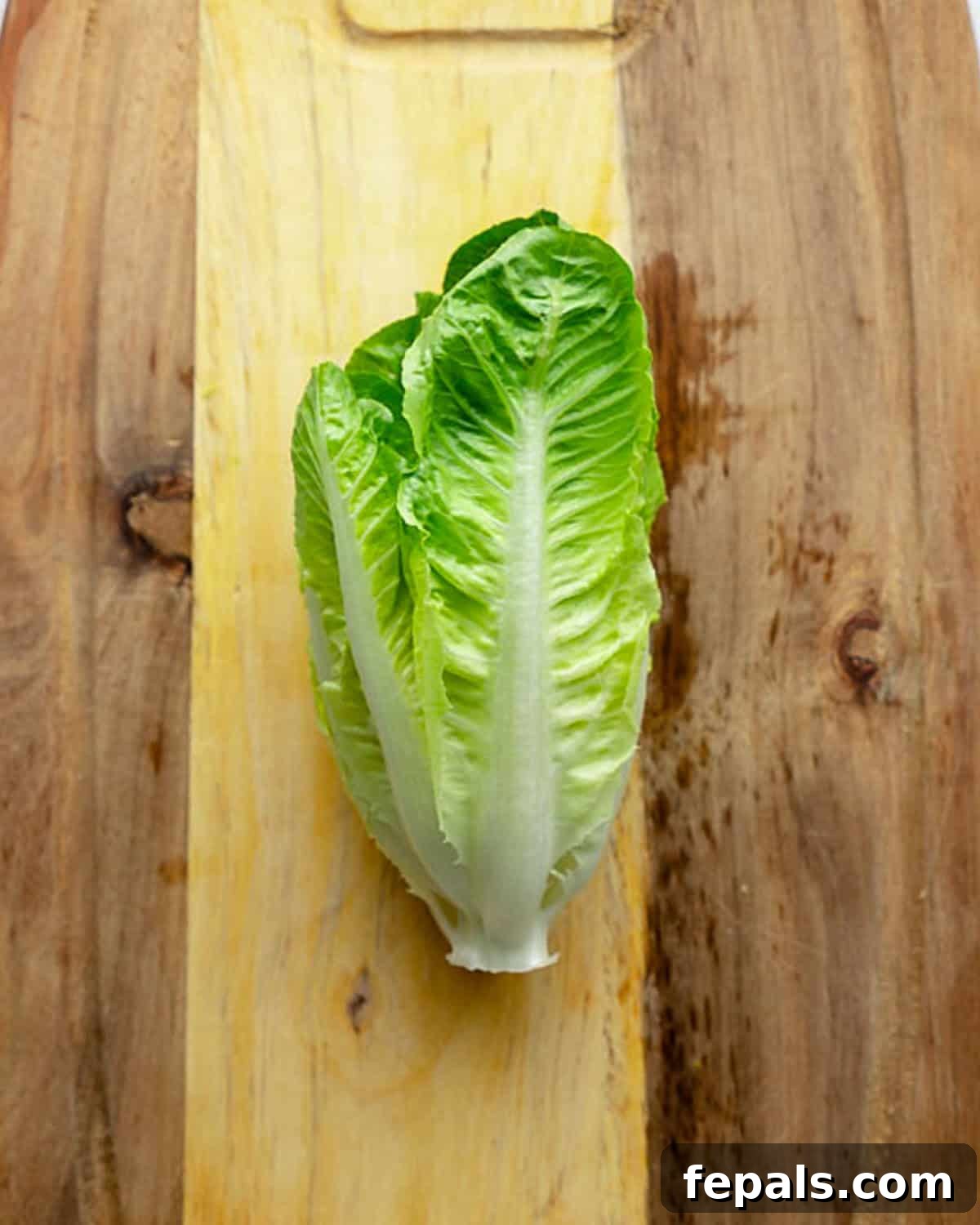
Preparing and chopping romaine lettuce is a straightforward process once you know the steps. Forget about those often-limp and overpriced pre-packaged bags of chopped greens. Opting for a whole head of fresh romaine from the grocery store is a smarter choice. Not only is it significantly more cost-effective, but it also guarantees superior freshness and a satisfying crunch that pre-chopped alternatives simply can’t match. By buying whole, you’ll have a generous supply of lettuce for days, minimizing waste and ensuring your salads are always at their peak.
Choosing the Freshest Romaine Lettuce
Selecting a high-quality head of romaine is the first step toward a perfect salad. A truly fresh romaine lettuce will not only taste better but also last longer. Here’s what to look for when you’re at the store:
- Vibrant Color is Key: Always prioritize romaine lettuce with bright, deep green leaves. Avoid any heads that show signs of yellowing, browning, or wilting, particularly around the edges. These are indicators that the lettuce is past its prime and has lost much of its essential crispness and nutritional value.
- Assess the Texture for Crispness: Fresh romaine is naturally firm and crisp. Gently squeeze the head or a few leaves; they should feel sturdy and resilient, not soft, rubbery, or limp. A crisp texture is crucial for that satisfying crunch in your salads. If it feels floppy, move on to another one.
- Inspect the Core and Stem: Take a moment to examine the base or core of the lettuce. It should appear pale white or light green, with no discoloration, sliminess, or brown spots. A clean, firm core indicates a healthy, recently harvested head of lettuce.
- Avoid Excessive Moisture: While lettuce should be hydrated, steer clear of heads that appear excessively wet or have slimy leaves. Too much moisture, especially if trapped in packaging, can accelerate spoilage and promote bacterial growth. Select a head that feels dry to the touch on its outer leaves, yet firm within.
Preparing Your Romaine: Thorough Washing is Essential
Before you even think about cutting your romaine, proper washing is absolutely critical. Even organic produce can harbor dirt, sand, small insects, or pesticide residues. A thorough wash ensures your lettuce is clean, safe, and ready to be enjoyed.
Start by separating the individual leaves from the core. This allows you to inspect each leaf closely and clean every nook and cranny. Place the separated leaves in a large bowl filled with cool water or directly under cool running water in a colander. Gently swish the leaves around, paying special attention to the ribbed areas where dirt loves to hide. You might see some dirt settle at the bottom of the bowl if you’re using the soaking method. Repeat this process with fresh water until the water remains clear. For an extra clean result, a salad spinner is an excellent investment, as it not only removes excess water but also helps dislodge any stubborn debris.
Ensuring your lettuce is completely dry after washing is crucial, especially if you plan to store it. Excess moisture can lead to premature wilting and spoilage. Use a salad spinner or gently pat the leaves dry with clean paper towels before proceeding to the chopping stage.
How To Cut Romaine Lettuce: A Step-by-Step Guide
With your romaine lettuce carefully selected and thoroughly washed, you’re ready to master the art of chopping. This simple technique will give you beautifully uniform, bite-sized pieces perfect for any dish.
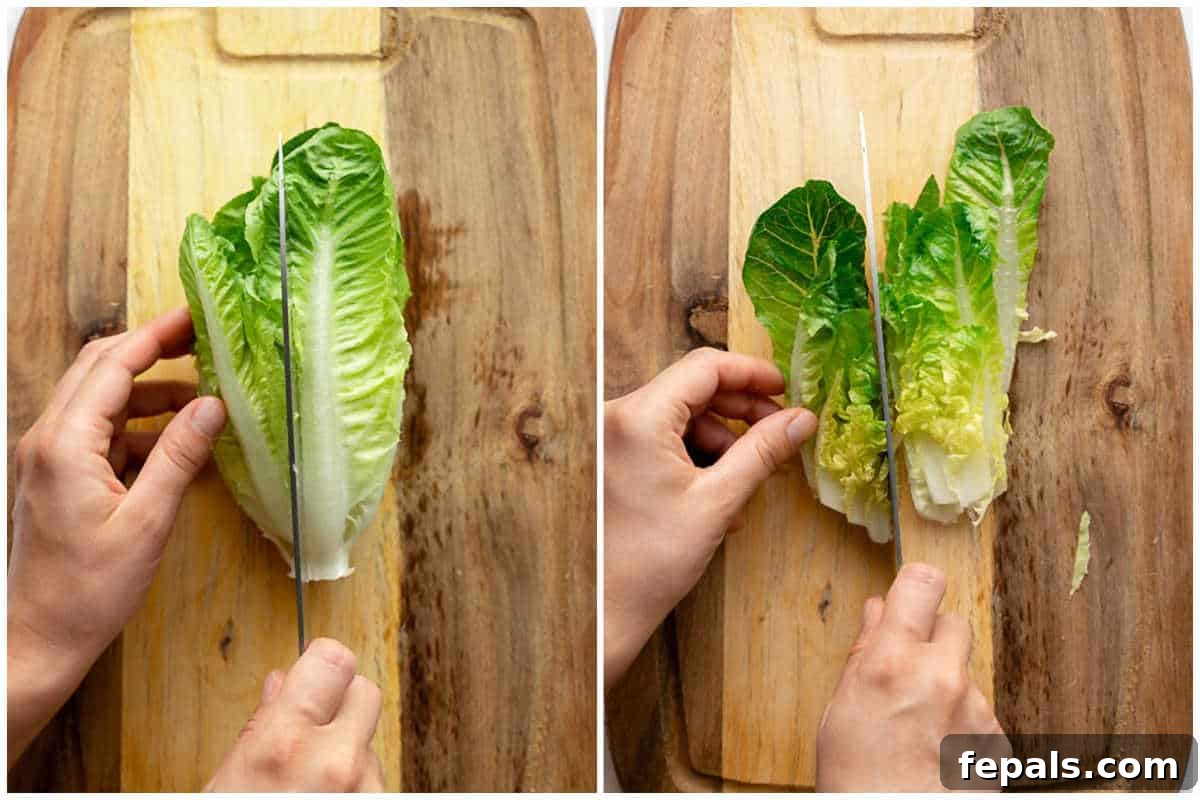
Step 1: Halving the Head
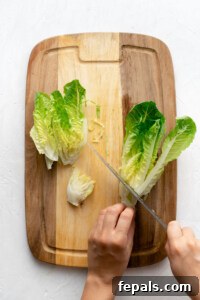
Place your washed, whole head of romaine lettuce (or two halves if you’ve already split it for washing) on a clean, stable wooden cutting board. Using a sharp chef’s knife, carefully slice the romaine lettuce vertically down the middle, cutting it into two long halves. This initial cut provides a stable base and makes subsequent chopping much easier and safer.
Step 2: Removing the Core
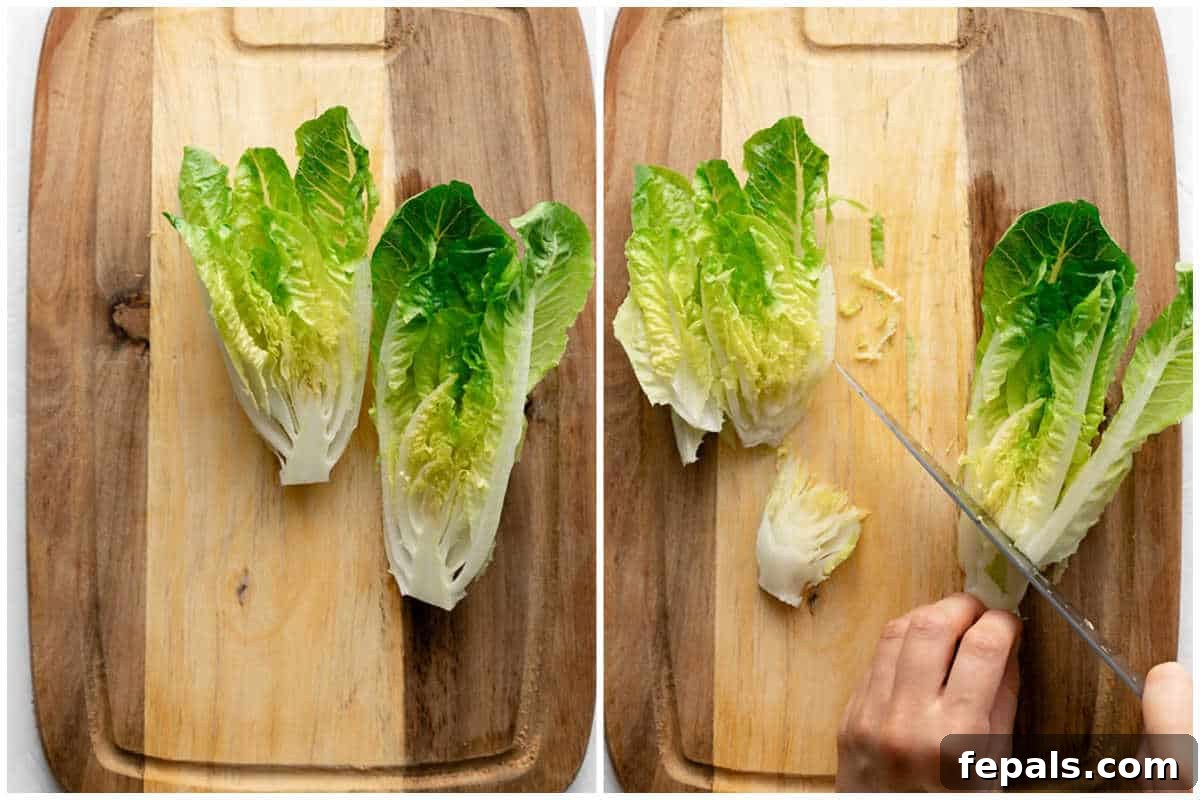
Next, take one half of the romaine and place it cut-side down on the cutting board. With your sharp knife, carefully slice off the hard, pale white bottom piece (the stem or core) from each half. This core can often be fibrous and slightly bitter, so removing it ensures a more pleasant eating experience. Discard these hard white pieces. You should now be left with only the darker, tender green leaves ready for further processing.
Step 3: Vertical Slicing
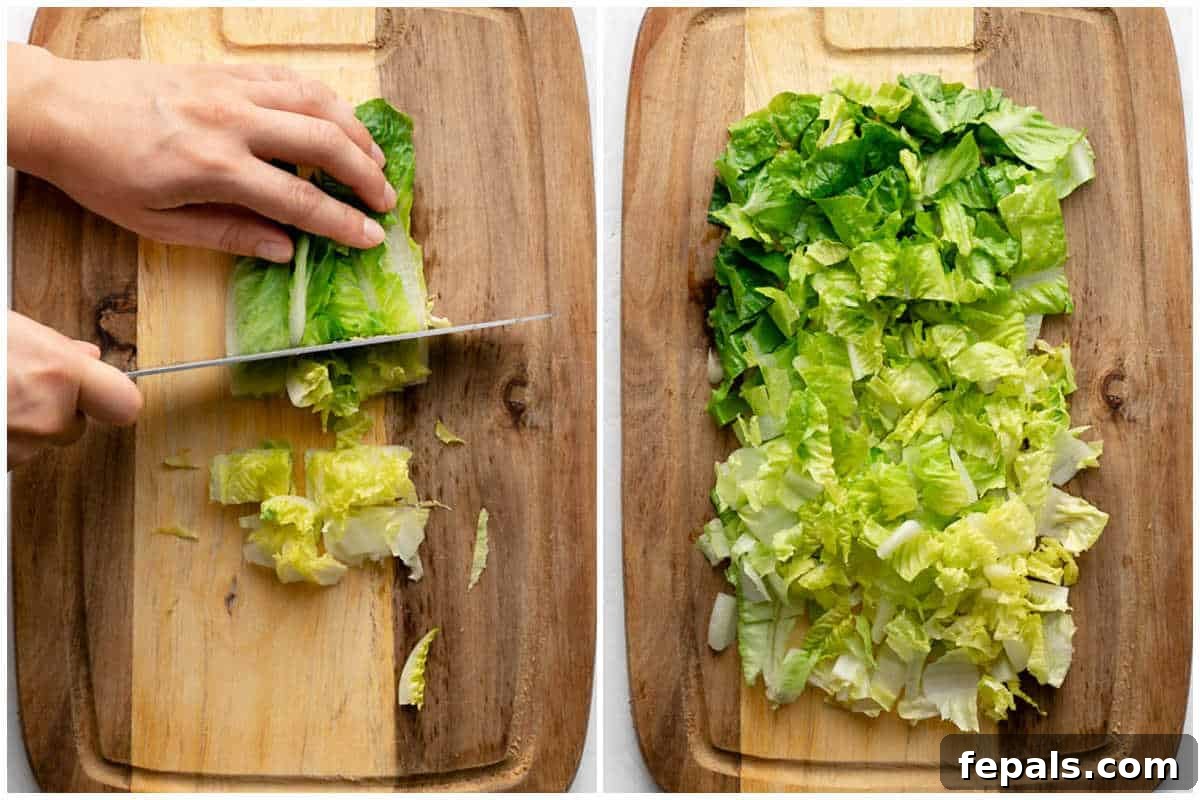
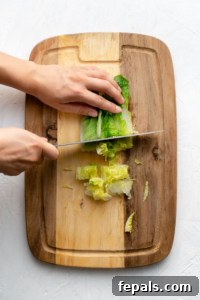
Take one of the de-cored romaine halves and lay it flat on the cutting board. Using your knife, slice it vertically down the middle again, or into two or three more long, vertical strips, depending on the size of the leaves and your desired final chop size. This step ensures that your chopped pieces will be uniform in length and easy to manage. You are essentially creating long, thin ribbons of lettuce.
Step 4: Horizontal Chopping for Bite-Sized Pieces
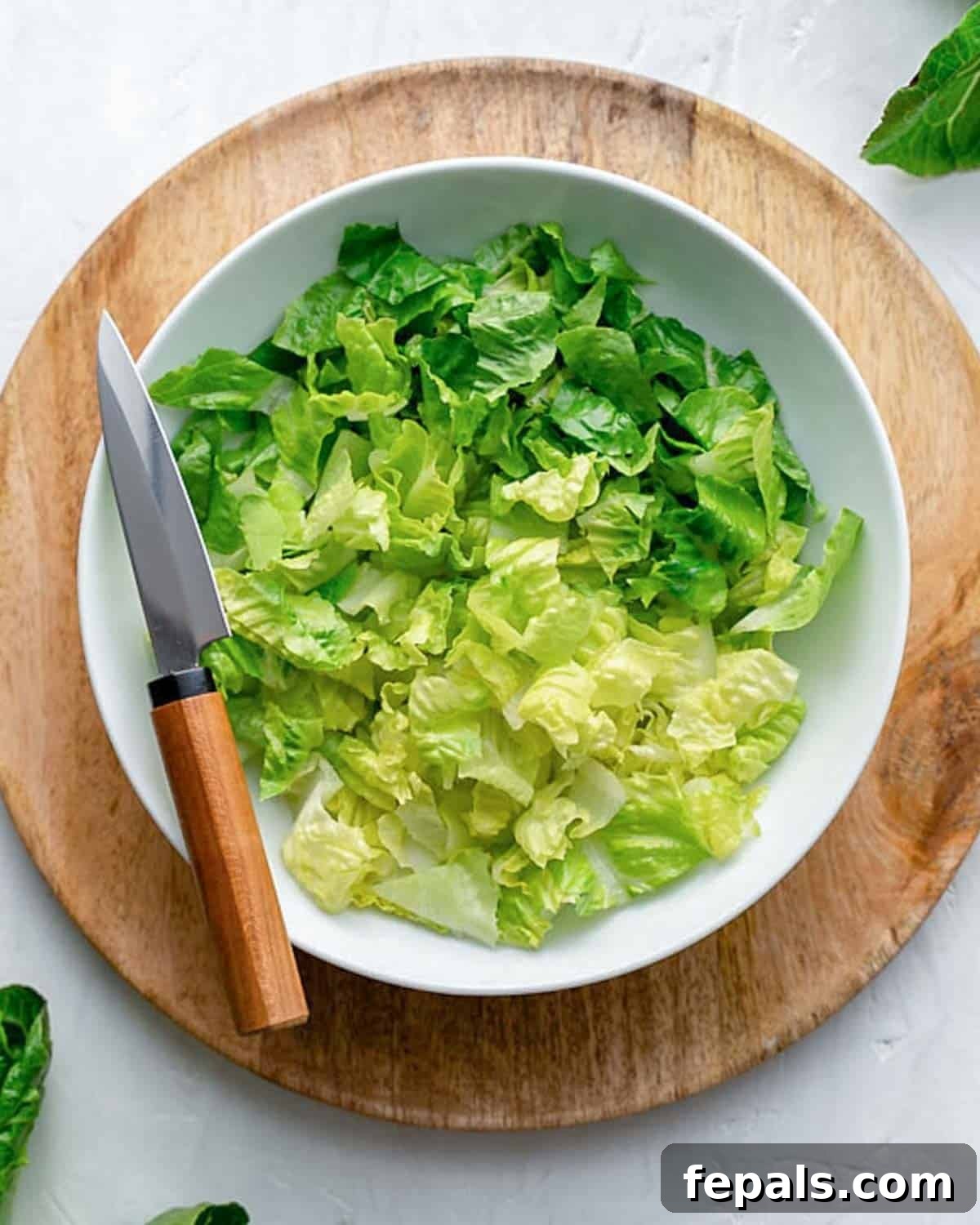
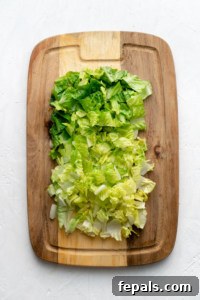
Gather the vertically sliced strips of lettuce and align them neatly on your cutting board. Now, horizontally slice across these strips to create small, bite-sized pieces, typically about two inches in length. This final cut transforms the long ribbons into manageable, uniform pieces perfect for salads, wraps, or as a garnish. Repeat this process with all remaining lettuce strips until you have a pile of perfectly chopped romaine.
Expert Tips for Romaine Lettuce Preparation and Storage
To ensure your romaine lettuce is always at its best, keep these essential tips in mind:
- Use a Sharp Knife: This is paramount for clean cuts. A sharp knife glides through the lettuce leaves effortlessly, preventing bruising and tearing, which can lead to premature browning. A dull knife, on the other hand, will crush the delicate leaves, making chopping frustrating and less efficient. Always keep your knives honed for safety and precision.
- Optimal Storage for Freshness:
- Unwashed, Whole Romaine: For maximum longevity, store unwashed whole heads of romaine lettuce in the crisper drawer of your refrigerator. Wrap them loosely in a dry paper towel (which helps absorb excess moisture) and then place them in an open plastic bag or an airtight container. Stored this way, romaine can remain fresh for up to 10 days.
- Chopped Romaine: If you’ve already chopped your lettuce, proper storage is even more critical. Place the chopped pieces in an airtight container lined with a damp paper towel. The damp towel provides just enough humidity to keep the leaves crisp without making them soggy. Ensure the container is sealed tightly to prevent air exposure. Chopped romaine can stay fresh in the fridge for up to seven days.
- Uniform Bite-Sized Pieces: Strive to chop the lettuce into roughly the same size pieces. This ensures that every forkful of salad offers a consistent texture and allows dressings to coat evenly.
- Pre-Wash vs. Post-Wash: While some prefer to wash leaves before chopping, and others after, a combination can be ideal if you’re particularly concerned about cleanliness. Washing leaves individually before chopping allows for thorough cleaning of crevices, and a final quick rinse after chopping can remove any residual dirt, followed by a thorough spin or pat dry.
Common Questions About Romaine Lettuce
It’s generally okay to eat the outer, leafy green romaine leaves as they are often rich in nutrients. However, if they appear brown, slimy, or spotty, it’s best to remove and discard them. Also, while the darker green leaves are tender, the thick, hard ribs of the romaine heart can sometimes taste bitter. You may choose to remove these for a more uniform texture and flavor in your salad.
While not strictly mandatory, removing the hard core of romaine lettuce is highly recommended. The core is typically tough and can have a slightly bitter taste. Discarding it ensures that your chopped lettuce is uniformly tender and pleasant to eat.
To keep chopped romaine fresh and crisp for as long as possible, place it in an airtight container lined with a slightly damp paper towel. The paper towel helps maintain optimal humidity, preventing the lettuce from drying out while absorbing excess moisture that could lead to spoilage. Store the sealed container in the crisper drawer of your refrigerator.
This is largely a matter of personal preference, and both methods have their merits. Washing the whole leaves before chopping allows for a very thorough cleaning of each leaf and its crevices. If you’re particularly cautious about cleanliness, a quick rinse after chopping followed by a thorough drying can offer peace of mind. The most important thing is to ensure the lettuce is completely dry before storing or serving.
The Nutritional Powerhouse: Benefits of Romaine Lettuce
Beyond its delightful crunch and versatility, romaine lettuce is a surprisingly potent source of essential vitamins and minerals, making it a fantastic addition to any healthy diet. It’s incredibly low in calories but rich in nutrients. A single cup of chopped romaine provides a significant amount of Vitamin K, vital for blood clotting and bone health, and Vitamin A, crucial for vision and immune function. It also offers a good dose of Vitamin C, a powerful antioxidant, and folate, important for cell growth. Furthermore, romaine contains dietary fiber, aiding digestion, and a decent amount of potassium, which supports heart health. Its high water content also contributes to hydration. Incorporating romaine lettuce regularly into your meals is an easy way to boost your nutrient intake without adding significant calories.
Creative Ways to Enjoy Your Chopped Romaine
While romaine lettuce is a classic base for salads, its crisp texture and mild flavor make it incredibly versatile. Here are some ideas to incorporate it into more than just your average salad:
- Wraps and Tacos: Use whole romaine leaves as a low-carb alternative to tortillas for wraps, or chop it finely to add a fresh crunch to fish tacos, chicken wraps, or even lettuce cups.
- Sandwiches and Burgers: Forget limp iceberg. A few crisp leaves of romaine can elevate any sandwich or burger, adding texture and a fresh bite.
- Smoothies: Don’t be afraid to throw a handful into your green smoothie for an extra nutritional boost. Its mild flavor won’t overpower your fruits.
- Garnish: Brighten up any dish, from chili to soups, with a sprinkle of freshly chopped romaine for a pop of color and texture.
- Stir-Fries (briefly): For a unique twist, add chopped romaine during the last minute of a stir-fry for a quick wilting that adds a fresh, slightly cooked green element.
More Culinary Tutorials
- How To Make Breadcrumbs
- How To Make Apple Sauce
- How To Cut Bell Peppers
- How To Cut Leeks
- Cutting a Potato Into Home Fries
- How to Make Homemade Buffalo Sauce
- How to Make Croutons
Delicious Salad Ideas
Here are some of our favorite fresh salad ideas where your perfectly chopped romaine will shine:
- Chicken Caprese Salad
- Grilled Buffalo Chicken Salad
- Fish Taco Salad Bowl
- Roasted Chickpea and Avocado Salad

Mastering how to cut romaine lettuce is a simple skill that pays big dividends in your kitchen. It ensures your salads are always fresh, crisp, and inviting, while also helping you make the most of your grocery budget. With these straightforward steps and tips, you’re now equipped to enjoy this fantastic leafy green in all its glory. Happy chopping!
FOLLOW me on FACEBOOK | INSTAGRAM | PINTEREST | TWITTER for all of our latest blog posts and recipes.
5 out of 5 stars from 1 vote
How To Chop Romaine Lettuce
Rena
4 cups
5 mins
5 mins
10 mins
Equipment
-
1 sharp knife
-
1 cutting board
-
Large bowl or colander for washing
-
Salad spinner (optional)
Ingredients
- 1 head romaine lettuce
- 4 cups water (for washing)
Instructions
-
Separate the leaves from 1 head romaine lettuce. Pour about 4 cups water into a bowl or use a colander under running water, and wash the lettuce leaves thoroughly. Ensure all dirt and debris are removed, repeating rinsing if necessary.
-
Take your washed and dried lettuce leaves and place them on a wooden cutting board. With a sharp knife, vertically slice the romaine lettuce down the middle to cut it into two halves.

-
Next, slice the hard bottom pieces (core) of the romaine lettuce off with the knife. Discard the white pieces. You should only have the darker, tender leaves left to work with.
-
Then, lay each romaine half flat on the cutting board and slice it straight down the middle again with the knife, forming more vertical pieces of lettuce. You can cut the lettuce into two or three whole pieces depending on desired final size.
-
Gather the vertically sliced lettuce strips and place them flat on the cutting board. Then, horizontally slice across them to form small, bite-sized pieces, roughly two inches. Repeat until you have chopped all the lettuce.
-
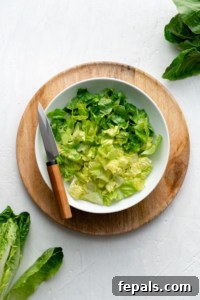
Store chopped lettuce in a bowl or an airtight storage container lined with a damp paper towel to maintain freshness.
Notes
- Approximately 27 Calories per cup.
- Be sure to use a sharp knife when ready to slice the lettuce. A dull knife will make it more difficult and messy to cut the lettuce leaves.
- Store an unwashed whole head of lettuce in a crisper drawer in the refrigerator for up to 10 days. Chopped lettuce will stay fresh in the fridge for up to seven days—just be sure to wrap it in a damp paper towel in an airtight container.
- Enjoy your freshly chopped romaine with your favorite fresh vegetables, dressings, and toppings for a delicious and healthy meal.
Nutrition
Calories: 27kcal
Carbohydrates: 5g
Protein: 2g
Fat: 0.5g
Saturated Fat: 0.1g
Polyunsaturated Fat: 0.3g
Monounsaturated Fat: 0.02g
Sodium: 24mg
Potassium: 387mg
Fiber: 3g
Sugar: 2g
Vitamin A: 13631IU
Vitamin C: 6mg
Calcium: 59mg
Iron: 2mg
Nutrition information is automatically calculated, so should only be used as an approximation.
Additional Info
ingredient, Salad
American
Tried this recipe?
Mention @healthyfitnessmeals or tag #healthyfitnessmeals!