
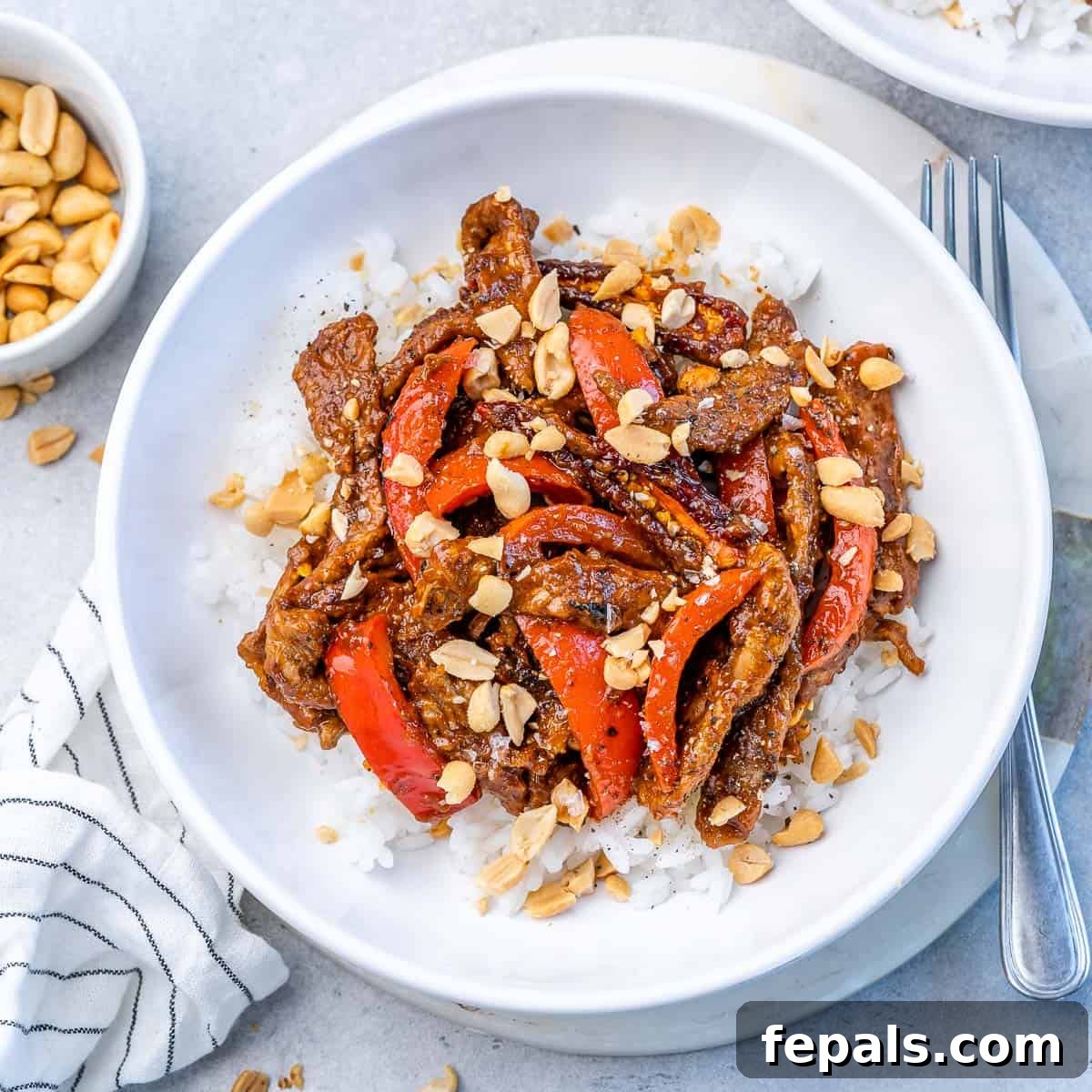
Craving a flavorful, restaurant-quality meal that’s both exciting and easy to make at home? Look no further than this incredible Homemade Kung Pao Beef recipe! This classic Chinese-American dish is a perennial takeout favorite, renowned for its irresistible combination of spicy, savory, and subtly sweet flavors, all brought together by perfectly pan-fried beef and a garnish of crunchy peanuts. Forget the long waits and delivery fees – you can whip up this culinary masterpiece in under 30 minutes, making it ideal for busy weeknights and even meal prepping for the week ahead.
Recipe Overview
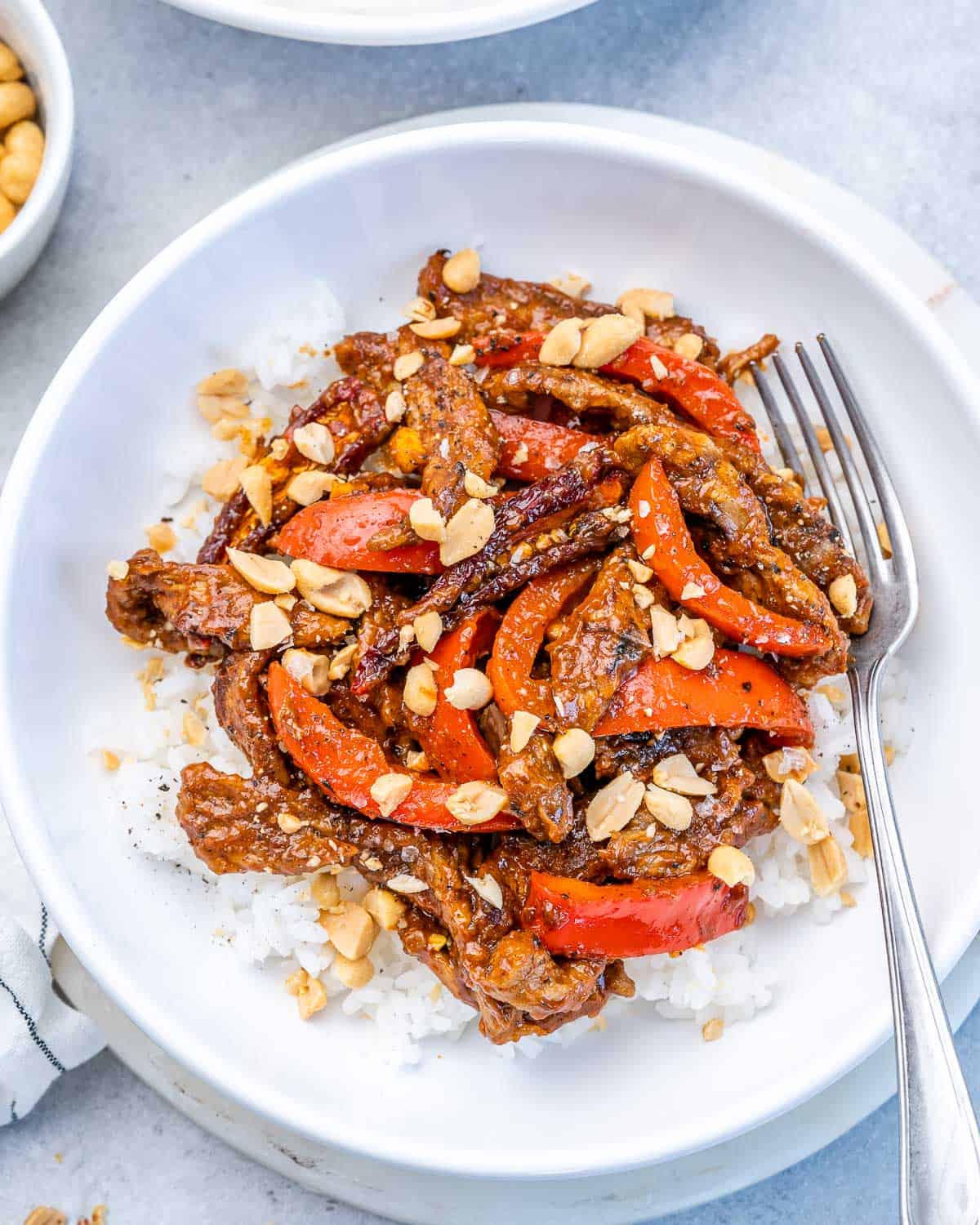
My family, especially the kids, absolutely lights up when they hear I’m making this Easy Kung Pao Beef. It’s a dish that genuinely brings joy to the dinner table. What’s even better for me, the chef, is that this entire meal comes together in about 30 minutes from start to finish. It’s incredibly straightforward, making it a perfect weeknight solution. While beef is fantastic, the versatility of this recipe means you can easily substitute it with chicken or shrimp, depending on what you have on hand or what you’re in the mood for.
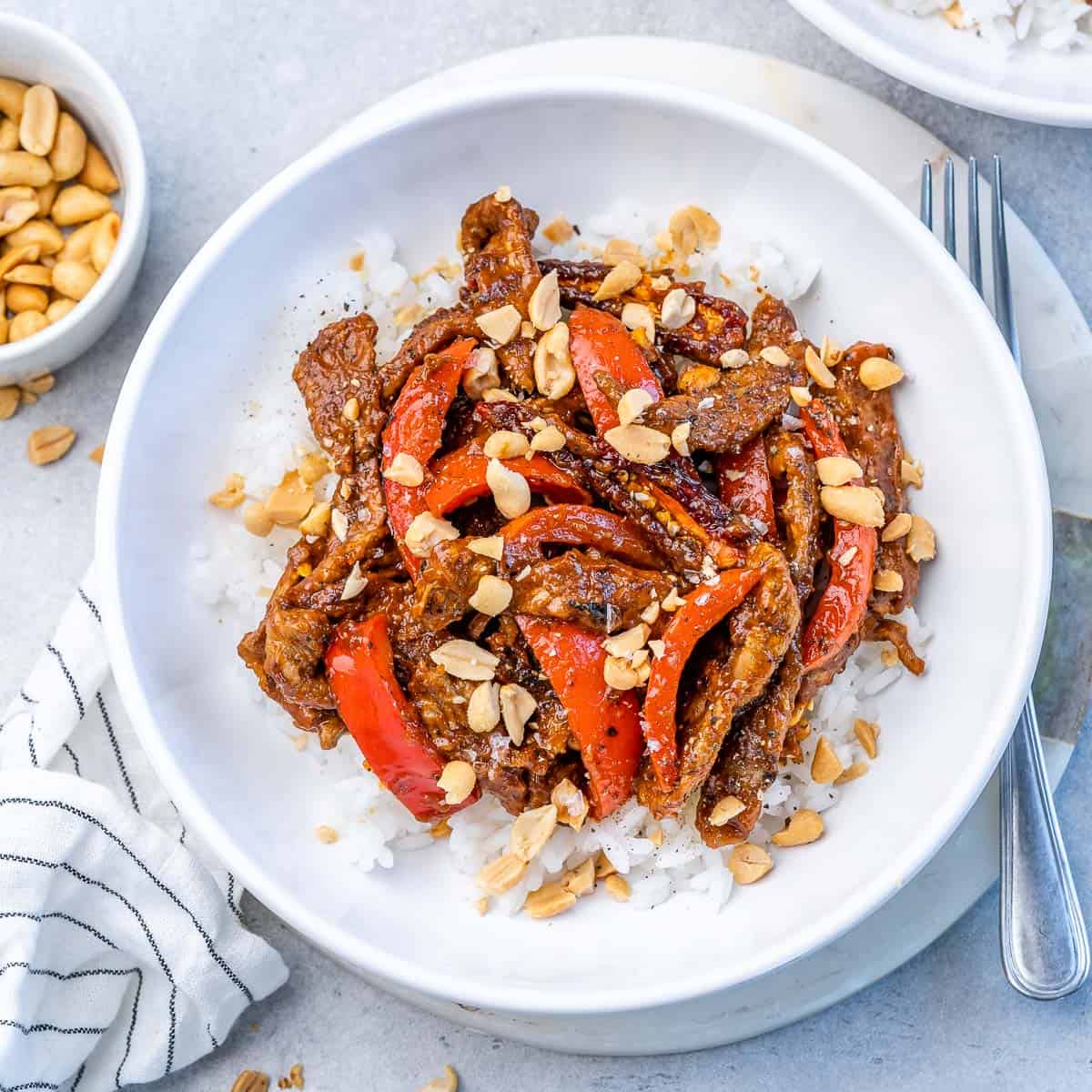
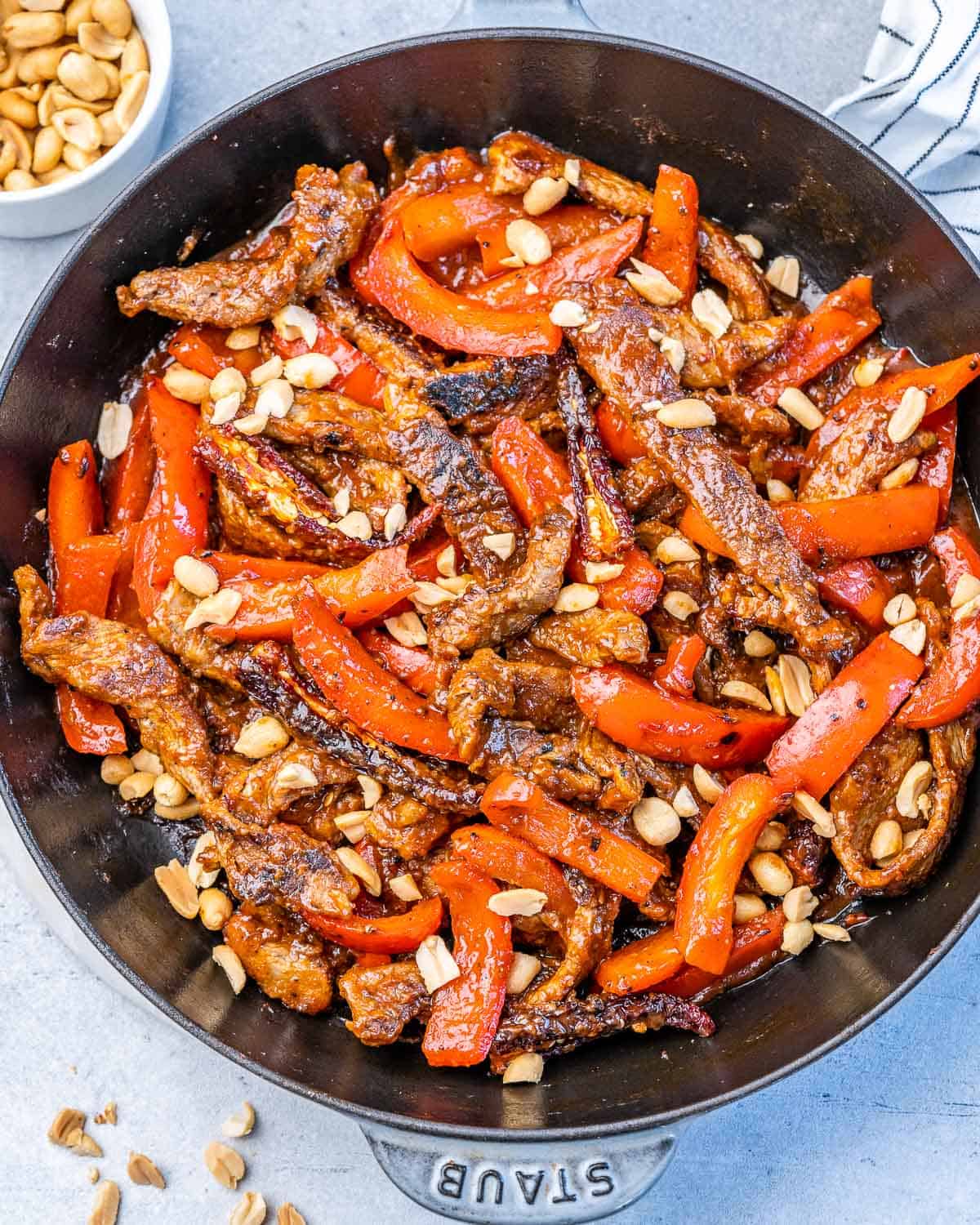
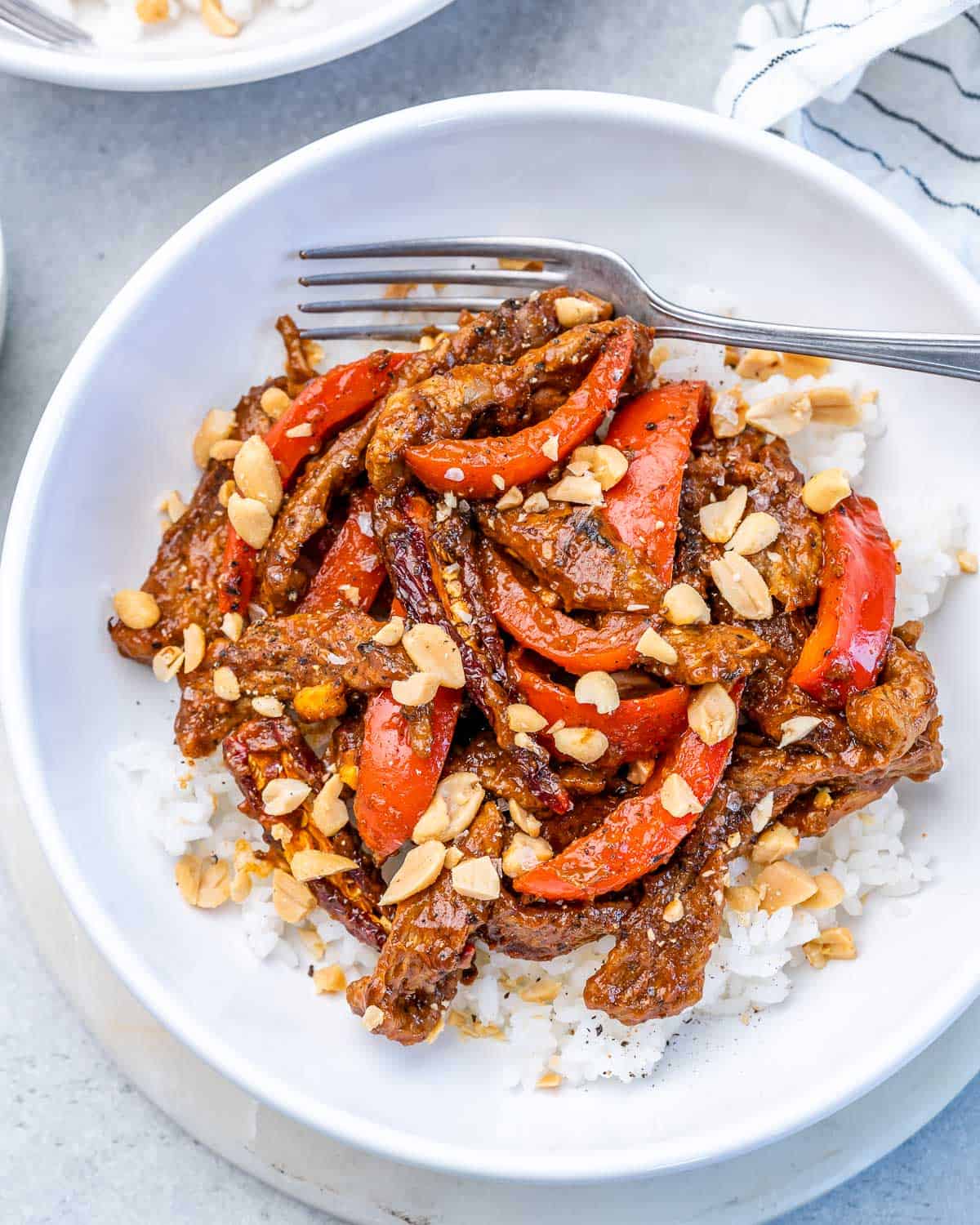
The magic begins with thin slices of seasoned beef, seared to a beautiful crisp alongside aromatic dried chilies and vibrant bell peppers. These tender morsels are then tossed in a luscious, well-balanced sauce that hits all the right notes: sweet, tangy, and just the right amount of spicy. To finish, a generous sprinkle of crunchy roasted peanuts adds a delightful textural contrast. I love serving it over fluffy white rice for the kids, while I often opt for cauliflower rice or quinoa for a lighter, nutrient-dense meal.
If you’re a fan of recreating your favorite takeout dishes at home, be sure to explore my other popular Kung Pao recipes: Kung Pao Shrimp and Healthy Kung Pao Chicken. They offer similar flavor profiles with different protein options, ensuring there’s a Kung Pao dish for everyone!
Why You’ll Love This Kung Pao Beef Recipe
Beyond being quick and delicious, there are so many reasons to make this Kung Pao Beef a staple in your meal rotation:
- Incredible Flavor: This recipe perfectly balances the signature sweet, savory, and spicy notes of traditional Kung Pao, creating a truly authentic and satisfying taste experience.
- Quick & Easy: With only 10 minutes of prep and 15 minutes of cook time, you can have a gourmet-level meal on the table faster than ordering takeout.
- Healthier Takeout Alternative: By making it at home, you have full control over the ingredients, allowing you to use fresh, high-quality components and adjust sodium or sugar levels to your preference.
- Meal Prep Friendly: This dish holds up beautifully in the refrigerator, making it an excellent choice for batch cooking and enjoying throughout the week.
- Versatile: Easily swap out beef for other proteins like chicken, shrimp, or tofu, and customize the vegetables to your liking.
- Family Favorite: The flavors are universally appealing, often becoming a hit with both adults and children (especially if you moderate the spice!).
Helpful Tips for Perfect Kung Pao Beef
Achieving restaurant-quality Kung Pao Beef at home is simpler than you think, especially with these insider tips:
- Choosing the Right Beef Cut: While flank steak is a fantastic choice for its lean texture and ability to absorb flavors, other cuts like Skirt Steak, sirloin, or flat iron steak also work wonderfully. These cuts are generally lean and tenderize beautifully when sliced thinly and stir-fried quickly.
- Mastering Beef Slicing: This is crucial for tenderness! Always slice the beef thinly across the grain. Slicing against the grain shortens the muscle fibers, resulting in a much more tender bite. Aim for slices about 1/4-inch thick for optimal cooking and texture.
- Don’t Overcrowd the Pan: For that desirable crispy, seared exterior on your beef, it’s vital to cook it in batches if necessary. Overcrowding cools down the pan and steams the meat instead of searing it, leading to a less appealing, tougher texture. Cook in two or even three batches to ensure each piece gets perfectly browned.
- Adjusting the Spice Level: Kung Pao is known for its kick! If you prefer a milder dish, simply reduce the number of dried chilies or omit them entirely. For more heat, you can add extra chilies or even a pinch of red pepper flakes to the sauce. You can also deseed the dried chilies before adding them to reduce their potency.
- Level Up the Flavor with Fresh Ingredients: While powders are convenient, using fresh garlic and fresh ginger (finely minced or grated) will significantly enhance the aromatic depth and vibrancy of your dish. It’s a small change that makes a big difference.
- Wok vs. Skillet: If you’re fortunate enough to own a wok, this is its moment to shine! A wok’s unique shape and high heat retention are perfect for stir-frying, ensuring even cooking and that characteristic smoky flavor. However, a large, heavy-bottomed skillet or cast-iron pan will also yield excellent results.
- Maintaining Crispy Veggies: If you prefer your bell peppers and other vegetables to be more on the crisp and crunchy side, add them towards the very end of the cooking process, just before or with the sauce. This minimizes their cooking time, preserving their vibrant color and texture.
Frequently Asked Questions About Kung Pao Beef
While both are popular beef stir-fry dishes, the key difference lies in their spice level. Mongolian Beef typically features a rich, sweet, and savory sauce with garlic and ginger, but it is not traditionally spicy. Kung Pao Beef, on the other hand, is distinctly characterized by its spicy kick from dried chilies, balanced with sweet, tangy, and savory notes, often including peanuts for texture.
This recipe is incredibly versatile! If beef isn’t your preference, you can easily substitute it with chicken (breast or thigh), shrimp, salmon bites, or even tofu for a vegetarian option. Just be mindful that cooking times may vary slightly depending on the protein chosen.
Absolutely! Kung Pao Beef freezes quite well. Once cooled completely, transfer leftovers to an airtight, freezer-safe container. It can be stored in the freezer for up to 3 months. When ready to enjoy, thaw overnight in the refrigerator and reheat following the instructions below.
No, the roasted peanuts are optional, though highly recommended for their characteristic crunch and flavor in traditional Kung Pao. If you have a peanut allergy or simply don’t enjoy their texture, you can certainly skip them or substitute with toasted cashews or sesame seeds for a different nutty note.
When made at home, Kung Pao Beef can be a very healthy and balanced meal! You control the amount of oil, sodium, and sugar. Pairing it with nutrient-rich sides like cauliflower rice, quinoa, or steamed vegetables further boosts its health benefits. It’s rich in protein, and you can pack in plenty of vitamins with added bell peppers and other stir-fry friendly vegetables.
Yes, easily! The main ingredient to watch out for is soy sauce. Simply substitute regular soy sauce with a gluten-free tamari or coconut aminos to make this Kung Pao Beef entirely gluten-free without sacrificing flavor.
Essential Ingredients for Your Kung Pao Beef
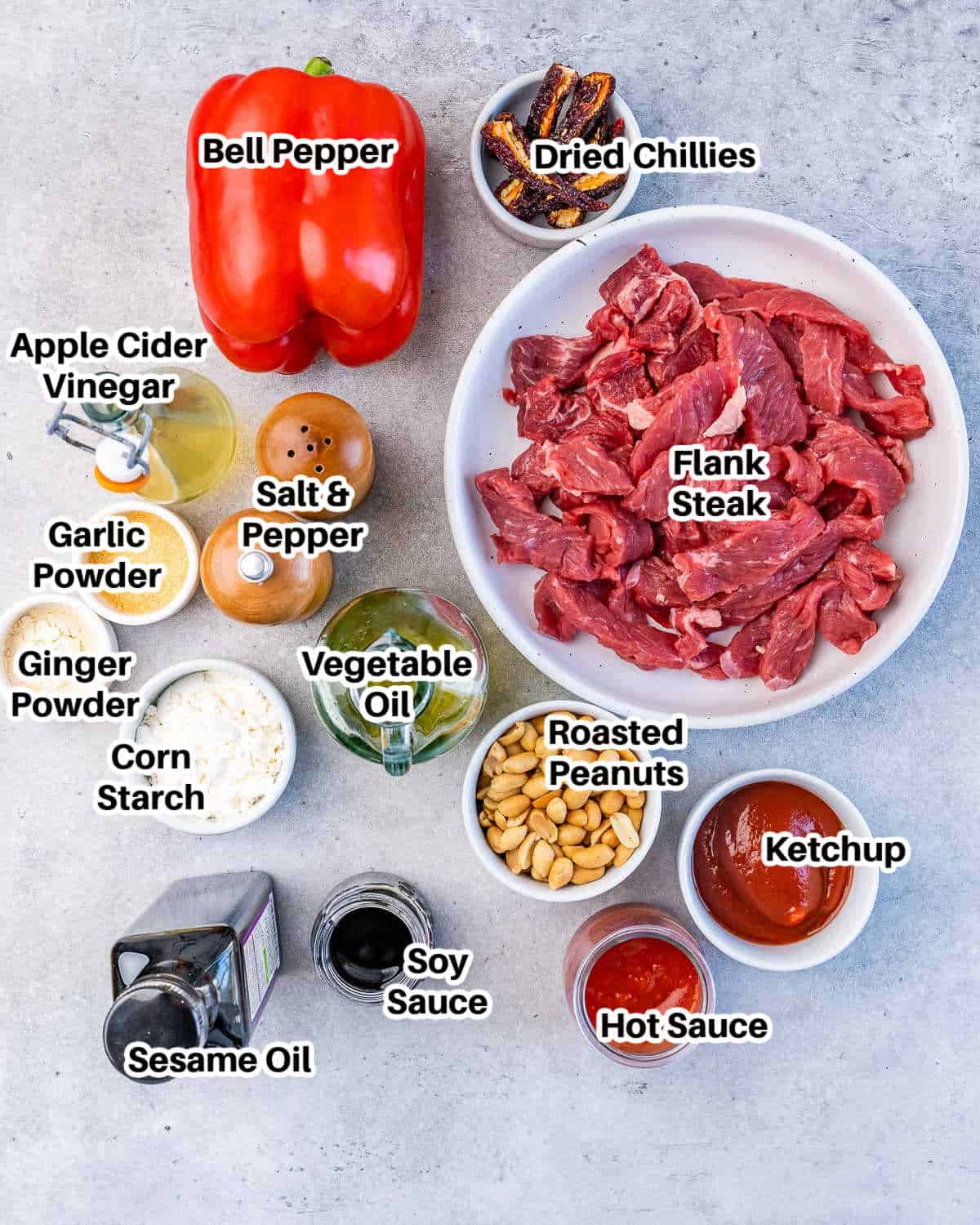
Crafting this irresistible Kung Pao Beef requires a few key components for both the beef marinade and the signature sauce. Below is a general overview of what you’ll need to gather. For precise measurements and quantities, please refer to the detailed recipe card further down this page.
For the Beef:
- Flank Steak: The star of the dish, thinly sliced for quick cooking and tenderness.
- Cornstarch: Acts as a tenderizer (velveting) and helps to create a crispy coating.
- Garlic Powder & Ginger Powder: Infuse the beef with aromatic flavors.
- Kosher Salt & Black Pepper: Essential seasoning.
For the Signature Kung Pao Sauce:
- Ketchup: Adds a touch of sweetness and tang, giving the sauce its rich body.
- Hot Sauce: Frank’s RedHot or sriracha are great for that spicy kick. Adjust to your heat preference.
- Apple Cider Vinegar: Provides a crucial tangy element, brightening the overall flavor.
- Soy Sauce (or Coconut Aminos): Delivers deep umami and savory notes. Use low-sodium if preferred.
- Toasted Sesame Seed Oil: Adds a nutty, aromatic finish to the sauce.
For Stir-Frying & Garnishing:
- Vegetable Oil (or Avocado Oil): For searing the beef and stir-frying the vegetables.
- Red Dried Chilies: The hallmark of Kung Pao’s spice. Use more or less to taste.
- Red Bell Pepper: Adds vibrant color, a hint of sweetness, and a satisfying crunch.
- Unsalted Roasted Peanuts: Crucial for the classic Kung Pao texture and nutty flavor.
- Optional Garnish: Fresh chopped parsley or cilantro for a burst of freshness.
- To Serve: Cooked rice (white, brown, or cauliflower rice), quinoa, or noodles.
Mastering Your Homemade Kung Pao Beef: Step-by-Step
Get ready to fire up your wok or a large skillet, because you’re just a few simple steps away from an unbelievably delicious dinner! This homemade Kung Pao Beef is so bursting with savory, spicy, and sweet flavors that it’s guaranteed to be devoured by everyone at the table.
1️⃣ Prepare and Coat the Beef
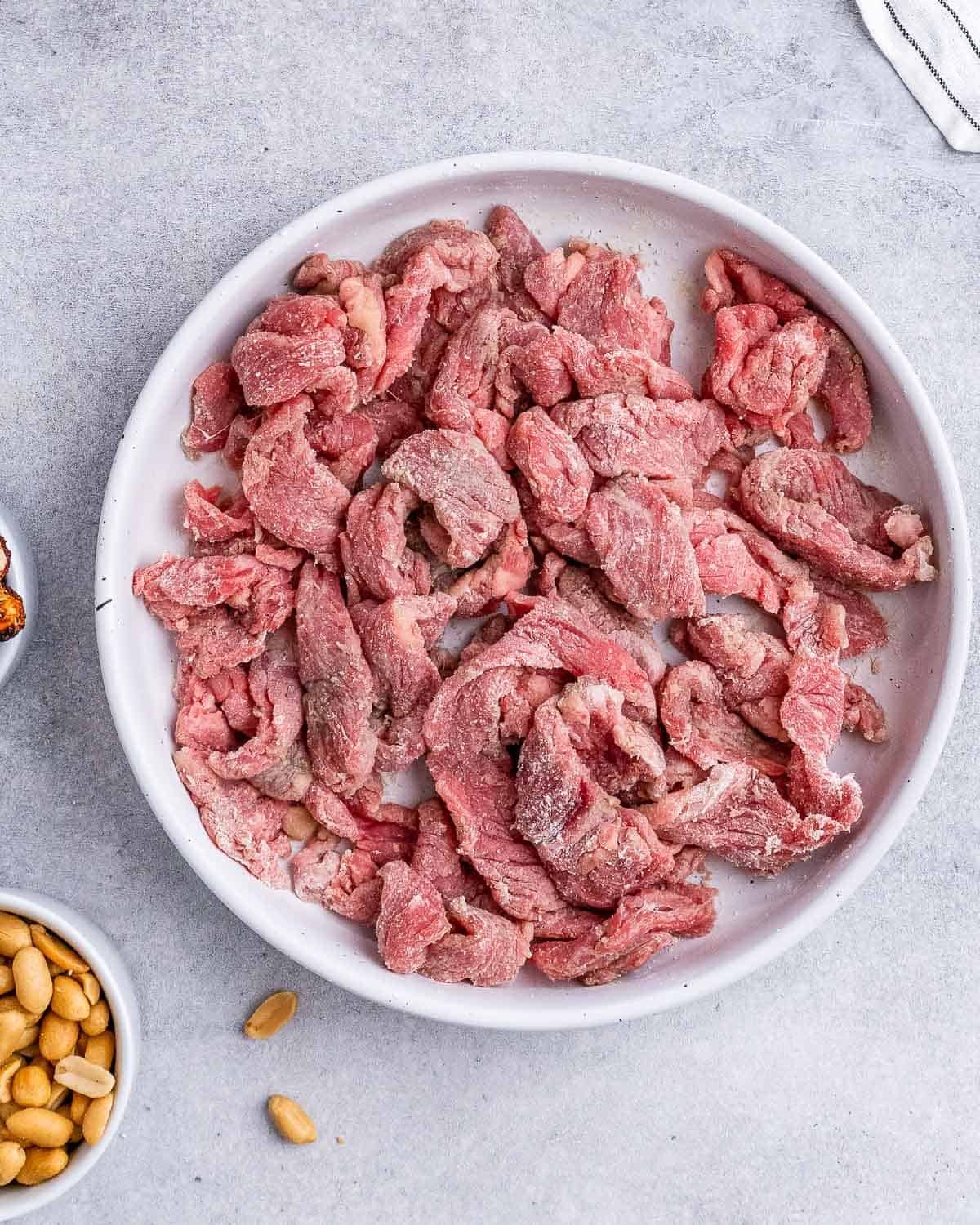
Begin by thinly slicing your flank steak against the grain into uniform 1/4-inch strips. Transfer the sliced beef to a large mixing bowl. To this, add the cornstarch, garlic powder, ginger powder, and a generous seasoning of kosher salt and freshly ground black pepper. Use your hands or a spoon to thoroughly stir and coat each piece of beef evenly. The cornstarch is key here; it not only helps tenderize the meat but also creates a beautiful crust when seared and thickens the sauce later. For an extra boost of tenderness and flavor infusion, you can pop the coated beef into the fridge for about 10 minutes, though this step is entirely optional if you’re short on time.
2️⃣ Whisk Together the Kung Pao Sauce
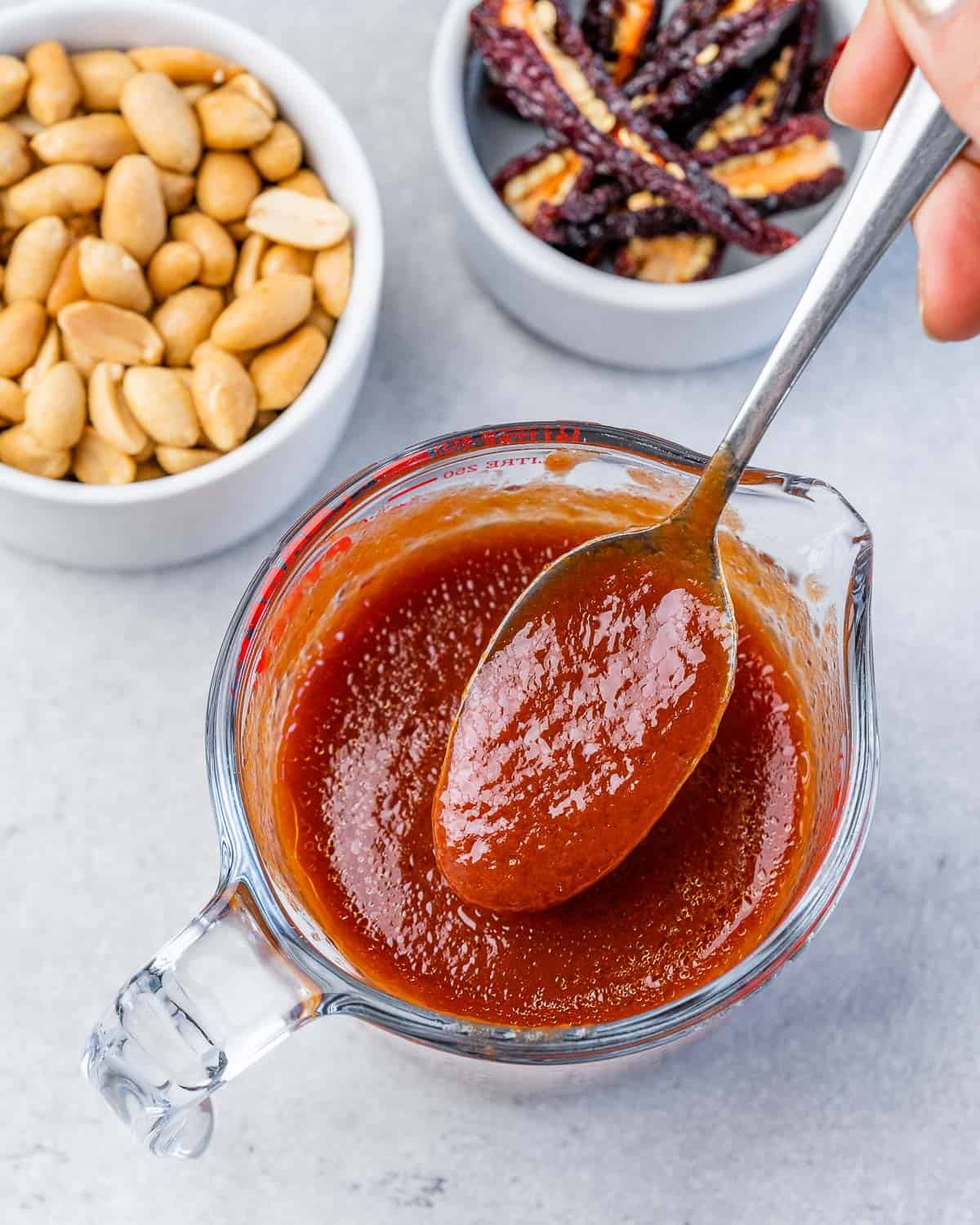
In a small bowl, combine all the sauce ingredients: ketchup, your chosen hot sauce (Frank’s or sriracha work perfectly), apple cider vinegar, soy sauce (or low-sodium coconut aminos for a gluten-free option), and toasted sesame oil. Whisk everything together until the sauce is completely smooth and well combined. This ensures all the distinct flavors meld together perfectly. Set this flavorful mixture aside as you prepare the rest of your ingredients.
3️⃣ Sear the Beef to Perfection
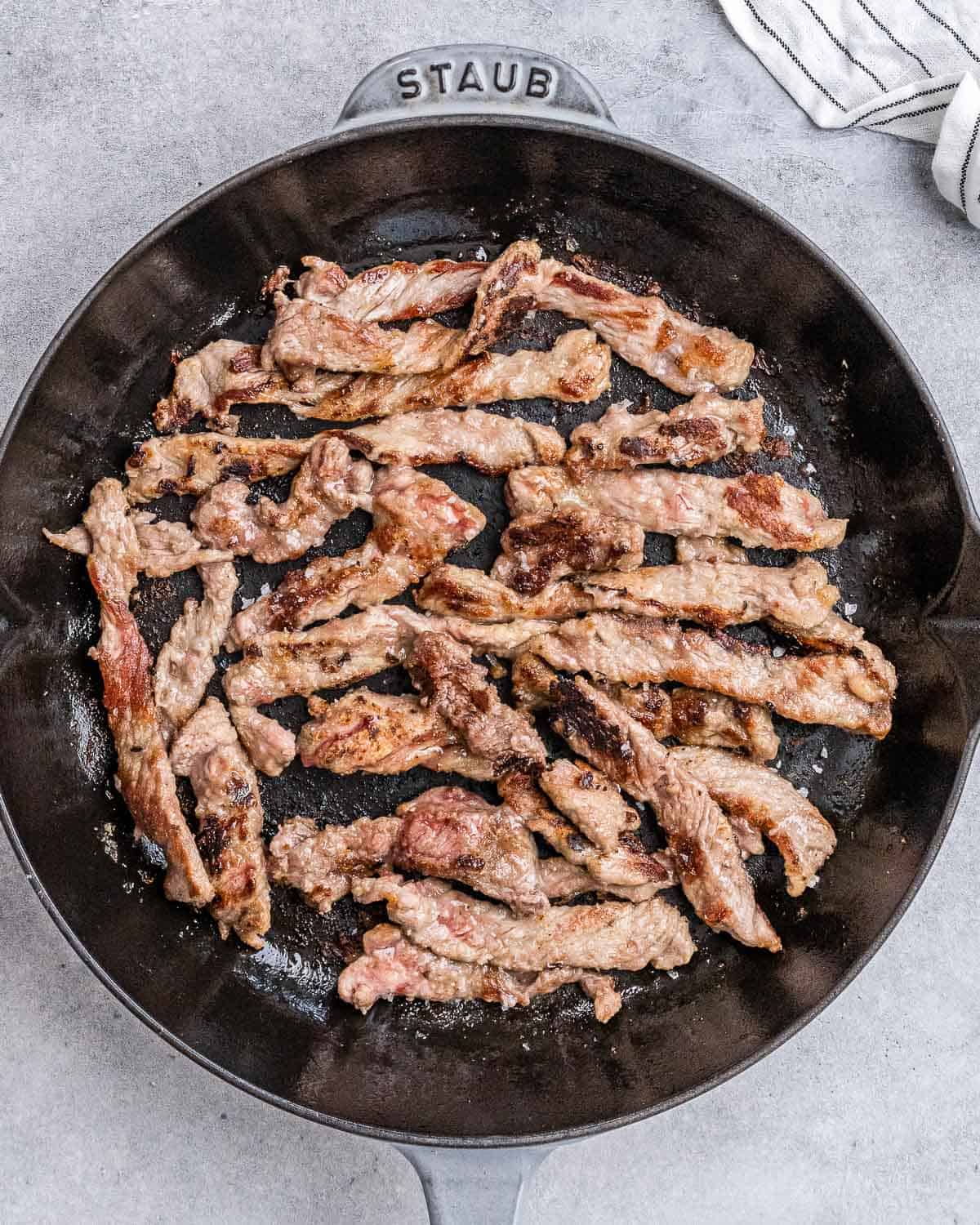
Heat the vegetable oil (or any high-heat cooking oil like avocado oil) in a large skillet or wok over medium-high heat until shimmering. Once hot, add the coated beef slices in a single layer. It’s crucial not to overcrowd the pan; if necessary, cook the beef in two separate batches to ensure a proper sear rather than steaming. Allow the beef to cook undisturbed for 2-3 minutes per side until it develops a beautiful golden-brown crust and is cooked through. Avoid overcooking at this stage, as it can lead to tough beef.
4️⃣ Add the Veggies and Bring it All Together with the Sauce
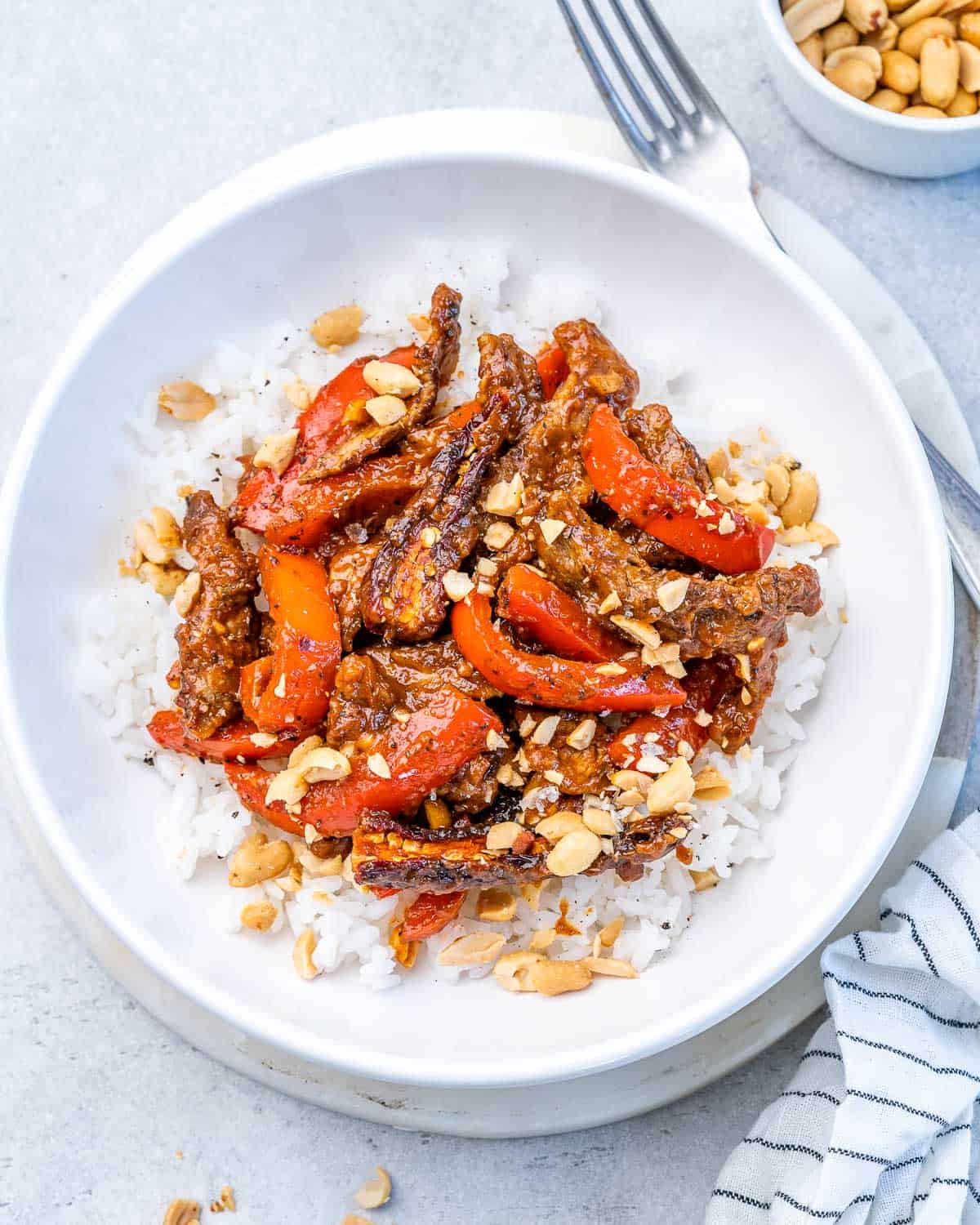
Once the beef is beautifully seared, add the roughly chopped dried chilies and the stick-cut red bell pepper to the pan. Stir-fry for an additional 1-2 minutes. If you prefer your bell peppers with a crispier texture, add them closer to the end of this step. The chilies will infuse the dish with their characteristic aroma and heat. Now, pour in the prepared Kung Pao sauce and stir continuously to coat the beef and vegetables evenly. The sauce will quickly thicken to a glossy consistency. Remove the pan from the heat immediately to prevent overcooking the vegetables and ensuring the beef remains tender. Finally, sprinkle with the unsalted roasted peanuts for that essential crunch and a handful of fresh sliced green onions or chopped herbs like parsley or cilantro, if desired, for a burst of fresh flavor.
Serving Suggestions and Delicious Variations
This Kung Pao Beef is incredibly versatile and pairs wonderfully with a variety of sides, allowing you to customize your meal to your preferences and dietary needs:
- Serving Your Kung Pao Beef:
- Rice: The classic pairing! Enjoy it over fluffy white rice, aromatic jasmine rice, wholesome brown rice, or a nutty wild rice blend.
- Low-Carb Options: For a lighter meal, serve your Kung Pao Beef over cauliflower rice, broccoli rice, or a bed of steamed vegetables like broccoli florets, green beans, or asparagus.
- Noodles: Turn it into a hearty noodle dish by serving it over stir-fried egg noodles, ramen noodles, or even zucchini noodles (zoodles) for a low-carb alternative.
- Quinoa: A protein-rich grain that makes a fantastic and healthy base for this flavorful beef dish.
- Other Proteins to Try: This recipe adapts beautifully to other protein sources. Just remember to adjust cooking times accordingly:
- Chicken: Use cubed chicken breasts or thighs. Chicken breast will cook faster than beef, while thighs will stay juicier.
- Shrimp: Quick-cooking and delicious, shrimp adds a lovely texture. Add them towards the end of the cooking process as they cook very quickly.
- Tofu: For a vegetarian option, press extra-firm tofu, cube it, and pan-fry until golden and crispy before adding to the sauce.
- Pork: Thinly sliced pork tenderloin or pork shoulder can also be used.
- Boost with More Veggies: To increase the nutritional value, volume, and heartiness of your meal, consider adding more stir-fry friendly vegetables. Great options include sliced zucchini, mushrooms, snow peas, snap peas, carrots (thinly sliced or julienned), baby corn, water chestnuts, or bok choy. Add these along with the bell peppers, adjusting cooking time to your preferred crispness.
- Garnish Galore: Beyond roasted peanuts, consider a sprinkle of toasted sesame seeds, a generous amount of fresh chopped scallions (green onions), or extra fresh cilantro for added brightness and visual appeal.
Kung Pao Beef
Rate
Pin
Video
Ingredients
- 1 pound flank steak, thinly sliced against the grain into 1/4-inch thick strips
- 2 tablespoons cornstarch
- 1 teaspoon garlic powder
- 1 teaspoon ginger powder
- Kosher salt and pepper, to taste
- 1/4 cup ketchup
- 2 tablespoons franks hot sauce, or to taste
- 2 tablespoons apple cider vinegar
- 2 tablespoons soy sauce, coconut aminos
- 2 teaspoons toasted sesame seed oil
- 2 tablespoons vegetable oil
- 4-6 red dried chiles, roughly chopped
- 1 red bell pepper, cut into sticks
- 1/2 cup unsalted roasted peanuts, roughly chopped
Optional:
- fresh chopped parsley , or cilantro
- cooked rice, To serve
Instructions
-
To a large bowl, add the sliced 1 pound flank steak, sprinkle with 2 tablespoons cornstarch, 1 teaspoon garlic powder, 1 teaspoon ginger powder, and a generous pinch of Kosher salt and pepper. Stir well to coat.

-
In a small bowl, whisk the 1/4 cup ketchup, 2 tablespoons franks hot sauce, 2 tablespoons apple cider vinegar, 2 tablespoons soy sauce, and 2 teaspoons toasted sesame seed oil. Set aside.
-
Heat the 2 tablespoons vegetable oil in a large skillet over medium-high heat. Add the meat in a single layer and cook undisturbed for 2-3 minutes. You might need to cook it in 2 batches.
-
Add in the 4-6 red dried chiles and 1 red bell pepper, and continue to stir-fry for 2 minutes.
-
Add the sauce and stir to combine. Remove from heat and sprinkle with 1/2 cup unsalted roasted peanuts and herbs ( fresh chopped parsley ) if desired. Serve over cooked rice and enjoy.
Notes
- Storing: Once completely cool, place in an airtight container in the refrigerator for 3-4 days.
- Freeze: For extended storage, freeze in a labeled, freezer-safe container for up to about 3 months.
- Reheating: When reheating on the stovetop, use a non-stick pan over medium heat with a splash of water or broth to prevent sticking. Stir occasionally until thoroughly warmed. You can also microwave leftovers in a covered, microwave-safe dish in 30-second intervals, stirring between each interval.
Nutrition
Nutrition information is automatically calculated, so should only be used as an approximation.
Additional Info
Storage and Reheating Recommendations
One of the best things about homemade Kung Pao Beef is how wonderfully it keeps! Leftovers make for a fantastic quick lunch or dinner the next day (or several days). Here’s how to properly store and reheat your delicious creation:
- Storing in the Refrigerator: Once your Kung Pao Beef has cooled completely to room temperature, transfer it to an airtight container. It will keep fresh and delicious in the refrigerator for 3-4 days. This makes it an excellent option for weekly meal prep!
- Freezing for Longer Storage: For extended storage, Kung Pao Beef can be frozen. Place the cooled leftovers in a freezer-safe container or a heavy-duty freezer bag, ensuring it’s sealed tightly. Label with the date. It will maintain its quality in the freezer for up to about 3 months. When you’re ready to enjoy it, thaw overnight in the refrigerator before reheating.
- Reheating Instructions:
- Stovetop: For best results, reheat on the stovetop. Use a non-stick pan over medium heat. Add a splash of water or broth (about 1-2 tablespoons) to help loosen the sauce and prevent sticking. Stir occasionally until the beef and vegetables are thoroughly warmed through.
- Microwave: If you’re short on time, microwave leftovers in a covered, microwave-safe dish. Heat in 30-second intervals, stirring gently between each interval, until evenly heated. Be careful not to overheat, as this can make the beef tough.
More Asian-Inspired Recipes You May Also Like
If you’re anything like me, a single delicious Asian-inspired dish often sparks a craving for more! Explore these other fantastic recipes that bring vibrant flavors and easy cooking to your kitchen:
- Asian Ground Chicken Cups
- Teriyaki Chicken Meal Prep Bowls
- Stuffed Bell Peppers
- Honey Sesame Chicken
- Chicken Spinach Pasta
- Asian Chili Chicken Breast
- Asian Cucumber Salad
- Beef and Broccoli Stir Fry
We absolutely love hearing from you! If you try this Kung Pao Beef recipe or any other on my site and enjoy it, please leave some feedback and a star rating in the comment section below. Your reviews help other home cooks discover and enjoy these dishes too! FOLLOW me on FACEBOOK | INSTAGRAM | PINTEREST for all of my latest blog posts, healthy recipe inspirations, and behind-the-scenes content!