
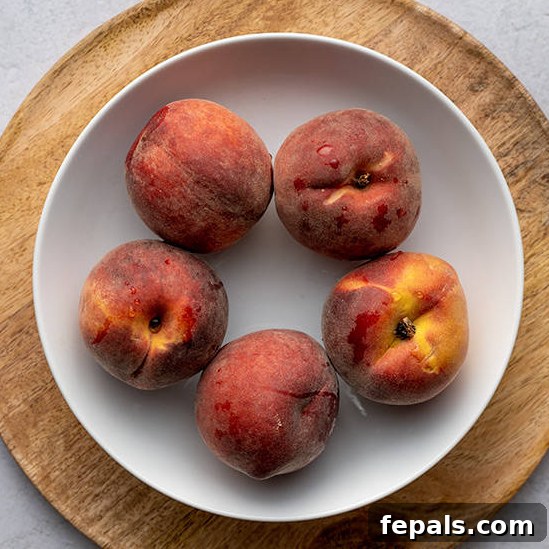
Unlock the full potential of summer’s sweetest delight by mastering the art of cutting peaches. Whether you’re aiming for perfectly sliced garnishes, juicy additions to your morning oatmeal, or preparing a batch for freezing, knowing the right technique makes all the difference. This comprehensive guide will walk you through every step, ensuring you achieve beautifully cut peaches with ease. All you need is a sharp knife, a stable cutting board, and your luscious peaches!
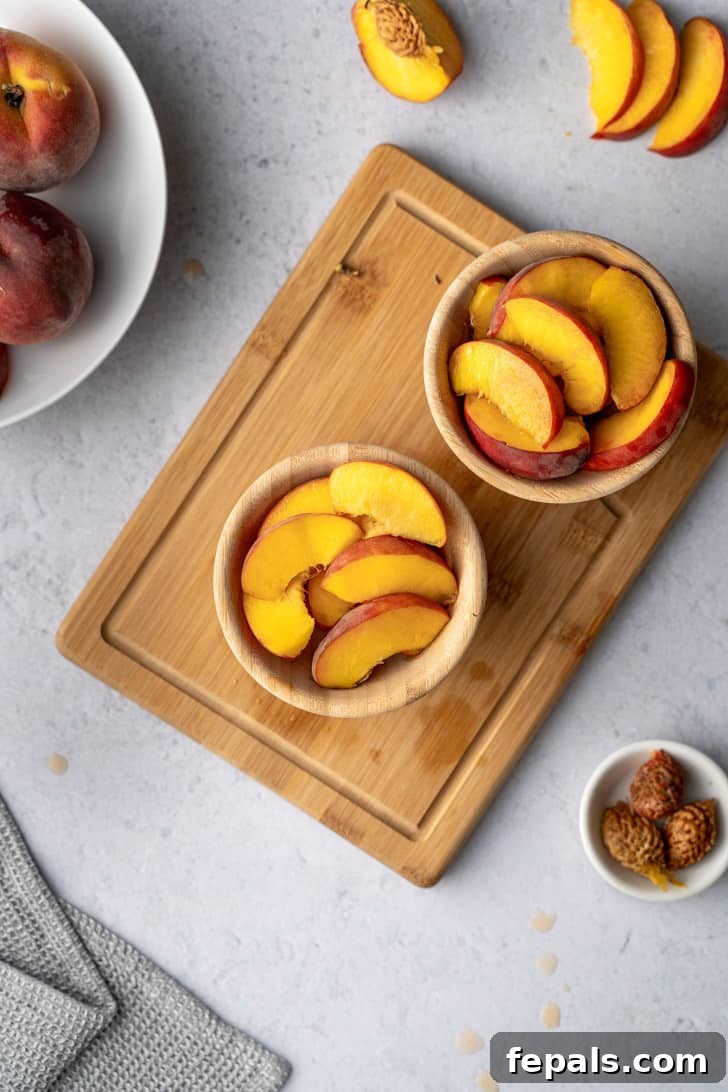
Peaches are a versatile fruit, offering a burst of sweet, tangy flavor in every bite. From their fuzzy skin to their succulent flesh, they are a true seasonal treat. While many people enjoy them whole, learning how to properly cut a peach opens up a world of culinary possibilities. This tutorial focuses on the most fundamental and universally useful cut: elegant slices, perfect for snacking, baking, or adding to your favorite dishes.
There are countless ways to incorporate peaches into your diet. Their natural sweetness and vibrant color make them ideal for various applications. Imagine them baked into a warm cobbler, layered in overnight oats, mixed into a refreshing oatmeal, adding a juicy element to summer salads, or even grilled for a unique dessert. The possibilities truly are endless, and it all starts with mastering the cut.
Before we dive into the specifics of slicing, let’s explore some crucial tips for selecting, storing, and preserving your peaches, ensuring you get the most out of every fruit.
Choosing the Perfect Peach for Slicing
The success of your peach-cutting endeavor begins at the market. Selecting a ripe yet firm peach is key. Here’s what to look for:
- Smell: A ripe peach should emit a sweet, fragrant aroma. Avoid peaches with no scent, as they are likely underripe.
- Color: Look for a vibrant yellow or orange hue, often with a blush of red, depending on the variety. Green undertones usually indicate it’s not quite ready.
- Feel: Gently squeeze the peach. It should yield slightly to pressure, indicating juiciness, but shouldn’t be mushy. A very firm peach is underripe, while an overly soft one is past its prime.
- Absence of Blemishes: Avoid peaches with bruises, soft spots, or wrinkles, as these can affect texture and flavor.
How To Keep Peaches Fresh Longer
Proper storage is crucial for maintaining the freshness and flavor of your peaches. The method depends on their ripeness:
- For Unripe Peaches: Store them at room temperature, ideally in a single layer, away from direct sunlight. Placing them in a paper bag can accelerate ripening due to the trapped ethylene gas. Check them daily for ripeness.
- For Ripe Peaches: Once ripe, peaches become perishable quickly. Transfer them to the refrigerator. Place them in a bag with large holes or a shallow bowl to allow air circulation, preventing moisture buildup and premature spoilage. Keep them separate from other fruits that produce a lot of ethylene gas, like apples and bananas, as this can speed up their deterioration. When stored correctly, ripe peaches can last for 3-5 days in the fridge.
Preventing Sliced Peaches From Browning
The moment you slice a peach, its exposed flesh begins to oxidize, turning an unappetizing brown. This natural process doesn’t affect flavor or safety, but it can be visually unappealing. Fortunately, there are simple ways to prevent this:
- Citrus Spritz: The most common and effective method is to lightly spritz or toss your sliced peaches with a small amount of acidic juice. Lemon, lime, or even orange juice works wonderfully. The ascorbic acid (Vitamin C) in these fruits acts as an antioxidant, slowing down the browning process. Pineapple juice is another excellent option due to its high acidity.
- Ascorbic Acid Powder: For a more neutral flavor, you can dissolve a small amount of food-grade ascorbic acid powder (often found with canning supplies) in water and dip or spray the slices.
- Syrup or Honey Solution: A light sugar syrup or a diluted honey solution can also help by forming a protective barrier and reducing oxygen exposure.
If you plan to store your sliced peaches in the refrigerator for a few days, applying one of these methods immediately after cutting is highly recommended.
Freezing Fresh Peaches for Long-Term Storage
Freezing is an excellent way to preserve the bounty of peach season, allowing you to enjoy their taste long after summer has passed. Frozen peaches are perfect for smoothies, baking, jams, or sauces. Here’s how to do it effectively:
- Prepare Peaches: Wash your peaches thoroughly. Decide if you want to peel them. While optional, blanching makes peeling much easier and can help prevent freezer burn. To blanch, briefly dip peaches in boiling water for 30-60 seconds, then immediately transfer to an ice bath. The skins should slip off easily.
- Slice: Follow the slicing instructions below to cut your peaches into uniform slices.
- Prevent Browning (Optional but Recommended): Lightly toss the slices with lemon juice or an ascorbic acid solution as described above.
- Pre-freeze on a Tray: Arrange the peach slices in a single layer on a baking sheet lined with parchment paper. Ensure they are not touching. Place the tray in the freezer for 1-2 hours, or until the slices are solid. This step prevents them from clumping together in the freezer bag.
- Transfer to Freezer Bags: Once frozen solid, transfer the individual slices into freezer-safe bags or airtight containers. Remove as much air as possible before sealing to prevent freezer burn.
- Label and Store: Label the bags with the date. Frozen sliced peaches will remain fresh and delicious for up to four months, though they can often last longer if properly sealed.
How To Cut a Peach Into Perfect Slices: A Step-by-Step Guide
Cutting a peach might seem daunting due to its large pit, but with the right technique, it’s incredibly simple. This method is designed for efficiency and safety, yielding beautiful slices every time.
Essential Tools:
- Sharp Knife: A chef’s knife or a sturdy paring knife is ideal. A sharp knife is safer as it glides through the fruit easily, requiring less force.
- Cutting Board: A stable, non-slip cutting board will prevent accidents and make your workstation more efficient.
- Napkin or Paper Towel: Keep one handy to wipe away excess juice and maintain a clean cutting surface.
The Cutting Process:
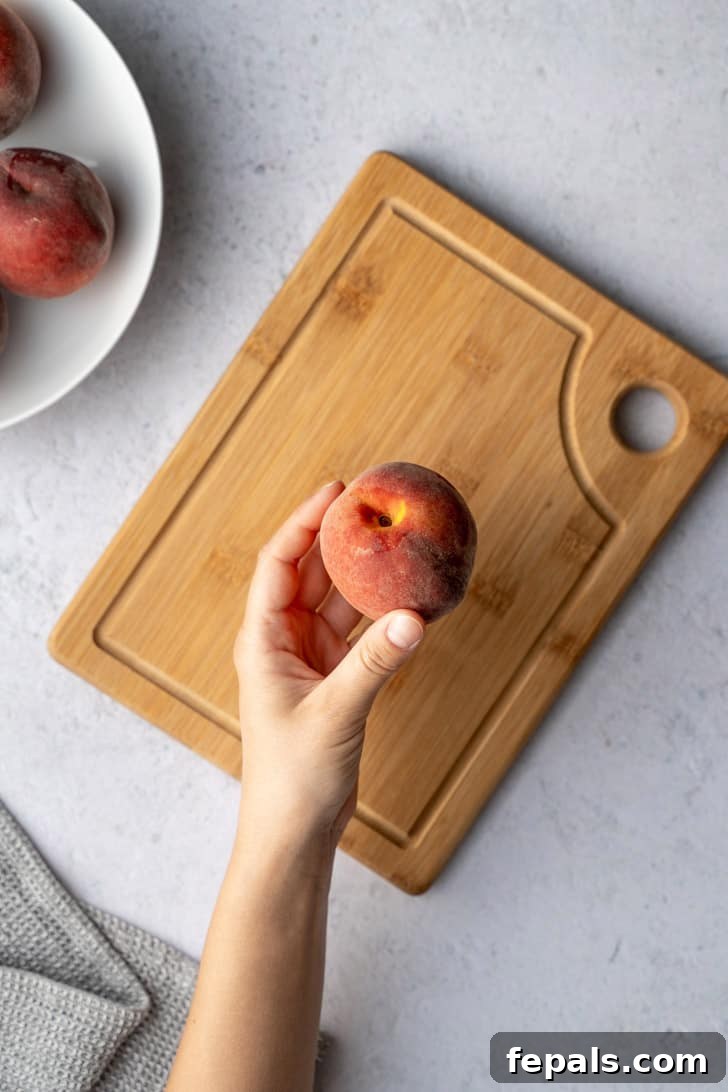
- Prepare Your Workstation: Lay out your cutting board, grab your knife, and ensure a napkin is within reach for any juicy drips.
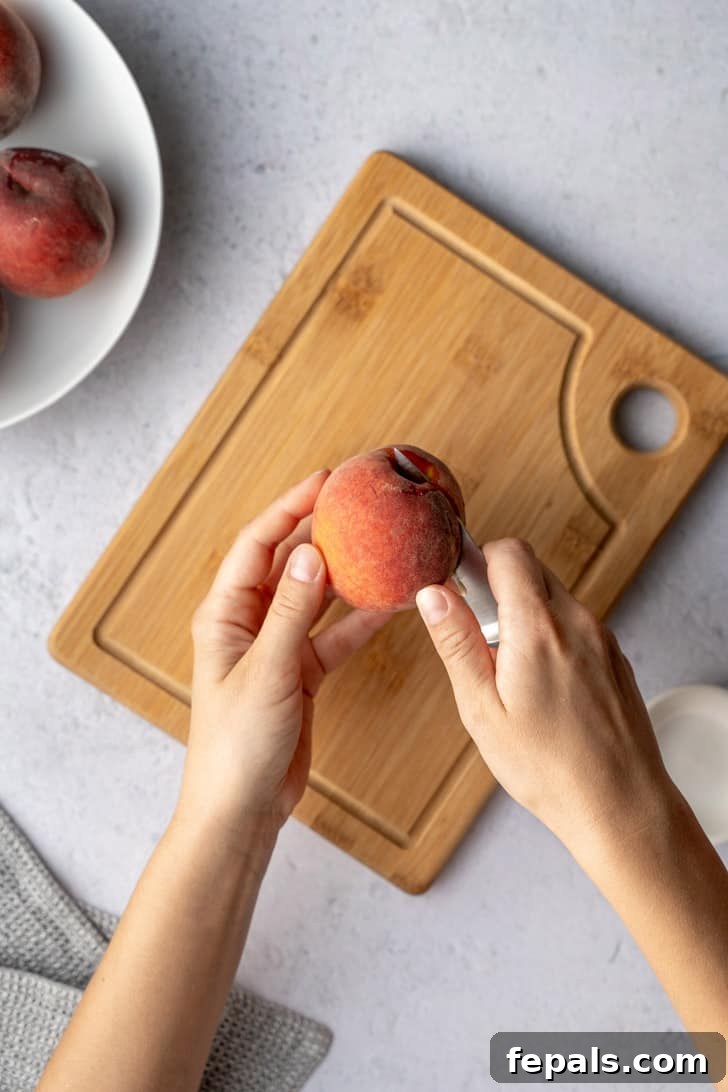
- Make the First Cut Around the Stone: Hold the peach in one hand. With your other hand, carefully position your knife at the stem end. Slice downwards, rotating the peach around its pit. Guide the knife all the way around the peach until you return to your starting point. You should feel the knife meeting the hard pit as you cut.
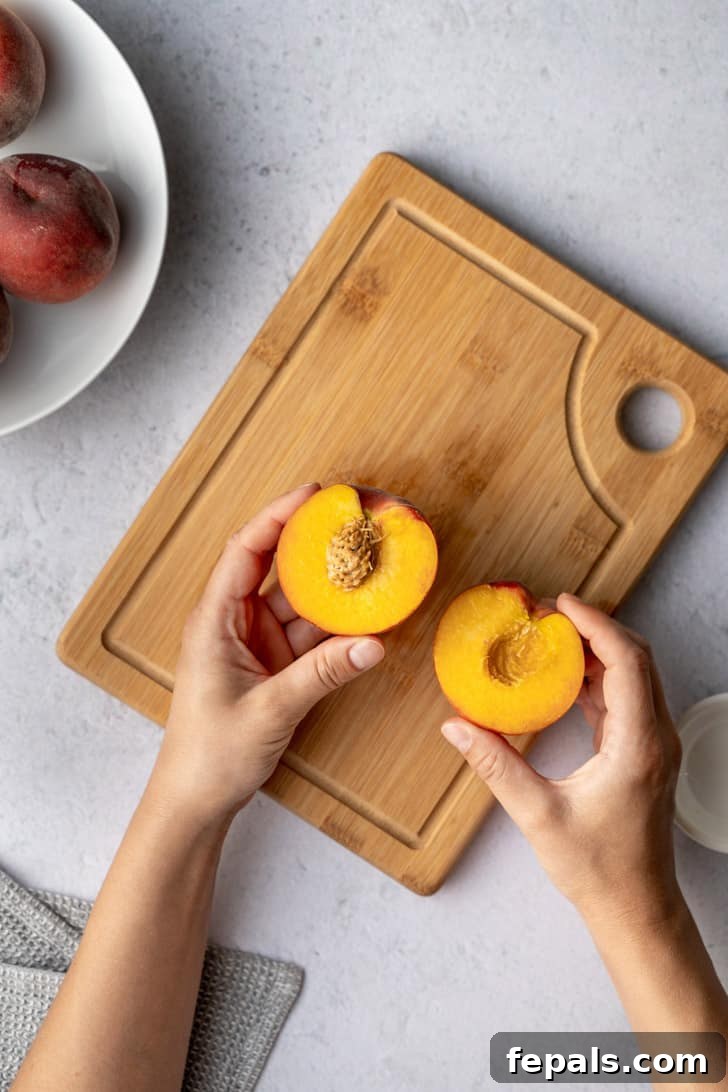
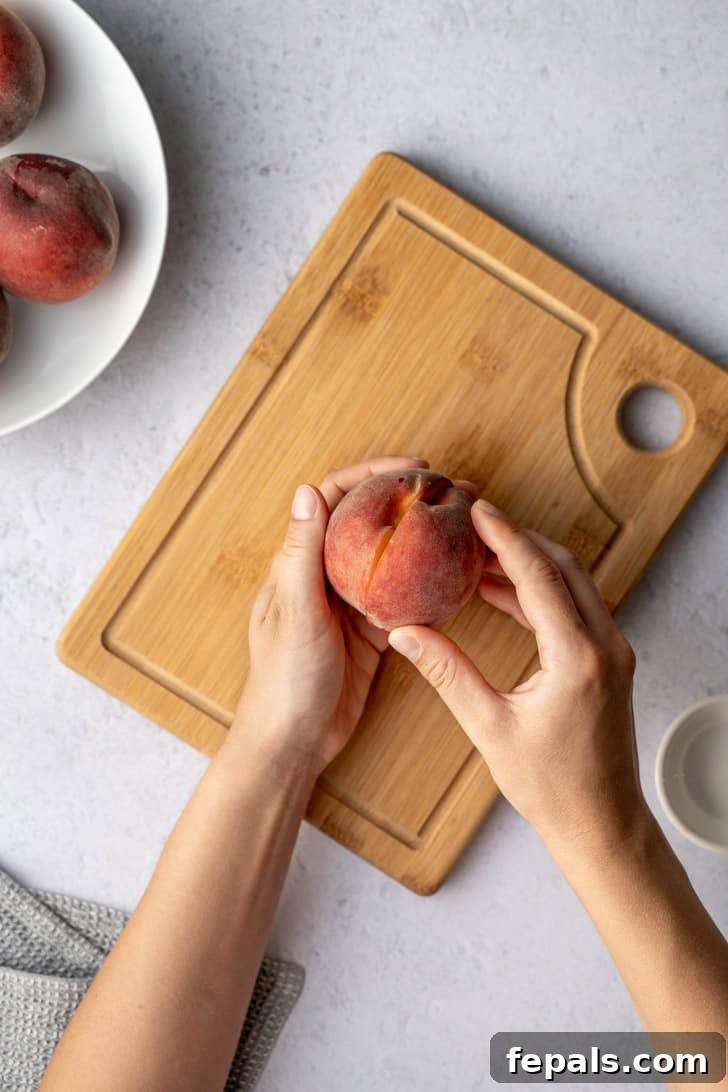
- Twist and Separate the Halves: Once you’ve cut all the way around, gently twist the two halves of the peach in opposite directions with your hands. The peach should easily separate into two halves, with the pit remaining in one half. This method works best with “freestone” peach varieties (more on this below).
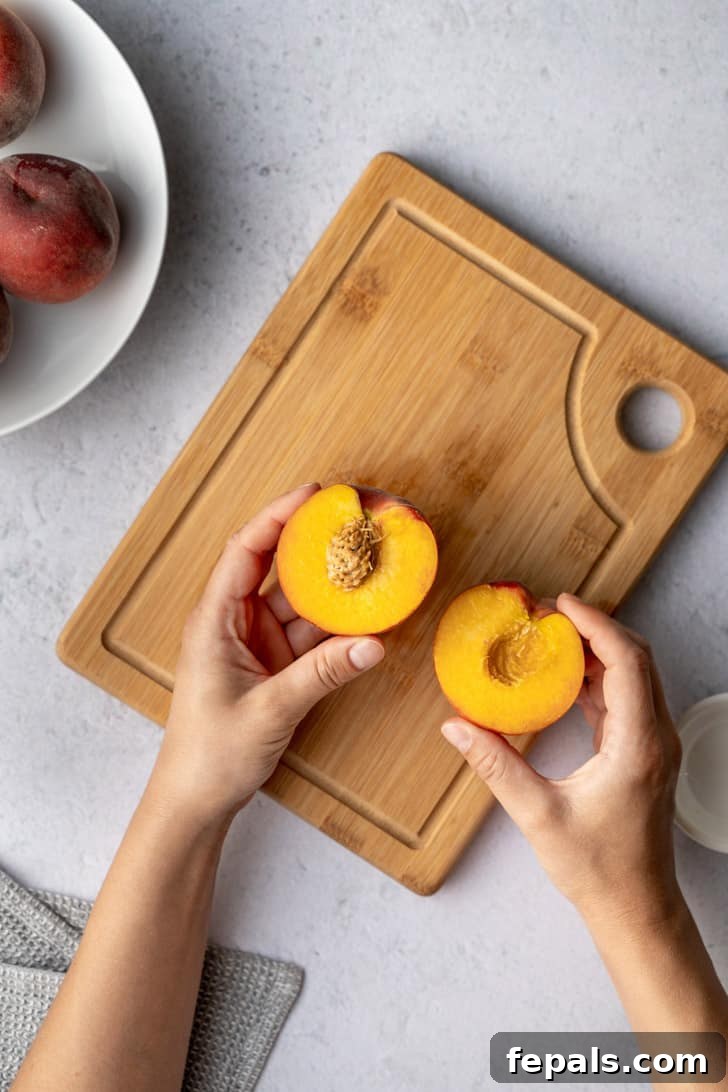
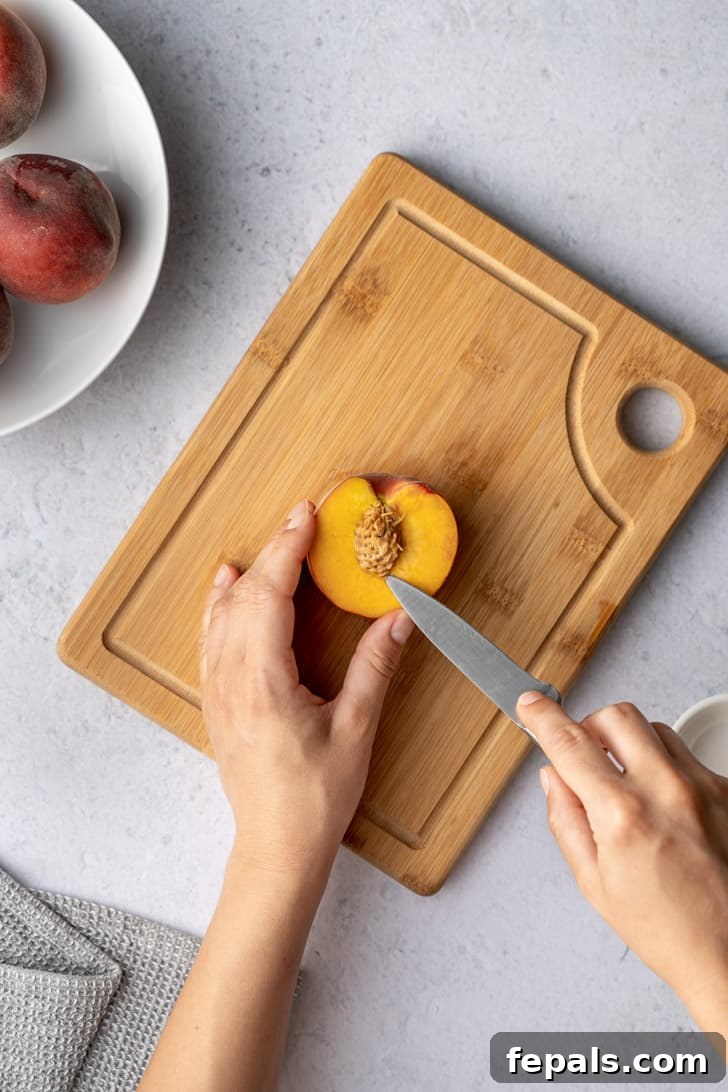
- Remove the Pit: With a peach half containing the pit, carefully wedge the tip of your knife under the pit and gently pry it out. You can also use a spoon for this if the pit is particularly stubborn. Discard the pit.
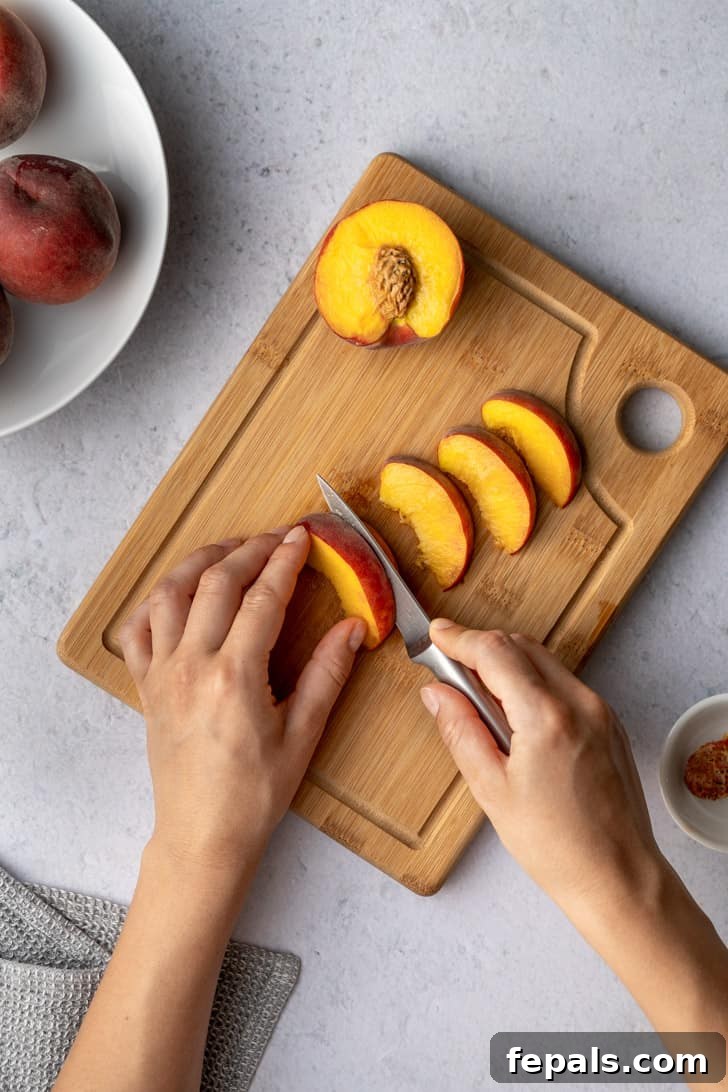
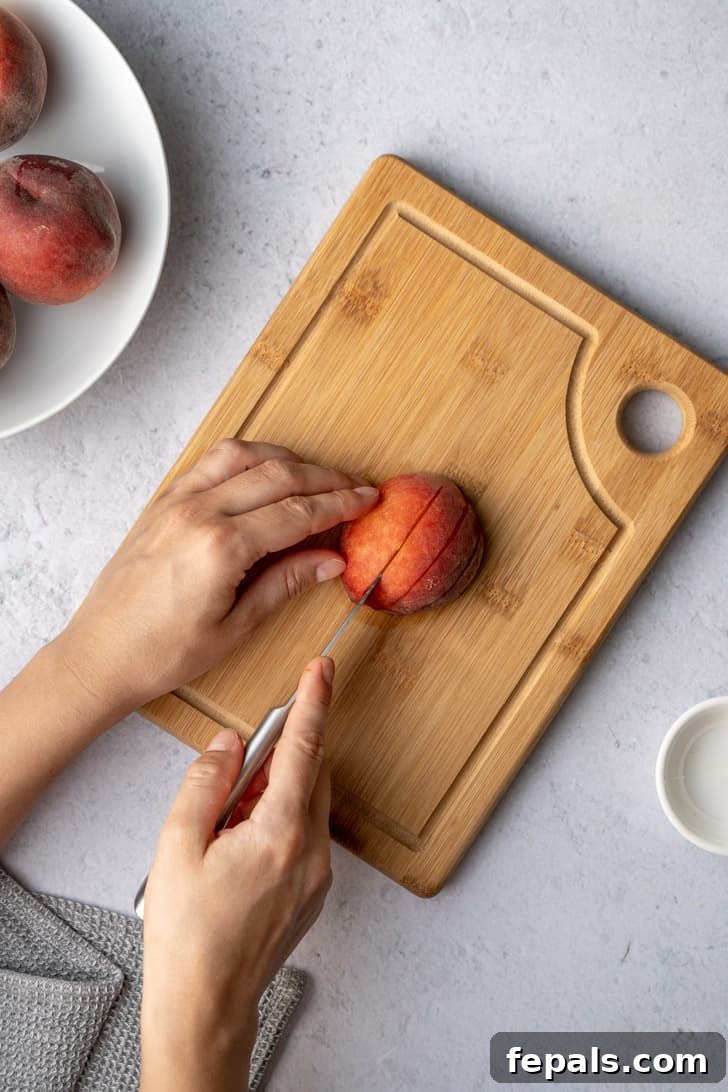
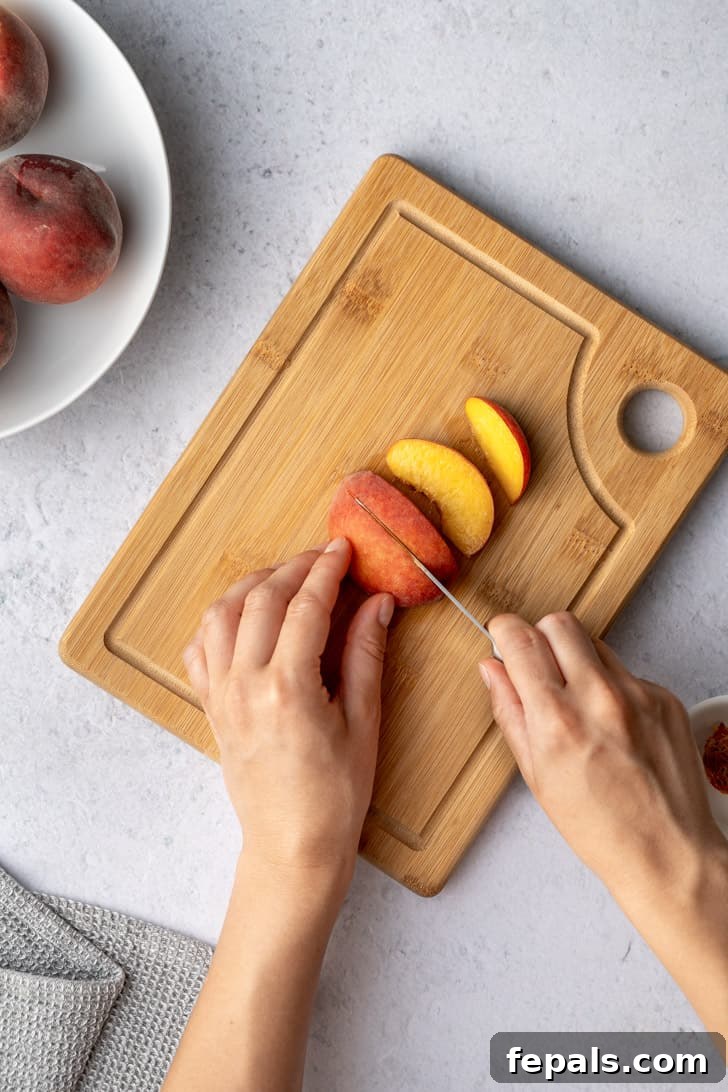
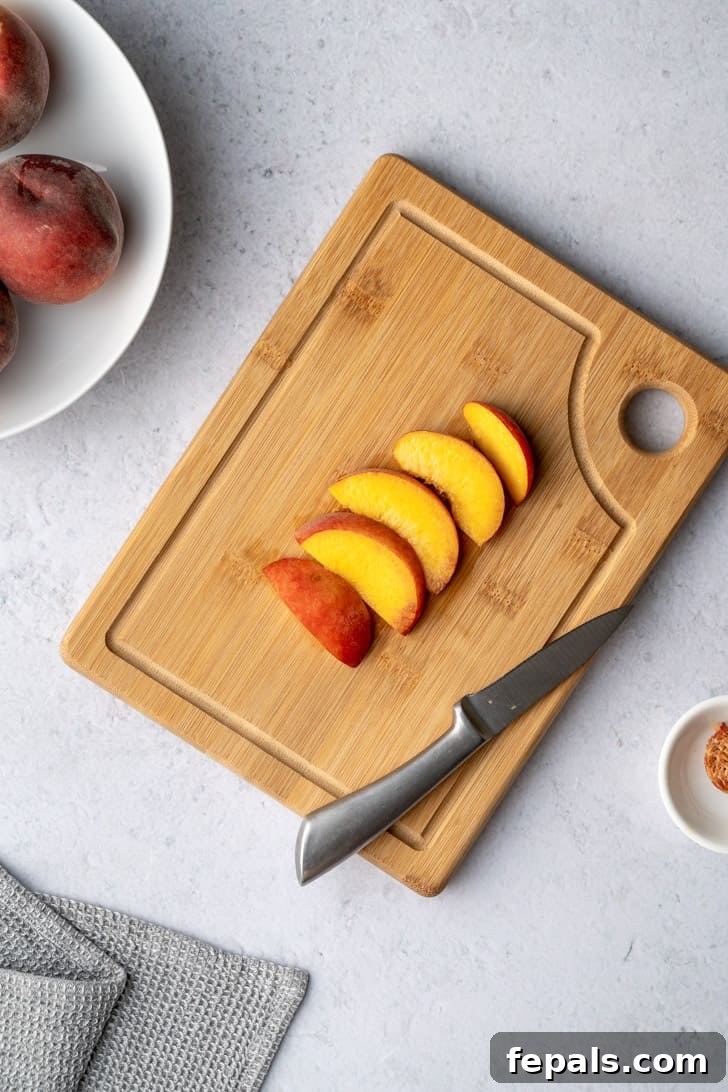
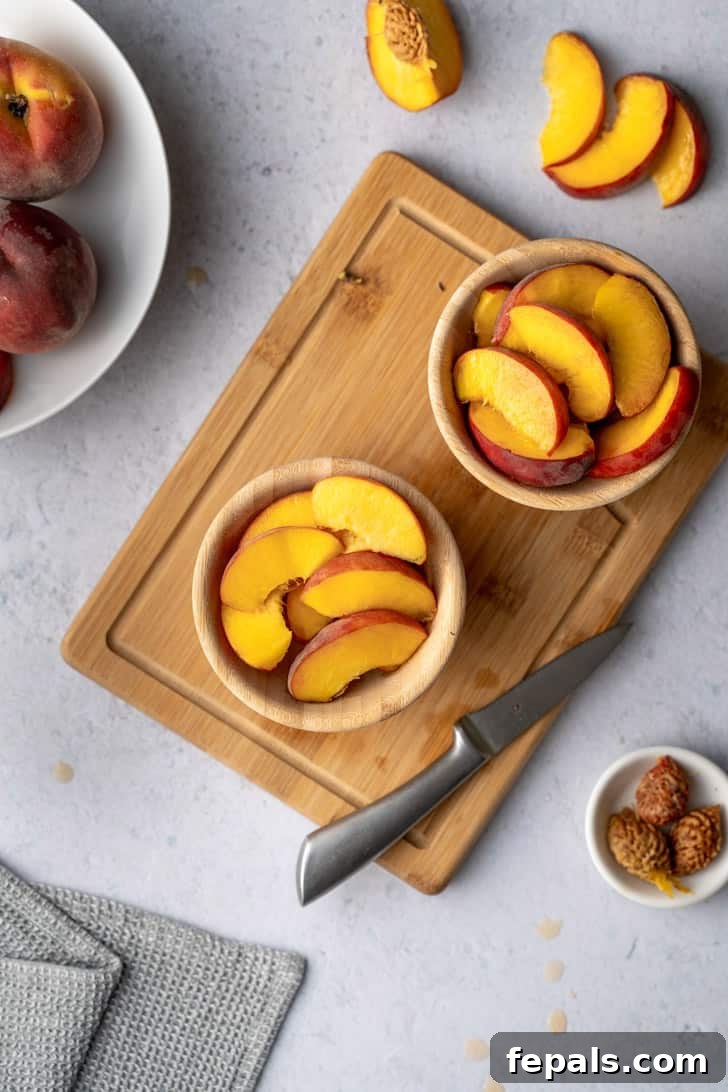
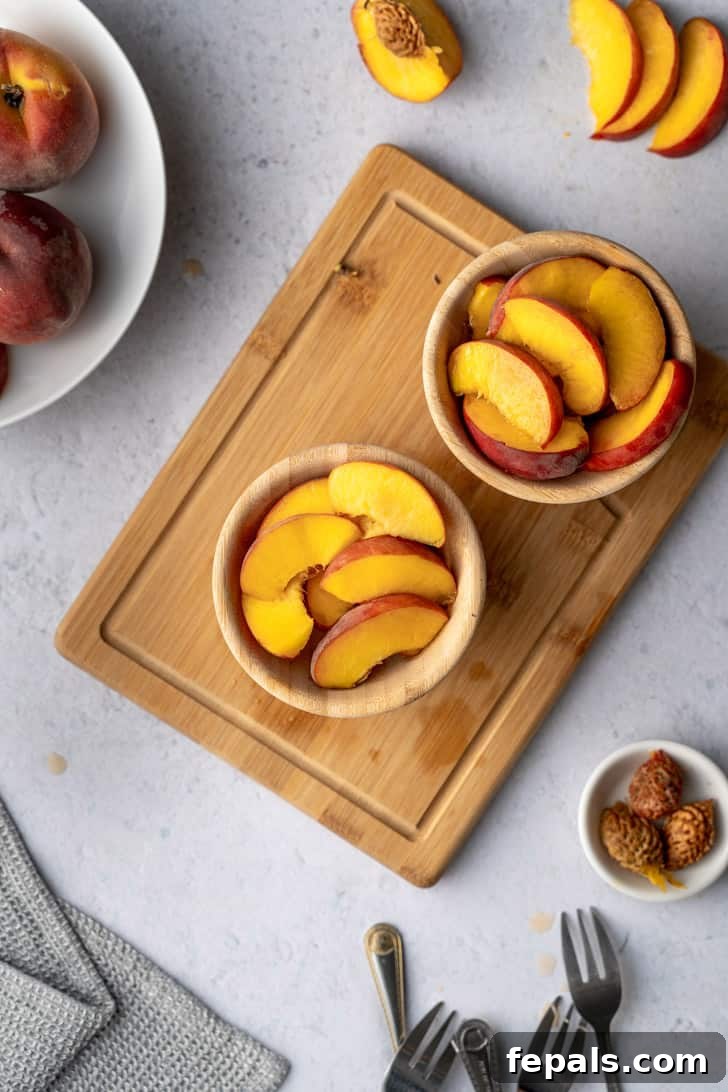
- Slice the Peach Halves: Place each peach half flat-side down on your cutting board. This creates a stable base for safe slicing. Begin to slice the peach into your desired thickness, typically ¼ to ½ inch wide for most applications. Repeat this process for all peach halves.
- Enjoy! Once all your peaches are sliced, they are ready to be savored! Serve them immediately as a refreshing snack, incorporate them into your favorite recipes, or prepare them for storage as outlined above.
Beyond Slices: Other Peach Cuts
While slices are incredibly versatile, peaches can be cut in other ways to suit different culinary needs:
- Diced Peaches: After slicing, simply gather the slices and cut them crosswise into small cubes. Diced peaches are fantastic for salsas, fruit salads, overnight oats, or mixing into yogurt.
- Halved Peaches: For grilling or baking whole, simply separate the peach into halves and remove the pit. These are great brushed with honey and grilled, or baked into a crumble.
- Cubed Peaches: Similar to diced but often larger pieces, ideal for sturdier fruit salads or roasting.
Peach Varieties: Freestone and Clingstone
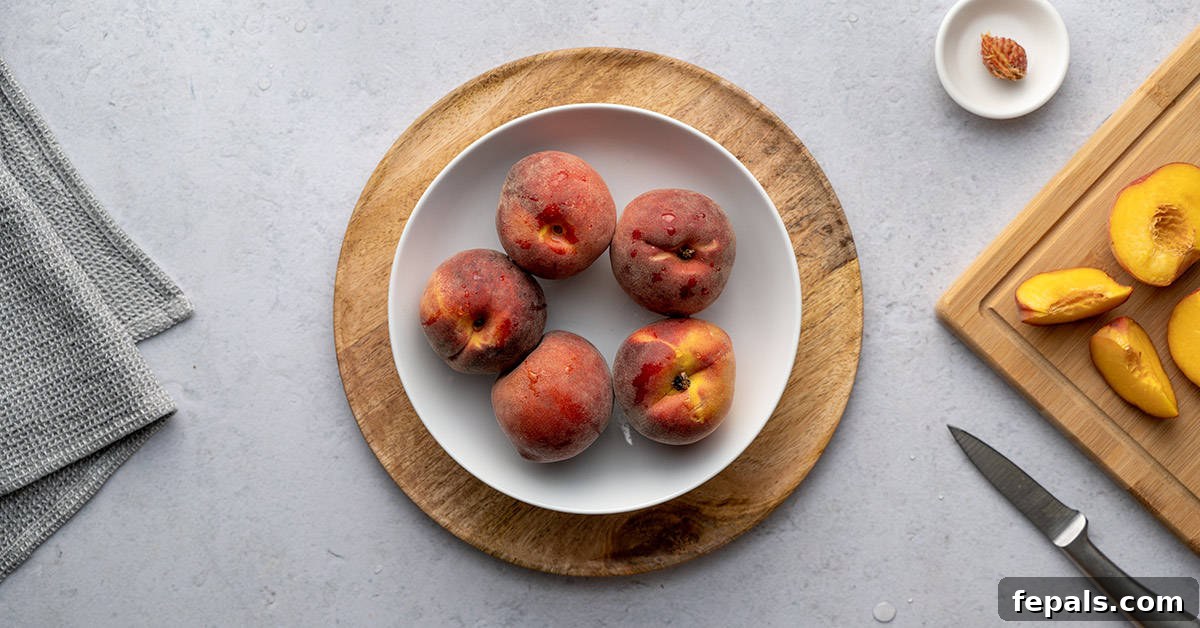
Understanding peach varieties is essential for successful cutting, especially when it comes to pit removal. There are two primary types:
- Freestone Peaches: These are the easiest to work with. As the name suggests, the flesh separates cleanly from the pit (or “stone”) once the peach is cut in half and twisted. Most peaches found in supermarkets during peak season are freestone. Varieties like ‘Redhaven’, ‘Glohaven’, and ‘Elberta’ are common freestones. Our tutorial above is optimized for freestone peaches.
- Clingstone Peaches: With clingstone peaches, the flesh “clings” tightly to the pit, making it much harder to remove cleanly. While you can still cut around the pit, you’ll likely have to cut the flesh away from it in smaller sections. Clingstone peaches are often preferred for canning or processing because their flesh holds its shape well. Varieties like ‘Early Redhaven’ and ‘Contender’ can be clingstone, especially earlier in the season.
If you have a clingstone peach, don’t despair! You can still slice it, but you may need to make more cuts around the pit, essentially carving the flesh away from the stubborn stone.
Frequently Asked Questions About Cutting Peaches
The method detailed in this tutorial, which involves slicing around the pit, twisting the peach into two halves, and then removing the pit, is widely considered the easiest and most efficient way to cut a peach, especially for freestone varieties. This technique minimizes waste and makes pit removal straightforward.
Peeling peaches before cutting is entirely a matter of personal preference. The skin is edible and contains beneficial fiber and nutrients. Many recipes, especially those for baked goods or jams, call for peeled peaches to achieve a smoother texture. If you prefer your peaches without the skin, it is generally easier to peel them after blanching (briefly dipping in boiling water and then ice water) and before slicing. For fresh eating or salads, the skin is often left on for added texture and nutrition.
Unripe peaches should be stored at room temperature to allow them to ripen naturally and develop their full flavor and sweetness. Once peaches are ripe, or if they have been sliced, it is best to refrigerate them. Refrigeration slows down the ripening process significantly and helps maintain their freshness for a longer period, typically 3-5 days for whole ripe peaches and 2-3 days for sliced peaches (especially if treated to prevent browning).
A sharp chef’s knife or a sturdy paring knife are both excellent choices for cutting peaches. The most important factor is that the knife is sharp, as this will allow for clean cuts, require less force, and reduce the risk of slippage, making the process safer and more efficient.
While the primary method involves cutting around the pit to remove it, you can also slice peaches directly with the pit still inside, especially if you plan to dice them into very small pieces. However, this often results in less uniform pieces and can be more challenging to navigate. For clean slices, removing the pit first is recommended.
Delicious Recipes Featuring Peaches
Now that you’re a peach-cutting expert, it’s time to put your skills to good use! Here are some fantastic recipes where fresh, perfectly sliced peaches truly shine:
- Peach Oatmeal Bake
- Healthier Peach Cobbler
- Blueberry Peach Crisp
- Peaches and Cream Overnight Oats
- Grilled Peaches: Halved peaches brushed with honey and grilled are a simple yet elegant dessert.
- Peach Salsa: Diced peaches mixed with red onion, cilantro, jalapeño, and lime juice make a fantastic topping for grilled chicken or fish.
- Summer Peach Salad: Combine peach slices with mozzarella, basil, and a balsamic glaze for a refreshing salad.
- Peach Smoothies: Frozen peach slices are perfect for blending into creamy, refreshing smoothies.
Pin this guide to save it for later!
Pin It
Expand Your Culinary Skills with More Tutorials
If you enjoyed learning how to cut peaches, you might find these other cutting and preparation guides equally useful for your kitchen adventures:
- How To Cut Romaine Lettuce
- How To Cut a Pear
- Homemade Apple Sauce
- How To Cut an Orange
- Cutting an Apple Into Slices
- How to make Greek Seasoning

(Please note: The interactive form for the eBook has been removed to comply with the “SADECE HTML İÇERİĞİ üret” request. You can typically find a similar form on the original website to download the eBook.)
Click Here to Discover My E-book!
We hope this detailed guide has empowered you to confidently cut and enjoy peaches in countless ways. Don’t hesitate to experiment with different uses and share your favorite peach creations with us!
Also, if you try a recipe and you like it, leave me some feedback in the comment section below. Don’t forget to rate the recipe, too! I would love it if you shared it with friends and family.
FOLLOW me on FACEBOOK | INSTAGRAM | PINTEREST | TWITTER for all of my latest blog posts and recipes.
How To Cut Peaches
Rena
1
peach
5
5
10
Equipment
-
1 cutting board
-
1 sharp knife (chef’s knife or paring knife)
Ingredients
-
1
ripe peach (freestone variety recommended)
Instructions
-
Hold the peach and, with a sharp knife, carefully slice down the peach, rotating it around the central stone. Cut all the way around until you meet your starting point.
-
Next, using both hands, gently twist and pull the peach apart into two halves. The stone should remain intact within one half (for freestone peaches).
-
Carefully remove the peach stone from the half using your knife or a spoon, then discard it. Place the peach halves flat-side down on the cutting board.
-
Begin to slice each peach half into individual slices of your desired thickness. Repeat with any remaining peaches.
Notes
- Peaches should be firm-ripe to the touch for optimal slicing and ease of pit removal.
- To prevent browning, lightly toss sliced peaches with lemon or lime juice immediately after cutting.
- Frozen sliced peaches will remain fresh for up to four months when stored in an airtight freezer-safe bag.
Nutrition
Carbohydrates: 15g
Protein: 1g
Fat: 0.4g
Saturated Fat: 0.03g
Polyunsaturated Fat: 0.1g
Monounsaturated Fat: 0.1g
Sodium: 20mg
Potassium: 183mg
Fiber: 2g
Sugar: 13g
Vitamin A: 489IU
Vitamin C: 6mg
Calcium: 6mg
Iron: 1mg
Nutrition information is automatically calculated and should be used as an approximation only.
Additional Info
Ingredient, Snack
American
Tried this technique?
Mention @healthyfitnessmeals or tag #healthyfitnessmeals!