
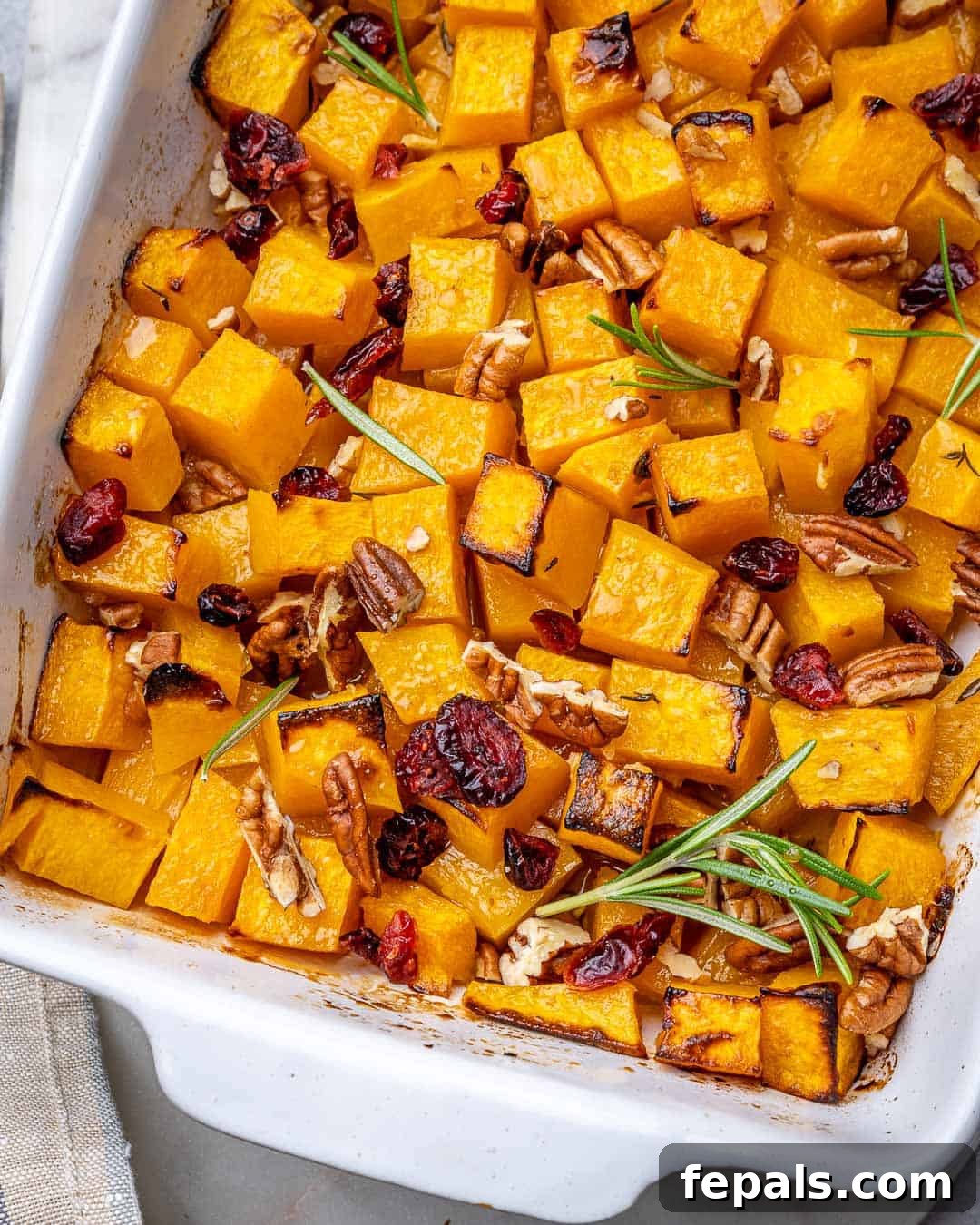
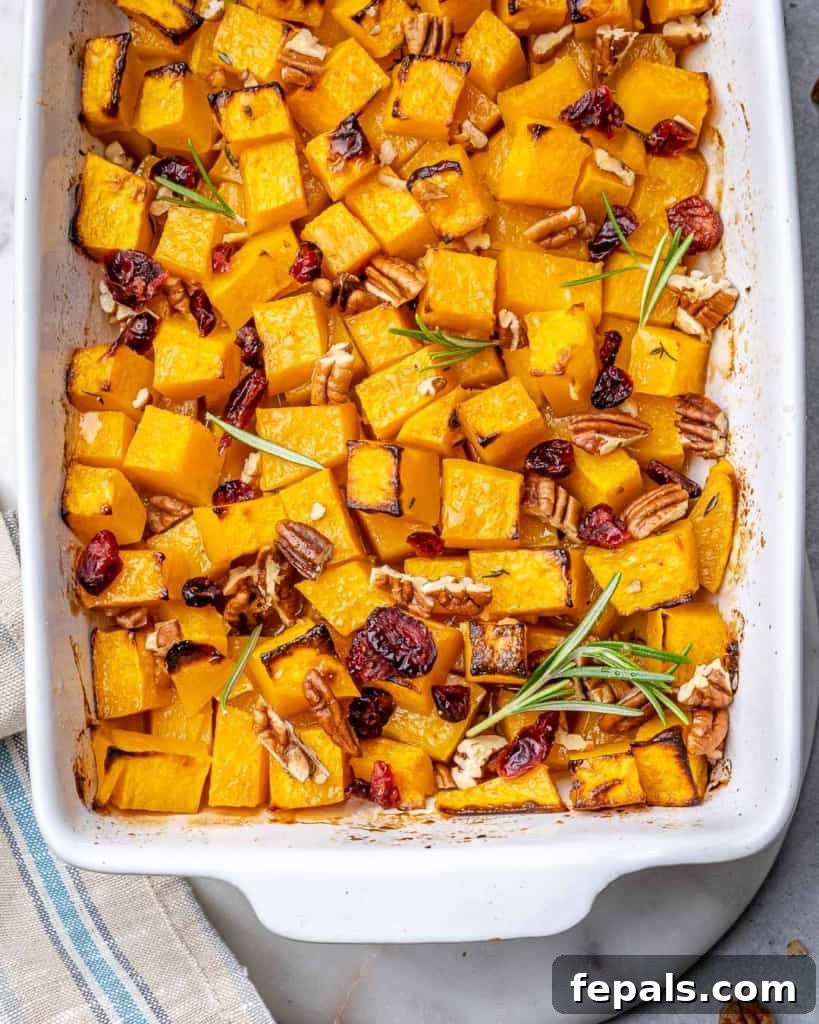
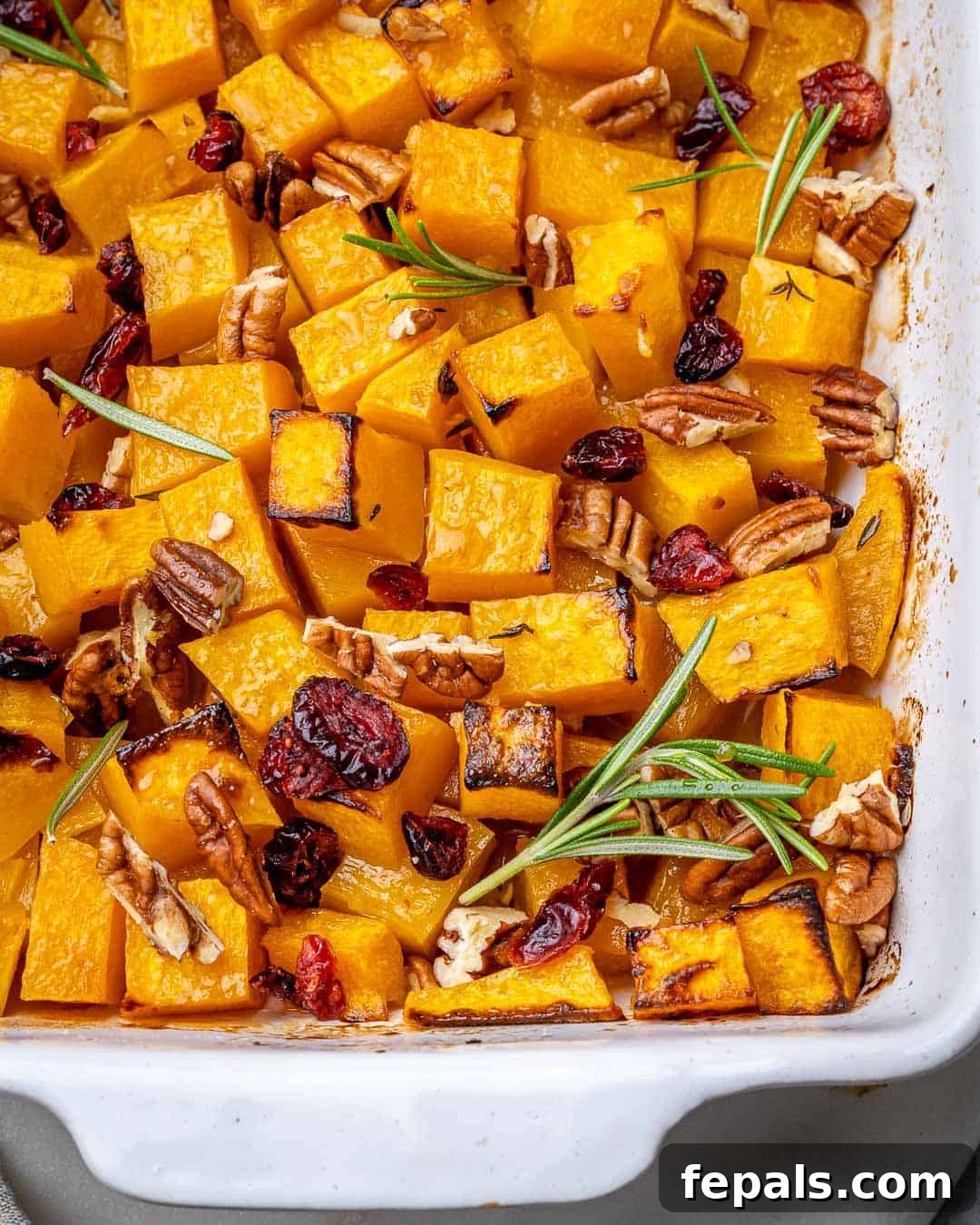
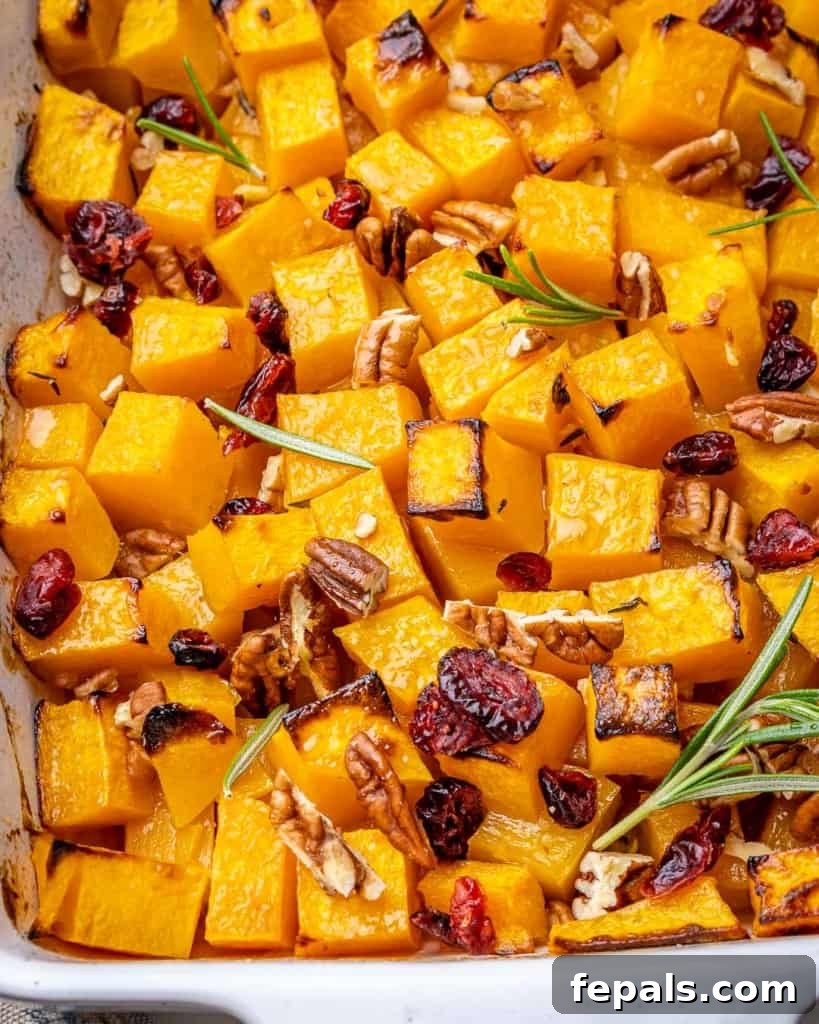
Welcome to the ultimate guide for creating the most delectable and visually appealing side dish for any occasion: Maple Roasted Butternut Squash. This recipe transforms humble butternut squash into a culinary masterpiece, featuring tender, caramelized chunks of squash bathed in a sweet and savory maple syrup and fresh thyme sauce, elegantly finished with a delightful crunch of pecans and a burst of tartness from dried cranberries. More than just a simple side, this dish offers a symphony of flavors and textures, making it an indispensable addition to your holiday table, a cozy weeknight dinner, or a sophisticated brunch spread.
Perfectly suited for vegan and vegetarian diets, this Maple Roasted Butternut Squash recipe is not only incredibly easy to prepare but also packed with essential nutrients. It’s a versatile dish that marries the natural sweetness of the squash with the earthy aroma of thyme and the rich notes of maple, creating a harmonious balance that truly excites the palate. Prepare to impress your guests and delight your family with a side dish that’s both comforting and elegant.
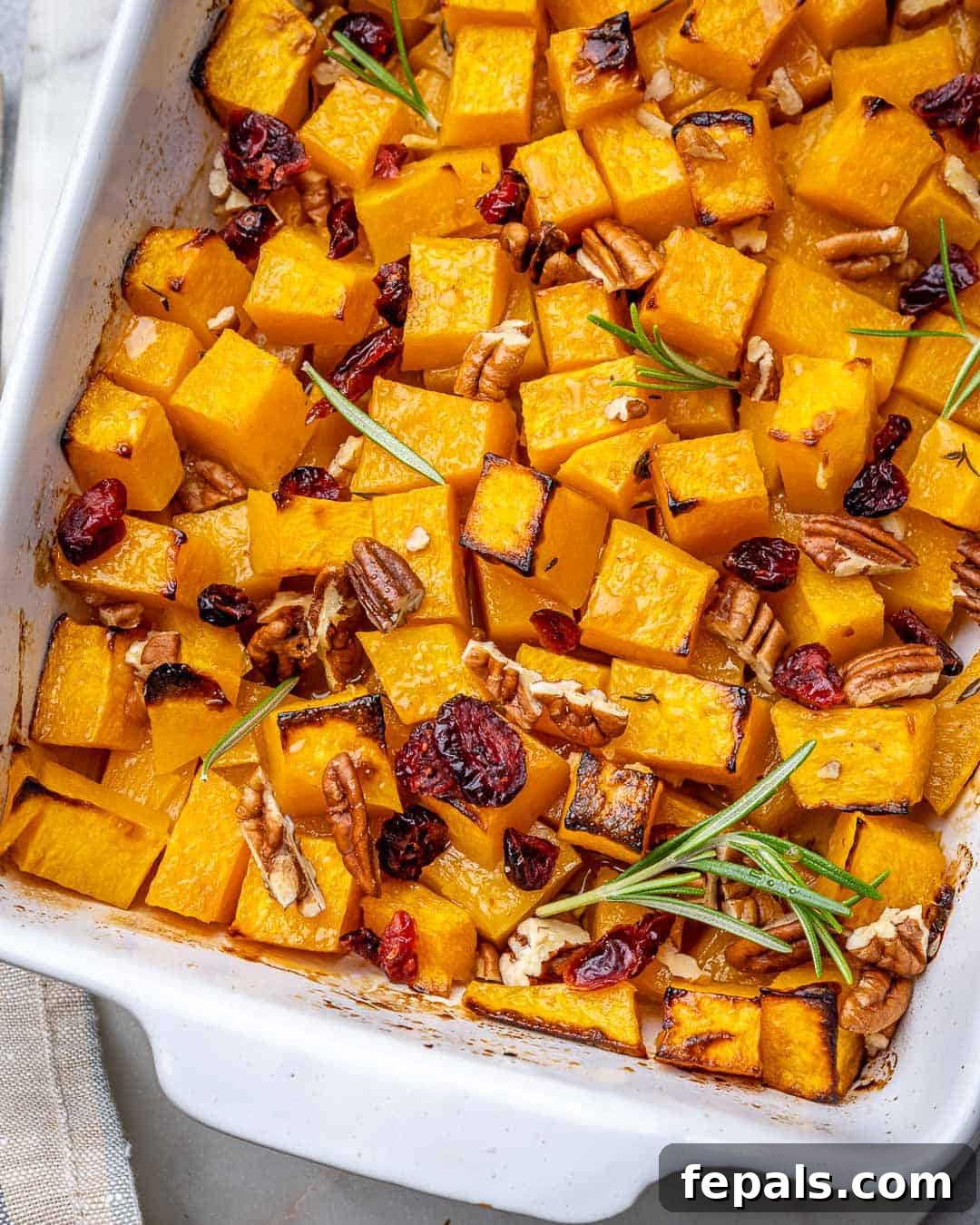
Imagine the enticing aroma filling your kitchen as tender butternut squash cubes caramelize to perfection, coated in a glistening, sticky maple-thyme glaze. The addition of toasted pecans provides a satisfying crunch, while vibrant dried cranberries introduce a delightful tang, cutting through the sweetness and adding a festive touch. This Maple Roasted Butternut Squash recipe is a testament to how simple ingredients can create extraordinary flavors. Its straightforward preparation makes it accessible for home cooks of all skill levels, ensuring a delicious outcome every time.
Beyond its irresistible taste, this dish offers impressive nutritional benefits, making it a smart choice for any meal. It’s a particularly fantastic option for autumn gatherings and major holidays like Thanksgiving, Christmas, or even Easter, serving as a naturally vegan and vegetarian centerpiece. Whether you’re planning an elaborate feast or a casual family dinner, this roasted butternut squash is sure to become a beloved favorite among kids and adults alike.
Looking to complete your holiday menu with more incredible dishes? Consider pairing this vibrant roasted butternut squash with our savory Mustard Maple Glaze Roasted Turkey Breast for a rich main course. And don’t forget a classic, yet healthier, complement like our Healthy Green Bean Casserole to round out your festive spread.
Why You Need to Make This Maple Roasted Butternut Squash Recipe
There are countless reasons why this Maple Roasted Butternut Squash recipe deserves a prime spot in your culinary repertoire. It’s more than just a side dish; it’s an experience that combines incredible taste with significant health benefits and unparalleled ease of preparation.
- Explosion of Flavor: Butternut squash inherently possesses a sweet, nutty, and slightly earthy flavor profile that truly shines when roasted. When combined with the warmth of pure maple syrup, the aromatic freshness of thyme, and a hint of savory garlic, it transforms into an incredibly complex and satisfying dish. The natural sugars caramelize beautifully in the oven, creating a rich, deep sweetness that’s perfectly balanced by the herbaceous thyme. This harmonious blend of sweet and savory notes makes it an ideal complement to a wide range of main courses, especially during the festive holiday season.
- Remarkably Healthy Side Dish: Butternut squash is a nutritional powerhouse, packed with an impressive array of vitamins, minerals, and dietary fiber. It’s an excellent source of Vitamin A, crucial for vision and immune function, and Vitamin C, an antioxidant that supports skin health and boosts immunity. Additionally, it provides a good amount of fiber, aiding in digestion, and potassium, essential for heart health. Being a naturally vegan and vegetarian recipe, it caters to various dietary needs without compromising on taste or satisfaction, making it a guilt-free indulgence for everyone at the table.
- Effortlessly Simple to Prepare: Despite its gourmet appeal, this recipe is surprisingly simple to put together. The primary steps involve minimal hands-on time: peeling and chopping the squash, whisking together a simple yet flavorful sauce, coating the squash, and letting the oven do the rest. For an even quicker preparation, many grocery stores offer pre-cut butternut squash, saving you valuable time and effort in the kitchen. This makes it an convenient choice for busy weeknights when you crave a wholesome meal or for holiday entertaining when you have many dishes to juggle.
- Versatile for Any Occasion: While often associated with fall and winter holidays, this maple roasted butternut squash is truly a year-round delight. Its vibrant colors and comforting flavors make it suitable for Thanksgiving, Christmas, or even a spring gathering. It can be served as a sophisticated side dish, added to salads for extra texture and flavor, or incorporated into grain bowls for a hearty lunch. Its adaptability means you’ll find yourself returning to this recipe again and again.
- Kid-Friendly Appeal: The inherent sweetness of butternut squash, enhanced by the maple syrup, makes this dish surprisingly appealing to children. It’s a wonderful way to introduce a nutritious vegetable into their diet in a format they’ll genuinely enjoy. The delightful caramelization and tender texture are often a hit with younger palates, ensuring that this healthy side doesn’t go uneaten.
Essential Ingredients for Maple Roasted Butternut Squash
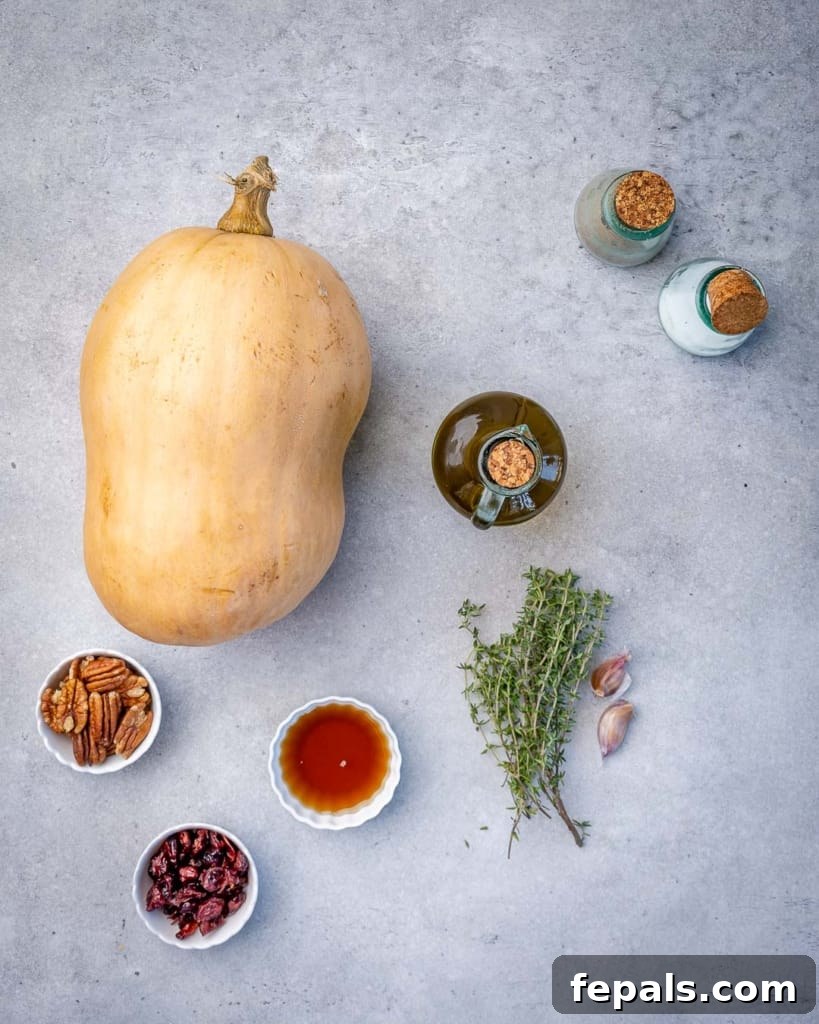
Crafting this delightful side dish requires a selection of fresh, high-quality ingredients that work in harmony to create its signature sweet and savory profile. Below is a comprehensive list of what you’ll need, along with a brief explanation of each component’s role in the recipe. Exact measurements can be found in the detailed recipe card further down this page.
- Butternut Squash: The star of our dish. Choose a firm, unblemished squash that feels heavy for its size. Its vibrant orange flesh is sweet and creamy when cooked, offering a perfect base for our flavors. Approximately 2.5 lbs, peeled and cut into ½-inch cubes, is ideal for a standard serving size.
- Olive Oil: A good quality extra virgin olive oil helps coat the squash, allowing for even roasting and caramelization, and prevents sticking. It also contributes a subtle fruity note that complements the other ingredients.
- Maple Syrup: This is where the magic happens! Use pure maple syrup (Grade A or B) for the best results. Avoid imitation pancake syrups, as they often contain corn syrup and artificial flavors that won’t provide the same rich, natural sweetness and depth of flavor. Maple syrup gives the squash that irresistible sticky glaze and sweet warmth.
- Garlic: Freshly minced garlic adds a pungent, aromatic counterpoint to the sweetness of the maple and squash. It introduces a savory depth that elevates the overall flavor profile, preventing the dish from being overly sweet.
- Kosher Salt: Essential for seasoning, kosher salt enhances the natural flavors of the squash and balances the sweetness. It also helps in drawing out moisture, contributing to better caramelization.
- Ground Pepper: A dash of freshly ground black pepper adds a subtle warmth and a touch of spicy kick, rounding out the flavor complexity.
- Fresh Thyme: The herbaceous heart of the seasoning. Fresh thyme sprigs (leaves picked) infuse the dish with an earthy, slightly lemon-mint flavor that is quintessential for fall and winter dishes. While dried thyme can be substituted, fresh thyme offers a more vibrant and aromatic experience.
- Dried Cranberries and Pecans (Optional, for serving): These are the perfect finishing touches. Dried cranberries provide a chewy texture and a tart burst of flavor that beautifully contrasts the sweet squash. Toasted pecans add a buttery crunch and nutty depth, enhancing the overall sensory experience. They are optional but highly recommended for a truly festive and complete dish.
Step-by-Step Guide: How to Perfectly Roast Butternut Squash with Maple Thyme Glaze
Achieving perfectly tender and caramelized maple roasted butternut squash is a simple process, even for beginner cooks. Follow these straightforward steps to create a show-stopping side dish that tastes as good as it looks.
- Prepare Your Oven: Begin by preheating your oven to 400°F (200°C). This ensures that when the squash goes in, it starts roasting immediately, leading to a more consistent and appealing caramelization. While the oven preheats, you can prepare the squash and the flavoring sauce.
- Craft the Flavorful Maple Thyme Sauce: In a medium-sized bowl, combine the liquid gold: maple syrup, along with the olive oil, minced garlic, kosher salt, and ground pepper. Gently stir or whisk these ingredients together until they are thoroughly blended. The fresh thyme leaves, picked from their sprigs, should also be added at this stage. This creates a beautifully aromatic and sticky glaze that will infuse every piece of squash with incredible flavor.
- Prepare and Coat the Butternut Squash: If starting with a whole squash, peel it carefully and cut it into uniform ½-inch cubes. Uniformity in size is key for even cooking. Place all the prepared butternut squash cubes into a large mixing bowl. Pour the freshly prepared maple-thyme mixture over the squash. Using a spatula or your clean hands, gently toss the squash until every cube is thoroughly and evenly coated with the sticky, aromatic sauce. Ensure no piece is left unglazed!
- Arrange for Roasting: Transfer the coated butternut squash cubes from the mixing bowl to a large baking dish or a rimmed baking sheet. It’s crucial to spread the squash in a single layer, ensuring that pieces do not overlap significantly. Overcrowding the pan will cause the squash to steam instead of roast, preventing that desirable golden-brown caramelization. If necessary, use two baking sheets to give the squash enough space.
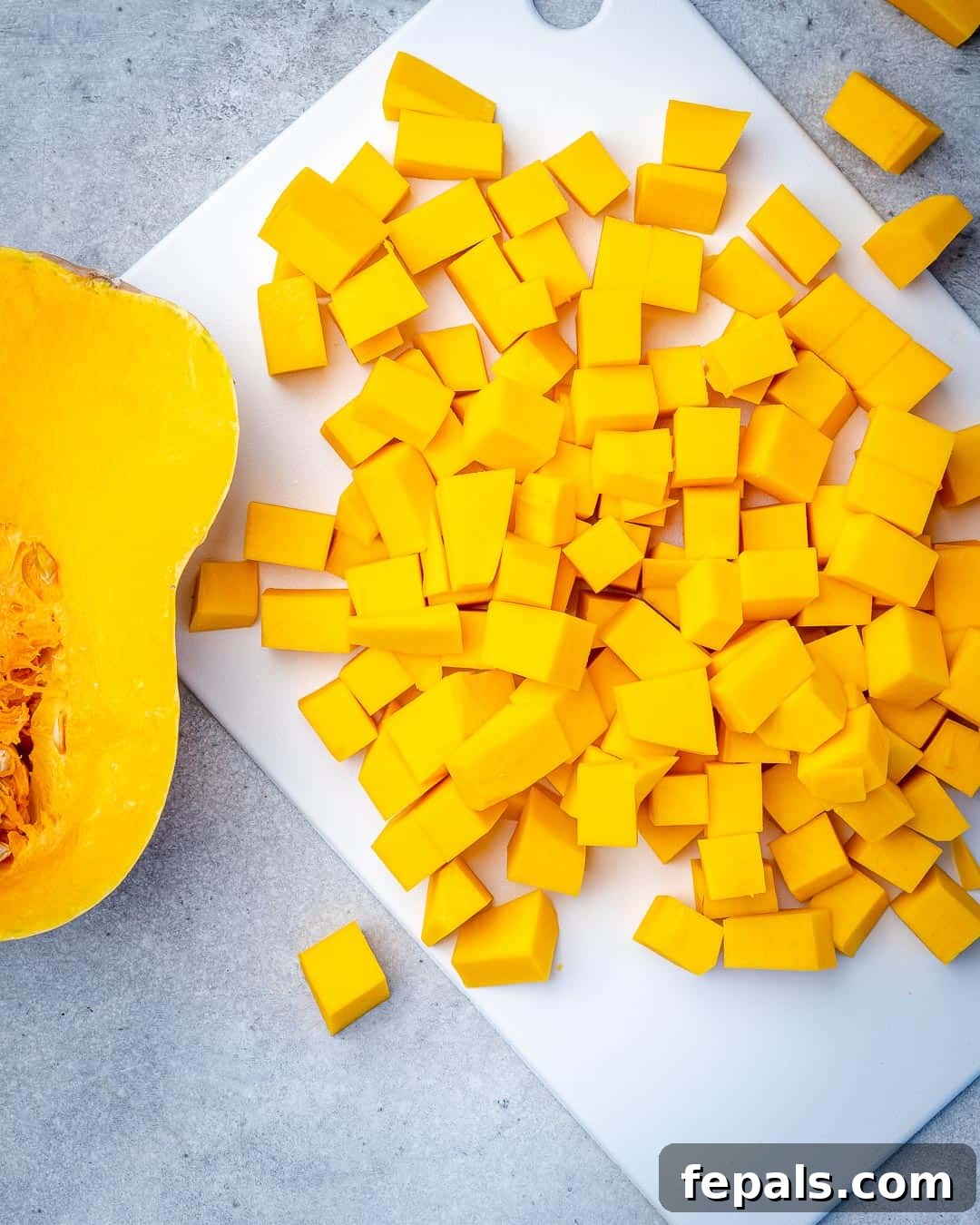
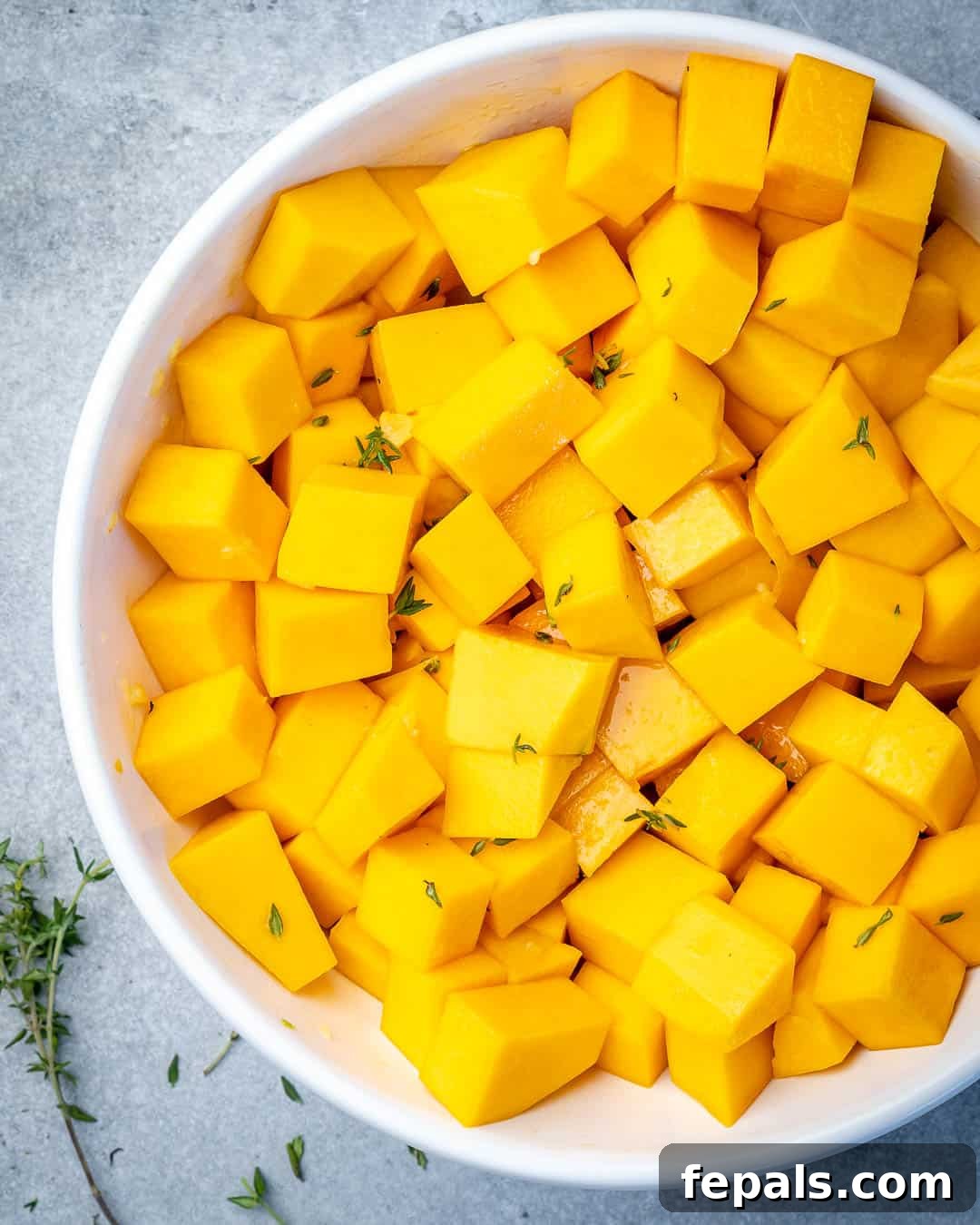
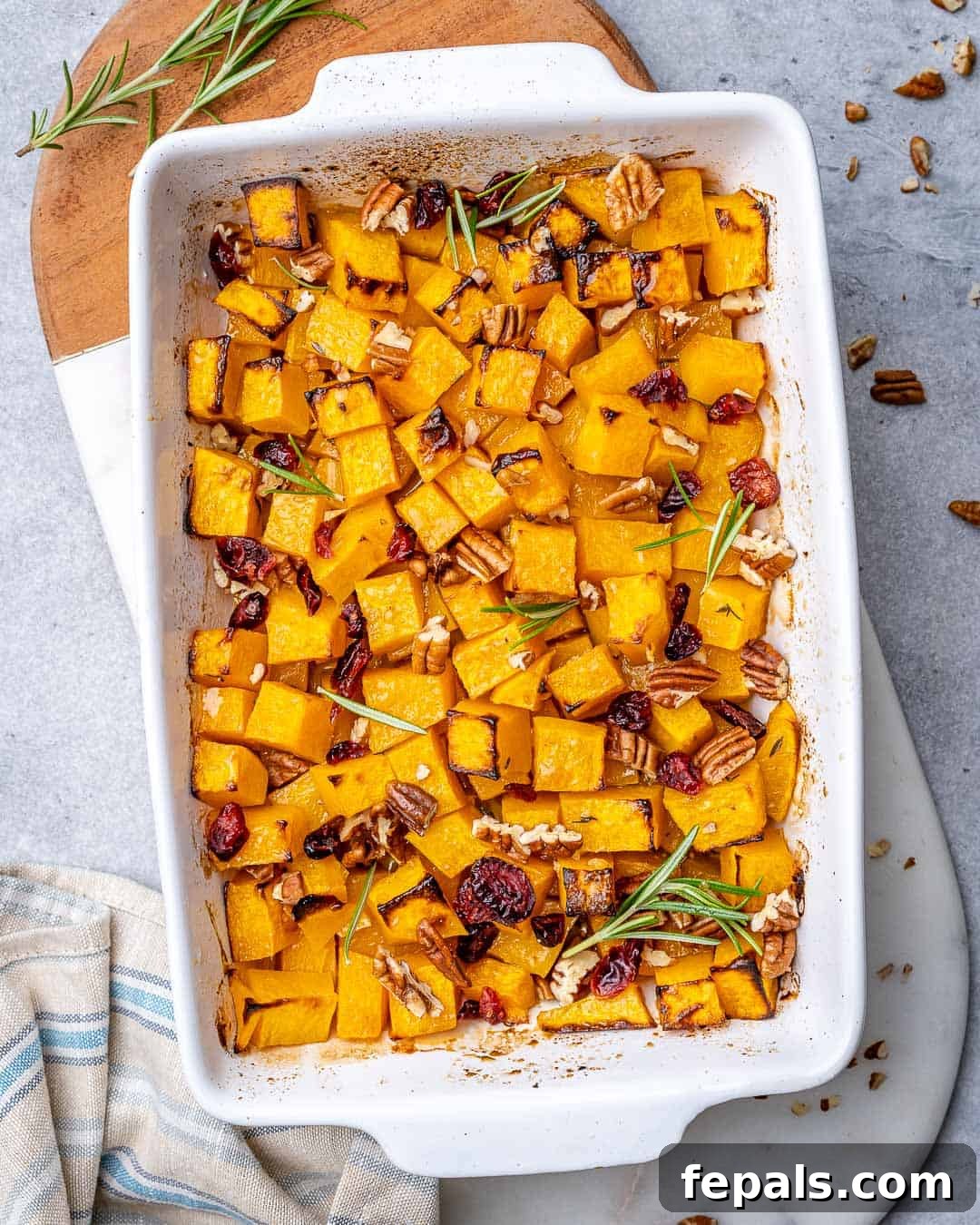
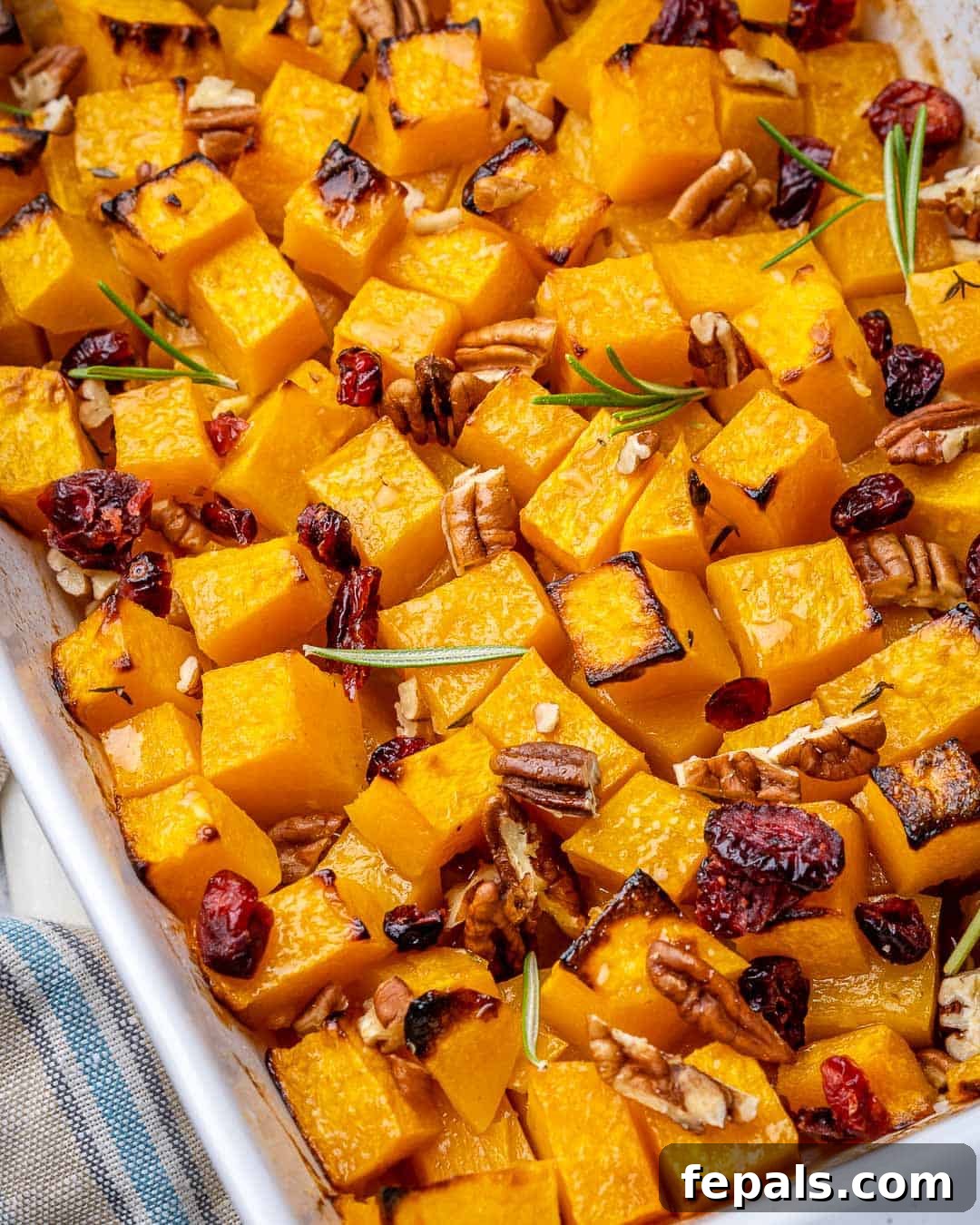
- Roast to Perfection: Place the baking dish or sheet into the preheated oven. Bake for approximately 30-40 minutes. Halfway through the cooking time (around the 15-20 minute mark), give the squash a gentle toss to ensure even cooking and browning on all sides. Continue baking until the butternut squash is fork-tender and the edges have turned beautifully golden brown and caramelized. The natural sugars from the maple syrup will create a sticky, glossy coating.
- Cool, Garnish, and Serve: Once the squash is perfectly roasted, remove the dish from the oven. Allow it to cool for a few minutes; this helps the flavors meld and the glaze to set slightly. For an added touch of elegance and flavor, garnish generously with extra fresh thyme leaves, a sprinkling of vibrant dried cranberries, and crunchy pecans. Serve warm as an exquisite side dish that’s guaranteed to be a crowd-pleaser.
Expert Tips & Clever Substitutions for Your Roasted Butternut Squash
Enhance your Maple Roasted Butternut Squash experience with these helpful tips and smart substitutions, ensuring perfect results every time and allowing for creative variations.
-
Choosing and Preparing Butternut Squash:
- Whole vs. Pre-cut: For maximum freshness and flavor, buying a whole butternut squash is often preferred. However, if time is of the essence, many grocery stores offer pre-peeled and pre-chopped butternut squash in the produce section. While convenient, check the freshness carefully.
- Peeling and Cutting: If starting with a whole squash, peeling can be challenging. A sharp vegetable peeler works best. For easier cutting, microwave the whole squash for 1-2 minutes to soften the skin slightly before peeling and chopping. Always use a sturdy chef’s knife and cut the squash in half horizontally first, then vertically, scoop out seeds, and finally cube into ½-inch pieces.
- Uniform Cubes: Ensure all squash pieces are roughly the same size (about ½-inch) for even cooking. Smaller pieces might burn, while larger ones might remain undercooked.
-
Sweetener Alternatives:
- Maple Syrup Quality: Always opt for pure maple syrup. The flavor complexity and natural sweetness are incomparable to artificial pancake syrups. Grade A Dark Robust Taste or Grade B (if available) offer a richer, more pronounced maple flavor.
- Honey Substitution: If maple syrup isn’t available or you prefer a different flavor profile, an equal amount of honey can be used. Honey will provide a similar sticky glaze and sweetness but with its distinct floral notes.
-
Herb Variations:
- Fresh vs. Dried Thyme: Fresh thyme is highly recommended for its bright, earthy aroma and potent flavor, which truly elevates the dish. If using dried thyme, remember that it is more concentrated; use about one-third the amount of fresh thyme (e.g., 1 teaspoon dried for 1 tablespoon fresh).
- Other Herbs: Consider experimenting with other fresh herbs like rosemary or sage for different flavor profiles. Both pair beautifully with butternut squash and maple.
-
Achieving Optimal Caramelization:
- Don’t Overcrowd the Pan: This is a crucial tip! Ensure the squash is spread in a single layer on the baking sheet. If the pan is overcrowded, the squash will steam rather than roast, resulting in a soggy texture and no golden-brown edges. Use two baking sheets if necessary.
- Broiling for a Finish: If your squash is tender but hasn’t achieved that desired golden-brown, caramelized crust after the initial roasting time, a quick stint under the broiler can work wonders. Watch it very closely, as sugar-coated vegetables can burn quickly under the broiler (usually 2-3 minutes is sufficient).
-
Make Ahead & Storage:
- Prep Ahead: You can peel and chop the butternut squash a day or two in advance and store it in an airtight container in the refrigerator. The maple-thyme sauce can also be mixed ahead of time and stored separately.
- Storage: Leftover roasted butternut squash can be stored in an airtight container in the refrigerator for up to 3-4 days.
- Reheating: Reheat gently in the microwave or, for best results, spread on a baking sheet and warm in a 350°F (175°C) oven until heated through and slightly re-caramelized, about 10-15 minutes.
Frequently Asked Questions About Maple Roasted Butternut Squash
Yes, when roasting butternut squash in small cubes, it is highly recommended to peel it first. While the skin is technically edible, it can be tough and fibrous after roasting, detracting from the tender texture of the squash flesh. For larger cuts or halves, some people choose to leave the skin on and scoop out the flesh after cooking, but for cubes, peeling is key for a pleasant eating experience.
Cutting a butternut squash can seem daunting due to its hard exterior. The safest and easiest method involves a few steps: First, trim off both ends of the squash to create flat surfaces. Next, cut the squash in half horizontally, usually where the narrower neck meets the wider base. This makes it more manageable. Use a sturdy vegetable peeler or a sharp knife to carefully remove the skin from both halves, working from top to bottom. Once peeled, cut each half vertically, scoop out the seeds and fibrous strands from the base, and then proceed to chop the flesh into uniform ½-inch cubes. If it’s still too hard, you can microwave the whole squash for 1-2 minutes before cutting to soften the skin slightly.
To maintain freshness and flavor, store any leftover maple roasted butternut squash in an airtight container in the refrigerator. Properly stored, it will remain delicious for approximately 3 to 4 days. This makes it a great candidate for meal prepping, as you can enjoy it throughout the week.
This versatile side dish complements a wide variety of meals. It’s an excellent accompaniment to poultry, such as our succulent Lemon Garlic Oven-Roasted Whole Chicken or the festive Maple Mustard Glazed Turkey Breast. For vegetarian options, it can be served over pasta dishes, tossed into a fresh salad, or integrated into hearty grain bowls. Try it with our Easy Quinoa Vegetable Bowl or add a sweet and savory element to this Black Bean Quinoa Salad. It also pairs wonderfully with pork or even a simple grilled steak.
Absolutely! This recipe is ideal for make-ahead planning, especially for holidays. You can peel and chop the butternut squash a day or two in advance and store it in an airtight container in the fridge. The maple-thyme sauce can also be prepared ahead of time and kept separately. On the day of serving, simply combine the squash with the sauce and roast. If you want to fully cook it ahead, roast it until tender but slightly less caramelized, then reheat in the oven and broil briefly before serving to get those beautiful golden edges.
Yes, butternut squash is incredibly healthy! It’s low in calories but rich in essential nutrients. It’s an excellent source of beta-carotene (which converts to Vitamin A in the body), Vitamin C, dietary fiber, potassium, and magnesium. These nutrients support vision, immune health, digestion, and cardiovascular function, making it a fantastic addition to a balanced diet.
Explore More Delicious Side Dishes for Your Table
If you’ve enjoyed this Maple Roasted Butternut Squash, you’ll love exploring these other fantastic side dish recipes from our collection. They are perfect for complementing any meal, adding flavor, texture, and nutritional value to your dining experience.
- Simple Oven-Roasted Butternut Squash: A classic, no-fuss approach to roasting butternut squash, highlighting its natural sweetness with minimal seasoning. Perfect for a quick and healthy everyday side.
- Elegant Hasselback Butternut Squash Recipe: Elevate your squash game with this visually stunning Hasselback technique. Thinly sliced and roasted until tender, it’s a beautiful and flavorful alternative.
- Cozy Pumpkin Spice Twice Baked Sweet Potatoes: Indulge in the comforting flavors of fall with these creamy, spiced sweet potatoes, baked twice for ultimate tenderness and flavor.
- Savory Easy Tuscan Stuffed Mushrooms: A delightful appetizer or side, these mushrooms are filled with a savory mixture inspired by Tuscan flavors, offering a rich and satisfying bite.
- Crispy Baked Parmesan Zucchini Fries: A healthier alternative to traditional fries, these zucchini sticks are coated in Parmesan and herbs, then baked until perfectly crispy and golden.
- Flavorful Garlic Charred Brussels Sprouts: Transform plain Brussels sprouts into a crave-worthy side with charring and a punch of garlic. They’re deliciously tender with crispy edges.
We hope you enjoy preparing and savoring this incredible Maple Roasted Butternut Squash recipe. Its combination of sweet, savory, and aromatic notes makes it a truly unforgettable dish that is sure to earn rave reviews. If you try this recipe and love it as much as we do, please consider leaving us a review and feedback in the comment section below. Your thoughts and ratings are invaluable to us and help others discover delicious new recipes!
Don’t forget to share your culinary creations with friends and family, spreading the joy of wholesome, flavorful eating. We would be absolutely thrilled if you shared your masterpieces on social media! Tag us using the hashtag #healthyfitnessmeals on INSTAGRAM for a chance to be featured on our page. Make sure to FOLLOW Healthy Fitness Meals on FACEBOOK | INSTAGRAM | PINTEREST | TWITTER to stay updated with all our latest blog posts, healthy living tips, and mouth-watering recipes. Happy cooking!
Maple Roasted Butternut Squash
Rena
6 Servings
10 minutes
40 minutes
50 minutes
Print Recipe
Ingredients
- 2.5 lbs butternut squash, peeled and cut into ½-inch cubes
- 2 tbsp olive oil
- 2 tbsp maple syrup
- 2 cloves garlic, minced
- 1 tsp kosher salt
- 1/4 tsp ground pepper
- 3-4 sprigs of fresh thyme, leaves picked
- Optional: dried cranberries and pecans, to serve
Instructions
-
Preheat the oven to 400°F (200°C).
-
In a small bowl, add maple syrup, olive oil, minced garlic, kosher salt, ground pepper, and fresh thyme leaves. Mix well to combine, forming the glaze.
-
Place the peeled and cubed butternut squash in a large bowl. Pour the maple mixture over the squash and toss until every piece is evenly coated.
-
Transfer the coated squash to a large baking dish or a rimmed baking sheet, spreading it out in a single layer to ensure even roasting. Avoid overcrowding the pan.
-
Bake for 30-40 minutes, tossing gently halfway through, or until the squash is fork-tender and the tops begin to brown and caramelize beautifully.
-
Remove the dish from the oven and allow it to cool for a few minutes.
-
Garnish generously with extra fresh thyme, dried cranberries, and pecans, if desired, before serving warm.
Notes
- Butternut squash: You can buy it whole and prepare it yourself, or opt for pre-peeled and chopped squash for added convenience.
- Maple syrup: For the best flavor, use real, pure maple syrup. Avoid artificial pancake syrups. Honey can be used as a substitute if preferred.
- Fresh thyme: Fresh thyme offers superior flavor. If substituting with dried thyme, use about 1/3 of the amount (e.g., 1 tsp dried for 1 tbsp fresh).
- Caramelization: If the squash is tender but not golden brown, you can broil it for a couple of minutes at the end. Watch it carefully to prevent burning.
- Storage: Store any leftovers in a sealed container in the fridge for up to 3-4 days. Reheat in the microwave or oven until warmed through.
Nutrition Information
Calories: 146kcal
Carbohydrates: 27g
Protein: 2g
Fat: 5g
Saturated Fat: 1g
Sodium: 396mg
Potassium: 680mg
Fiber: 4g
Sugar: 8g
Vitamin A: 20090IU
Vitamin C: 40mg
Calcium: 100mg
Iron: 1mg
Nutrition information is automatically calculated and should be used as an approximation.
Additional Info
Side Dish
American
Tried this recipe?
Mention @healthyfitnessmeals or tag #healthyfitnessmeals!