
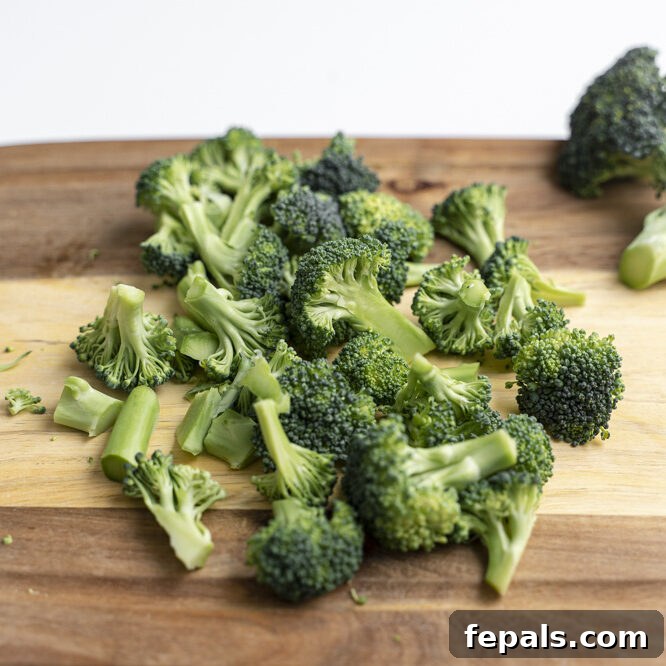
Unlock the secrets to perfectly cut broccoli florets with this ultimate guide! Learning how to cut broccoli efficiently means you’ll consistently achieve uniform pieces, ideal for roasting, enjoying raw in salads, or incorporating into a myriad of delicious recipes. Say goodbye to unevenly cooked broccoli and hello to culinary perfection. Beyond just the cutting technique, we’ll delve into essential tips for selecting the freshest heads, washing them thoroughly, and storing them to maximize their shelf life and nutritional value.
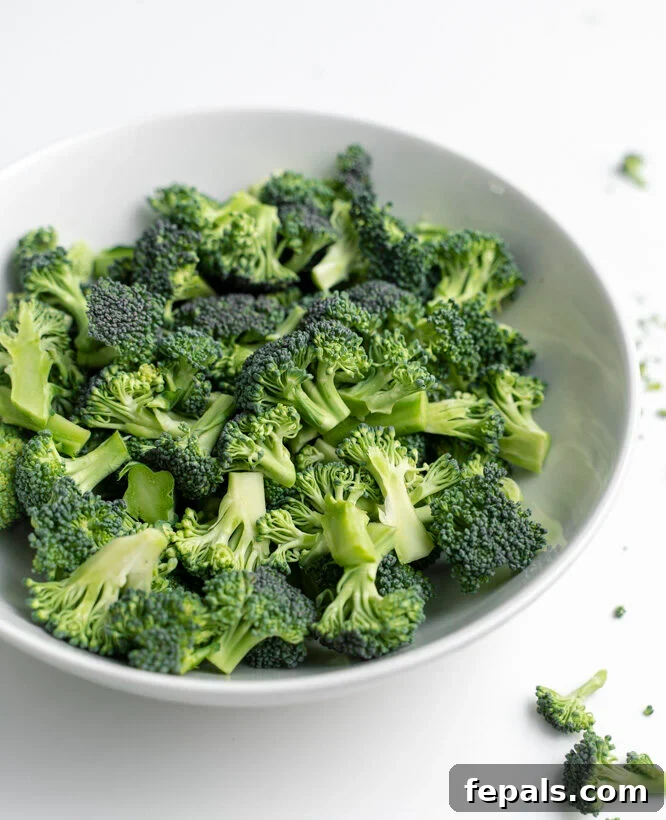
Once you master this straightforward method for how to cut broccoli, you’ll effortlessly produce uniform-sized florets. These versatile pieces are perfect for dipping into a creamy Homemade Ranch Dip, adding vibrant green crunch to a savory Shrimp and Broccoli Stir Fry, enriching a comforting Broccoli Cheese Casserole, or elevating countless other dishes.
Broccoli isn’t just a versatile ingredient; it’s a nutritional powerhouse and one of the best vegetables to regularly include in your diet. It’s naturally low in calories, fat-free, and an excellent source of plant-based protein. More impressively, it’s packed with a vast array of essential vitamins, minerals, and antioxidants, contributing significantly to overall health and wellness. This guide will walk you through each step to transform a fresh head of broccoli into ready-to-use florets.
Why This Comprehensive Guide Will Transform Your Kitchen Prep
Learning the proper technique for cutting broccoli might seem minor, but it can significantly impact your cooking experience and the enjoyment of your meals. This guide offers more than just a cutting lesson; it provides a pathway to more efficient, delicious, and healthy culinary endeavors:
- Delicious Results Every Time: When broccoli florets are cut to a consistent size, they cook evenly, ensuring perfect texture and flavor in every bite. Whether you’re roasting it until slightly crispy, steaming it to tender perfection, or stir-frying for a quick meal, uniform pieces absorb seasonings beautifully and achieve the desired doneness simultaneously. This even cooking prevents some pieces from being overcooked and mushy while others remain raw and hard.
- Boost Your Health: Broccoli is celebrated as one of the healthiest vegetables available, brimming with vitamins C and K, fiber, and potent antioxidants that support immune function, bone health, and overall vitality. By learning the best way to prepare it, you’ll be more inclined to incorporate this nutrient-dense food into your daily meals, maximizing its health benefits and adding vibrant nutrition to your diet effortlessly.
- Simplify Meal Prep: Cut your fresh broccoli ahead of time, and you’ll always have a healthy vegetable ready to add to any recipe on your weekly menu. Properly cut and stored broccoli can last in the refrigerator for up to four days, making it an ideal component for advanced meal preparation. For even longer storage, you can easily freeze your prepped florets, keeping them fresh and ready to use for several months, drastically cutting down on cooking time during busy weeknights.
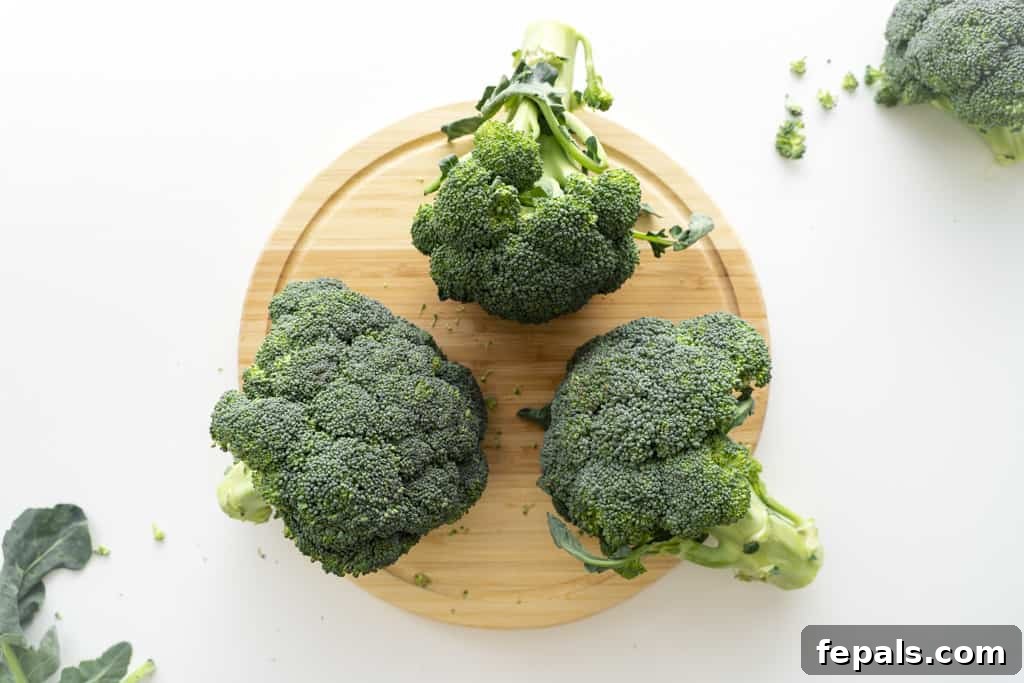
Essential Tools for Perfect Broccoli Preparation
Preparing broccoli is a simple task that requires just a few basic kitchen tools. Having the right equipment makes the process smoother, safer, and more efficient:
- Sharp Knife: A good knife is paramount for clean and safe cuts. We recommend a large 7 to 8-inch chef’s knife for its versatility and leverage, which makes slicing through thick broccoli stalks much easier. Alternatively, a smaller paring knife can be very useful for trimming individual florets and precisely slicing off tougher stem sections. A sharp blade reduces the effort needed, minimizes the risk of slippage, and ensures cleaner cuts that are more appealing visually.
- Sturdy Cutting Board: A reliable cutting board is essential for any vegetable preparation. Choose one that is gentle on your knife edge, easy to clean, and durable enough to withstand regular use. Wood and bamboo cutting boards are popular choices for vegetables because they are naturally resistant to knife marks, help maintain the sharpness of your blades, and offer a stable, non-slip surface. Plastic cutting boards are also a good option, provided they are sturdy and don’t slide around.
- Fresh Broccoli Heads: Naturally, you’ll need fresh broccoli! The quantity will depend on your recipe, but a general rule of thumb is that one medium-sized head of broccoli typically yields approximately 3 to 3 1/2 cups of florets. When selecting broccoli, look for vibrant green heads with tight, compact florets and firm stalks, free from yellowing or soft spots.
Step-by-Step Guide: How to Cut Broccoli into Florets with Ease
Cutting broccoli into florets is a surprisingly simple and clean process, making it one of the easiest vegetables to prepare. Follow these steps for perfectly sized pieces:
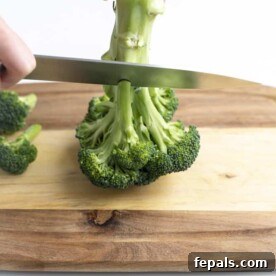
- Cut Off the Main Stalk: Begin by placing the head of the broccoli upside down on your cutting board, with the florets resting on the surface. Using your chef’s knife, slice through the main stalk, approximately 1 inch below where the smaller stems branch off from the base of the head. This separates the main, tougher stalk from the more tender florets and their individual stems. Don’t discard the stalk; it’s edible and delicious!
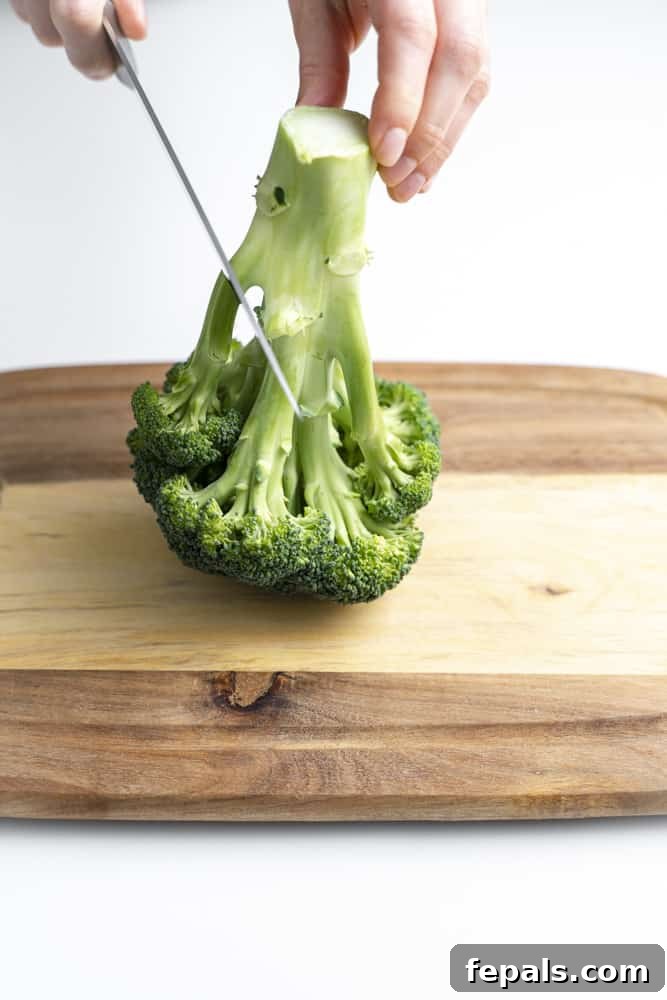


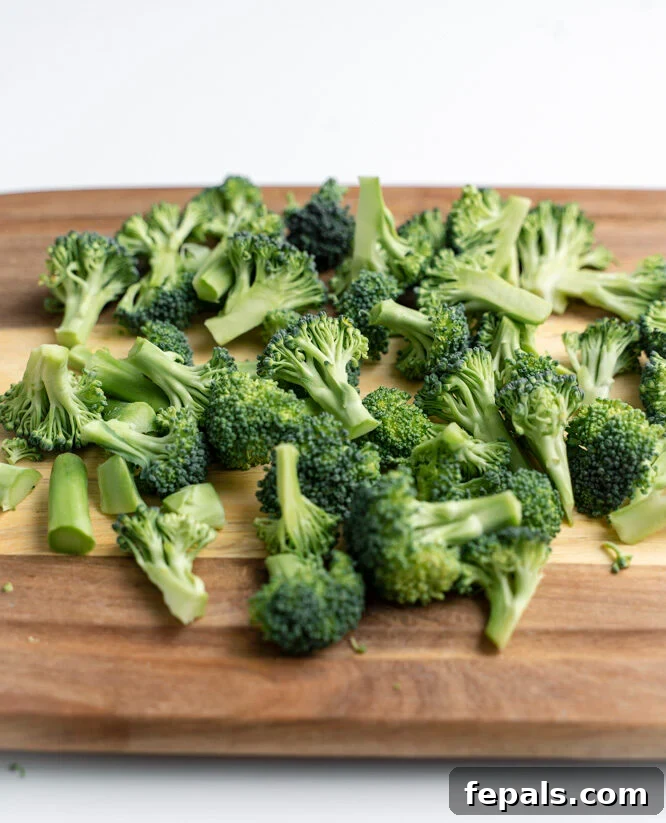
- Detach Individual Florets and Trim Stems: Once the main stalk is removed, you’ll be left with a cluster of florets. Gently pull or slice these florets apart, separating them into smaller, manageable pieces. You have the flexibility to determine the length of the stems on each floret. For a more rustic appearance or for dishes where you appreciate a bit more crunch, you can leave the stems longer. If you prefer smaller, more compact florets (often referred to as “stubby”), trim the stems closer to the head. The ideal stem length often depends on how you intend to use the broccoli.
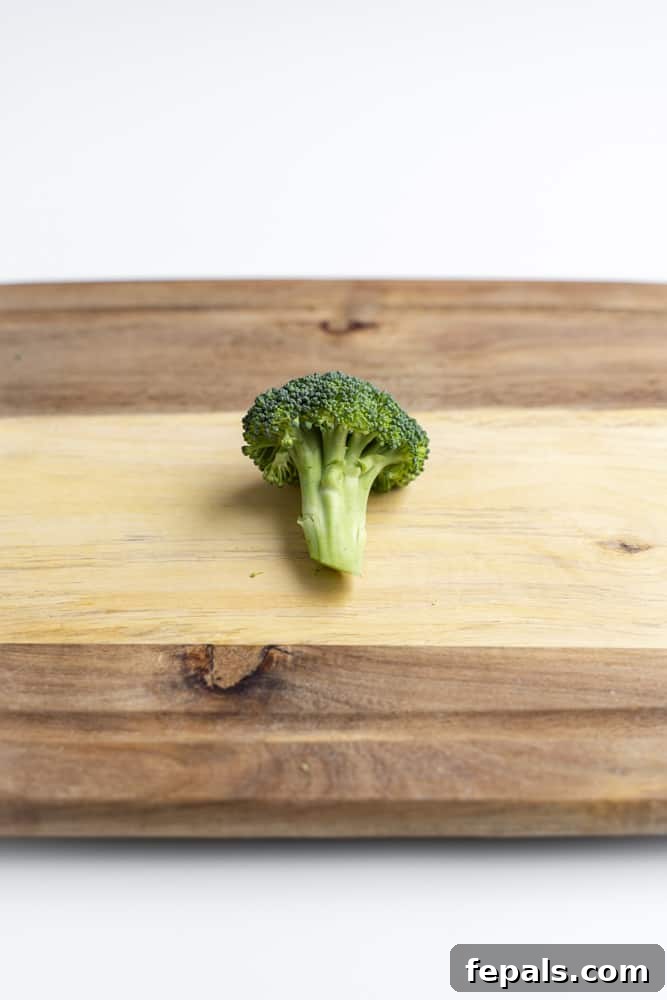

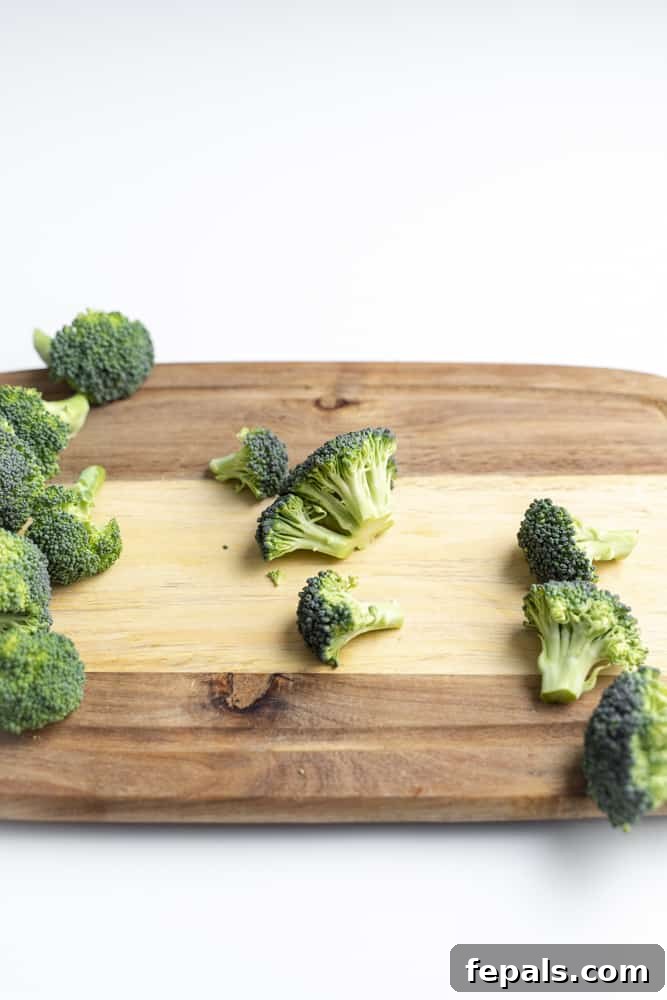
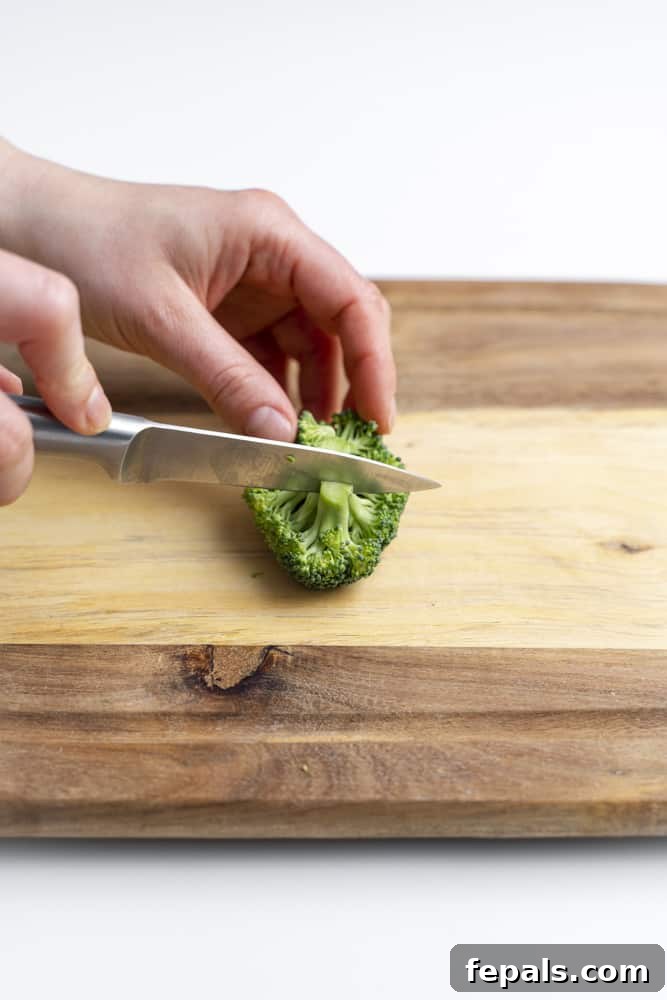
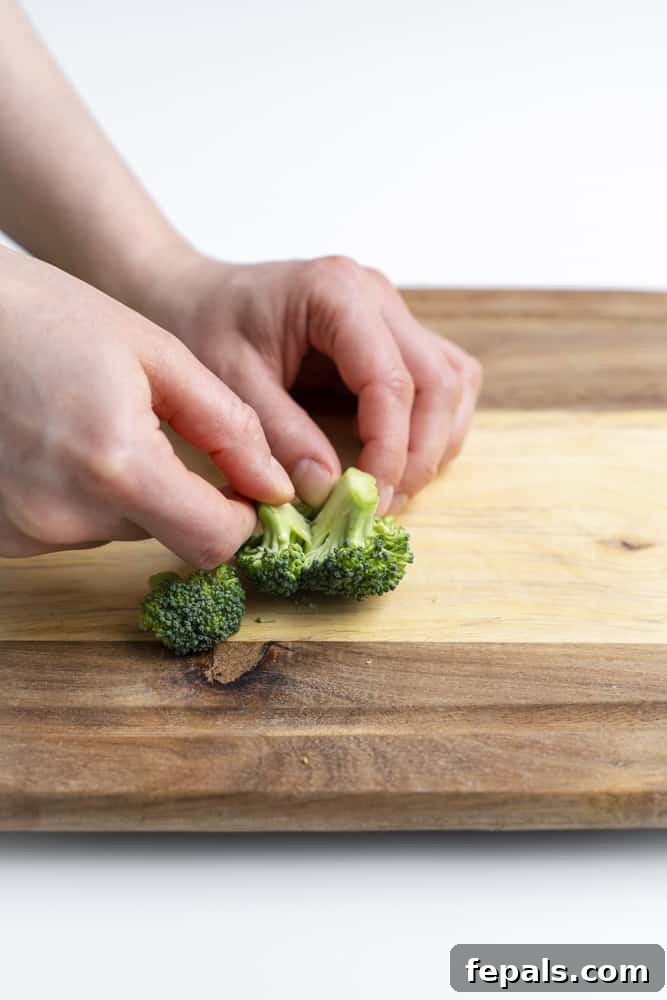
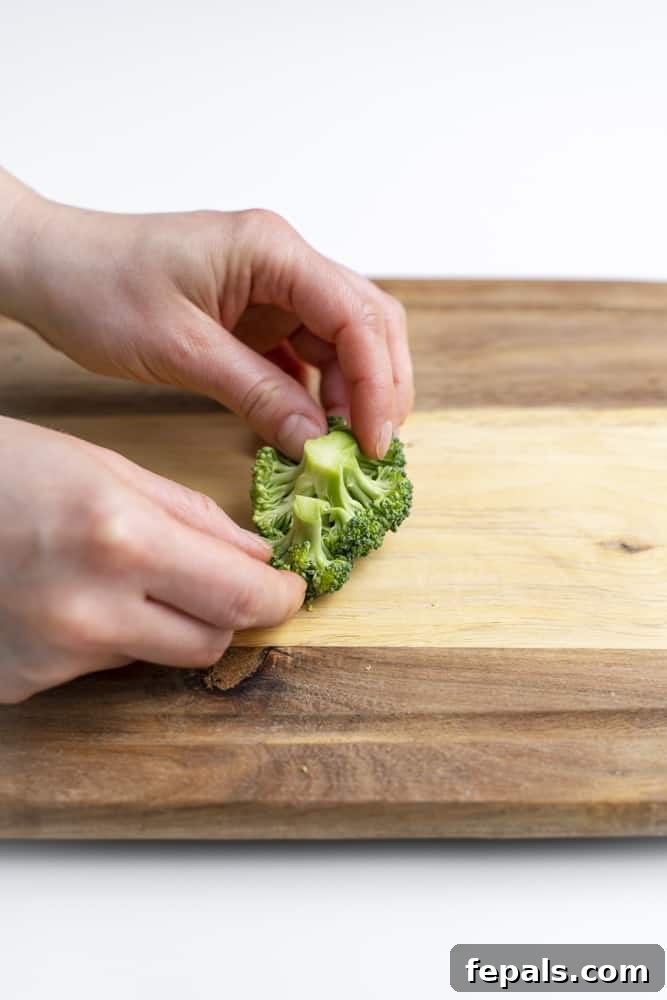
- Slice Apart Larger Florets for Uniformity: Examine your separated florets. If any are significantly larger than others, carefully slice through them with your knife, then gently pull the pieces apart with your fingers. The goal is to achieve a relatively uniform size across all florets. For recipes like Air Fryer Chicken and Broccoli where you might want heartier bites, you can leave the florets a bit larger. For dishes such as Cheesy Pasta Casseroles or soups, smaller, more delicate pieces tend to integrate better.
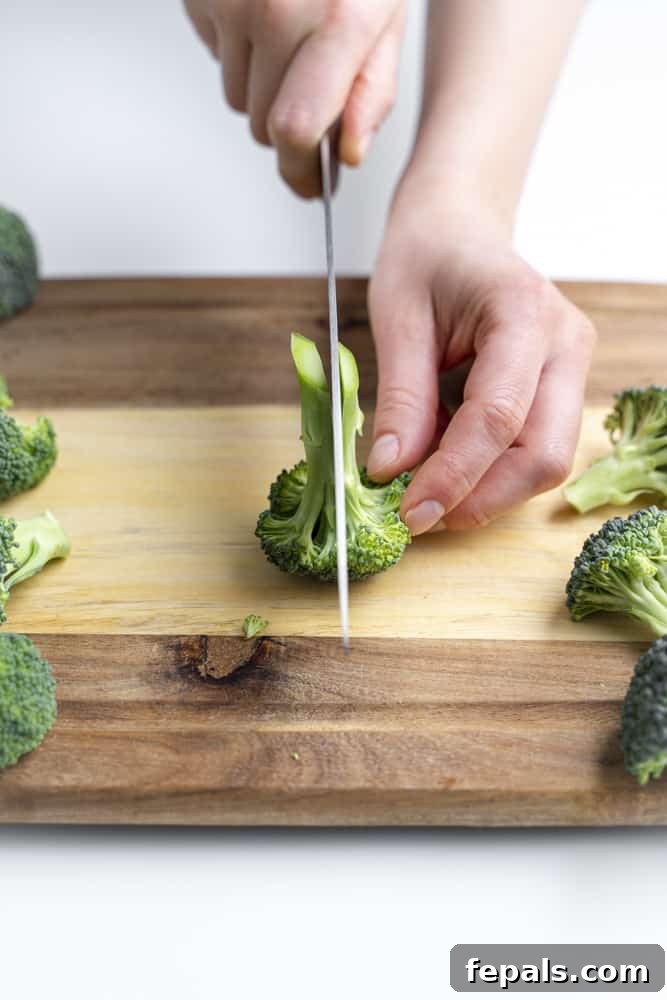
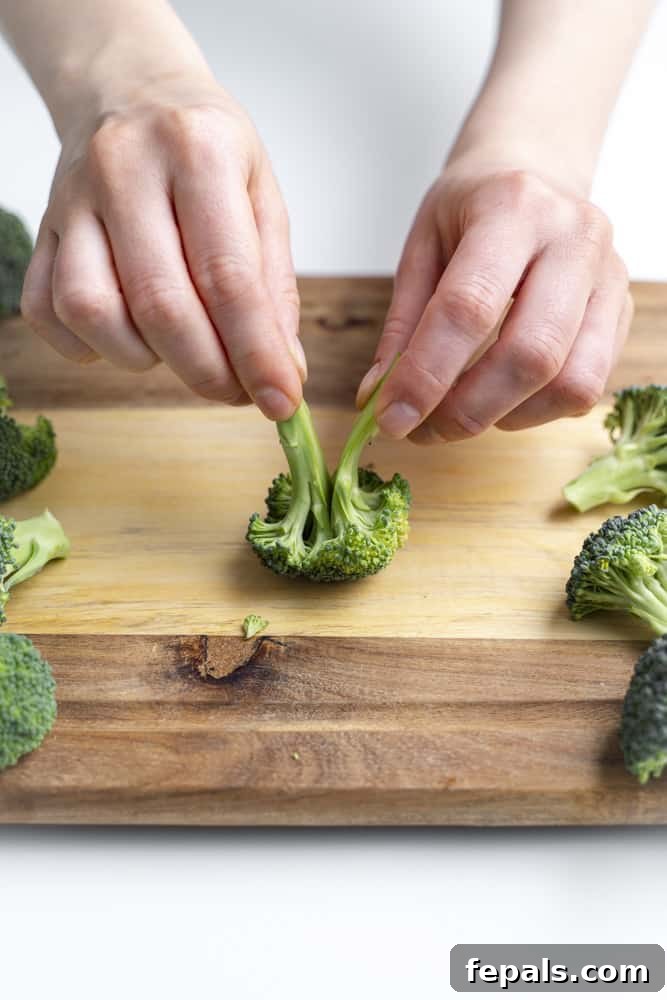
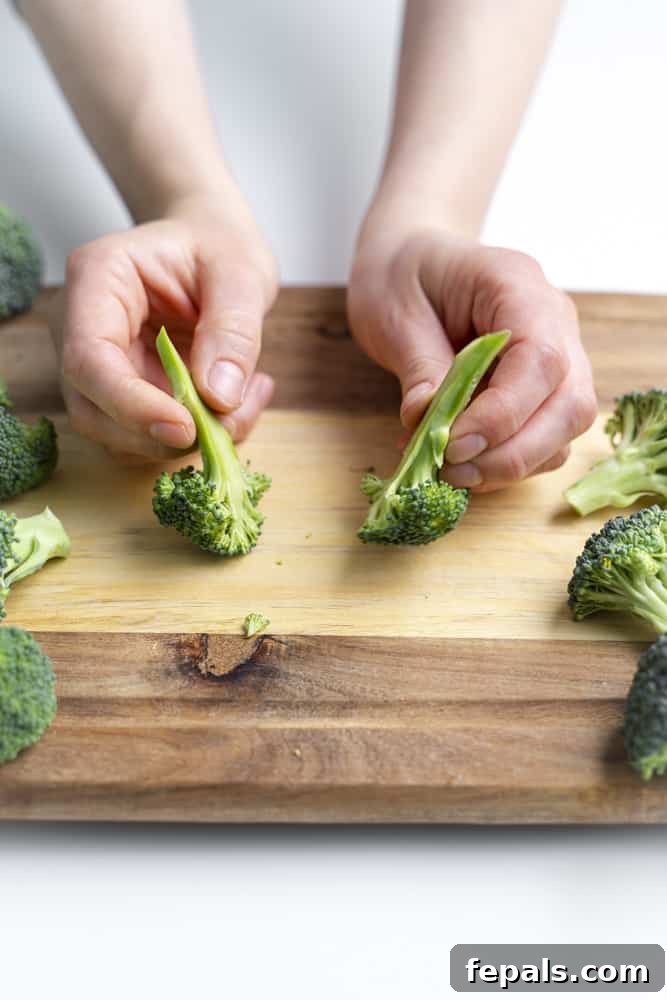
- Create Smaller, Stubby Florets (Optional): For very small, “stubby” florets that have minimal stem, slice through the larger florets as described in the previous step. Then, use your fingers to pull the pieces further apart, aiming for compact, almost bite-sized clusters. This style is excellent for quick cooking, as garnishes, or when mixing into finely textured dishes where larger pieces might be overwhelming.
Expert Tips for Broccoli Perfection
Elevate your broccoli preparation with these professional insights:
- Ensure Uniform Size for Even Cooking: This is arguably the most crucial tip for any cooking method. Cutting your broccoli florets into similar-sized pieces (ideally 1 to 1 1/2-inch for most recipes) guarantees that they will cook evenly. For example, if you’re making Roasted Broccoli, consistent pieces will achieve that perfect tender-crisp texture without some burning and others remaining raw. If you’re adding florets to a delicate soup, a mixed green salad, or a creamy casserole, cutting them into even smaller, bite-sized pieces ensures they blend seamlessly and cook through without dominating the texture of the dish.
- Selecting the Freshest Broccoli: The quality of your raw ingredient significantly impacts the final dish. When buying broccoli, look for heads that are vibrant green in color, with tight, compact florets. The stalk should be firm to the touch, not rubbery or soft, and free of any yellowing, brown spots, or wilting. A good quality head of broccoli should also feel heavy for its size, indicating good hydration and freshness. Avoid any broccoli with opened florets or a strong odor, as these are signs of age.
- Thorough Washing Before Use: Broccoli’s dense, intricate florets are notorious for harboring dirt, small debris, and even tiny insects. It is imperative to wash your broccoli thoroughly just before cutting or cooking. Hold the entire head under cool or lukewarm running water, rotating it to ensure water reaches all crevices. For a deeper clean, you can soak the broccoli in a bowl of water for a couple of minutes, gently swishing it around. However, avoid soaking for longer than 5 minutes, as prolonged submersion can lead to a loss of water-soluble nutrients.
- Understanding Serving Amounts: A standard single serving of broccoli, whether cooked or fresh, is typically considered one cup. This amount contains approximately 30 calories, making it a low-calorie, nutrient-rich option. Generally, one average-sized head of broccoli will yield about 3 to 4 servings of florets, providing a convenient estimate for meal planning and recipe adjustments.
Don’t Waste a Bit: Utilizing Broccoli Stems
Many people discard the tough main stalk of broccoli, but it’s a treasure trove of flavor and nutrition! Broccoli stems are just as edible and healthy as the florets, offering a slightly milder, sweeter taste and a pleasant crunch. Don’t let them go to waste:
- Preparation: The outer layer of the stem can be a bit fibrous. Use a vegetable peeler to remove the tough skin, revealing the tender interior.
- Creative Uses: Once peeled, the stem can be sliced thinly and added to stir-fries, providing a different texture and absorbing flavors beautifully. You can also dice it finely and add it raw to salads for extra crunch, or blend it into creamy soups for added body and nutrients. For a unique twist, you can spiralize the entire stalk into “veggie noodles,” a fantastic gluten-free alternative for pasta dishes. They also make an excellent addition to vegetable stocks.
Frequently Asked Questions About Cutting Broccoli
Yes, it’s generally recommended to cut the main stalk and the thicker parts of the individual stems off the broccoli head. However, it’s important not to throw them away! Broccoli stems and stalks are incredibly nutritious and surprisingly versatile. The entire stalk can be peeled and then spiraled into unique veggie noodles, or simply chopped and added to salads, hearty soups, and flavorful stir-fries, offering a delicious and crunchy component.
Remarkably, the entire broccoli plant is edible! While the florets (the top parts of the head) are the most commonly consumed part, the broad outer leaves, the tender individual stems, and the main thick stalk can all be eaten. These parts can be enjoyed raw, steamed, grilled, sautéed, roasted, or prepared in any other way you cook the florets, offering a fantastic way to minimize food waste and maximize nutrition.
Yes, absolutely! I strongly recommend that you thoroughly wash your broccoli, whether before or after cutting it into florets. Broccoli’s naturally intricate florets and small crevices are ideal spots for dirt, dust, tiny debris, and even small insects to settle and hide. A good rinse under running water or a quick soak will ensure your broccoli is clean and safe to eat.
Inspiring Broccoli Recipes
Now that you’re a pro at cutting broccoli, put your skills to good use with these delicious and healthy recipes:
- Healthy Broccoli Cheddar Soup
- Air Fryer Broccoli
- Chicken Cheese Broccoli Rice Casserole
- Beef and Broccoli Stir Fry
- Creamy Chicken and Broccoli Skillet
- Creamy Broccoli Cauliflower Salad
Optimal Storage for Maximum Freshness
Proper storage is key to keeping your broccoli fresh and ready for use. Here’s how to store both whole and cut broccoli effectively:
- Refrigerating Freshly Cut Broccoli: Once you’ve cut your broccoli into florets, store them in an airtight container or a resealable plastic bag. Adding a damp paper towel to the container can help maintain moisture and prevent the florets from drying out. Place the container in the crisper drawer of your refrigerator. Stored this way, freshly cut broccoli will remain fresh and crisp for approximately 3 to 4 days.
- Freezing Broccoli for Long-Term Storage: For extended preservation, freezing is an excellent option. Blanching the broccoli first (briefly boiling, then plunging into ice water) helps to retain its vibrant color, crisp texture, and nutritional value. After blanching, pat the florets thoroughly dry. Then, flash freeze the cut broccoli by spreading them in a single layer on a baking sheet and freezing for about 30 minutes. Once solid, transfer the frozen florets to a freezer-safe bag or airtight container, removing as much air as possible to prevent freezer burn. Properly frozen broccoli can keep fresh for up to 6 to 9 months, ready to be added directly to cooked dishes.
Explore More Culinary Cutting Guides
Mastering vegetable preparation is an invaluable skill in the kitchen. Continue honing your knife skills with these other helpful guides:
- How to Cut Sweet Potatoes
- How to Make Oat Flour
- How To Cut Romaine Lettuce
- How to Cut Brussel Sprouts
- (3 Ways) How To Cut Bell Peppers
- How To Cut an Orange
- How to Cut Cabbage
- Cutting Potatoes Into Fries
- How To Cut Green Onions
Simply subscribe to our newsletter to receive your complimentary copy instantly!
Download Your Free Ebook Here!
If you try this method or one of our recipes and love it, please leave us some feedback in the comment section below and don’t forget to rate it! Your support helps us share delicious and healthy ideas with more friends and family.
Finally, remember to use our hashtag #healthyfitnessmeals on INSTAGRAM for a chance to be featured! FOLLOW Healthy Fitness Meals on FACEBOOK | INSTAGRAM | PINTEREST | TWITTER for all of my latest blog posts and recipes.
How to Cut Broccoli
Pin
Equipment
- Cutting Board
- Chef’s Knife
Ingredients
- 1 head broccoli
Instructions
- Start with the head of the broccoli down on the cutting board, slice through the stalk to separate it from the smaller stems and the head of the broccoli, about 1-inch below the base of the head.
- You can leave the stems longer, or cut the stem completely off making them more stubby, depending on how you plan to use them.
- Slice through any very large florets, and pull the floret apart with your fingers. You can leave the florets larger for recipes like air fryer or roasted broccoli, or create smaller pieces of broccoli depending on your desired use.
Notes
- Storage: Store freshly cut broccoli in an airtight container, in the fridge for 3 to 4 days.
- Freezing: Flash freeze the cut broccoli for 30 minutes, on a baking sheet, then transfer to a freezer bag. It will keep fresh for up to 6-9 months.
Nutrition
Calories: 59 kcal
Carbohydrates: 12g
Protein: 5g
Fat: 1g
Saturated Fat: 0.2g
Polyunsaturated Fat: 0.2g
Monounsaturated Fat: 0.1g
Sodium: 57mg
Potassium: 549mg
Fiber: 5g
Sugar: 3g
Vitamin A: 1082 IU
Vitamin C: 155mg
Calcium: 82mg
Iron: 1mg
Nutrition information is automatically calculated, so should only be used as an approximation.
Additional Info
Tried this recipe?
Mention @healthyfitnessmeals or tag #healthyfitnessmeals!