
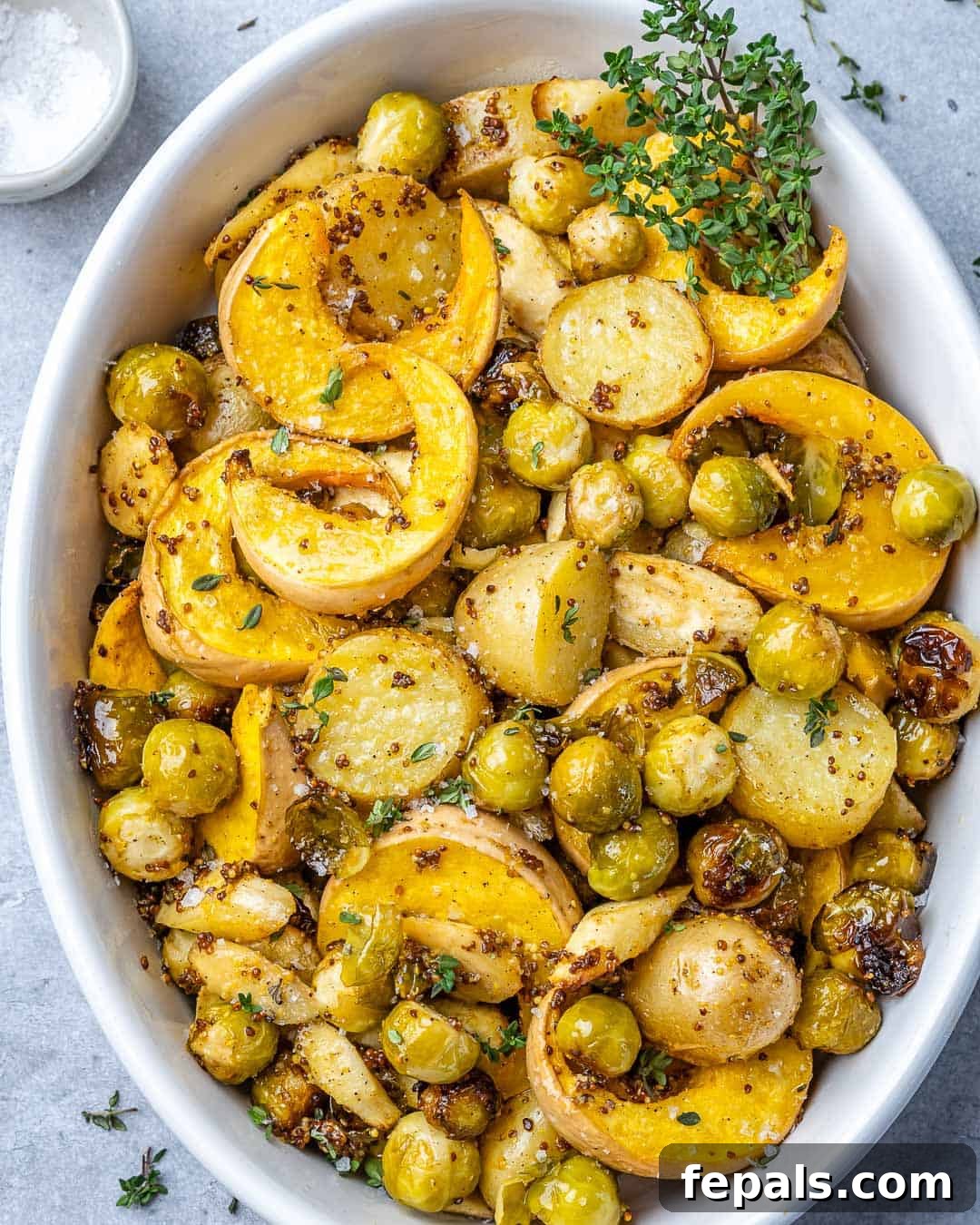
Transform your dinner routine with these incredibly delicious and effortlessly prepared Oven-Roasted Veggies. This recipe is destined to become your go-to healthy and versatile side dish, elevating any meal from ordinary to extraordinary. Whether you’re pairing them with juicy grilled chicken, a perfectly seared steak, flaky baked fish, or even serving them over a bed of fluffy quinoa for a complete and satisfying vegetarian meal, these roasted vegetables offer a burst of flavor and nutrition that the whole family will love.
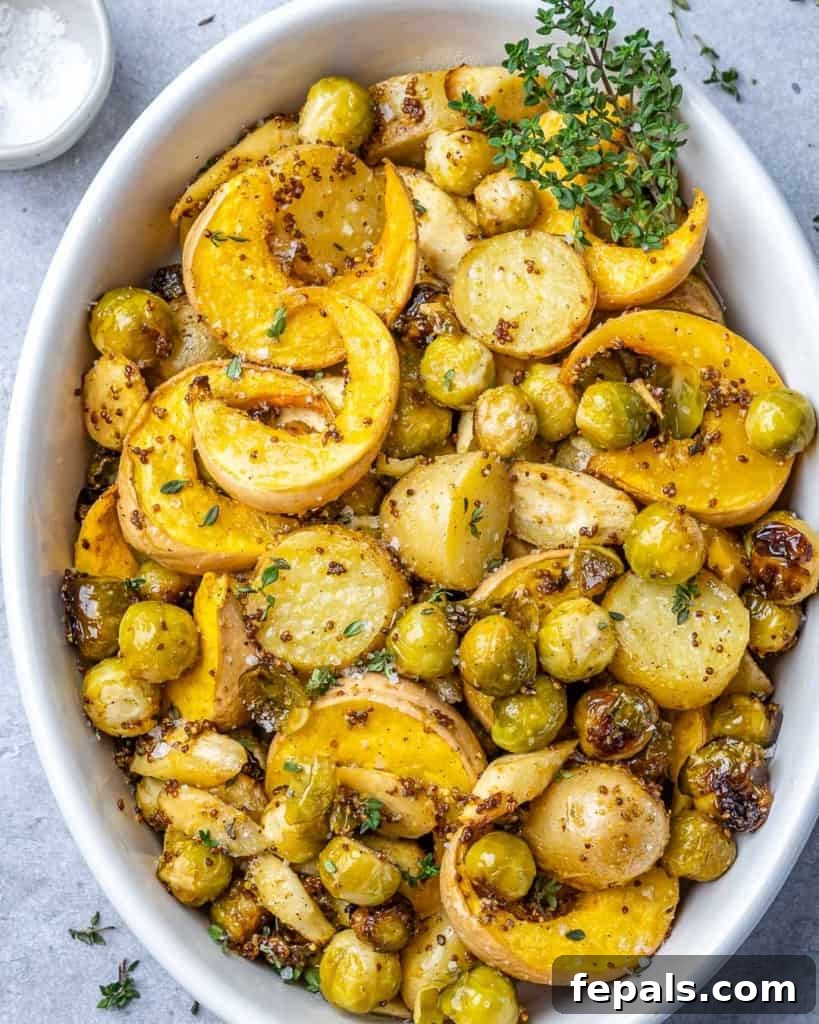
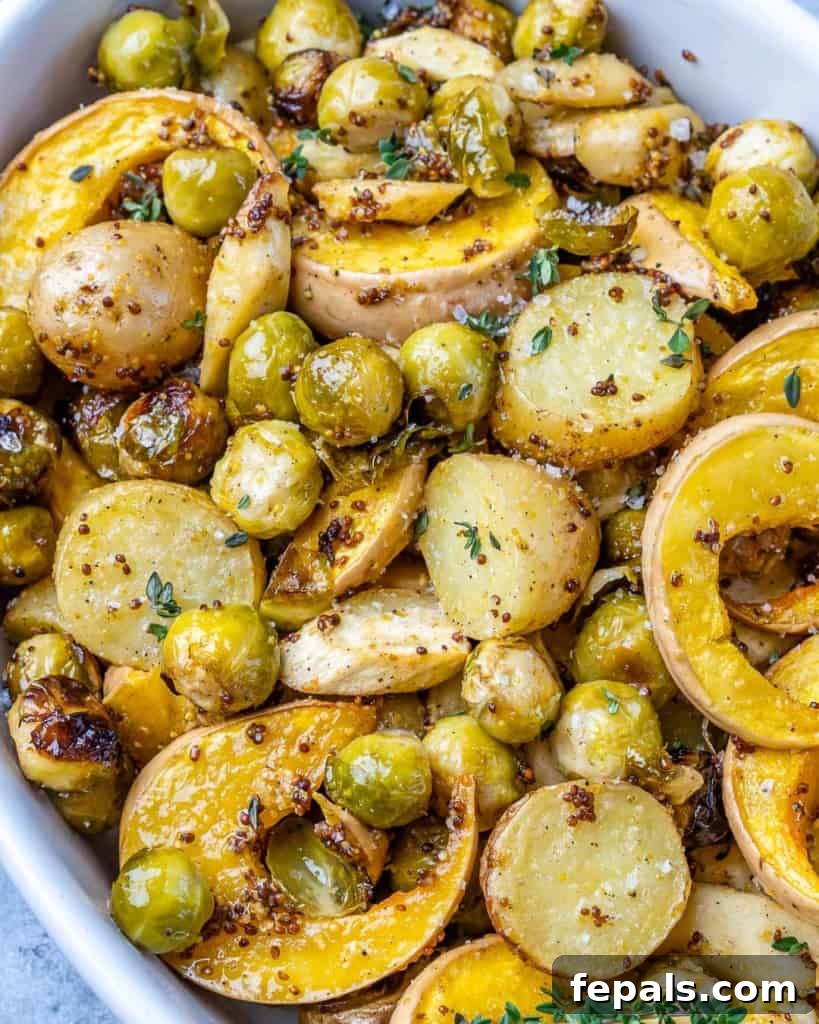
This particular roasted vegetables recipe stands out as one of the most flavorful and satisfying ways to enjoy your greens (and oranges, and whites!). Featuring a harmonious blend of earthy butternut squash, subtly sweet parsnips, and tender-crisp Brussels sprouts, the natural sweetness and distinct textures of these vegetables truly shine. What makes this dish truly exceptional, however, is the simple yet incredibly vibrant mustard sauce that coats each piece, creating a delectable caramelized exterior and a melt-in-your-mouth interior.
The exquisite combination of flavors and textures in this vegetable medley is truly remarkable. The natural sugars caramelize beautifully in the oven, enhanced by the tangy kick of the mustard sauce, resulting in a dish that’s both comforting and invigorating. Not only are these roasted vegetables a delight for the taste buds, but they are also fantastic for meal prepping. Imagine having a large batch of these savory veggies ready to grab and add to your meals throughout the week, simplifying your healthy eating goals. Their incredible versatility means they complement nearly any main course you can conjure up, making them the ultimate addition to your culinary repertoire. Say goodbye to boring side dishes and hello to a burst of wholesome flavor!
Why You’ll Adore This Roasted Vegetable Medley
This recipe isn’t just about cooking vegetables; it’s about transforming them into a culinary experience. Here’s why these oven-roasted vegetables will quickly become a cherished favorite in your kitchen:
- Unforgettable Mustard Flavor: Forget bland, steamed vegetables. Our signature mustard sauce is the secret weapon here. It’s a simple blend that infuses the vegetables with a tangy, savory, and slightly piquant flavor, creating a caramelized crust that’s utterly irresistible. This isn’t just a sauce; it’s a flavor enhancer that makes these roasted veggies a true show-stopper, leaving you craving more with every bite. The mustard adds a depth and complexity that will surprise and delight your palate.
- Remarkably Versatile to Your Pantry: While our recommended medley of butternut squash, parsnips, Brussels sprouts, and potatoes offers a fantastic flavor profile, this recipe is incredibly adaptable. Don’t have parsnips? Swap them for carrots! Prefer broccoli over Brussels sprouts? Go for it! This flexibility means you can easily adjust the ingredients based on what’s in season, what’s on sale, or simply what you have on hand, ensuring you can enjoy this delicious dish any time. It’s a forgiving recipe that encourages creativity and minimizes food waste.
- A Simple, Nutritious Side Dish: It’s hard to find a healthier or easier side dish than perfectly roasted vegetables. Roasting brings out their natural sweetness and concentrates their flavors, while preserving their vital nutrients. This recipe requires minimal hands-on time, making it ideal for busy weeknights. You’re getting a powerhouse of vitamins, minerals, and fiber without any complicated techniques or obscure ingredients. It’s clean eating made incredibly delicious and accessible.
- Perfect Pairing or a Satisfying Meal on Its Own: These roasted vegetables are the ultimate team player, complementing virtually any protein you choose – chicken, fish, steak, pork, tofu, or legumes. Their robust flavor profile and hearty texture make them a fantastic accompaniment. But don’t limit them to just a side! Serve a generous portion over your favorite grain like quinoa, couscous, or brown rice, perhaps topped with a fried egg or a sprinkle of feta, and you instantly have a complete, wholesome, and incredibly satisfying vegetarian meal. It’s meal versatility at its finest!
Essential Ingredients for Your Oven-Roasted Veggies
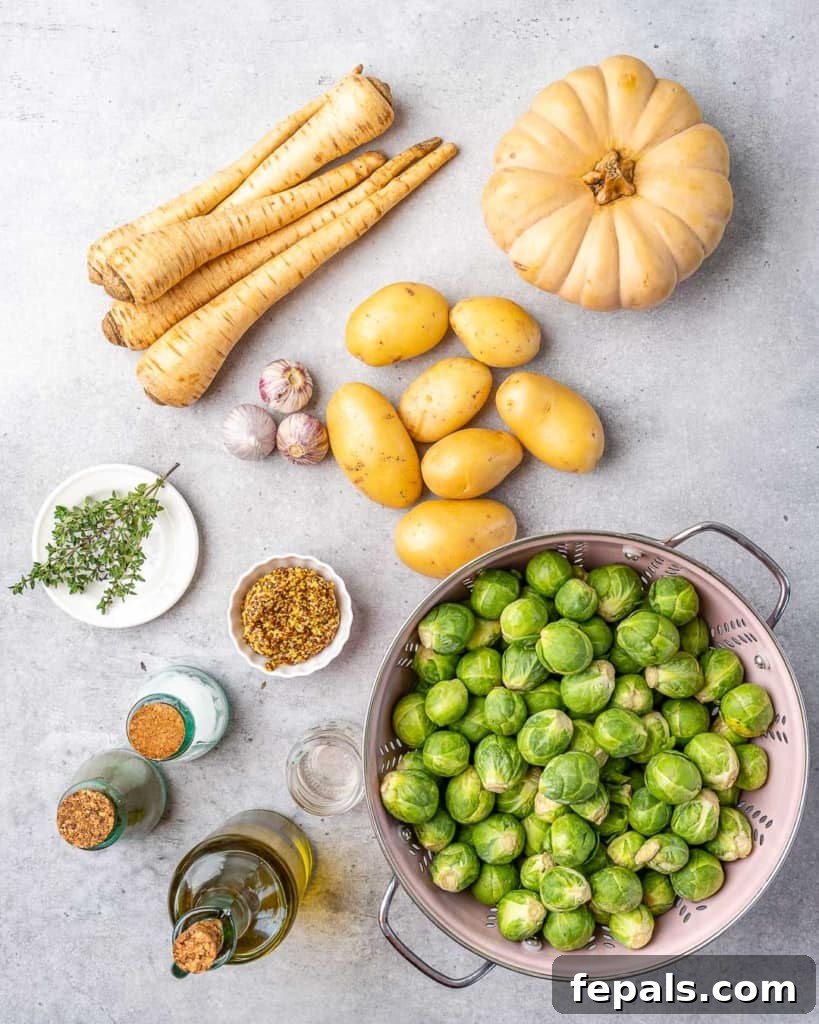
Crafting these sensational oven-roasted vegetables requires a handful of fresh ingredients and pantry staples. The magic truly happens when these simple components combine to create a symphony of flavors. Below is a detailed list; exact measurements can be found in the comprehensive recipe card that follows.
- Olive Oil: The foundation for roasting, a good quality extra virgin olive oil not only helps the vegetables crisp up beautifully but also adds a subtle fruity note. You can also opt for avocado oil or grapeseed oil as excellent high-smoke point alternatives.
- Whole-Grain Mustard: This is the star of our flavorful sauce! Whole-grain mustard provides a wonderful texture and a pungent, tangy flavor that caramelizes into a delightful crust. It’s typically found in the condiments aisle. If whole-grain isn’t to your liking or unavailable, honey Dijon mustard offers a sweeter, milder tang, or a spicy brown mustard can add an extra kick.
- Fresh Garlic Cloves: Minced or finely chopped, fresh garlic is non-negotiable for its aromatic depth and savory essence. Avoid garlic powder if possible; the fresh cloves release a much more vibrant flavor as they roast.
- Fresh Thyme: The herbaceous notes of fresh thyme perfectly complement the earthiness of the vegetables and the zest of the mustard. Its delicate leaves infuse the dish with a sophisticated aroma. While fresh is highly preferred for its superior flavor and fragrance, if you must, dried thyme can be used, but in a smaller quantity (typically one-third of the fresh amount).
- Apple Cider Vinegar: Divided for use in both the sauce and a final flourish, apple cider vinegar adds a bright, acidic counterpoint that balances the richness of the vegetables and the mustard. It helps cut through the sweetness and enhances overall flavor complexity.
- Kosher Salt: Essential for seasoning, kosher salt provides a clean, pure saltiness without the harshness of table salt. It helps draw out moisture and intensify the vegetables’ natural flavors during roasting.
- Freshly Ground Black Pepper: Aromatic and subtly spicy, freshly ground black pepper adds a crucial layer of flavor. Always opt for fresh grinding over pre-ground for the best results.
- Small Pumpkin or Butternut Squash: These autumnal gourds are fantastic for roasting, offering a sweet, creamy texture and a rich, slightly nutty flavor. Butternut squash is widely available and easy to work with, providing a beautiful golden hue to the medley.
- Parsnips: Often overlooked, parsnips contribute a unique, sweet, and slightly spicy flavor with a tender texture once roasted. Peel and cut them into 1-inch pieces to ensure even cooking. If parsnips aren’t your preference, carrots, sweet potatoes, or even additional potatoes make excellent substitutes.
- Brussels Sprouts: When trimmed and halved, Brussels sprouts roast up beautifully, developing crispy outer leaves and a tender, slightly sweet interior. Their mild bitterness is mellowed by the roasting process and perfectly balanced by the mustard sauce.
- Potatoes: Hearty and satisfying, potatoes (such as Yukon Gold or red potatoes) become wonderfully tender on the inside and deliciously crispy on the outside when roasted. Halve or quarter them, depending on their size, to match the cooking time of the other vegetables.
Crafting Your Perfect Oven-Roasted Veggies: A Step-by-Step Guide
Creating these vibrant and flavorful oven-roasted vegetables is a straightforward process, designed for simplicity and maximum flavor. Follow these easy steps to achieve tender-crisp perfection every time:
- Step 1: Preheat Your Oven to the Ideal Temperature. Begin by preheating your oven to 425°F (220°C). A hot oven is crucial for achieving that coveted caramelized exterior and tender interior. It ensures the vegetables roast quickly and evenly, preventing them from steaming instead of browning. Give your oven ample time to reach the desired temperature before placing your vegetables inside.
- Step 2: Whisk Together Your Flavorful Mustard Sauce. In a small mixing bowl, combine all the sauce ingredients: olive oil, whole-grain mustard, minced garlic, chopped fresh thyme, half of the apple cider vinegar, kosher salt, and freshly ground black pepper. Whisk them vigorously until they are well combined and emulsified. Set this aromatic mixture aside; it’s the key to the dish’s incredible flavor.
- Step 3: Prepare Your Vegetables for Roasting. Take all your chosen vegetables – the butternut squash, parsnips, Brussels sprouts, and potatoes – and ensure they are thoroughly washed and dried. Peel the parsnips and squash as needed. Cut all the vegetables into roughly equal 1-inch pieces. This uniform sizing is critical for ensuring they cook evenly and are all tender at the same time. Once prepped, spread them out in a single layer on a large baking tray that has been lined with parchment paper. Parchment paper is essential to prevent sticking and make cleanup a breeze.
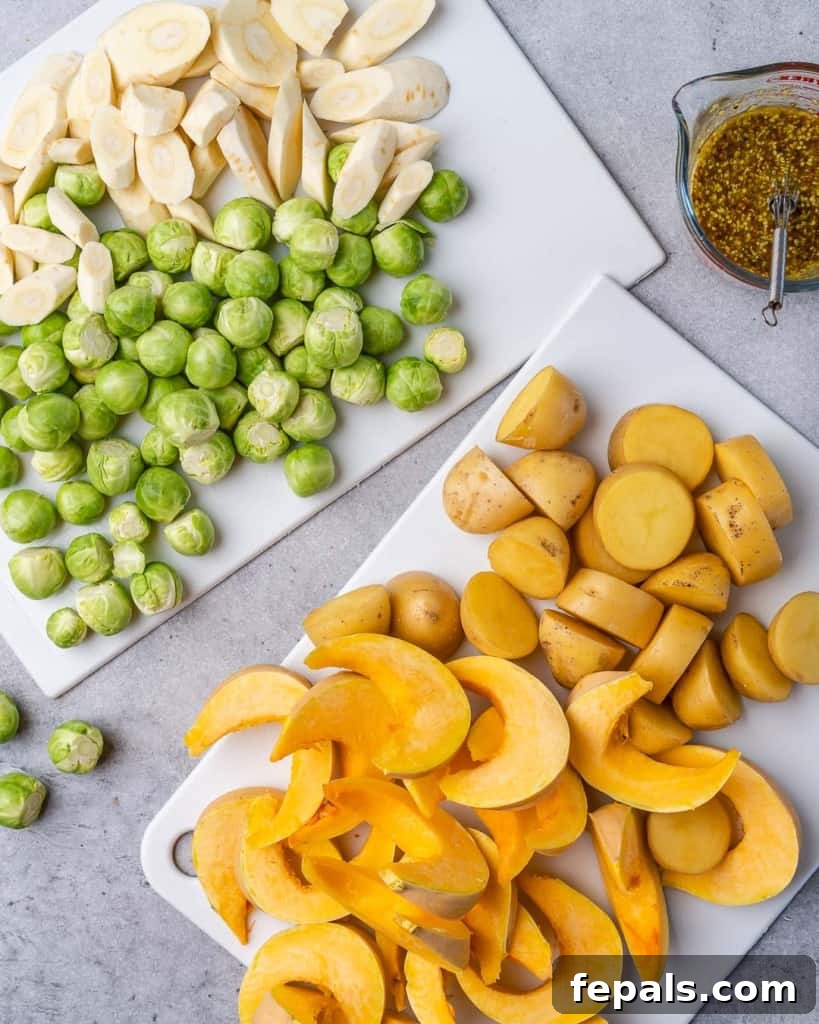
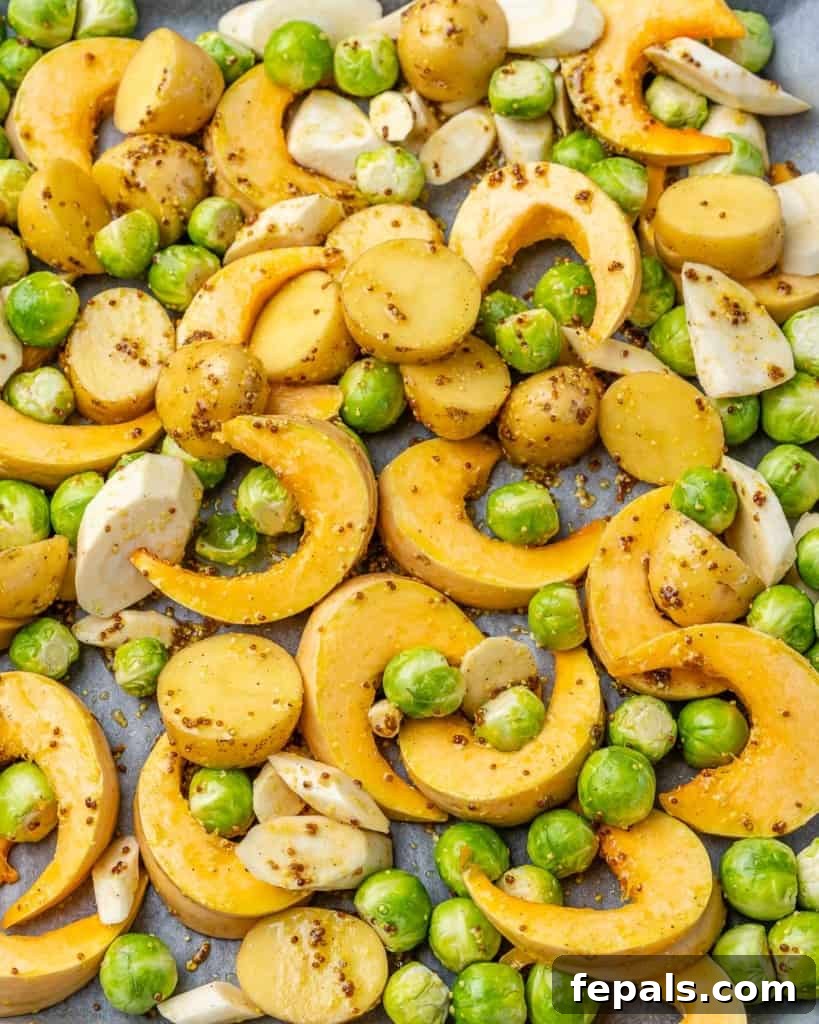
- Step 4: Drizzle and Toss with the Mustard Sauce. Generously drizzle the prepared mustard sauce over all the prepped vegetables on the baking tray. Using your hands or two large spatulas, gently toss the vegetables until each piece is thoroughly and evenly coated with the sauce. Make sure there are no dry spots, as this coating is what gives them their incredible flavor and helps them brown beautifully. Spread them back into a single layer, ensuring minimal overlap.
- Step 5: Bake to Golden Perfection. Place the baking tray into your preheated oven and roast for approximately 30 minutes. Midway through the baking time (around 15 minutes), remove the tray from the oven and give the vegetables a good stir or toss. This ensures even browning and prevents any sticking. Continue baking until the vegetables are tender when pierced with a fork, slightly caramelized, and golden brown on the edges. The exact cooking time may vary slightly depending on your oven and the size of your vegetable pieces.
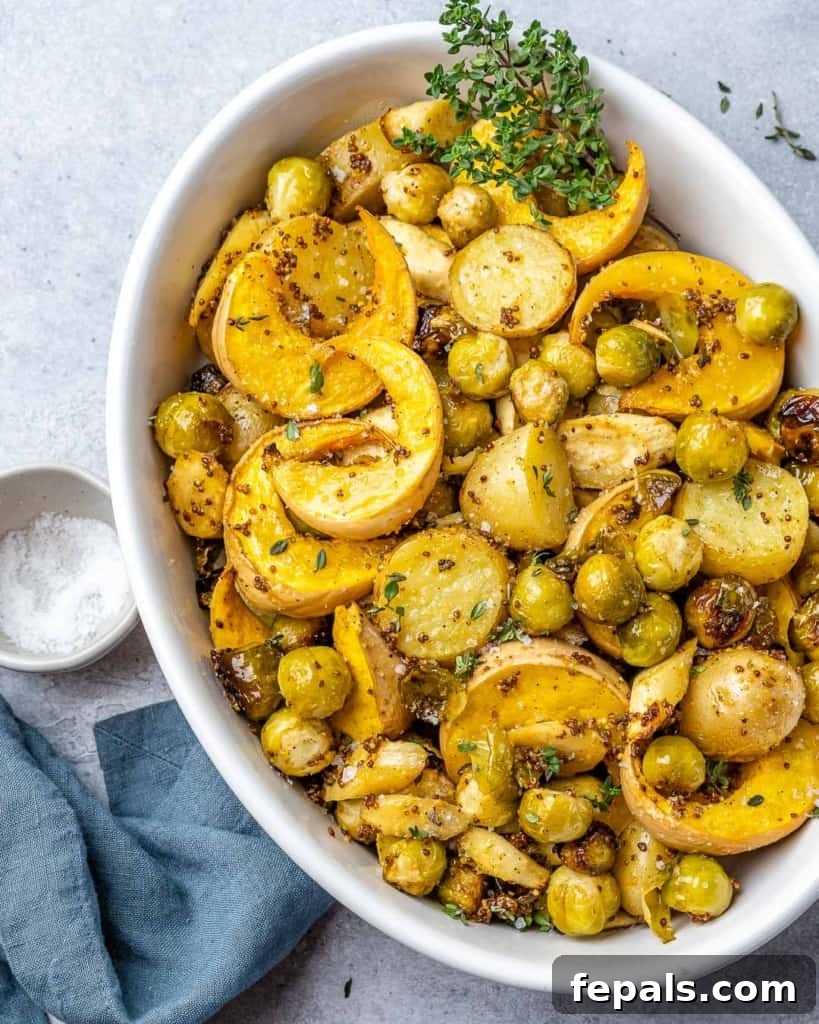
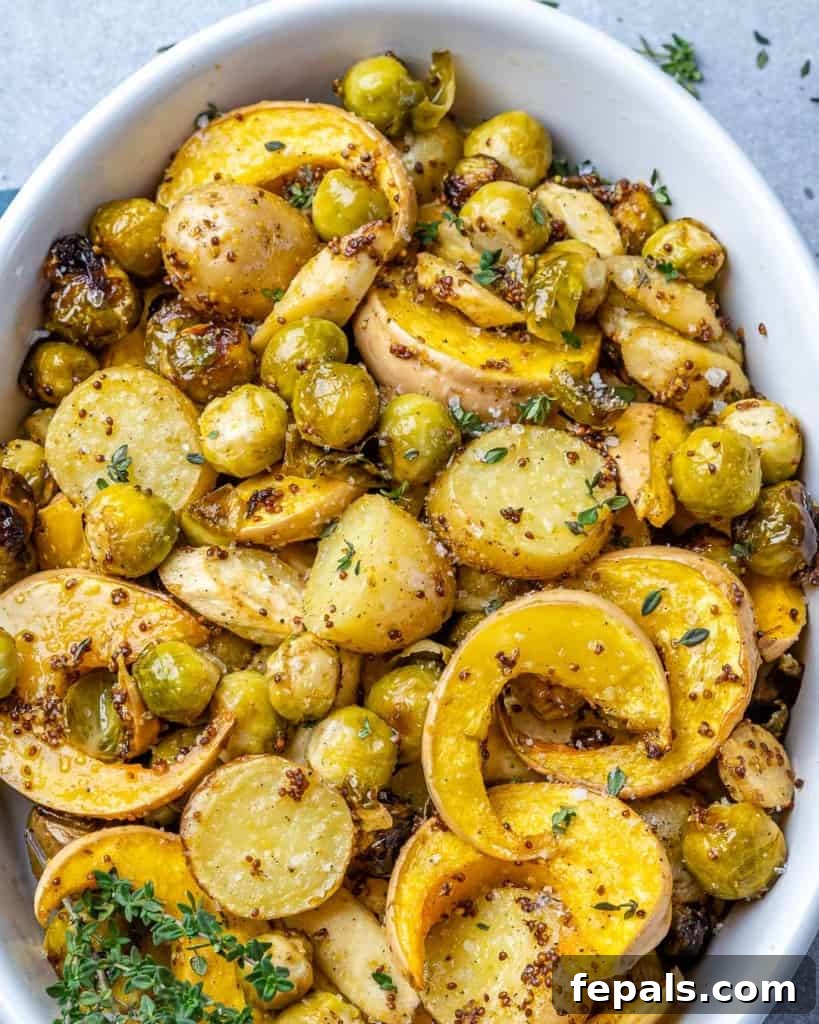
- Step 6: Garnish and Serve Immediately. As soon as the oven-roasted vegetables emerge from the oven, sprinkle them generously with additional fresh thyme leaves. The residual heat will warm the herbs, releasing their fragrant oils. A final drizzle of the remaining apple cider vinegar (if using) can add a bright, fresh finish. Serve these delectable veggies hot, right out of the oven, to enjoy their optimal texture and flavor.
Expert Recipe Notes & Tips for Flawless Roasting
Achieving perfectly roasted vegetables is an art, but with these pro tips, you’ll master it in no time. These insights will help you prevent common pitfalls and ensure your veggies are always tender, flavorful, and beautifully caramelized.
- Give Your Veggies Breathing Room: This is arguably the most crucial tip for successful roasting. When spreading your vegetables on the baking sheet, ensure there’s ample space between each piece. Overcrowding the pan causes vegetables to steam rather than roast, resulting in soggy, uncaramelized results. If you have a large batch, it’s always better to divide them between two separate baking trays, even if it means doing two rounds in the oven, to allow for proper air circulation and crisping.
- Precision in Your Cuts: To guarantee that all your vegetables cook at the same rate and reach that perfect tender-crisp texture simultaneously, strive to cut them into uniform sizes. Roughly 1-inch pieces are ideal for most root vegetables and dense gourds like squash. Smaller or thinner vegetables like Brussels sprouts can be halved. Consistency is key for even cooking.
- Ensure an Even Coating: Don’t be shy with the mustard sauce! Every single piece of vegetable should be thoroughly coated. This ensures that the flavor is distributed evenly and that each surface has a chance to caramelize and absorb the delicious sauce. A good toss with your hands (or sturdy spatulas) will do the trick.
- Resist the Urge to Peek: While stirring the vegetables halfway through baking is important for even browning, try to avoid opening the oven door too frequently. Each time you open the oven, the temperature drops significantly, extending the cooking time and potentially impacting the crispness of your vegetables. Stir once, and then let the oven do its magic until the final few minutes.
- Embrace Your Favorite Vegetables: This recipe is incredibly adaptable. While the suggested medley is fantastic, feel free to substitute or add any of your favorite roasting-friendly vegetables. Carrots, sweet potatoes, cauliflower florets, broccoli florets, bell peppers, red onions, and even mushrooms can be wonderful additions. Adjust roasting times slightly for different vegetable densities.
- Optimal Roasting Temperature: A high temperature, specifically 425°F (220°C), is ideal for achieving quick caramelization and a crispy exterior while keeping the interior tender. Lower temperatures might lead to softer, sweeter vegetables, but for that satisfying crunch, high heat is your friend.
- Don’t Skimp on the Oil: Healthy fats like olive oil are essential for roasting. They conduct heat, prevent sticking, and contribute to the browning process. Ensure your vegetables are adequately coated in oil before adding the sauce.
- Seasoning is Key: Taste your vegetables after roasting. If they seem to be missing something, a final sprinkle of salt or a crack of black pepper can make all the difference. Sometimes a tiny extra splash of apple cider vinegar at the end can brighten the flavors.
- Storage and Reheating: Store any leftover roasted vegetables in an airtight container in the refrigerator for up to 3-4 days. For best results when reheating, spread them on a baking sheet and warm them in a hot oven (around 375°F/190°C) for 10-15 minutes until heated through and slightly re-crisped. Microwaving is an option but may result in a softer texture.
Perfect Pairings: What To Serve With Roasted Mixed Vegetables
These flavorful and adaptable roasted mixed vegetables are a fantastic addition to almost any meal. Their hearty texture and savory-sweet profile make them an ideal complement to a wide array of proteins and grains. Here are some inspired serving suggestions to help you craft a complete and delicious meal:
- Classic Protein Pairings:
- Grilled Chicken or Baked Chicken Breast: The simplicity of a perfectly cooked chicken breast provides a neutral canvas for the vibrant flavors of the roasted vegetables. Whether marinated, herb-crusted, or simply seasoned, chicken is a timeless pairing.
- Steak: A juicy steak, whether pan-seared or grilled, finds a perfect partner in these earthy and slightly sweet vegetables. The robust flavors of the beef are beautifully balanced by the tangy mustard sauce.
- Fish: From delicate baked cod to pan-seared salmon or even crispy Air Fryer Fish and Chips, the lightness of fish creates a wonderful contrast with the substantial veggies. Our Lemon Garlic Salmon would be an especially brilliant match, with the citrus notes harmonizing with the mustard.
- Pork Tenderloin: The lean, tender nature of pork tenderloin makes it an excellent choice. A simple herb-crusted or pan-seared pork dish would be beautifully rounded out by the roasted vegetables.
- Lamb Chops: For a more gourmet touch, serve these veggies alongside perfectly cooked lamb chops. The richness of the lamb pairs wonderfully with the sweetness of the roasted squash and parsnips.
- Transforming Them into a Main Meal:
- Grain Bowls: Elevate these roasted vegetables to a satisfying main course by serving them over a foundation of your favorite grain. Fluffy quinoa, hearty brown rice, nutty farro, or even pearled couscous provide an excellent base. Add a drizzle of tahini sauce, a sprinkle of toasted nuts or seeds, and perhaps a dollop of Greek yogurt for a complete and wholesome vegetarian meal.
- Eggs: For a delightful brunch or a light dinner, top a serving of roasted vegetables with a perfectly fried, poached, or sunny-side-up egg. The runny yolk creates an instant sauce that binds all the flavors together.
- With Plant-Based Proteins: Make it a vegan or vegetarian feast by adding cooked lentils, chickpeas, or crispy baked tofu to your roasted vegetable bowl. A spoonful of hummus or a zesty herb dressing can further enhance the experience.
- Other Delicious Combinations:
- These veggies would also be a vibrant side to something like Cilantro Lime Chicken Bites, where the freshness of the chicken complements the roasted flavors.
- Consider adding them to a hearty salad, warm or cold, for extra texture and depth.
No matter how you choose to serve them, these roasted vegetables are sure to impress with their rich flavor and satisfying texture.
Frequently Asked Questions About Roasting Vegetables
New to roasting or just looking for some extra tips? Here are answers to some of the most common questions about preparing delicious oven-roasted vegetables:
The beauty of this recipe is its incredible versatility! You can roast virtually any firm vegetable using the same technique and mustard sauce. Some popular and delicious alternatives or additions include:
- Root Vegetables: Carrots, sweet potatoes, beets, turnips, radishes (become surprisingly sweet when roasted).
- Cruciferous Vegetables: Broccoli florets, cauliflower florets, kale (roasts into crispy chips), cabbage wedges.
- Soft Vegetables (add partway through cooking): Bell peppers (any color), zucchini, yellow squash, cherry tomatoes, asparagus, green beans, mushrooms.
For denser vegetables like carrots or beets, ensure they are cut into similar 1-inch pieces as the butternut squash and parsnips. Softer vegetables like zucchini or peppers should be added about 10-15 minutes into the roasting time to prevent them from becoming too soft.
The roasting time for vegetables largely depends on their type, density, and how consistently they are cut. Generally, at 425°F (220°C):
- Dense Root Vegetables (potatoes, sweet potatoes, butternut squash, parsnips, carrots): 25-40 minutes. These often benefit from being cut into 1-inch pieces.
- Cruciferous Vegetables (Brussels sprouts, broccoli, cauliflower): 20-30 minutes. Look for tender florets with browned, crispy edges.
- Softer Vegetables (bell peppers, zucchini, green beans, asparagus): 10-20 minutes. These cook much faster and should be added later or cut into larger pieces if roasting with denser vegetables.
The best practice is to start checking for doneness after about 15 minutes. Give the pan a good shake or stir. Vegetables are ready when they are tender enough to be easily pierced with a fork and have a beautiful golden-brown, slightly caramelized exterior. If you’re roasting a mix of very different vegetables, you might need to remove some pieces before others, or add softer vegetables partway through the cooking process.
Vegetables can be roasted at various temperatures, typically ranging from 350°F (175°C) to 425°F (220°C), each yielding slightly different results.
- Higher Temperatures (400-425°F / 200-220°C): This is my preferred temperature for this recipe. High heat promotes rapid caramelization, creating crispy edges and a tender interior. It’s excellent for achieving that satisfying “roasted” flavor and texture quickly.
- Lower Temperatures (350-375°F / 175-190°C): Roasting at a lower temperature will result in a softer, often sweeter texture as the natural sugars have more time to develop. The vegetables will be less crispy but still incredibly flavorful. This can be ideal for vegetables you want to be very tender, or if you’re roasting them alongside a dish that requires a lower oven temperature.
For this particular mustard-coated medley, 425°F (220°C) was selected specifically for those delightfully crispy edges and concentrated flavors.
Absolutely, you can roast frozen vegetables, and it’s a great shortcut for busy days! Here are a few key tips for the best results:
- Do Not Thaw: It’s crucial to roast frozen vegetables directly from the freezer. Thawing them first will result in excess moisture, leading to soggy veggies that steam instead of roast.
- Higher Temperature: Roast frozen vegetables at a slightly higher temperature, at least 400°F (200°C), or even up to 450°F (230°C). This high heat helps evaporate the surface moisture quickly.
- Extra Oil: Ensure they are well-coated in oil to aid in browning.
- Single Layer & Space: Just like with fresh vegetables, spread them in a single layer on a parchment-lined baking sheet, allowing plenty of space between pieces to promote crisping. You may need more than one pan.
- Expected Texture: While still delicious, frozen roasted vegetables may not achieve the same level of crispness as their fresh counterparts due to their higher water content. However, they will still be tender, flavorful, and a wonderfully convenient side dish!
While roasting is best done fresh, you can certainly do some prep work in advance. You can chop all your vegetables 1-2 days ahead of time and store them in an airtight container in the refrigerator. The mustard sauce can also be whisked together and stored in a separate airtight container in the fridge for up to 3-4 days. When you’re ready to cook, simply combine the prepped veggies with the sauce and roast!
Allow any leftover roasted vegetables to cool completely before transferring them to an airtight container. They will keep well in the refrigerator for up to 3-4 days. For reheating, the best method to retain some crispness is to spread them on a baking sheet and reheat in a preheated oven at 375°F (190°C) for about 10-15 minutes, or until heated through and slightly re-crisped. While you can microwave them, they may lose some of their crispy texture and become softer.
Other Delightful Side Dish Recipes You May Enjoy
If you loved these oven-roasted vegetables, you’ll surely appreciate these other healthy and flavorful side dish options that complement a wide range of meals:
- Parmesan Roasted Broccoli and Cauliflower
- Air-fryer Zucchini Chips
- Crispy Parmesan Roasted Potatoes
- Healthy Shrimp Salad
- Greek Chickpea Salad
- Watermelon Feta Salad
- Mexican Sweet Corn Soup
- Creamy Zucchini and Broccoli Soup
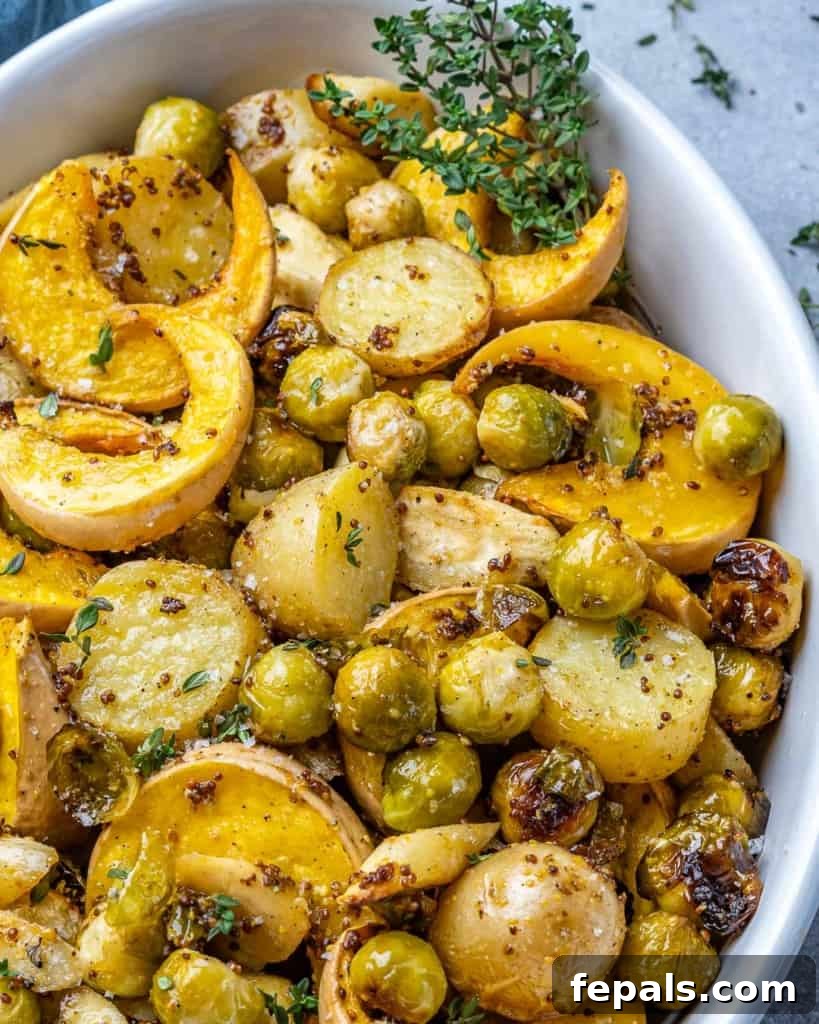
We hope you truly enjoy making and sharing these incredible Oven-Roasted Veggies! If you give this recipe a try and love it, please consider leaving us your feedback in the comment section below. Your ratings and comments are invaluable and help other home cooks discover delicious new dishes. Don’t forget to share this recipe with your friends and family – good food is always better when shared!
Finally, we’d love to see your culinary creations! Please use our hashtag #healthyfitnessmeals on INSTAGRAM for a chance to be featured on our page! For all our latest blog posts, delicious recipes, and healthy living tips, be sure to FOLLOW Healthy Fitness Meals on FACEBOOK | INSTAGRAM | PINTEREST | TWITTER. Happy cooking!
Oven Roasted Veggies
Rena
8
10 mins
30 mins
40 mins
Print Recipe
Ingredients
- 3 tbsp olive oil
- 2 tbsp whole-grain mustard
- 3-4 garlic cloves, minced or chopped
- 1 tbsp chopped fresh thyme
- 1 tbsp apple cider vinegar, divided
- 1 tsp Kosher salt
- 1/2 tsp black pepper, freshly ground
Vegetables:
- 1 small pumpkin or butternut squash, 1 lb. or about 3 cups, peeled and cut into 1-inch pieces
- 1 pound parsnips, peeled and cut into 1-in. pieces (about 2 1/4 cups)
- 1 pound Brussels sprouts, trimmed and halved if big
- 1 pound potatoes, halved or quartered
Instructions
- Preheat the oven to 425F (220C).
- In a small bowl, whisk together all sauce ingredients (olive oil, whole-grain mustard, garlic cloves, fresh thyme, half of the apple cider vinegar, Kosher salt, and black pepper) and set aside.
- Prepare all the vegetables (butternut squash/pumpkin, parsnips, Brussels sprouts, potatoes) by washing, peeling (if necessary), and cutting them into roughly 1-inch pieces. Place them in a large baking tray lined with parchment paper, ensuring they are in a single layer.
- Drizzle the prepared mustard sauce over the vegetables and toss to evenly coat every piece. Spread them out again in a single layer on the baking sheet.
- Bake for 30 minutes, stirring the vegetables halfway through (around 15 minutes) to ensure even browning. The vegetables are ready when they are tender, with a slight crunch and golden-brown caramelized edges.
- Garnish with fresh thyme and a final drizzle of the remaining apple cider vinegar (if desired) as soon as they are removed from the oven. Serve hot.
Notes
- Serving size: approximately one cup.
- Leave plenty of space between vegetables on the baking sheet to prevent steaming and encourage proper roasting. Use two trays if necessary.
- Try to cut all vegetables into even sizes for uniform cooking.
- Coat the vegetables evenly with the sauce for optimal flavor and browning.
- Stir halfway through baking for even caramelization, but try to avoid opening the oven frequently otherwise.
- Feel free to use any of your favorite roasting-friendly vegetables in this medley.
Nutrition
Calories: 207kcal
Carbohydrates: 37g
Protein: 6g
Fat: 6g
Saturated Fat: 1g
Polyunsaturated Fat: 1g
Monounsaturated Fat: 4g
Sodium: 359mg
Potassium: 1268mg
Fiber: 7g
Sugar: 9g
Vitamin A: 14946IU
Vitamin C: 86mg
Calcium: 95mg
Iron: 3mg
Nutrition information is automatically calculated, so should only be used as an approximation.
Additional Info
Side Dish
American
Tried this recipe?
Mention @healthyfitnessmeals or tag #healthyfitnessmeals!