
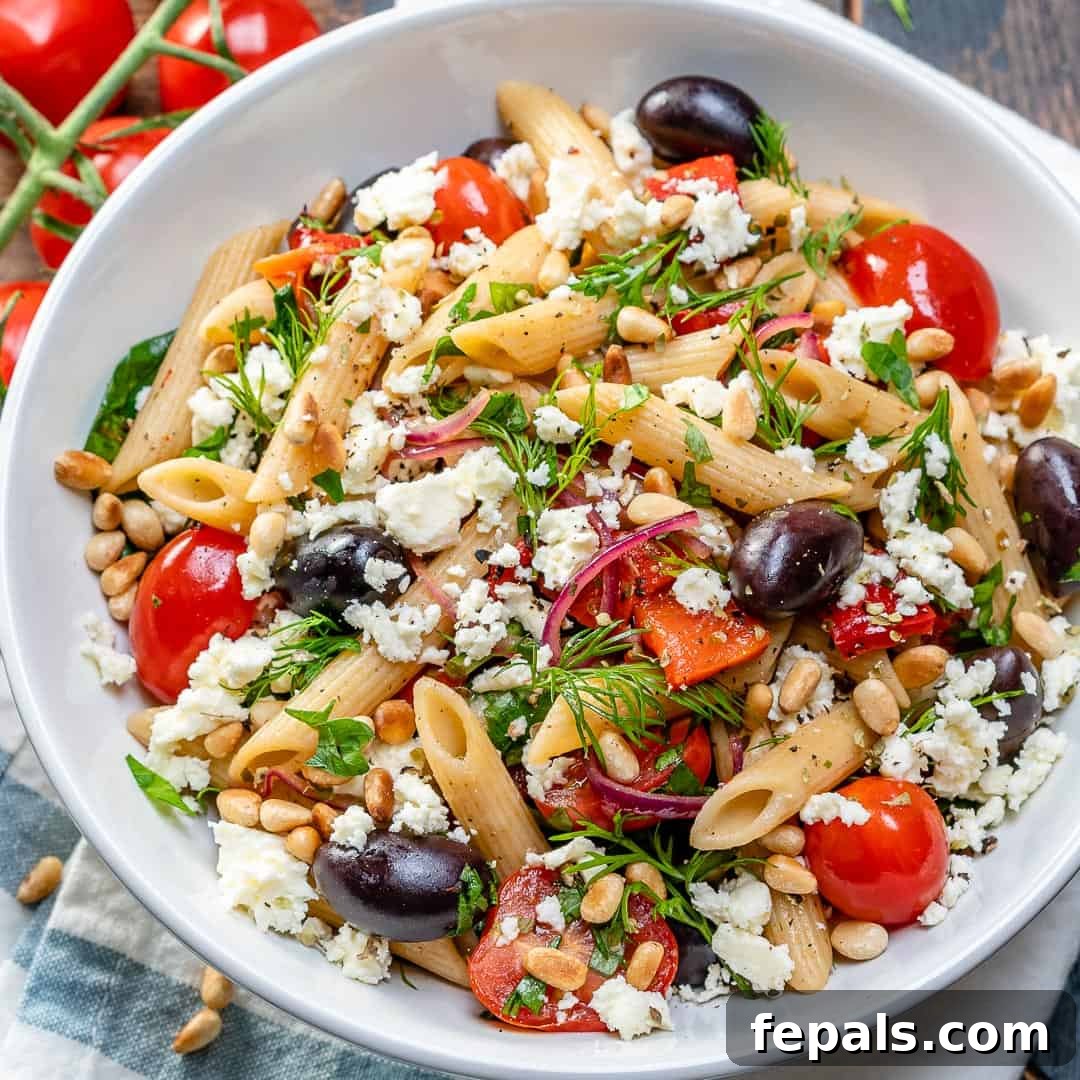
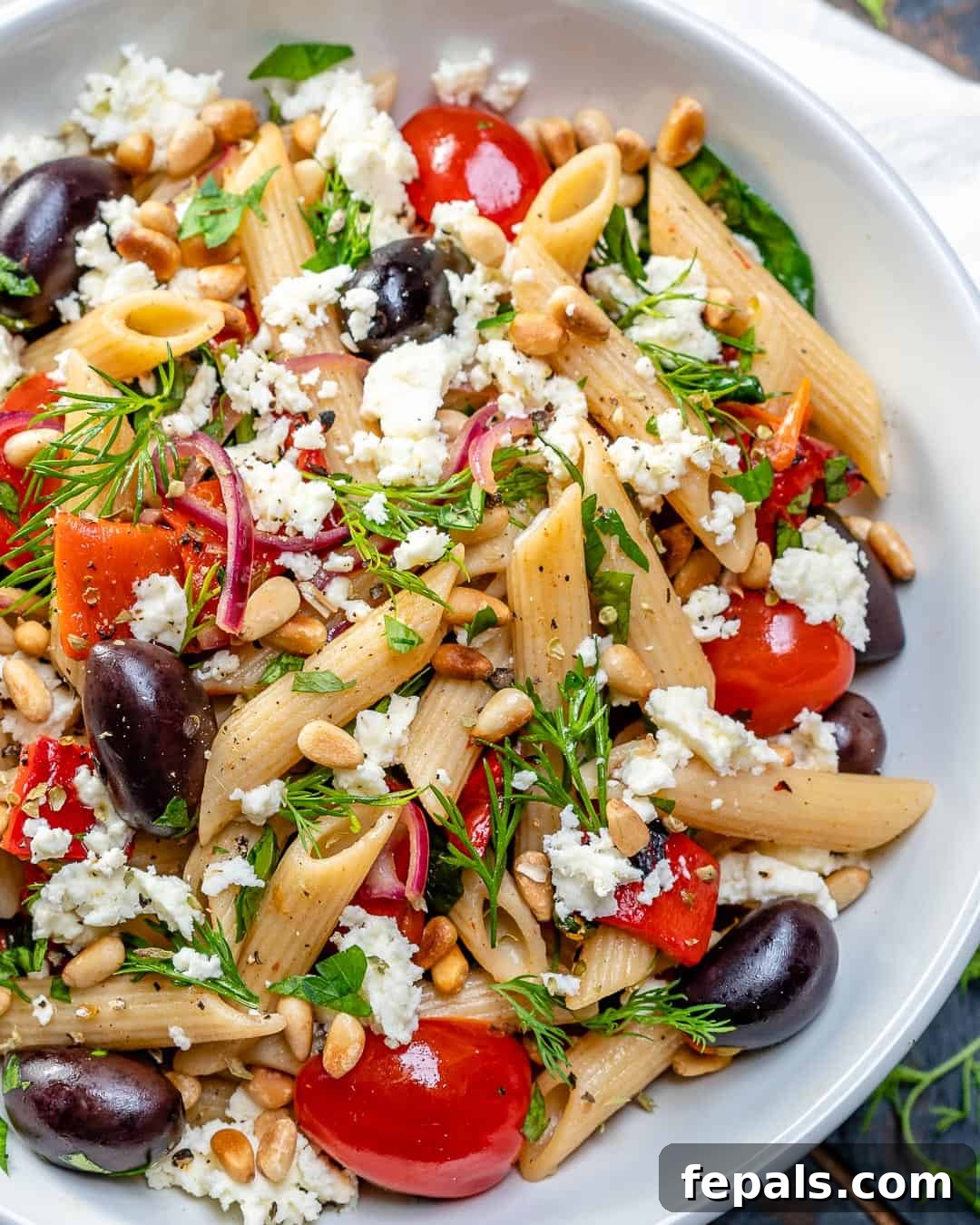
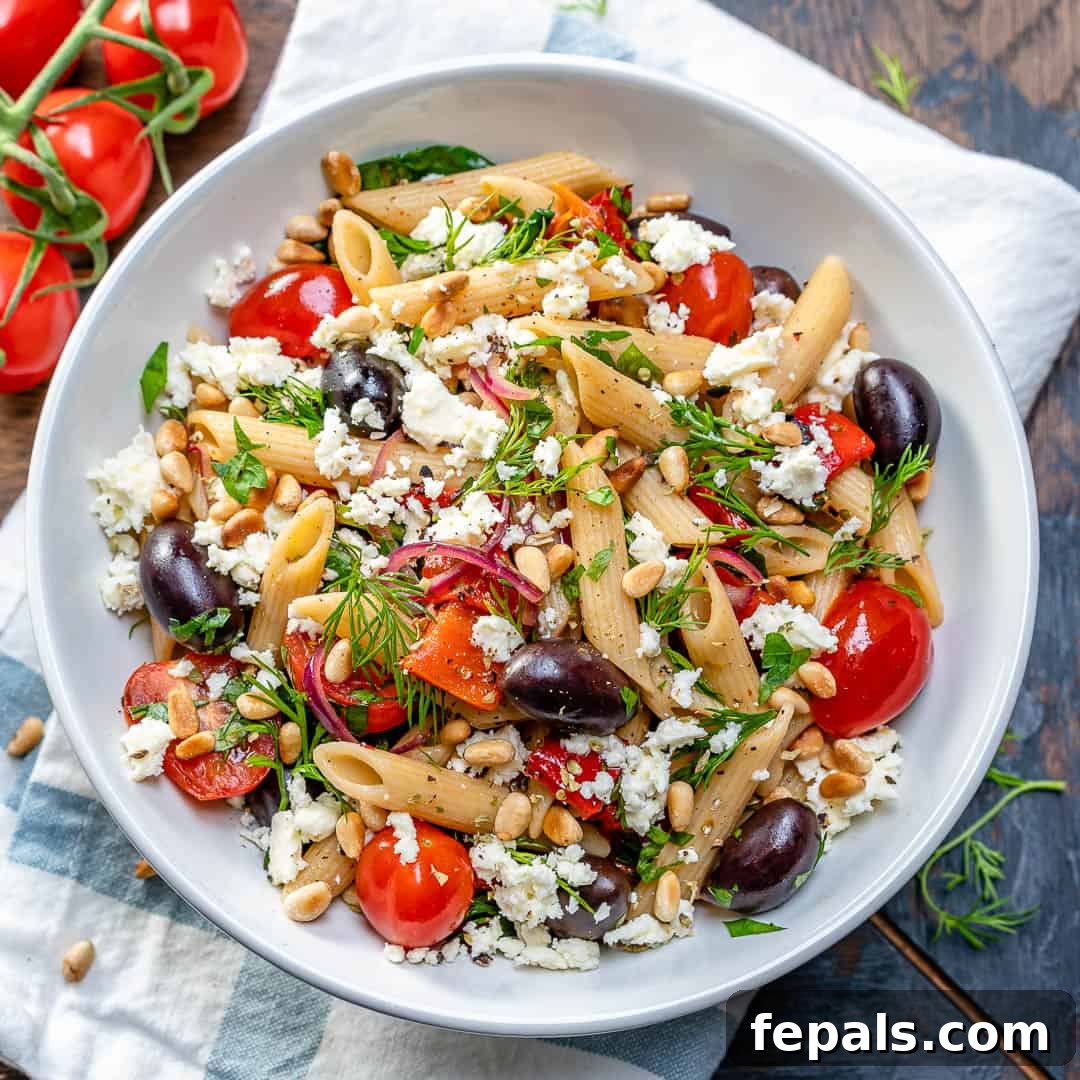
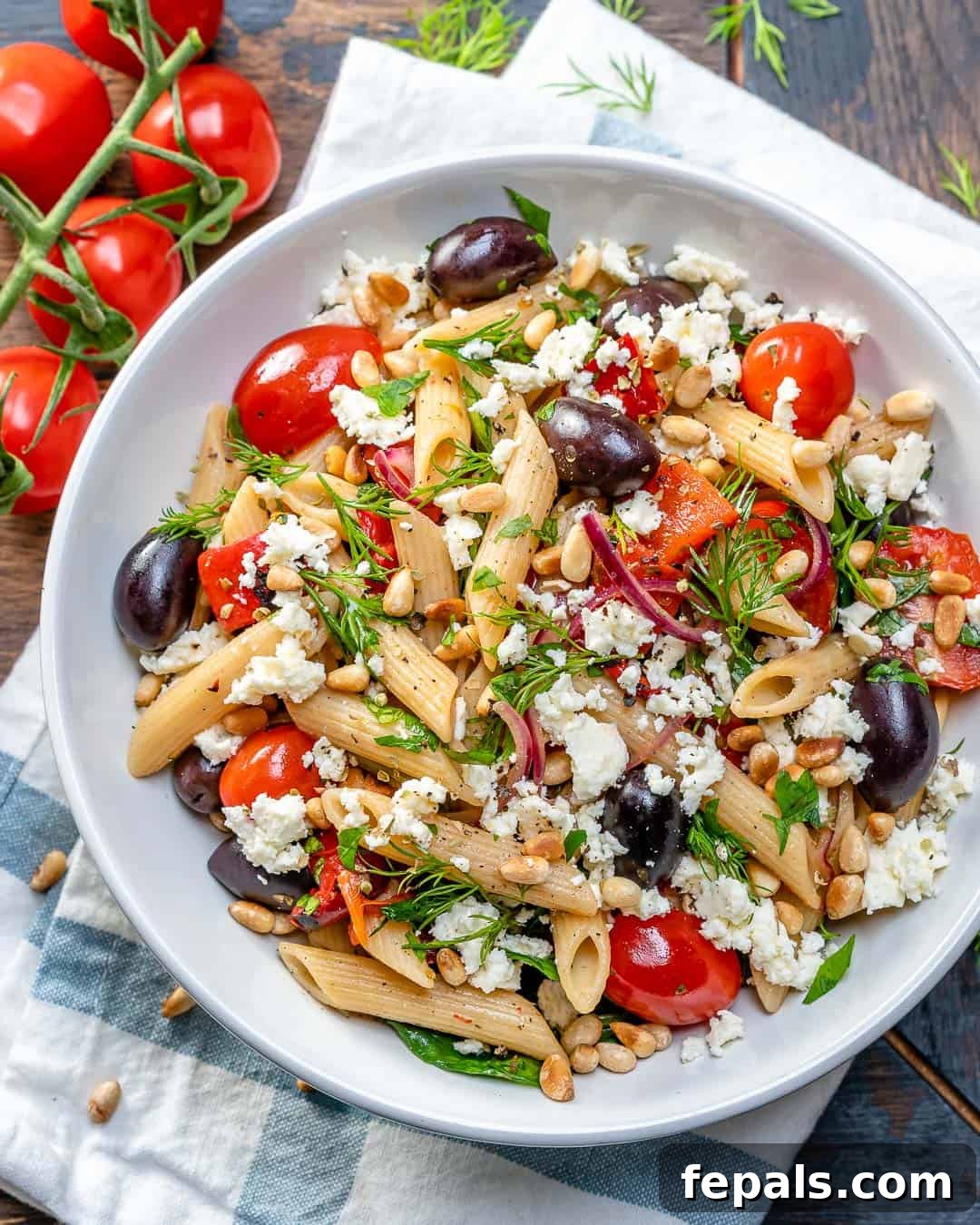
This Easy Greek Cherry Tomato Pasta Recipe is a vibrant, vegetarian dish that effortlessly brings the sun-drenched flavors of the Mediterranean to your table. Simple to prepare yet bursting with fresh ingredients, it’s a wholesome meal that promises to delight everyone, even the pickiest eaters!
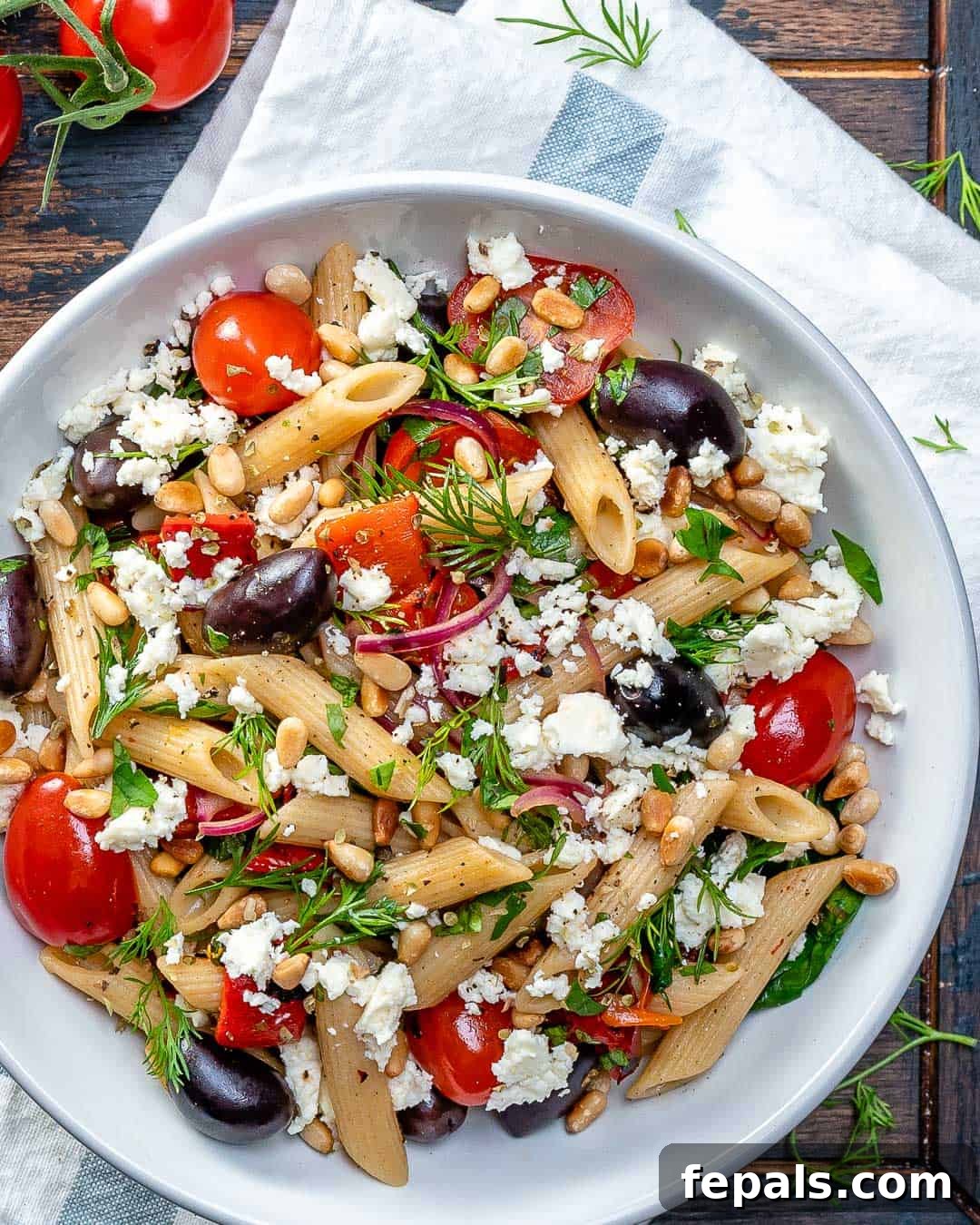
Are you a devoted fan of the fresh, tangy tastes of a traditional Greek salad? Do you also find ultimate comfort in a warm, hearty bowl of pasta? Then prepare to have your culinary worlds collide in the most delicious and harmonious way! This incredible recipe masterfully combines the best elements of a classic Greek salad with the satisfying foundation of pasta, creating a symphony of flavors that is both light and incredibly fulfilling. Every forkful delivers a fresh, zesty, and savory experience that will quickly establish this dish as a top-tier favorite in your household. While pine nuts add a wonderful, buttery crunch and depth, feel free to omit them if you don’t have them on hand or if you have any nut allergies or dietary preferences – the dish remains absolutely delicious and complete without them. This Easy Cherry Tomato Pasta recipe is destined to become one of your most cherished and frequently made meals.
For those craving more Greek-inspired culinary adventures, be sure to explore our refreshing Greek Orzo Salad, perfect for a lighter side or main, or indulge in the rich, savory layers of our comforting Greek Zucchini Moussaka – both are fantastic ways to continue your flavorful journey through Mediterranean cuisine!
Why You’ll Adore This Mediterranean Cherry Tomato Pasta
There are countless reasons why this particular pasta dish stands out and earns a permanent spot in your recipe rotation. It’s more than just a meal; it’s an experience designed for convenience, flavor, and well-being:
- Effortlessly Easy & Quick: Life is busy, and demanding recipes simply don’t always fit. This Greek Cherry Tomato Pasta is designed with simplicity in mind. From gathering your fresh ingredients from the pantry to plating a delectable dinner, the entire process typically takes around 30 minutes or less. It relies on straightforward cooking techniques that even novice cooks can master, making it the perfect solution for busy weeknights, a spontaneous lunch, or when you need a satisfying meal without the fuss.
- Incredibly Fresh and Bursting with Flavor: This isn’t just a basic pasta dish; it’s a vibrant celebration of fresh produce and aromatic Mediterranean herbs. Each ingredient contributes its unique essence: the sweet acidity of cherry tomatoes, the mild sharpness of red onions, the tender sweetness of roasted red peppers, and the briny kick of Kalamata olives. Infused with classic Greek herbs like oregano, parsley, and dill, every bite explodes with authentic zest and a delightful array of textures. It’s hearty enough to truly satisfy your hunger but light enough to leave you feeling energized and refreshed, never heavy.
- Wholesome and Exceptionally Healthy: Embrace the goodness of the renowned Mediterranean diet! This recipe is a nutritional powerhouse, carefully crafted with your health in mind. Featuring fiber-rich whole wheat pasta, an abundance of colorful, vitamin-packed vegetables, and heart-healthy extra virgin olive oil, it delivers essential nutrients, antioxidants, and beneficial fats. It’s naturally vegetarian, providing a fantastic source of plant-based goodness, and can be effortlessly adapted for vegan diets, making it a versatile and guilt-free choice for a healthy lifestyle.
- Remarkably Versatile and Customizable: One of the greatest attributes of this Greek Cherry Tomato Pasta is its adaptability. It serves as an ideal culinary canvas for your creativity. Whether you prefer a touch more spice, different seasonal vegetables, or the addition of lean protein, this recipe can be easily tailored to your specific taste, dietary needs, or whatever ingredients you happen to have on hand. It’s forgiving and always delicious, no matter how you personalize it.
Key Ingredients for Your Authentic Greek Pasta
The true magic of this Greek Cherry Tomato Pasta lies in its selection of simple, high-quality ingredients that, when combined, create a complex, harmonious, and satisfying flavor profile. Each component plays a crucial role in delivering that authentic Mediterranean taste. Here’s a detailed look at what you’ll need to create this culinary delight:
- Pasta: For this particular dish, we highly recommend Penne pasta. Its distinctive tubular shape and ridged surface are exceptionally adept at catching and holding onto the creamy feta crumbles, the finely chopped herbs, and the savory olive oil-based sauce, ensuring that every single bite is packed with flavor. For an added nutritional boost, we specifically choose whole wheat pasta. This significantly increases the fiber content of your meal, making it more filling, aiding in digestion, and providing sustained energy. If penne isn’t available, other short pasta shapes like rotini, farfalle (bow-tie pasta), or even campanelle would also work beautifully.
- Olive Oil: As a cornerstone of traditional Mediterranean cuisine, high-quality extra virgin olive oil is indispensable for this recipe. It not only provides the perfect medium for sautéing your vegetables, allowing their flavors to develop richly, but it also imparts its own distinct, fruity depth of flavor while contributing healthy monounsaturated fats that are beneficial for heart health.
- Fresh and Vibrant Vegetables: This recipe is a celebration of garden-fresh goodness!
- Cherry Tomatoes: These small, juicy cherry tomatoes are absolutely key to the dish, offering delightful bursts of sweet and tart juiciness that mimic the freshness of a Greek salad. Their petite size means minimal preparation, and they soften perfectly when gently heated, releasing their natural sugars and acidity into the pasta.
- Red Onions: Thinly sliced red onions contribute a mild sharpness and a delightful, crisp texture when raw, which mellows beautifully into a sweet and savory note as they lightly cook in the skillet.
- Baby Spinach: Fresh baby spinach adds a vibrant green hue, a pleasant earthiness, and a fantastic dose of iron, vitamins A and K. It wilts down quickly and seamlessly into the hot pasta, adding bulk and nutrition without overpowering the other flavors.
- Kalamata Olives: Briny, distinctively purple-black Kalamata olives are utterly essential for imparting that authentic Greek taste. They contribute a rich, salty, and slightly fruity counterpoint to the sweetness of the tomatoes and the richness of the olive oil.
- Roasted Red Peppers: Using convenient roasted red peppers (either homemade or from a jar) adds a wonderful smoky sweetness and a tender texture, deepening the overall flavor profile of the dish and providing an extra layer of complexity.
- Aromatic Herbs and Garlic: These are the very soul of Greek cooking, infusing the dish with unmistakable Mediterranean fragrances and tastes!
- Fresh Parsley: Bright, chopped fresh parsley adds a clean, herbaceous note and a vibrant splash of color as a garnish.
- Fresh Dill: A distinctive and traditional Greek herb, fresh dill contributes a unique, slightly anisy, and refreshing flavor that is characteristic of many regional dishes and pairs perfectly with feta and tomatoes.
- Dried Oregano: Earthy, robust dried oregano is synonymous with Greek cuisine and infuses the entire dish with its deep, aromatic presence during the sautéing process.
- Garlic Cloves: Minced or pressed garlic cloves are non-negotiable for their pungent, savory kick, which serves as a powerful flavor enhancer, elevating all the other fresh ingredients.
- Cheese: Crumbled Feta cheese is undeniably the star dairy component here. Its signature creamy yet crumbly texture, combined with its distinct salty and tangy profile, adds a quintessential “Greek salad” essence and a wonderful textural contrast that truly makes the dish sing.
- Toasted Pine Nuts: Although optional, toasted pine nuts are highly recommended if you enjoy an extra layer of texture and flavor. They provide a delicate, buttery crunch and a subtle nutty aroma that beautifully complements the other ingredients, adding a touch of sophistication.
- Seasoning: Simple yet essential, salt and freshly ground black pepper are all you need to meticulously enhance and balance the natural, exquisite flavors of these fresh, high-quality ingredients.
Step-by-Step: How to Make This Easy Tomato Pasta Recipe
Crafting this flavorful Greek Cherry Tomato Pasta is incredibly straightforward, breaking down into just a few simple and manageable steps. By following these clear instructions, you’re guaranteed to achieve a perfect, delicious meal every single time:
- Cook the Pasta to Al Dente Perfection: Begin by filling a large pot with generously salted water and bringing it to a rapid, rolling boil over high heat. Once boiling, add your chosen pasta (penne works exceptionally well for this recipe!) and cook it according to the package directions. The goal is an “al dente” consistency, meaning the pasta should be firm to the bite, offering a slight resistance, rather than being soft or mushy. Once cooked, drain the pasta, making sure to reserve about half a cup of the starchy pasta water. Set both the drained pasta and the reserved water aside.
- Sauté the Aromatics and Peppers: While your pasta is cooking, heat the extra virgin olive oil in a large, deep skillet or a wide, heavy-bottomed pan over medium-high heat. Add the thinly sliced red onions and the minced garlic to the hot oil. Sauté them for approximately 2-3 minutes, stirring frequently, until the onions begin to soften and turn translucent, and the garlic becomes wonderfully fragrant (be vigilant to prevent the garlic from burning, as this can turn bitter). Next, stir in the chopped roasted red peppers and continue to cook for an additional 2-3 minutes, allowing their smoky-sweet flavors to gently release and meld with the aromatics.
- Wilting the Spinach with Herbs: Introduce the fresh baby spinach and the dried oregano into the skillet with the sautéed vegetables. Cook, stirring continuously, just until the spinach wilts down. This process is usually quite quick, taking only a minute or two. The residual heat from the pan and vegetables is typically enough to soften the spinach without overcooking it, thereby preserving its vibrant green color and beneficial nutrients.
- Combine All Ingredients and Season: Add the cooked and drained pasta along with the halved fresh cherry tomatoes directly into the skillet with the sautéed vegetables and wilted spinach. Gently toss all the ingredients together using tongs or a large spoon until everything is thoroughly combined and the pasta is well coated. If the mixture appears a little dry or you desire a slightly saucier consistency, add a splash or two of the reserved starchy pasta water. This helps to create a light, cohesive sauce that beautifully clings to the noodles. Season the entire dish generously with salt and freshly ground black pepper to your personal taste, adjusting as needed.
- Garnish and Serve Immediately: Transfer the vibrant pasta mixture to individual serving plates or a large, attractive serving bowl. Generously top each portion with the briny Kalamata olives, a sprinkle of crumbled feta cheese, and the freshly chopped parsley and dill. For an added textural element and a subtle nutty flavor, sprinkle with the toasted pine nuts (if you are using them). Serve this delicious Greek Cherry Tomato Pasta immediately while it’s warm and fresh, allowing everyone to savor the authentic flavors of Greece!
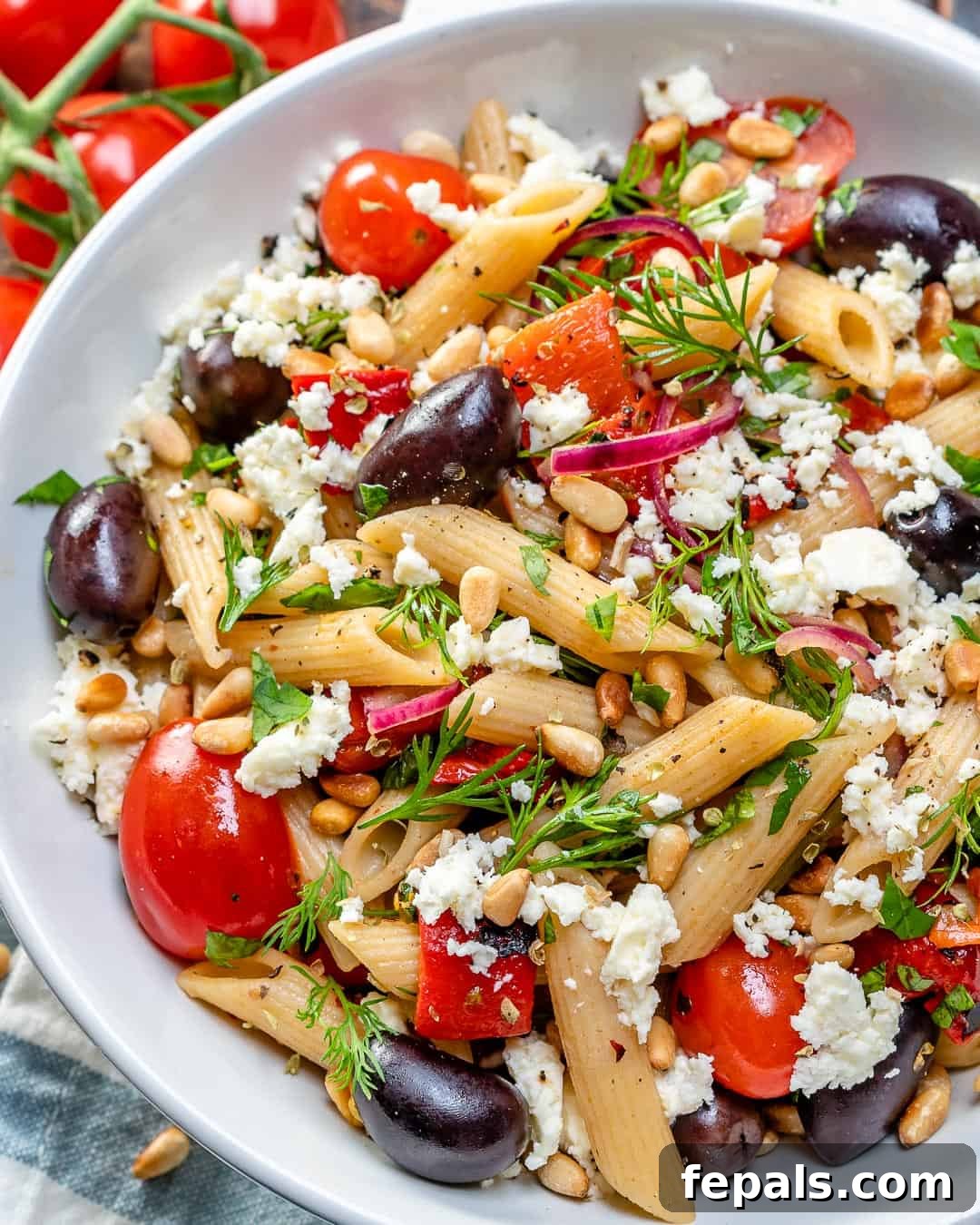
Is This Tomato Pasta Recipe Healthy and Nutritious?
Absolutely! This Greek Cherry Tomato Pasta is a shining example of how incredibly delicious, satisfying, and easy healthy eating can be. Pasta, when chosen thoughtfully and enjoyed in moderation as part of a well-rounded diet, can undoubtedly be a very healthy and beneficial component of your meals. The true key to its healthfulness lies in the quality of the ingredients you select and the thoughtful way in which you prepare them.
Here’s a breakdown of precisely why this recipe truly shines from a health and nutritional perspective:
- The Power of Whole Wheat Pasta: By consciously opting for whole wheat pasta instead of its refined white pasta counterpart, you are making a significant upgrade in the nutritional value of your meal. Whole wheat pasta dramatically boosts the dietary fiber content, which is paramount for maintaining excellent digestive health, helping to stabilize blood sugar levels, and promoting a feeling of fullness that lasts longer, thus naturally aiding in weight management and preventing overeating. Furthermore, whole grain pastas typically offer a richer profile of essential nutrients, including various B vitamins, iron, and magnesium, which are often stripped away during the refining process of white flour.
- Abundance of Nutrient-Dense Vegetables: This dish is literally brimming with an impressive array of vibrant, colorful, and nutrient-packed vegetables!
- Spinach: A fantastic source of iron, vital for energy and blood health, as well as high levels of vitamins K and A, crucial for bone health and vision.
- Cherry Tomatoes: These little gems are packed with lycopene, a potent antioxidant known for its heart-protective benefits, along with ample vitamin C for immune support and potassium for electrolyte balance.
- Red Peppers: Offer an outstanding dose of vitamin C (often more than an orange!), along with other powerful antioxidants that help combat cellular damage.
- Olives: While small, Kalamata olives contribute healthy monounsaturated fats, which are beneficial for heart health, and various antioxidants.
This diverse spectrum of vegetables ensures you’re receiving a broad range of essential vitamins, minerals, and disease-fighting phytonutrients, contributing significantly to your overall well-being.
- Heart-Healthy Fats from Olive Oil: The generous use of extra virgin olive oil is not just for flavor; it’s a defining characteristic and a major health benefit of the Mediterranean diet. Olive oil is exceptionally rich in monounsaturated fatty acids (MUFAs), which are widely recognized for their ability to promote cardiovascular health, helping to lower levels of “bad” LDL cholesterol and reduce systemic inflammation throughout the body.
- Lean Protein and Calcium from Feta: Feta cheese, while wonderfully flavorful and a staple of Greek cuisine, also serves as a good source of quality protein, essential for muscle repair and growth, and calcium, which is crucial for strong bones and teeth. In this recipe, it’s used thoughtfully and in moderation to impart its distinctive taste without making the dish overly rich.
- Mindful Sodium Management: While ingredients like Kalamata olives and feta cheese inherently contribute to the dish’s sodium content, the abundance of fresh, unsalted vegetables and aromatic herbs allows you to balance and control the overall saltiness. You have the flexibility to adjust added salt and pepper to your personal taste, ensuring a delicious and health-conscious meal.
In essence, this recipe aligns perfectly with the fundamental principles of the Mediterranean diet, which places a strong emphasis on whole, unprocessed, plant-based foods, healthy fats, and moderate consumption of dairy. It’s a truly wholesome meal that wholeheartedly supports overall health and vitality.
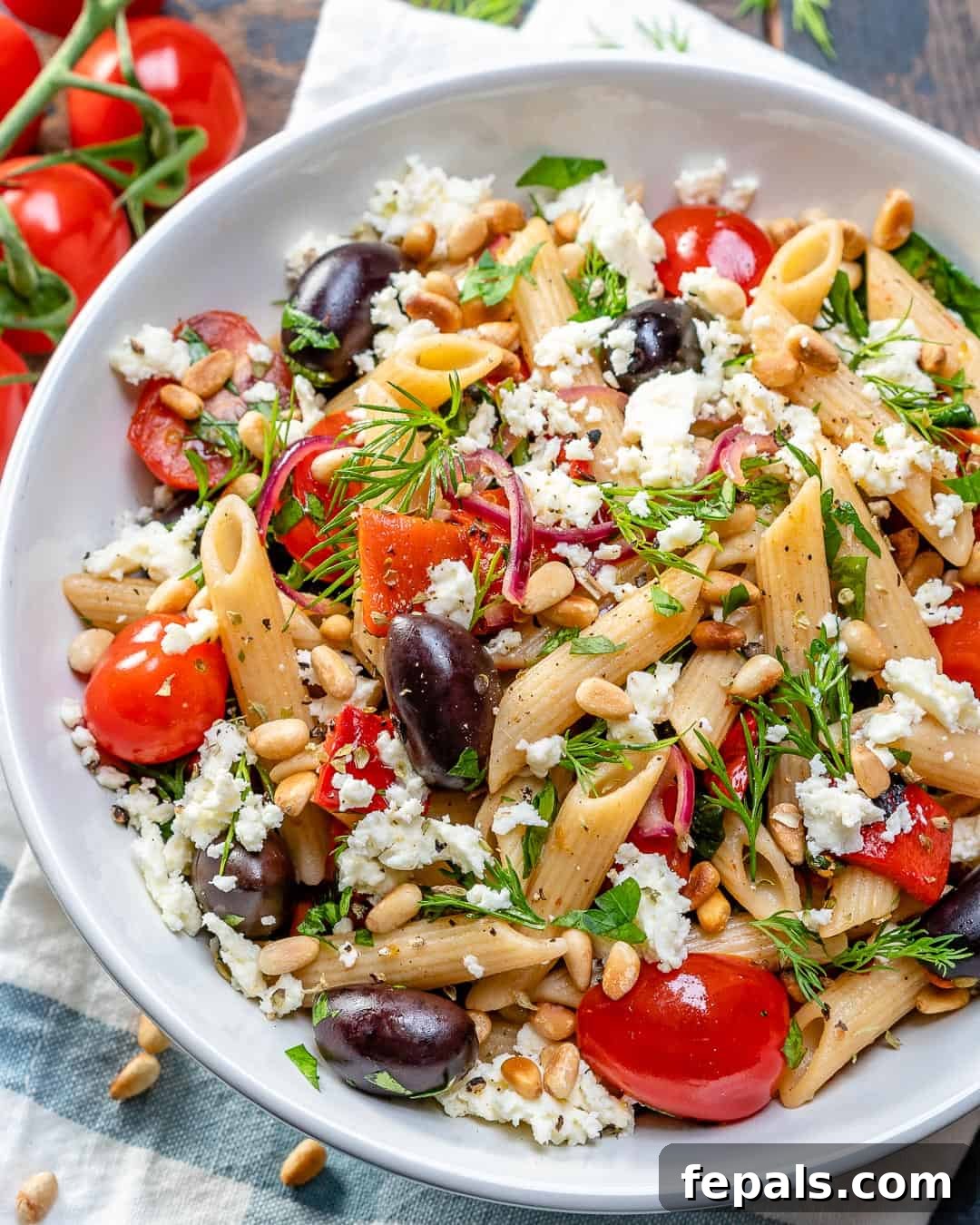
Exploring the Healthiest Pasta Options
Pinpointing a single “healthiest pasta” can be quite nuanced, as the ideal choice often depends significantly on individual dietary needs, specific health goals, and personal taste preferences. However, we can certainly identify categories of pasta that consistently offer superior nutritional benefits compared to traditional refined white flour pasta.
Generally speaking, pastas that are primarily made with refined wheat and white flour are considered to be the least healthy options. This is largely due to their low dietary fiber content, which means they are digested quickly and can lead to more rapid spikes in blood sugar levels. While this easy Greek Pasta recipe already makes a smart choice by recommending whole wheat pasta – a significant step up in nutritional value – the market has evolved to offer an even wider array of healthier and more specialized pasta alternatives in recent years.
When you’re actively seeking out truly nutritious pasta alternatives, it’s beneficial to look for options crafted from legumes, ancient grains, or even entirely from vegetables. These alternatives are typically much higher in essential protein and dietary fiber, which not only contribute to better digestive health but also offer sustained energy release and promote a greater sense of satiety, helping you feel fuller for longer:
- Lentil Pasta: Often made solely from red or green lentils, this type of pasta is an outstanding source of complete plant-based protein and an impressive amount of dietary fiber. It typically features a slightly earthy flavor profile and, importantly, holds its shape remarkably well during cooking. Many individuals find its texture surprisingly similar to that of traditional wheat pasta, making it a highly popular and satisfying choice.
- Chickpea Pasta: Similar to lentil pasta, chickpea pasta is another excellent high-protein and high-fiber alternative. It boasts a mild, subtly nutty flavor and a firm, satisfying texture. This option is particularly beneficial for those aiming to increase their intake of legumes and their associated nutritional benefits.
- Quinoa Pasta: While frequently blended with corn or rice flour to improve texture, pure quinoa pasta is exceptional because it offers a complete protein profile, meaning it contains all nine essential amino acids necessary for human health. It is also naturally gluten-free and provides a good amount of fiber.
- Brown Rice Pasta: A widely popular gluten-free alternative, brown rice pasta is made from whole grain brown rice flour. It serves as a good source of fiber and possesses a neutral flavor that adapts beautifully to a vast array of sauces, making it incredibly versatile.
- Edamame Pasta: Crafted from nutrient-rich green soybeans, edamame pasta stands out for its exceptionally high protein and fiber content, making it a very substantial and satisfying choice. It typically has a slightly denser texture and a distinct, fresh flavor.
- Spelt Pasta: An ancient grain, spelt pasta offers a slightly nutty flavor and a good source of fiber and protein, similar to whole wheat but with a different nutritional profile that some find easier to digest.
From my own experience, lentil pasta often provides an excellent balance of taste and texture that integrates quite seamlessly into most recipes, and I often find myself preferring it over chickpea pasta for its slightly less dense and more adaptable consistency. Experimenting with different types will help you discover your personal favorite!
Low-Carb Pasta Alternatives for a Lighter Meal
For individuals who are actively seeking to reduce their carbohydrate intake, whether for dietary reasons, health goals, or simply a preference for lighter meals, several excellent pasta substitutes can ingeniously transform your favorite pasta dishes into low-carb delights without requiring you to sacrifice flavor or the satisfying feel of a pasta meal. These innovative alternatives are predominantly derived from various vegetables, offering not only significantly fewer carbohydrates but also an added bonus of vitamins, minerals, and often a fresh, vibrant taste.
The most common, versatile, and popular low-carb pasta substitutes include:
- Spiralized Vegetables (Often called “Zoodles,” “Sweet Potato Noodles,” “Carrot Noodles”):
- Zucchini Noodles (Zoodles): Arguably the most popular and widely embraced option, zucchini can be effortlessly spiralized into long, delicate strands that beautifully mimic spaghetti. Zoodles possess a very mild, almost neutral flavor, which allows them to readily absorb the flavors of your sauce. They cook incredibly quickly and are best either lightly sautéed for a minute or two or simply tossed directly with a warm sauce to retain their desirable slightly crisp-tender texture.
- Sweet Potato Noodles: Offering a naturally sweeter taste and a visually appealing vibrant orange hue, spiralized sweet potatoes are a fantastic and nutrient-dense alternative. They are more robust than zucchini noodles and hold up exceptionally well to cooking, providing a hearty and flavorful base for a wide variety of sauces, from savory to slightly spicy.
- Carrot Noodles: While generally thinner and sweeter than zucchini or sweet potato noodles, spiralized carrots introduce a beautiful bright color and a gentle sweetness to dishes. They perform particularly well in lighter, fresh preparations or Asian-inspired meals where their unique flavor can truly shine.
- Spaghetti Squash: This incredibly unique winter squash earns its name by naturally forming spaghetti-like strands when cooked. To prepare, simply bake or microwave the squash until tender, then easily scrape out the “noodles” with a fork. Spaghetti squash boasts a mild, slightly nutty flavor and a tender-crisp texture, making it an excellent and versatile base for virtually any pasta sauce you can imagine.
- Eggplant “Noodles” or Lasagna Sheets: Thinly sliced eggplant can be used as an exceptional low-carb replacement for traditional pasta sheets in layered dishes like lasagna. Alternatively, thicker slices can be cut into “noodles” for other pasta-like preparations. Roasting or grilling the eggplant slices prior to assembly helps to soften their texture, remove excess moisture, and concentrate their rich, earthy flavor.
- Cabbage Noodles: Finely shredded cabbage, especially green cabbage, can be lightly sautéed until it reaches a tender-crisp texture to create a surprisingly satisfying and hearty noodle substitute. Cabbage has a distinctive, slightly peppery flavor that pairs particularly well with robust, savory sauces.
- Shirataki Noodles: Made predominantly from glucomannan, a dietary fiber derived from the konjac plant, shirataki noodles are almost entirely calorie-free and carb-free. They possess a somewhat gelatinous, translucent texture and are known for their ability to absorb the flavors of the sauce they are cooked in, rather than contributing much flavor themselves. They typically require a thorough rinsing before use to remove their packaging liquid.
When incorporating these low-carb alternatives into your cooking, it’s important to remember that their cooking times and final textures will differ significantly from those of conventional wheat pasta. Generally, they require less cooking time and benefit immensely from being added to your sauce towards the very end of the cooking process or lightly sautéed, which helps to prevent them from becoming too watery or mushy.
Expert Recipe Notes and Tips for Success
To ensure your Easy Greek Cherry Tomato Pasta turns out perfectly every single time, achieving that ideal balance of flavor and texture, keep these expert tips and culinary insights in mind:
- Optimal Pasta Cooking Environment: Always use a generously large pot filled with plenty of cold, fresh water for cooking your pasta. Once the water comes to a rolling boil and you add the pasta, there should be ample space for the individual noodles to move and circulate freely. This crucial step is key to preventing them from clumping together and ensures that each piece cooks evenly to that desired al dente perfection.
- Prevent Pasta from Sticking: The moment you introduce your pasta to the vigorously boiling water, immediately give it a good, vigorous stir. Repeat this stirring motion several times during the first couple of minutes of cooking. This simple yet vital action effectively prevents the pasta strands from sticking to each other or adhering to the bottom of the pot, ensuring perfectly separated noodles.
- The Art of Proper Draining: When your pasta is cooked al dente, drain it just enough to remove the majority of the cooking water, but avoid letting the drained pasta sit in the colander for an extended period. As it cools, the starches on the surface will firm up, inevitably causing the noodles to stick together. Ideally, you should combine the pasta with your sauce as soon as possible after draining. If it does sit too long, a quick rinse with hot water can sometimes help separate the strands, but it’s best to avoid this if possible.
- The Secret Weapon: Reserved Pasta Water: Never underestimate the power of that starchy pasta water! Before draining your pasta completely, remember to reserve about half a cup. A splash or two of this starchy liquid, when added to the sauce during the final combining step, works wonders. It helps to beautifully emulsify the sauce, thicken it ever so slightly, and ensures it coats the noodles magnificently, making the entire dish more cohesive, glossy, and intensely flavorful.
- Exciting Cheese Variations: While the traditional feta cheese is undeniably delicious and provides that authentic Greek tang, don’t hesitate to experiment with other cheeses if you’re feeling adventurous. If you desire a stronger, more pungent, and creamier cheese flavor, consider swapping out the feta for fresh goat cheese. Its distinct tart notes and soft texture can introduce another delightful layer of complexity. For a milder, saltier profile, some crumbled ricotta salata could also work beautifully.
- Boost the Mediterranean Aroma: To infuse your dish with an even deeper and more profound Mediterranean essence, consider adding a tiny pinch of dried mint along with the oregano and dill during the sautéing process. A generous squeeze of fresh lemon juice over the finished pasta just before serving is also a fantastic trick; it brightens all the flavors, adding a wonderful zesty lift that makes the dish sing.
- Add a Savory Protein Punch: While this vegetarian pasta is wonderfully satisfying and complete on its own, it also serves as an excellent base for adding your favorite lean proteins. Perfectly grilled chicken breast, succulent pan-seared shrimp, flaky baked cod, or even some drained and rinsed cannellini beans or chickpeas would complement the vibrant Mediterranean flavors perfectly, turning it into an even more substantial meal.
- Effortlessly Make it Vegan: To transform this delightful recipe into a fully vegan-friendly dish, the process is incredibly simple: just omit the feta cheese entirely. You can either substitute it with a high-quality plant-based feta alternative for a similar tang and texture, or sprinkle in some nutritional yeast for a cheesy umami flavor, or simply savor the dish for its incredible vibrant vegetable and herb profile as is. It’s delicious either way!
Serving Suggestions for Your Greek Cherry Tomato Pasta
This incredibly versatile Greek Cherry Tomato Pasta can be enjoyed as a light and satisfying main course or as a hearty, flavorful side dish. Here are some delightful ideas to help you complete your Mediterranean-inspired meal, ensuring a balanced and delicious spread:
- Warm, Crusty Bread: A warm, freshly baked baguette, a slice of rustic sourdough, or even some soft pita bread is absolutely perfect for soaking up every last drop of the savory sauce and the infused olive oil. It’s a simple pleasure that enhances the meal.
- Simple Green Salad: To add even more fresh greens and a refreshing contrast, pair your pasta with a crisp, undressed green salad. A light vinaigrette made simply with good quality olive oil, fresh lemon juice, salt, and pepper will complement the pasta without overpowering its flavors.
- Grilled or Baked Protein: For those seeking a more substantial meal, this pasta serves as an ideal accompaniment to lean proteins. Consider serving it alongside perfectly grilled chicken skewers, pan-seared flaky white fish (such as cod or halibut), baked salmon, or tender shrimp. The lightness of the pasta makes it a superb counterpoint to richer proteins.
- Additional Roasted Vegetables: Enhance the vegetable goodness of your meal by adding a side of beautifully roasted asparagus, tender-crisp broccoli florets, or extra bell peppers. Roasting brings out their natural sweetness and adds another layer of texture.
- Classic Greek Dips: A dollop of cool, creamy tzatziki (cucumber-yogurt dip) or a side of velvety smooth hummus with extra pita bread can add an authentic layer of Greek flavor and texture to your meal, perfect for dipping or spreading.
Storage and Meal Prep Tips
This Greek Cherry Tomato Pasta is not only delicious fresh but also holds up wonderfully for meal prepping or enjoying as convenient leftovers. With proper storage, you can extend the enjoyment of this delightful dish:
- Proper Storage: Always allow the pasta dish to cool completely to room temperature before transferring it into an airtight food storage container. Stored correctly in the refrigerator, it will maintain its quality and delicious flavor for up to 3-4 days. This makes it an excellent option for preparing ahead of time for lunches or quick dinners throughout the week.
- Gentle Reheating: When you’re ready to enjoy your leftovers, reheat individual portions gently. You can use a microwave on a medium setting, stirring occasionally, or warm it on the stovetop over low heat in a skillet. If the pasta appears a little dry or stiff after refrigeration, you can easily revive it by adding a small splash of vegetable broth, a tablespoon of water, or a little extra drizzle of fresh olive oil. Be careful not to overheat the pasta, as this can lead to it becoming mushy and losing its desired texture.
- Best Served Fresh: While the pasta reheats commendably, it’s worth noting that the dish is truly at its absolute best when served fresh. The cherry tomatoes, in particular, retain their optimal firm texture and vibrant, juicy flavor immediately after preparation, contributing to a truly delightful culinary experience.
More Mediterranean and Pasta Recipes to Inspire You
If you’ve enjoyed the fresh and wholesome flavors of this Greek Cherry Tomato Pasta, we encourage you to explore more of our delightful Mediterranean and pasta-inspired recipes. Broaden your culinary horizons with these other fantastic options:
- Healthy Pasta Primavera Recipe
- Creamy Wild Mushroom Pasta
- Spinach and Avocado Pasta Recipe
Don’t miss out on more incredibly delicious and healthy recipes like this Easy Greek Cherry Tomato Pasta! Remember to subscribe to our exclusive NEWSLETTER for free and have all our latest culinary creations and healthy eating tips delivered straight to your inbox, ensuring you’re always inspired in the kitchen.
If you give this recipe a try and absolutely love it, we would be incredibly thrilled to see your beautiful creation! Please share your photos and use our unique hashtag #healthyfitnessmeals on INSTAGRAM for a fantastic chance to be featured on our page! You can also FOLLOW Healthy Fitness Meals on FACEBOOK | INSTAGRAM | PINTEREST | TWITTER for all of our newest blog posts, innovative recipes, and healthy lifestyle content.
Easy Greek Cherry Tomato Pasta Recipe
By: Rena
Servings: 4
Prep Time: 15 mins
Cook Time: 20 mins
Total Time: 35 mins
A wonderfully easy-to-make Greek-flavored pasta dish that’s loaded with fresh, vibrant flavors and ready in under 30 minutes. Perfect for a quick and healthy meal.
Ingredients
- 8 oz Whole Wheat Penne
- 1 Tbsp Olive Oil
- 2 Garlic Cloves, minced or pressed
- 1/2 Medium Red Onion, sliced
- 8 oz Roasted Red Peppers, chopped (from a jar is fine)
- 1 Tsp Dried Oregano
- 2 Cups Baby Spinach
- 1 Cup Halved Cherry Tomatoes
- 1/4 Cup Kalamata Olives, pitted and halved
- 1/4 Cup Feta Cheese, crumbled
- 2 Tbsp Toasted Pine Nuts (optional, for garnish)
- 1 Tbsp Fresh Parsley, chopped (for garnish)
- 1 Tbsp Fresh Dill, chopped (for garnish)
- Salt and freshly ground black pepper, to taste
Instructions
- Bring a large pot of generously salted water to a rolling boil. Add the pasta and cook according to package directions, typically 6-8 minutes, or until it reaches an al dente consistency (firm to the bite). Drain the pasta, reserving about 1/2 cup of the starchy pasta water, and set aside.
- Meanwhile, heat 1 Tbsp olive oil in a large skillet or deep pan over medium-high heat. Add the sliced red onions and minced garlic. Sauté for about 2-3 minutes until the onions begin to soften and become translucent, and the garlic is fragrant (be careful not to burn it).
- Stir in the chopped roasted red peppers and continue to cook for an additional 2-3 minutes, allowing their flavors to meld.
- Add the fresh baby spinach and dried oregano to the skillet. Cook, stirring frequently, just until the spinach wilts down, which usually takes only 1-2 minutes.
- Add the cooked and drained pasta along with the halved cherry tomatoes to the skillet with the vegetables. Toss everything together gently until well combined. If the mixture seems a little dry, add a splash or two of the reserved pasta water to create a light sauce that beautifully coats the noodles. Season generously with salt and freshly ground black pepper to your taste.
- Transfer the pasta to serving plates or a large serving bowl. Generously top with the pitted Kalamata olives, crumbled feta cheese, fresh chopped parsley, fresh chopped dill, and toasted pine nuts (if using). Serve immediately and enjoy this vibrant Greek-inspired dish!
Notes
- For best results, use a large pot with ample water when cooking pasta to prevent sticking and ensure even cooking.
- Stir your pasta immediately after adding it to the boiling water, and a few times during the first minute, to prevent it from clumping.
- Drain pasta just enough to remove most of the water; avoid letting it sit and “dry off” as it will become sticky.
- The reserved starchy pasta water is key for creating a silky sauce that binds the ingredients.
- Feel free to swap feta for fresh goat cheese if you prefer a stronger, creamier tang.
- To make this recipe vegan, simply omit the feta cheese or use a plant-based feta alternative.
- A squeeze of fresh lemon juice at the end can brighten all the flavors beautifully.
Nutrition
Calories: 320kcal
Carbohydrates: 42g
Protein: 10g
Fat: 11g
Saturated Fat: 2g
Cholesterol: 8mg
Sodium: 1029mg
Potassium: 297mg
Fiber: 6g
Sugar: 3g
Vitamin A: 2035IU
Vitamin C: 41.8mg
Calcium: 103mg
Iron: 1.6mg
Nutrition information is automatically calculated and should only be used as an approximation. Values may vary based on specific ingredients and brands used.
Additional Info
Course: Main Course
Cuisine: Greek
Tried this recipe? We’d love to see your creation! Mention @healthyfitnessmeals or tag #healthyfitnessmeals on Instagram!