
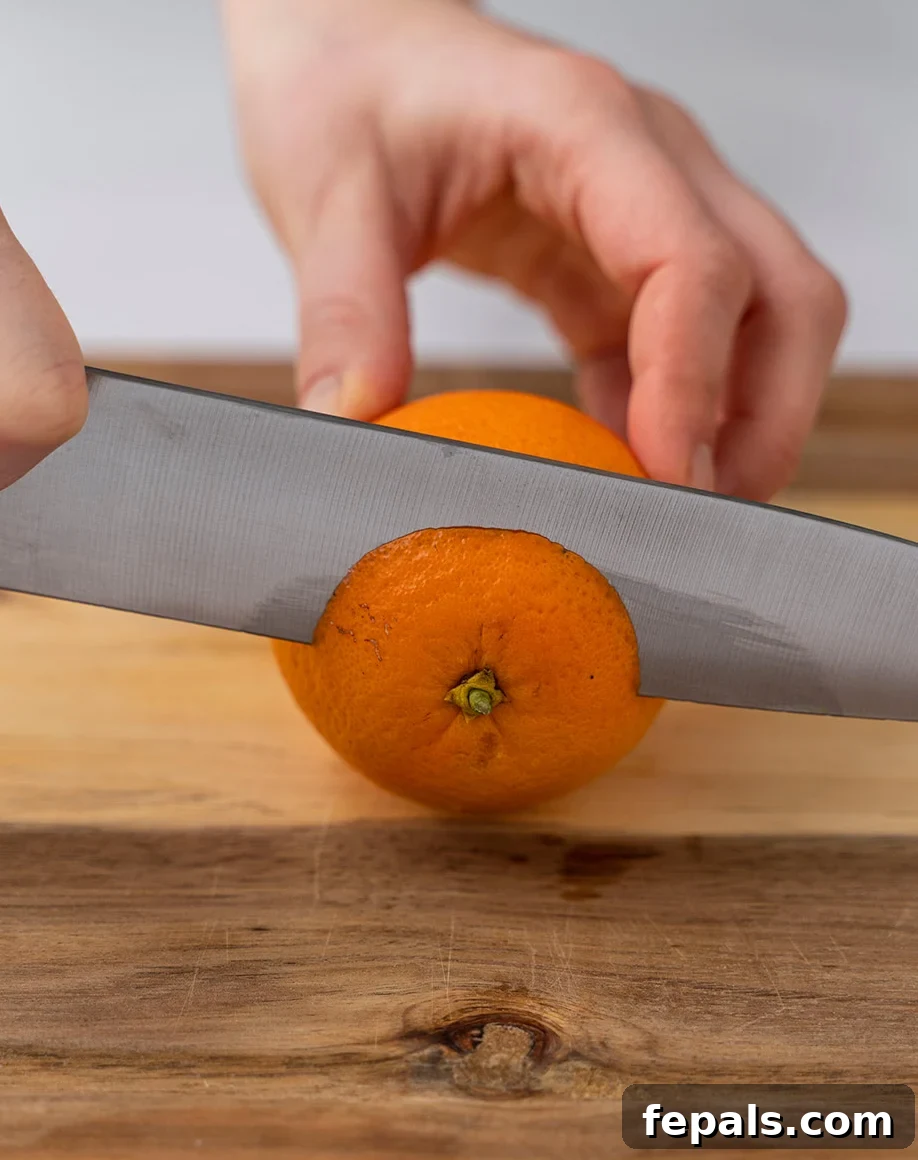
Whether you’re preparing a vibrant fruit salad, garnishing a dessert, or simply enjoying a healthy snack, knowing how to perfectly cut an orange can elevate your culinary experience. This comprehensive guide will show you how to quickly and easily transform an orange into beautiful segments or slices, free from the often-bitter white pith and membranes. This professional technique, known as “supreming,” is applicable to any citrus fruit, and you’ll be slicing like a pro in no time!
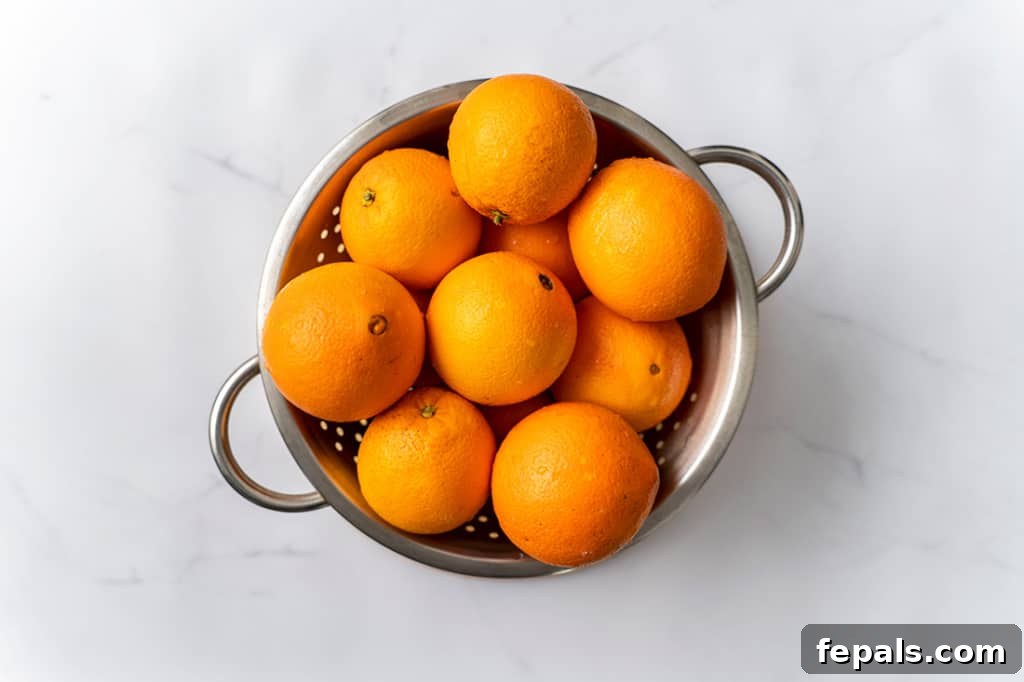
While cutting an orange might seem like a simple task, achieving those perfectly presented, membrane-free slices or segments requires a specific approach. This technique, called “supreming,” is a skill commonly observed in professional kitchens and high-end restaurants, where each piece of fruit is meticulously prepared for optimal flavor and presentation. We will walk you through a detailed, step-by-step process on how to easily and elegantly cut an orange, ensuring every bite is pure, juicy citrus goodness.
Why Master the Art of Orange Cutting?
Beyond aesthetic appeal, mastering orange cutting, particularly the supreming technique, offers several advantages. The white pith and membranes, while harmless, can impart a slightly bitter taste and a less pleasant texture. By removing them, you unlock the purest, sweetest flavor of the orange, making it more enjoyable for eating fresh, adding to salads, or using in desserts. It also enhances the visual presentation of your dishes, turning a simple ingredient into an elegant garnish or component.
The Abundant Health Benefits of Oranges
Oranges are not just delicious; they are incredibly good for you, packed with essential nutrients that support overall health and well-being. These vibrant citrus fruits are a powerhouse of vitamins and minerals, making them a fantastic addition to any diet.
- Rich in Vitamin C: Oranges are famously loaded with Vitamin C, a powerful antioxidant crucial for boosting the immune system. It helps protect your body against illness, promotes healthy skin by aiding collagen production, and contributes to wound healing. A single orange can provide more than 100% of your daily recommended Vitamin C intake.
- High in Antioxidants: Beyond Vitamin C, oranges contain various other antioxidants, such as flavonoids and carotenoids. These compounds help combat oxidative stress in the body, reducing inflammation and potentially lowering the risk of chronic diseases like heart disease and certain cancers.
- Good Source of Fiber: The dietary fiber found in oranges is beneficial for digestive health. It aids in regular bowel movements, prevents constipation, and can help maintain stable blood sugar levels. The fiber also contributes to a feeling of fullness, which can be helpful for weight management.
- Hydration: Oranges have a high water content, contributing to your daily hydration needs, which is vital for all bodily functions, including nutrient transport and temperature regulation.
- Potassium Rich: This essential mineral plays a crucial role in maintaining fluid balance, nerve signals, and muscle contractions. Adequate potassium intake is also important for supporting healthy blood pressure levels.
- Folate for Cell Health: Folate (Vitamin B9) is necessary for cell growth and function. It’s particularly important during pregnancy to prevent birth defects.
Incorporating oranges into your daily diet is a delicious and easy way to nourish your body with these vital nutrients.
Popular Types of Oranges
The world of oranges is diverse, offering a range of flavors, textures, and appearances. Here are some of the more common varieties you’re likely to find at your local grocery store, each with its unique characteristics:
- Valencia Orange: Hailing from Southern California, Valencia oranges are celebrated for their exceptionally sweet taste and low acidity, making them a favorite for juicing. They typically have a thin, bright orange rind and are often seed-bearing. These oranges thrive in warmer climates and are primarily harvested in the summer months, usually in season from March to July. While perfect for juicing, their balanced flavor also makes them excellent for fresh eating.
- Navel Orange: Easily identifiable by the “navel” indentation at its blossom end, which resembles a human belly button, the Navel orange is one of the most popular varieties for eating fresh. They are typically seedless, have a thick, easy-to-peel rind, and boast a wonderfully sweet and juicy flesh. Navel oranges are usually in season from November to June, making them a winter staple. Their large size and sweet flavor make them ideal for snacks and salads.
- Cara Cara Orange: A delightful part of the Navel orange family, the Cara Cara stands out with its distinctive pinkish-red flesh, a result of lycopene, the same antioxidant found in tomatoes and watermelons. These oranges are remarkably sweet, often described as having subtle notes of berry, rose, or cherry, adding a complex flavor profile. They are usually seedless and have a relatively low acidity. Cara Cara oranges are in season from December to April, offering a unique and flavorful citrus option during the colder months.
- Blood Orange: Named for its dramatic crimson-colored flesh, which can range from a deep red to a dark purple, the Blood orange offers a unique flavor experience. It is sweet but also possesses a pleasant tartness and often hints of raspberry or cranberry, especially when fully ripe. The intensity of the red color can vary depending on the growing conditions and specific cultivar. Blood oranges are typically in season from December to May and are fantastic for both eating fresh and adding a vibrant color and distinct flavor to juices, salads, and desserts.
- Clementine: These small, sweet, and typically seedless citrus fruits are a hybrid between a mandarin orange and a sweet orange. Clementines are exceptionally easy to peel, making them a perfect, convenient snack, especially popular with children. Their bite-sized nature and delightful sweetness make them irresistible. They are usually in season from October to January, often appearing in grocery stores around the holidays.
Essential Tools for Perfect Orange Cuts
Before you begin, ensure you have the right equipment. A sharp knife is paramount for clean, safe cuts. A dull knife is more likely to slip and cause injury. You’ll need:
- A Sharp Chef’s Knife: Ideal for removing the peel and pith.
- A Paring Knife (Optional, but Recommended for Segments): Its smaller, more nimble blade provides greater control for intricate tasks like supreming.
- A Sturdy Cutting Board: To protect your countertop and provide a stable surface.
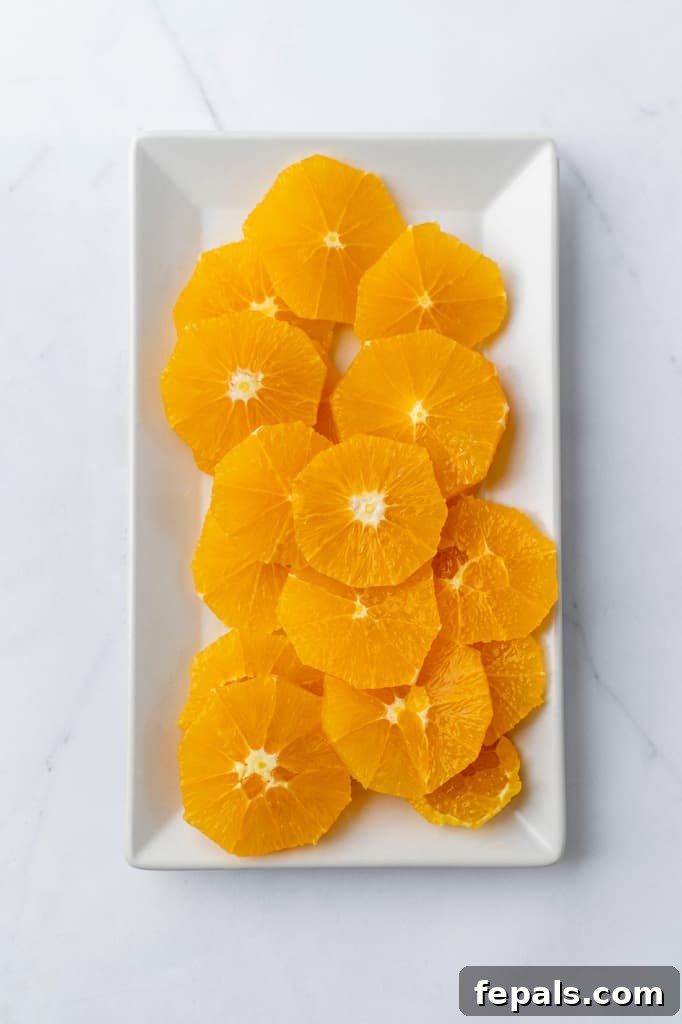
How to Cut Orange Slices Easily
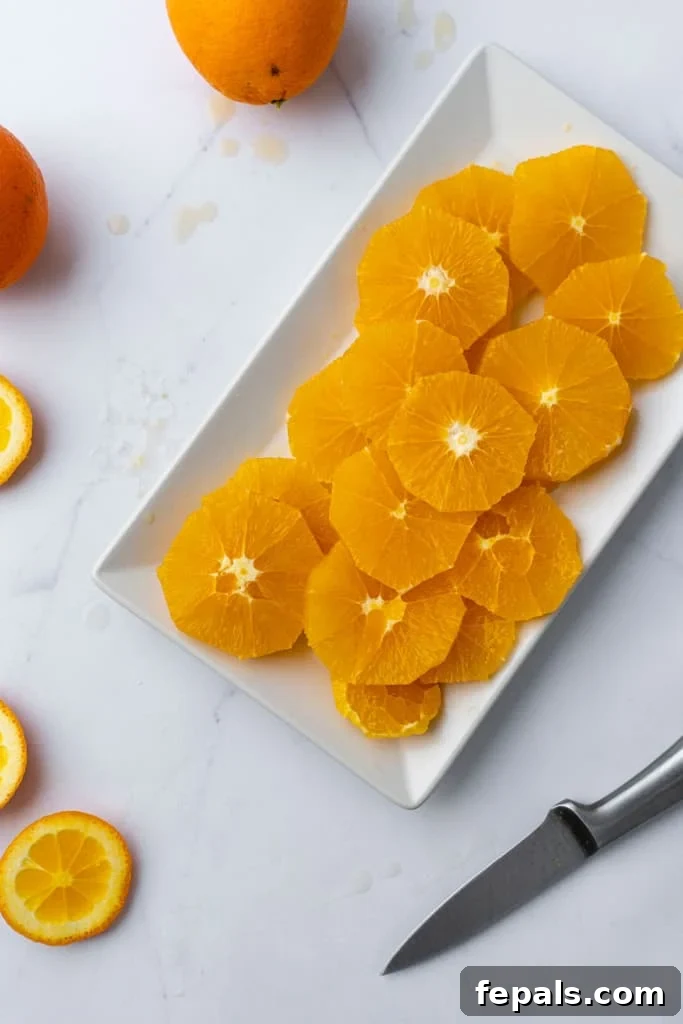
Achieving perfectly round, appealing orange slices is simpler than you might think. Follow these steps to prepare beautiful slices for any purpose:
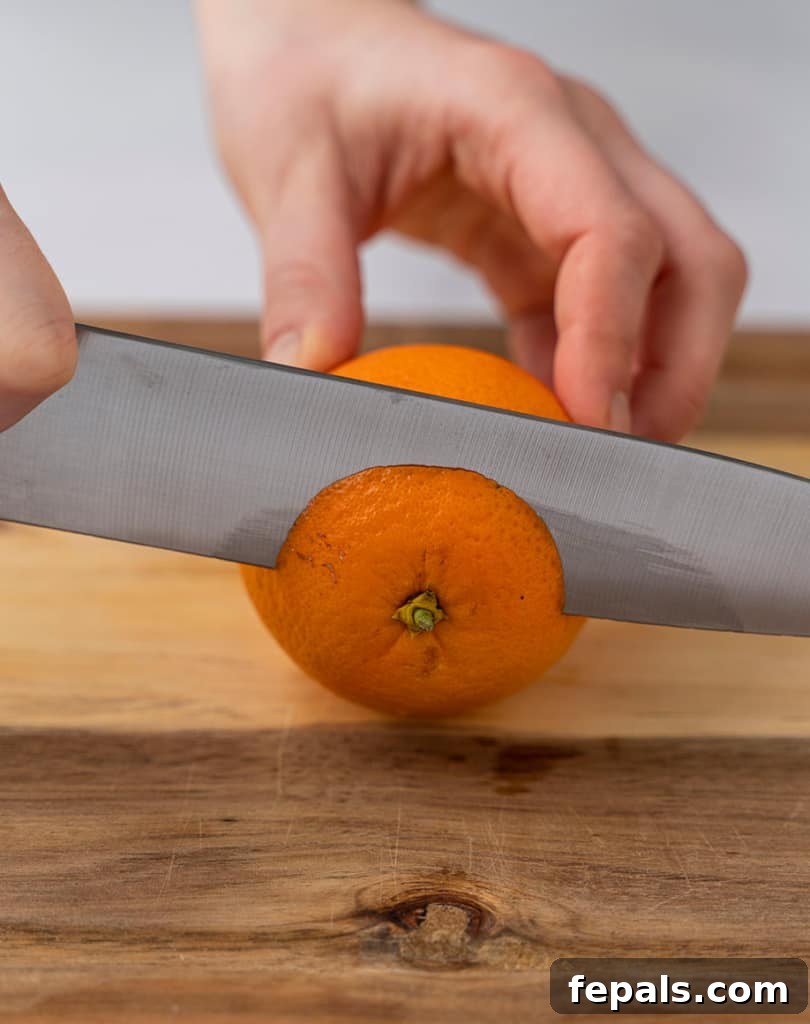
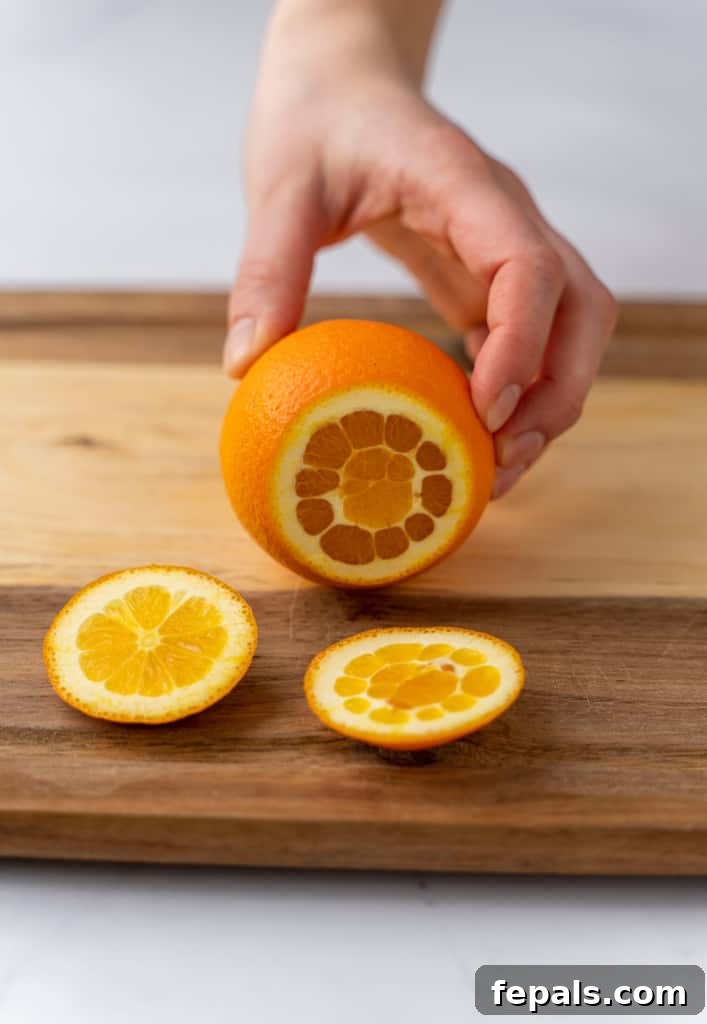
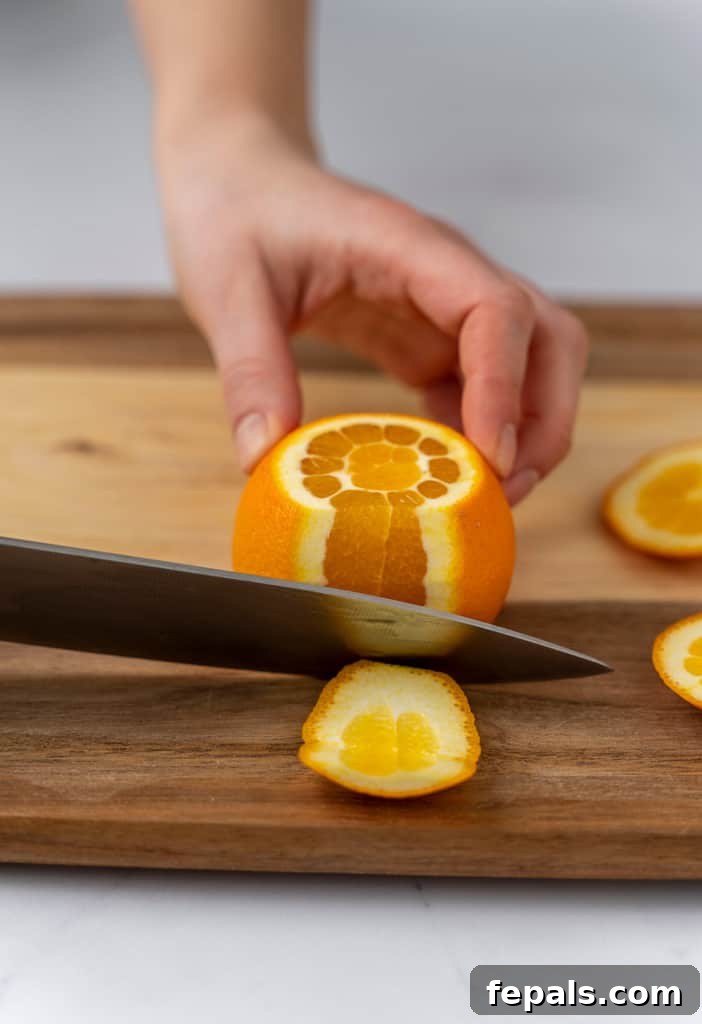
- Prepare the Orange: Place the orange on your cutting board. Using a sharp chef’s knife, carefully slice off about a quarter-inch from both the top and bottom ends of the orange. This creates two flat surfaces, making the orange more stable and easier to handle.
- Remove the Peel and Pith: Stand the orange upright on one of its flat, cut ends. Working from top to bottom, carefully slice off the peel and white pith in strips, following the natural curve of the fruit. Ensure you remove all of the bitter white pith, cutting just deep enough to expose the juicy flesh. Rotate the orange as you go, until all the peel and pith are removed.
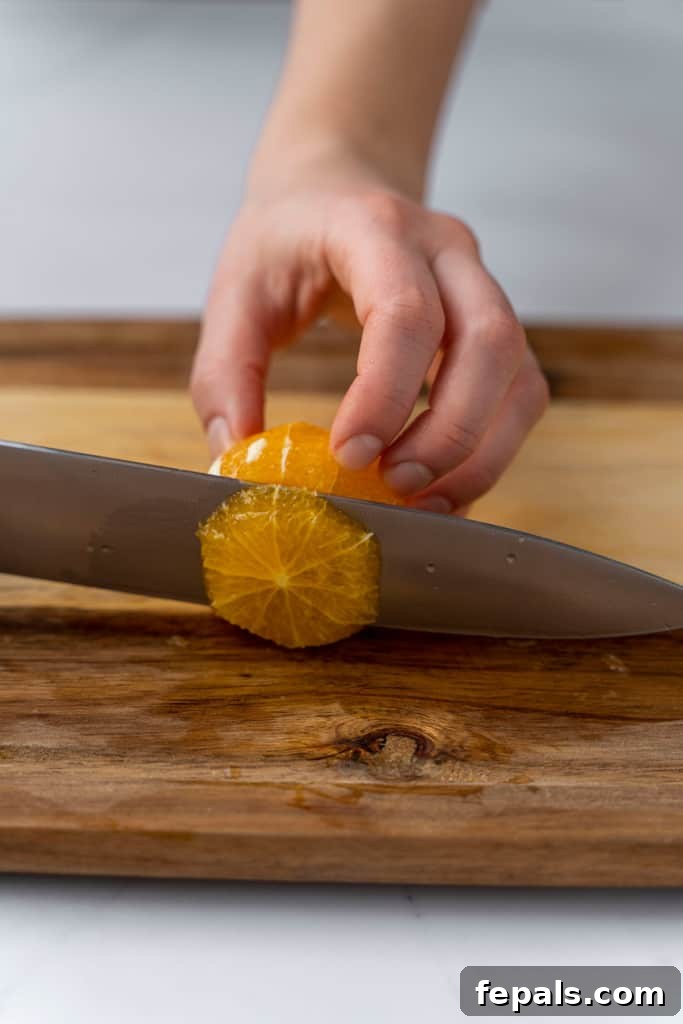
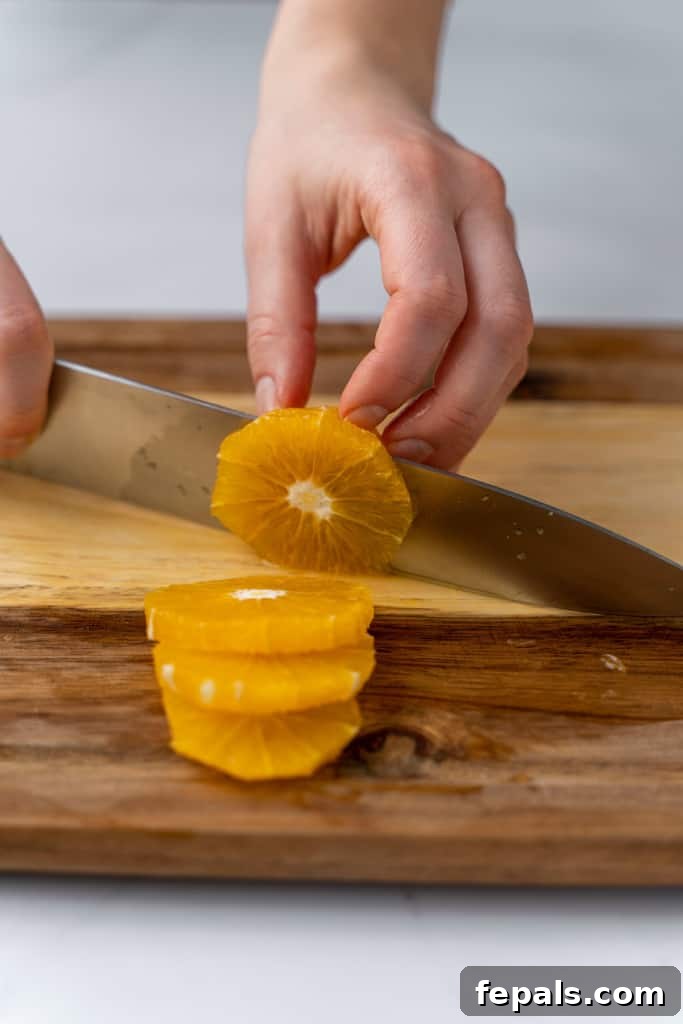
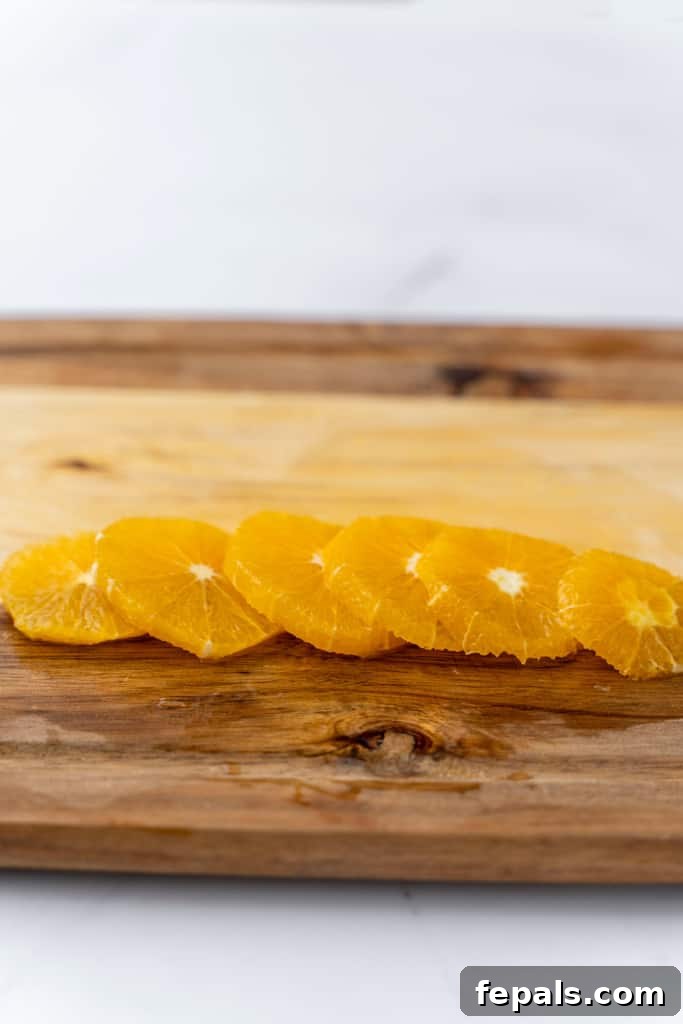
- Slice the Orange: Once the orange is completely peeled and free of pith, lay it on its side on the cutting board. Now, slice the orange horizontally into rounds. You can make these slices as thick or as thin as you prefer, depending on your recipe or serving preference. Aim for uniform thickness for an appealing presentation.
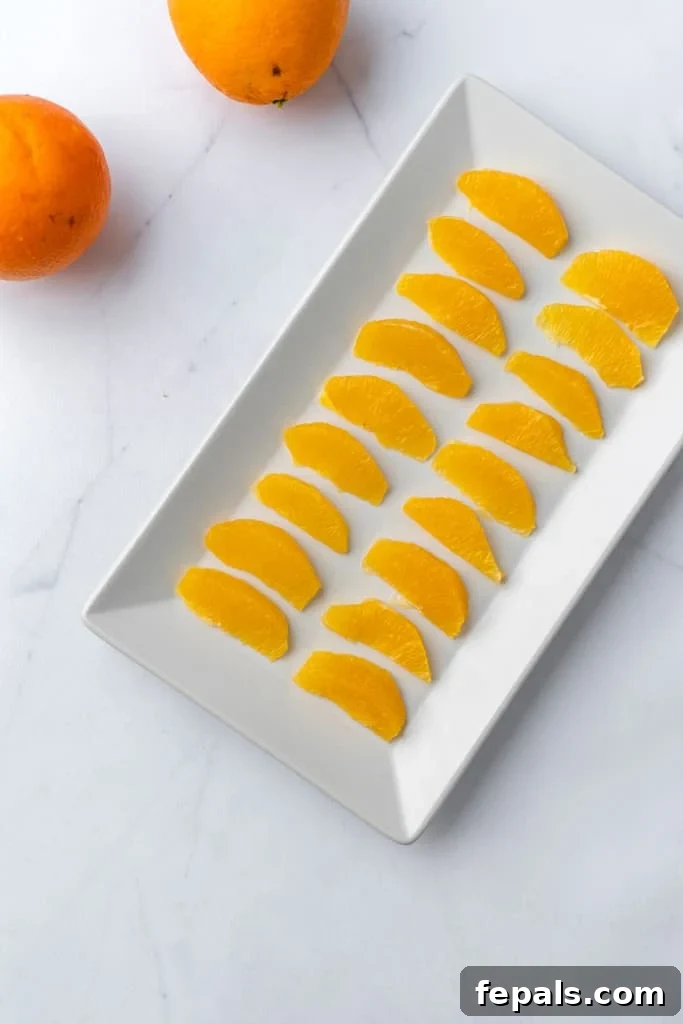
How to Cut Orange Segments (Supremes)
Supreming an orange means removing the individual fruit segments from their surrounding membranes, resulting in delicate, juicy pieces that are perfect for salads, desserts, and elegant garnishes. This technique might seem intimidating but becomes easy with practice.
- Prepare the Orange: Just as with slicing, start by using a sharp chef’s knife to slice off about a quarter-inch from both the top and bottom ends of the orange. This creates stable, flat surfaces.
- Remove the Peel and Pith: Stand the orange upright on one of the flat, cut ends. Carefully slice off the peel and all of the white pith from top to bottom, following the natural curve of the fruit. Make sure to remove all the fibrous white parts, exposing the juicy flesh entirely. Take your time with this step to avoid cutting too much of the fruit.
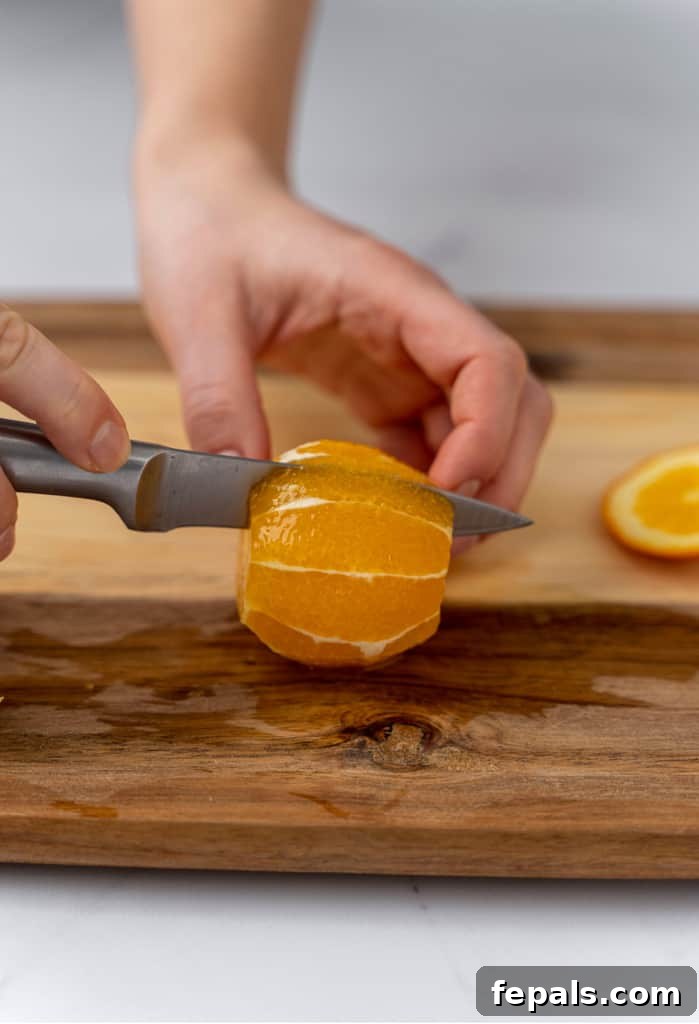
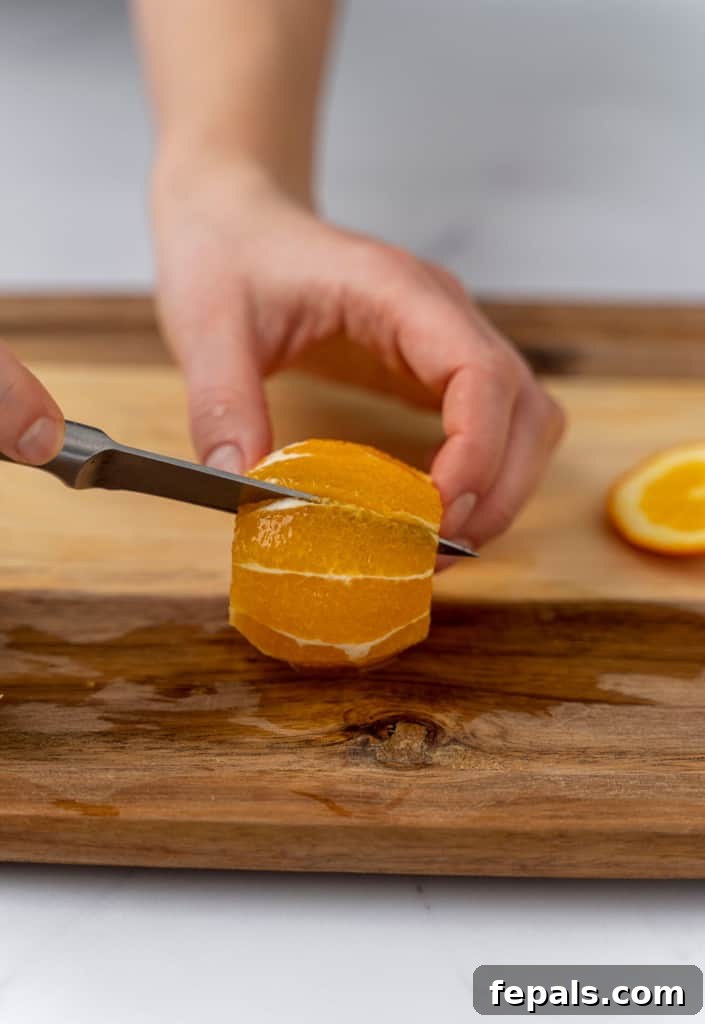
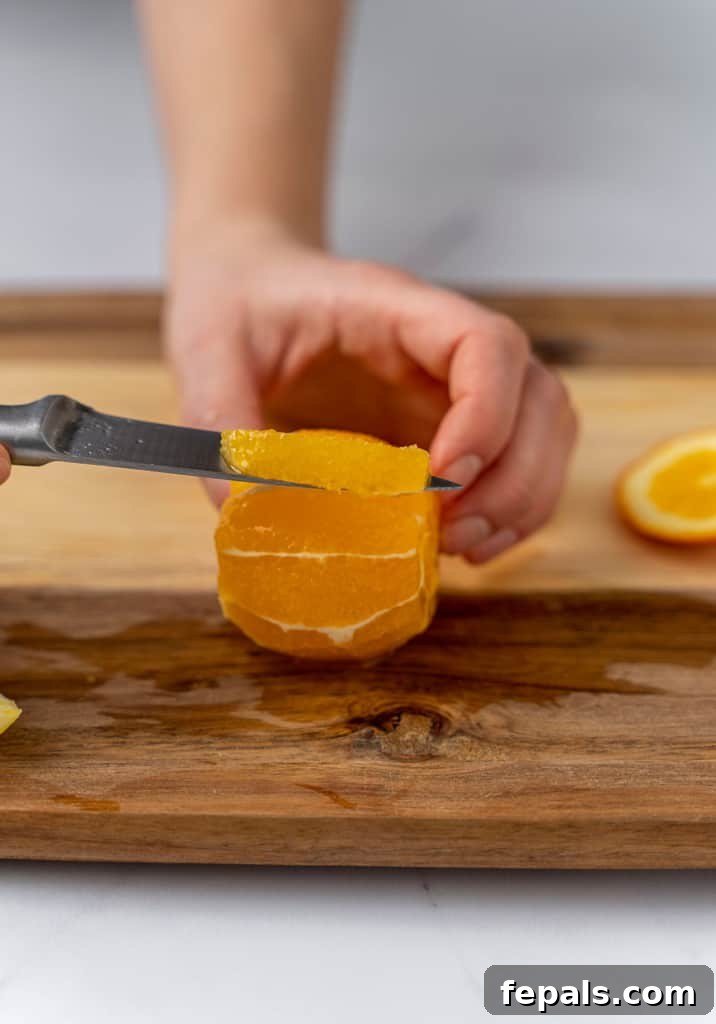
- Segment the Orange (Supreming): Hold the peeled orange over a bowl (to catch any juice). Using a paring knife or a smaller, sharp knife, carefully slice into the orange parallel to one of the white membranes, going towards the center. Then, make a second slice on the other side of the same segment, also parallel to the membrane, forming a V-shape. Gently lift out the wedge-like segment, leaving the membrane behind. Continue this process around the entire orange until all segments are removed. The remaining membranes and core can be squeezed over the bowl to extract any remaining juice.
How to Store Cut Oranges
Proper storage is key to maintaining the freshness and flavor of your cut oranges. Once sliced or segmented, oranges are more susceptible to drying out and spoilage.
- Refrigeration: Store any uneaten orange slices or segments in an airtight container in the refrigerator. This minimizes air exposure and helps retain moisture. They can typically last for up to 3 days when stored correctly.
- Not Freezer-Friendly: Due to their high water content, oranges do not freeze well. Freezing and thawing can alter their texture, making them mushy and less appealing for fresh consumption. If you need to preserve oranges for longer, consider juicing them and freezing the juice.
Creative Ways to Use Cut Oranges
Once you’ve mastered the art of cutting oranges, a world of culinary possibilities opens up. Here are some fantastic ways to incorporate your freshly cut orange slices and segments into your meals and snacks:
- Smoothies and Juices: Add segments or slices to your morning smoothie for a burst of Vitamin C and natural sweetness. They also make a refreshing addition to freshly pressed juices.
- Salads: Orange segments add a delightful citrusy zing and vibrant color to both fruit and savory green salads. Pair them with ingredients like avocado, red onion, nuts, and a light vinaigrette.
- Dessert Toppings: Elegantly arranged orange segments can beautifully top cakes, cheesecakes, tarts, puddings, or yogurt parfaits, adding freshness and a gourmet touch.
- Charcuterie and Cheese Boards: Bright orange slices or segments provide a fantastic contrast in flavor and color on a charcuterie or cheese board, complementing savory meats and creamy cheeses.
- Savory Dishes: Incorporate them into savory dishes, such as stir-fries, glazes for poultry or fish, or a vibrant salsa for tacos. The natural acidity and sweetness balance rich flavors.
- Fruit Tarts and Bowls: Create stunning fruit tarts or simple fruit bowls by arranging segmented oranges with other seasonal fruits.
- Infused Water: Drop a few slices into a pitcher of water with other fruits and herbs like mint for a refreshing infused drink.
- Garnishes: Use a single slice or a few segments to garnish cocktails, mocktails, or even plates for a touch of elegance.
Tips and Notes for Perfect Orange Cuts
- Maximize Segments: When supreming, use your knife to gently push the segment away from the membrane on the second side of the V-cut. This helps you get as much of the juicy orange flesh out as possible. Don’t be afraid to angle your knife slightly.
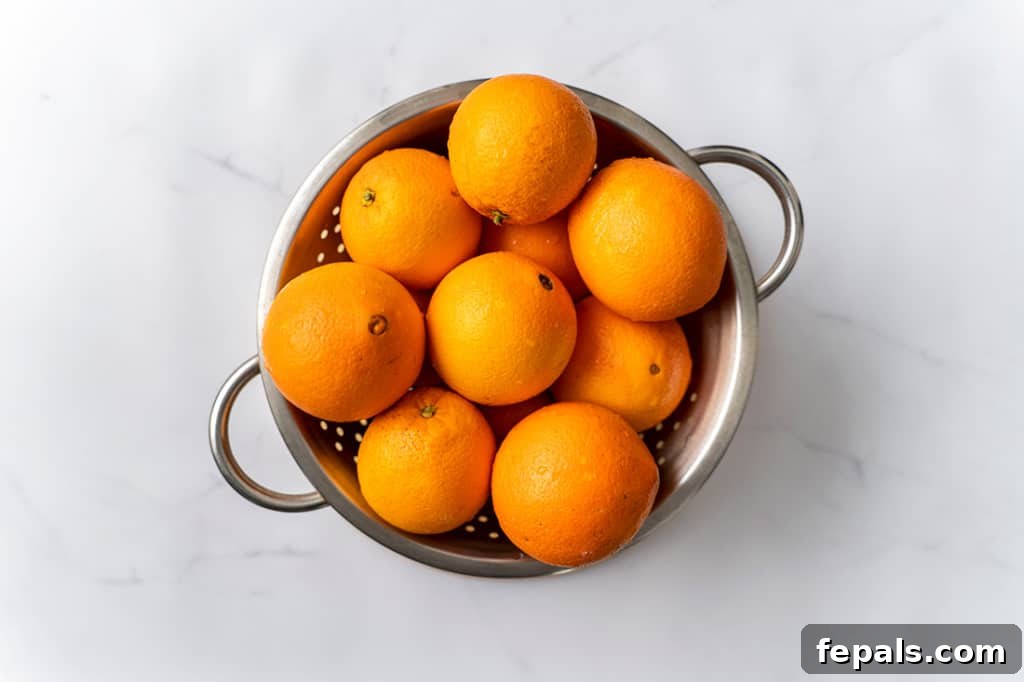
- Selecting the Best Oranges: Look for oranges that feel dense and heavy for their size. This indicates a higher juice content. The skin should be smooth and firm, without any soft spots.
- Avoid Damaged Fruit: Always steer clear of oranges that are bruised, overly soft, or too hard. These can be indicators of overripeness, underripeness, or damage, which will affect both flavor and texture.
- Knife Choice for Segments: While a chef’s knife can work for peeling, a sharp paring knife is highly recommended for cutting segments. Its smaller blade offers superior control and precision, making the intricate supreming process much easier and safer.
- Collect the Juice: Place a bowl under your cutting board (or hold the orange over a bowl) when supreming to catch any escaping juice. This juice is delicious and can be used in dressings, drinks, or sauces.
- Practice Makes Perfect: Don’t get discouraged if your first few attempts aren’t perfect. Like any culinary skill, cutting oranges beautifully takes a bit of practice.
More How-To Tutorials for Your Kitchen
Expand your kitchen skills with these other helpful guides:
- How to Cut a Mango
- How to Cut Cabbage
- Homemade Cashew Butter (How to)
- How to Poach Chicken Breast
How to Cut an Orange
Rena
1 orange
5 mins
5 mins
Rate
Pin

Equipment
-
knife
-
cutting board
Ingredients
- 1 large orange
Instructions
How to Cut Orange Slices
-
Slice off the top and bottom of the orange.
-
Stand the orange up on the flat, cut end and slice off the peel from the top to the bottom, making sure to slice off all of the white pith.
-
Lay the orange on its side, and slice the orange as thick or thin as you’d like, from the top to bottom.
How to Cut Orange Segments
-
Slice off the top and bottom of the orange.
-
Stand the orange up on the flat, cut end and slice off the peel from the top to the bottom, making sure to slice off all of the white pith.
-
Slice into the orange parallel to one of the white membranes in a V shape to cut out wedge-like segments.
Notes
- Use your knife to gently push the segment away from the membrane on the second side of the V cut to get as much of the orange cut out as possible.
- When picking an orange, look for oranges that feel dense and are heavy for their size.
- Avoid oranges that are bruised or too soft.
- To cut the segments, you might want to swap your chef’s knife for a paring knife for ease.
Nutrition
Carbohydrates: 22g
Protein: 2g
Fat: 0.2g
Saturated Fat: 0.03g
Polyunsaturated Fat: 0.1g
Monounsaturated Fat: 0.04g
Potassium: 333mg
Fiber: 4g
Sugar: 17g
Vitamin A: 414IU
Vitamin C: 98mg
Calcium: 74mg
Iron: 0.2mg
Nutrition information is automatically calculated, so should only be used as an approximation.
Additional Info
ingredient
American
Mastering how to cut an orange, whether into neat slices or elegant supremes, is a simple skill that significantly enhances your culinary endeavors. From everyday snacks to sophisticated presentations, perfectly cut oranges offer a burst of flavor, vibrant color, and undeniable nutritional benefits. So grab a sharp knife, choose your favorite orange, and start practicing!
If you found this tutorial helpful, we would love for you to leave us some feedback in the comment section below. Don’t forget to rate it! Sharing with friends and family is always appreciated.
Finally, please use our hashtag #healthyfitnessmeals on INSTAGRAM for a chance to be featured! FOLLOW Healthy Fitness Meals on FACEBOOK | INSTAGRAM | PINTEREST | TWITTER for all of our latest blog posts and recipes.