

Unlock the full potential of your favorite root vegetable with this comprehensive guide on How to Cut Sweet Potatoes. Mastering simple knife skills will allow you to effortlessly prepare sweet potatoes for a myriad of delicious recipes, whether you’re aiming for crispy oven-baked fries, perfectly roasted cubes for a wholesome side dish, or any other culinary creation. Sweet potatoes are an incredibly versatile ingredient, and knowing how to properly cut them is the first step to incorporating them seamlessly into your healthy cooking routine.
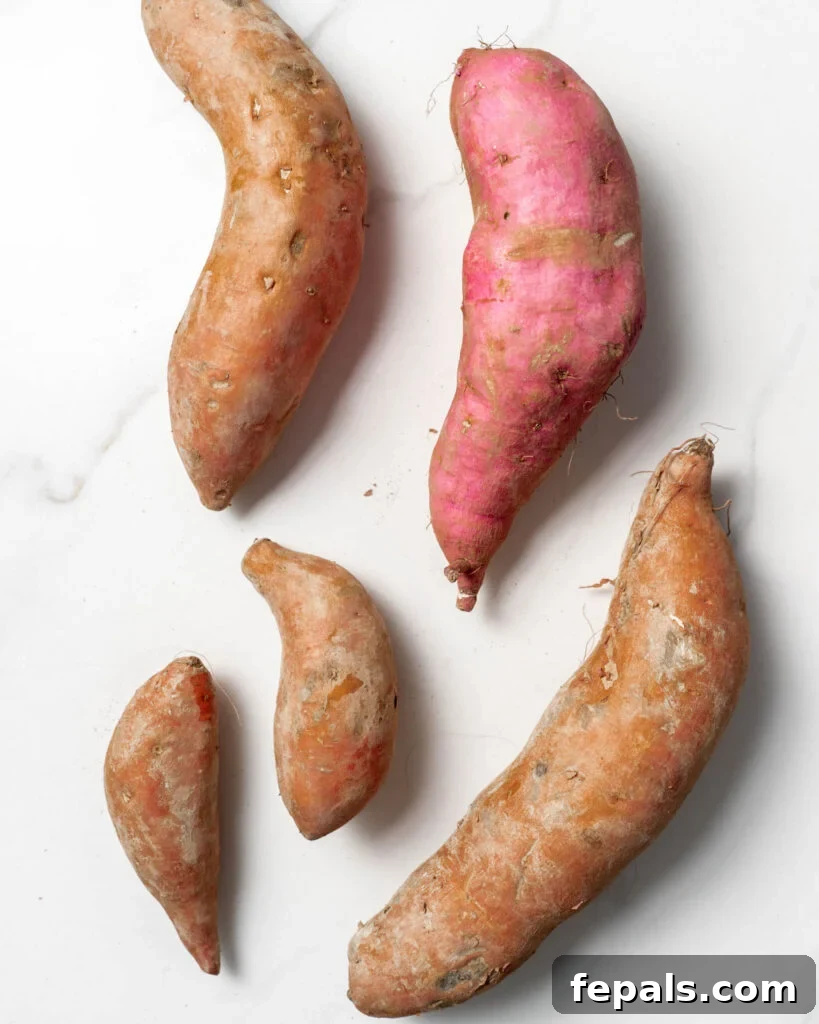
Sweet potatoes stand out as a beloved vegetable for countless reasons. Beyond their delightful flavor and vibrant color, they are a nutritional powerhouse, packed with essential vitamins, minerals, and antioxidants. Their natural sweetness makes them adaptable to an impressive range of dishes, transitioning effortlessly from decadent desserts to hearty savory meals. For instance, some of our go-to quick and easy recipes featuring sweet potatoes include the comforting Sweet Potato Carrot Soup, the satisfying Taco Stuffed Sweet Potatoes, and the flavorful Baked Sweet Potato Hash. Integrating this superfood into your diet becomes incredibly simple once you master the fundamental techniques for preparing them. Continue reading to discover the best methods for transforming raw sweet potatoes into perfectly uniform sticks or cubes, ready for your next culinary adventure.
Why Sweet Potatoes Are a Kitchen Essential
Sweet potatoes are more than just a tasty side dish; they are a nutritional powerhouse and an incredibly versatile ingredient that deserves a permanent spot in your kitchen. Here’s why we adore cooking with them:
- Incredibly Versatile Flavor: The inherent sweetness of sweet potatoes makes them remarkably adaptable. Their slightly earthy and sweet profile complements a vast array of ingredients and cuisines. They shine in sweet applications like rich Candied Sweet Potatoes, adding depth and natural sugars. Simultaneously, they provide a delightful contrast in savory dishes such as a robust Sweet Potato Chili, where their sweetness balances spices and heartiness. This dual nature allows for endless culinary creativity, from breakfast hashes to dinner stews.
- Abundantly Healthy: Often hailed as a “superfood,” sweet potatoes are brimming with health-promoting compounds. They are an excellent source of beta-carotene, which the body converts into Vitamin A, crucial for vision, immune function, and skin health. They also provide a significant amount of Vitamin C, vital for immunity and collagen production, along with B vitamins, potassium, and manganese. Furthermore, their high fiber content supports digestive health, helps regulate blood sugar, and contributes to a feeling of fullness, making them an ideal choice for a balanced diet. The antioxidants found in sweet potatoes also help combat oxidative stress and inflammation.
- Perfect for Meal Prep: Once you’ve mastered the art of cutting sweet potatoes, you’ll find them to be an absolute dream for meal prepping. You can wash, peel (if desired), and chop a large batch of sweet potatoes at the beginning of the week, saving valuable time during busy weekdays. When stored correctly, these pre-cut sweet potatoes will maintain their freshness and quality in the refrigerator for up to four to five days, ready to be incorporated into quick weeknight dinners, lunches, or even healthy snacks. This makes healthy eating more convenient and accessible than ever before.
Essential First Step: Cleaning and Washing Sweet Potatoes
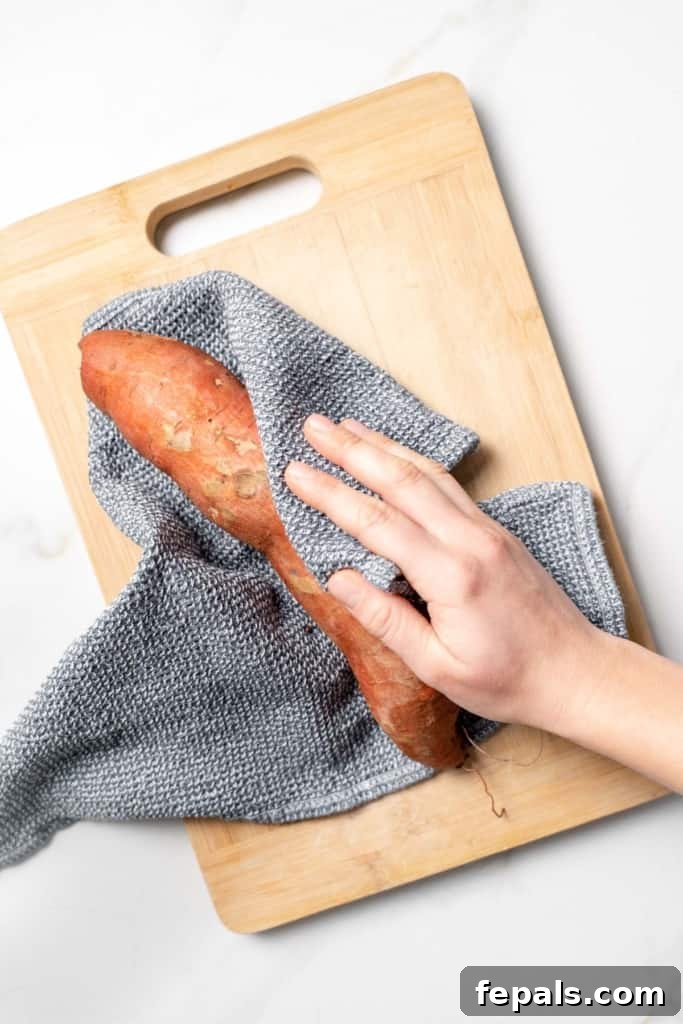
Before any cutting begins, proper cleaning is paramount to ensure your sweet potatoes are free from dirt, pesticides, and other residues. This step is especially crucial if you plan to keep the skin on, as the skin contains a significant amount of beneficial nutrients. Here’s a simple, effective method:
- Thorough Rinse: Place the sweet potato under cool, running water in your sink. Use your hands to scrub the surface thoroughly, dislodging any visible dirt or debris. For a more effective clean, especially if the skin is heavily soiled or you intend to eat it, consider using a dedicated vegetable brush. Gently but firmly scrub the entire surface of the potato to remove stubborn dirt that simple rinsing might miss.
- Dry Completely: After rinsing, grab a clean kitchen towel or a few sheets of paper towel. Use it to vigorously rub the sweet potato, ensuring it is completely dry. This not only removes any remaining moisture but also helps to polish the skin further. A dry surface is vital for safe and efficient cutting, as a wet potato can be slippery and dangerous to handle with a sharp knife.

Mastering Sweet Potato Cuts: Sticks and Cubes
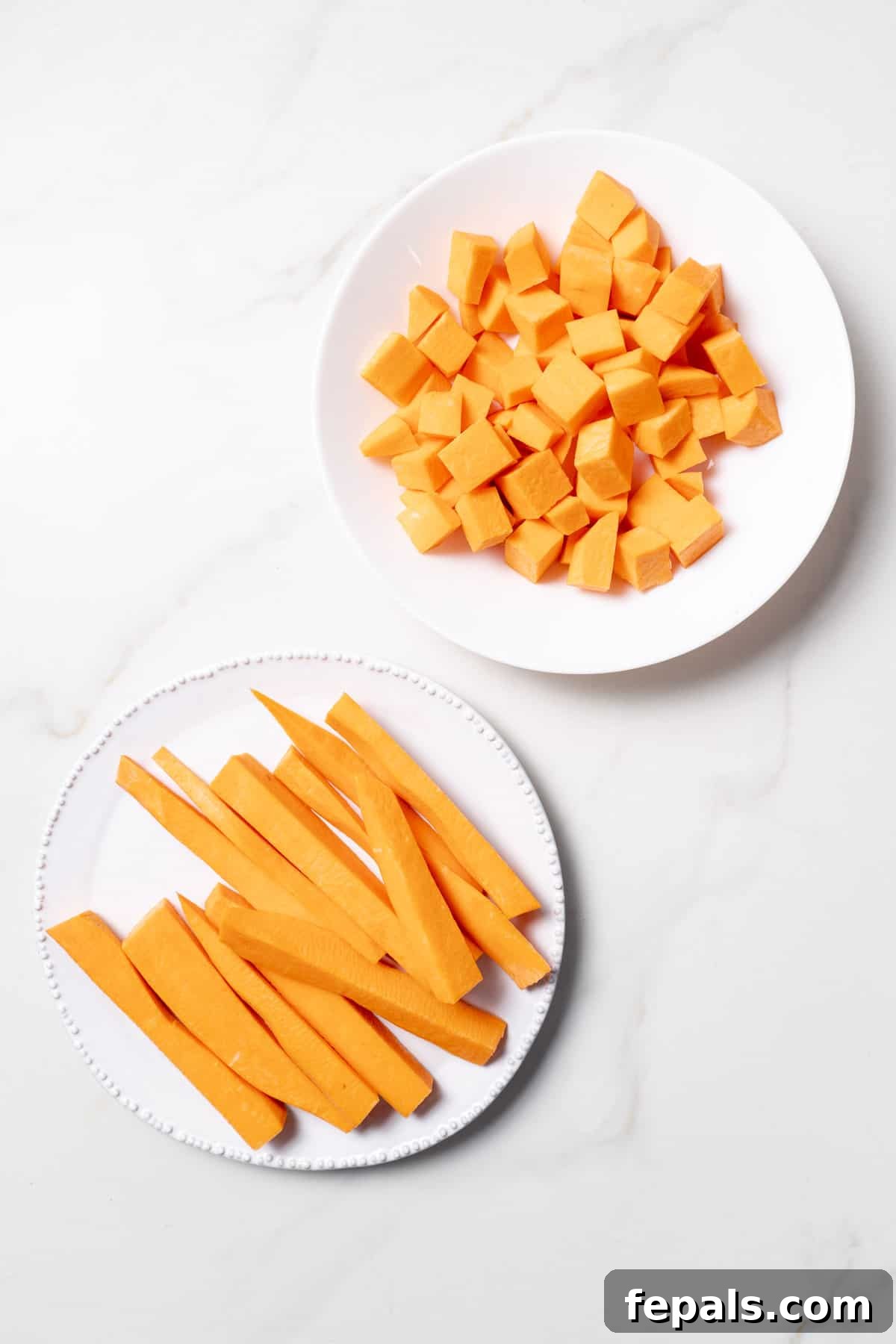
Now that your sweet potatoes are clean and dry, it’s time to transform them into the desired shapes for your recipes. We’ll cover two of the most popular and versatile cuts: sticks for fries and uniform cubes for roasting or stews. Always use a stable cutting board and a sharp chef’s knife for safety and efficiency.
- Prepare the Sweet Potato (Peel and Trim):
- Peeling (Optional): Decide if you want to peel the sweet potato. While the skin is packed with nutrients and fiber, some recipes or personal preferences call for peeling. If peeling, use a sharp vegetable peeler to carefully remove the skin, working from end to end. If you choose to leave the skin on, ensure it was thoroughly scrubbed.
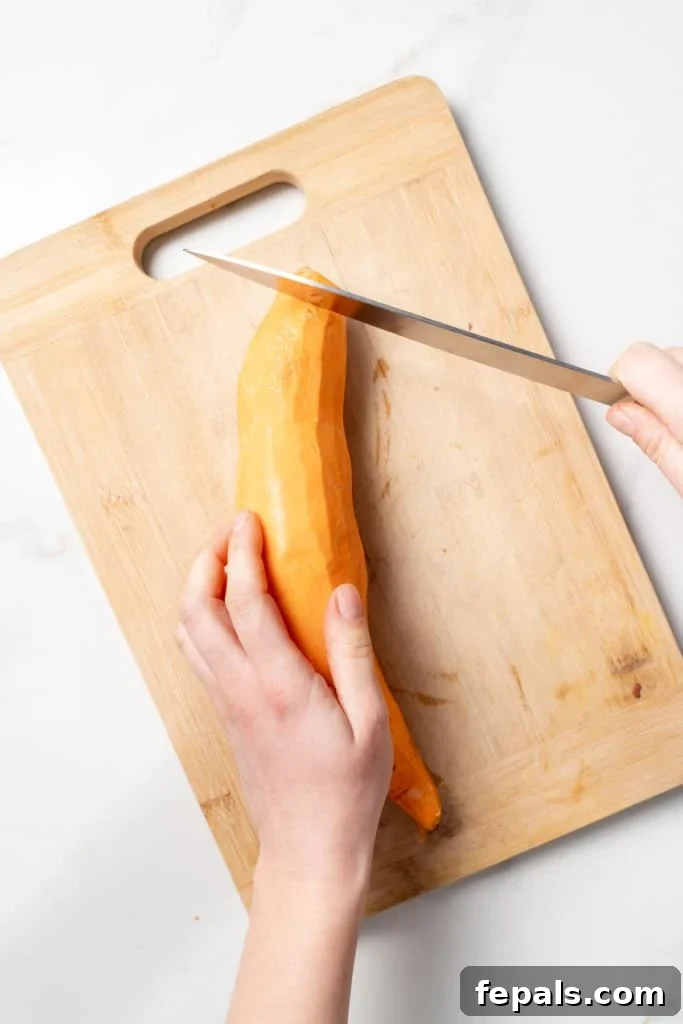
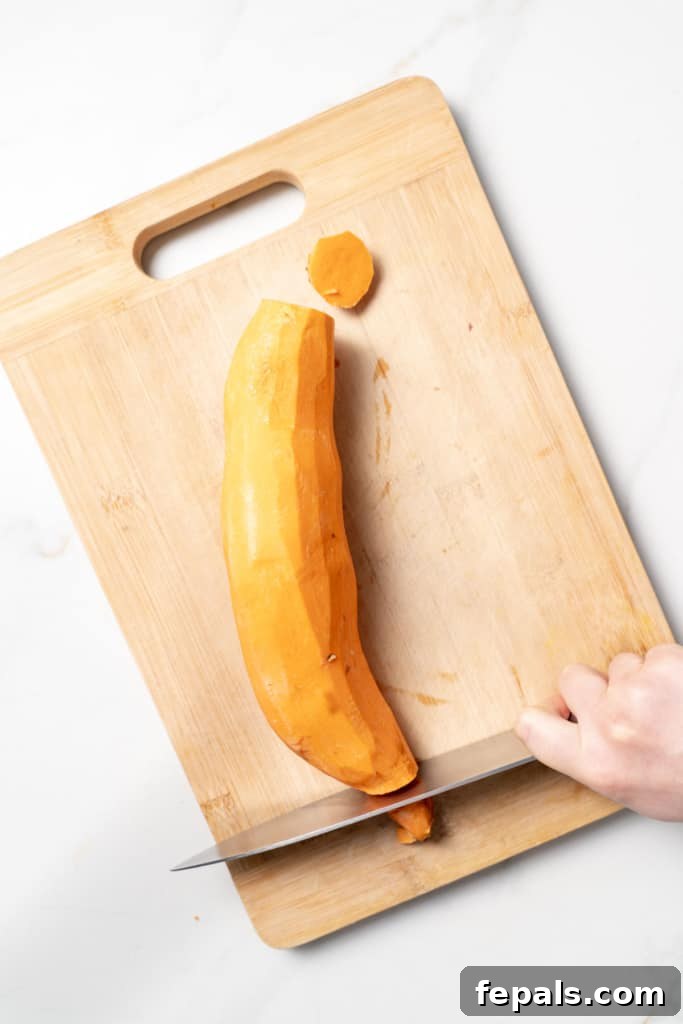
- Trim the Ends: With the sweet potato laid flat on your cutting board, carefully slice off about a 1-inch portion from both ends. This creates two flat, stable surfaces, which are crucial for safe and even slicing in the next steps. Discard the trimmed ends or save them for vegetable stock.

- Create Flat Slices:
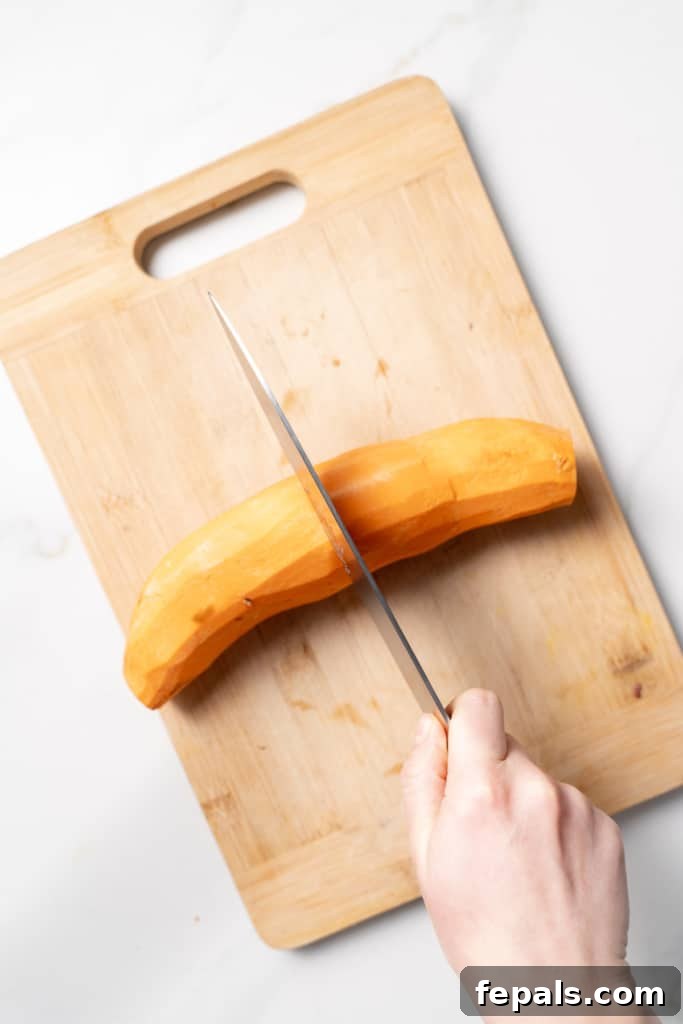
- Halve (if necessary): If your sweet potato is exceptionally long, it’s often easier and safer to cut it in half crosswise before proceeding. This makes the potato more manageable on the cutting board.
- Achieve Stability: Stand the trimmed sweet potato (or its halves) upright on one of its newly cut flat ends. This creates a secure base, preventing the potato from rolling while you cut.
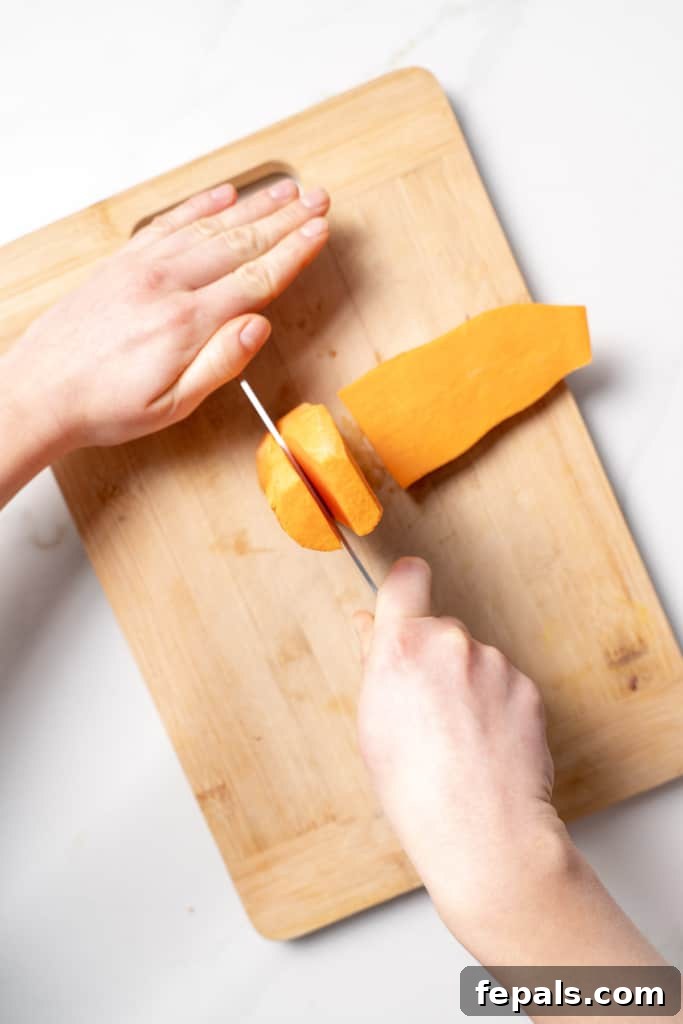
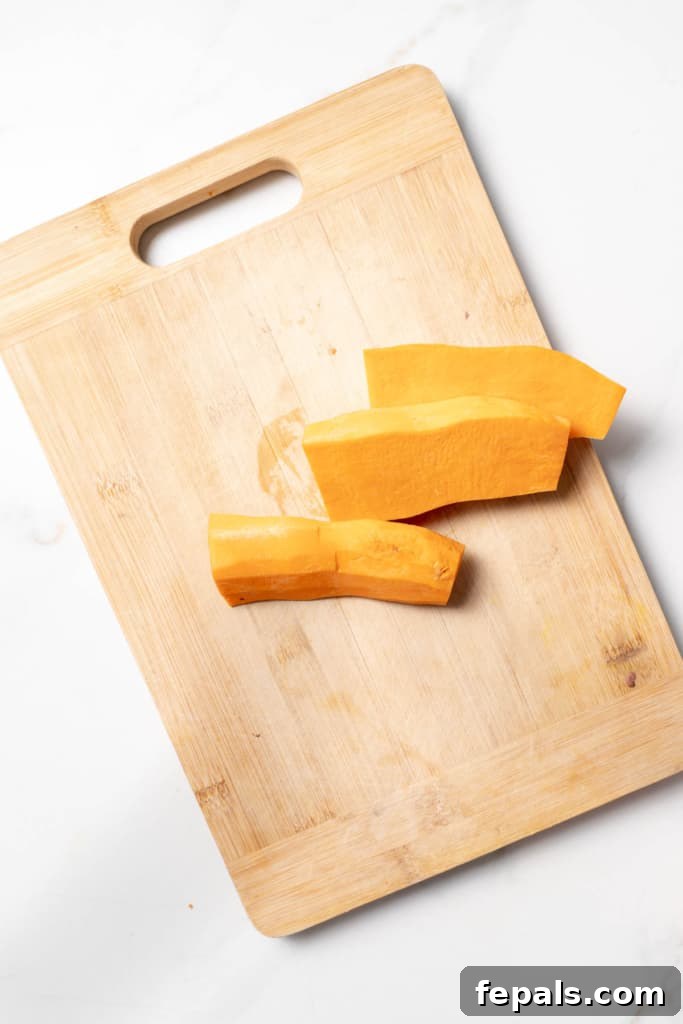
- Slice into Boards: Using a sharp chef’s knife, carefully slice downwards through the sweet potato, creating uniform “boards” or planks. Depending on the size of the potato, aim for about 3-4 slices. The thickness of these initial slices will determine the length and girth of your sticks or cubes, so try to keep them consistent.
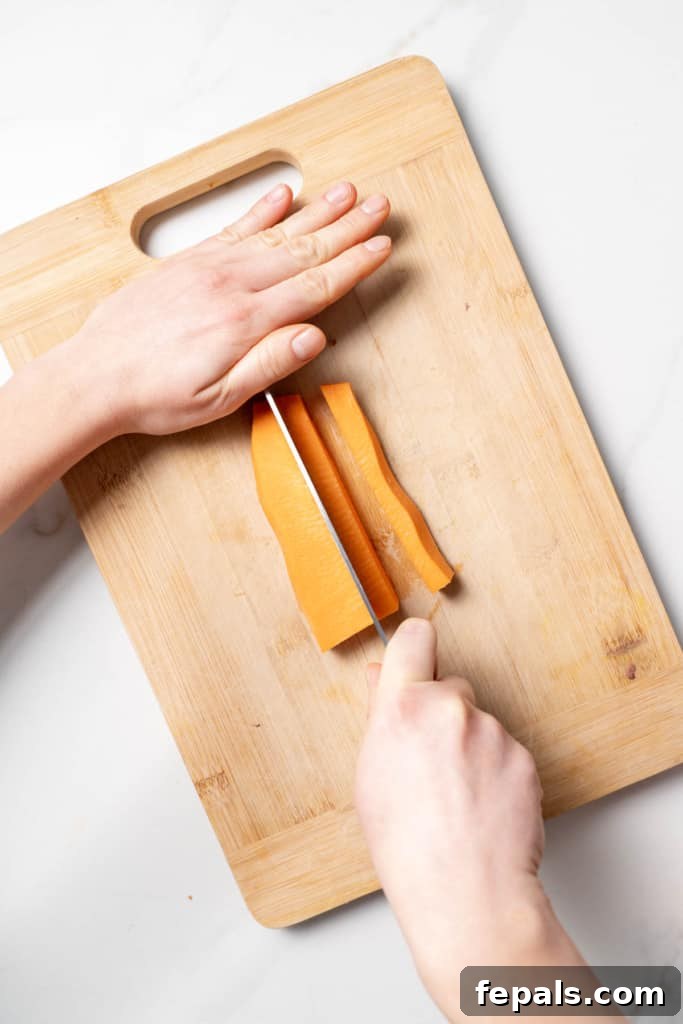
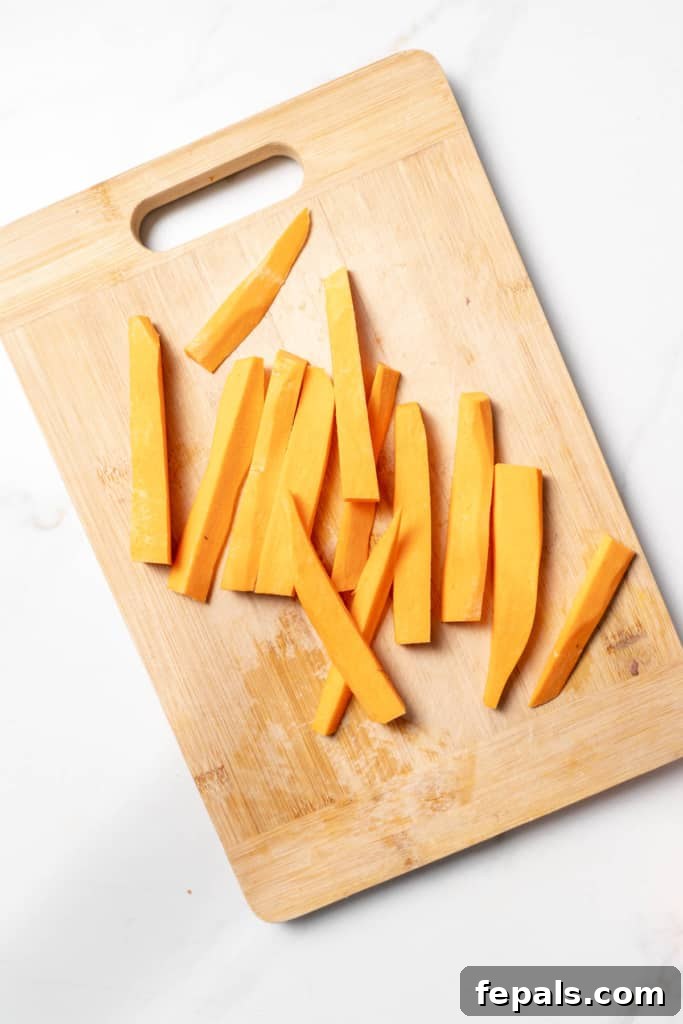
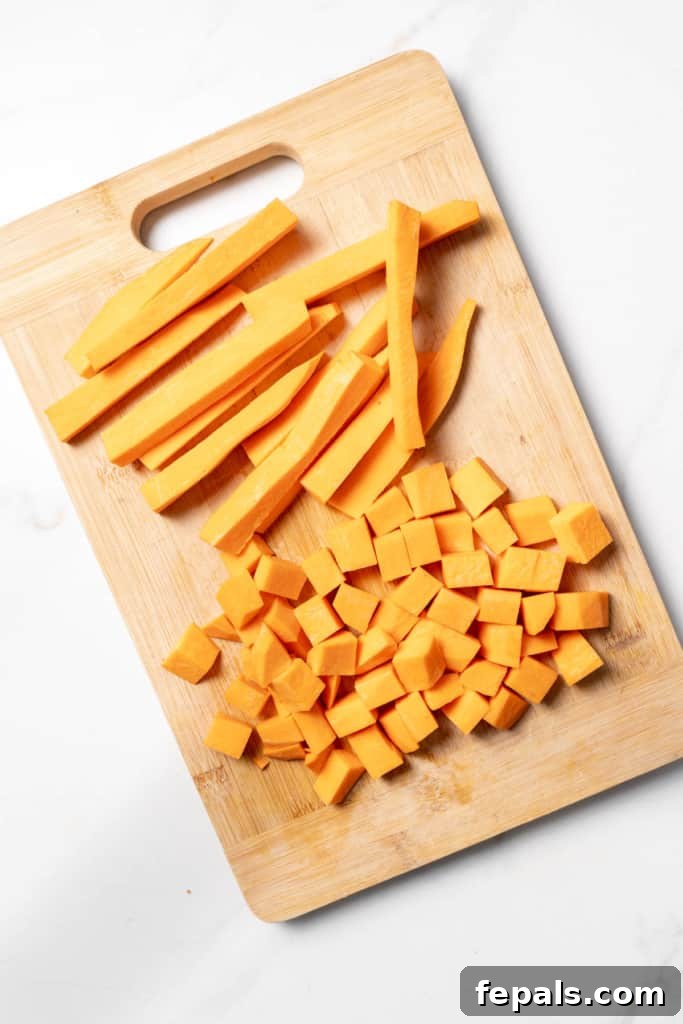
- Cutting into Sticks (for Sweet Potato Fries):
- Stack the Slices: Lay one of your sweet potato planks flat on the cutting board. For efficiency and uniformity, you can carefully stack two or three planks on top of each other, ensuring they are stable.
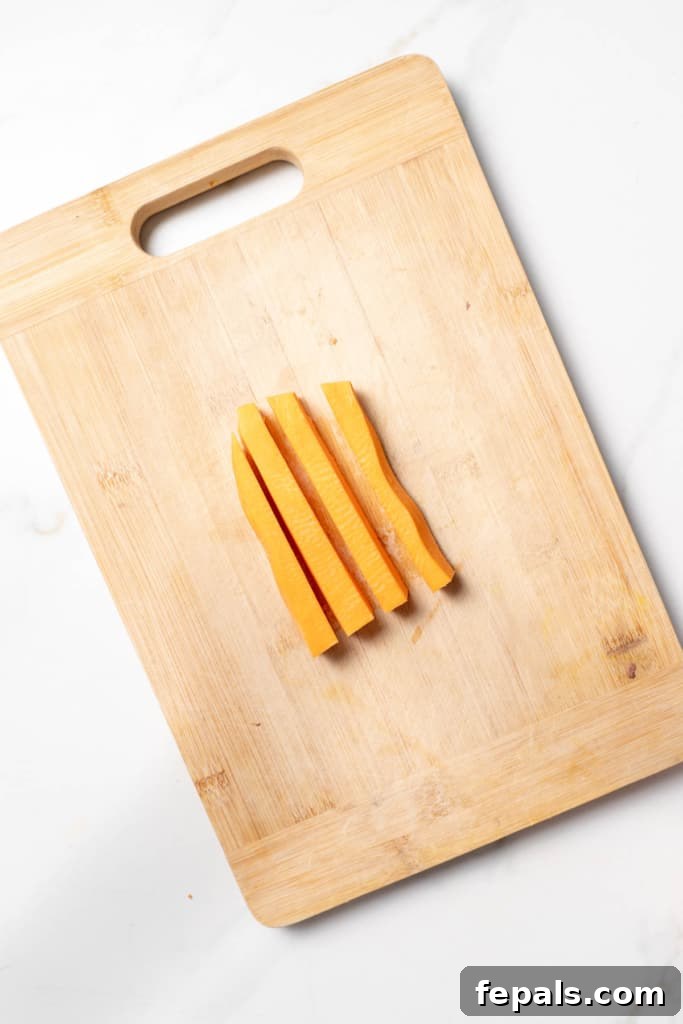
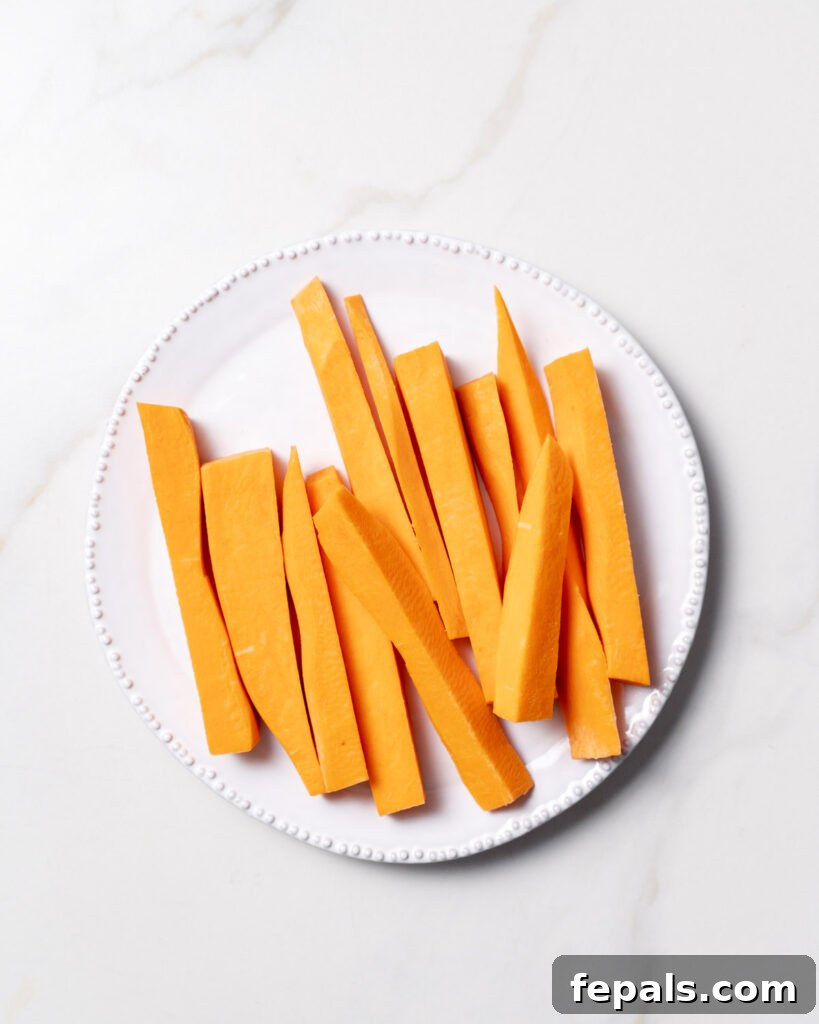
- Slice into Strips: Using your sharp knife, slice lengthwise through the stacked planks to create long, even strips. Aim for a thickness of about ¼ to ½ inch, depending on your preference for thin, crispy fries or thicker, more substantial wedges. The thinner the strips, the crispier your fries will be.
- Perfect Uniformity: Try to keep the thickness as consistent as possible across all your strips. This ensures that all the sweet potato fries cook evenly, preventing some from burning while others remain undercooked.
- Cutting into Cubes:
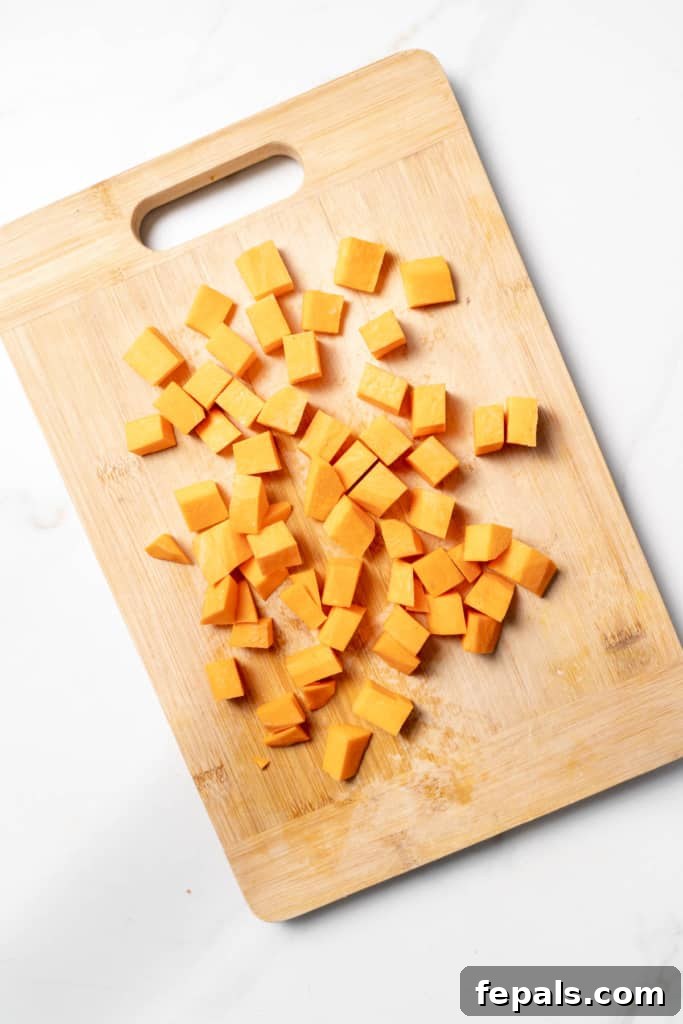
- Start with Sticks: Follow the initial steps to clean, trim, and slice your sweet potato into planks, then further into sticks, as described above. The sticks should be of your desired thickness for the cubes (e.g., ½ inch for ½-inch cubes).
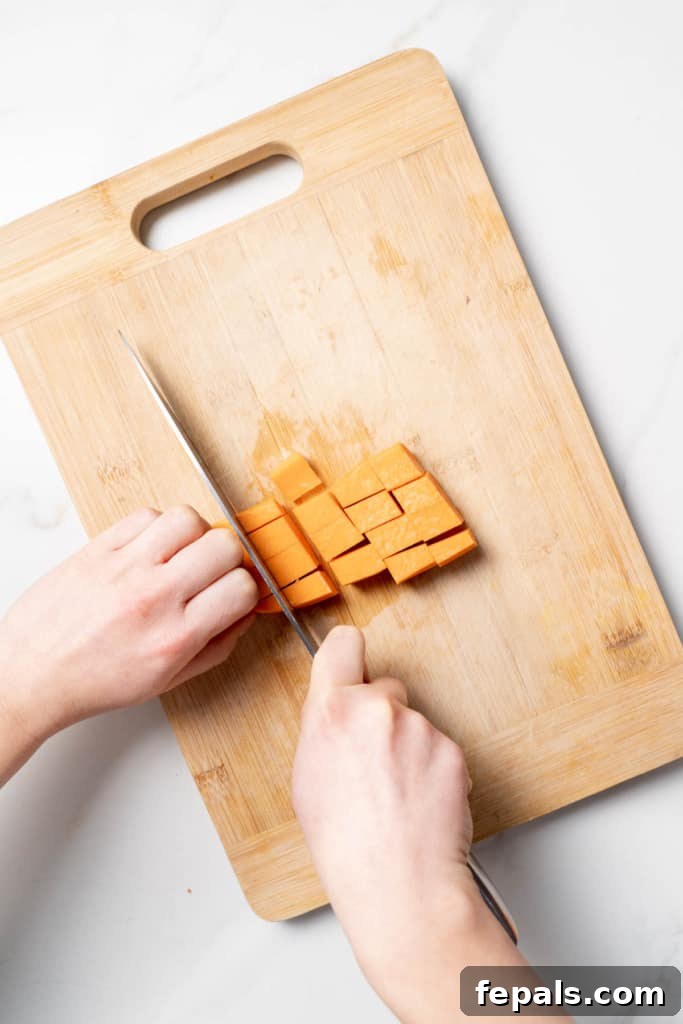
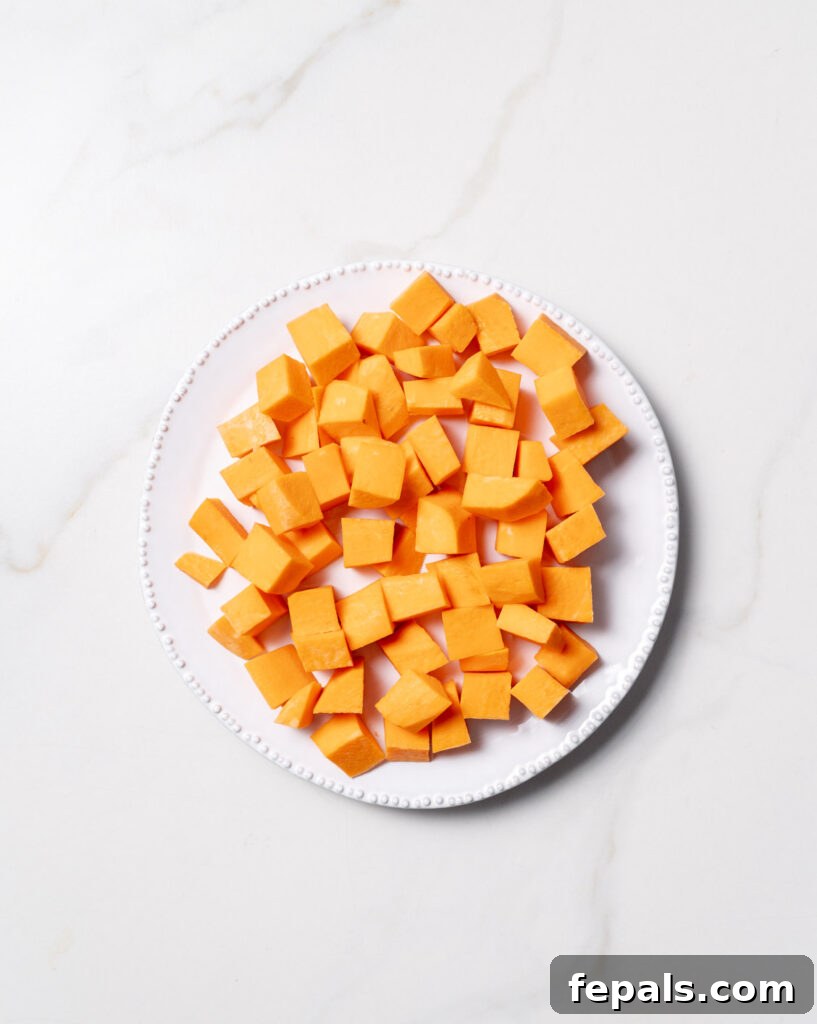
- Gather and Dice: Take several of these uniformly cut sticks and align them neatly on your cutting board. Hold them firmly together with your non-dominant hand, using the “claw” grip (fingertips curled under, knuckles pressed against the knife blade for guidance and safety).
- Chop into Cubes: With your sharp knife, cut across the bundle of sticks at regular intervals, creating perfectly sized cubes. For example, if your sticks are ½ inch thick, cut them into ½-inch segments to yield ½-inch cubes. Again, consistency is key for even cooking whether you’re roasting, stewing, or adding them to a hash.
Expert Tips for Effortless Sweet Potato Cutting
Cutting raw sweet potatoes can sometimes be a challenge due to their firmness. However, with a few expert tips and techniques, you can make the process much smoother, safer, and more efficient, ensuring perfectly prepped potatoes every time.
- Softening Before Cutting for Ease: If you find a particularly hard sweet potato difficult to slice through, a little pre-softening can make a world of difference. To do this, simply poke several holes (about 5-6 times) all around the potato with a fork or the tip of a sharp knife. Then, microwave the sweet potato for 2 to 3 minutes, depending on its size. This brief burst in the microwave will slightly soften the flesh, making it much easier and safer to cut, reducing the effort and risk of slippage. Be cautious when removing it, as it will be hot.
- Ensure a Firm and Safe Grip: Safety is paramount when working with knives. Always use a cutting board that has a non-slip surface or place a damp kitchen towel underneath your regular cutting board to prevent it from sliding. When holding the sweet potato, maintain a firm, stable grip. Use the “claw” grip with your non-dominant hand: curl your fingertips inwards, holding the potato securely, and let your knuckles guide the blade of the knife, keeping your fingers tucked away from the cutting edge. This technique significantly reduces the risk of accidental cuts.
- Invest in a Large, Sharp Chef’s Knife: The right tool makes all the difference. For sweet potatoes, a large, heavy, and most importantly, sharp chef’s knife is ideal. A sharp blade glides through the dense flesh with minimal effort, whereas a dull knife requires more force, increasing the chance of the knife slipping and causing injury. The weight of a chef’s knife also helps with leverage, making it easier to power through tough vegetables. Make sure to hone your knife regularly to maintain its sharpness.
- Consider Peeling (or Not) Strategically: Whether to peel a sweet potato depends largely on your recipe and personal preference. The skin of sweet potatoes is rich in fiber and other nutrients, so leaving it on can boost the nutritional value of your dish. If you choose to peel, a standard vegetable peeler works quickly and efficiently. However, if you plan to eat the skin, ensure you’ve thoroughly scrubbed the sweet potato to remove all dirt and residues. For recipes like sweet potato fries, leaving the skin on can also add a rustic texture.
- Aim for Uniformity for Even Cooking: Regardless of whether you’re cutting sticks or cubes, strive for consistency in size and shape. Evenly sized pieces will cook at the same rate, preventing some pieces from becoming mushy or burnt while others remain undercooked. This is particularly important for dishes like roasted sweet potatoes or fries, where consistent texture and doneness are key to a delicious outcome. Take your time to make each cut precise for the best results.
Frequently Asked Questions About Cutting Sweet Potatoes
Raw sweet potatoes can be quite dense, making them challenging to cut. A simple trick is to pre-soften them slightly. Poke about 4-5 holes around the sweet potato with a fork or the tip of a knife, then microwave it for 2-3 minutes, depending on its size. This will make the flesh softer and significantly easier to slice through. Always use an oven mitt or towel to handle the potato after microwaving, as it will be hot.
For cutting sweet potatoes, a large, sharp chef’s knife is highly recommended. The weight of a chef’s knife provides leverage, helping you cut through the dense potato with less effort. Crucially, the knife must be very sharp. A sharp blade reduces the force needed and minimizes the risk of slipping, which is a common cause of accidents with dull knives. Ensure your cutting board is stable and non-slip for added safety.
Yes, if you plan to cook a whole sweet potato (e.g., baking or microwaving), it’s highly advisable to pierce it 4 to 5 times with a sharp knife or fork all around its surface. This allows built-up steam to escape during cooking, preventing the potato from potentially bursting in your oven or microwave. This small step ensures a safer and more consistent cooking process.
Peeling sweet potatoes before cutting is a matter of personal preference and recipe requirements. The skin is edible and rich in fiber and nutrients, so many people choose to leave it on, especially for roasted sweet potatoes or fries. If you decide to keep the skin, ensure you wash and scrub the potato thoroughly. If a recipe calls for peeled sweet potatoes, or if you prefer a smoother texture, use a vegetable peeler to remove the skin.
Just like regular potatoes, sweet potatoes can oxidize and turn brown when exposed to air. To prevent this, submerge the cut sweet potato pieces in a bowl of cold water immediately after cutting. You can leave them in the water for up to 24 hours in the refrigerator. Before cooking, simply drain and pat them dry. This simple method helps maintain their vibrant color and freshness.
Storage Recommendations for Sweet Potatoes
Proper storage is key to extending the shelf life of your sweet potatoes, whether whole or pre-cut. Knowing the best practices will help you minimize waste and ensure your sweet potatoes are fresh and ready for cooking when you need them.
- Whole Sweet Potatoes: Uncut, whole sweet potatoes thrive in a cool, dark, and dry environment, such as a pantry or basement. Avoid storing them in the refrigerator, as the cold temperature can cause the starch to convert to sugar prematurely, leading to a gritty texture and an overly sweet taste. Refrigeration can also make them even harder to cut, defeating the purpose of efficient meal prep. Stored correctly, whole sweet potatoes can last for several weeks, sometimes even months.
- Cut Sweet Potatoes: Once you’ve prepped and cut your sweet potatoes into sticks or cubes, they need to be stored differently. To prevent discoloration and maintain freshness, submerge the cut pieces in a bowl of cold water in an airtight container or a zip-top bag. Store them in the refrigerator, and they will keep well for up to 4 to 5 days. Remember to change the water daily if storing for longer periods.
- Freezing Raw Sweet Potatoes (Not Recommended): We generally do not recommend freezing raw, cut sweet potatoes. The high water content can lead to an undesirable mushy texture and diminished flavor upon thawing and cooking. The cellular structure breaks down, resulting in a less pleasant culinary experience.
- Blanching & Freezing for Best Results: For long-term storage, blanching your cut sweet potatoes before freezing is the optimal method. Blanching briefly cooks the potatoes, which deactivates enzymes that cause spoilage and changes in texture and color, preserving their quality.
- Blanch: Bring a large pot of water to a rolling boil. Carefully place your cut sweet potato pieces (sticks or cubes) into the boiling water for 3-5 minutes. The exact time depends on the size of the pieces; smaller pieces need less time.
- Chill: Immediately after blanching, remove the sweet potatoes with a slotted spoon and plunge them into a large bowl of ice water for an equal amount of time (3-5 minutes). This “shocks” them, stopping the cooking process and preserving their texture.
- Drain & Dry: Drain the chilled sweet potatoes thoroughly and pat them very dry with a clean towel. Excess moisture can lead to freezer burn.
- Flash Freeze: Spread the dried sweet potato pieces in a single layer on a large baking sheet lined with parchment paper. Place the baking sheet in the freezer for 1-2 hours, until the pieces are individually frozen solid. This prevents them from clumping together.
- Store: Once flash-frozen, transfer the sweet potato pieces to a freezer-safe bag or airtight container, removing as much air as possible to prevent freezer burn. Label with the date. Frozen blanched sweet potatoes can be stored for up to 6 months and can be cooked directly from frozen in most recipes.
Delicious Sweet Potato Recipes to Try
Now that you’re a sweet potato cutting pro, it’s time to put those newly acquired skills to good use! Here are some fantastic recipes that highlight the versatility and deliciousness of sweet potatoes:
- Baked Smashed Sweet Potatoes
- Black Bean Sweet Potato Stew
- Honey Roasted Sweet Potatoes
- Maple Pecan Roasted Sweet Potatoes
- Instant Pot Sweet Potatoes
- Healthy Sweet Potato Casserole
Expand Your Kitchen Skills with More “How-To” Guides
Mastering basic knife skills and food preparation techniques can transform your cooking experience. Check out these other helpful guides to become even more confident in the kitchen:
- Homemade BBQ Sauce
- How To Cut Romaine Lettuce
- (3 Ways) How To Cut Bell Peppers
- How To Cut an Orange
- How to Cut Cabbage
- Cutting Potatoes Into Fries
- How To Cut Green Onions
If you try any of these recipes or guides and find them helpful, please leave us some feedback in the comment section below. Your ratings and comments are greatly appreciated! We’d love it if you shared your culinary creations with friends and family.
Finally, use our hashtag #healthyfitnessmeals on INSTAGRAM for a chance to be featured! FOLLOW Healthy Fitness Meals on FACEBOOK | INSTAGRAM | PINTEREST | TWITTER for all of our latest blog posts and recipes.
How to Cut Sweet Potatoes
Rena
1
sweet potato
5 minutes
0 minutes
5 minutes

Equipment
-
Sharp Chef’s knife
-
Cutting board
Ingredients
-
1
large
sweet potato
Instructions
-
Wash and dry sweet potatoes. Peel the potatoes with a vegetable peeler, if desired.
-
Cut the ends off the potato from both sides (around 1-inch). If the potato is very long, cut it in half. Then prop it up on the flat end and use a sharp knife to slice down the center into about 3 slices, depending on the size of the potato.
-
To make sticks, continue to slice the 3 original slices to make your desired thickness.
-
To make cubes, follow the same instructions until you end up with sticks to make your desired size of cubes. Hold several sticks together, then dice to create cubes.
Notes
Nutrition
Calories: 292kcal
Carbohydrates: 68g
Protein: 5g
Fat: 0.2g
Saturated Fat: 0.1g
Polyunsaturated Fat: 0.1g
Sodium: 187mg
Potassium: 1146mg
Fiber: 10g
Sugar: 14g
Vitamin A: 48236IU
Vitamin C: 8mg
Calcium: 102mg
Iron: 2mg
Nutrition information is automatically calculated, so should only be used as an approximation.
Additional Info
Side Dish
American
Tried this recipe?
Mention @healthyfitnessmeals or tag #healthyfitnessmeals!