
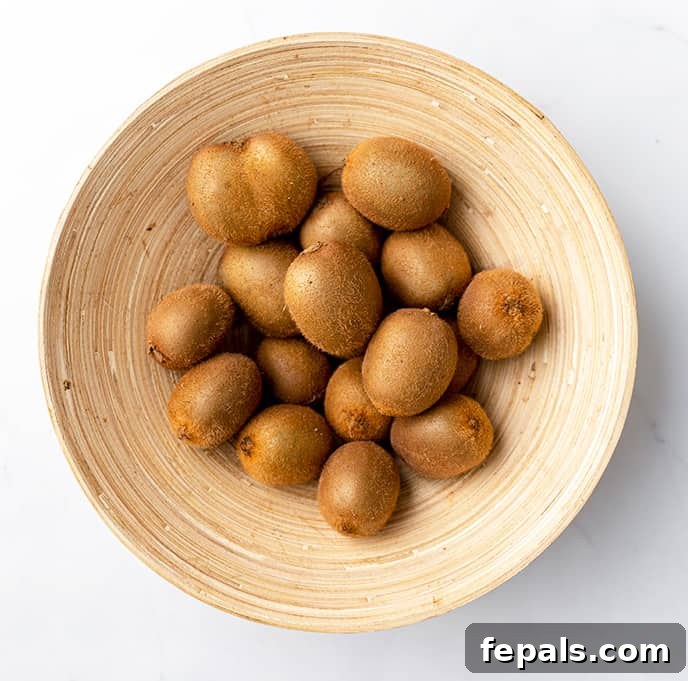
Brown, fuzzy, and undeniably delicious, the kiwi fruit is a small package bursting with vibrant flavor and an impressive array of health benefits. Often recognized for its unique appearance and tropical-sweet taste, the kiwi is a versatile fruit that can elevate any meal or snack. Whether you’re a seasoned kiwi enthusiast or just discovering its charms, understanding how to properly select, prepare, and enjoy this delightful fruit is key to unlocking its full potential. This comprehensive guide will walk you through everything you need to know about kiwis, focusing particularly on mastering the art of cutting a kiwi with ease and precision.
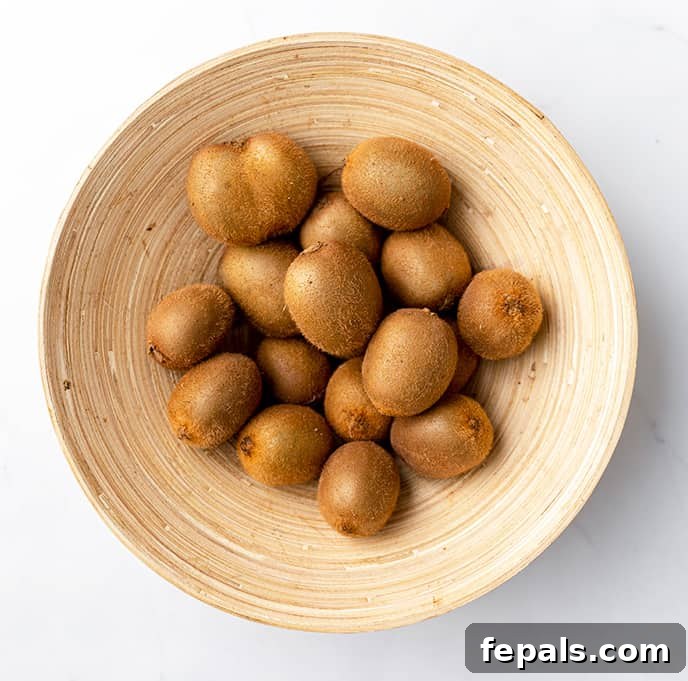
Initially, the kiwi might seem a bit unusual with its distinctive fuzzy, brown skin and egg-like shape. While the skin is technically edible, and some people enjoy it for its added fiber and nutrients, many prefer to peel the fruit due to its texture. Don’t let its appearance intimidate you; beneath that fuzzy exterior lies a brilliant green (or golden) flesh dotted with tiny, edible black seeds, offering a refreshing and juicy experience. In this guide, we’ll explore various methods for peeling and cutting kiwis, ensuring you can enjoy this fruit exactly how you like it.
What is Kiwi Fruit? Unveiling the Origin and Characteristics
The kiwi, or kiwifruit, is a small, oval fruit native to China, where it was originally known as the “Chinese gooseberry.” It gained international popularity and its current name, “kiwi,” after being introduced to New Zealand in the early 20th century, named after the country’s national bird due to its fuzzy, brown appearance. Kiwis are known for their bright green or golden flesh, sweet-tart taste, and distinctive small, black edible seeds. They grow on a woody vine and are harvested when firm, then allowed to ripen off the vine. This unique fruit offers a refreshing taste profile that makes it a favorite for many.
Exploring the Diverse World of Kiwis
Did you know there are more than 50 types of kiwi fruit? While the most commonly found variety in grocery stores is the fuzzy green kiwifruit, scientifically known as Actinidia deliciosa, often referred to as ‘Hayward’ kiwi, the world of kiwi is much richer. This variety is characterized by its oval shape, brown fuzzy skin, and vibrant green flesh with a balanced sweet and tangy flavor.
Another popular type is the Golden Kiwi (Actinidia chinensis), such as the ‘Zespri SunGold’. Golden kiwis have smoother, less fuzzy skin and typically feature a sweeter, less tart taste with a golden-yellow flesh. They are often preferred by those who find green kiwis too acidic. Beyond these two, other less common varieties include:
- Kiwi Berries: Small, grape-sized kiwis with smooth, edible skin, perfect for popping into your mouth whole. They have a similar sweet-tart flavor but are much more convenient for snacking.
- Hardy Kiwis: Extremely cold-tolerant varieties that can grow in colder climates, often resembling kiwi berries.
- Red Kiwis: A newer variety with a red blush around the core, offering a very sweet flavor.
Kiwis are grown globally, with major producers including California, Italy, China, and New Zealand. This widespread cultivation means you can often find fresh, in-season kiwi year-round, ensuring a consistent supply of this delicious fruit.
What to Expect: The Unique Flavor Profile of Kiwi
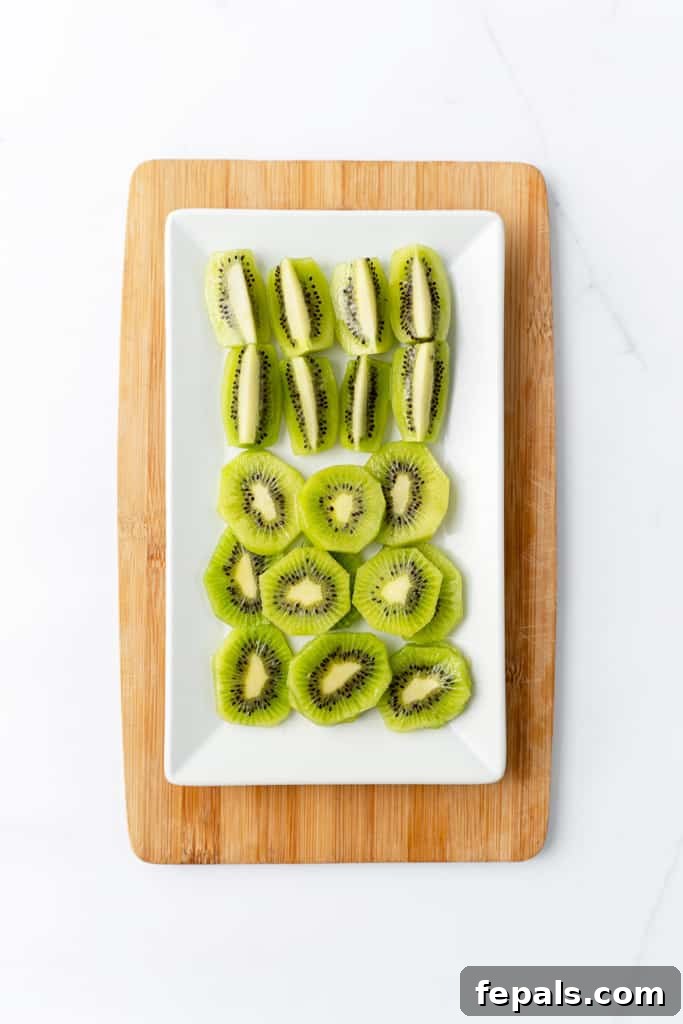
When you slice open a ripe kiwi, you’re greeted with a juicy, refreshing, and exquisitely sweet aroma. The taste is a delightful blend of sweetness with a subtle hint of acidity, making it incredibly invigorating. Green kiwis tend to have a more pronounced tangy note, reminiscent of strawberries, pineapples, and bananas all rolled into one. Golden kiwis, on the other hand, offer a generally sweeter and less tart experience, often described as tropical and mellow. The small, crunchy black seeds add a pleasant textural contrast, enhancing the overall eating experience. This unique balance of flavors makes kiwi a fantastic addition to both sweet and savory dishes, or simply enjoyed on its own.
The Nutritional Powerhouse: Why Kiwi is a Must-Have for Your Health
Absolutely! Kiwi is not just tasty; it’s a nutritional powerhouse packed with an impressive array of vitamins, minerals, and antioxidants essential for good health. Incorporating kiwi into your diet is an excellent way to boost your overall well-being.
- Vitamin C Champion: Kiwi is famously rich in Vitamin C, often containing more than an equivalent serving of oranges. This potent antioxidant is crucial for immune system support, collagen production for healthy skin, and fighting off free radicals in the body.
- Excellent Source of Vitamin E: Unlike many other fruits, kiwi provides a good amount of Vitamin E, another powerful antioxidant that protects cells from oxidative damage and supports skin health.
- Potassium Power: Two small kiwis can deliver as much potassium as a whole banana! Potassium is vital for maintaining healthy blood pressure, fluid balance, and proper muscle function.
- Fiber Rich: Kiwis are an excellent source of dietary fiber, which is essential for digestive health. Fiber aids in preventing constipation, promoting a healthy gut microbiome, and contributing to feelings of fullness, which can support weight management.
- Bone Health: It also contains essential minerals like calcium, which is fundamental for strong bones and teeth.
- Other Nutrients: Beyond these, kiwis offer Vitamin K (important for blood clotting), folate (critical for cell growth and function), and various other antioxidants that contribute to its anti-inflammatory properties.
With such a dense nutrient profile, regularly enjoying kiwi fruit can contribute to improved immunity, better digestion, enhanced skin health, and overall vitality.
Selecting the Perfect Kiwi: A Guide to Ripeness
Choosing the best kiwi at the grocery store ensures you get the most flavor and juiciness. Here’s how to select ripe, delicious kiwis:
- Gentle Squeeze for Firmness: This is the most crucial test. Gently press the kiwi with your thumb. A ripe kiwi should yield slightly to the touch, similar to a ripe avocado or peach. If it’s rock-hard, it’s unripe and will need a few days to soften. If it’s too soft or mushy, it’s overripe and might have an unpleasant texture.
- Examine the Skin: Look for kiwis with plump, unblemished skin. Avoid any that have wrinkles, soft spots, mold, or visible bruising. These are signs of spoilage or rough handling.
- Check for a Fragrant Aroma: Bring the kiwi close to your nose. A ripe kiwi will emit a fragrant, sweet, and slightly citrusy smell at its stem end. If there’s no scent, it’s likely unripe. If it smells fermented or overly sweet, it might be past its prime.
- Size and Weight: While not a definitive indicator of ripeness, generally opt for kiwis that feel heavier for their size, as this can indicate a juicier fruit.
How to Ripen Unripe Kiwis
If you purchase firm, unripe kiwis, you can ripen them at home. Simply leave them at room temperature on your kitchen counter for 2-5 days. To speed up the ripening process, place the kiwis in a paper bag with other fruits that release ethylene gas, such as bananas or apples. The ethylene will encourage the kiwi to ripen faster, usually within 1-2 days. Once ripe, store them in the refrigerator to slow down further ripening.
Preparing Your Kiwi: Skin On or Off?
Before diving into cutting, it’s worth addressing the kiwi skin. While many people choose to peel kiwis, the skin is completely edible and actually contains a good amount of fiber and antioxidants. If you choose to eat the skin, simply wash the kiwi thoroughly under cold water to remove any fuzz or debris. However, the texture of the skin can be off-putting for some due to its fuzzy nature. For those who prefer a smoother eating experience, peeling is the way to go.
Essential Tools for Cutting Kiwi
To effectively cut a kiwi, you’ll need just a few basic kitchen tools:
- Sharp Knife: A small paring knife or a larger chef’s knife will work well. A sharp blade makes the process much safer and more efficient.
- Cutting Board: To protect your countertops and provide a stable surface.
- Optional: Vegetable Peeler or Spoon: For alternative peeling methods.
How to Peel and Cut a Kiwi: Step-by-Step Methods
Learning how to peel and cut a kiwi is straightforward and can be done in several ways, depending on your preference and how you plan to use the fruit. Here, we’ll cover the most popular techniques.
Method 1: The Classic Knife Peeling Method
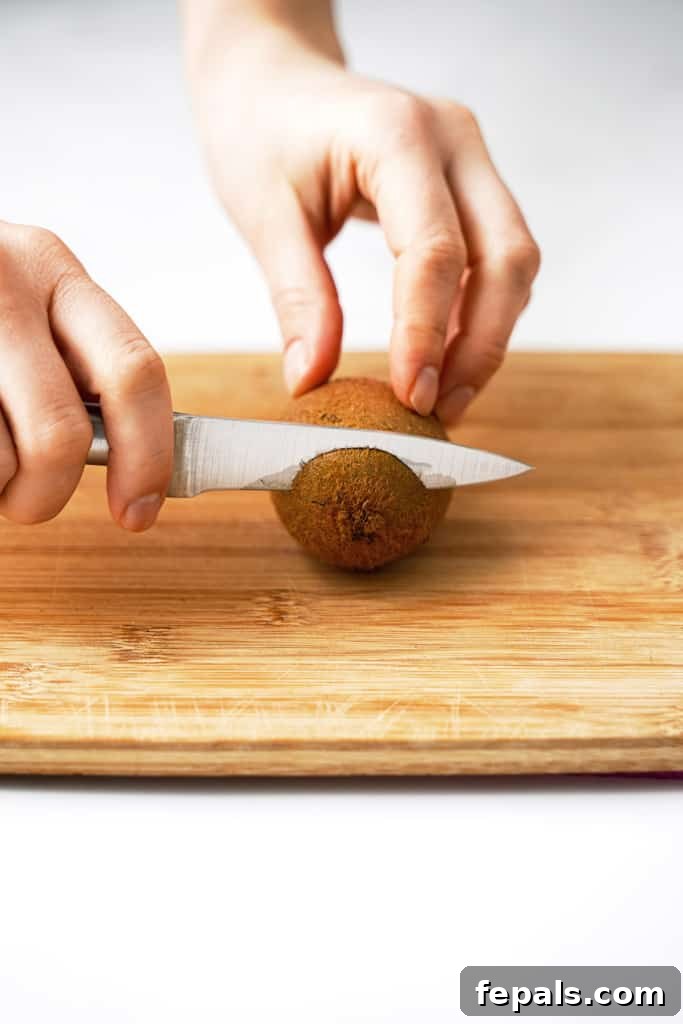
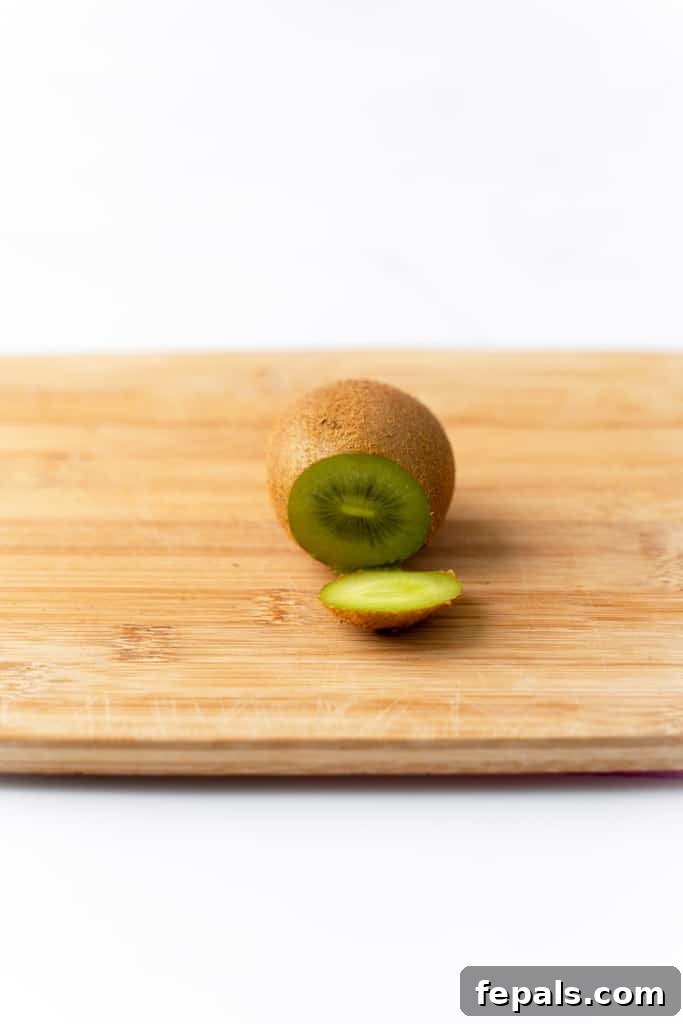
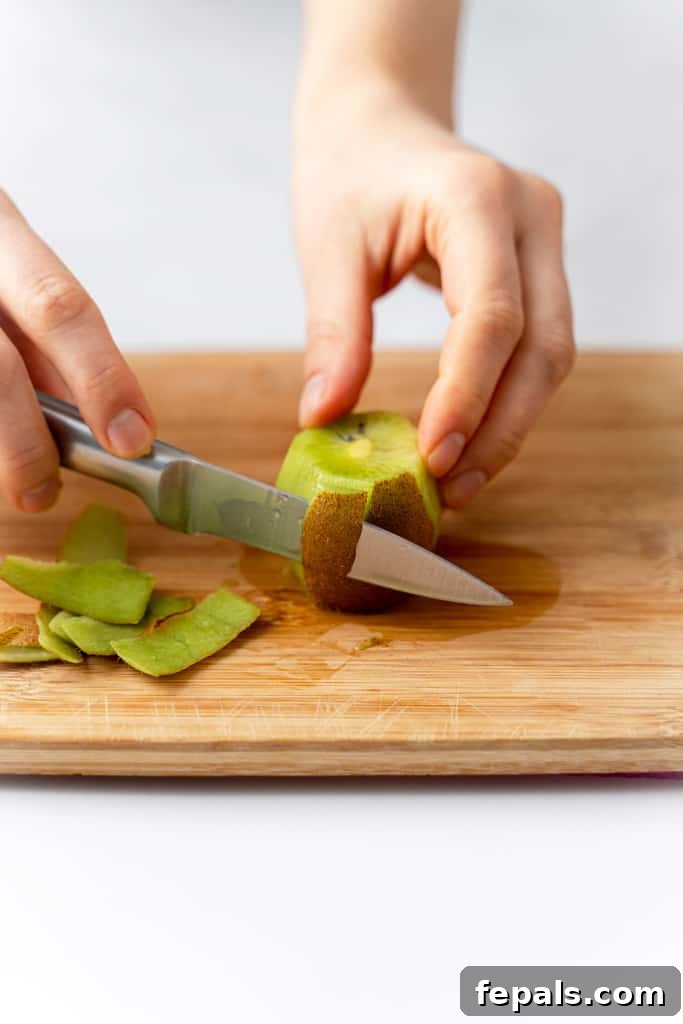
- Step 1: Trim the Ends. Place the kiwi on a sturdy cutting board. Using a sharp knife, carefully slice off both ends (top and bottom) of the kiwi. Aim to remove just enough so that you see the green flesh.
- Step 2: Peel the Skin. Stand the kiwi upright on one of its flat, cut sides. Using your knife, carefully cut away the peel in a downward motion, following the curve of the fruit. Rotate the kiwi as you go, removing all the brown skin until the fruit is entirely green. Be mindful to remove only the skin and as little of the precious fruit flesh as possible.
Method 2: The Spoon Method (for easy scooping)
This method is fantastic for quickly scooping out the flesh, especially if you plan to eat the kiwi directly from the skin or dice it later.
- Step 1: Trim the Ends. As with the knife method, slice off both ends of the kiwi on a cutting board.
- Step 2: Insert Spoon. Take a spoon (a smaller spoon works well for smaller kiwis, or a larger one for bigger fruit) and insert it just under the skin at one of the cut ends.
- Step 3: Scoop Around. Gently push the spoon around the entire circumference of the kiwi, keeping it close to the skin. Once you’ve gone all the way around, the peeled kiwi core should easily pop out.
Method 3: The Vegetable Peeler Method
If you’re comfortable with a vegetable peeler, it can also be an efficient way to remove kiwi skin.
- Step 1: Trim the Ends. Slice off both ends of the kiwi.
- Step 2: Peel with a Peeler. Hold the kiwi firmly in one hand and use a vegetable peeler (preferably a swivel peeler) to peel the skin from top to bottom, much like peeling a potato or apple. The peeler allows for thin, precise peeling, minimizing fruit waste.
How to Cut Kiwi into Slices
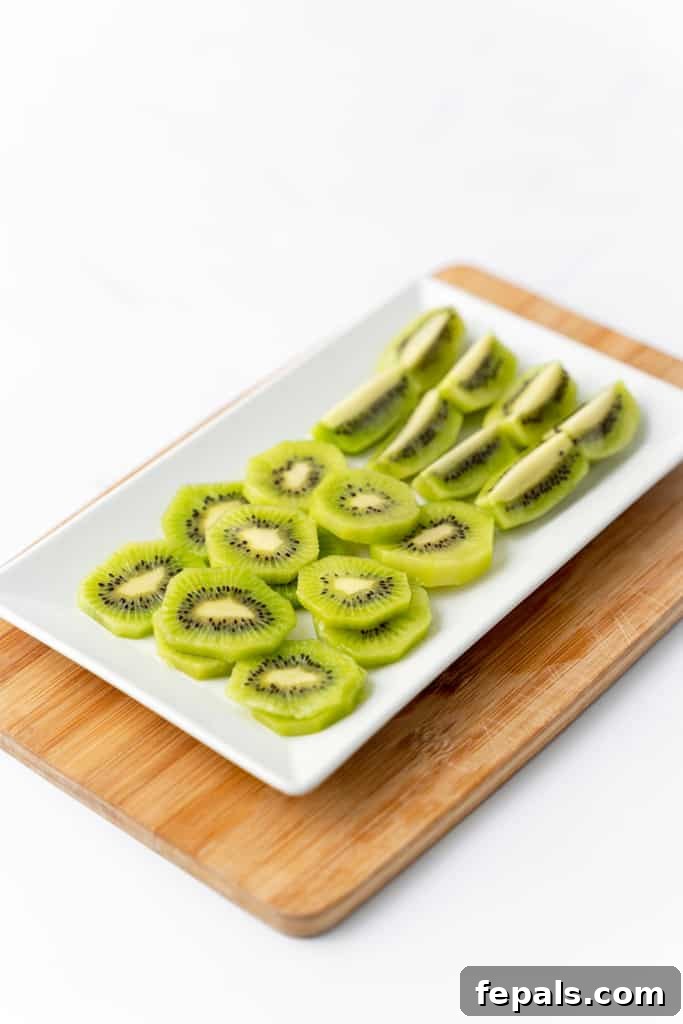
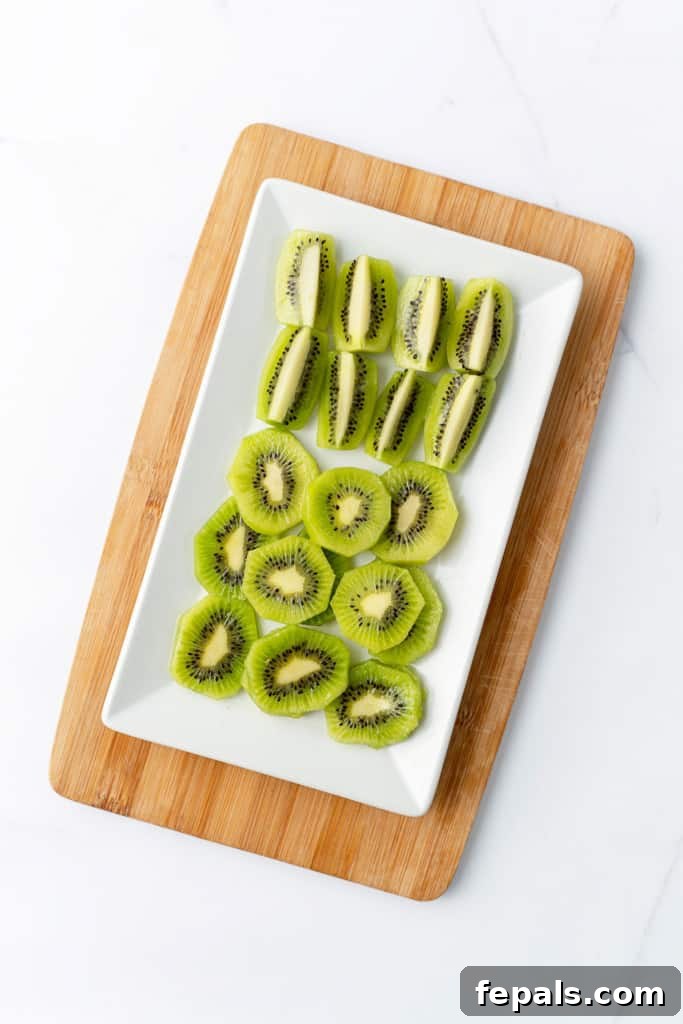
Once your kiwi is peeled, cutting it into elegant slices is simple and perfect for garnishes, fruit salads, or stacking on toast.
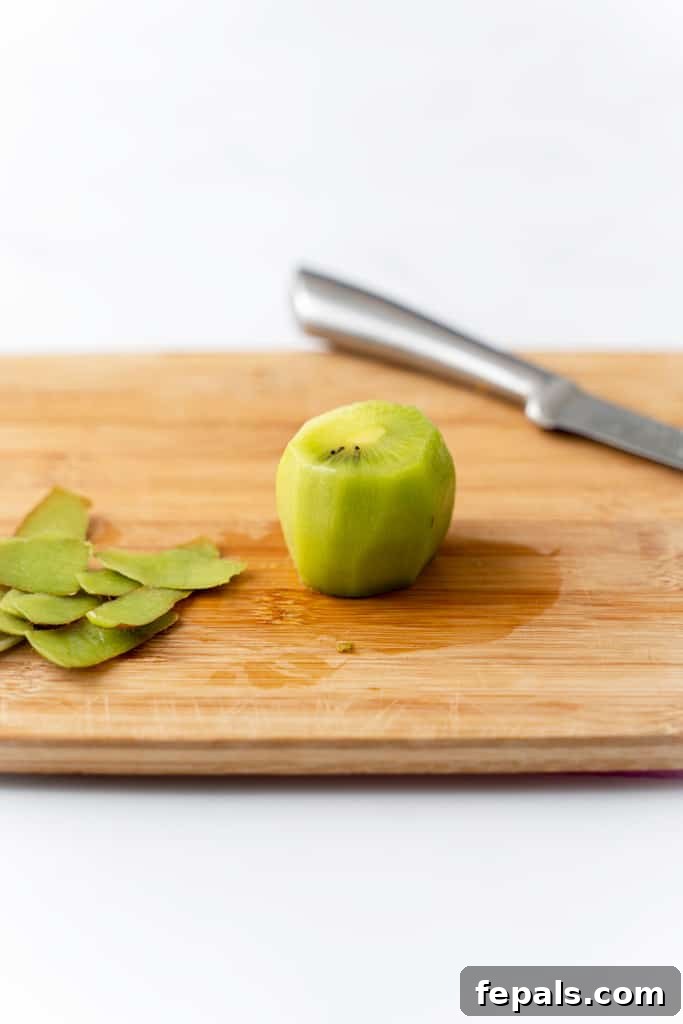
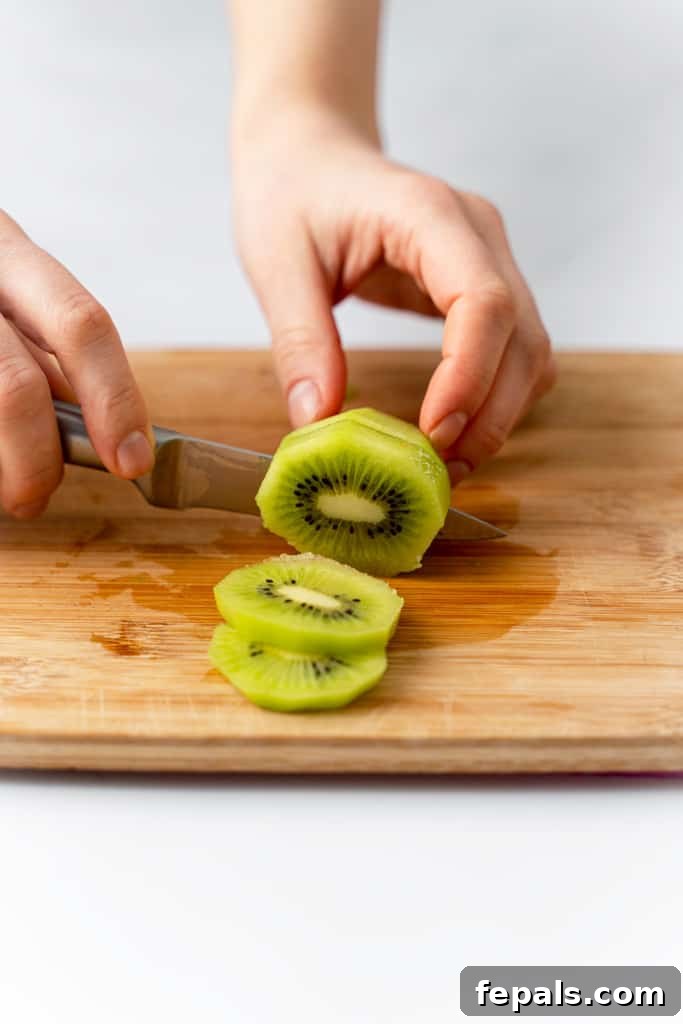
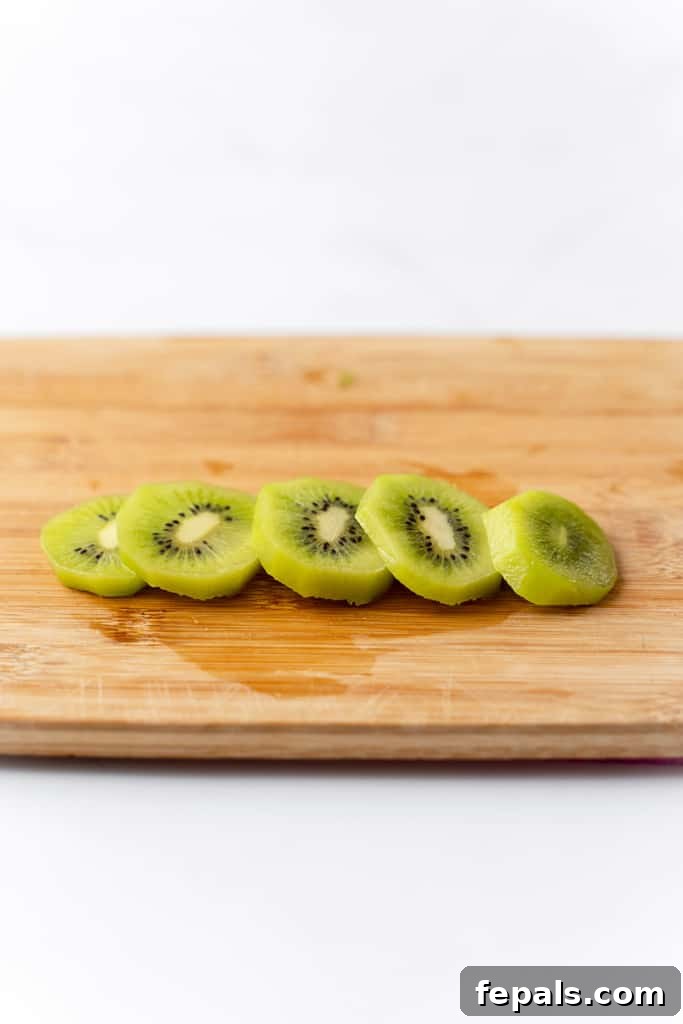
- Place the peeled kiwi on its side on a cutting board.
- Using your sharp knife, slice the kiwi into uniform rounds. You can make them as thick or as thin as you desire, typically about ¼ to ½ inch thick. These beautiful green circles are perfect for decorating desserts or adding to a fruit platter.
How to Cut Kiwi into Wedges
Wedges are ideal for adding to fruit salads, serving alongside yogurt, or as a vibrant snack.
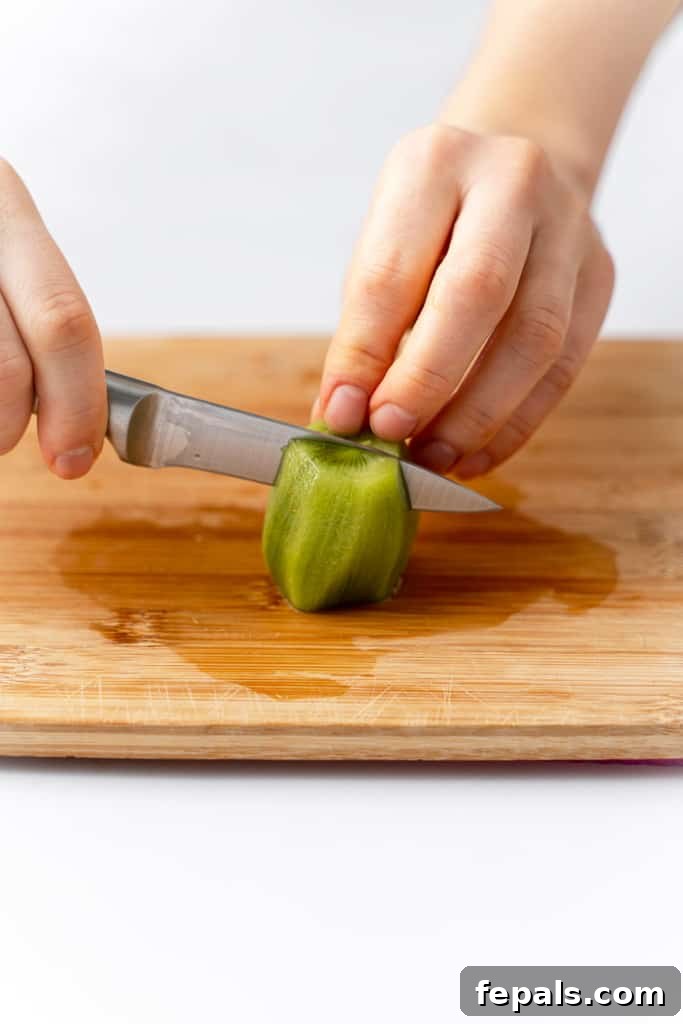
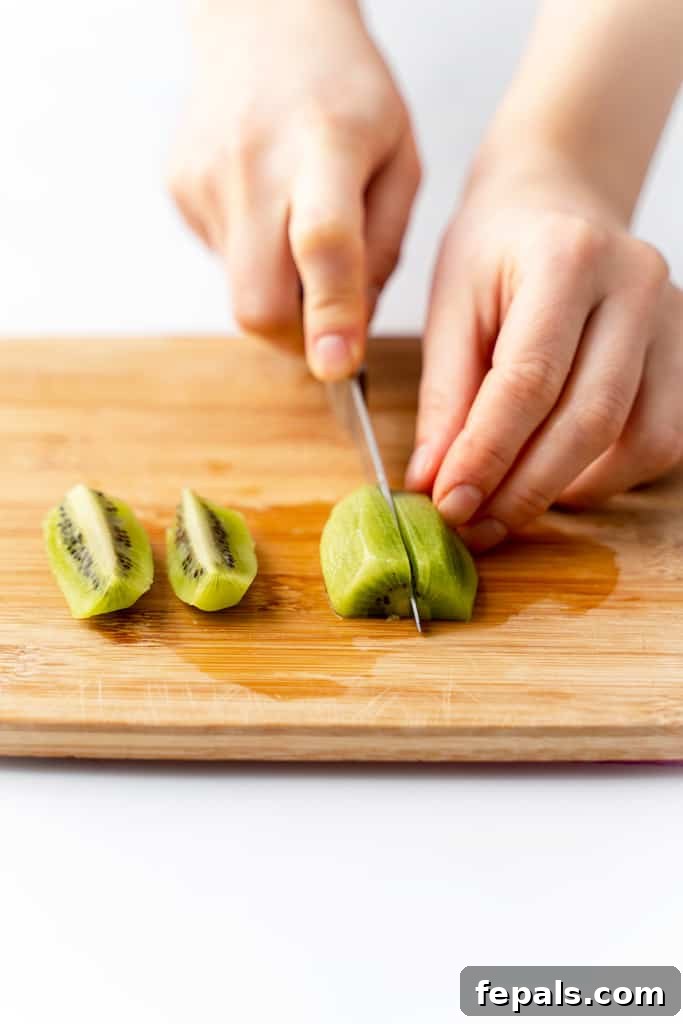
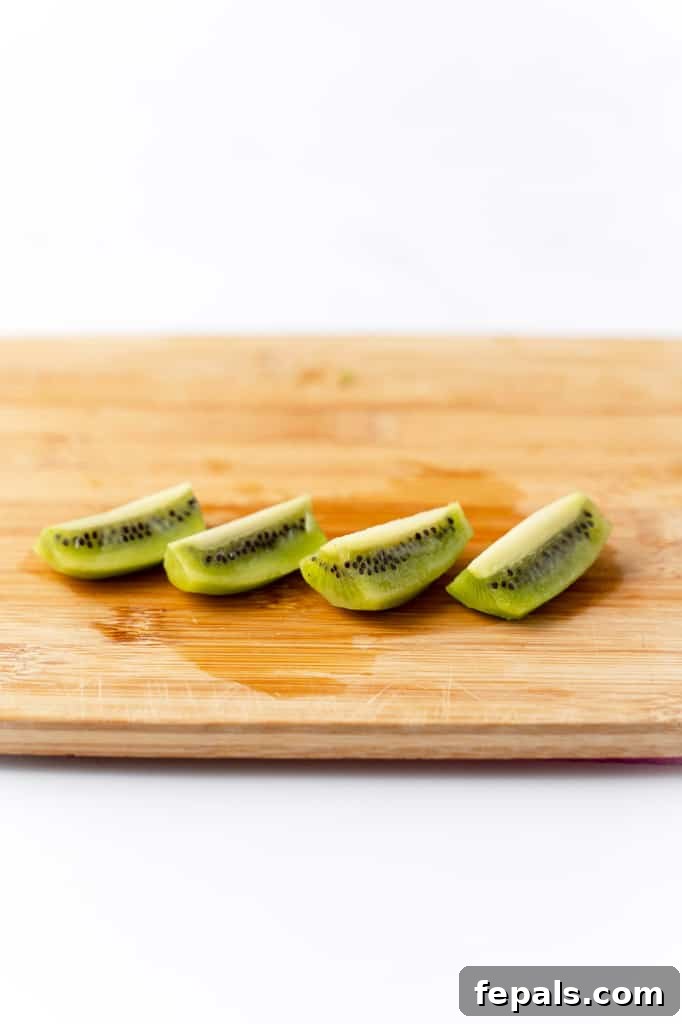
- Place the peeled kiwi upright on a cutting board.
- Carefully cut the kiwi in half lengthwise.
- Take each half and cut it lengthwise again, creating four wedges from each half, for a total of eight wedges per kiwi. You can adjust the number of cuts to make thicker or thinner wedges.
How to Cut Kiwi into Diced Cubes
Diced kiwi is perfect for adding to salsas, fruit salads, overnight oats, or as a topping for yogurt and desserts.
- Follow the steps to peel the kiwi using your preferred method.
- Place the peeled kiwi on its side and cut it into thick slices (about ½ inch).
- Stack a few slices together and then cut them lengthwise into strips.
- Finally, cut across the strips to create small, uniform cubes.
The Quickest Way to Enjoy Kiwi: Halved with a Spoon
If you’re in a hurry and just want to enjoy the fresh fruit, simply cut the kiwi in half crosswise. Then, grab a spoon and scoop out the juicy flesh directly from the skin. This is a mess-free and super-fast way to enjoy a refreshing kiwi snack.
Storing Kiwi for Maximum Freshness
Proper storage is crucial to keep your kiwis fresh and flavorful for as long as possible. The storage method depends on whether the kiwi is ripe and whether it has been cut.
- Uncut, Unripe Kiwis: Store firm, unripe kiwis at room temperature on your kitchen counter. They will typically ripen in 2 to 5 days. You can speed up this process by placing them in a paper bag with an apple or banana.
- Uncut, Ripe Kiwis: Once a kiwi yields slightly to the touch, indicating ripeness, transfer it to the refrigerator. Storing ripe kiwis in the fridge will significantly slow down the ripening process, keeping them fresh for up to 4 to 5 days, sometimes even a week.
- Peeled and Cut Kiwis: Once peeled or cut, kiwi flesh is more perishable and can dry out or spoil faster. Place any cut kiwi pieces in an airtight container to prevent oxidation and moisture loss. Store them in the refrigerator for up to 2-3 days. For best quality, consume them as soon as possible after cutting.
Can You Freeze Kiwi? Extending Shelf Life for Future Enjoyment
Yes, you can absolutely freeze kiwi, and it’s a great way to preserve its goodness for longer, especially if you have an abundance of ripe fruit. However, it’s important to note that frozen and thawed kiwi will have a softer texture than fresh kiwi. This makes it ideal for specific applications rather than eating fresh.
- Preparation for Freezing: Start by peeling and cutting your kiwis into slices or chunks, depending on how you plan to use them.
- Flash Freezing: To prevent the pieces from sticking together, arrange the cut kiwi in a single layer on a parchment-lined baking sheet. This “flash freezing” step helps them freeze individually. Transfer the sheet pan to the freezer and freeze until the kiwi pieces are solid, which usually takes about 2-3 hours.
- Long-Term Storage: Once frozen solid, transfer the kiwi pieces from the baking sheet into a freezer-safe bag or an airtight container. Remove as much air as possible from the bag to prevent freezer burn. Label the bag with the date.
- Storage Duration: Frozen kiwi can be stored in the freezer for up to 6-12 months.
- Best Uses for Frozen Kiwi: Due to its softer texture after thawing, frozen kiwi is best suited for smoothies, purees, sauces, jams, or as an ingredient in baked goods. It’s also fantastic for adding to refreshing drinks or making sorbets.
Creative Ways to Enjoy Kiwi: Beyond the Fruit Bowl
Kiwi’s unique flavor and vibrant color make it a fantastic ingredient in a variety of dishes. Here are some delicious and healthy ways to incorporate cut kiwi into your meals:
- Breakfast Bowls: Elevate your morning routine by adding sliced or diced kiwi to Fruit and Oatmeal Breakfast Bowls, yogurt parfaits, or Protein Overnight Oats.
- Smoothies and Juices: Its juicy texture and sweet-tart flavor blend perfectly into refreshing smoothies. Combine with spinach, banana, and a splash of orange juice for a nutritious green smoothie, or juice it on its own or with other fruits for a tropical drink.
- Desserts: Kiwi adds a beautiful splash of color and tang to desserts. Use it as a topping for Homemade Banana Ice Cream, fruit tarts, pavlovas, cheesecakes, or simply serve with a dollop of whipped cream.
- Fruit Salads: A staple! Kiwi is a must-have in any vibrant fruit salad, pairing well with berries, melons, and citrus fruits.
- Savory Dishes: Don’t limit kiwi to sweet dishes. It can be surprisingly delicious in savory applications, such as a refreshing salsa for grilled fish or chicken, or in a light green salad with a vinaigrette dressing.
- Healthy Snacks: Simply eat peeled slices on their own, or pair with cheese, nuts, or a delightful Chocolate Fruit Dip for an energizing snack.
Expand Your Kitchen Skills: More Helpful How-To Tutorials
Mastering kitchen techniques can make cooking and healthy eating much more enjoyable. If you found this guide on cutting kiwi helpful, you might also be interested in these other practical tutorials to enhance your culinary expertise:
- How to Cut an Orange: Learn the best ways to segment and prepare oranges for various dishes.
- Tutorial How to Cut a Cabbage: Efficient techniques for chopping cabbage for salads, stir-fries, or coleslaw.
- How to Make Cashew Butter: Discover how to create your own creamy, homemade nut butter.
- Learn How to Poach Chicken Breasts: A simple method for cooking tender, juicy chicken perfect for salads or sandwiches.
- How to Cook Rice: Perfect the art of cooking fluffy, perfectly tender rice every time.
If you found this guide helpful and tried our cutting methods or used kiwi in a recipe, we would love to hear from you! Please leave us some feedback in the comment section below, and don’t forget to rate it! Your input helps us create even better content for our community.
Finally, share your delicious kiwi creations with us on social media! Use our hashtag #healthyfitnessmeals on INSTAGRAM for a chance to be featured! FOLLOW Healthy Fitness Meals on FACEBOOK | INSTAGRAM | PINTEREST | TWITTER for all of our latest blog posts and recipes.
How to Cut a Kiwi
Rena
1
5 minutes
0 minutes
5 minutes
Rate
Pin
Equipment
-
knife
-
cutting board
Ingredients
-
1
kiwi
Instructions
-
On a cutting board, cut off the top and bottom of the kiwi.
-
Place the kiwi on one of the cut-sides, then use a knife to cut away the peel in a downward motion, turning it as you go to get the entire kiwi.
How to Cut Kiwi into Slices
-
Place the peeled kiwi on its side and slice rounds, to your desired thickness.
How to Cut Kiwi into Wedges
-
Place the peeled kiwi right side up and cut it vertically.
-
Cut each of the cut pieces, lengthwise in half to cut the kiwi into wedges.
Notes
- Use a sharp knife for safety and efficiency.
- If the kiwi is firm when you buy it, leave it on the kitchen counter for 2-3 days to ripen. Once it yields to a gentle touch, you can cut it and enjoy it immediately or store it in the fridge to prevent it from becoming overripe.
Nutrition
Calories:
56
kcal
Carbohydrates:
13
g
Protein:
1
g
Fat:
1
g
Saturated Fat:
1
g
Sodium:
3
mg
Potassium:
284
mg
Fiber:
3
g
Sugar:
8
g
Vitamin A:
79
IU
Vitamin C:
84
mg
Calcium:
31
mg
Iron:
1
mg
Nutrition information is automatically calculated, so should only be used as an approximation.
Additional Info
ingredient
American
Tried this recipe?
Mention @healthyfitnessmeals or tag #healthyfitnessmeals!