
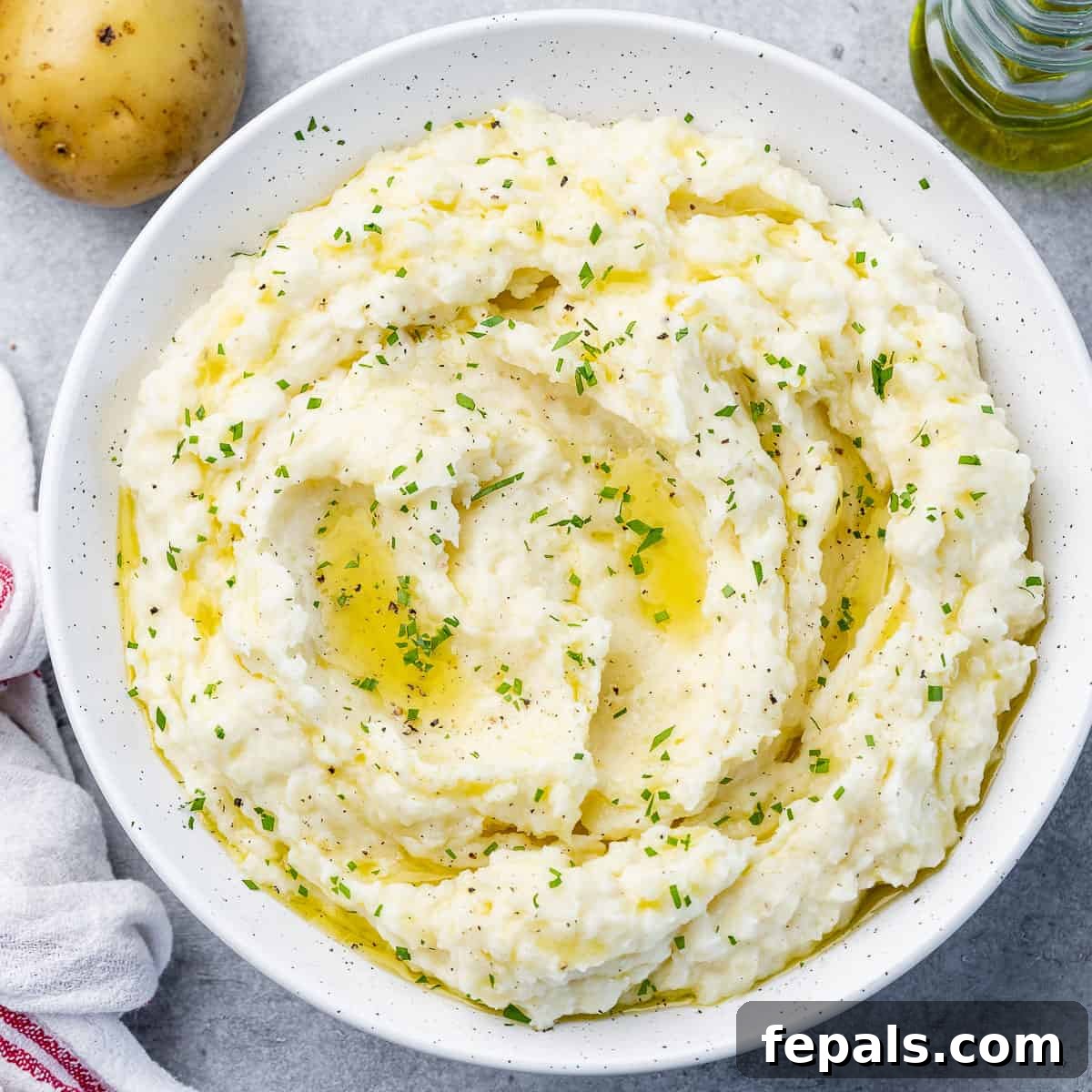
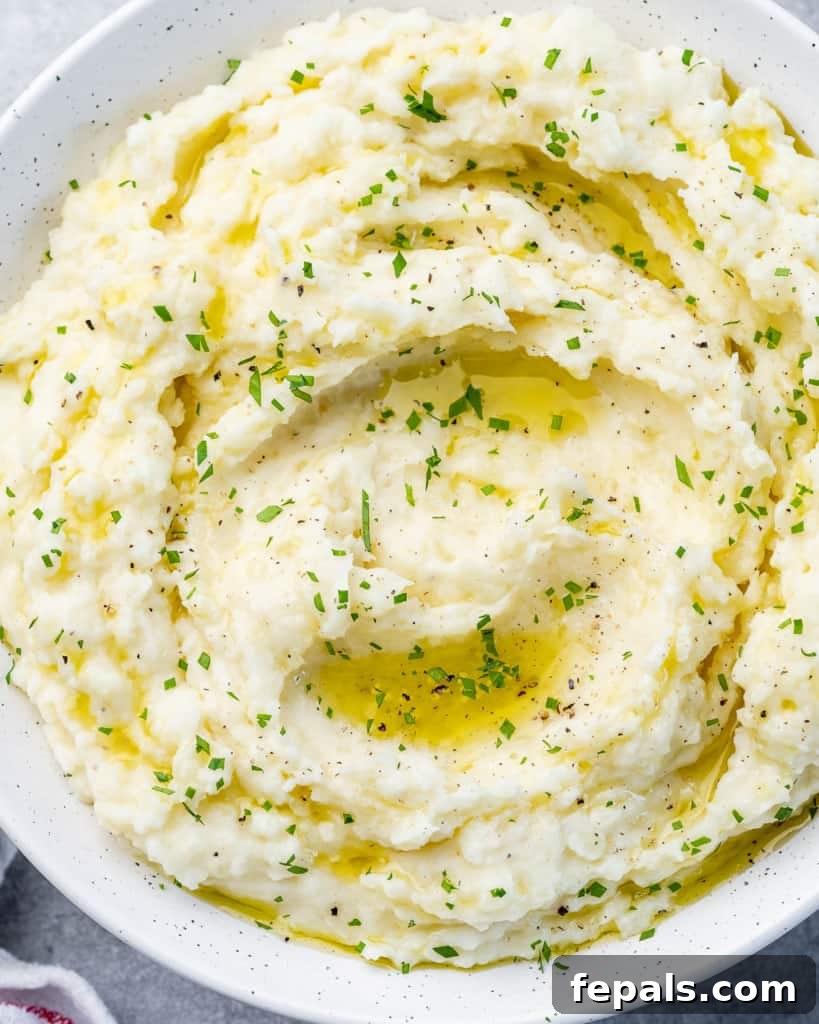
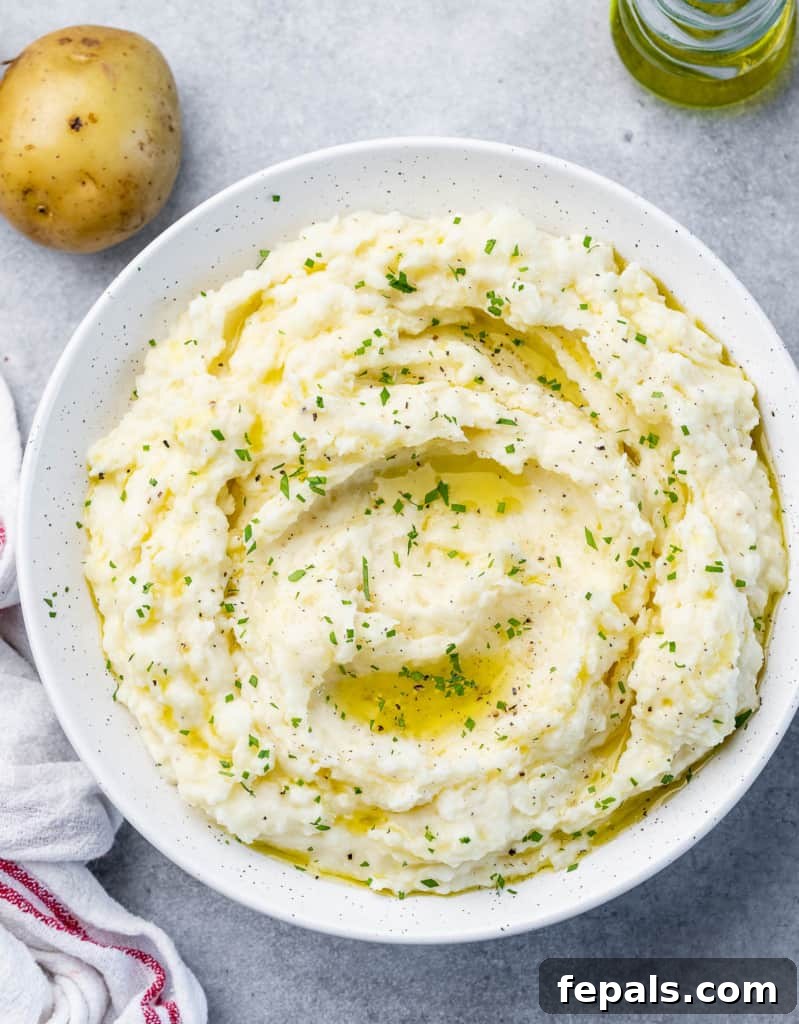
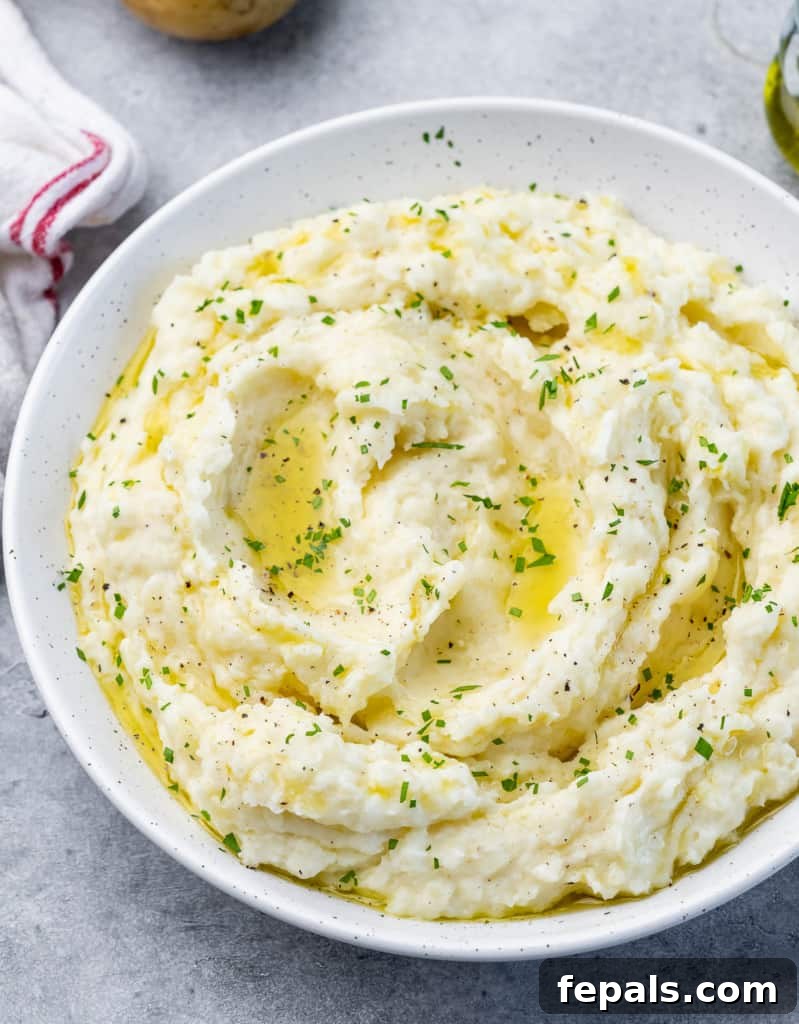
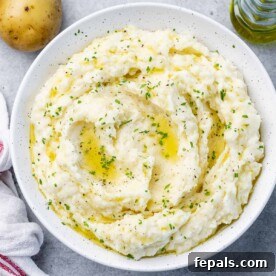
Prepare to infuse your home with warmth, comfort, and irresistible aromas with our ultimate recipe for Vegan Mashed Potatoes! These aren’t just any mashed potatoes; they are luxuriously creamy, bursting with savory flavor, and so incredibly easy to make that they’re destined to become your new go-to side dish. Whether you’re a seasoned vegan or simply exploring plant-based options, this recipe promises to impress even the most discerning palates.
For those seeking a low-carb alternative to traditional mashed potatoes, you might also enjoy exploring our Garlic Butter Mashed Cauliflower recipe.
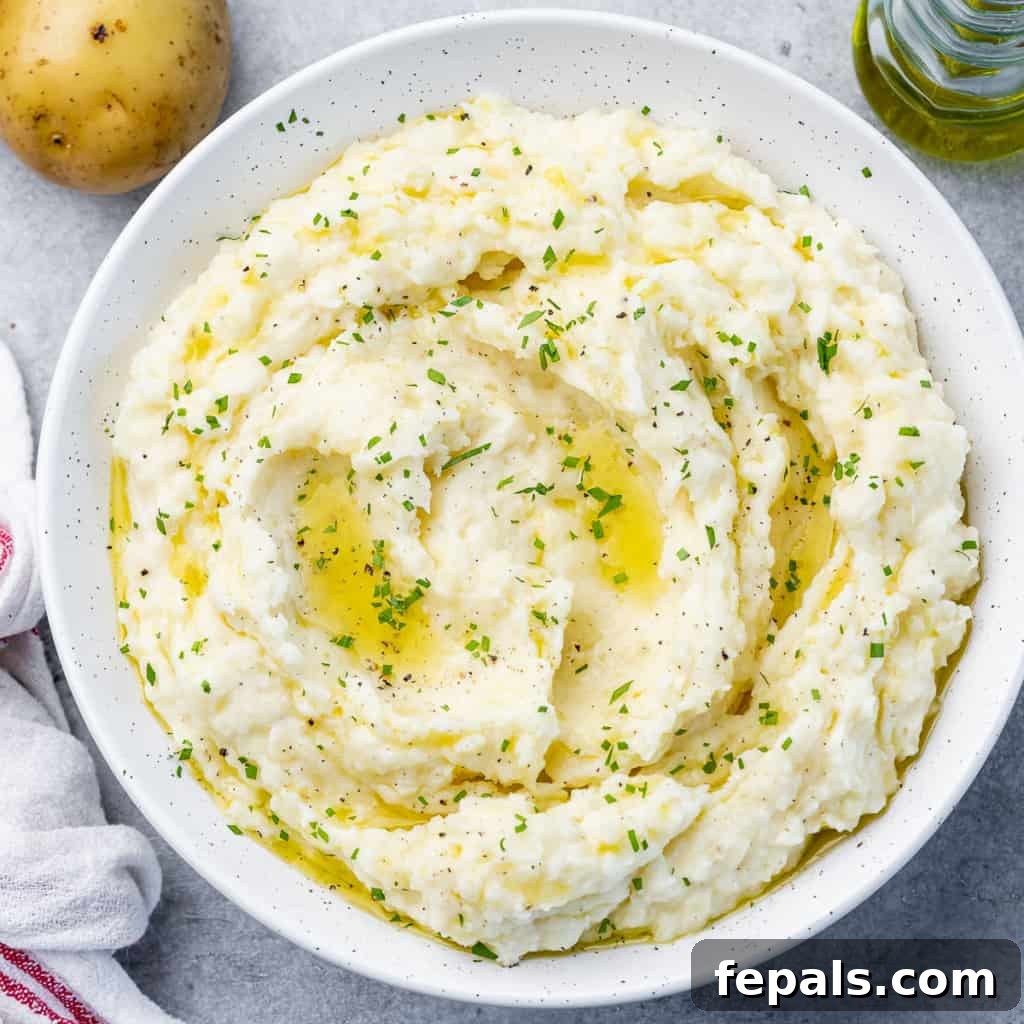
There’s an undeniable magic to a perfectly executed potato side dish, isn’t there? Potatoes have a way of rounding out any meal, making it feel complete and satisfying. Our creamy vegan mashed potatoes elevate this comfort food classic, offering a dairy-free experience that sacrifices absolutely nothing in terms of taste or texture. In fact, many find this plant-based version even more delightful than its traditional counterpart. It’s a dish that consistently earns rave reviews from friends and family alike.
I frequently prepare this vegan rendition of mashed potatoes, especially since some members of my family are lactose-sensitive. This recipe has proven to be a lifesaver, allowing everyone to enjoy a beloved classic without any dietary concerns. Its simplicity makes it ideal for everyday family dinners, yet its impressive flavor and elegant presentation make it perfect for larger gatherings, festive parties, and all major holidays. It has become an essential part of our holiday spread, particularly for Thanksgiving, where it stands out as a star side.
Why You’ll Love This Vegan Mashed Potato Recipe
This recipe for vegan mashed potatoes isn’t just another dish; it’s an experience. Here’s why it’s poised to become a staple in your kitchen:
- Effortlessly Simple to Prepare: You’ll be amazed at how quickly and easily these incredibly flavorful mashed potatoes come together. With just four core ingredients, plus salt, pepper, and your preferred fresh herbs for garnish, the process is streamlined. Simply peel and chop, boil until tender, stir in the rich plant-based goodness, and serve! It’s an ideal recipe for busy weeknights or when you need a reliable, crowd-pleasing side without the fuss.
- Unbelievably Delicious & Ultra-Creamy: Forget everything you thought you knew about dairy-free mashed potatoes. This recipe delivers an exceptionally smooth, fluffy, and savory mash that’s so rich and satisfying, you won’t believe it’s vegan. The careful selection of ingredients ensures a depth of flavor that will have everyone asking for seconds. It’s a universally loved and devoured side dish that will undoubtedly be requested time and time again, all year round.
- Incredibly Versatile: One of the greatest attributes of these vegan mashed potatoes is their incredible adaptability. They complement an extensive array of main courses, from hearty plant-based roasts and savory stews to grilled vegetables, baked tofu, and even more traditional proteins like fish, beef, chicken, or pork, if you’re catering to a mixed dietary crowd. They serve as a fantastic canvas for various seasonings, fresh herbs, or even a drizzle of your favorite infused olive oil, allowing you to customize them to perfectly match any meal or palate.
Essential Ingredients for Perfect Vegan Mashed Potatoes
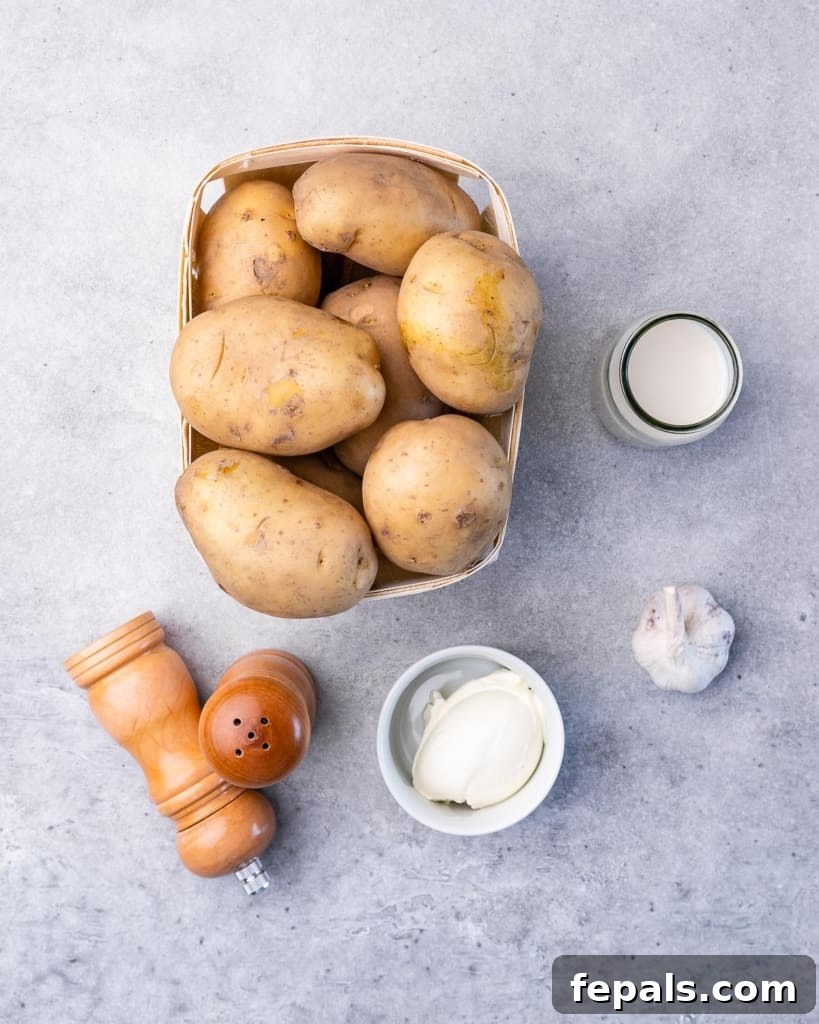
Mashed potatoes are the quintessential comfort food, a dish that instantly evokes feelings of warmth and nostalgia. While they are an absolute must-have for holiday feasts, they also serve as a perfect, easy addition to any weeknight meal. The beauty of this vegan version lies in its simplicity and reliance on readily available ingredients. Here’s a detailed look at what you’ll need to create the fluffiest, most flavorful plant-based mash:
- Gold Potatoes (Yukon Golds are Highly Recommended): The foundation of any great mashed potato dish is the potato itself. For the absolute best results—meaning a fluffy, velvety smooth, and incredibly flavor-packed mash—opt for higher starch potato varieties. Yukon Golds are my personal favorite and the gold standard for mashing due to their naturally buttery flavor and creamy texture when cooked. Their thin skin means less peeling, and their consistent starch content ensures a superior mash. Russet potatoes are another excellent choice, known for their light, fluffy texture, though they require thorough peeling. Avoid waxy varieties like red or white potatoes, as they tend to become gluey when mashed due to their lower starch content.
- Non-Dairy Milk: This is the secret to achieving that wonderfully smooth and creamy consistency without any dairy. The great news is that you have several fantastic options, each contributing a slightly different nuance:
- Almond Milk: A widely available and neutral-tasting option that won’t overpower the potato flavor.
- Oat Milk: Offers a natural creaminess and subtle sweetness that works beautifully in mashed potatoes.
- Cashew Milk: Known for its rich, full-bodied texture, cashew milk can add an extra layer of decadence.
- Soy Milk: A classic plant-based milk that provides a good creamy base.
Be sure to choose unsweetened varieties to avoid an odd flavor profile. For an extra boost of richness and tang, you may also incorporate a touch of vegan cream cheese, which truly takes the creaminess to the next level.
- Vegan Butter: Mashed potatoes simply aren’t complete without the luxurious richness of butter! Thankfully, the market offers an abundance of excellent plant-based butter alternatives that melt beautifully and impart that classic buttery flavor. Look for stick-form vegan butters for the best results, as they tend to have a similar fat content to dairy butter. If you prefer, or don’t have vegan butter on hand, a generous drizzle of high-quality extra virgin olive oil can also add a delightful fruity note and richness.
- Fresh Garlic: While garlic powder can be used in a pinch, freshly minced garlic truly elevates these mashed potatoes from good to extraordinary. Its pungent, aromatic flavor infuses deeply into the potatoes, creating a complex and irresistible savory profile. For an even more mellow and sweet garlic flavor, consider roasting whole garlic cloves until tender before mashing them in.
- Essential Seasonings:
- Kosher Salt: Crucial for bringing out the natural flavors of the potatoes and balancing the richness. Adding salt to the cooking water is also key (more on this in the tips!).
- Freshly Ground Black Pepper: Provides a subtle kick and aromatic warmth that complements the creamy potatoes perfectly.
- Fresh Parsley: While optional, a sprinkle of freshly minced parsley not only adds a vibrant pop of color but also a fresh, herbaceous note that brightens the entire dish. Don’t underestimate the power of fresh herbs for garnish!
Step-by-Step Guide: Crafting the Perfect Vegan Mashed Potatoes
Making truly exceptional vegan mashed potatoes is a straightforward process, achievable through various cooking methods like boiling, baking, or using a pressure cooker. My preferred method, and arguably the simplest, is boiling the potatoes to tender perfection. Here’s a detailed, easy-to-follow guide:
For complete, detailed instructions and ingredient quantities, please refer to the recipe card located further down the page.
- Prepare and Boil the Potatoes: Begin by thoroughly washing your gold potatoes. While some recipes suggest leaving the skin on for a more rustic mash, for the creamiest results, I recommend peeling them. Once peeled, chop the potatoes into roughly uniform 1-inch cubes. This ensures they cook evenly and prevents some pieces from becoming overcooked while others remain firm. Place the cubed potatoes into a large soup pot or Dutch oven. Cover them with cold water, ensuring there’s at least an inch of water above the potatoes. Add a generous pinch of kosher salt to the water; this seasons the potatoes from the inside out and enhances their flavor. Bring the water to a rolling boil over high heat, then reduce the heat to medium-high and let the potatoes simmer. Cook until they are fork-tender, meaning a fork easily slides through them without resistance. This typically takes about 15-20 minutes, though cooking time may vary based on the size of your potato pieces.
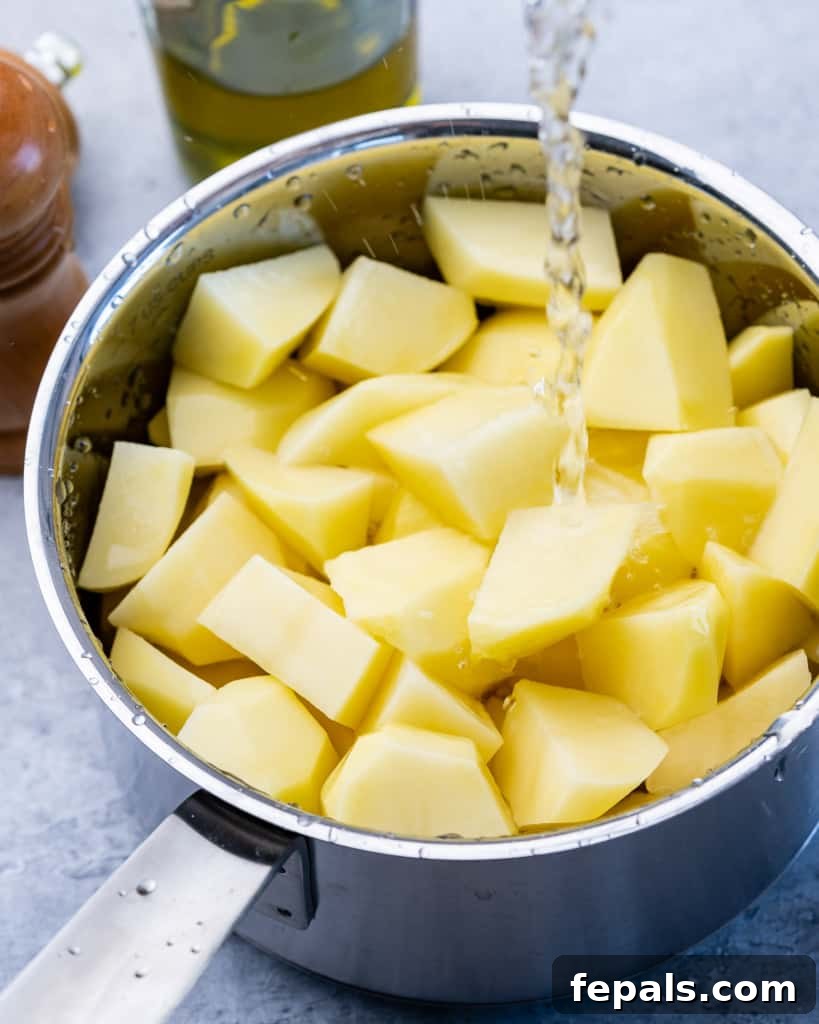
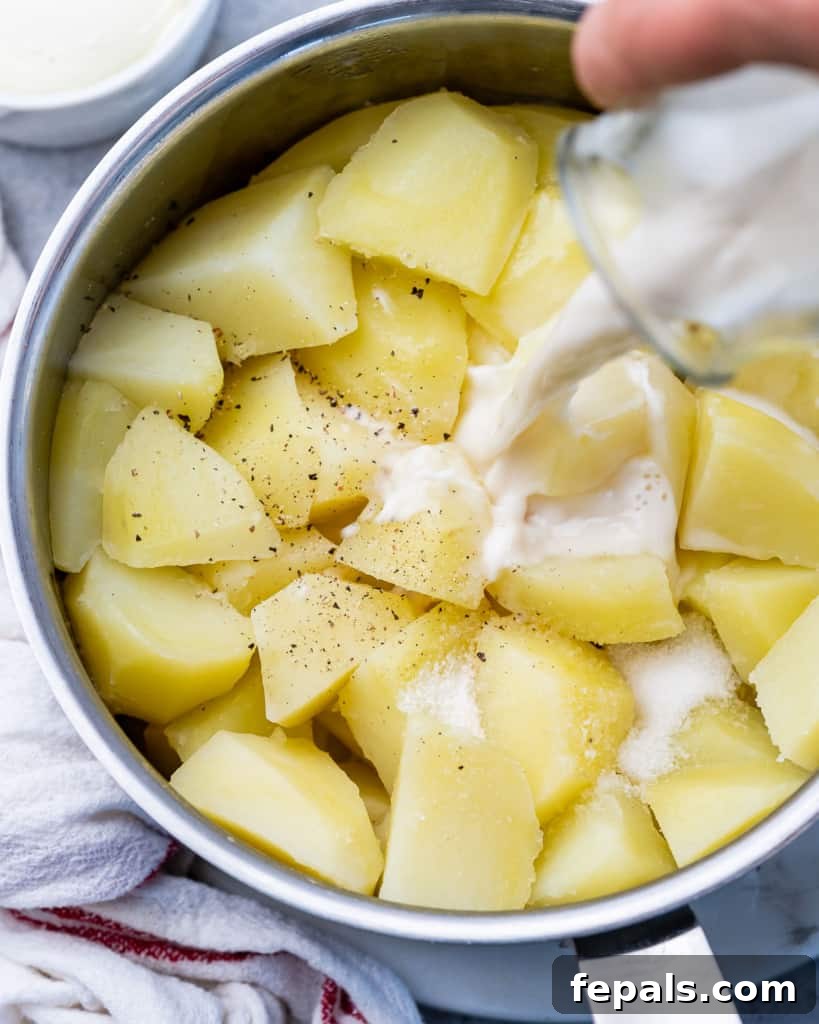
- Drain and Add Remaining Ingredients: Once the potatoes are perfectly tender, carefully drain all the water from the pot. It’s crucial to drain them thoroughly, as any excess water can lead to a watery or gluey mash. Return the hot, drained potatoes to the same pot. While the potatoes are still hot—this is key for melting the butter and allowing the milk to incorporate smoothly—immediately add the non-dairy milk, vegan butter, minced fresh garlic, and your desired amounts of kosher salt and freshly ground black pepper.
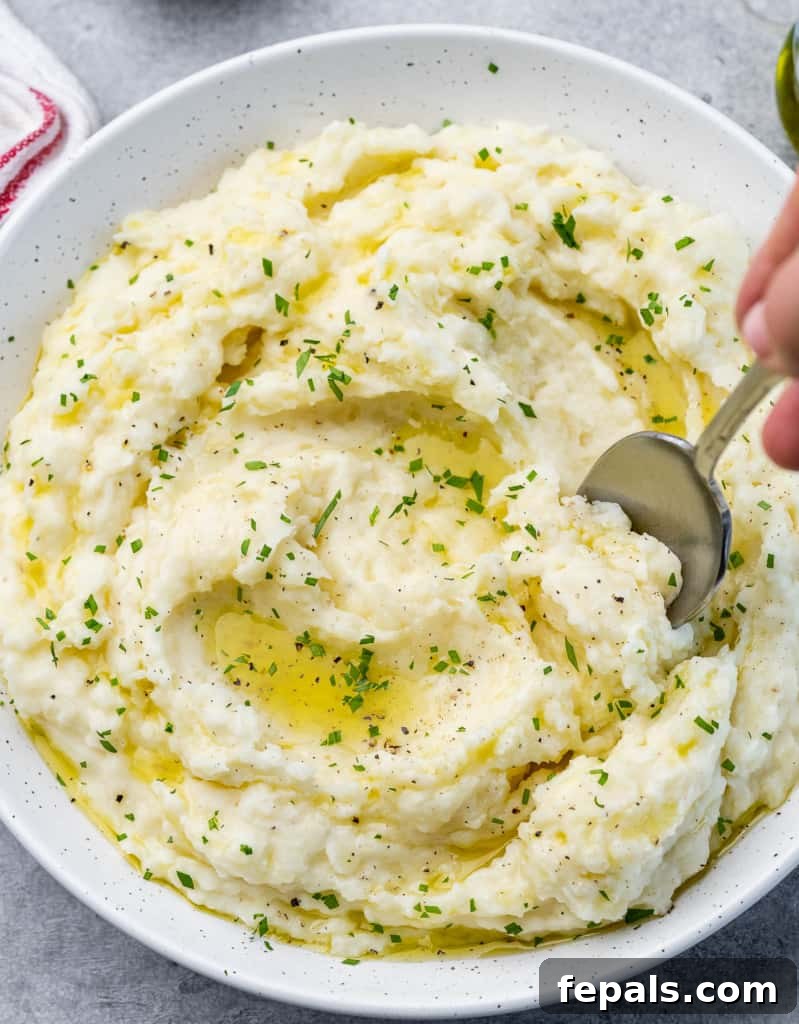
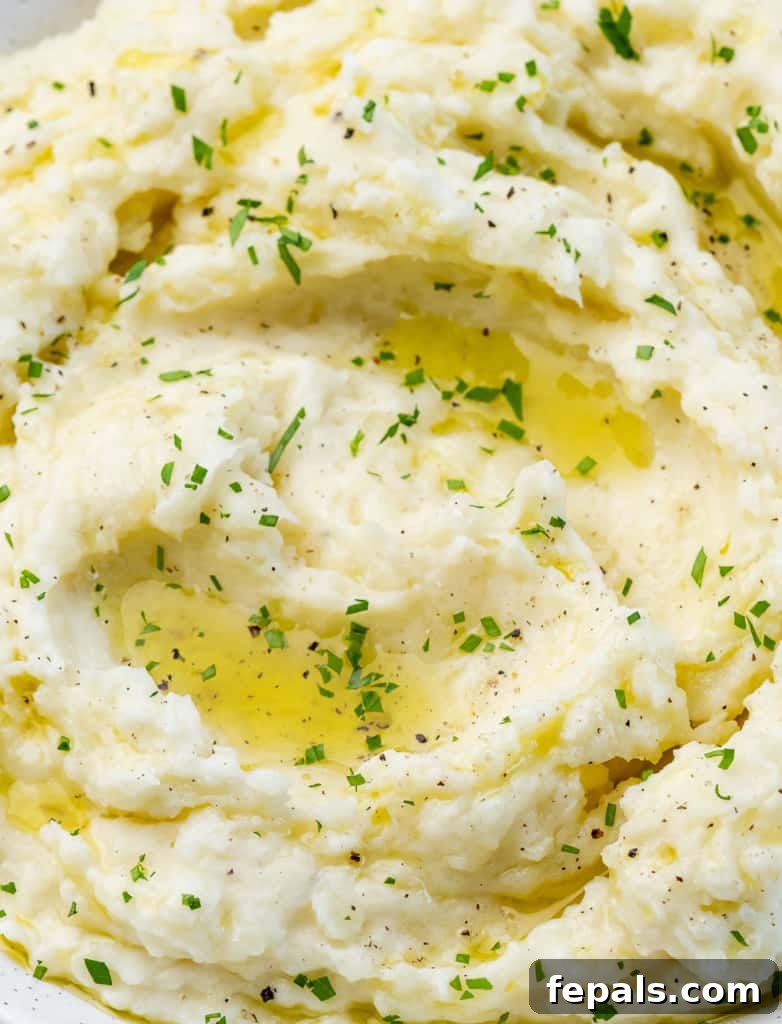
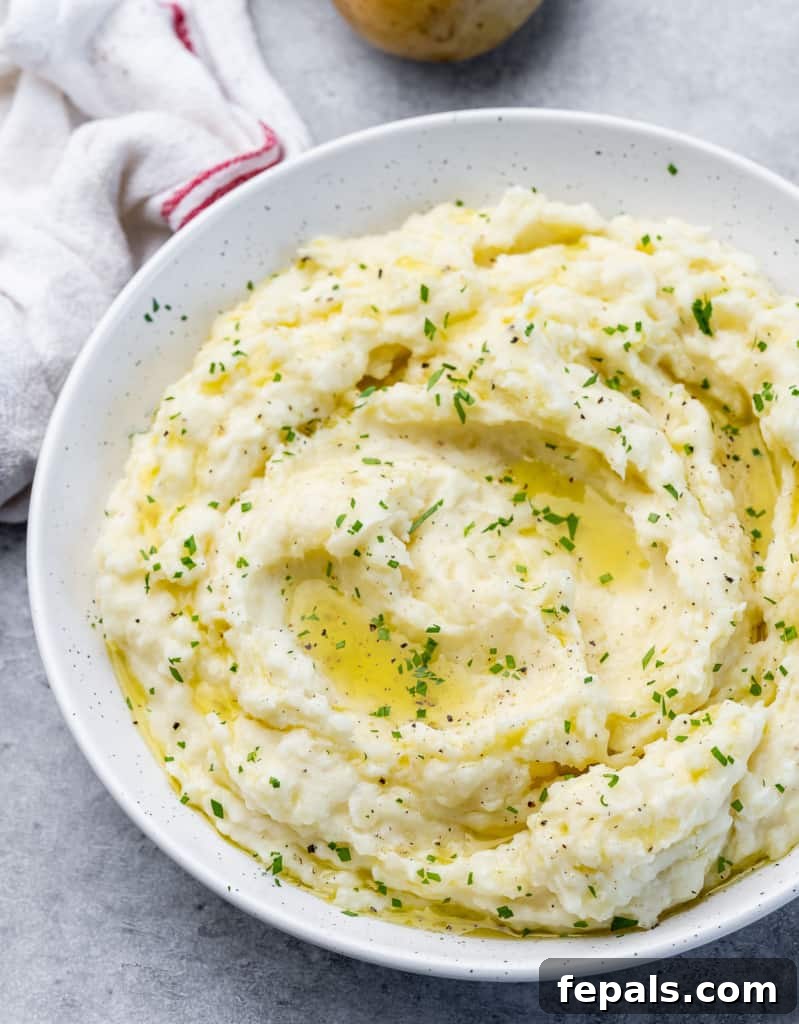
- Mash and Serve: Now for the fun part! Using a potato masher, begin mashing the potatoes. Work quickly and efficiently, mashing until you reach your desired consistency—whether you prefer a rustic, slightly chunky mash or a super smooth, uniform puree. Be careful not to over-mash, as this can activate too much starch and result in a gummy texture. Once mashed to perfection, transfer the creamy vegan mashed potatoes to a beautiful serving platter or bowl. For an extra touch of richness and visual appeal, drizzle lightly with a bit of extra virgin olive oil and garnish generously with freshly minced parsley or chives. Serve immediately and watch them disappear!
Expert Tips for the Most Flavorful & Creamy Vegan Mashed Potatoes
Achieving restaurant-quality mashed potatoes at home is simpler than you think with a few key techniques. These tips will help you create a consistently delicious and perfectly textured vegan mash:
- Cut Potatoes Evenly: This fundamental step is often overlooked but crucial for success. Before boiling, take the time to cube your potatoes into roughly similar sizes. Whether they are 1-inch or 2-inch pieces, consistency is key. Evenly sized pieces ensure that all potatoes cook at the same rate, preventing some from becoming mushy while others remain undercooked and firm. This leads to a uniform texture throughout your mash.
- Generously Salt the Water: Don’t be shy with the salt when boiling your potatoes! Adding a good amount of kosher salt to the cooking water infuses flavor directly into the potatoes as they cook. This process seasons the potatoes from the inside out, creating a much more flavorful foundation than simply adding salt at the mashing stage. As a general guideline, aim for about 1-2 teaspoons of salt per pound of potatoes in the cooking water.
- Master Your Mashing Technique: The tool you choose for mashing and how you use it significantly impacts the final texture of your potatoes:
- For the Smoothest, Most Velvety Potatoes: A potato ricer or a food mill are your best friends. These tools gently break down the potatoes into fine, airy strands, producing an exceptionally light and lump-free mash. This is often the secret to restaurant-style mashed potatoes.
- For a Rustic, Slightly Chunky Mash: An old-fashioned potato masher is perfect. It allows you to control the texture, leaving some delightful small chunks for character. It’s also great for those who enjoy a bit of bite in their mash.
- For a Smoother, Fluffier Texture (with caution): A stand mixer fitted with the paddle attachment can yield smooth, fluffy potatoes. However, use it on low speed and mix only until just combined. The key is to avoid over-mixing, which brings us to our next crucial tip.
- Avoid the Food Processor: I strongly advise against using a food processor for mashing potatoes. The high-speed blades and intense friction tend to break down the starches too much, resulting in an unpleasant, gluey, or gummy texture.
- Do Not Over-Mix: This is perhaps the most critical rule for perfectly textured mashed potatoes, similar to how over-mixing can ruin baked goods. Over-mixing potatoes, especially with mechanical tools like a stand mixer, can cause the starch cells to break down excessively. This releases too much starch, leading to a sticky, gummy, and unappetizing consistency. Mash or mix only until the desired smoothness is achieved, and then stop immediately.
- Heat Your Liquids: For the creamiest results, gently warm your non-dairy milk and vegan butter together before adding them to the hot potatoes. Adding cold liquids can cool down the potatoes, making them harder to mash smoothly and hindering the full incorporation of the fats. Warm liquids help everything blend seamlessly, ensuring a uniform and luxurious consistency.
- Taste and Adjust: Always taste your mashed potatoes before serving! Salt and pepper are essential, but you might want to adjust them based on your preference. Consider adding a pinch of nutritional yeast for a cheesy umami flavor, a dash of onion powder, or a swirl of roasted garlic paste for extra depth.
Frequently Asked Questions About Vegan Mashed Potatoes
Here are answers to some common questions about making the best vegan mashed potatoes:
I consistently recommend starchy potatoes like Russet or, my favorite, Yukon Gold. These varieties have a high starch content that breaks down beautifully when cooked, resulting in the creamiest, fluffiest, and most flavorful vegan mashed potatoes. Their texture is perfect for absorbing the plant-based milk and butter. Waxy potato varieties, such as red or white potatoes, contain less starch and more moisture. While they hold their shape well, they tend to become dense and even gluey when mashed, and their flavor may not be as rich or robust for mashing.
These mashed potatoes achieve their delicious, creamy, and entirely plant-based status by substituting traditional dairy ingredients with fantastic vegan alternatives. Specifically, we use plant-based milk (such as almond, oat, or cashew milk) and vegan butter. All other ingredients, like potatoes, garlic, salt, and pepper, are naturally plant-based and commonly found in most other mashed potato recipes, making this a simple swap for a dairy-free dish.
Several factors can contribute to gluey mashed potatoes, often related to starch activation. One common culprit is using a waxy type of potato (as mentioned above) that isn’t ideal for mashing. However, the most frequent reason is overprocessing the potatoes. Using appliances like a food processor, blender, or even over-mixing with a stand mixer can excessively break down the starch cells, releasing too much starch and creating that undesirable gluey consistency. To avoid this, your best tools are an old-fashioned potato masher, a sturdy fork, a potato ricer, or a food mill. Mash gently and only until the desired texture is achieved.
Absolutely! Vegan mashed potatoes are wonderfully versatile. Feel free to experiment with roasted garlic, fresh herbs like rosemary or thyme, a pinch of nutritional yeast for a cheesy flavor, onion powder, or even a touch of white miso paste for an umami boost. A swirl of caramelized onions or sautéed mushrooms can also add incredible depth and texture.
Yes, you can! Mashed potatoes are an excellent make-ahead side dish. Prepare them fully, then allow them to cool completely before storing. Reheating instructions are provided below. For best results, you might need to add a splash more non-dairy milk or a pat of vegan butter when reheating to restore their creamy consistency.
Storage & Freezing Instructions for Vegan Mashed Potatoes
Vegan mashed potatoes are not only delicious but also incredibly convenient, as they store and freeze beautifully. This makes them an ideal make-ahead option for busy weeks or holiday meal prepping. Here’s how to properly store and reheat your leftovers:
- Storing Leftovers in the Refrigerator: Allow any leftover mashed potatoes to cool completely to room temperature before transferring them to an airtight container. Properly stored, they will remain fresh and delicious in the refrigerator for up to 4 days. This makes them perfect for enjoying as quick, comforting meals throughout the week.
- Freezing for Longer Storage: Vegan mashed potatoes freeze exceptionally well, allowing you to extend their shelf life significantly. Transfer cooled mashed potatoes into a freezer-safe container or, for maximum space efficiency, into freezer bags. If using bags, press out as much air as possible and flatten them to lie flat in the freezer. This also helps them thaw and reheat more quickly. They will keep their quality in the freezer for one to two months. The best part? There’s generally no need to thaw them before reheating; you can often go straight from frozen to hot.
- Reheating Your Mashed Potatoes:
- Microwave (for individual portions): For quick reheating of smaller servings, transfer the mashed potatoes to a microwave-safe bowl. Add a splash of non-dairy milk and a small pat of vegan butter, then cover and microwave on medium heat, stirring occasionally, until heated through and creamy.
- Stovetop (for larger amounts): For bigger batches, heat the mashed potatoes in a heavy-bottomed pan or skillet over low heat. Add a bit of non-dairy milk and vegan butter to prevent sticking and restore creaminess. Stir frequently until uniformly heated and smooth.
- Oven (for convenience or large quantities): Place the mashed potatoes in a baking dish. If desired, add a little extra non-dairy milk or vegan butter on top. Cover the dish tightly with foil to retain moisture, and bake at 350°F (175°C) until thoroughly heated, usually 20-30 minutes for refrigerated portions, and longer for frozen.
When reheating, if the potatoes seem a bit dry, simply stir in a spoonful or two of extra non-dairy milk or vegan butter until they regain their perfect creamy consistency.
Other Delicious Vegan Side Dishes to Explore
If you loved these creamy vegan mashed potatoes, you’ll surely enjoy these other fantastic plant-based side dishes from our collection:
- Crispy Baked Greek Potato Wedges
- Maple Roasted Butternut Squash
- Squash & Wild Rice Pilaf Stuffing
- Twice Baked Sweet Potatoes
- Vegan Green Goddess Pasta Salad
Main Course Recipes You May Also Like
Looking for the perfect main dish to pair with your vegan mashed potatoes? Or simply seeking more delicious and healthy meal ideas? Explore these popular recipes:
- Chicken Enchilada Pasta
- Baked Macaroni and Cheese
- Maple Glazed Carrots
- Chickpea Feta Salad
- Baked Avocado Fries
Get My Free eBook!
Grab my free ebook featuring 20 of my top 30-minute, family-friendly healthy dinner recipes.
(Note: Interactive form removed as per instructions; please visit the original site to download the ebook.)
Download Now
Vegan Mashed Potatoes Recipe Card
Experience the joy of perfectly creamy and flavorful vegan mashed potatoes with this easy-to-follow recipe. A dairy-free side dish that everyone will adore!
Cuisine: American | Course: Side Dish | Author: Rena
Yields: 4 servings
Prep time: 20 mins | Cook time: 15 mins | Total time: 35 mins
Ingredients
- 1 1/2 pounds gold potatoes, peeled and chopped
- 1/2 cup non-dairy milk (unsweetened almond, oat, or cashew milk)
- 4 tablespoons vegan butter
- 2 garlic cloves, minced
- Kosher salt and freshly ground black pepper, to taste
- Optional garnish: Extra virgin olive oil and minced fresh parsley or chives
Instructions
- Place the peeled and chopped potatoes in a large soup pot. Cover them with cold water by about one inch. Add a generous pinch of kosher salt to the water. Bring to a boil over high heat, then reduce the heat and simmer until the potatoes are fork-tender, approximately 15-20 minutes (adjust cooking time based on potato size).
- Once the potatoes are cooked, thoroughly drain all the water from the pot. Return the hot, drained potatoes to the pot. Immediately add the non-dairy milk, vegan butter, minced garlic, salt, and pepper.
- Using a potato masher, mash the ingredients together until smooth and creamy, or to your desired consistency. Be careful not to over-mash. Transfer the mashed potatoes to a serving platter or bowl. Drizzle with a bit of extra virgin olive oil and garnish with fresh parsley or chives, if desired. Serve immediately.
Notes
- Storing Leftovers: Store any leftover vegan mashed potatoes in an airtight container in the refrigerator for up to 4 days.
- Freezing: For longer storage, transfer cooled mashed potatoes to a freezer-safe container or bag. They will keep well for 1-2 months. Reheat from frozen or thawed.
- Reheating: Reheat individual portions in the microwave. For larger amounts, heat in a heavy pan on the stove over low heat with a splash of non-dairy milk, or in a covered baking dish at 350°F (175°C) until heated through.
- Extra Creaminess: For an even richer and creamier mashed potato, consider adding 1/4 cup of vegan cream cheese along with the other ingredients in step 2.
Nutrition Information (Approximate per serving)
Serving Size: 1 serving |
Calories: 247 kcal |
Carbohydrates: 31g |
Protein: 4g |
Fat: 12g |
Saturated Fat: 2g |
Polyunsaturated Fat: 4g |
Monounsaturated Fat: 6g |
Trans Fat: 2g |
Sodium: 698mg |
Potassium: 766mg |
Fiber: 4g |
Sugar: 2g |
Vitamin A: 119 IU |
Vitamin C: 36mg |
Calcium: 65mg |
Iron: 2mg
Nutrition information is automatically calculated and should only be used as an approximation.
If you try this delightful recipe and love it as much as we do, please leave your feedback in the comment section below and don’t forget to rate it! Your support means the world, and we’d be thrilled if you shared it with your friends and family.
FOLLOW me on FACEBOOK | INSTAGRAM | PINTEREST | TWITTER for all of my latest blog posts and delicious recipes.