
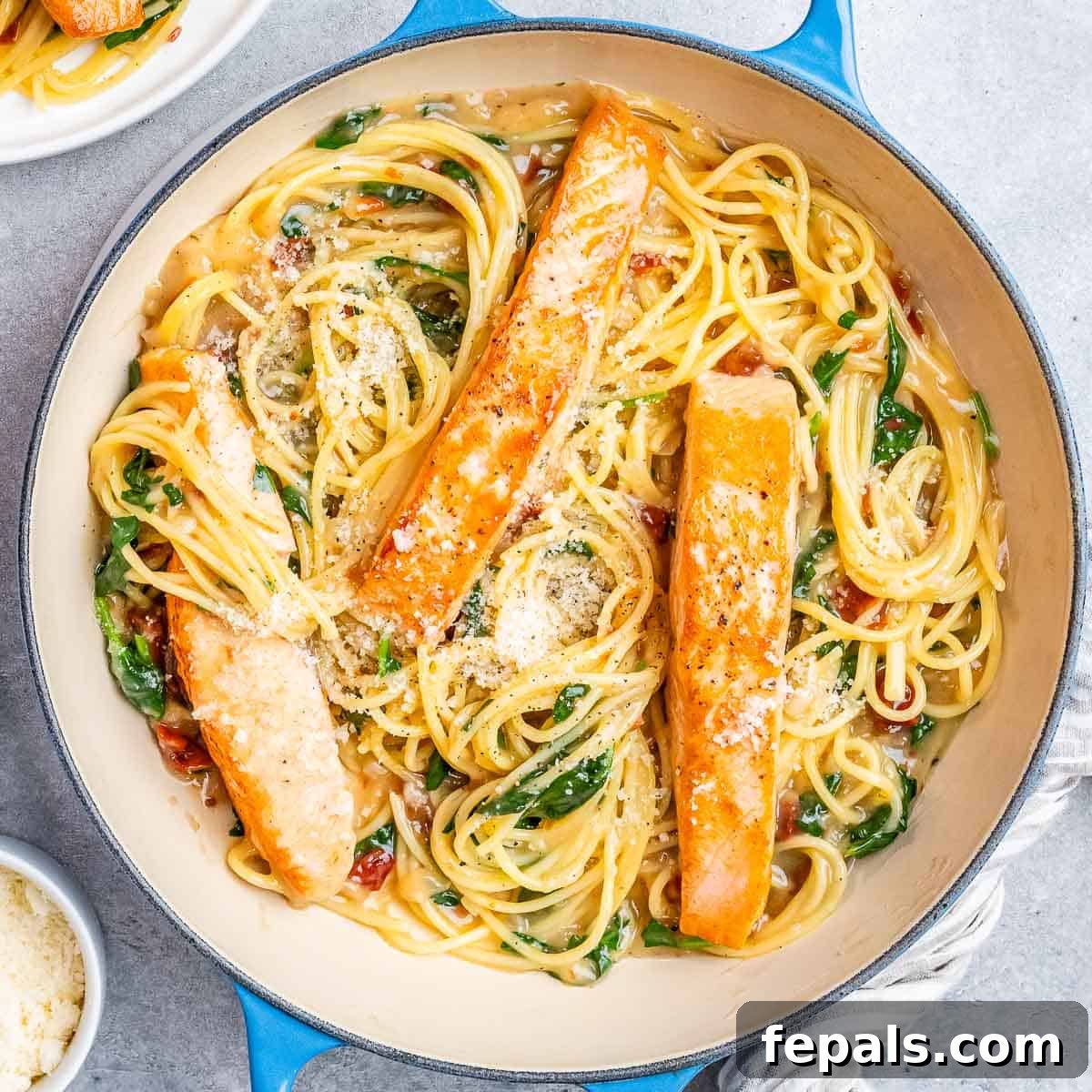
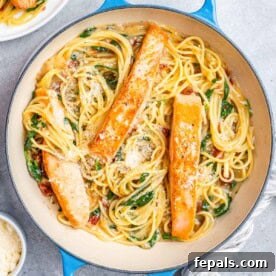
Imagine a dish that effortlessly marries elegance with everyday ease, a culinary masterpiece that promises to delight your senses without demanding hours in the kitchen. This is exactly what you get with our irresistible Creamy Salmon Alfredo Pasta! Featuring succulent, flaky salmon nestled in a rich, garlic-infused Alfredo sauce, perfectly tossed with your favorite pasta and brightened by a handful of fresh greens, it’s a winning combination that’s sure to become a beloved family favorite. As an added bonus, this recipe is designed to be completely gluten-free, making it an ideal choice for those with dietary sensitivities who refuse to compromise on flavor or satisfaction. Get ready to transform your dinner table with this exquisite and surprisingly simple meal!
If you’re a fan of delicious and healthy salmon dishes, you’ll also adore my creamy Tuscan salmon or my uniquely flavored pistachio-crusted salmon. Each offers a distinct taste experience while keeping the focus on wholesome ingredients and incredible flavor.
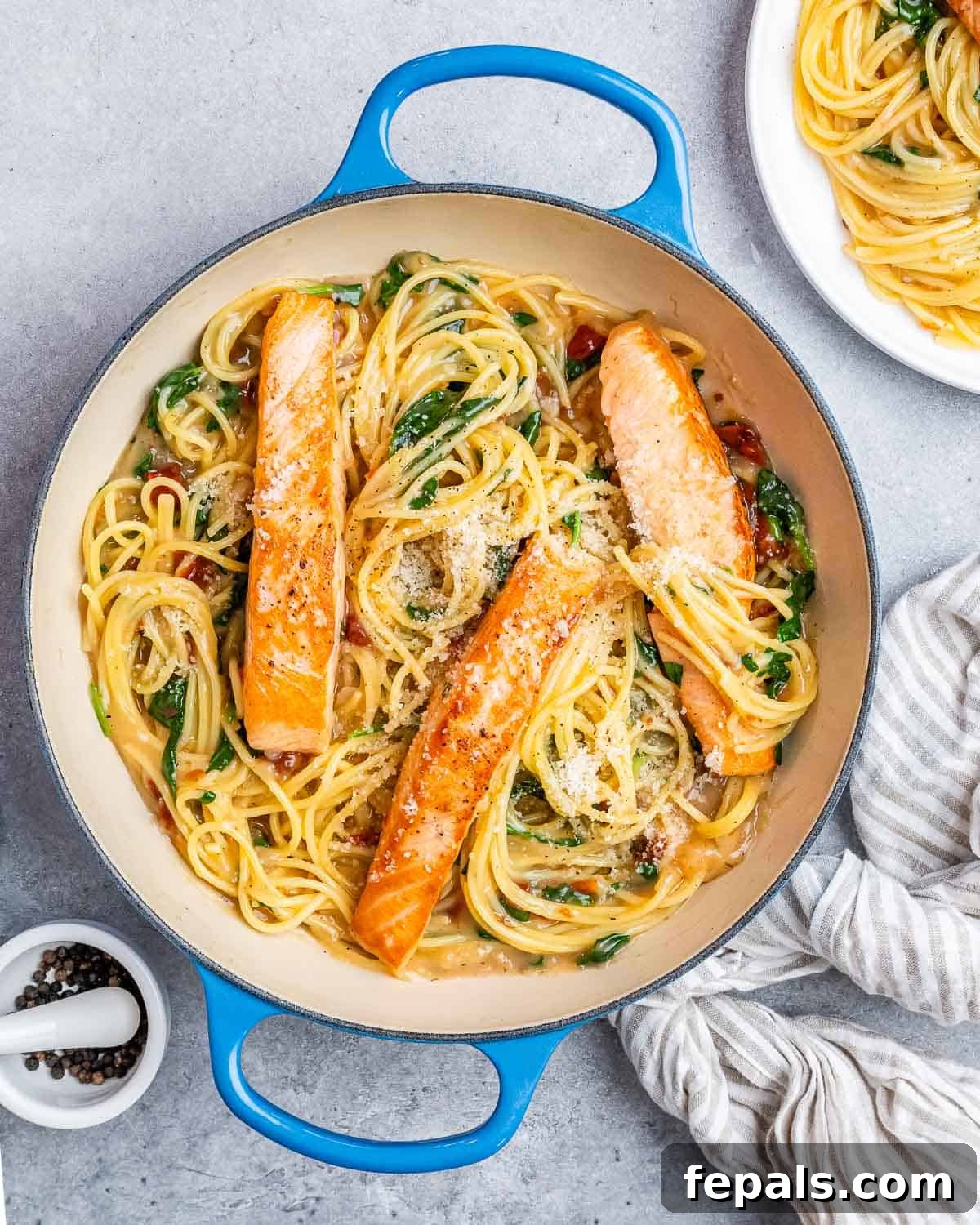
Our Salmon Alfredo Pasta is truly a versatile dish, perfect for everything from a cozy, comforting family dinner on a chilly evening to a sophisticated main course for a special weekend gathering. Whether you’re celebrating a holiday, hosting friends, or simply craving a supremely creamy and satisfying pasta dish, this recipe is guaranteed to impress and leave everyone feeling utterly content. It takes inspiration from my popular Easy Baked Teriyaki Salmon, showcasing how simple techniques can yield extraordinary results. For a complete and balanced meal, consider pairing it with a vibrant side like this Air Fryer Broccoli, which adds a refreshing crunch and even more nutritional value.
Recipe Overview
Essential Ingredients for Salmon Alfredo
This exquisite recipe relies on a selection of simple, fresh, and high-quality ingredients that, when combined, create an unforgettable flavor profile. Each component plays a crucial role in building the rich, creamy, and savory notes of this delightful meal. Below, you’ll find a detailed breakdown of the ingredients required, along with tips on selecting the best options for your dish. Full measurements for each ingredient are conveniently listed further down in the comprehensive recipe card.

- Gluten-Free Pasta: The foundation of any great pasta dish! While we recommend gluten-free options for those with dietary needs, any type of pasta will beautifully absorb the creamy Alfredo sauce. Fettuccine or spaghetti are classic choices, offering ample surface area for the sauce to cling to, but feel free to experiment with other shapes like penne or rigatoni for a different texture. Ensure you cook it al dente for the best mouthfeel.
- Salmon Fillets: The star protein of this dish. Opt for fresh, wild-caught salmon whenever possible for superior flavor and texture, though high-quality frozen salmon works wonderfully too if thawed properly. Each fillet, ideally 3-4 ounces, should be skin-on or off, depending on your preference. If salmon isn’t your favorite, this recipe is incredibly adaptable; feel free to substitute with chicken breast, shrimp, or even firm white fish.
- Milk: The essential base for our luscious Alfredo sauce. While any milk can be used, whole milk or a rich plant-based milk (like full-fat oat or cashew milk) will yield the creamiest, most indulgent sauce. Skim milk can be used for a lighter version, but you might find the sauce slightly less opulent.
- Garlic and Onion: These aromatic powerhouses are non-negotiable! They form the flavor foundation of the Alfredo sauce, infusing it with a depth and warmth that is simply irresistible. Always use fresh garlic, minced finely, and a sweet onion, finely chopped, for the best and most vibrant taste. Do not be tempted to skip these, as they are key to the dish’s complexity.
- Sun-Dried Tomatoes: These concentrated gems add a fantastic sweet-tart, umami burst to the sauce. Sun-dried tomatoes packed in oil generally offer the best, most intense flavor and a tender texture. Make sure to drain them well and chop them before adding. If oil-packed isn’t available, the dry-packed varieties rehydrated in warm water can also work, though they might have a slightly different chew.
- Spinach: A vibrant addition that provides a welcome freshness, a nutritional boost, and a beautiful pop of color. Fresh baby spinach is ideal as it wilts quickly and beautifully into the sauce. Frozen spinach, thawed and thoroughly squeezed of excess water, is a convenient alternative. For a bolder green, consider using finely chopped kale.
- Parmesan Cheese: The final touch of richness and savory depth for the Alfredo sauce. Freshly grated Parmesan cheese will melt more smoothly and offer a superior, more authentic flavor compared to pre-grated varieties, which often contain anti-caking agents. For a tangier note, you could even mix in a bit of Pecorino Romano.
How to Craft Your Perfect Salmon Alfredo
Whipping up this incredibly easy and gloriously creamy Salmon Alfredo is a straightforward process that yields impressive results. Follow these detailed steps to ensure every component of your dish comes together flawlessly, creating a harmonious blend of flavors and textures. For precise measurements and step-by-step instructions, please refer to the comprehensive recipe card provided below.
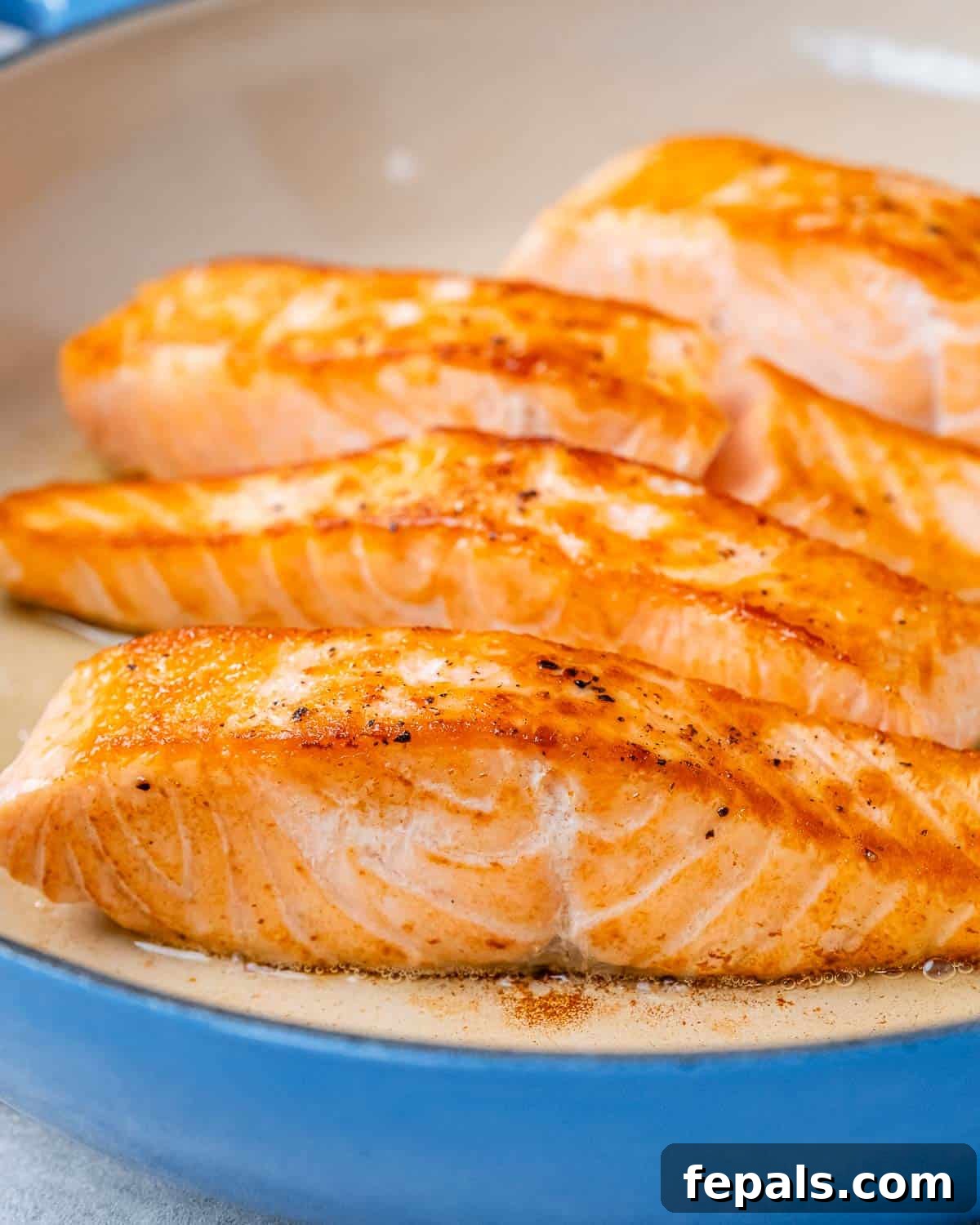
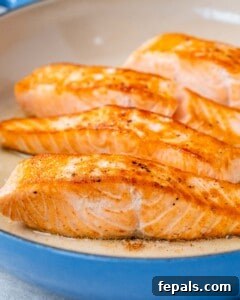
Step 1: Prepare the Pasta and Salmon. Begin by cooking your gluten-free spaghetti or fettuccine in a large pot of generously salted boiling water according to package directions, aiming for an al dente texture. While the pasta cooks, pat your salmon fillets dry with paper towels and season them generously with kosher salt and freshly ground black pepper on both sides. Heat one tablespoon of olive or avocado oil in a large non-stick skillet over medium-high heat. Once hot, place the seasoned salmon fillets, skin-side down if applicable, into the pan and sear for 5-6 minutes per side, until they are golden brown, cooked through, and easily flake with a fork. Be careful not to overcook them to maintain their tender texture. Remove the salmon from the skillet, cover loosely with foil to keep warm, and set aside.
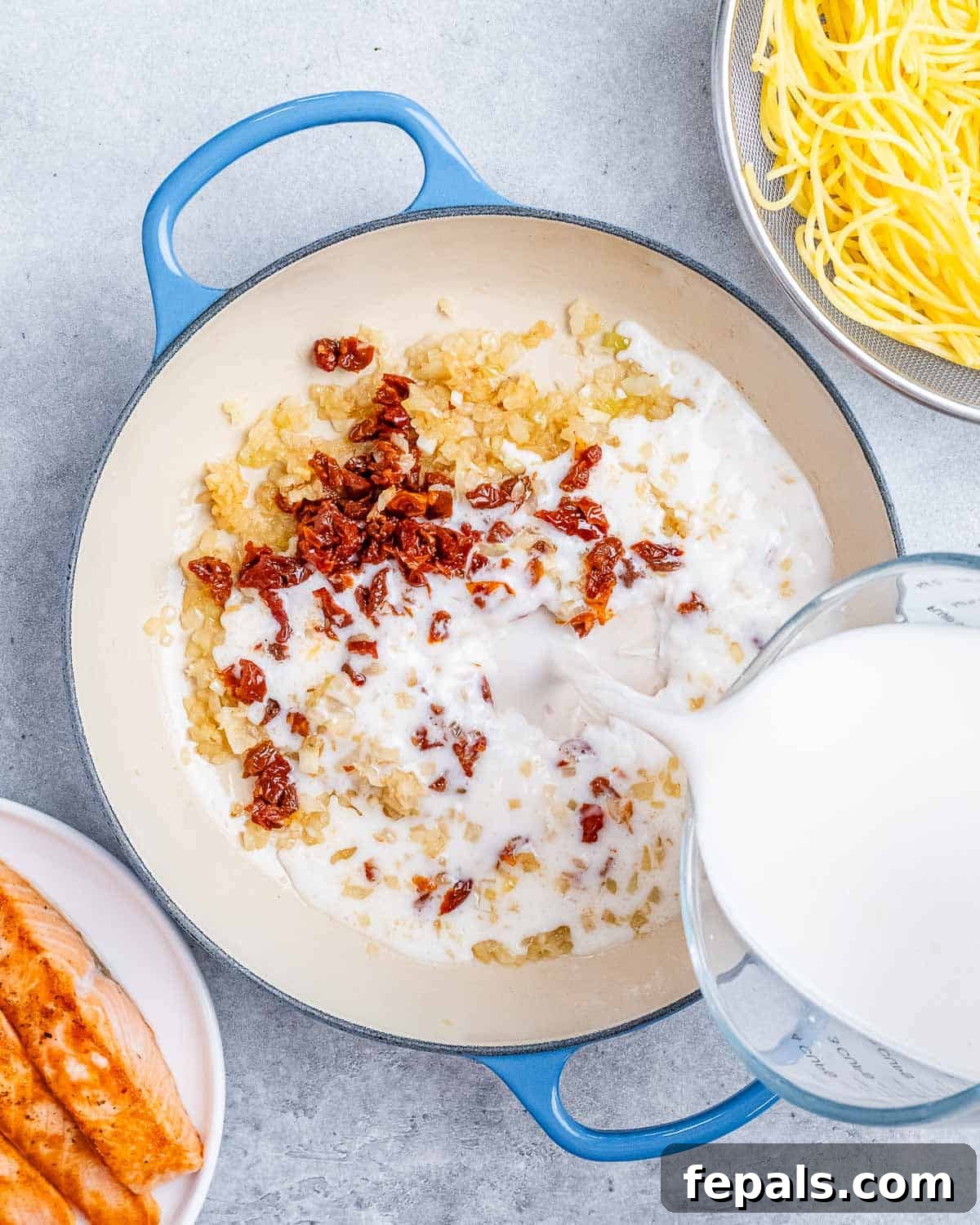
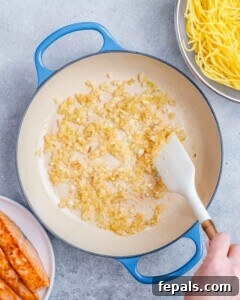
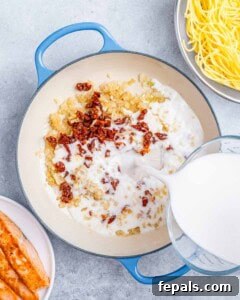
Step 2: Build the Flavor Base. In the same skillet where you cooked the salmon (no need to clean it, those browned bits add flavor!), reduce the heat to medium. Add the finely minced garlic and chopped sweet onion, sautéing for 4-5 minutes until they become fragrant and translucent, stirring frequently to prevent burning. Next, stir in the drained and chopped sun-dried tomatoes, cooking for another minute to release their rich flavors. In a separate small bowl, whisk together the cornstarch with about 1/4 cup of your chosen milk until a smooth, lump-free slurry forms. Gradually pour this cornstarch-milk mixture, along with the remaining milk, into the skillet, stirring constantly to combine.
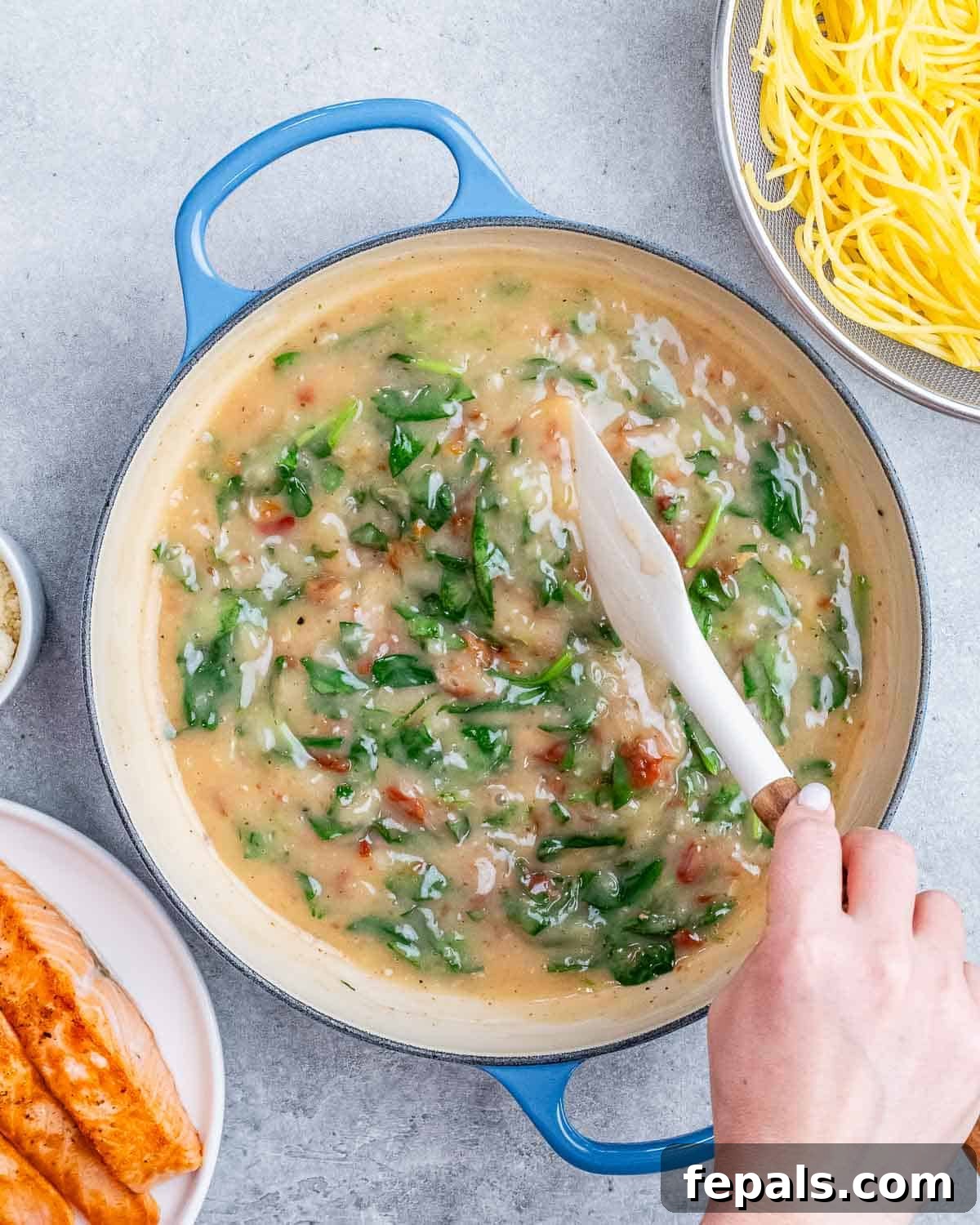
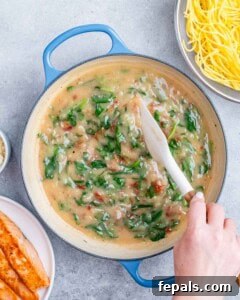
Step 3: Create the Creamy Alfredo Sauce. Allow the sauce to gently simmer for 6-8 minutes, stirring frequently to prevent sticking and encourage even thickening. You’ll know it’s ready when it coats the back of a spatula or spoon. Season the sauce with additional kosher salt and freshly ground black pepper to taste. Once the sauce has reached your desired consistency, gently stir in the fresh baby spinach until it just begins to wilt, and then fold in the finely grated Parmesan cheese. Continue stirring until the cheese is fully melted and incorporated, creating a velvety smooth and incredibly flavorful Alfredo sauce. Resist the urge to boil the sauce rapidly, as this can cause it to break.
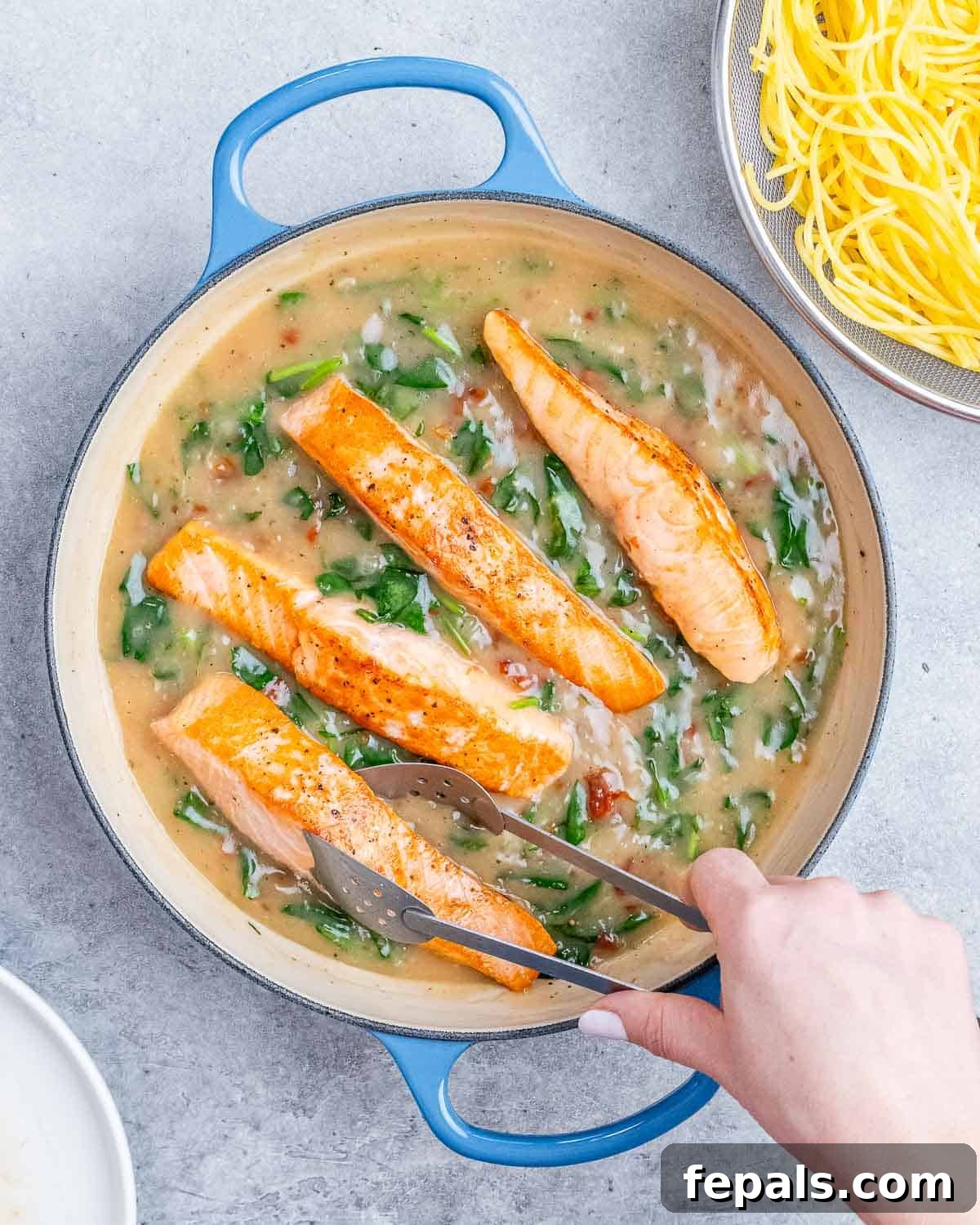
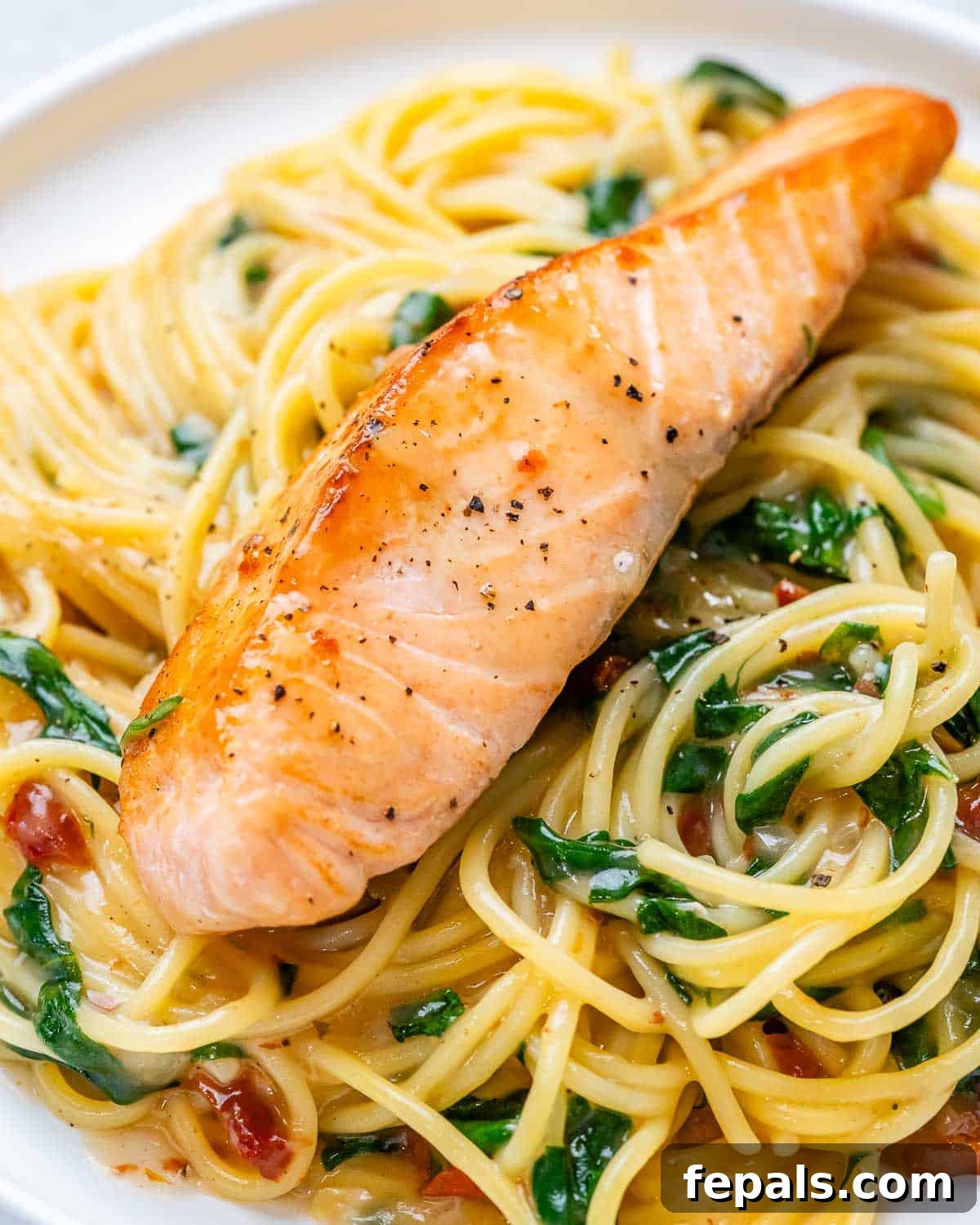
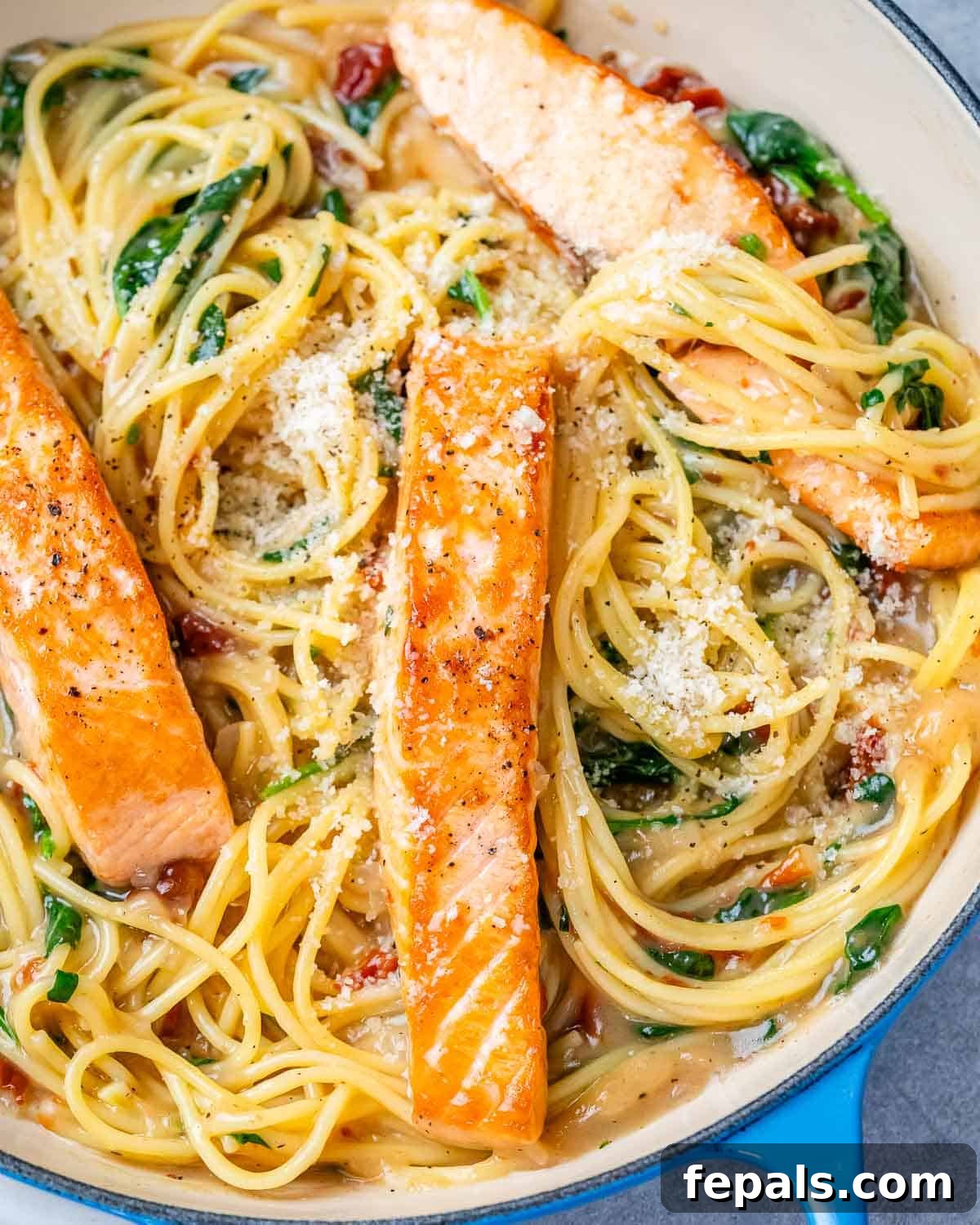
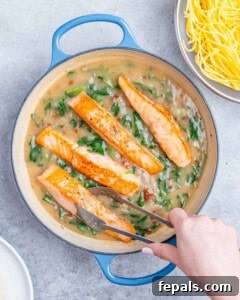
Step 4: Combine and Serve. Carefully add the cooked salmon fillets back into the creamy Alfredo sauce, allowing them to warm through for just a minute or two. You can either gently flake the salmon into the sauce and toss it with the cooked pasta, or keep the fillets whole and place them artistically on top of a bed of pasta coated in the sauce. Serve immediately over your perfectly cooked gluten-free pasta. For an extra touch of freshness and elegance, garnish with fresh chopped parsley or a few lemon slices. Enjoy this comforting and sophisticated meal!
Chef’s Tips for Perfect Salmon Alfredo
Achieving the perfect creamy Salmon Alfredo is easier than you think with a few expert tips. These insights from my kitchen will help you elevate your dish from good to absolutely outstanding, ensuring every bite is rich, flavorful, and perfectly cooked.
- Ensure the Sauce Thickens Perfectly: The key to a luxurious Alfredo sauce is its creamy consistency. As you simmer the milk mixture with the cornstarch slurry, stir constantly and patiently. This prevents lumps from forming and ensures the sauce thickens evenly to a luscious texture that beautifully coats the pasta. If the sauce seems too thin, continue to gently simmer and stir; if it becomes too thick, a splash of warm milk or reserved pasta water will thin it out.
- Choose Your Salmon Wisely – Fresh or Frozen: Both fresh and high-quality frozen salmon fillets can yield excellent results. Fresh salmon often offers a slightly more pronounced flavor and firmer texture, especially if it’s wild-caught. If using frozen salmon, ensure it’s fully thawed in the refrigerator overnight or under cold running water, then pat it thoroughly dry before searing to achieve that desired golden crust.
- Avoid Overcooking the Salmon: Salmon cooks quickly, and overcooking can lead to a dry, tough texture. Aim for perfectly golden-brown fillets with a moist, flaky interior. A good indicator is when the internal temperature reaches 145°F (63°C). Remember, salmon continues to cook slightly even after it’s removed from the heat, so it’s better to undercook it slightly and let residual heat finish the job.
- Don’t Skip the Aromatics: Freshly minced garlic and finely chopped onion are the backbone of this Alfredo sauce. They provide a depth of flavor that dried or powdered alternatives simply cannot replicate. Sauté them gently until translucent and fragrant to build a robust flavor base for your sauce.
- Embrace Pasta Water: Always reserve about a cup of your starchy pasta water before draining. This liquid gold is incredibly useful! If your Alfredo sauce becomes too thick or needs a little extra liquid to cling to the pasta, a spoonful or two of pasta water can emulsify the sauce beautifully, adding richness and helping it adhere perfectly.
- Garnish for Freshness: A sprinkle of fresh chopped parsley or a squeeze of lemon juice just before serving can brighten the entire dish. The acidity of lemon cuts through the richness of the Alfredo sauce, creating a balanced and incredibly appealing flavor profile.
Creative Variations and Smart Substitutions
One of the beauties of a classic like Salmon Alfredo is its incredible adaptability. Whether you’re looking to switch up the protein, boost the veggie content, or cater to different dietary preferences, this recipe offers endless possibilities for customization. Here are a few ways to make this delicious dish uniquely your own:
- Protein Swaps for Everyone: While salmon is the star, feel free to substitute it with other proteins. Succulent seared chicken breast (sliced or shredded), perfectly cooked shrimp, or even pan-fried scallops make fantastic alternatives. Adjust cooking times as needed for your chosen protein to ensure it’s cooked through but remains tender.
- Boost the Veggie Factor: Easily add more vegetables to enhance flavor, texture, and nutritional value. Sautéed mushrooms (cremini or button) pair wonderfully with the creamy sauce, as does blanched or roasted broccoli florets. Asparagus, peas, or zucchini can also be folded in for a fresh touch. Add firmer vegetables like broccoli early in the sautéing process, and softer ones like peas or blanched asparagus towards the end.
- Add a Zesty Kick or a Touch of Heat: Elevate the flavor profile with a squeeze of fresh lemon juice at the end, or a sprinkle of lemon zest, to brighten the richness of the sauce. For those who enjoy a little warmth, a pinch of red pepper flakes added with the garlic and onion will introduce a subtle, pleasant heat without overpowering the dish.
- Dairy-Free Alternatives: To make this recipe completely dairy-free, simply swap out traditional milk for a full-fat unsweetened plant-based milk like oat milk, cashew milk, or almond milk. For the Parmesan, use a high-quality dairy-free Parmesan alternative that melts well, or nutritional yeast for a cheesy, umami flavor.
- Low-Carb or Keto Options: Transform this into a low-carb or keto-friendly meal by replacing traditional pasta with zucchini noodles (zoodles), spaghetti squash, or even cauliflower rice. These alternatives still provide a satisfying base for the creamy salmon and sauce, allowing you to enjoy all the flavors without the carbs.
- Sun-Dried Tomato Substitutions: If you don’t have sun-dried tomatoes on hand, don’t fret! Roasted red peppers (from a jar, drained and chopped) offer a similar sweet and smoky flavor profile. Alternatively, a tablespoon of tomato paste, cooked for a minute with the garlic and onion, can add a concentrated umami depth.
- Herb Variations: While parsley is a classic garnish, consider experimenting with other fresh herbs. Fresh dill pairs exceptionally well with salmon, adding a bright, slightly anise-like note. Chives or a hint of fresh basil can also contribute to a wonderfully aromatic dish.
Make Ahead and Storage Solutions
This Creamy Salmon Alfredo Pasta is undeniably best enjoyed fresh, right off the stove, when the salmon is tender, the sauce is velvety, and the pasta is perfectly al dente. However, life often calls for a little planning, and you can certainly prepare components of this dish in advance to make weeknight dinners even smoother. Here’s how to manage make-ahead and storage for your Salmon Alfredo:
Making Components Ahead:
- Cook the Pasta in Advance: You can cook your gluten-free pasta up to a day in advance. Drain it, toss lightly with a small amount of olive oil to prevent sticking, and store it in an airtight container in the refrigerator. When ready to use, simply refresh it by briefly submerging it in boiling water or a quick sauté with a splash of water.
- Prepare the Salmon Separately: Cook the salmon fillets as instructed and allow them to cool completely. Store them in an airtight container in the refrigerator for up to 2 days. This allows you to quickly assemble the dish when it’s mealtime.
- Pre-Chop Vegetables: Mince your garlic, chop your onion, and prepare your sun-dried tomatoes and spinach ahead of time. Store them in separate airtight containers in the refrigerator for up to 2-3 days, ready to be added to the pan.
Storing Leftovers:
Store any leftover Salmon Alfredo in an airtight container in the refrigerator for up to 2 days. It’s important to consume it relatively quickly because seafood and creamy sauces are best enjoyed fresh to maintain their quality and safety.
Reheating Leftovers:
When reheating, the Alfredo sauce might thicken considerably. To restore its creamy consistency, reheat gently on the stovetop over low heat, stirring frequently. Add a tablespoon or two of milk (or even a splash of water or vegetable broth) as it warms to loosen up the sauce and bring it back to its original velvety texture. Avoid high heat, which can cause the sauce to separate or become oily. You can also reheat individual portions in the microwave for 30-60 seconds, stirring halfway through and adding a splash of liquid if needed. Be mindful not to overheat the salmon, as it can dry out quickly.
Freezing is Not Recommended:
I strongly advise against freezing this Salmon Alfredo. Creamy, dairy-based sauces like Alfredo tend to separate and develop a grainy, unappealing texture upon thawing and reheating. The salmon, too, can become dry and lose its delicate texture when frozen and reheated. This dish truly shines when enjoyed fresh, or as a quick leftover within a couple of days.
Frequently Asked Questions About Salmon Alfredo
Absolutely! This recipe is incredibly versatile when it comes to pasta. Feel free to use any type of regular pasta you prefer – fettuccine, spaghetti, linguine, or even penne all work beautifully with the creamy Alfredo sauce. For a healthier twist, consider high-protein pasta options available on the market, which make a fantastic and satisfying alternative.
To ensure your leftovers remain creamy, reheat them gently on the stovetop over low heat. Add a little extra milk (or even a splash of water or vegetable broth) while stirring frequently to help loosen the sauce and prevent it from drying out or separating. Alternatively, you can reheat in your microwave in short bursts of 30-60 seconds, stirring between intervals, until thoroughly warmed.
Certainly! Adding more vegetables is a fantastic way to boost the flavor, texture, and nutritional content of your Salmon Alfredo. Popular choices include sliced mushrooms, tender green beans, steamed or roasted broccoli florets, or even diced zucchini. Sauté firmer vegetables like broccoli earlier with the aromatics, and softer ones like zucchini or pre-cooked green beans closer to the end.
If salmon isn’t available or you’d like to try a different protein, this Alfredo base is very adaptable. Chicken breast, cut into bite-sized pieces or thinly sliced, or succulent shrimp are excellent substitutes. Cook the alternative protein separately before incorporating it into the finished Alfredo sauce, ensuring it’s cooked through and tender.
For a thicker sauce, you can let it simmer for a few more minutes, stirring constantly, until it reduces to your desired consistency. If it becomes too thick, simply whisk in a tablespoon or two of warm milk or reserved pasta water until it thins out to perfection. The cornstarch in the recipe helps stabilize the thickness, so it’s quite forgiving.
While traditionally mild, you can easily add a touch of heat! Stir in a pinch of red pepper flakes with your garlic and onion for a subtle warmth. For more pronounced spice, increase the amount of red pepper flakes to your liking. You could also finish with a drizzle of chili oil if you enjoy a different kind of kick.
Discover More Delectable Salmon Recipes
If you’ve fallen in love with the versatility and flavor of salmon, you’re in for a treat! This incredible fish lends itself to a multitude of culinary creations, from quick weeknight meals to impressive dishes for entertaining. Explore some of my other favorite salmon recipes, each offering a unique twist and guaranteed to become a regular in your rotation:
- Easy Salmon Patties: A budget-friendly and delicious way to enjoy salmon, perfect for sandwiches or salads.
- Miso Glazed Salmon: An umami-rich and slightly sweet glaze that transforms salmon into an Asian-inspired delight.
- Baked Pesto Salmon: Simple yet incredibly flavorful, with vibrant pesto baked right onto the fish.
- Maple Pecan Salmon: A perfect balance of sweet and nutty, creating a caramelized crust.
- Creamy Coconut Lime Salmon: A tropical-inspired dish with a bright, tangy, and rich sauce.
- Blackened Salmon: Bold, spicy, and perfectly seared, a fantastic option for a flavorful weeknight dinner.
Pin this now to find it later!
Pin It
You May Also Enjoy These Creamy Pasta Dishes
If the rich and comforting flavors of Alfredo pasta are calling your name, be sure to explore these other fantastic creamy pasta recipes. Each offers a unique spin on the beloved sauce, incorporating different proteins and ingredients to satisfy any craving:
- Chicken Fettuccine Alfredo: The classic comfort food, featuring tender chicken in a luscious Alfredo sauce.
- Easy Shrimp Alfredo: A quick and elegant dish with succulent shrimp and a creamy sauce.
- Southwest Chicken Alfredo: A vibrant fusion of creamy Alfredo with a zesty, smoky Southwest kick.
I genuinely hope you love this Creamy Salmon Alfredo Pasta as much as I do! If you give this recipe a try and find it to your liking, please consider leaving me some feedback and a rating in the comment section below. Your thoughts and experiences are incredibly valuable, and I’d love to hear from you. Don’t forget to share this delicious recipe with your friends and family – spread the joy of a fantastic homemade meal!
FOLLOW me on FACEBOOK | INSTAGRAM | PINTEREST | TWITTER for all of my latest blog posts and recipes. Let’s stay connected and keep cooking delicious, healthy meals together!
Salmon Alfredo
Ingredients
- 10 ounces gluten-free spaghetti or fettuccine pasta
- Kosher salt and pepper, to taste
- 1 tablespoon olive oil, or avocado oil
- 4 salmon fillets, 3-4 oz each
- 3 tablespoons cornstarch
- 2 cups milk of choice
- 6 cloves garlic, minced
- 1 small sweet onion, finely chopped
- 1/4 cup sun-dried tomato in oil, drained of oil and chopped
- 3 cups baby spinach, coarsely chopped
- 1/2 cup finely grated Parmesan
- Fresh chopped parsley, Optional, or lemon slices
Instructions
-
Boil the 10 ounces gluten-free spaghetti or fettuccine pasta in salted water according to the package instructions. Once cooked to al dente, drain and set aside.
-
Heat the 1 tablespoon olive oil in a non-stick skillet over medium heat. Season the 4 salmon fillets with Kosher salt and pepper and cook the salmon for 5-6 minutes per side, until golden. Set aside and cover to keep warm.

-
Meanwhile, in a small bowl, combine the 3 tablespoons cornstarch with 1/4 cup of the 2 cups milk of choice until smooth with no lumps. Stir this mixture into the rest of the milk.
-
To the same preheated pan where you cooked the salmon, add the 6 cloves garlic (minced) and 1 small sweet onion (diced). Saute for 4-5 minutes, stirring frequently.
-
Add the 1/4 cup sun-dried tomato in oil and the milk mixture. Toss to combine.
-
Allow the sauce to cook for 6-8 minutes, stirring frequently, until thickened to coat the back of the spatula. Season with salt and pepper and stir in the 3 cups baby spinach and 1/2 cup finely grated Parmesan.
-
Add the salmon into the sauce and allow it to bubble just for a minute to heat it up, before removing it from the stove. (see note)
-
Serve it over cooked pasta, garnish with Fresh chopped parsley, and enjoy!
Notes
- Note: In step 7, before adding the salmon, you can toss the pasta in with the sauce first, then top with the salmon fillets. Cover it for 1-2 minutes and set it on low just for the salmon to heat up.
- Make sure the sauce thickens: Stir constantly to avoid lumps and get that creamy texture.
- Use fresh or frozen salmon: Either works, but fresh will give the dish an extra depth of flavor.
- Don’t overcook the salmon: It should be perfectly golden and moist.
Nutrition
Calories: 425kcal
Carbohydrates: 17g
Protein: 43g
Fat: 20g
Saturated Fat: 5g
Polyunsaturated Fat: 5g
Monounsaturated Fat: 8g
Cholesterol: 110mg
Sodium: 958mg
Potassium: 1295mg
Fiber: 1g
Sugar: 6g
Vitamin A: 2606IU
Vitamin C: 15mg
Calcium: 314mg
Iron: 2mg
Nutrition information is automatically calculated, so should only be used as an approximation.