
Unlock the vibrant, juicy secret hidden within one of nature’s most beautiful fruits! Learning how to cut a pomegranate doesn’t have to be a messy ordeal. With our simple, step-by-step guide, you’ll discover the easiest way to deseed this magnificent fruit, allowing you to effortlessly incorporate its ruby-red arils into your favorite dishes and snacks. Forget about stained countertops and wasted fruit – all you need is a sharp knife, a bowl of water, and a sturdy cutting board to enjoy the sweet-tart explosion of fresh pomegranate.
If you’ve been hesitant to bring pomegranates into your kitchen due to the perceived difficulty of preparing them, this comprehensive guide is for you. We’ll walk you through every step to efficiently open and deseed a pomegranate, ensuring you can enjoy its delightful, jewel-like arils with minimal effort. These tiny, juicy pearls are not only a feast for the eyes but also a versatile ingredient, perfect for snacking straight from the bowl or transforming into a vibrant, refreshing juice with a blender.
Mastering the art of cutting fresh pomegranates for their seeds is a fantastic addition to your culinary skills. The sheer versatility of pomegranates makes them a kitchen staple for many. The anticipation of opening a pomegranate to reveal the treasure trove of colorful seeds nestled within its chambers is truly exciting. It’s a simple skill that yields incredibly rewarding and delicious results.
Why Pomegranates? Choosing, Eating, and Their Health Benefits
Pomegranates are not only a treat for your taste buds but also a powerhouse of nutrition. Often referred to as “superfruits,” their distinct sweet and tart flavor makes them incredibly appealing. One common question newcomers have is: Can you eat pomegranate seeds? Absolutely! The entire aril, including the tiny white seed inside, is completely edible and provides a wonderful fibrous crunch. You can chew and swallow them whole, or if you prefer, you can chew to extract the juice and then discreetly discard the inner seed. Both methods are perfectly fine and widely practiced.
Fresh pomegranate arils are exceptionally versatile, lending themselves beautifully to an extensive array of dishes and recipes. Their unique flavor profile and vibrant color make them a valuable addition in countless culinary scenarios. Before you dive into cutting your pomegranate, it’s helpful to know how to select a good one. Look for pomegranates that are heavy for their size, indicating a juicier fruit. The skin should be taut, shiny, and free of soft spots or bruises, with a deep, uniform color (often ruby red, but some varieties can be pinkish or yellow-red). A slightly flattened, hexagonal shape is also a good indicator of ripeness.
The Abundant Health Benefits of Pomegranates
Beyond their delightful taste, pomegranates are celebrated for their impressive nutritional content. These juicy arils are rich in antioxidants, particularly punicalagins, which are responsible for more than half of the fruit’s antioxidant activity. They are also packed with Vitamin C, Vitamin K, folate, and potassium, making them excellent for overall health. The fiber content supports digestive health, while the anti-inflammatory properties can contribute to heart health and may help reduce the risk of certain chronic diseases. Incorporating pomegranates into your diet is a delicious way to boost your intake of essential vitamins and powerful plant compounds.
Creative Ways to Use Pomegranate Seeds (Arils)
The culinary possibilities with fresh pomegranate arils are truly endless. Their juicy, tart, and subtly sweet notes add a burst of flavor and a beautiful pop of color to almost any meal or snack. Here are some fantastic ideas for incorporating fresh pomegranate seeds into your daily diet:
- Elevate Your Salads: Sprinkle these vibrant jewels over your favorite green salads for a refreshing crunch and tangy sweetness. They pair wonderfully with a spinach apple pecan salad, a crisp watermelon feta salad, or even a hearty Brussels sprouts salad.
- Homemade Pomegranate Juice: Easily transform a cup of fresh seeds into your very own pomegranate juice. Simply blend the arils with a splash of water, then strain the mixture through a fine-mesh sieve or cheesecloth for a pure, invigorating drink.
- Savory Enhancements and Garnishes: Add a surprising twist to your dips and spreads. Pomegranate arils can bring a delightful textural and flavor contrast to guacamole or used as an elegant garnish for dishes like baba ganoush, enhancing both visual appeal and taste.
- Brighten Breakfast Bowls: Top your creamy oatmeal, Greek yogurt, or smoothie bowls with pomegranate seeds. Their vibrant color and fresh taste will instantly awaken your morning meal, creating a delightful contrast to the rich base, much like in this Greek Yogurt overnight oatmeal.
- Sweet & Savory Main Courses: Introduce a sophisticated balance to warm, savory main courses. A scattering of sweet pomegranate arils over roasted chicken, grilled beef, or baked fish can create an exquisite interplay of flavors, adding a gourmet touch to your dinner.
- Power-Packed Smoothies: Blend fresh pomegranate seeds directly into your favorite smoothies. They will contribute a lovely tartness and a boost of nutrients, complementing all types of sweet or green smoothie creations.
- Dessert Decorations: Use them as a garnish on cakes, tarts, parfaits, or fruit salads for an elegant and flavorful finish.
- Festive Drinks: Add to sparkling water, cocktails, or mocktails for a beautiful and flavorful presentation.
The Mess-Free Method: How to Peel and Cut a Pomegranate
Preparing a pomegranate can seem daunting, but with the right technique, it’s surprisingly simple and mess-free, especially when you use the water method. This technique helps contain the juice and makes separating the arils much easier. Here’s how to do it:
- Prepare Your Workspace: Begin by grabbing a large bowl and filling it about halfway with cool water. Set it aside for the deseeding process. Place your pomegranate on a clean, sturdy wooden cutting board.
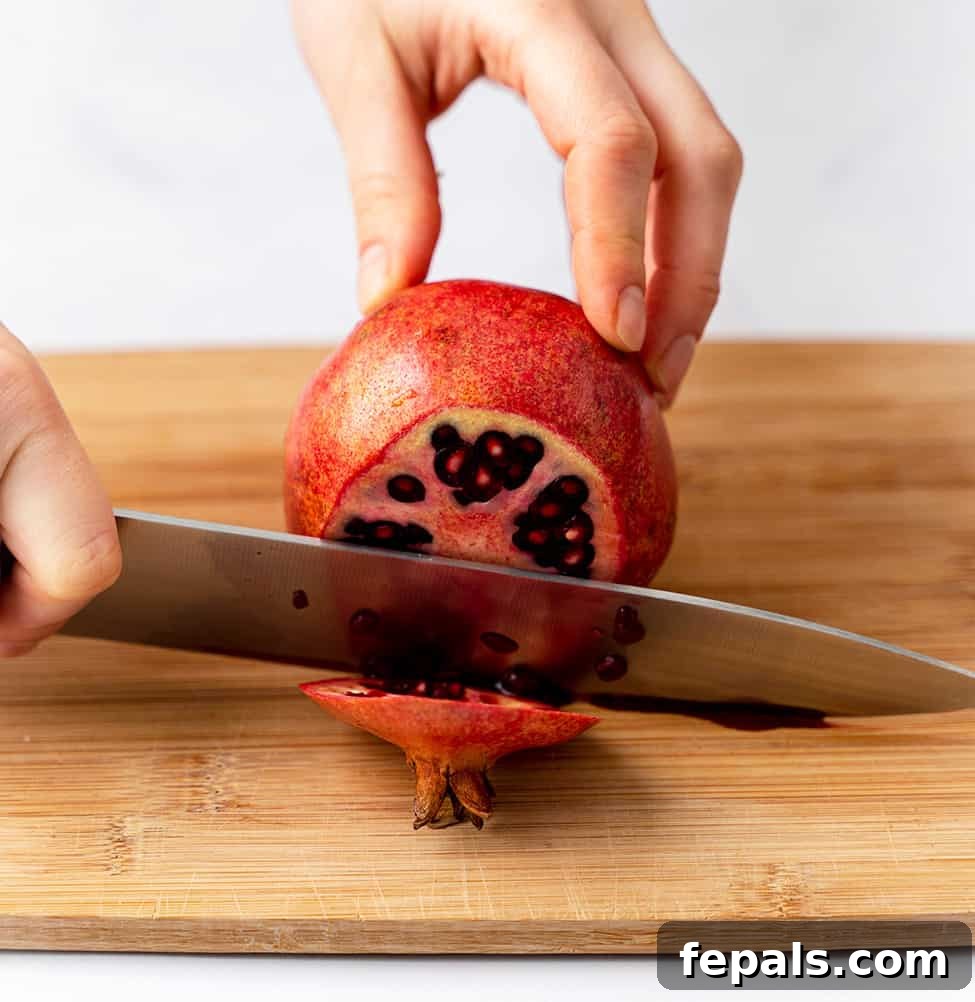
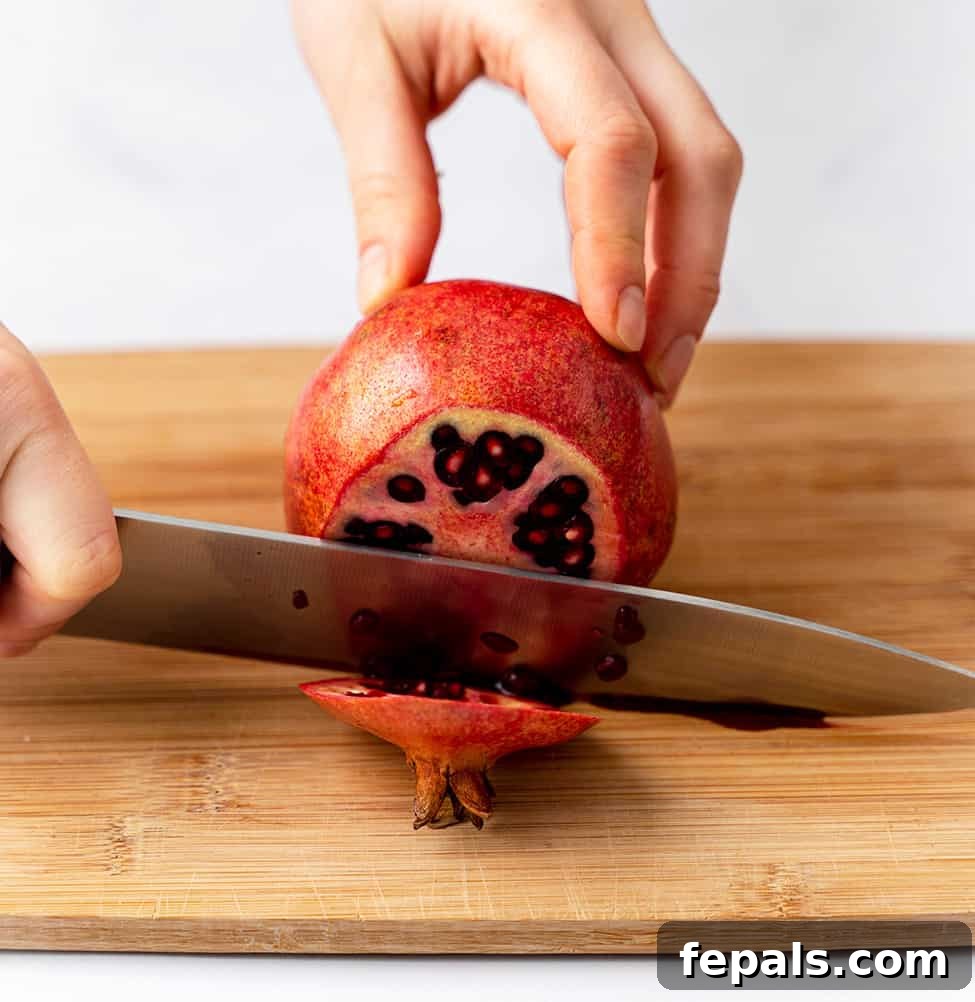
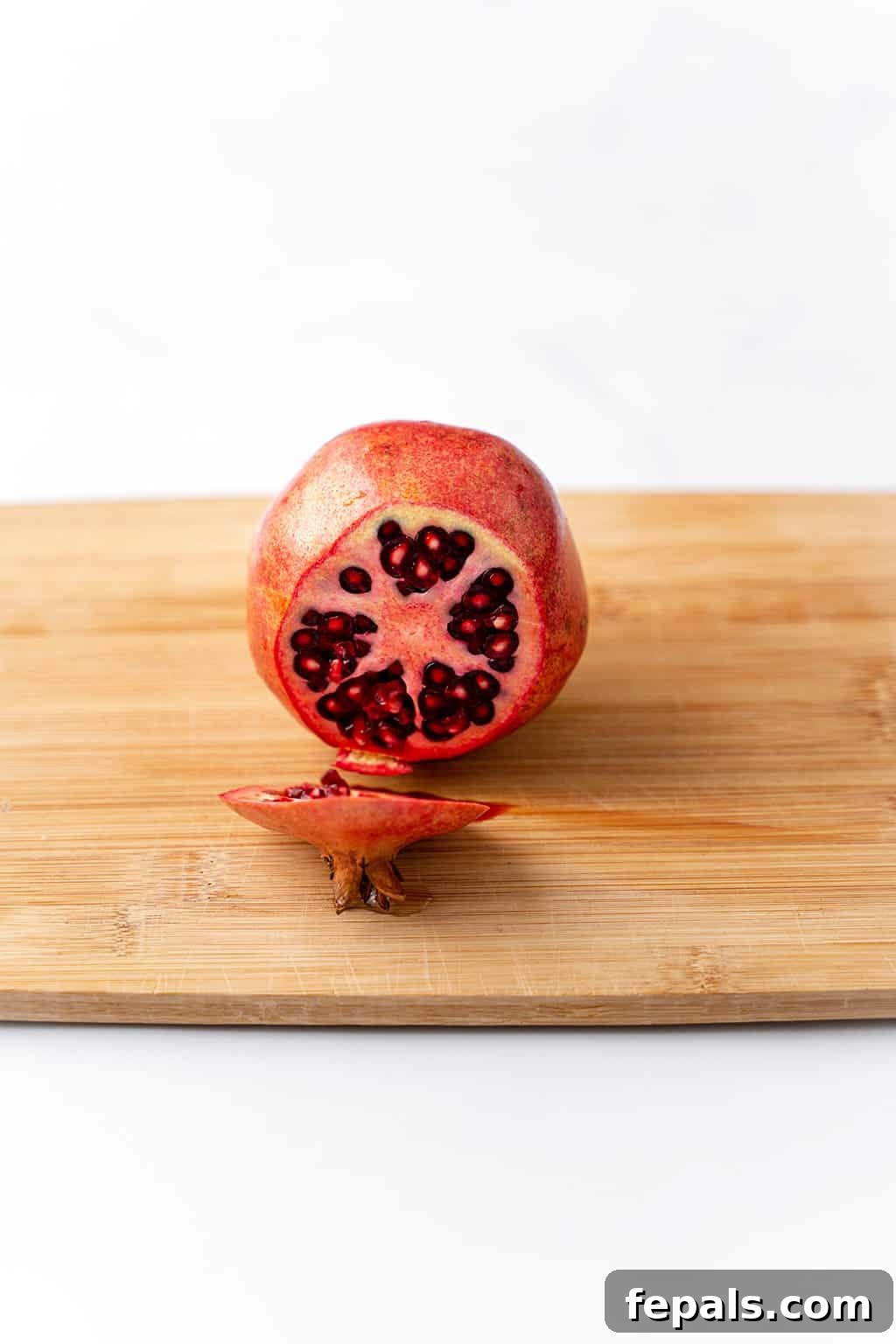
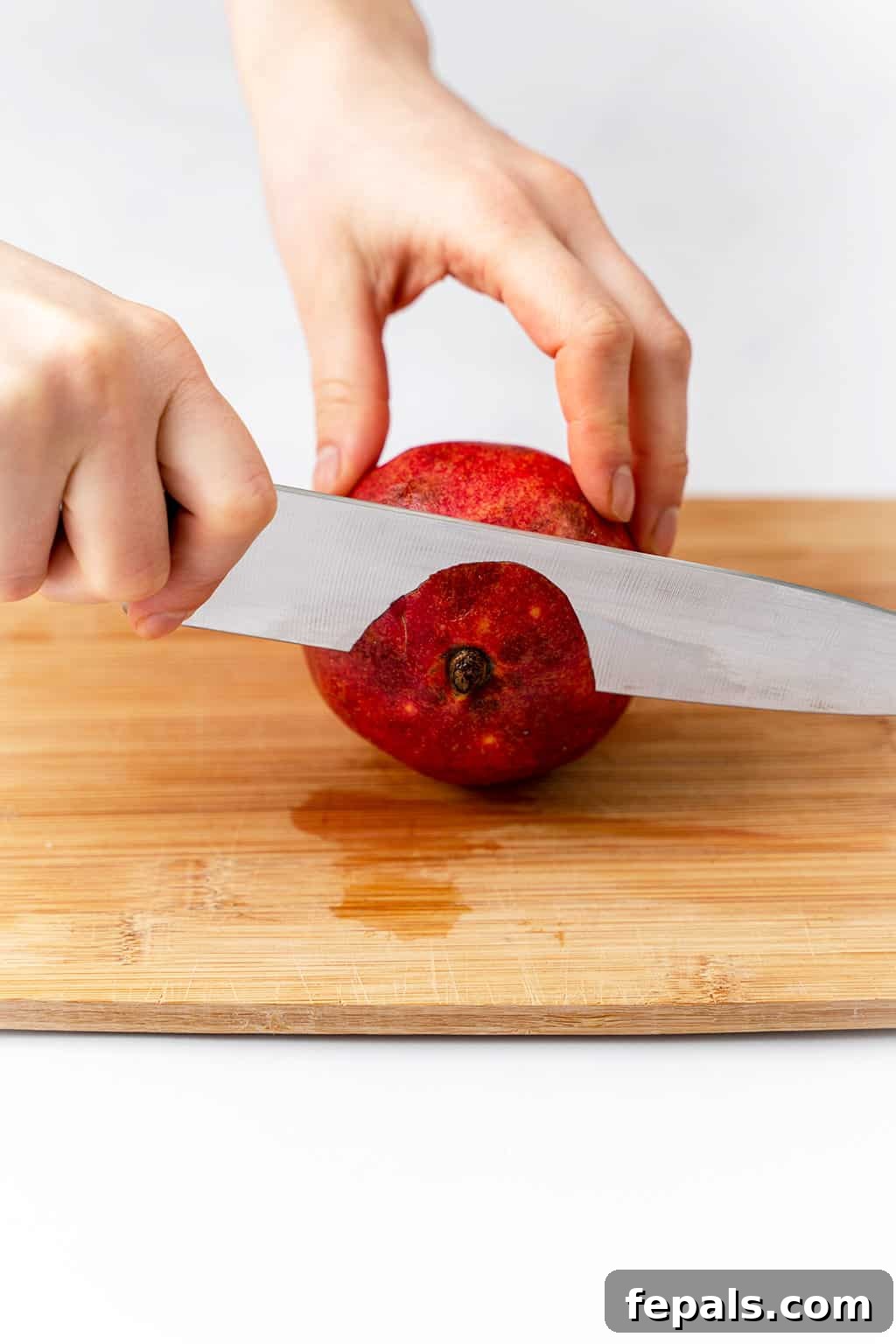
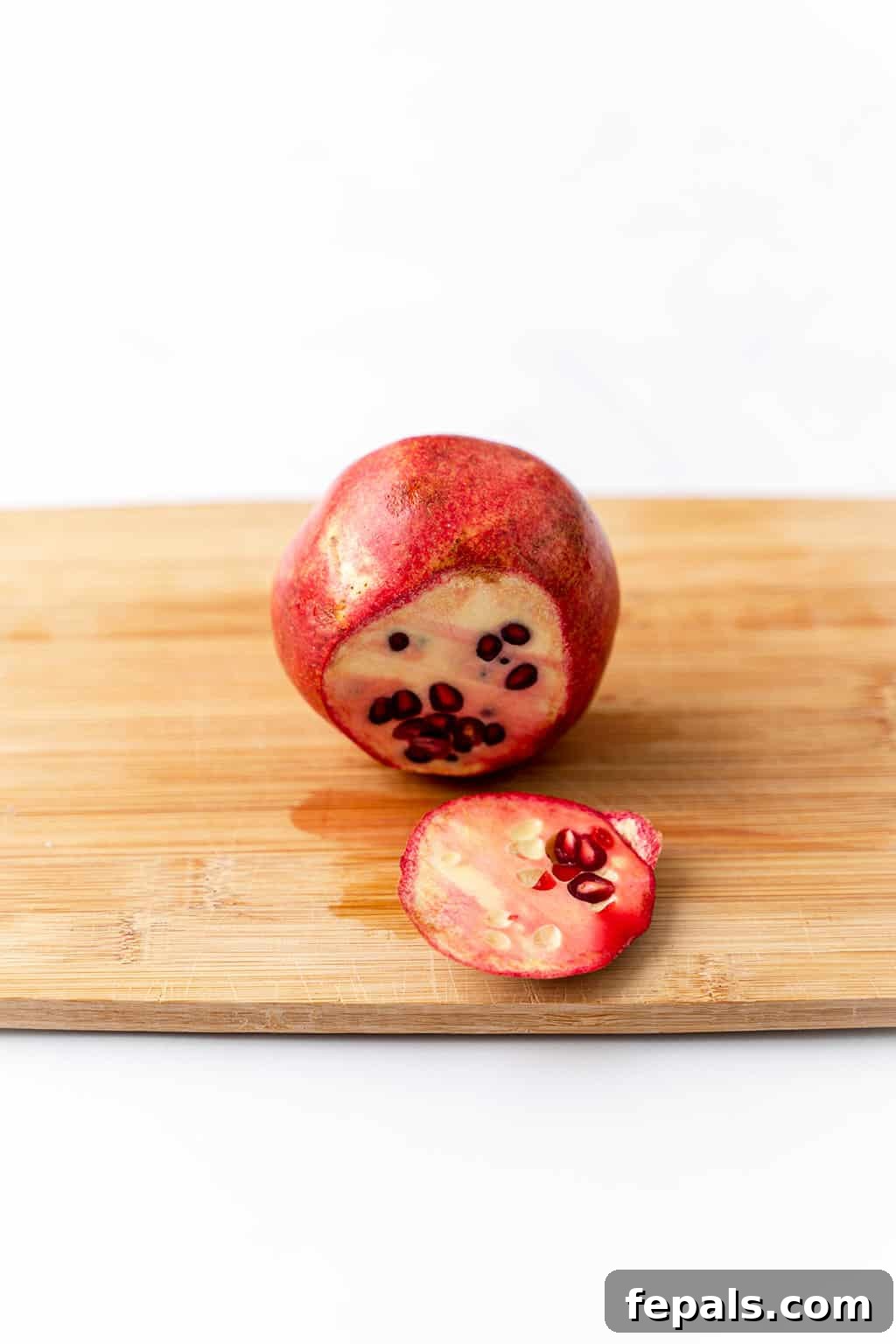
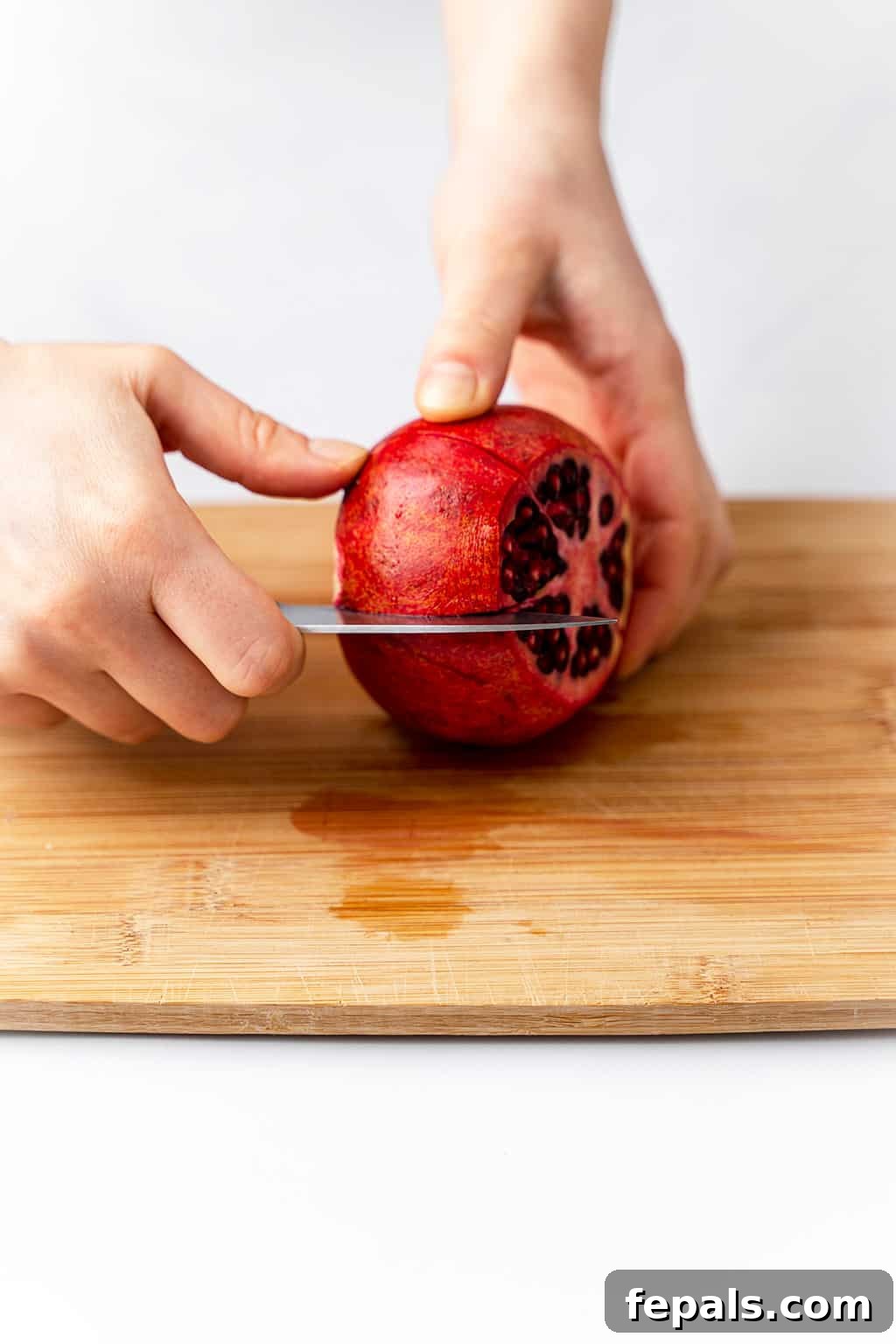
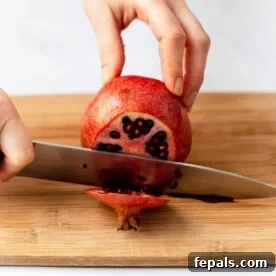
- Top and Tail the Pomegranate: Using a sharp knife, carefully slice off approximately ¼ to ½ inch from the crown (top) and the stem end (bottom) of the pomegranate. You’re aiming to remove just enough of the peel to expose the white membrane and a glimpse of the arils inside, but not so much that you cut deeply into the fruit itself.
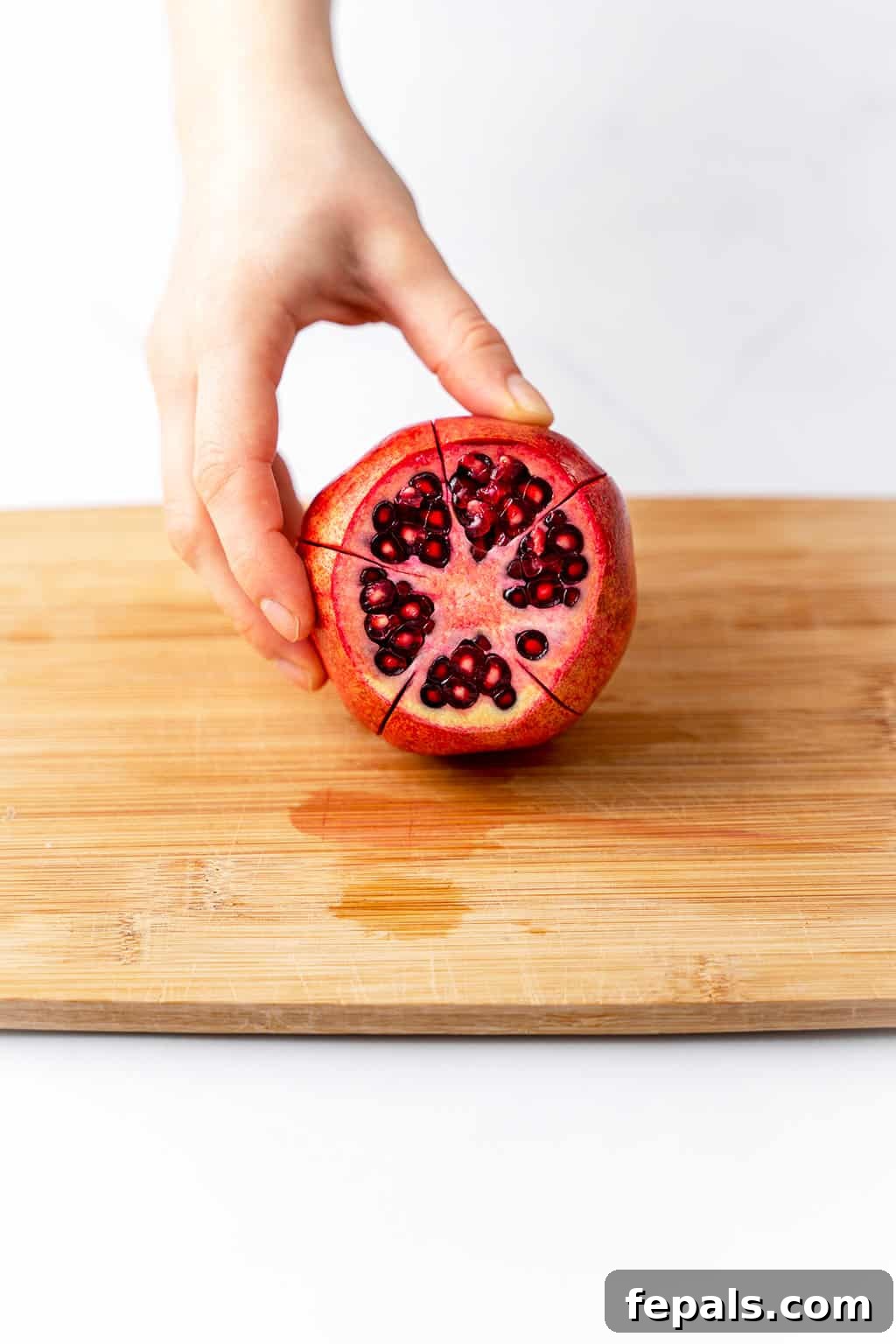
- Identify the Ridges: After removing the crown, you should observe several thin, white ridges or membranes on the surface of the exposed fruit. These natural divisions typically number between five and six and are key to easily sectioning the pomegranate.
- Score Along the Ridges: Carefully slice through just the skin of the pomegranate along each of these visible ridges, from the top (where you removed the crown) down to the bottom (where you removed the stem end). It’s crucial to cut only through the outer skin and not deeply into the arils to prevent them from bursting and releasing juice prematurely. Think of it like scoring an orange for easy peeling.
Opening a Pomegranate: The Water Method for Easy Deseeding
Now for the ingenious part! The water method not only keeps your kitchen clean but also significantly simplifies the separation of arils from the pith. This is the secret to a truly mess-free pomegranate experience.
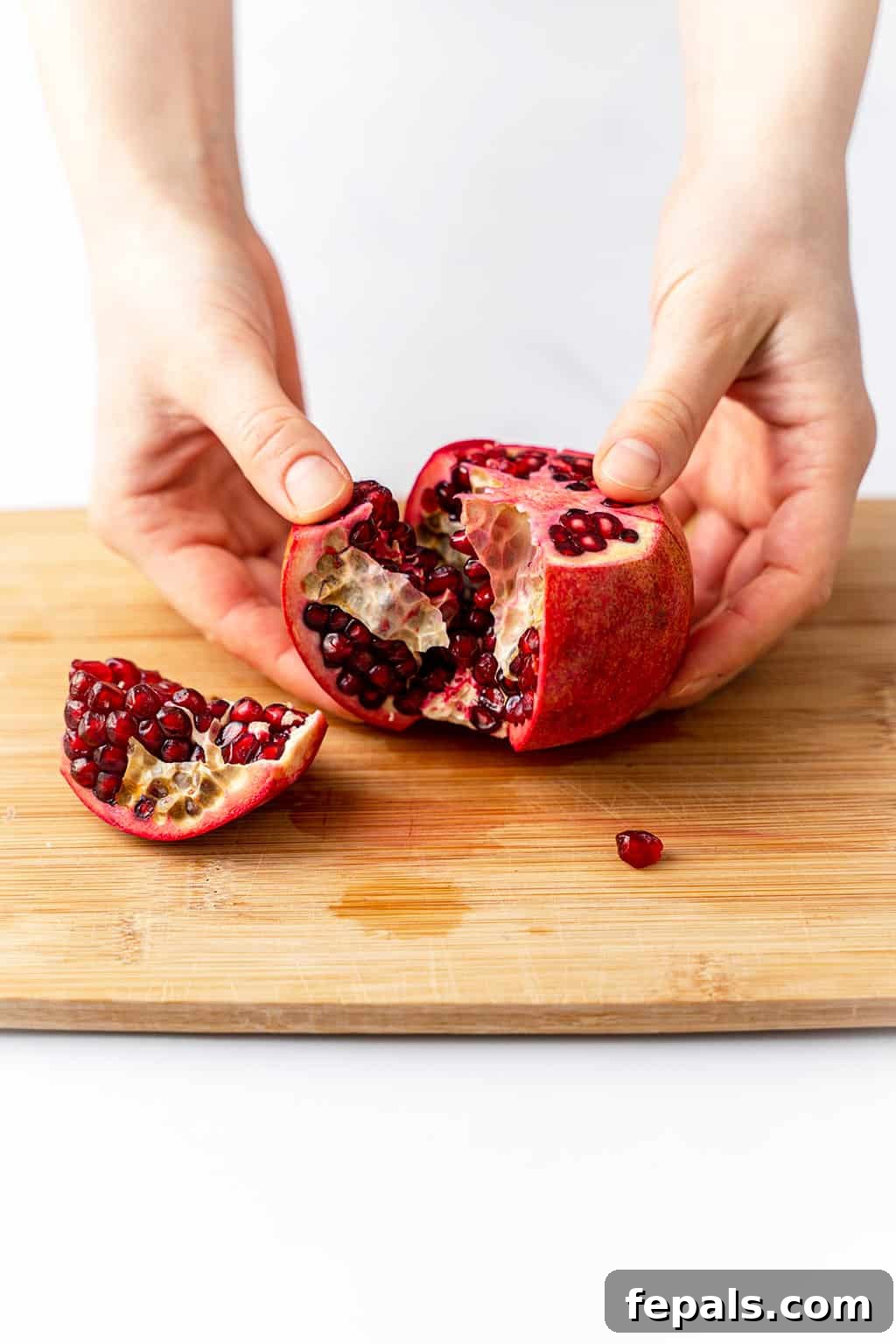
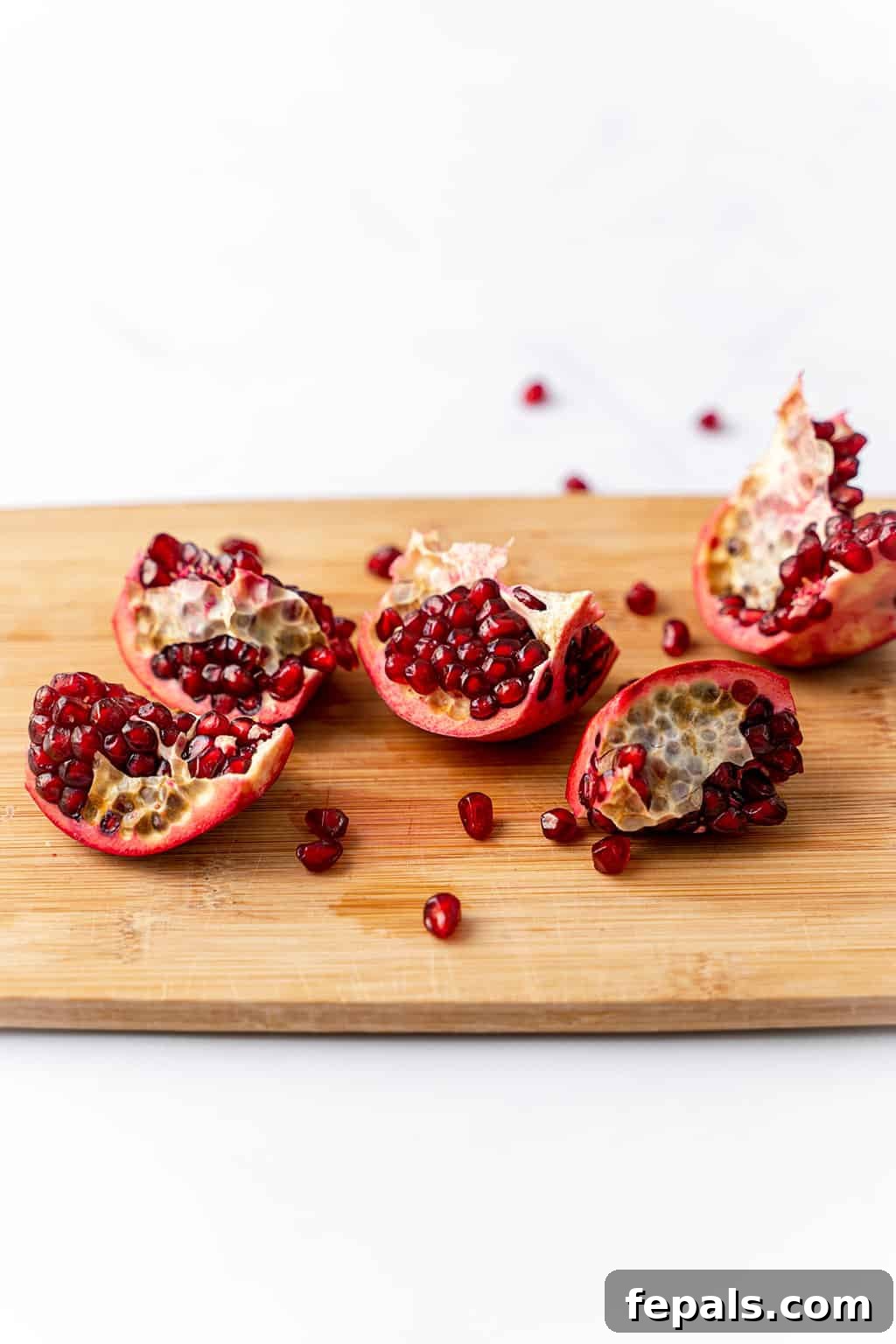
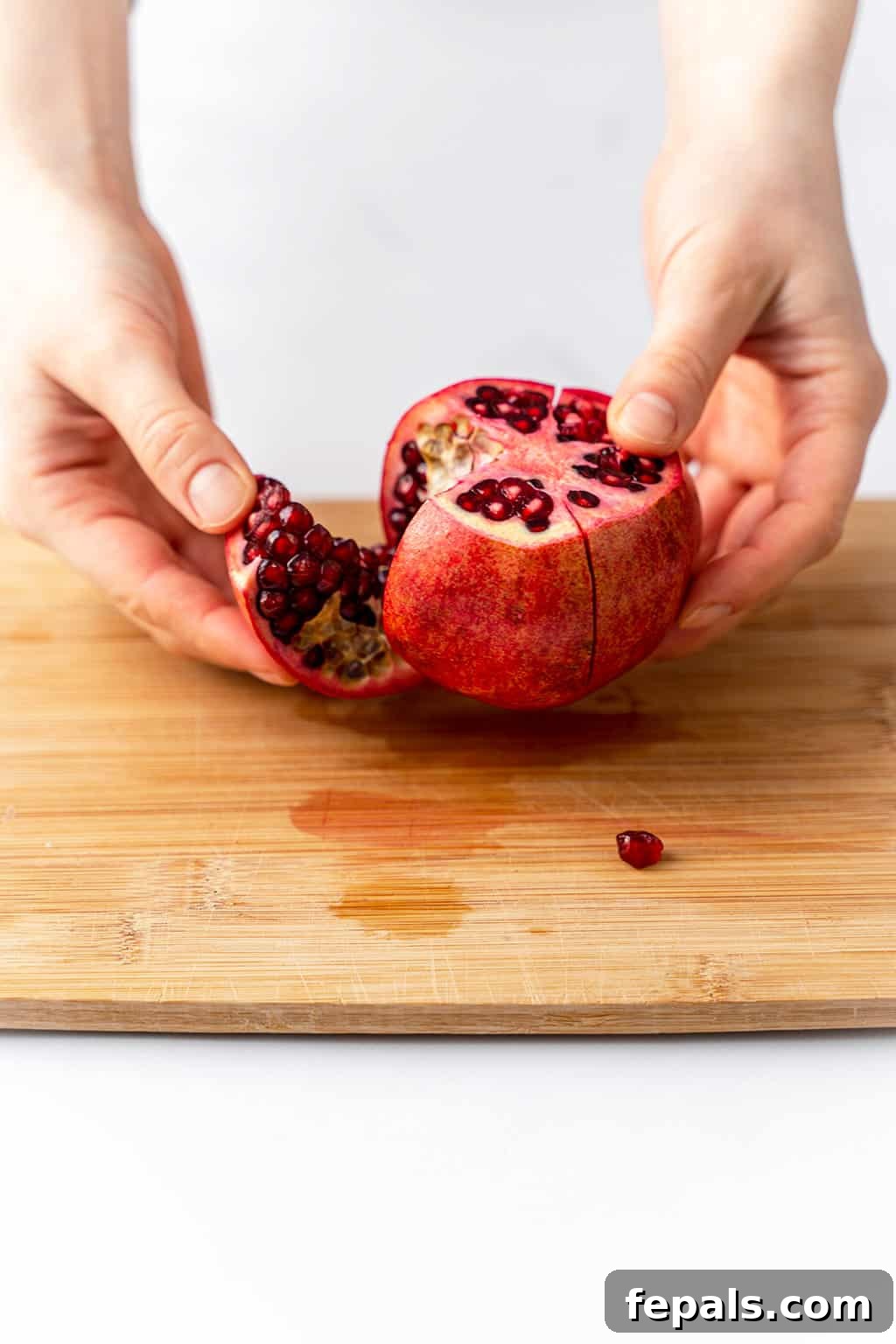
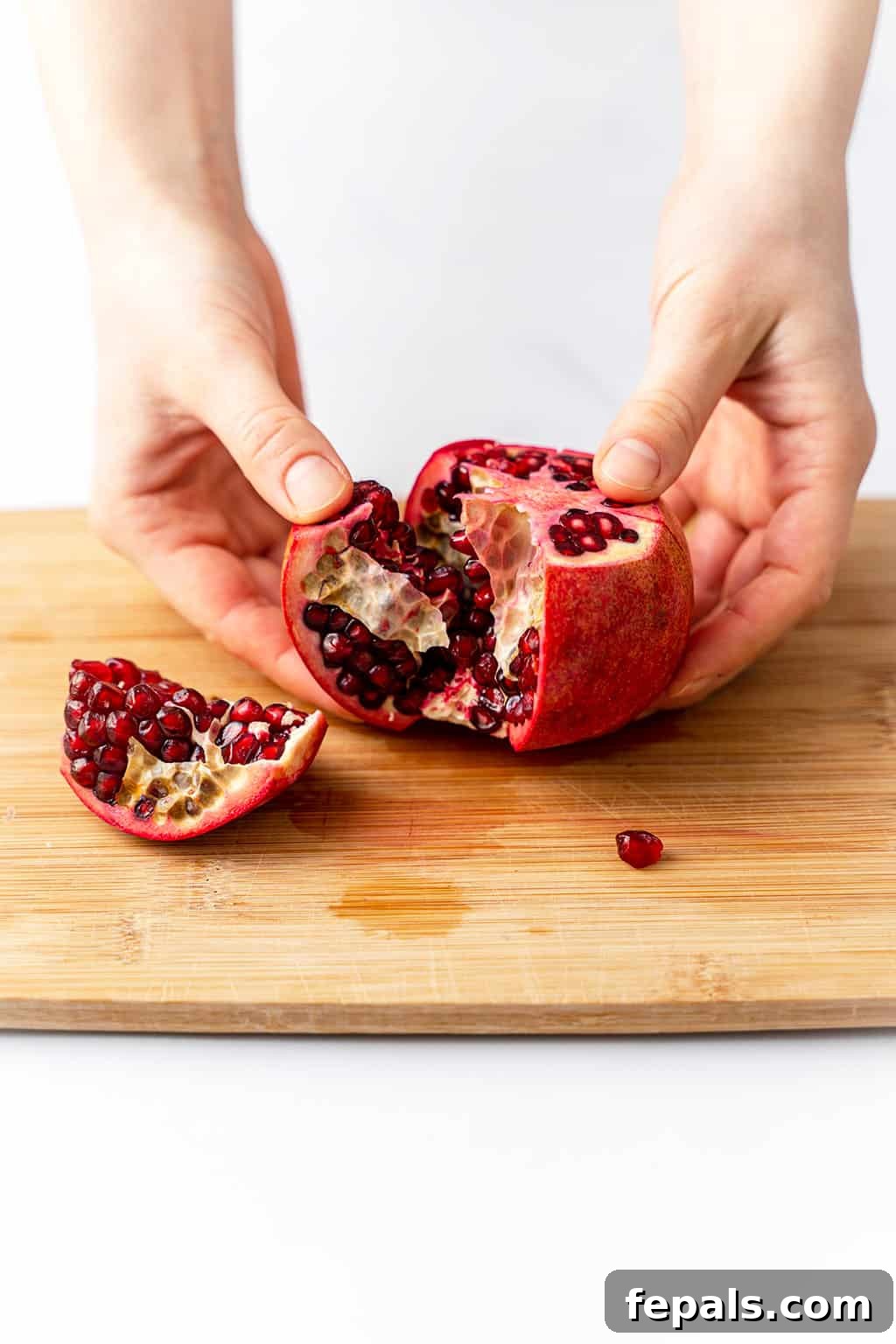
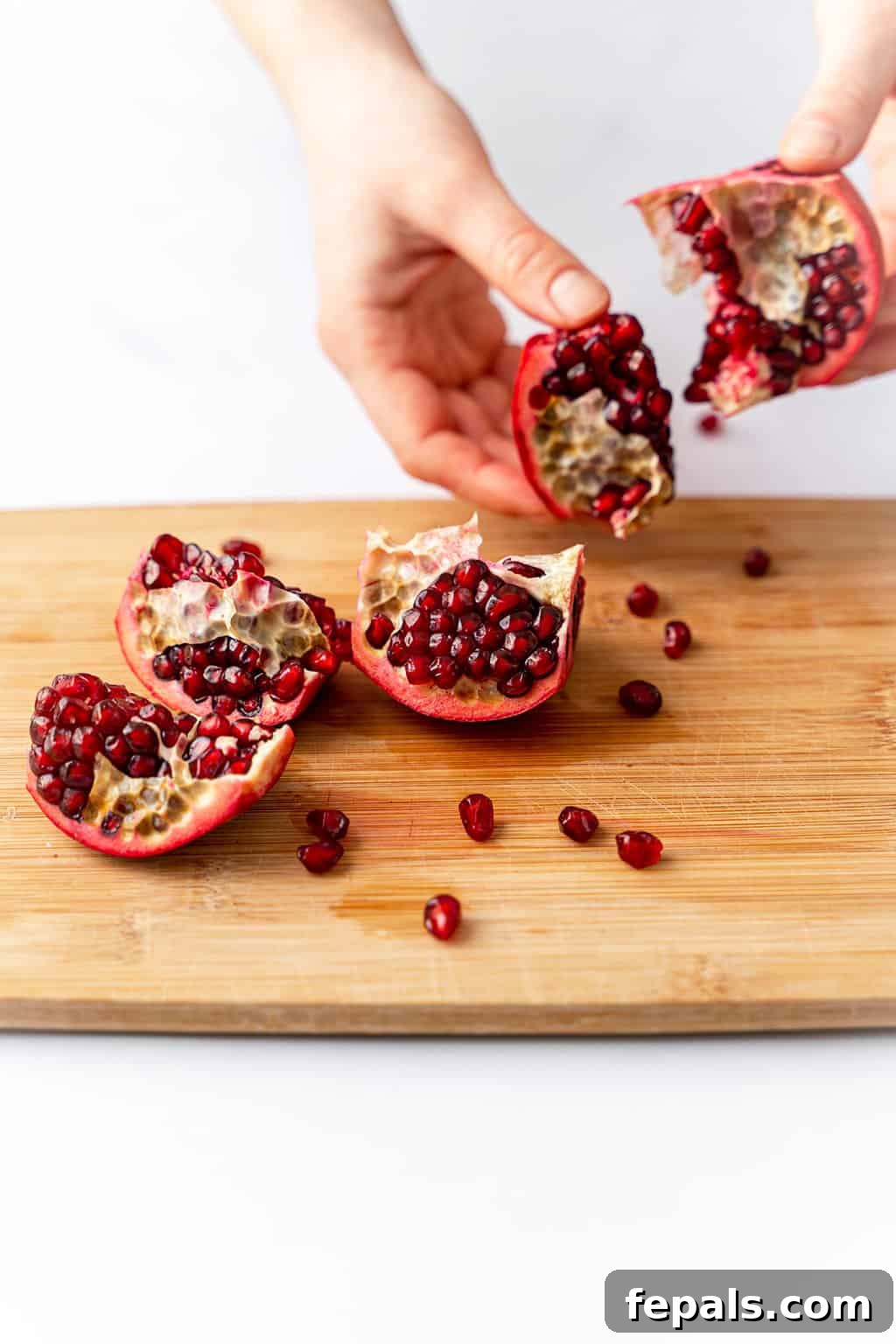
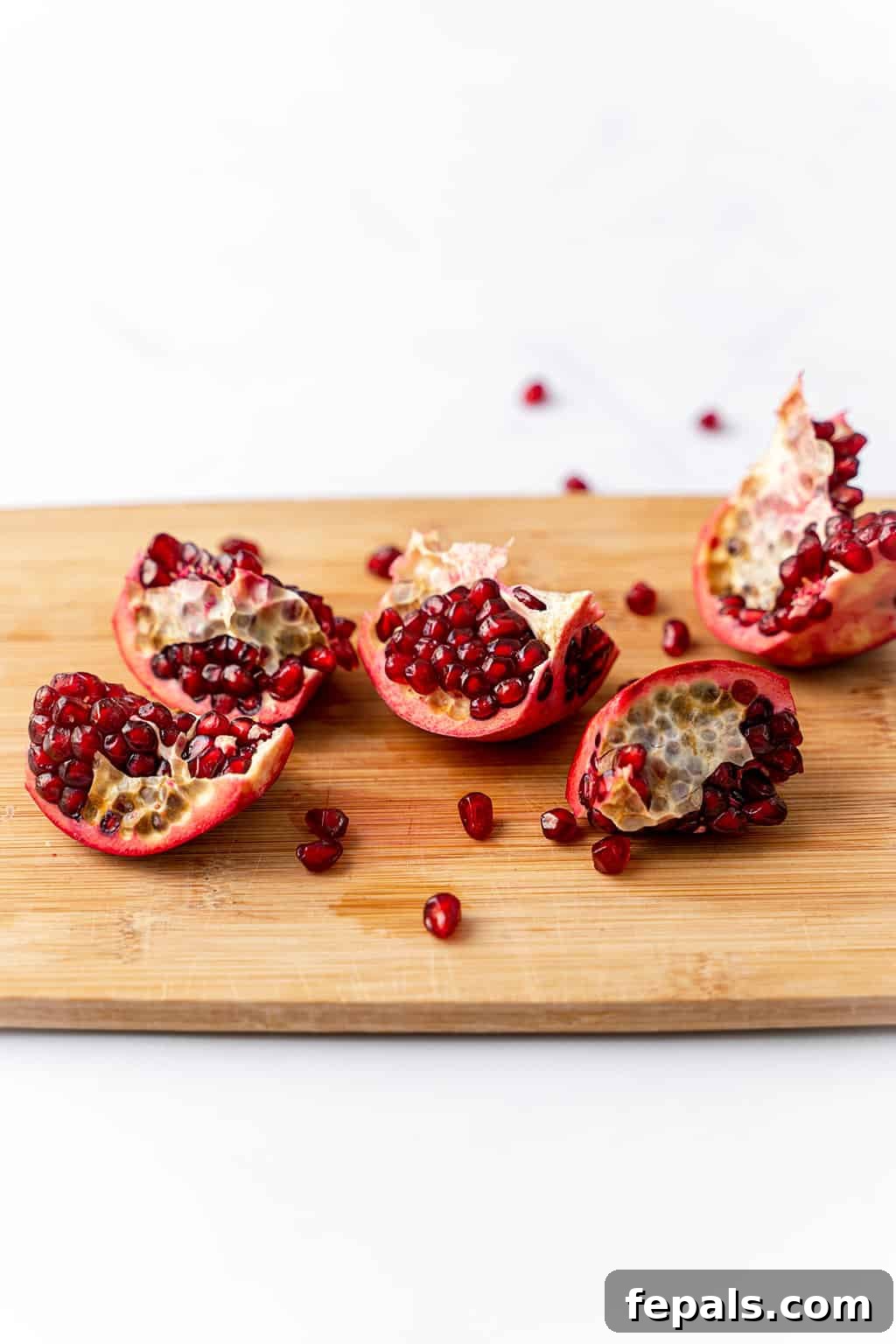
- Gently Segment the Pomegranate: Using your hands, carefully pull apart the scored pomegranate. It should naturally divide into approximately four to six even segments, following the lines you’ve already cut.
- Submerge and Deseed: Retrieve the bowl you filled with water. You have two options here:
- Submerge Segments: Fully submerge each pomegranate segment into the bowl of water.
- Hold Over Water: Alternatively, hold the segments over the water, working beneath the surface as much as possible.
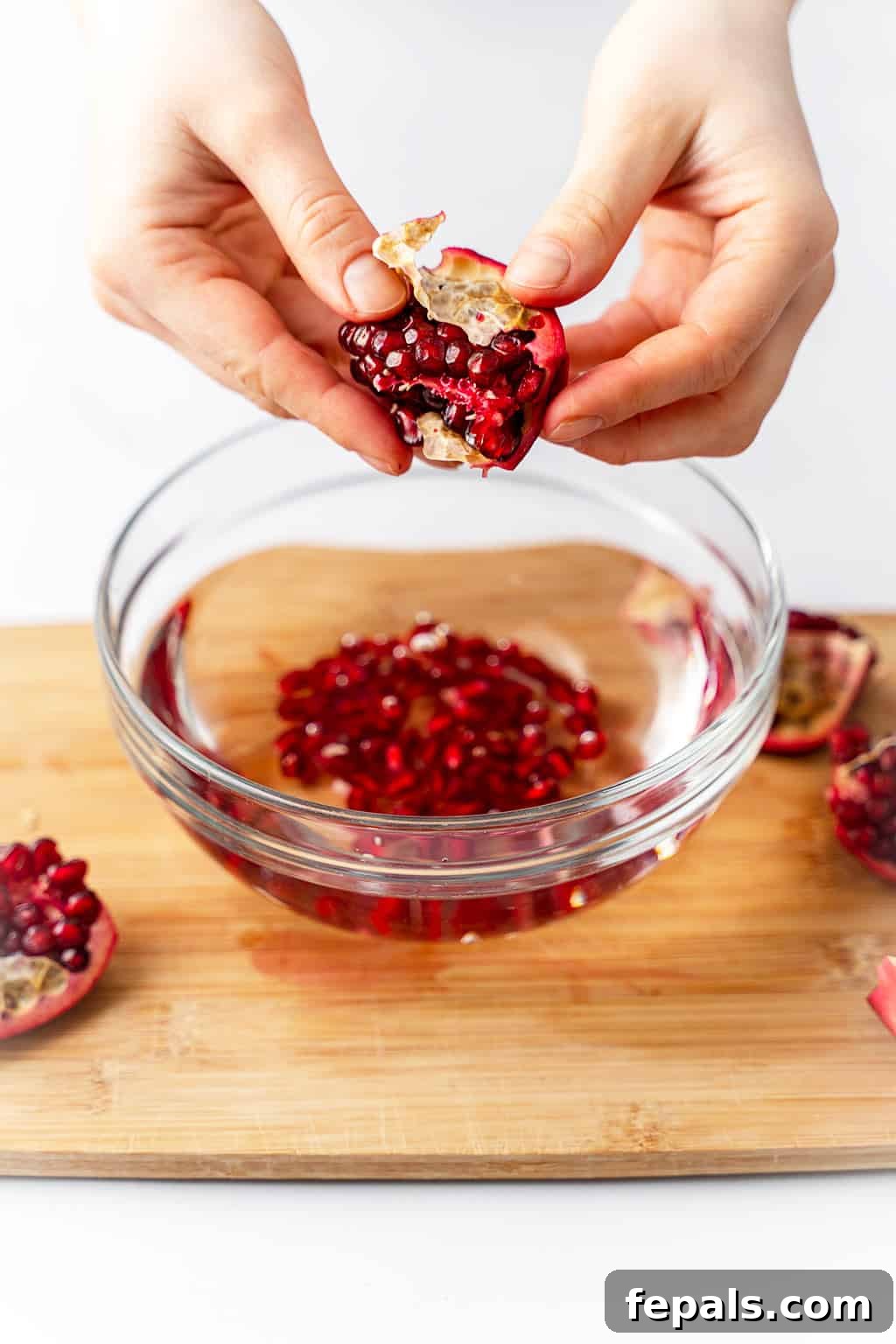
While submerged or held over the water, use your fingers to gently flex and break apart the segments. The white pith and membranes will release, and the ruby-red pomegranate seeds will detach from the skin and membranes of the fruit. Repeat this process for all segments.
- The Magic of Water: As you gently work the arils free, you’ll observe a clever phenomenon. The light, bitter white pith and skin pieces will float to the surface of the water, while the dense, juicy arils will sink to the bottom. This natural separation is what makes the water method so incredibly efficient and mess-free. The water also prevents the red juice from spraying and staining your clothes or kitchen surfaces.
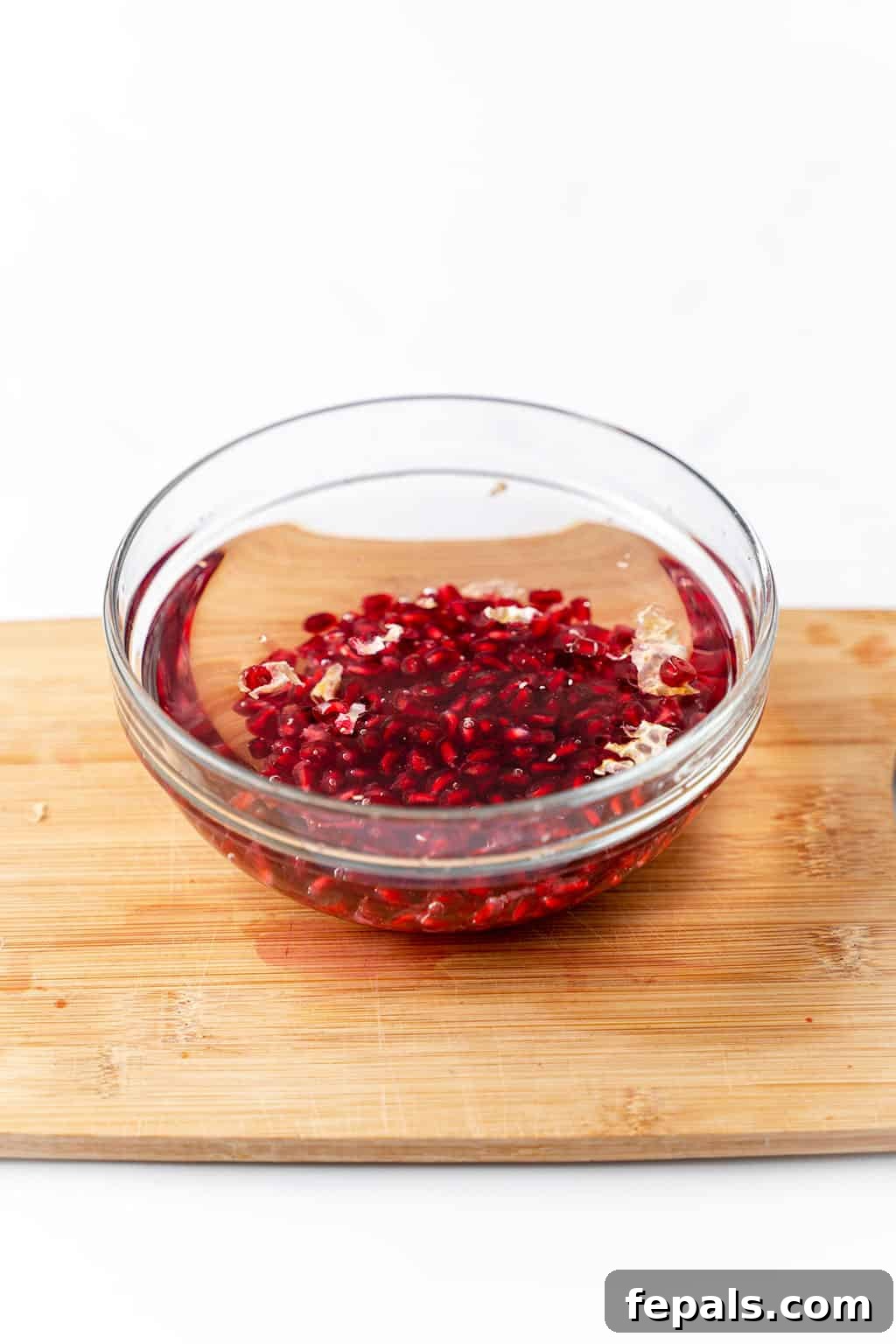
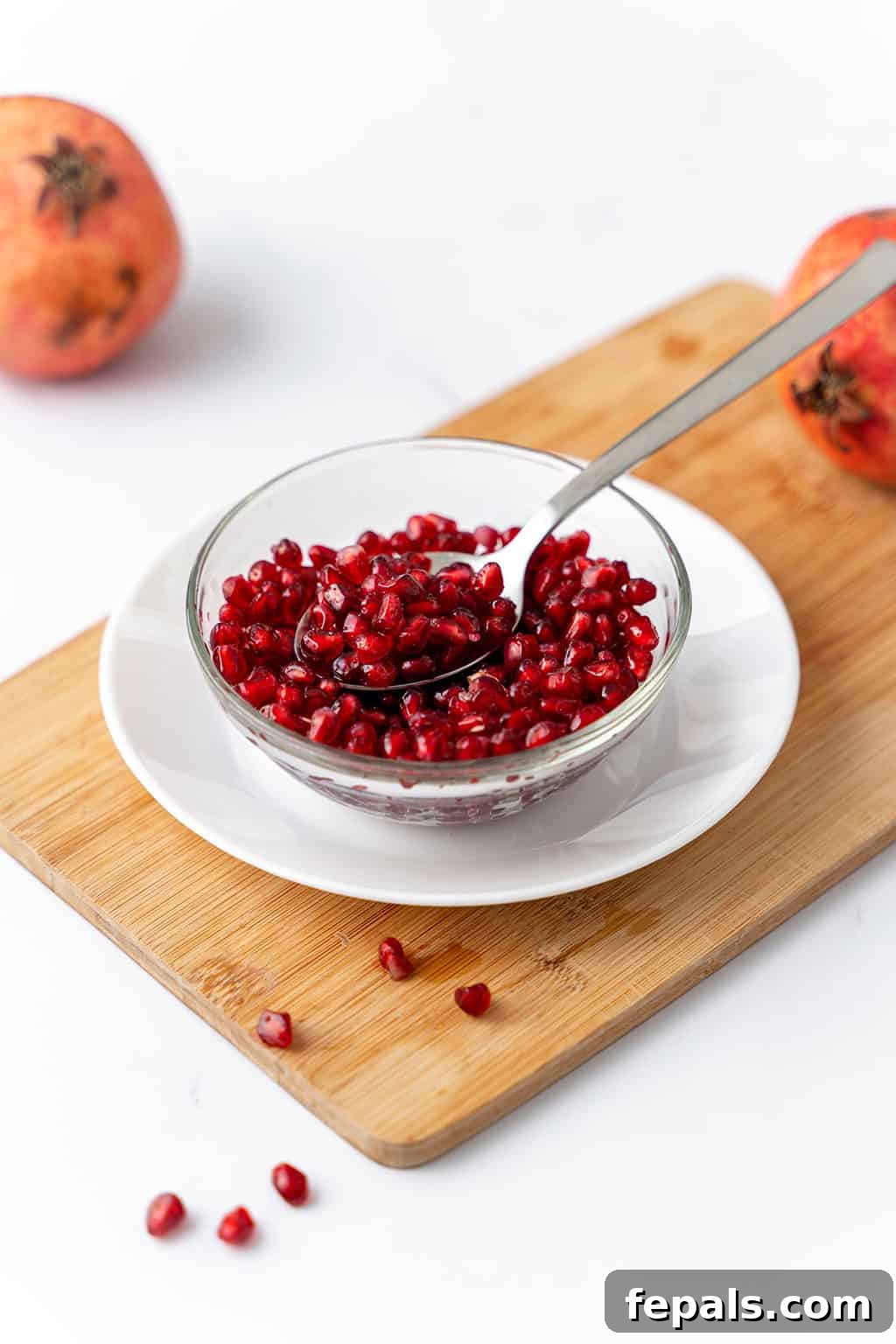
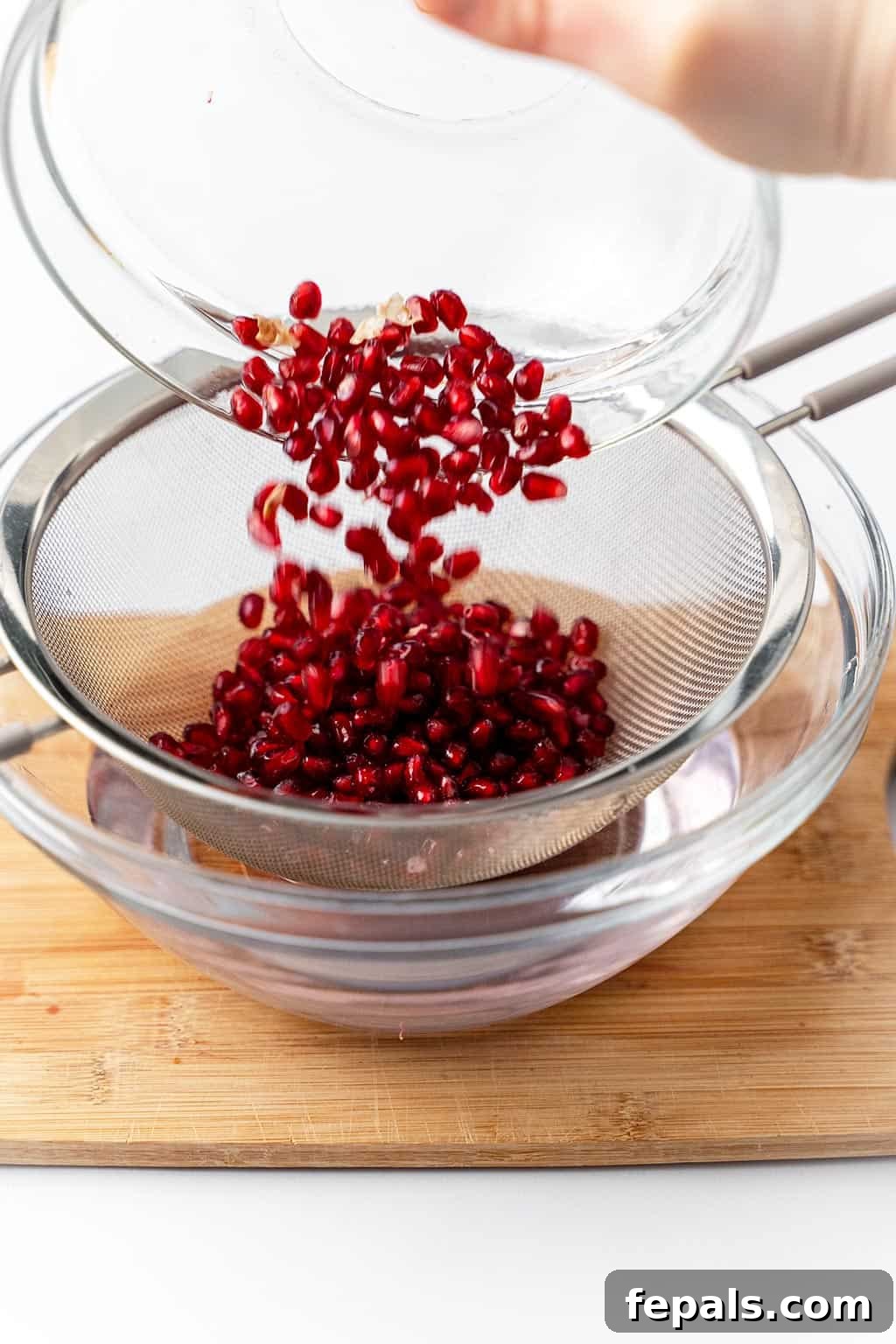
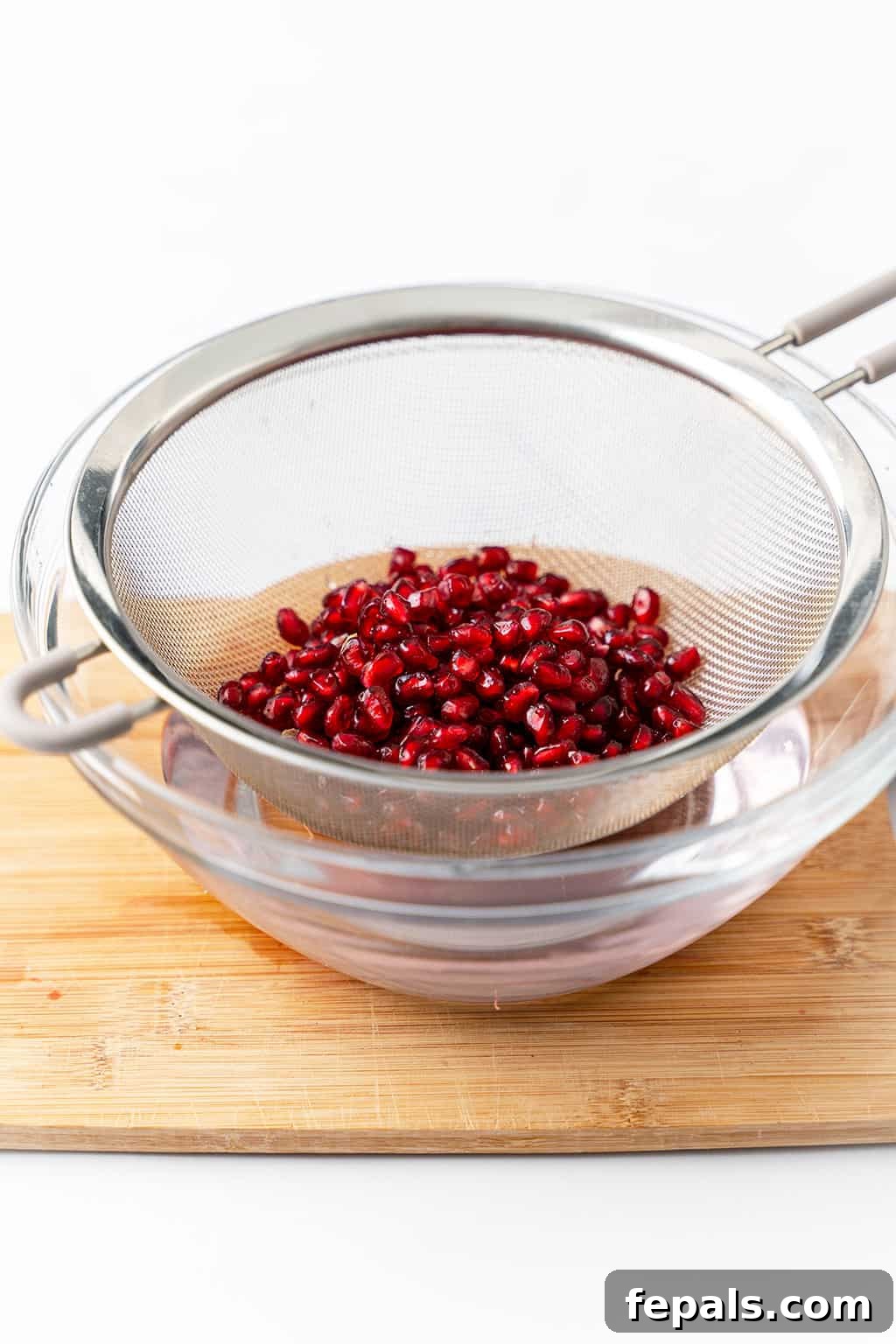
Once you’ve removed all the arils from the skin and membranes, gently skim the floating debris (pith and skin pieces) from the surface of the water and discard them. Then, carefully pour the water and arils through a fine-mesh strainer to rinse and drain the clean pomegranate seeds. Your beautiful, ruby-red arils are now ready to be enjoyed immediately or stored for later use. Transfer them to an airtight container and refrigerate until needed.
How to Store Fresh Pomegranate Arils for Maximum Freshness
Once you’ve gone through the effort of deseeding your pomegranate, proper storage is key to maintaining their freshness and vibrant flavor. Here’s how to store your precious arils:
- Refrigeration: Store your fresh, clean pomegranate arils in an airtight container in the refrigerator for up to five to seven days. To help absorb any excess moisture and keep them fresher for longer, you may place a paper towel or a clean linen napkin at the bottom of the storage container before adding the arils. Replace the paper towel every couple of days if it becomes too damp.
- Freezing for Long-Term Storage: Pomegranate arils freeze beautifully, allowing you to enjoy them long after their season. To freeze them, first ensure they are completely dry after rinsing. Gently pat them with dry towels to remove all surface moisture. Then, spread the arils in a single layer on a baking sheet lined with parchment paper and freeze for about 1-2 hours until solid. This prevents them from clumping together. Once frozen, transfer them to a freezer-safe storage bag or an airtight container, removing as much air as possible to prevent freezer burn. You can freeze pomegranate seeds for up to two months, and even longer if stored properly in a deep freezer. Frozen arils are perfect for smoothies, baking, or as a vibrant topping directly from the freezer.
Expert Notes and Tips for Pomegranate Preparation
Achieving perfectly cut and deseeded pomegranates every time is easy with these handy tips:
- The Importance of a Sharp Knife: Always use a sharp knife when cutting pomegranates. A sharp blade will glide easily through the skin, making clean scores and segments without bruising the arils or requiring excessive force. Using a dull knife will make slicing and deseeding a pomegranate unnecessarily difficult and potentially messy.
- Embrace the Water Method: Soaking the seeds in water as you deseed them will consistently yield the most optimal results. This method not only keeps your kitchen clean by preventing juice splatter but also ensures you get perfectly clean arils, free from the bitter white pith. The membranes float, while the good seeds sink – it’s culinary magic!
- Eating the Seeds: Remember, you can either eat the entire seed (the small white crunchy part inside the aril) or discreetly discard the tiny membranes after extracting the juice from each aril. Both are common ways to enjoy this fruit, so choose what you prefer.
- Keep an Extra Bowl Handy: While the water method minimizes mess, keeping another empty bowl nearby as you initially peel and segment the pomegranate allows you to discard the skin and other unwanted bits immediately. This helps keep your primary workspace tidier throughout the process.
- Don’t Waste the Pith: While the white pith isn’t toxic, it is quite bitter. Ensure you remove as much of it as possible from your arils for the best flavor.
- Wear an Apron: Although the water method significantly reduces mess, pomegranate juice can stain. Wearing an apron is a small precaution that can save your clothes from accidental splashes.
How Do You Get All of the Seeds Out of a Pomegranate? The Ultimate Trick
The single most effective way to extract every last ruby-red aril from a pomegranate is by employing the water immersion technique. As detailed above, soaking the pomegranate arils in a bowl of water during the deseeding process, and then thoroughly rinsing them afterward, ensures that all the stubborn bits of skin and bitter white membranes are separated from the precious seeds. The floating debris can be easily skimmed away, leaving you with perfectly clean, ready-to-enjoy arils at the bottom of the bowl. This comprehensive soaking and rinsing step is absolutely vital for an efficient, mess-free, and complete pomegranate deseeding experience.
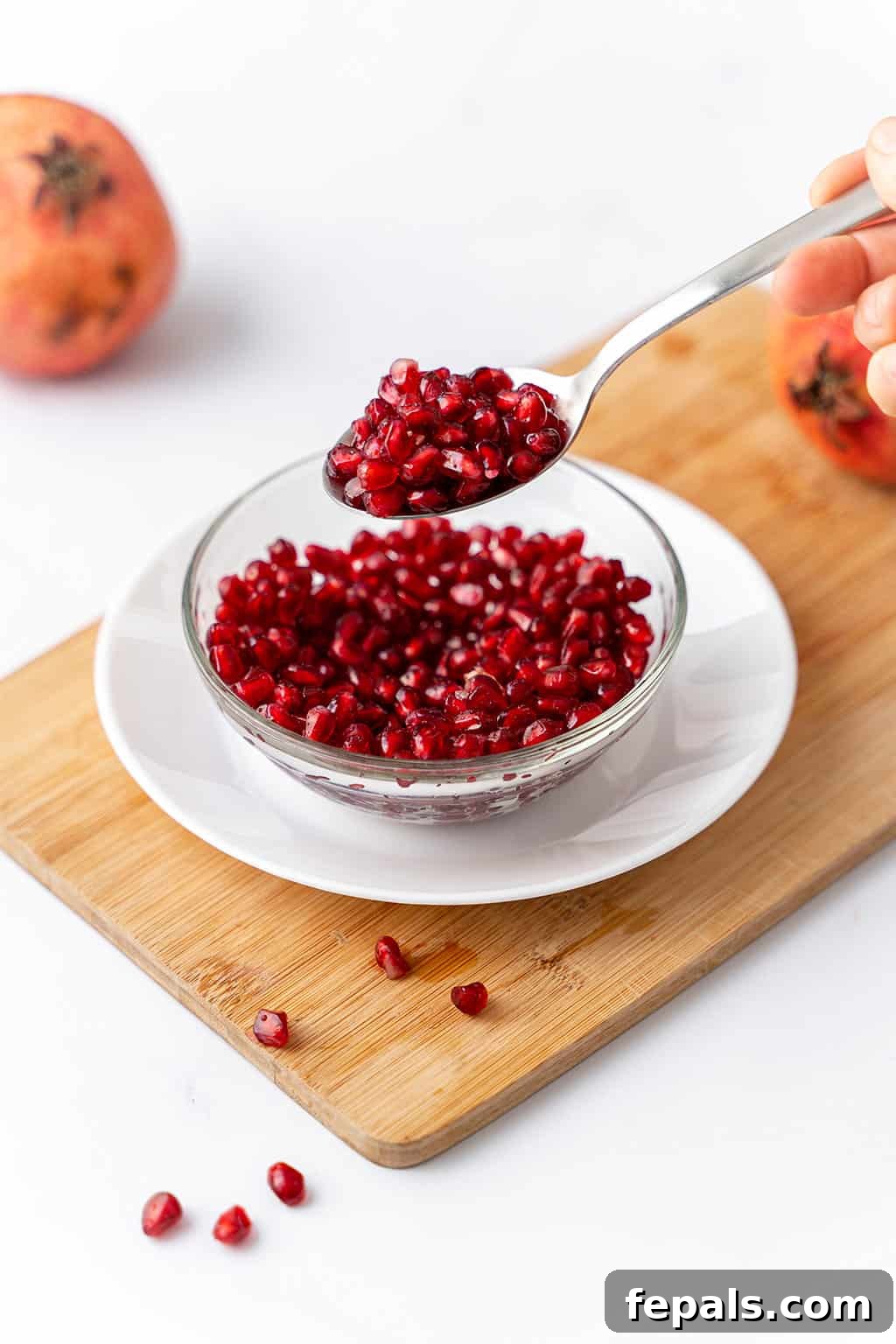
We hope this detailed guide has demystified the process of cutting a pomegranate, making it an enjoyable and mess-free experience for you. Whether you’re adding them to a salad, blending them into a juice, or simply enjoying them as a snack, fresh pomegranate arils are a wonderful addition to any healthy lifestyle. Give this method a try, and you’ll be deseeding pomegranates like a pro in no time!
If you try this method and find it helpful, please leave us some feedback in the comment section below, and don’t forget to rate it! We would love it if you shared this tutorial with friends and family who also want to master the art of cutting pomegranates.
FOLLOW me on FACEBOOK | INSTAGRAM | PINTEREST | TWITTER for all of my latest blog posts and recipes.
How to Cut a Pomegranate
Rena
1 pomegranate
5
10
15
Equipment
-
Sharp knife
-
Bowl of water
-
Cutting Board
-
Fine-mesh strainer
Ingredients
- 1 large Pomegranate
Instructions
-
Lay the pomegranate on a cutting board. Using a sharp knife, slice ¼-inch to ½-inch off the top (crown) and bottom (stem end) of the pomegranate.
-
After cutting the top, carefully observe the exposed surface. You will notice thin, white ridges or membranes along the surface, typically 5 to 6 of them, which naturally divide the fruit.
-
Score the skin of the pomegranate along each of these thin ridges, from the top to the bottom. Be careful to cut only through the outer skin and not all the way through to the arils themselves.
-
Using your hands, gently pull the pomegranate open along the scored lines. It should naturally divide into four to six segments.
-
Fill a large bowl with cool water. Either fully submerge each pomegranate segment in the water or hold it over the bowl of water. Use your hands to gently remove the arils (seeds) from the skin and white membranes of the pomegranate.
-
The dense arils will sink to the bottom of the bowl, while the lighter skin and tiny membranes will float to the surface of the water, making separation effortless.
-
Using your hands or a spoon, skim off all the floating debris (skin and membranes) from the water and discard them. Pour the water and arils through a fine-mesh strainer to rinse and drain the clean arils.
-
Your fresh pomegranate arils are now ready to be used as needed. For later use, store them in an airtight container in the refrigerator.
Notes
- Use a sharp knife for clean slices and easy segmentation. A dull knife will make the process challenging and potentially messy.
- The water immersion method for deseeding ensures optimal results, yielding perfectly clean arils free from bitter pith and minimizing juice splatter.
- You have the option to either eat the entire seed (the small white crunchy part inside each aril) or discard the tiny membranes after enjoying the juicy flesh.
- Keep an additional empty bowl handy while initially cutting the pomegranate to dispose of the removed skin and other unwanted parts, helping to keep your cutting board clean.
Nutrition (per 1 Pomegranate)
Carbohydrates: 53g
Protein: 5g
Fat: 3g
Saturated Fat: 0.3g
Polyunsaturated Fat: 0.2g
Monounsaturated Fat: 0.3g
Sodium: 8mg
Potassium: 666mg
Fiber: 11g
Sugar: 39g
Vitamin C: 29mg
Calcium: 28mg
Iron: 1mg
Nutrition information is automatically calculated, so should only be used as an approximation.
Additional Info
Snack
American