
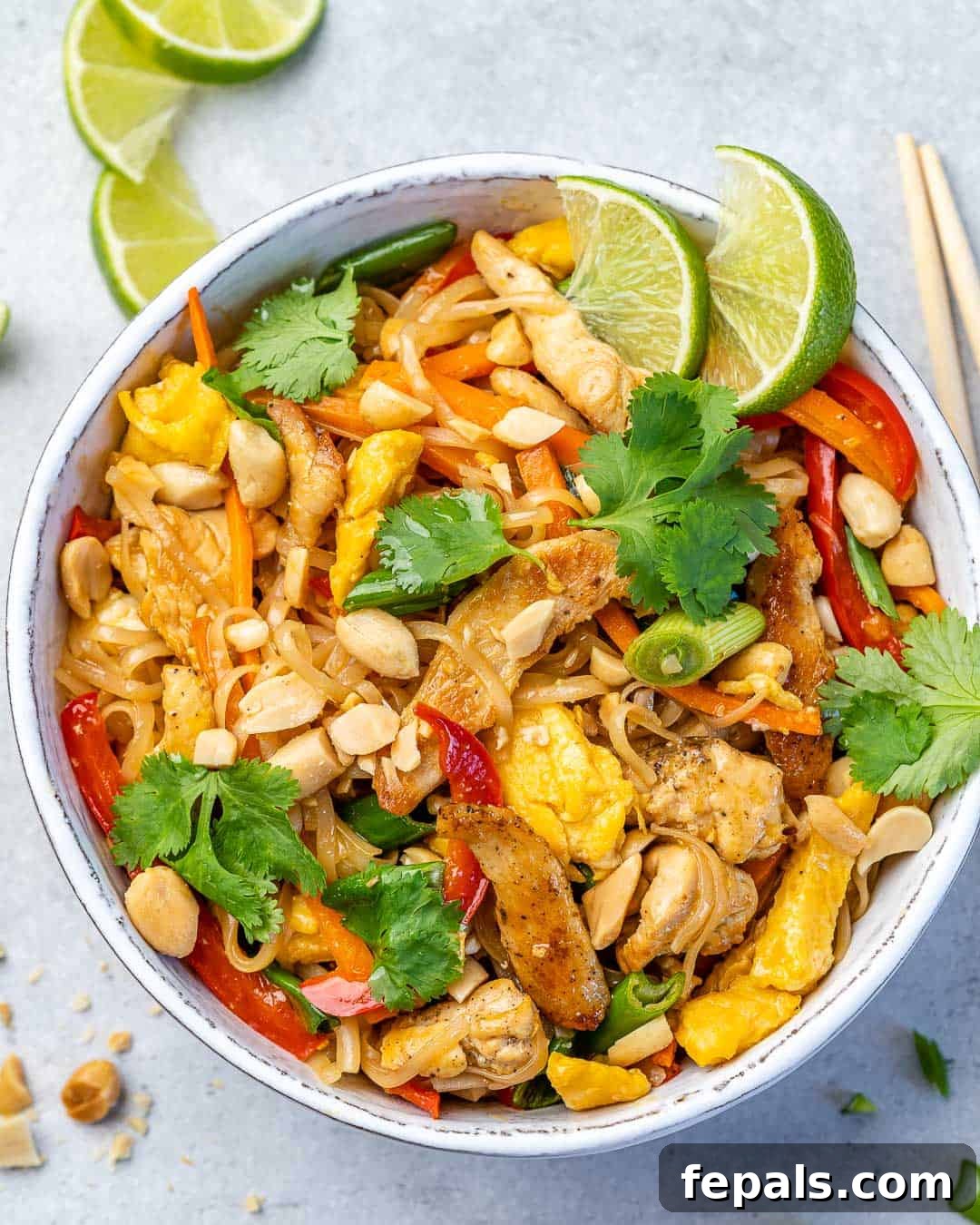
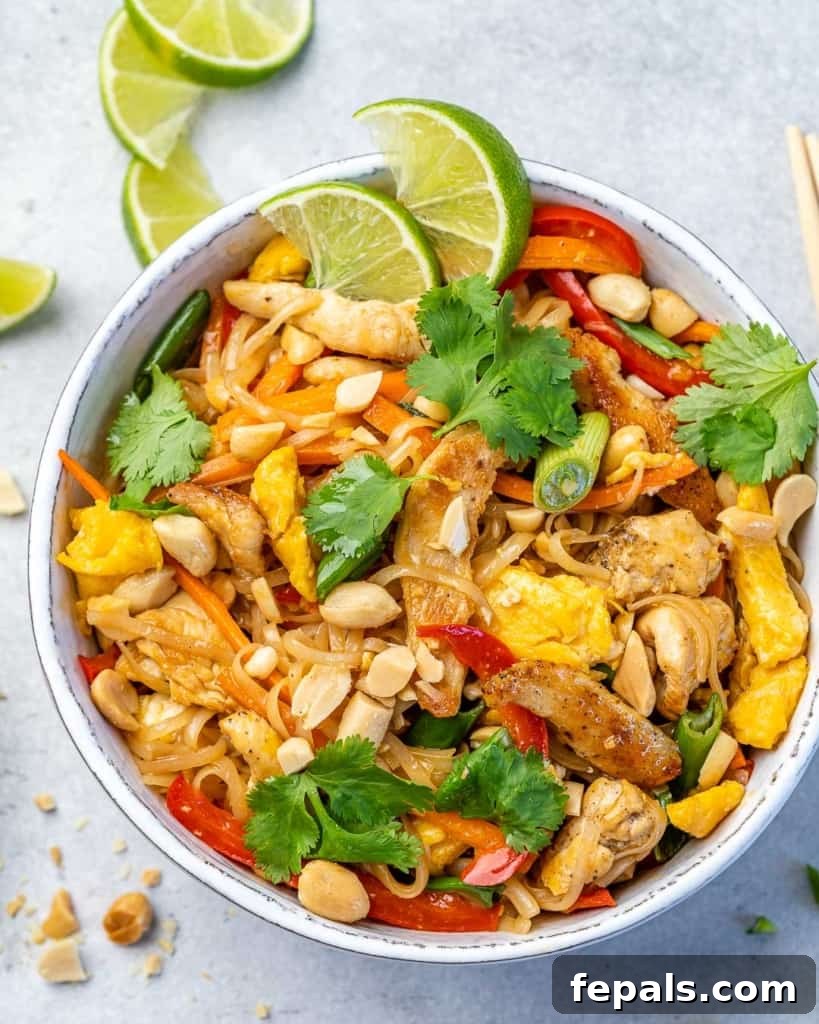
Embark on a culinary journey to Thailand right from your kitchen with this incredibly easy and authentic Chicken Pad Thai recipe. Forget waiting for takeout; this flavorful, simple, and quick dish will be on your dinner table in no time, guaranteed to impress even the most discerning palates. Crafted with an effortless homemade sauce using everyday pantry staples, you’ll discover just how satisfying it is to recreate this beloved Thai street food classic at home, ensuring freshness and unparalleled taste.
If you enjoy exploring vibrant Asian-inspired flavors, you might also love our equally delicious Shrimp Pad Thai recipe for another delightful meal idea that comes together quickly.
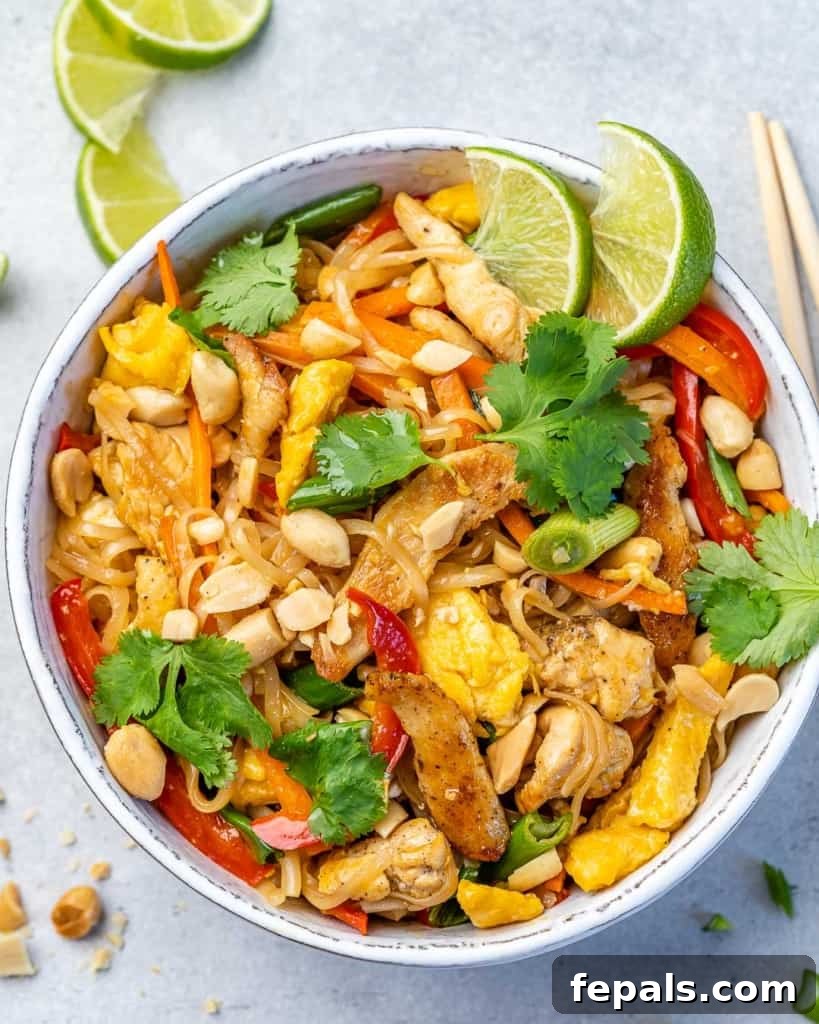
Have you ever yearned to master the art of making delicious Chicken Pad Thai in your own home? Many believe this iconic dish is complex, best left to restaurant chefs. However, with the right quality ingredients and our comprehensive guide, you’ll be whipping up a version that rivals (and often surpasses!) your favorite takeout in no time at all. This recipe isn’t just easy; it’s also incredibly versatile, allowing for personalized adjustments to suit any taste preference or dietary need. Whether you’re feeding picky eaters or a crowd of foodies, everyone will adore this homemade rendition, making it a perfect weeknight meal or a weekend treat.
Recipe Overview
Why Choose Homemade Chicken Pad Thai?
There’s a unique satisfaction that comes with creating your favorite dishes from scratch, and Pad Thai is no exception. Beyond the sheer joy of cooking, preparing Chicken Pad Thai at home offers numerous compelling benefits. Firstly, you gain complete control over the ingredients, allowing you to select the freshest produce and high-quality proteins. This means no mystery oils or additives, just wholesome goodness and the confidence of knowing exactly what’s in your meal.
Secondly, making Pad Thai at home is often far more cost-effective than frequent takeout orders, especially when feeding a family. This allows you to indulge in this delicious and authentic Thai experience more regularly without straining your budget. Furthermore, the ability to customize your Pad Thai to your exact preferences is a huge advantage. Love extra vegetables? Pile them in! Crave a spicier kick? Adjust the chili paste. Catering to dietary restrictions or picky eaters becomes a breeze when you’re the chef. This versatility transforms a restaurant staple into a truly personalized culinary masterpiece, ensuring every bite is exactly what you crave.
Essential Ingredients for Your Authentic Chicken Pad Thai
Crafting the perfect Chicken Pad Thai begins with selecting the right, fresh ingredients. This section outlines the core components you’ll need for this delectable dish, along with quick tips for each. For precise measurements and quantities, please refer to the detailed recipe card located further down the page.
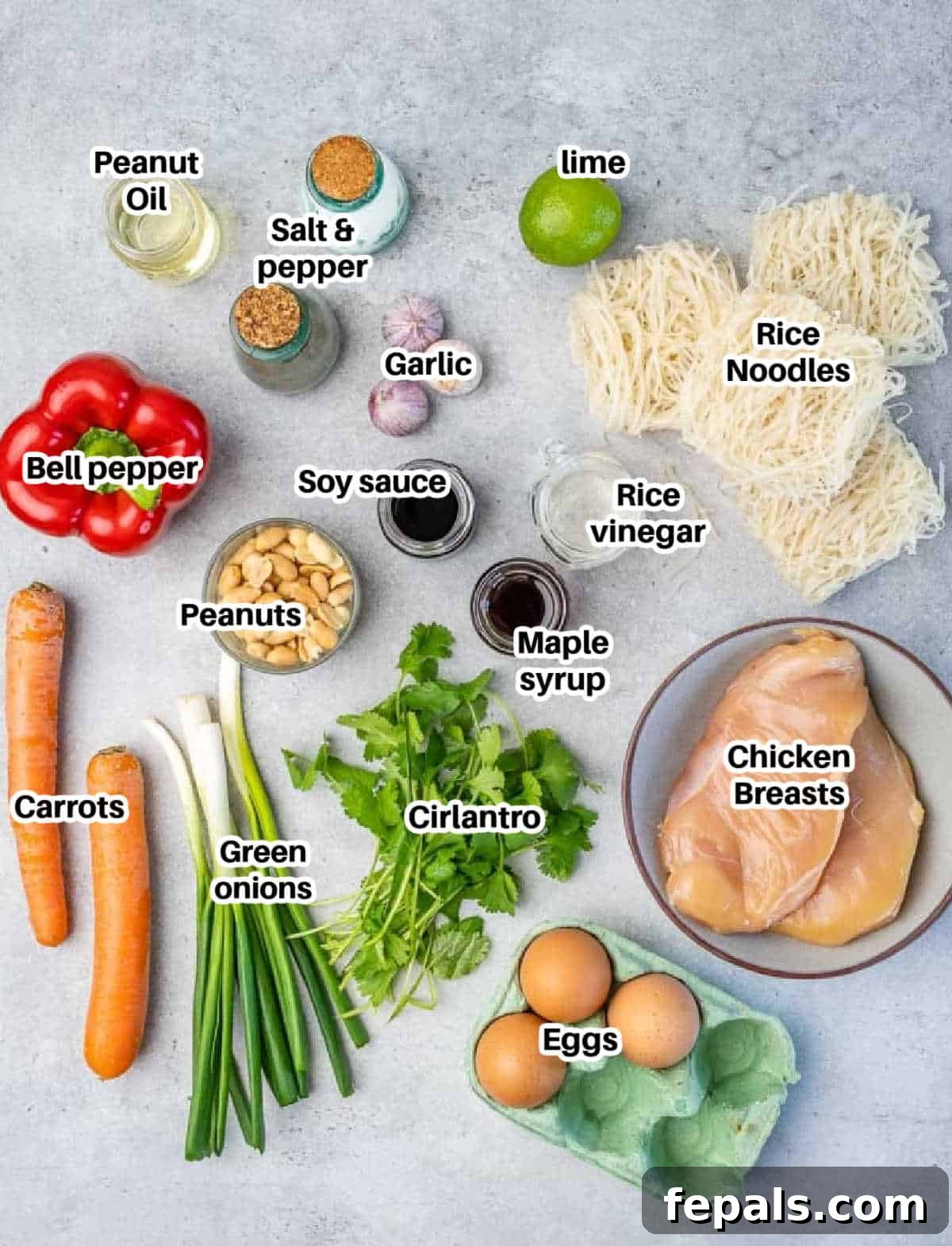
- Thai Rice Noodles: These flat, wide noodles are the backbone of any great Pad Thai, providing its signature chewy texture. You can usually find them in the Asian food section of your local grocery store or order them easily online.
- Boneless, Skinless Chicken Breasts: A lean and versatile protein, easily sliced into thin strips for quick cooking. For a slightly richer flavor and juicier result, boneless and skinless chicken thighs can be used as a fantastic alternative.
- Peanut Oil or Sesame Oil: Essential for high-heat stir-frying, these oils impart a subtle nutty flavor. Peanut oil is traditional, while sesame oil offers a more pronounced aromatic note.
- Red Bell Pepper: Adds a touch of natural sweetness, vibrant color, and a pleasant crisp-tender crunch. Slice it thinly to ensure it cooks evenly with other vegetables.
- Carrots: Peeled and cut into delicate matchsticks, carrots contribute natural sweetness and a lovely texture contrast that stands out in the dish.
- Garlic: Minced fresh garlic is an indispensable ingredient, building the aromatic and savory foundation of the stir-fry. Don’t underestimate this flavor powerhouse!
- Green Onions: Sliced diagonally, green onions offer a mild oniony bite and a fresh, herbaceous finish. We recommend adding them in two stages for maximum flavor and visual appeal.
- Eggs: Quickly scrambled and incorporated into the noodles, eggs add richness, protein, and another distinctive textural layer, characteristic of authentic Pad Thai.
- Unsalted Roasted Peanuts: Roughly chopped, these provide a crucial nutty crunch and flavor, typically sprinkled generously on top as a garnish, adding depth to every bite.
- Cilantro: Freshly chopped cilantro brightens the entire dish with its distinctive, refreshing aroma and flavor. While optional, it’s highly recommended as a final flourish.
- Maple Syrup: Or honey. This natural sweetener is vital for balancing the savory and tangy notes in the Pad Thai sauce, providing the dish’s signature sweet element without artificiality.
- Light-Sodium Soy Sauce: Or coconut aminos liquid for a gluten-free and soy-free option. This ingredient provides the essential salty and umami depth to the sauce, allowing you better control over the overall sodium content.
- Rice Vinegar: Adds a mild, clean, and tangy acidity that is less harsh than other vinegars, playing a crucial role in achieving the sauce’s characteristic sweet-sour balance.
- Lime: Freshly squeezed lime juice is paramount for adding a bright, zesty, and refreshing sour note to the sauce. It cuts through the richness of the stir-fry, leaving a clean, vibrant taste.
Crafting the Perfect Pad Thai Sauce
The heart and soul of any truly great Pad Thai lies in its exquisite sauce. It’s a delicate and intricate balance of sweet, sour, salty, and umami flavors that truly defines the dish and makes it so irresistibly addictive. While many store-bought options are available, creating your own Pad Thai sauce at home is surprisingly simple and allows you to tailor the flavor profile precisely to your preference, achieving a depth of taste often missing in pre-made versions. Our recipe utilizes a harmonious blend of maple syrup (or honey) for natural sweetness, light-sodium soy sauce (or coconut aminos for gluten-free diets) to provide savory depth, rice vinegar for a mild tang, and fresh lime juice to add a bright, zesty finish. The magic happens as these ingredients combine, creating a robust yet balanced base that clings beautifully to the noodles and infuses every component of the dish with authentic Thai essence. The key is to taste and adjust as you go, ensuring a perfect symphony of flavors that delights your palate.
Customization Tips and Smart Substitutions for Your Pad Thai
One of the most appealing aspects of homemade Pad Thai is its remarkable adaptability. This recipe serves as a fantastic foundation, but don’t hesitate to make it truly your own! Here are some creative tips and smart substitutions to help you tailor your Chicken Pad Thai to various dietary needs, experiment with different flavors, or simply use what you have on hand, ensuring a perfect meal every time:
- Make it Vegetarian: Easily transform this flavorful dish by swapping the chicken for equally delicious plant-based proteins. Pressed, extra-firm tofu, cubed and pan-fried until golden, or mock chicken strips are excellent choices. Sauté them separately until they achieve a pleasant texture before incorporating them into the main stir-fry.
- Make it Pescatarian: Shrimp is a classic and highly popular addition to Pad Thai, pairing beautifully with the sweet and savory sauce. Simply replace the chicken with an equal amount of peeled and deveined shrimp. Remember to cook them quickly until they turn pink and opaque to avoid overcooking and ensure they remain tender and succulent.
- Boost with More Vegetables: Enhance the nutritional content, vibrant colors, and satisfying crunch by adding a variety of fresh vegetables. Consider incorporating crisp snow peas, sweet snap peas, fresh bean sprouts (add these at the very end for maximum crunch), thinly shredded cabbage, or even tender broccoli florets. Add tougher vegetables earlier in the cooking process to ensure they reach your desired tenderness.
- Ignite the Heat: If you’re a fan of a spicy kick, it’s incredibly easy to elevate the heat level. Stir in some chili paste (such as sambal oelek or chili-garlic sauce) or a dash of sriracha sauce directly into your Pad Thai sauce mixture. Alternatively, you can add it to the wok with the vegetables. Start with a small amount and gradually increase to your desired level of fiery deliciousness.
- Optimal Cooking Vessel is Key: For the absolute best results and an authentic stir-fry experience, we highly recommend using a large skillet or, ideally, a traditional wok. These vessels provide ample space to toss all the ingredients effectively, ensuring even cooking and preventing the noodles from clumping or becoming soggy. A crowded pan tends to steam ingredients rather than stir-fry them, compromising texture.
- Alternative Noodles: While classic flat Thai rice noodles are traditional and recommended, if you’re in a pinch, you can experiment with other flat rice noodles of similar width. Some cooks even use linguine as a last resort, though the texture and overall mouthfeel will be noticeably different. Always ensure noodles are cooked al dente before stir-frying to prevent them from becoming mushy.
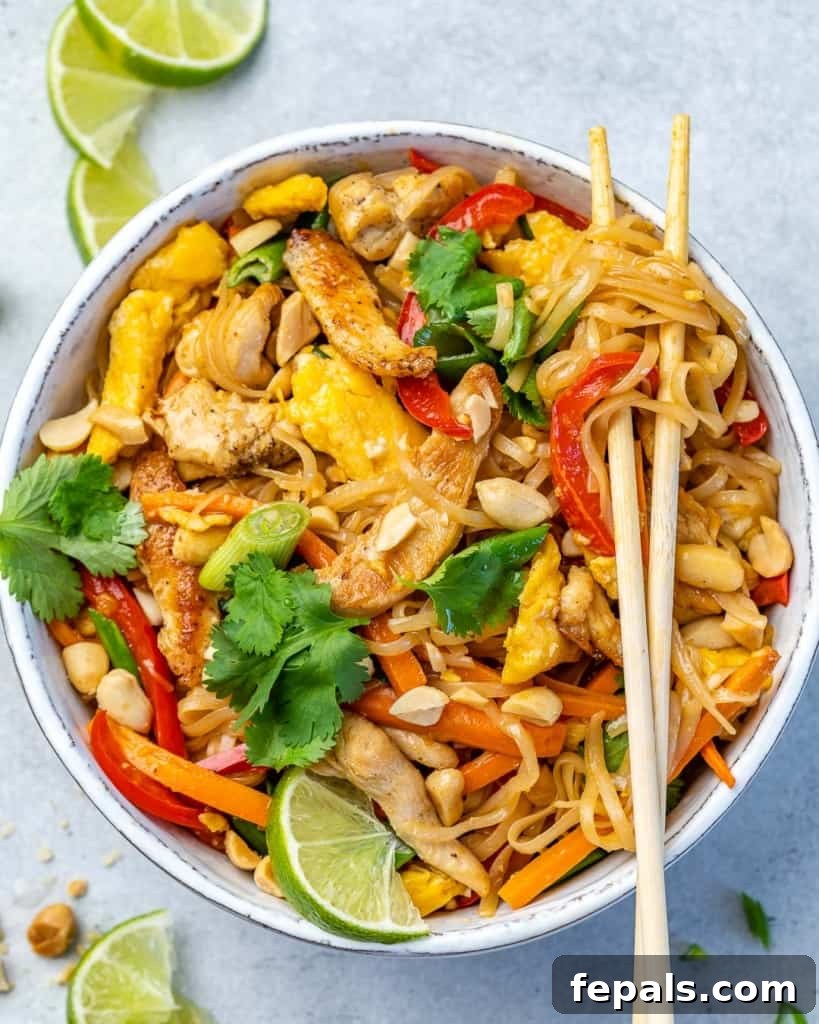
Common Questions About Homemade Chicken Pad Thai
Chicken Pad Thai is wonderfully satisfying as a complete meal on its own, but you can certainly enhance your dining experience with complementary side dishes. Light and refreshing options work best to balance the richness and complex flavors of the Pad Thai. Consider serving it alongside a fresh Sweet & Sour Vegetable Stir Fry, a crisp and vibrant Easy Crab Corn Tomato Salad, savory Creamy Garlic Mushrooms, or some delightful Sweet and Spicy Baked Cauliflower. A simple green salad with a light vinaigrette also makes an excellent, refreshing accompaniment.
Absolutely! While our recipe calls for boneless and skinless chicken breasts, chicken thighs are an excellent and often preferred alternative for many. They tend to be more flavorful and stay wonderfully juicy during high-heat cooking, adding a delicious depth and tenderness to your Pad Thai. Simply slice them into bite-sized pieces or thin strips, just as you would with chicken breast, and follow the same cooking instructions.
Proper storage ensures your delicious leftovers remain enjoyable and safe. If you have any Chicken Pad Thai remaining, allow it to cool completely to room temperature before transferring it to an airtight container. Store it in the refrigerator for up to 3 days. For longer storage, you can freeze it for up to 2 months. When reheating, a quick stir-fry in a wok or skillet with a splash of water or broth helps to revive the noodles and prevent them from drying out, restoring much of its original texture and flavor.
Pad Thai is wonderfully versatile when it comes to protein choices, allowing for great creativity and adaptation. Beyond chicken and the previously mentioned shrimp, you can easily substitute beef (sliced thinly against the grain for tenderness), pork (tenderloin or thinly sliced shoulder work well), or even a plant-based protein like pan-fried extra-firm tofu or tempeh for a satisfying vegetarian or vegan option. Each protein will bring its unique texture and flavor, allowing you to customize the dish to your preference or whatever you have on hand.
The most authentic and highly recommended noodles for Pad Thai are flat, dried rice noodles, commonly labeled “Pad Thai noodles” or “rice stick noodles.” They come in various widths, but a medium-width (typically about 3-5mm) is generally preferred for its ideal texture and ability to absorb the sauce. It’s crucial not to overcook them during the initial soak or boil, as they will continue to cook and soften in the wok during the stir-frying process. They should be al dente and slightly firm before mixing with other ingredients to achieve that perfect chewy bite.
Discover More Delectable Asian-Inspired Recipes You May Also Like
- Easy Orange Chicken Stir Fry
- Flavorful Asian Chicken Cups Recipe
- Hearty Beef Lo Mein
- Quick and Healthy Beef Stir Fry
- Crispy Chinese Scallion Sesame Pancakes
- Light Asian Shrimp Zucchini Noodles Recipe
- Classic Chicken Fried Rice Recipe
We truly hope you love this homemade Chicken Pad Thai recipe! If you give it a try and enjoy it, please share your experience and leave us some valuable feedback in the comment section below. Don’t forget to rate the recipe too! Your feedback means a lot to us and helps other home cooks discover delicious meals. We’d be thrilled if you shared this fantastic dish with your friends and family, spreading the joy of home cooking.
FOLLOW us on FACEBOOK | INSTAGRAM | PINTEREST | TWITTER for all of our latest blog posts, delicious recipes, and healthy living tips. Join our community and never miss an update!
Easy Chicken Pad Thai Recipe
4 servings
10
25
35
Ingredients
- 10 ounces Thai rice noodles
- 1 pound boneless skinless chicken breasts, sliced into small strips (or boneless, skinless chicken thighs for extra juiciness)
- 2 tablespoons groundnut oil, divided (or peanut/sesame oil for high-heat cooking)
- 1 red bell pepper, sliced into thin strips (for sweetness and color)
- 2 medium carrots, peeled and cut into matchsticks (for natural sweetness and crunch)
- 2-3 cloves garlic, minced (the aromatic foundation of the dish)
- 2-3 green onions, sliced into 1-inch pieces diagonally (reserve some for garnish)
- 3 large eggs, beaten (adds richness and texture)
- ½ cup unsalted roasted peanuts, chopped (for garnish and crucial nutty crunch)
- ⅓ cup cilantro, chopped (fresh garnish is key for brightness)
Sauce Ingredients
- ¼ cup maple syrup or honey (for the essential sweet notes)
- ¼ cup light-sodium soy sauce or coconut aminos liquid (for savory depth and umami)
- 2 tablespoons rice vinegar (for mild, balanced tanginess)
- 1 lime, juiced (fresh acidity brightens all the flavors)
Instructions
-
In a small bowl, thoroughly whisk together all the sauce ingredients: ¼ cup maple syrup or honey, ¼ cup light-sodium soy sauce or coconut aminos liquid, 2 tablespoons rice vinegar, and the freshly squeezed juice from 1 lime. Stir until well combined, then set this flavorful sauce aside.
-
Prepare the 10 ounces of Thai rice noodles according to their specific package directions. This typically involves soaking them in hot water for a period or a brief boil until they are al dente and pliable, but still firm. Drain them very well and set aside.
-
Heat 1 tablespoon of the groundnut oil in a large skillet or wok over medium-high heat. Add the 1 pound of boneless skinless chicken breasts (or thighs), seasoned lightly with a pinch of salt and pepper.

-
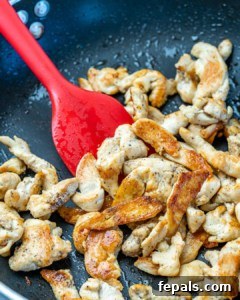
Cook the chicken for 6-8 minutes, stirring occasionally, until it’s beautifully golden brown on all sides and fully cooked through. Once done, transfer the cooked chicken to a clean plate and cover it loosely to keep warm while you proceed.
-
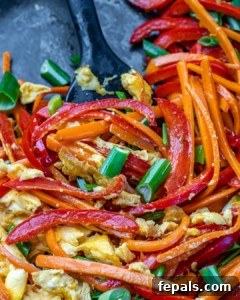
Add the remaining groundnut oil to the same heated pan. Sauté the 1 red bell pepper (thinly sliced), 2 medium carrots (cut into matchsticks), and 2-3 minced cloves of garlic, stirring frequently, for 5-6 minutes until the vegetables begin to soften but still retain a pleasant crispness. During the last minute of cooking, stir in most of the 2-3 sliced green onions, reserving a small amount for garnish.
-
Meanwhile, quickly beat the 3 large eggs in a small bowl until they are well combined and slightly frothy.
-
Push the sautéed vegetables to one side of the pan, creating a clear space in the center. Pour the beaten eggs into this empty side of the pan. Cook and scramble the eggs quickly until they are just set and cooked through.
-
Return the cooked chicken to the pan, then add the drained rice noodles and generously pour in the prepared Pad Thai sauce over all the ingredients.
-
Cook and toss all the ingredients together vigorously over medium-low heat, ensuring the sauce evenly coats every strand of noodle, piece of chicken, and vegetable. Continue cooking and tossing until everything is thoroughly heated through and beautifully combined, usually about 2-3 minutes.
-
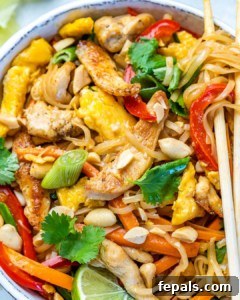
Take the pan off the heat. Sprinkle generously with the ½ cup of chopped unsalted roasted peanuts and the remaining ⅓ cup of fresh cilantro. Serve your homemade Chicken Pad Thai immediately and savor every delicious bite!
Recipe Notes & Pro Tips
- Master the Noodles: The trick to perfect Pad Thai noodles is not overcooking them initially. They should still be slightly firm (al dente) after soaking or par-boiling, as they will finish cooking and absorb flavor in the wok.
- Wok Hei (Breath of the Wok): For that authentic smoky flavor and crisp-tender vegetables, ensure your wok or skillet is extremely hot before adding ingredients. Cook in batches if necessary to avoid overcrowding the pan, which can lead to steaming instead of stir-frying.
- Balanced Sauce: Don’t be afraid to taste the sauce before adding it to the noodles. Adjust the sweetness (more maple syrup), tanginess (more lime/rice vinegar), or saltiness (more soy sauce) to perfectly suit your personal preference.
- Fresh Garnishes: Freshly chopped peanuts and cilantro are not just for looks; they add essential texture, crunch, and aromatic freshness that truly elevate the entire dish. Don’t skip these crucial finishing touches!
- Vegetarian Adaptation: To make this recipe vegetarian, swap the chicken for pressed, extra-firm tofu, pan-fried until golden and crispy. Tofu absorbs the sauce beautifully and offers a satisfying texture.
- Pescatarian Option: Substitute chicken with quick-cooking shrimp. Add them towards the end of the cooking process, stirring just until they turn pink and opaque, to prevent overcooking and ensure they remain tender.
- Add More Veggies: Feel free to experiment and boost your Pad Thai with additional vegetables. Consider snow peas, fresh bean sprouts (add at the very end for maximum crunch), thinly sliced cabbage, or even tender broccoli florets.
- Spice It Up: For a fiery kick, incorporate chili paste (like sriracha or sambal oelek) into your sauce mixture or directly into the stir-fry with the vegetables. Adjust the amount to achieve your desired level of heat.
- Equipment Matters: A large, heavy-bottomed skillet or a traditional wok is highly recommended for this recipe. Ample space is essential for tossing and stir-frying ingredients evenly, ensuring consistent results.
Nutrition Information
Calories: 697kcal
Carbohydrates: 85g
Protein: 38g
Fat: 23g
Saturated Fat: 4g
Trans Fat: 1g
Cholesterol: 195mg
Sodium: 944mg
Potassium: 909mg
Fiber: 5g
Sugar: 16g
Vitamin A: 6397IU
Vitamin C: 48mg
Calcium: 106mg
Iron: 3mg
Nutrition information is automatically calculated, so should only be used as an approximation.
Additional Information
Tried this recipe?
Mention @healthyfitnessmeals or tag #healthyfitnessmeals!